Archive
Ephemeris: 02/19/2026 – The star called Pup
This is Ephemeris for Thursday, February 19th. Today the Sun will be up for 10 hours and 40 minutes, setting at 6:17, and it will rise tomorrow at 7:35. The Moon, 2 days past new, will set at 9:05 this evening.
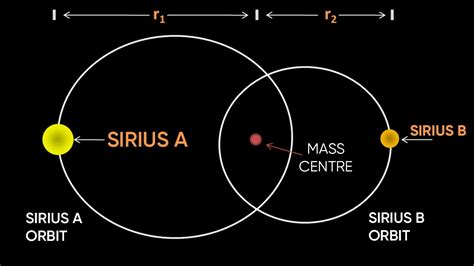
Sirius is the brightest nighttime star and is located in the south at 9 p.m. below and a bit left of Orion the Hunter. We’ve visited Sirius last Monday, but there is another star in the Sirius system that is practically invisible due to Sirius’ dazzling glare. Its name is Sirius B, nicknamed the Pup, alluding to Sirius’ Dog Star title as the heart of Canis Major, Orion’s larger hunting dog. The tiny star was suspected as far back as 1834 due to Sirius’ wavy path in the sky against the more distant stars. Sirius and the Pup have 50-year orbits of each other. The Pup was first seen in 1862. The Pup was the first of a new class of stars to be discovered, white dwarfs. The Pup, with the mass of the Sun, is packed into the volume of the Earth.
The astronomical event times given in this blog are for the Traverse City/Interlochen area of Michigan (Lat 44.7° N, Long 85.7° W; EST, UT – 5 hours) unless stated otherwise. Times will be different for other locations.
Addendum
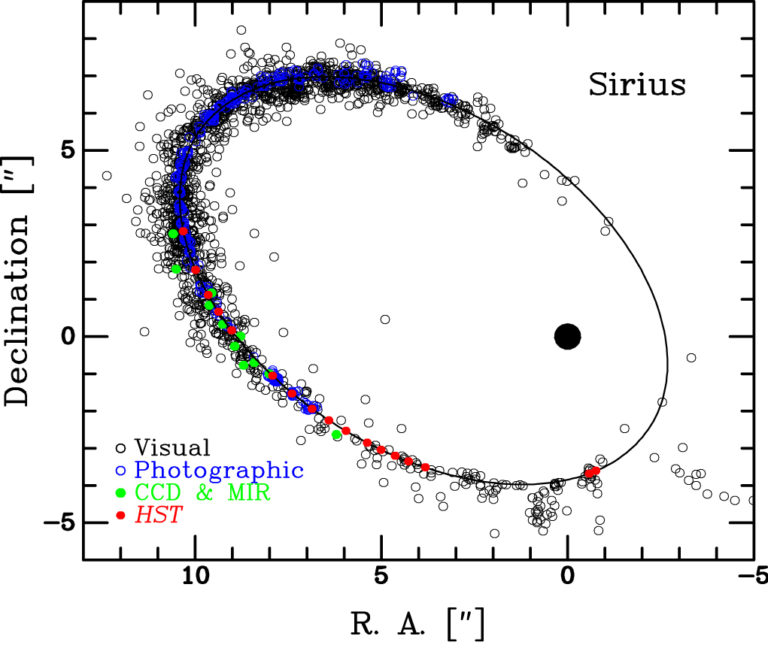
by Howard E. Bond et al 2017 ApJ 840 70.
Ephemeris: 01/22/2024 – The Dog Star’s little buddy
This is Ephemeris for Monday, January 22nd. Today the Sun will be up for 9 hours and 24 minutes, setting at 5:37, and it will rise tomorrow at 8:11. The Moon, 3 days before full, will set at 7:14 tomorrow morning.
Sirius is the brightest nighttime star and is located low in the southeast at 9 p.m. below and a bit left of Orion the Hunter. We’ve visited Sirius on Tuesday, but there is another star in the Sirius system that is practically invisible due to Sirius’ dazzling glare. Its name is Sirius B, nicknamed the Pup, alluding to Sirius’ Dog Star title. The tiny star was suspected as far back as 1834 due to Sirius’ wavy path against the more distant stars in the sky. Sirius and the Pup have 50-year orbits of each other. The Pup was first seen in 1862. It was the first of a new class of stars to be discovered, white dwarfs. The Pup is a dying star with the mass of the Sun, collapsed down to the size of the Earth after running out of hydrogen fuel in its core.
The astronomical event times given are for the Traverse City/Interlochen area of Michigan (EST, UT –5 hours). They may be different for your location.
Addendum
02/25/2022 – Ephemeris – The star that’s called the Pup
This is Ephemeris for Friday, February 25th. Today the Sun will be up for 10 hours and 58 minutes, setting at 6:25, and it will rise tomorrow at 7:25. The Moon, 2 days past last quarter, will rise at 5:04 tomorrow morning.
Sirius is the brightest nighttime star and is located in the south at 9 p.m. below and a bit left of Orion the Hunter. We’ve visited Sirius last Friday. But there is another star in the Sirius system that is practically invisible due to Sirius’ dazzling glare. Its name is Sirius B, nicknamed the Pup, alluding to Sirius’ Dog Star title as the heart of Canis Major, Orion’s larger hunting dog. The tiny star was suspected as far back as 1834 due to Sirius’ wavy path in the sky against the more distant stars. Sirius and the Pup have 50-year orbits of each other. The Pup was first seen by famed 19th century telescope maker Alvan Clark in 1862 while testing a new telescope. The Pup was the first of a new class of stars to be discovered, white dwarfs. The Pup, with the mass of the Sun, is packed into the volume of the Earth.
The astronomical event times given are for the Traverse City/Interlochen area of Michigan (EST, UT – 5 hours). They may be different for your location.
Addendum
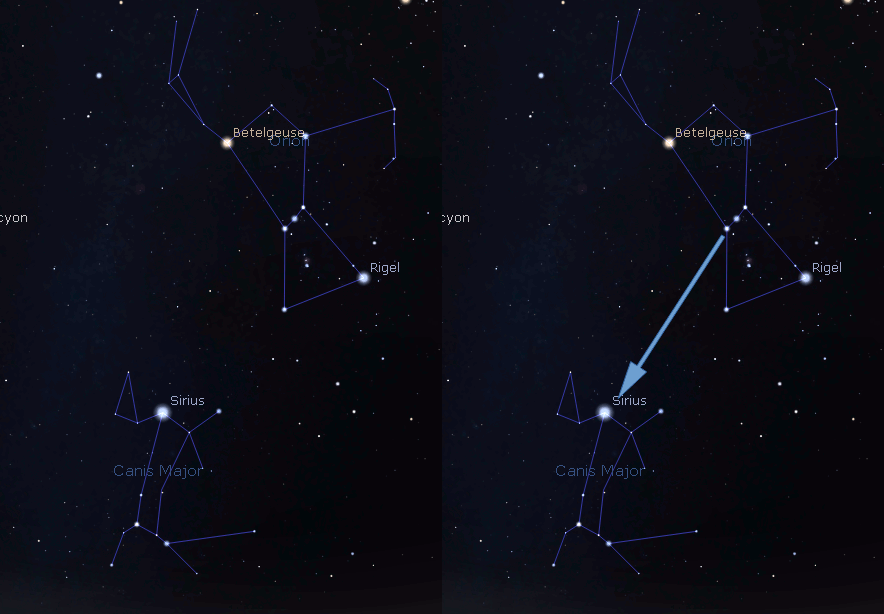
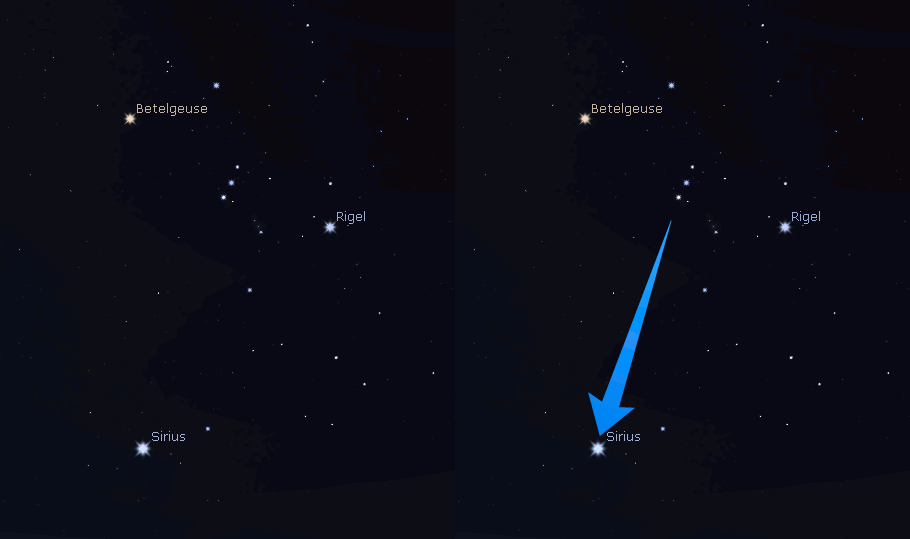
A Sirius finder animation for late January/early February at around 8 pm. Even in bright moonlight, the seven bright stars of Orion can be seen. The three stars of Orion’s belt make a great pointer to Sirius. Created using Stellarium, GIMP and Libreoffice (for the arrow).
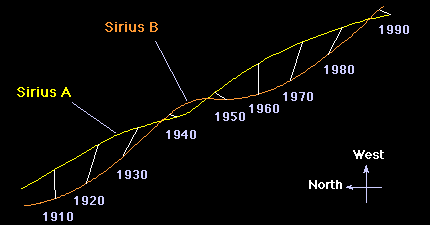
Sirius A & B’s path in the sky, showing the wobble that betrayed the Pup’s presence. Credit Mike Guidry, University of Tennessee.
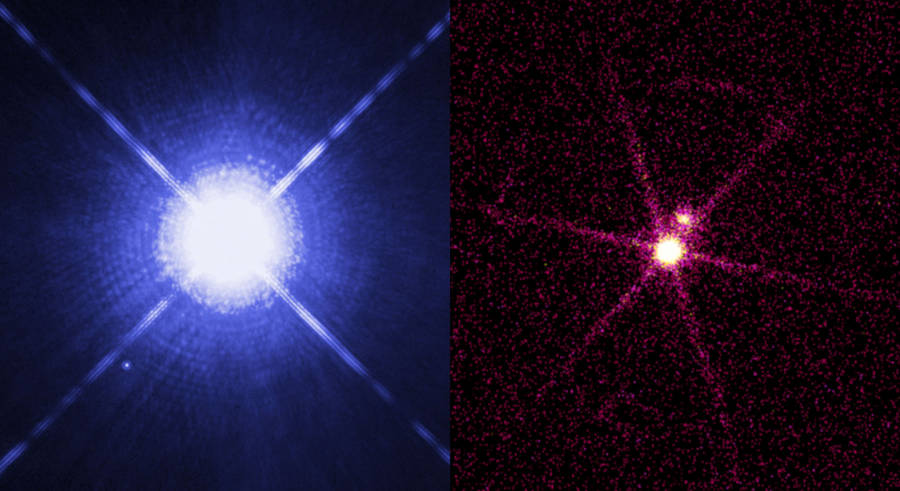
Sirius A and B imaged by two different space telescopes, revealing dramatically different views! Hubble’s image (left) shows Sirius A shining brightly in visible light, with diminutive Sirius B a tiny dot. However, in Chandra’s image (right) tiny Sirius B is dramatically brighter in X-rays! The “Universe in a Different Light” activity highlights more surprising views of some familiar objects: http://bit.ly/different-light-nsn NASA, ESA, H. Bond (STScI), and M. Barstow (University of Leicester) (left); NASA/SAO/CXC (right)
03/02/2021 – Ephemeris – Sirius and the Pup
This is Ephemeris for Tuesday, March 2nd. Today the Sun will be up for 11 hours and 14 minutes, setting at 6:32, and it will rise tomorrow at 7:16. The Moon, halfway from full to last quarter, will rise at 10:51 this evening.
Sirius is the brightest night-time star and is located in the south at 9 p.m. below and a bit left of Orion the Hunter. We’ve visited Sirius a month ago. But there is another star in the Sirius system that is practically invisible due to Sirius’ dazzling glare. Its name is Sirius B, nicknamed the Pup, alluding to Sirius’ Dog Star title. The tiny star was suspected as far back as 1834 due to Sirius’ wavy path against the more distant stars in the sky. Sirius and the Pup have 50-year orbits of each other. The Pup was first seen in 1862. It was the first of a new class of stars to be discovered, white dwarfs. The Pup is a dying star with the mass of the Sun, collapsed down to the size of the Earth after running out of hydrogen fuel in its core.
The astronomical event times given are for the Traverse City/Interlochen area of Michigan. They may be different for your location.
Addendum
A Sirius finder animation for late January/early February at around 8 pm. Even in bright moonlight the seven bright stars of Orion can be seen. The three stars of Orion’s belt make a great pointer to Sirius. Created using Stellarium, GIMP and Libreoffice (for the arrow).
Sirius A & B’s path in the sky showing the wobble that betrayed the Pup’s presence. Credit Mike Guidry, University of Tennessee.
Sirius A and B imaged by two different space telescopes, revealing dramatically different views! Hubble’s image (left) shows Sirius A shining brightly in visible light, with diminutive Sirius B a tiny dot. However, in Chandra’s image (right) tiny Sirius B is dramatically brighter in X-rays! The “Universe in a Different Light” activity highlights more surprising views of some familiar objects: http://bit.ly/different-light-nsn NASA, ESA, H. Bond (STScI), and M. Barstow (University of Leicester) (left); NASA/SAO/CXC (right).
02/13/2017 – Ephemeris – The brightest night-time star has a tiny stellar companion
Ephemeris for Monday, February 13th. The Sun will rise at 7:45. It’ll be up for 10 hours and 23 minutes, setting at 6:08. The Moon, 3 days past full, will rise at 9:16 this evening.
Sirius is the brightest night-time star and is located in the south at 9 p.m. below and a bit left of Orion the Hunter. We’ve visited Sirius last week. But there is another star in the Sirius system that is practically invisible due to Sirius’ dazzling glare. It’s Sirius B, nicknamed the Pup, alluding to Sirius’ Dog Star title. The tiny star was suspected as far back as 1834 due to Sirius’ wavy path in the sky against the more distant stars. Sirius is only 8 light years away. Sirius A and the Pup have 50 year orbits of each other. The star was first seen by Alvan Clark in 1862 while testing a new telescope. The Pup was the first of a new class of stars to be discovered, white dwarfs. The Pup is about the size of the Earth, with the mass of our Sun; its out of fuel and slowly collapsing.
Times are for the Traverse City/Interlochen area of Michigan. They may be different for your location.
Addendum
Sirius A & B’s path in the sky showing the wobble that betrayed the Pup’s presence. Credit Mike Guidry, University of Tennessee.
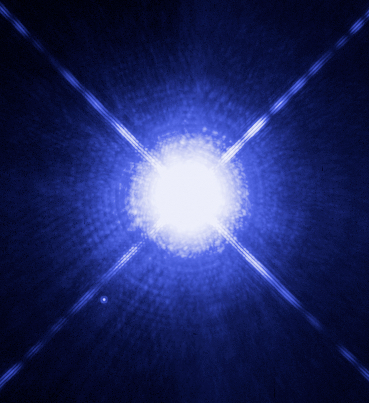
Sirius A and B (near the diffraction spike to the lower left), A Hubble Space Telescope photograph. Credit NASA, ESA.
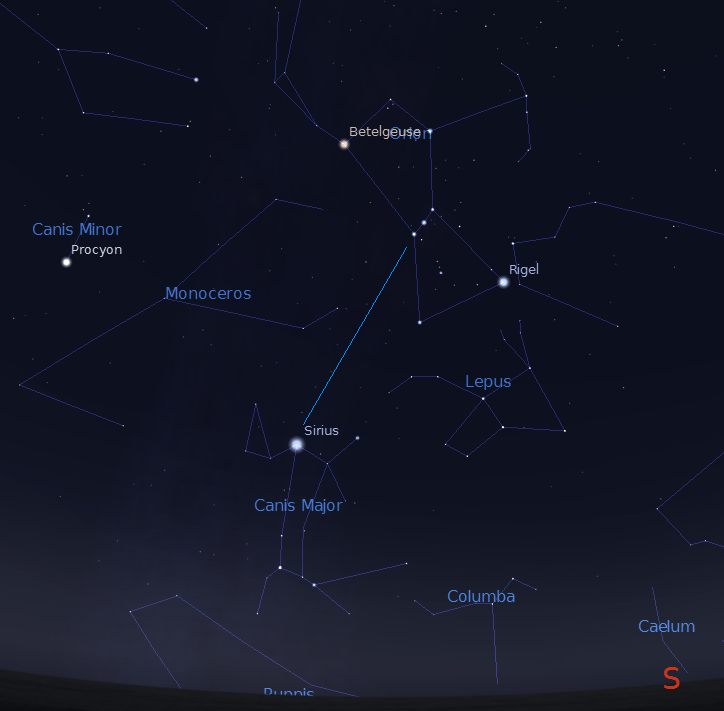
Orion’s Belt points to Sirius. Created using Stellarium.
 Bob Moler's Ephemeris Blog