Archive
09/21/2020 – Ephemeris – This is the last full day of summer
This is Ephemeris for Monday, September 21st. Today the Sun will be up for 12 hours and 11 minutes, setting at 7:41, and it will rise tomorrow at 7:30. The Moon, 2 days before first quarter, will set at 10:24 this evening.
Enjoy the last full day of summer. Summer will last until 9:31 am (05:31 UTC) tomorrow when the center of the Sun will cross the celestial equator, an imaginary line above the Earth’s equator, heading southward. At that instant autumn will begin for Earth’s northern hemisphere and spring will begin in the southern hemisphere. Shortly, for us, the Sun will be up less than half the day. The day and the point in the sky that the Sun crosses is called the autumnal or September equinox. The word equinox means equal night, implying the equality of day and night. Geometrically that’s true, but the Earth’s atmosphere and the definition of sunrise and sunset, prolong daylight by a few more minutes. The amount of heat we are getting and will get from the Sun cannot sustain our current temperatures, and it will get a lot colder on average before it gets warmer again.
The event times given are for the Traverse City/Interlochen area of Michigan. They may be different for your location.
Addendum
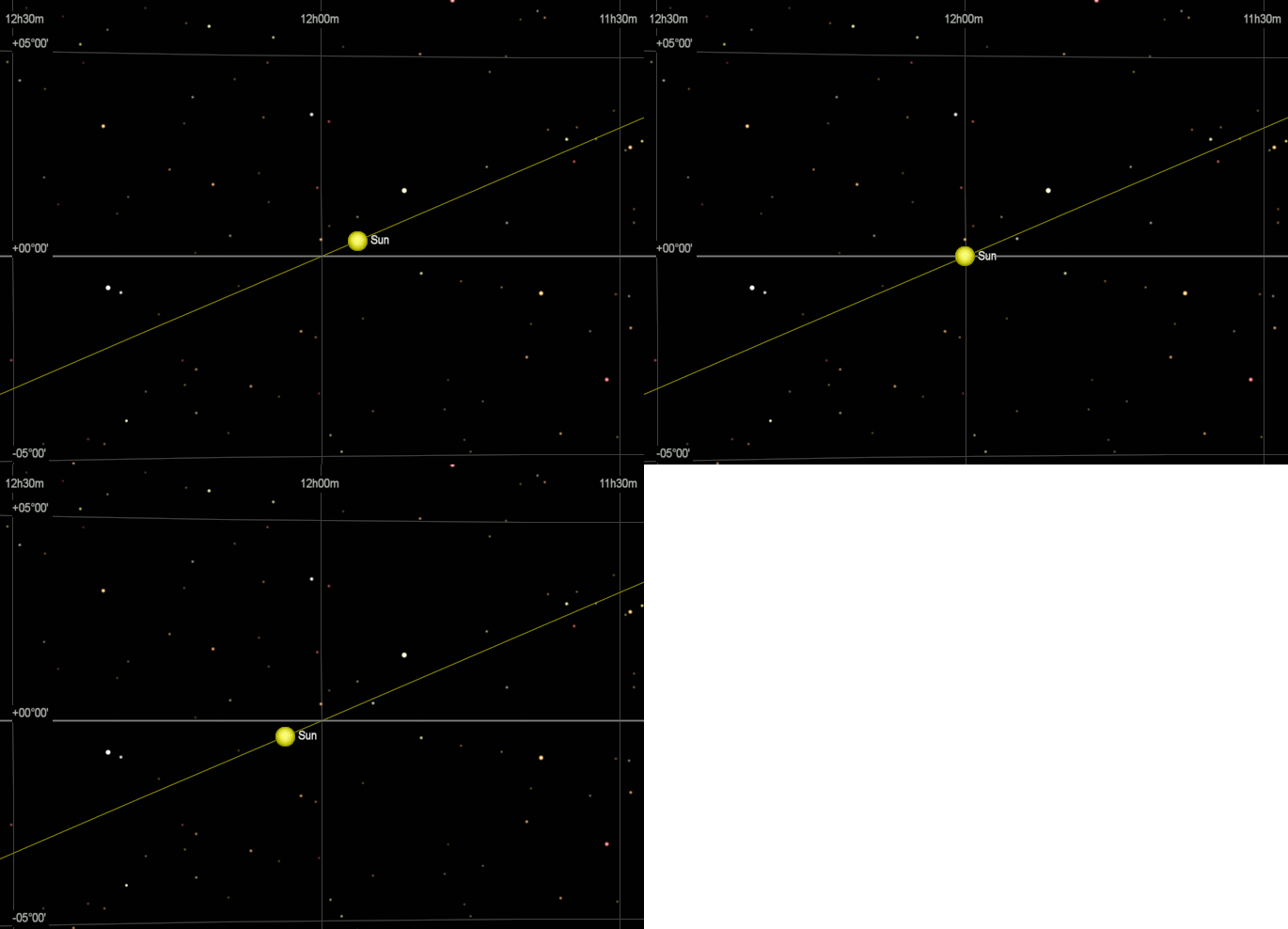
The Sun crossing the celestial equator in the sky moving southward in three steps: 9:31 am Sept 21, 22, and 23 2020. The vertical axis is declination, the exact match to latitude on the Earth. The horizontal line at 00°00′ is the celestial equator, a projection of the Earth’s equator on the sky. The diagonal line that the Sun appears to travel on is the ecliptic, the plane of the Earth’s orbit. Due to the tilt of the Earth’s axis it is inclined by 23.5° to the celestial equator. The horizontal values mark right ascension, the celestial analog of longitude. One hour equals 15°. Since the Earth rotates, the right ascension that is on one’s meridian, the north-south line passing through the zenith, is best kept track of by using a clock. A clock that runs 3 minutes 56 seconds fast a day. We call that a sidereal clock. Created using Cartes du Ciel (Sky Chart) and GIMP.
 Bob Moler's Ephemeris Blog