10/28/2020 – Ephemeris – Let’s look for the naked-eye planets for this week
This is Ephemeris for Wednesday, October 28th. Today the Sun will be up for 10 hours and 20 minutes, setting at 6:36, and it will rise tomorrow at 8:17. The Moon, 3 days before full, will set at 6:05 tomorrow morning.
Let’s look for the naked-eye planets for this week. Jupiter and Saturn are both low in the south-southwestern sky at 8 pm. Jupiter is the very bright one. Left and a bit above it will be the somewhat dimmer Saturn. They are closing slowly, so they will cross paths on December 21st and be in the same telescope field that evening. Jupiter will set first tonight at 11:08 with Saturn following at 11:37. Off in the east-southeast at that hour will be Mars. Since the it was closest 22 days ago its distance has increased to 42.0 million miles (67.6 million km) away. Brilliant Venus will rise at 5:12 am in the east as it retreats slowly toward the Sun. We’ll have a big jump backwards in rise and set times next week when standard time returns.
The event times given are for the Traverse City/Interlochen area of Michigan. They may be different for your location.
Addendum
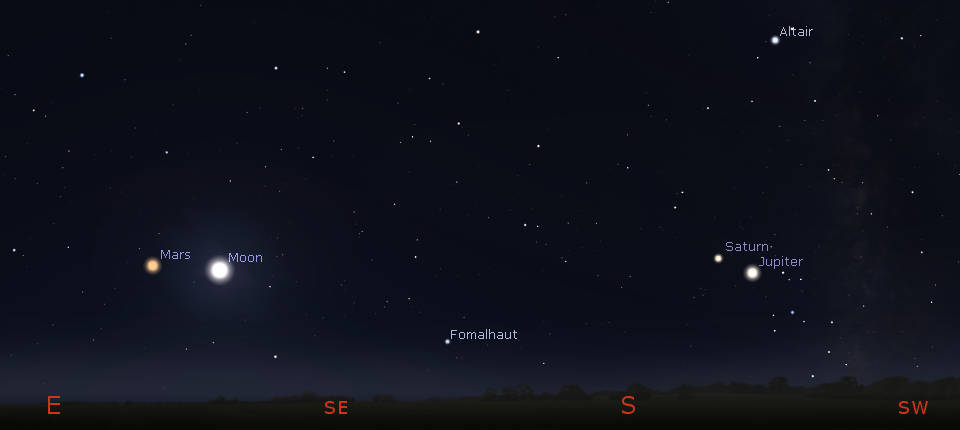
The evening planets and the Moon at 8 pm tonight, October 28, 2020. Click on the image to enlarge. Created using Stellarium.
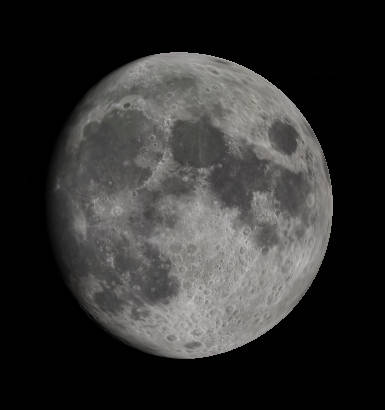
The waxing gibbous Moon tonight October 28, 2020 as it might appear in binoculars or a low power telescope. Created using Stellarium.
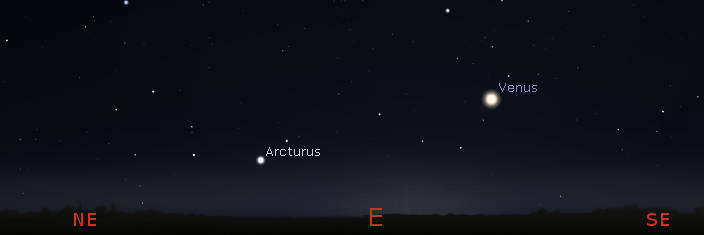
The morning planet Venus visible at 7 am October 29, 2020 with some of the stars of morning. Click on the image to enlarge. Created using Stellarium.
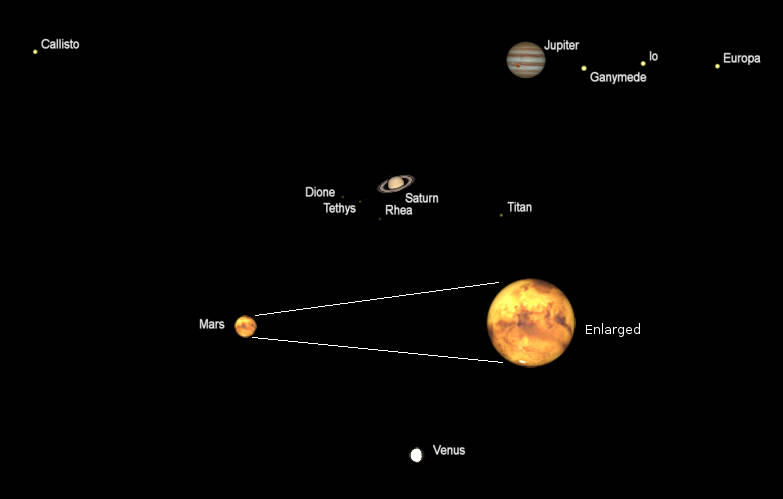
The planets as seen in a telescope (north up) with the same magnification for the night of October 28/29, 2020. Times of the display are: Jupiter and Saturn, 8 pm; Mars, 11 pm; Venus, 7 am. Apparent diameters: Jupiter, 37.26″; Saturn, 16.42″, rings, 38.25″. Mars, 20.27″, and Venus 13.29″. Mars also displays an enlargement showing surface detail. Mars was closest to the Earth this go-a-round on October 6. The ” symbol means seconds of arc (1/3600th of a degree.) Click on the image to enlarge. Created using Cartes du Ciel (Sky Charts).
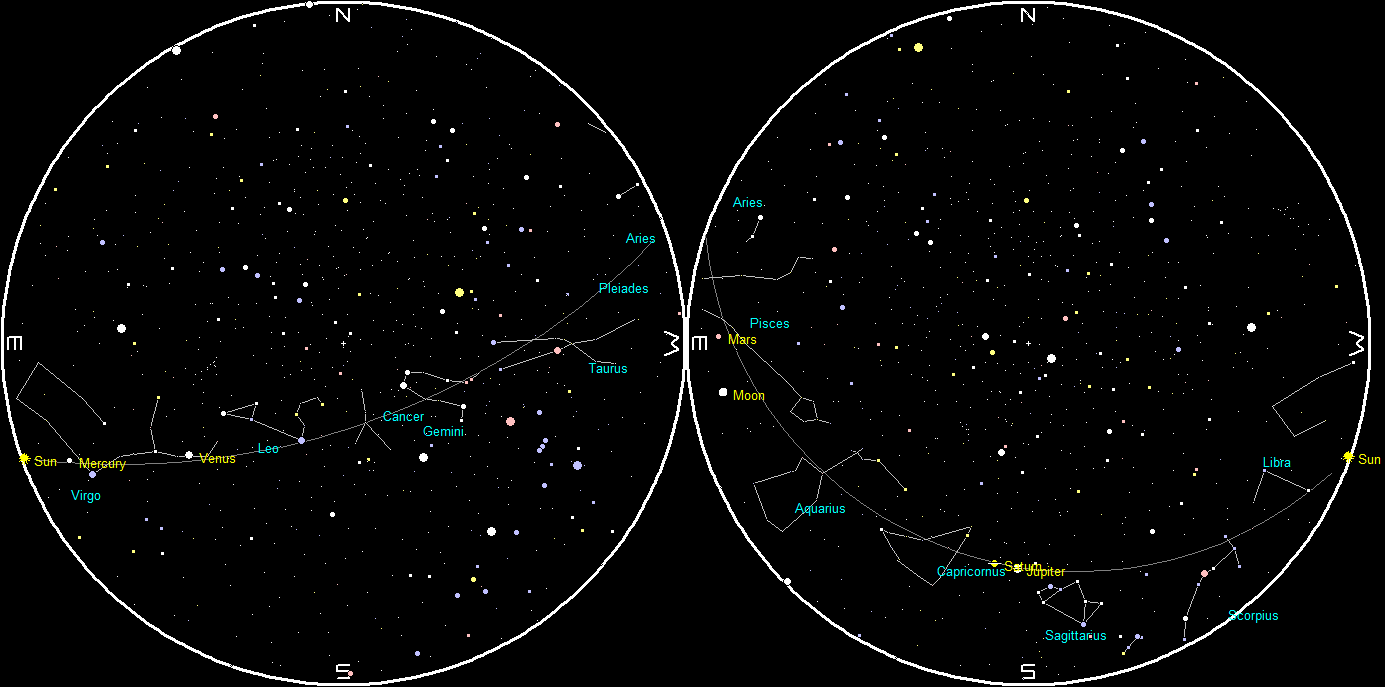
Planets and the Moon at sunset and sunrise of a single night starting with sunset on the right on October 28, 2020. The night ends on the left with sunrise on 29th. Click on the image to enlarge. Created using my LookingUp program.
 Bob Moler's Ephemeris Blog