06/22/2023 – Ephemeris – The lunar seas on tonight’s Moon
This is Ephemeris for Thursday, June 22nd. Today the Sun will be up for 15 hours and 34 minutes, setting at 9:32, and it will rise tomorrow at 5:57. The Moon, halfway from new to first quarter, will set at 12:51 tomorrow morning.
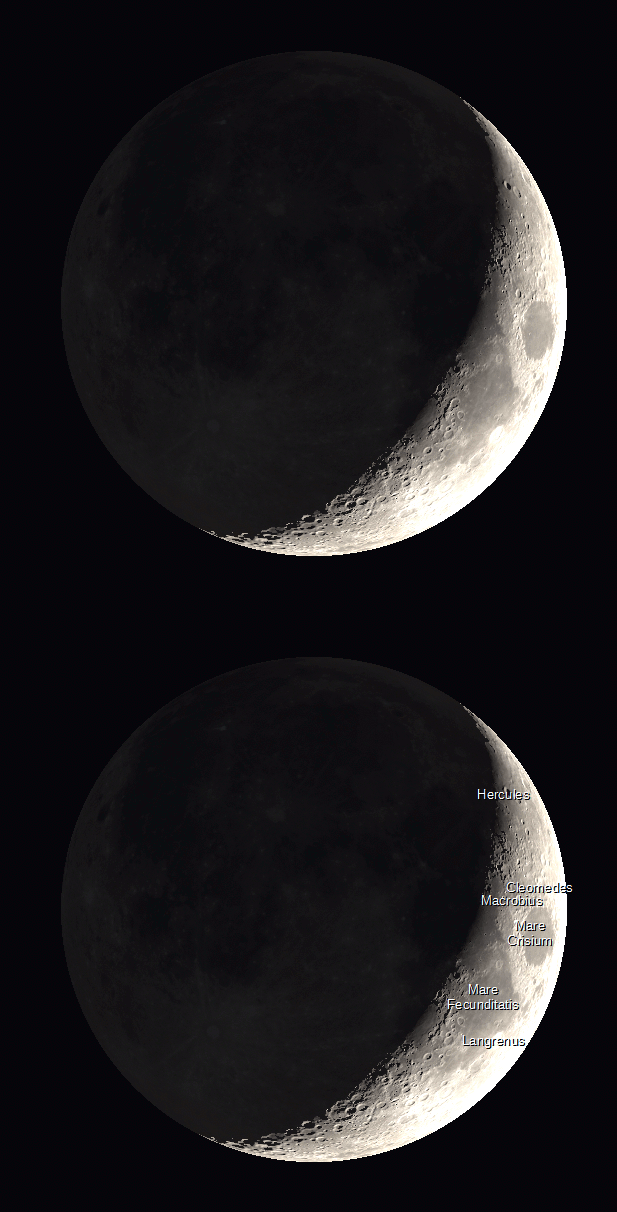
The crescent Moon tonight reveals two large seas. Astronomers using the first telescopes thought the darker flat areas on the moon may actually be filled with water. It turns out that they are flat lava plains, and since most of them are roughly circular, may be gigantic craters from impacts of asteroids. Examination of rocks brought back by the Apollo astronauts over 50 years ago suggest the age of the seas at around 4 billion years. This suggests some kind of disruption in the solar system, called the Late Heavy Bombardment. The reason the Earth does not have these scars is due to plate tectonics and the weathering of wind and water. The Moon has none of these, so it preserves the damage done to it.
The astronomical event times given are for the Traverse City/Interlochen area of Michigan (EDT, UT –4 hours). They may be different for your location.
Addendum
Late Heavy Bombardment (Based on my August 4, 2022 post)
There are even more and larger seas on the east half of the Moon, as we see it. Most were created about 3.9 billion years ago by asteroid strikes. The same thing happened to the Earth, but plate tectonics destroyed the evidence. Not so on the Moon. The result, many planetary scientists think, was the Late Heavy Bombardment, caused by the shifting orbits of mainly Saturn, Uranus and Neptune that disrupted the smaller asteroids, and sending them careening through the solar system.
 Bob Moler's Ephemeris Blog