Archive
Ephemeris: 03/21/2024 – Three lunar craters named for heliocentrists by a geocentrist
This is Ephemeris for Thursday, March 21st. Today the Sun will be up for 12 hours and 14 minutes, setting at 7:57, and it will rise tomorrow at 7:41. The Moon, halfway from first quarter to full, will set at 6:59 tomorrow morning.
The gibbous moon tonight is exhibiting, over the last three days, three craters named for those who promoted the heliocentric or Sun centered solar system. The largest crater of the three, Copernicus, can be seen to the lower left of the center of the Moon. The asteroid that hit it made a big splash, which can be seen in its rays of ejecta being round and full. Then about halfway between it and the terminator is a small crater named for Johannes Kepler, and then nearby and on the terminator tonight is the crater named for the Greek philosopher who first proposed the Sun centered solar system, or in his case the universe, Aristarchus. He was a contemporary of and overshadowed by Aristotle, so his ideas were never adopted.
The astronomical event times given are for the Traverse City/Interlochen area of Michigan (EDT, UT–4 hours). They may be different for your location.
Addendum
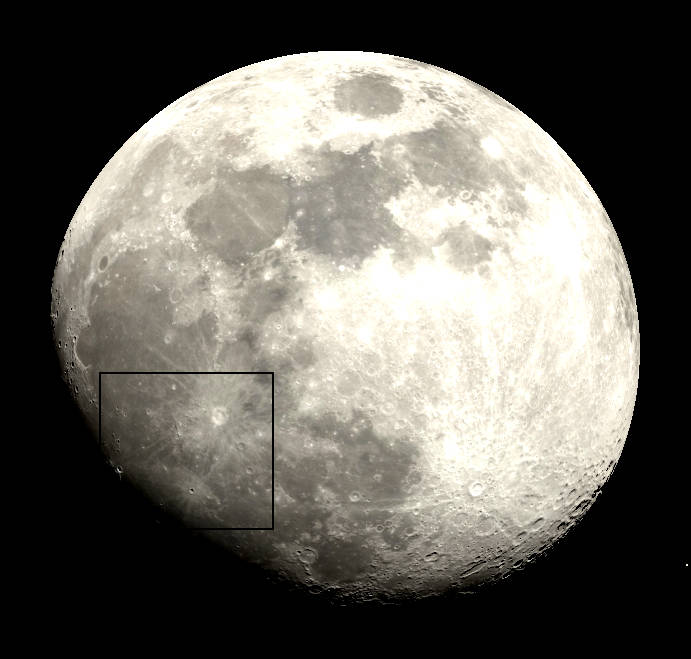
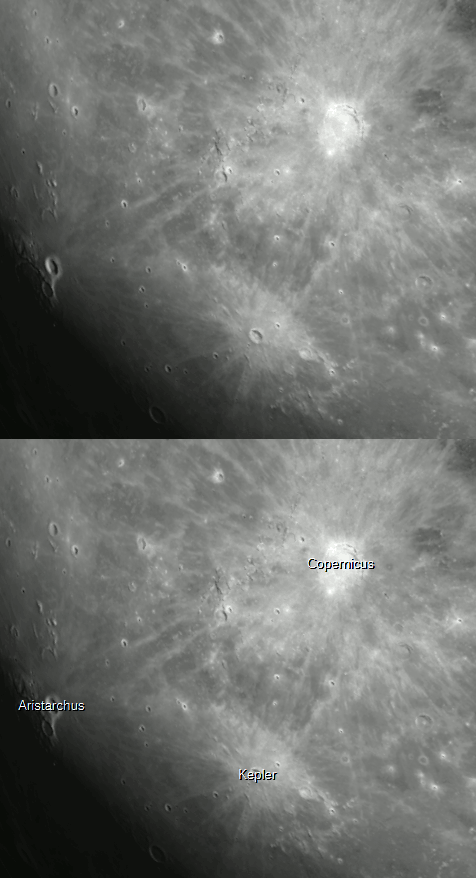
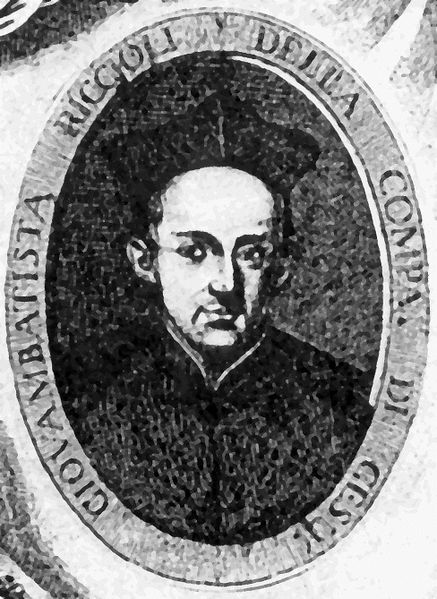
These craters were named by Giovanni Battista Riccioli, an astronomer and Jesuit priest. He established the lunar nomenclature we have today and named many of the largest craters. Being a 17th century Catholic, he bought the Roman Catholic line that the universe was geocentric, that is earth centered, yet he honored these heliocentrists with their own craters. He tended to group crater names by their relationship in life or their ideas, so the three proponents of the Sun centered solar system were given craters near each other in one section of the Moon.
Aristarchus of Samos was a Greek philosopher who lived between 310 and 230 BCE. He proposed a heliocentric solar system or universe, where Earth and all the planets revolved about the Sun. However, the work that he proposed it in has been lost. We know of his idea only referenced in the writings of others who attempted to debunk it.
Copernicus (Mikola Kopernik 1473-1543), was a Polish Catholic Canon, who was a mathematician, astronomer and translator, among other talents. He came up with the theory of the Sun centered or heliocentric solar system or in his day, universe.
Johannes Kepler (1571–1630) was an astronomer, astrologer and mathematician who discovered the laws of planetary motion. While Copernicus kept the circular orbits of the planets, they still didn’t match the motions of the planets in the sky. So he had to add some epicycles to make it all work. He actually had more epicycles than Ptolemy had. Kepler was able to figure out that he didn’t need epicycles if he assumed that the orbits were elliptical. He developed his Three Laws of Planetary Motion.
Galileo also has a crater there (Galilaei). It’s a tiny crater right on the terminator, below Kepler in the images above, and not visible. The Virtual Moon Atlas does not give an origin of the naming of the crater. Back in 1651, when Riccioli was giving craters names, Galileo was still on the outs with the Vatican, and the church.
 Bob Moler's Ephemeris Blog