Archive

Archive for January 30, 2025

Ephemeris: 01/30/2025 – What’s up with Betelgeuse

January 30, 2025 Comments off

This is Bob Moler with Ephemeris for Thursday, January 30th. Today the Sun will be up for 9 hours and 45 minutes, setting at 5:49, and it will rise tomorrow at 8:02. The Moon, 1 day past new, will set at 7:20 this evening.

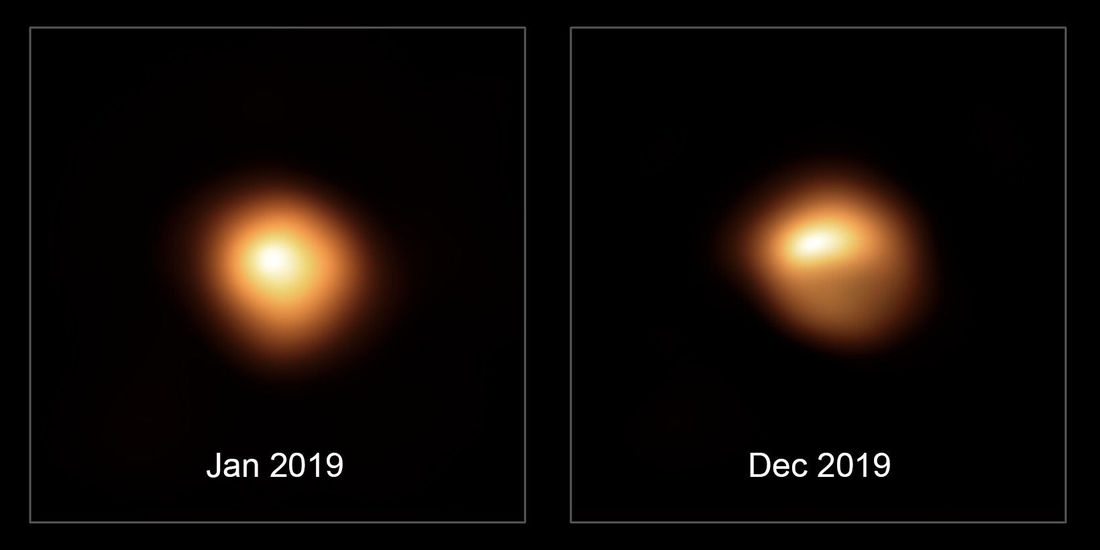
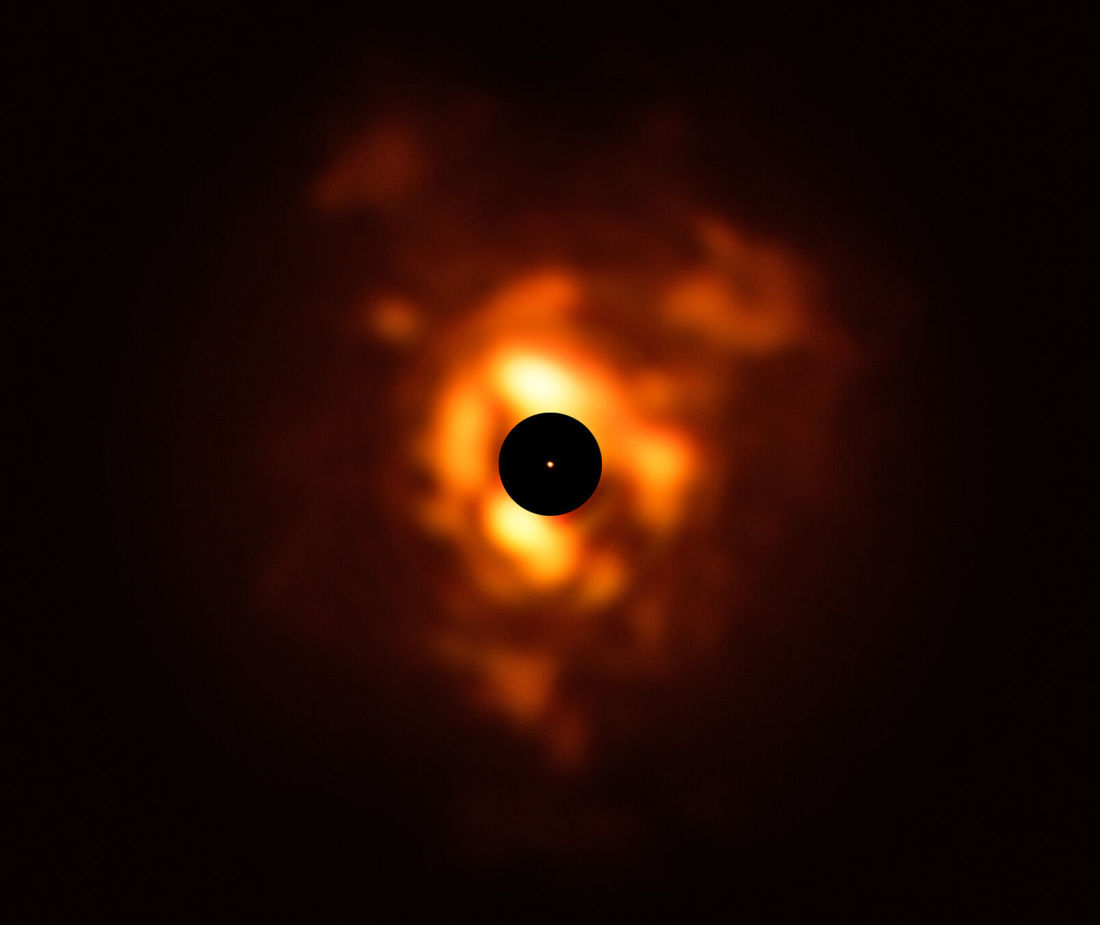
The constellation Orion is in the southeast at 8 PM, so what’s up with Betelgeuse. Betelgeuse is the bright reddish upper leftmost star of the torso of Orion the hunter, it’s in his shoulder. Betelgeuse has been acting up lately. In 2019 and 2020 Betelgeuse had dimmed significantly. Astronomers didn’t know why at the time, but found out later that it ejected a large cloud of gas and dust which blocked the light from the star. Since then Betelgeuse has increased its brightness significantly, so it’s much brighter than normal. Again, we don’t exactly know why. Some have speculated that Betelgeuse is will soon go supernova. We’ve known that for a while, but soon is measured in hundreds of thousands of years. So astronomers are keeping an eye on Betelgeuse to see what happens next.

The astronomical event times given are for the Traverse City/Interlochen area of Michigan (EST, UT – 5 hours). Times will be different for other locations.

Addendum
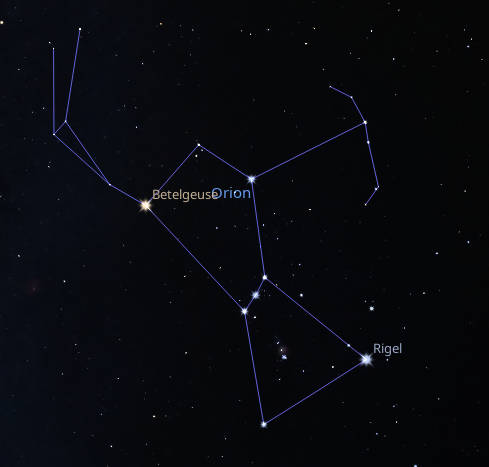
The constellation Orion the hunter in its orientation at 8:00 PM tonight, January 29th with lines outlining his body.
The constellation Orion the hunter in its orientation at 8:00 PM tonight, January 30th with lines outlining his body. Its two brightest stars Betelgeuse and Rigel labeled. Both Betelgeuse and Rigel are very massive stars with a short lifetime. By short, I mean millions of years not billions like the Sun. Betelgeuse is much farther along in its life cycle than Rigel which is 30% farther away. Created using Stellarium.
Betelgeuse before and after dimming
This comparison image shows the star Betelgeuse before and after its unprecedented dimming. The observations, taken with the SPHERE instrument on ESO’s Very Large Telescope in January and December 2019, show how much the star has faded and how its apparent shape has changed. Credit: ESO/M. Montargès et al.
Betelgeuse's dust plume
An image of the star Betelgeuse taken in infrared shows it’s surrounded by a vast cloud of dust that erupted from the surface (the bright star itself is masked out, though an image of it has been superposed there for scale — it’s about the size of the orbit of Jupiter, over a billion km wide). Credit: ESO/P. Kervella/M. Montargès et al., Acknowledgement: Eric Pantin via Phil Plait’s Bad Astronomy blog on syfy.com, which is no longer active.