Ephemeris: 02/06/2025 – The Moon tonight, two days after first quarter
This is Ephemeris for Thursday, February 6th. Today the Sun will be up for 10 hours and 3 minutes, setting at 5:59, and it will rise tomorrow at 7:54. The Moon, 1 day past first quarter, will set at 4:30 tomorrow morning.
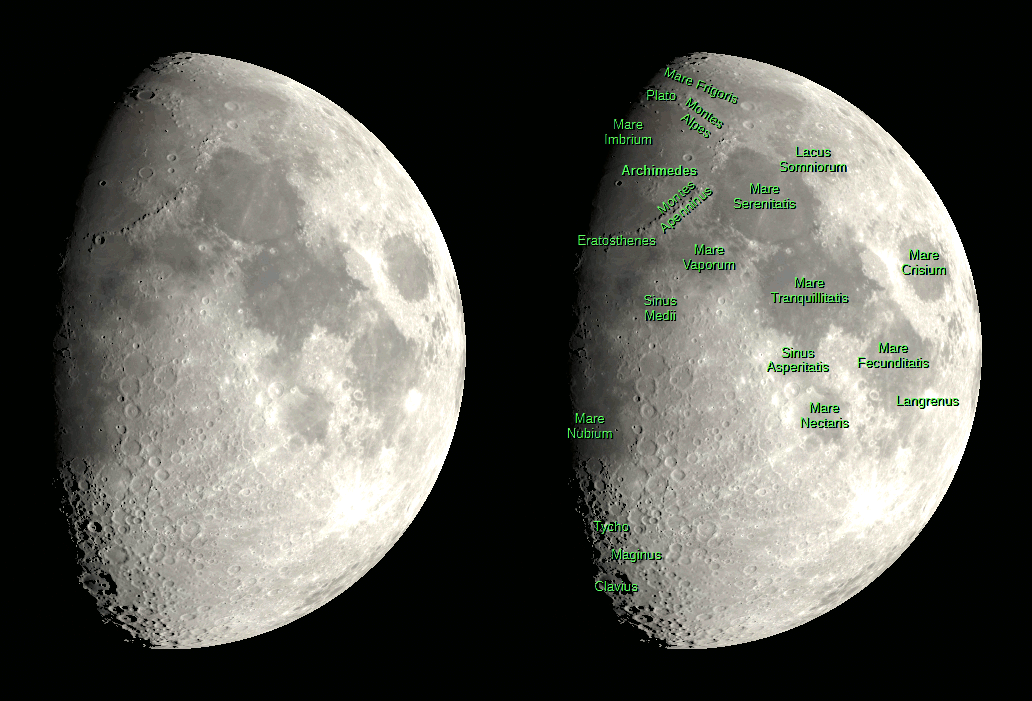
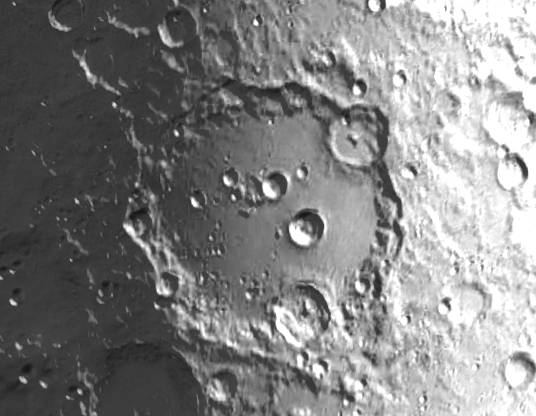
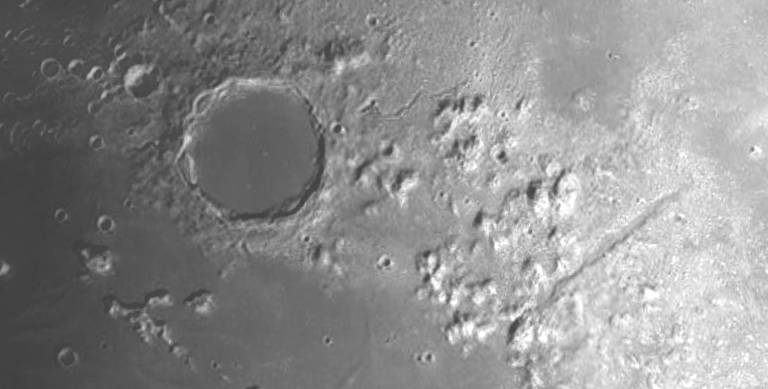
Tonight the moon will be about a day and a half past first quarter it is showing some very nice craters for the binoculars or small telescope. Near the south end of the moon near the terminator, the sunrise line, is the crater called Clavius which has an arc of several craters within it, each of decreasing size. North or above that is the sharp-edged crater called Tycho which, during a full moon, shows several long ejecta rays across the face of the Moon, but are almost invisible now. Near the top edge of the Moon the flat floored crater called Plato is seen by the edge of the large sea Mare Imbrium or Sea of Showers. A mountain range at the opposite side of Imbrium is called the Apennines Mountains.
The astronomical event times given are for the Traverse City/Interlochen area of Michigan (EST, UT – 5 hours). Times will be different for other locations.
Addendum
 Bob Moler's Ephemeris Blog