Ephemeris: 03/31/2025 – Finding Leo, the celestial lion
This is Ephemeris for Monday, March 31st. Today the Sun will be up for 12 hours and 44 minutes, setting at 8:09, and it will rise tomorrow at 7:23. The Moon, 2 days past new, will set at 11:39 this evening.
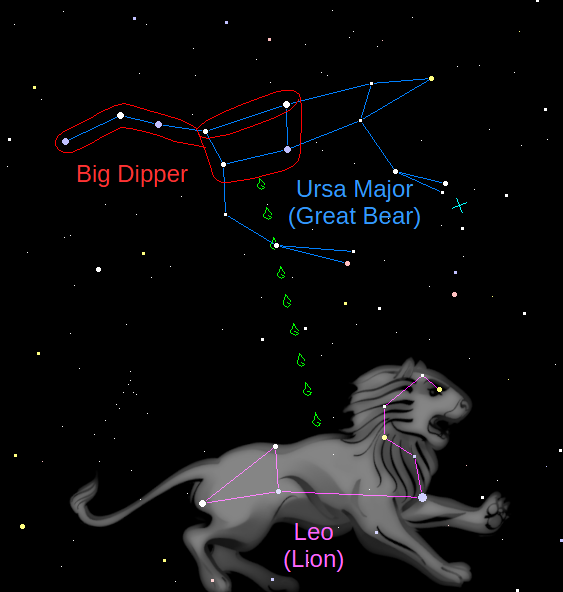
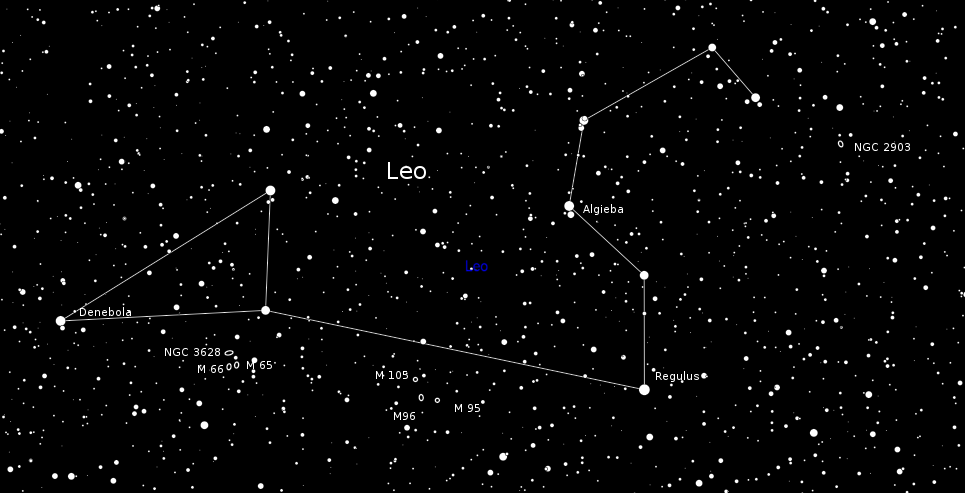
At 10 p.m. the spring constellation of Leo the lion will be high in the south-southeast. It can be found by locating the Big Dipper high in the northeast and imagining that a hole were drilled in the bowl to let the water leak out. It would drip on the back of this giant cat. The Lion is standing or lying facing westward. His head and mane are seen in the stars as a backwards question mark. This group of stars is also called the sickle. The bright star Regulus is at the bottom, the dot at the bottom of the question mark. A triangle of stars, to the left of Regulus, is the lion’s haunches. Leo contains some nice galaxies visible in moderate sized telescopes. The stars in Leo’s part of the sky are fewer than those in the winter sky.
The astronomical event times given are for the Traverse City/Interlochen area of Michigan (EDT, UT – 4 hours). Times will be different for other locations.
Addendum

 Bob Moler's Ephemeris Blog