Archive
Ephemeris: Finding Andromeda and the great galaxy within
This is Ephemeris for Tuesday, September 29th. Today the Sun will be up for 11 hours and 48 minutes, setting at 7:26, and it will rise tomorrow at 7:39. The Moon, 3 days past full, will rise at 8:35 this evening.
For at least the last thousand or so years a fuzzy spot in the constellation of Andromeda has been known. It was known as the Great Andromeda Nebula until a little over 100 years ago. Nebula means cloud, and it belonged to the Milky Way. At that time it was finally recognized as another Milky Way just like ours. So the word to call it was galaxy, a word that’s related to milk. It looks to be among the stars of Andromeda, but it’s far beyond the stars that we make the constellation of Andromeda. Current estimates place it at about two and a half million light years away, well beyond the stars that we see in Andromeda that range to only a few thousand light years distance. It could collide with our galaxy in about 4 billion years or so.
The astronomical event times given in this blog are for the Traverse City/Interlochen area of Michigan (Lat 44.7° N, Long 85.7° W; EDT, UT – 4 hours) unless stated otherwise. Times will be different for other locations.
Addendum

Ephemeris: 09/15/2026 – Two small but interesting constellations in and near the Summer Triangle
This is Ephemeris for Tuesday, September 15th. Today the Sun will be up for 12 hours and 31 minutes, setting at 7:53, and it will rise tomorrow at 7:22. The Moon, 3 days before first quarter, will set at 9:34 this evening.
There are two small constellations in and near the Summer Triangle of bright stars. Both are near Altair the bottom star of the triangle in the south. The first is Delphinus the dolphin to the left of Altair. Delphinus is made-up of a small squished box of stars with another star below. It does look a dolphin leaping out of the water. The legendary Greek poet Arion, according to myth, was rescued by a dolphin. Also the little squished box is an asterism called Job’s Coffin, though no one knows the origin of that name. The second constellation is above Altair, and within the Summer Triangle. It is called Sagitta the arrow. The stars do line up to look like a short arrow. It’s supposed to represent Cupid’s dart.
The astronomical event times given in this blog are for the Traverse City/Interlochen area of Michigan (Lat 44.7° N, Long 85.7° W; EDT, UT – 4 hours) unless stated otherwise. Times will be different for other locations.
Addendum

Ephemeris: 09/10/2026 – Finding Pegasus the winged horse of Greek myth
This is Ephemeris for Thursday, September 10th. Today the Sun will be up for 12 hours and 46 minutes, setting at 8:02, and it will rise tomorrow at 7:17. The Moon is new today, and won’t be visible.
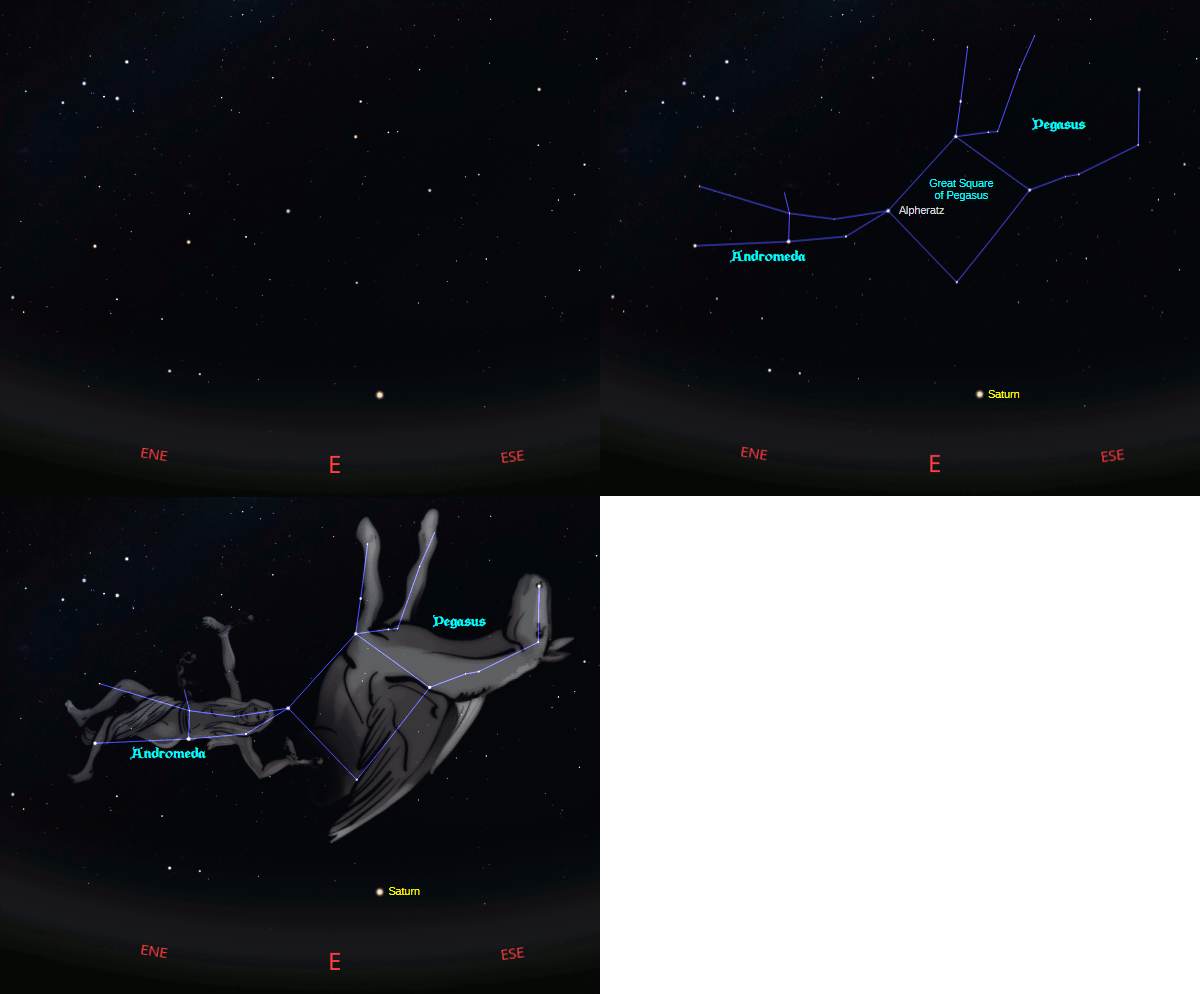
Saturn is low in the eastern sky at 10 PM. This is the brightest “star” in that direction. Above Saturn is the Great Square of Pegasus, a large, nearly perfect square of stars, standing on one corner. This is the front part of the body of Pegasus the flying horse. He’s climbing to the upper right, following the rotation of the sky. But it’s flying upside down, having its neck and head extend from the rightmost star of the square. From the top star are his forelegs extend. From the leftmost star extend two curved lines of stars which may look like hind legs, but belong to another constellation, Andromeda the Princess. Pegasus’ wings are not seen in the stars. Pegasus is part of a Greek myth, which has been made into two movies, both titled Clash of the Titans. But no actual Titans were used in the movies. All gods and godesses in the movie were their decendents.
The astronomical event times given in this blog are for the Traverse City/Interlochen area of Michigan (Lat 44.7° N, Long 85.7° W; EDT, UT – 4 hours) unless stated otherwise. Times will be different for other locations.
Addendum
Ephemeris: 08/13/2026 – The Milky Way seen in two cultures
This is Ephemeris for International Left-Handers Day, Thursday, August 13th. Today the Sun will be up for 14 hours and 8 minutes, setting at 8:51, and it will rise tomorrow at 6:44. The Moon, 1 day past new, will set at 9:22 this evening.
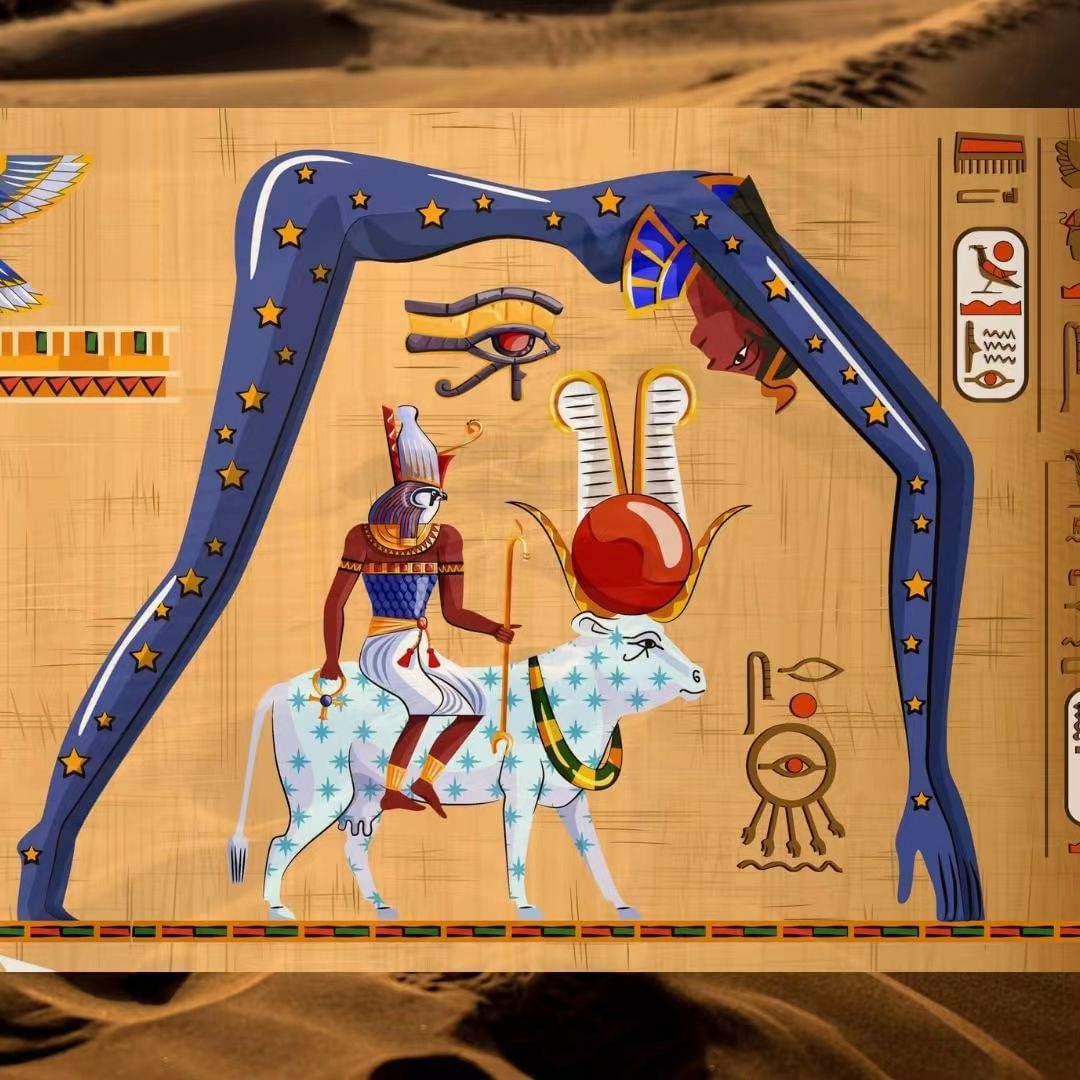
In the folk tales of many lands and cultures the Milky Way has been seen as either a stream or pathway. The term we get for it, the Milky Way, is that it is a stream of milk from the breasts of the Egyptian goddess Nut, the goddess of the sky.
The Anishinaabe native peoples of our area gave it several names: Jiibay-Miikana, The Spirit Road, or Jiibay-ziibi, River of souls, Both for the journey of souls to the afterlife. Or Binesiwi-miikana, Thunderbird’s path. This last is interesting, because in spring as the Milky Way rises from the southeast it beckons migrating birds northward, and in autumn as the Milky Way sinks to the southwest, it bids them to fly southward to warmer climes.
The astronomical event times given in this blog are for the Traverse City/Interlochen area of Michigan (Lat 44.7° N, Long 85.7° W; EDT, UT – 4 hours) unless stated otherwise. Times will be different for other locations.
Addendum
Ephemeris: 08/06/2026 – Looking for Sagittarius
This is Ephemeris for Thursday, August 6th. Today the Sun will be up for 14 hours and 26 minutes, setting at 9:01, and it will rise tomorrow at 6:35. The Moon, 1 day past last quarter, will rise at 12:32 tomorrow morning.
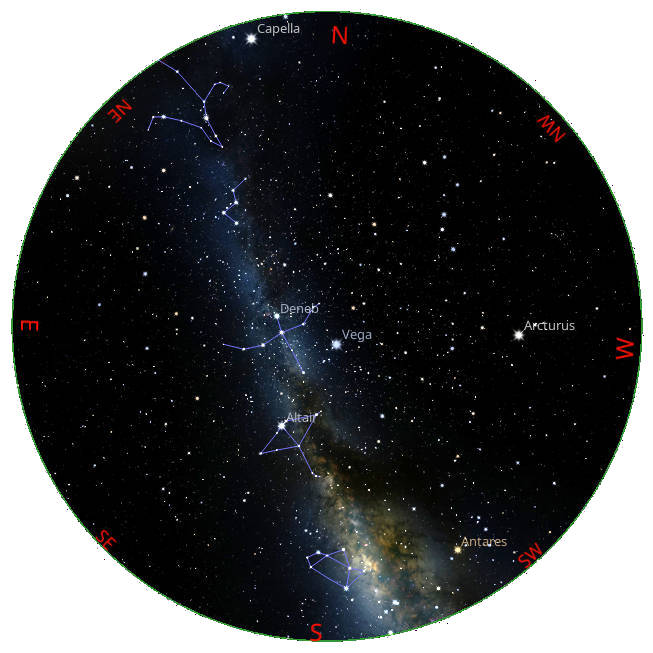
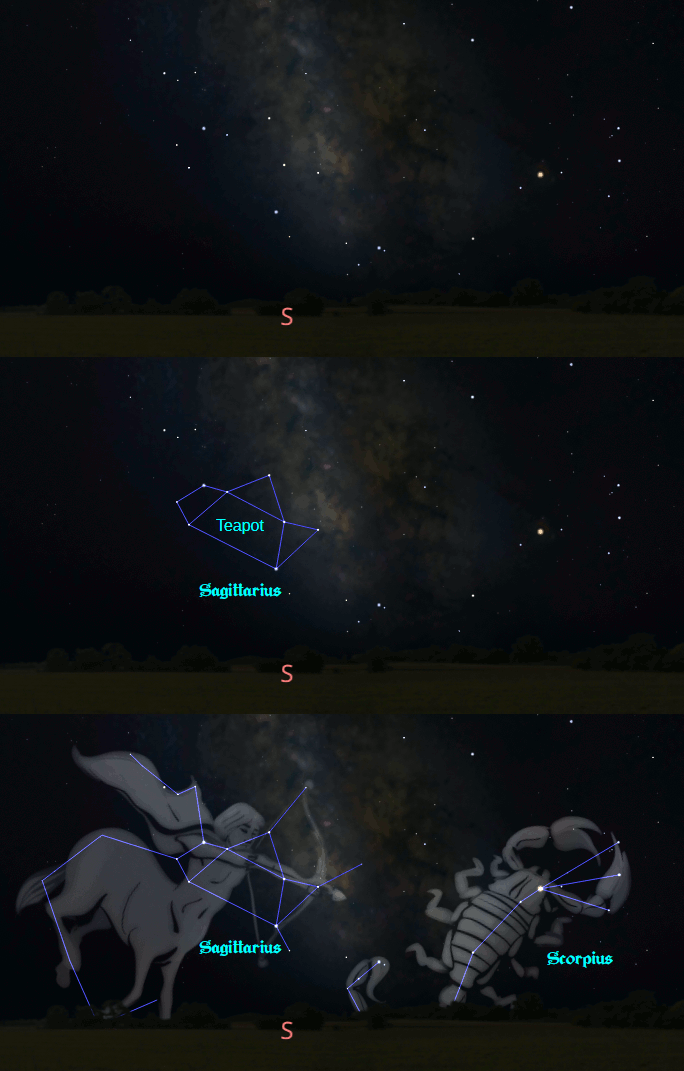
With the Moon out of the sky we get a look at the summer Milky Way in the evening. By 11 PM the Milky Way will stretch from the north-northeast, passing high in the east to the southern horizon. The asterism of the stout little Teapot in Sagittarius, low to the south, is near the bottom end of the Milky Way. The milky stream appears as steam rising out of its spout. With more stars there, one might be able to see the Centaur with a bow and arrow. The front part of the teapot is the bow. The bottom left, and the far right star are the back and the tip of the arrow which is pointing at the heart of Scorpius the scorpion in the south-southwest. We’ll be exploring the wonders of the summer Milky Way this month and next.
The astronomical event times given in this blog are for the Traverse City/Interlochen area of Michigan (Lat 44.7° N, Long 85.7° W; EDT, UT – 4 hours) unless stated otherwise. Times will be different for other locations.
Addendum
Ephemeris: 07/13/2026 – Finding the celestial eagle, Aquila
This is Ephemeris for Monday, July 13th. Today the Sun will be up for 15 hours and 17 minutes, setting at 9:26, and it will rise tomorrow at 6:10. The Moon, 1 day before new, will rise at 6:04 tomorrow morning.
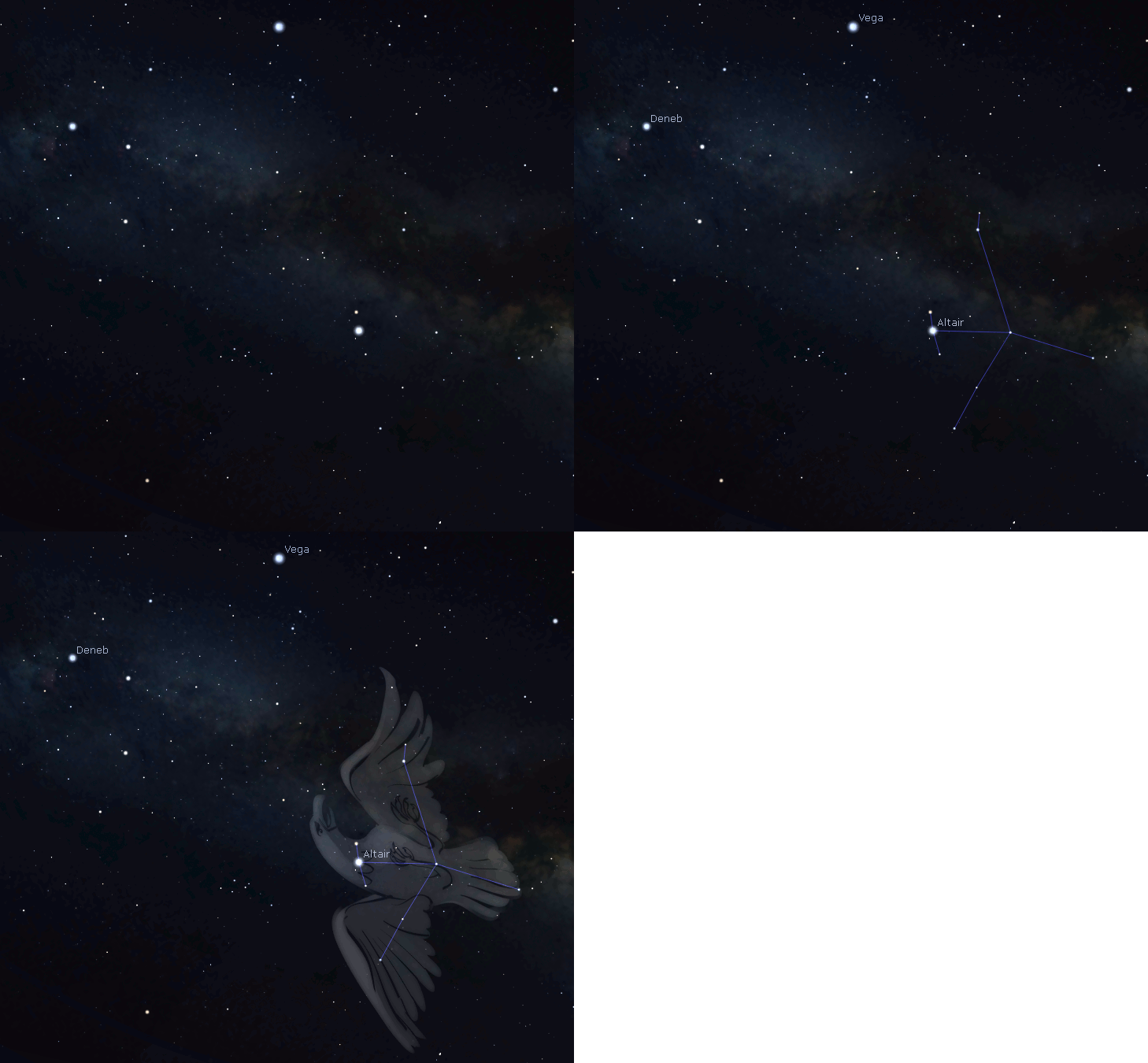
Aquila the eagle is a constellation that lies in the Milky Way. It’s in the southeastern sky as it gets dark. Its brightest star, Altair, is one of the stars of the Summer Triangle, a group of three bright stars dominating the eastern sky in the evening now. Altair, in the head of the eagle, is flanked by two slightly dimmer stars. The eagle is flying northeastward through the Milky Way. Its wings are seen in the wing tip stars. A curved group of stars to the lower right of Altair is its tail. Within Aquila, the Milky Way shows many dark clouds as part of the Great Rift that splits it here. The other summer bird is Cygnus the swan above and left of Aquila, flying in the opposite direction. It was said this was the eagle that attended the god Jupiter.
The astronomical event times given in this blog are for the Traverse City/Interlochen area of Michigan (Lat 44.7° N, Long 85.7° W; EDT, UT – 4 hours) unless stated otherwise. Times will be different for other locations.
Addendum
Ephemeris: 07/07/2026: Finding the Celestial Swan
This is Ephemeris for Tuesday, July 7th. Today the Sun will be up for 15 hours and 25 minutes, setting at 9:30, and it will rise tomorrow at 6:05. The Moon, at last quarter today, will rise at 1:02 tomorrow morning.
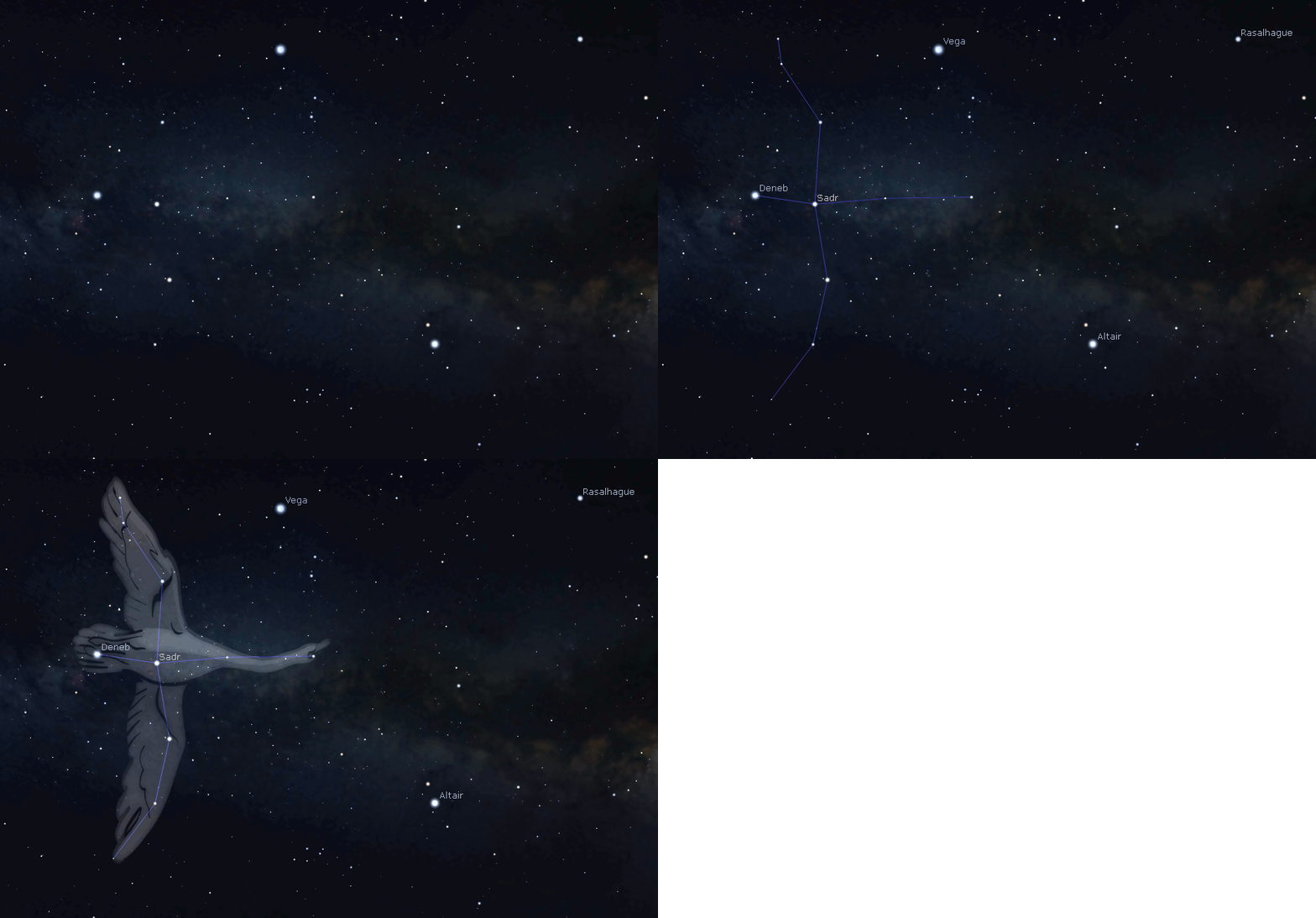
Located halfway to the zenith in the east at 11 p.m. is the constellation of Cygnus the swan, flying south through the Milky Way. It is also called the Northern Cross. At the left, the tail of the swan or the head of the cross is the bright star Deneb, one of the stars of the Summer Triangle. The next star right is at the intersection of the body and the wings of the swan seen in flight, or the intersection of the two pieces of the cross. There are two or three stars farther to the right that delineate the swan’s long neck or upright of the cross, that ends with the star Alberio in the beak of the swan or foot of the cross. The crosspiece of the cross extends to the stars on either side of the intersection star Sadr, while the swan’s wings extend to a couple more stars each.
The astronomical event times given in this blog are for the Traverse City/Interlochen area of Michigan (Lat 44.7° N, Long 85.7° W; EDT, UT – 4 hours) unless stated otherwise. Times will be different for other locations.
Addendum
Ephemeris: 07/03/2026 – The celestial scorpion is crawling out on the southern horizon tonight
This is Ephemeris for Friday, July 3rd. Today the Sun will be up for 15 hours and 29 minutes, setting at 9:31, and it will rise tomorrow at 6:02. The Moon, halfway from full to last quarter, will rise at 11:47 this evening.
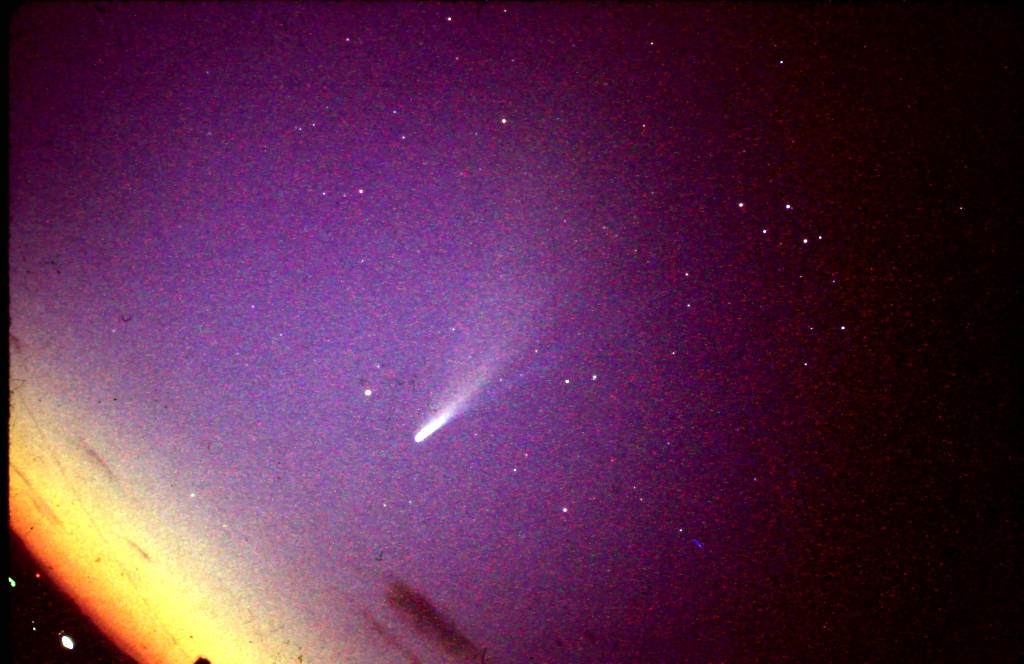
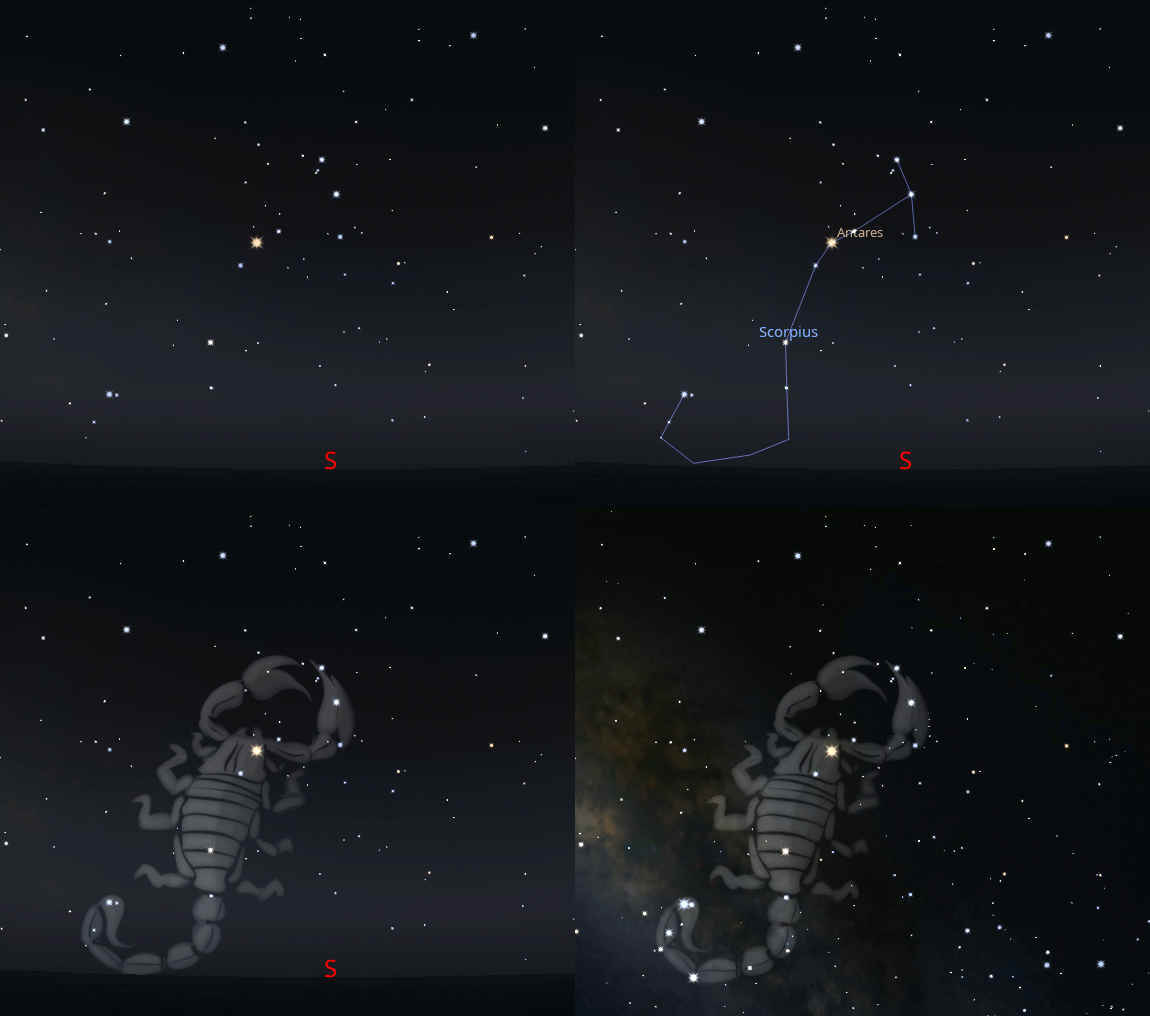
There’s a large constellation located low in the south at about 11 tonight. It’s Scorpius the scorpion. Its brightest star is Antares in its heart, a red giant star, that I’ve gotten calls about it as being a UFO. From Antares to the right is a star, then a vertical arc of three stars that is its head. The Scorpion’s tail is a line of stars running down to the left of Antares, swooping to the horizon before coming back up and ending in a pair of stars that portray his poisonous stinger. There is a beautiful star cluster, NGC 6231, seen in binoculars at that first bend in the tail that is unfortunately too low to appreciate from this far north. I was very impressed with it when spotting it from the Florida Keys when I was down there in 1986 to observe Halley’s Comet.
The astronomical event times given in this blog are for the Traverse City/Interlochen area of Michigan (Lat 44.7° N, Long 85.7° W; EDT, UT – 4 hours) unless stated otherwise. Times will be different for other locations.
Addendum
Ephemeris: 07/02/2026 – Finding Ophiuchus, the celestial snake handler
This is Ephemeris for Thursday, July 2nd. Today the Sun will be up for 15 hours and 30 minutes, setting at 9:31, and it will rise tomorrow at 6:02. The Moon, 3 days past full, will rise at 11:26 this evening.
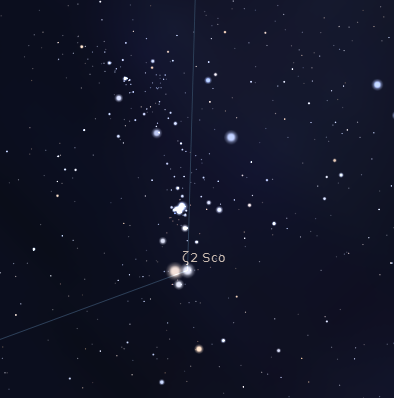
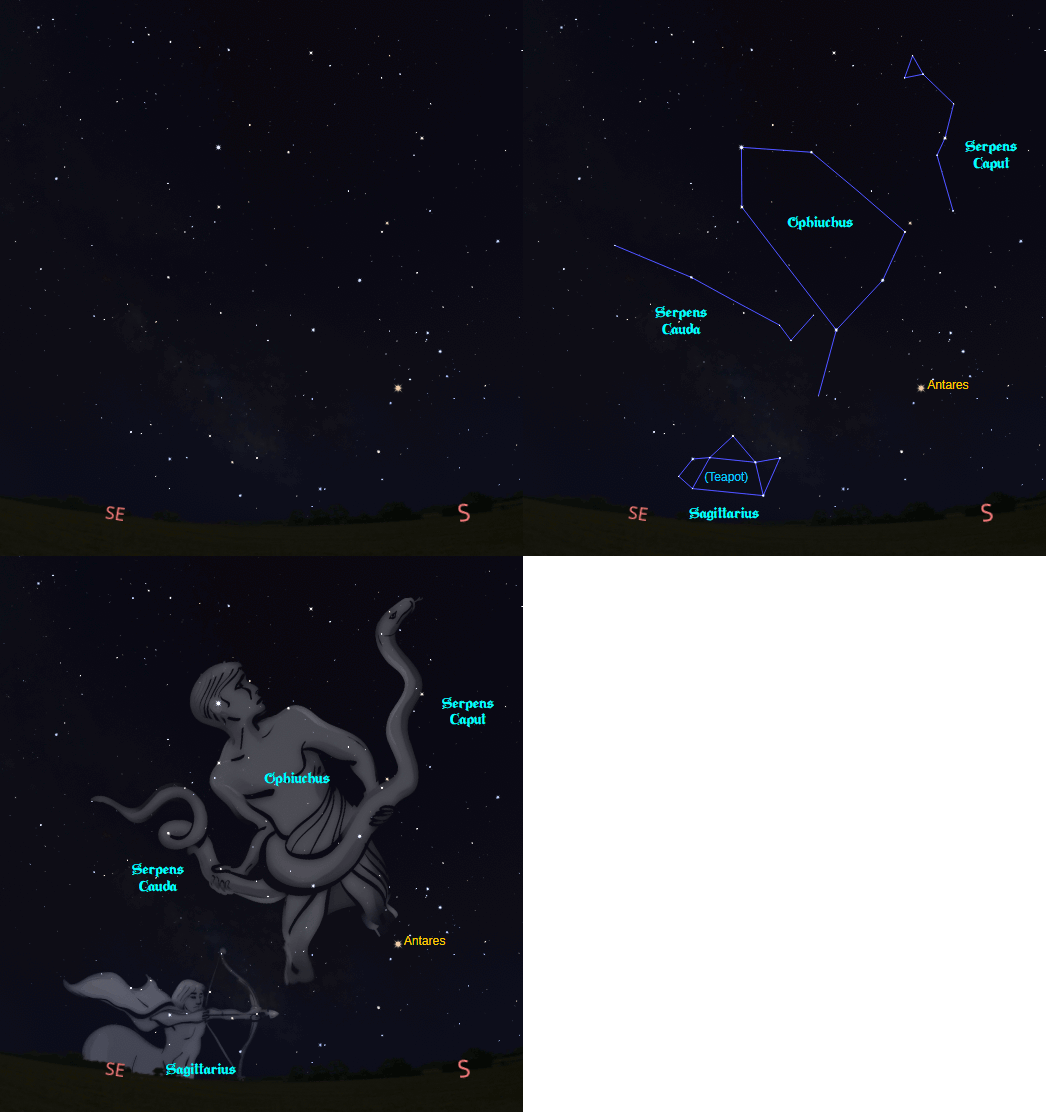
The red star Antares shines in the south at 11 p.m. In the constellation of Scorpius. In the area of sky above and a little to the left lies a large constellation of faint stars called Ophiuchus, the serpent bearer. The constellation shape is like a large bell, which reminds me of the head, shoulders and arms of a fellow that’s holding the large snake across his body, hip high. The serpent he’s holding is Serpens, the only two-part constellation in the heavens. The head rises to Ophiuchus’ right, toward Hercules, and the tail extends up to the left, toward Aquila the eagle. In Greek myth, Ophiuchus represents the great physician Aesculapius, educated by the god Apollo, and the centaur Chiron, who is found in the stars as Sagittarius, now rising below and left of him.
The astronomical event times given in this blog are for the Traverse City/Interlochen area of Michigan (Lat 44.7° N, Long 85.7° W; EDT, UT – 4 hours) unless stated otherwise. Times will be different for other locations.
Addendum
Ephemeris: 06/12/2026 – Finding the elusive Little Dipper
This is Ephemeris for Friday, June 12th. Today the Sun will be up for 15 hours and 32 minutes, setting at 9:28, and it will rise tomorrow at 5:56. The Moon, 2 days before new, will rise at 4:04 tomorrow morning.
One of the constellations I don’t talk about much, except in passing is Ursa Minor, the Little Bear with an impossibly long tail. It is better known as the Little Dipper. As a dipper goes, its handle is bent the wrong way, like someone stepped on it. Anyway, this time of year in the evening, it’s standing on the tip of it’s handle, which is the North Star, Polaris. Polaris is pointed to by the front two stars of the Big Dipper. As dippers go they pour their contents into each other. The second and third-brightest stars of the Little Dipper are at the front of the bowl, and are Kochab and Pherkad, the Guard Stars, that is, Guardians of the Pole. To the Anishinaabe native peoples of our area the Little Dipper is Maang, the Loon.
The astronomical event times given in this blog are for the Traverse City/Interlochen area of Michigan (Lat 44.7° N, Long 85.7° W; EDT, UT – 4 hours) unless stated otherwise. Times will be different for other locations.
Addendum