Archive
Ephemeris: 03/04/2025 – Looks like asteroid 2024 YR4 will miss the Earth
This is Ephemeris for Fat Tuesday, March 4th. Today the Sun will be up for 11 hours and 20 minutes, setting at 6:35, and it will rise tomorrow at 7:12. The Moon, 2 days before first quarter, will set at 1:02 tomorrow morning.
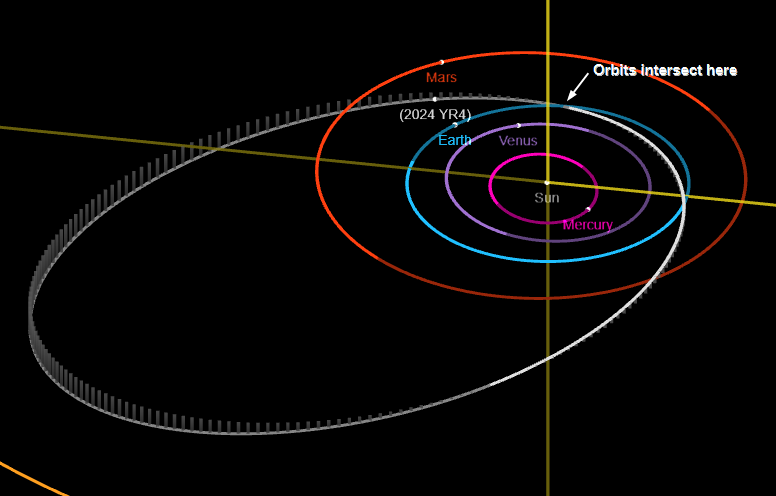
I’ve got some good news for a change. The recently discovered small asteroid with the provisional designation 2024 YR4 it’s not going to hit the Earth on December 22nd, 2032. More precisely the percentage chance of hitting the Earth is now down to four thousandths of a percent. The recalculation was due to observations from the Subaru Telescope in Hawaii. Three separate organizations calculated the chances of the asteroid to hit. That means this number is of very high confidence. The new center of the locus that they calculated for the asteroid’s passage by the Earth now comes closer to the orbit of the Moon than it does the Earth. So that’s one less thing to worry about, although astronomers will be keeping tabs on it.
The astronomical event times given are for the Traverse City/Interlochen area of Michigan (EST, UT – 5 hours). Times will be different for other locations.
Addendum
Ephemeris: 03/03/2025 – The Moon tonight
This is Bob Moler with Ephemeris for Monday, March 3rd. Today the Sun will be up for 11 hours and 17 minutes, setting at 6:33, and it will rise tomorrow at 7:14. The Moon, 3 days before first quarter, will set at 11:40 this evening.
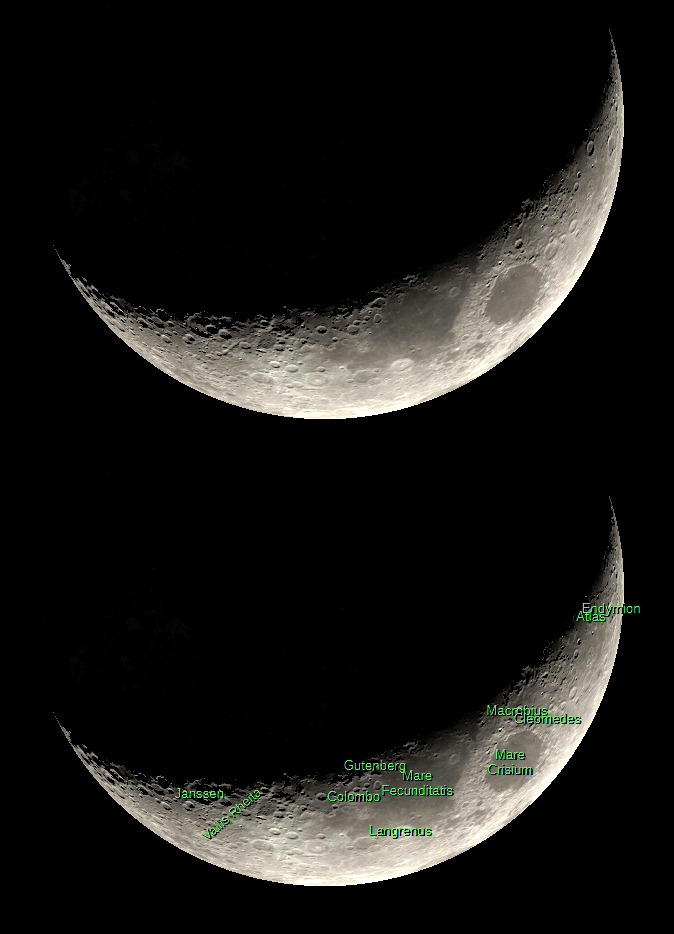
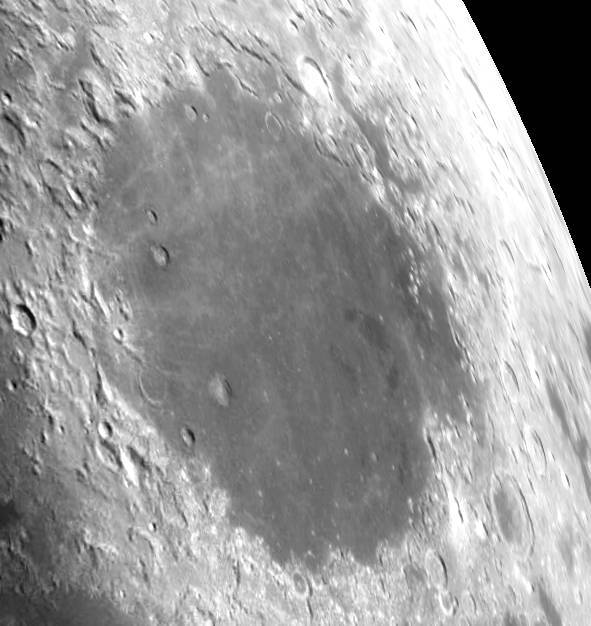
Tonight the moon will be four days old. The age of the moon is the number of days since the new moon which ranges from 1 to 28 or 29 for the lunar month. I usually don’t use that, being more concerned with the phase of the Moon so at the top of the program I give the moon’s relation to its new, quarter, or full phase. Being in its waxing crescent phase right now, the only features to the naked eye on the Moon besides the crescent itself are the dark Sea of Crises, Mare Crisium, target of Firefly Aerospace’s Blue Ghost Lander, and the larger Sea of Fruitfulness, Mare Fecunditatis. The Moon rotates about 1/28th the speed of the Earth, and it’s also smaller, about a quarter of the Earth’s diameter. So one would have to use a supersonic jet to fly around the Earth to keep up with the rotation, but on the Moon one could do that with the Apollo moon rover.
The astronomical event times given are for the Traverse City/Interlochen area of Michigan (EST, UT – 5 hours). Times will be different for other locations.
Addendum
 Bob Moler's Ephemeris Blog