Ephemeris: 07/28/2025 – Deneb, a truly brilliant star
This is Ephemeris for Monday, July 28th. Today the Sun will be up for 14 hours and 48 minutes, setting at 9:12, and it will rise tomorrow at 6:26. The Moon, halfway from new to first quarter, will set at 11:06 this evening.
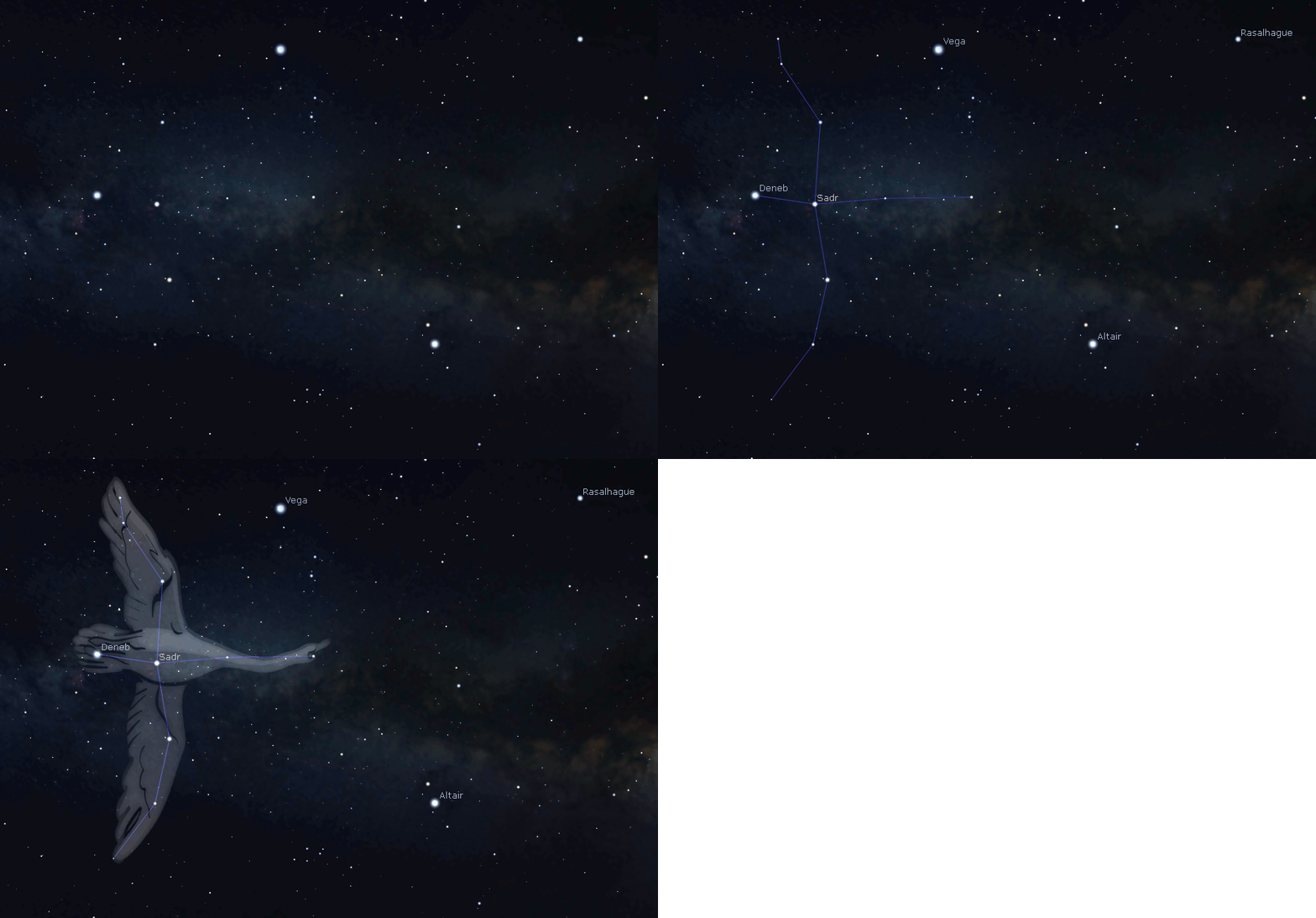
This evening when it gets dark enough the bright star Deneb in Cygnus the swan will be high in the east-northeast. Deneb is the dimmest star of the summer triangle. Of the other stars of the triangle, Vega is higher in the east, while Altair is lower in the southeast. Deneb’s apparent magnitude, or brightness as seen from Earth, is deceptive. Its vast distance of possibly 2,600 light years is over 100 times the distance of Vega. If brought as close as Vega, Deneb would be almost as bright as the quarter moon. It is possibly as bright as 200 thousand Suns; and a huge star, possibly as large as half the diameter of Earth’s orbit. For all this, it is only 19 to 25 times the mass of the Sun.
The astronomical event times given in this blog are for the Traverse City/Interlochen area of Michigan (Lat 44.7° N, Long 85.7° W; EDT, UT – 4 hours) unless stated otherwise. Times will be different for other locations.
Addendum
 Bob Moler's Ephemeris Blog