Ephemeris: 05/22/2026 – Uranus has rings, like Saturn
This is Bob Moler with Ephemeris for Friday, May 22nd. Today the Sun will be up for 15 hours and 4 minutes, setting at 9:12, and it will rise tomorrow at 6:06. The Moon, 1 day before first quarter, will set at 2:35 tomorrow morning.
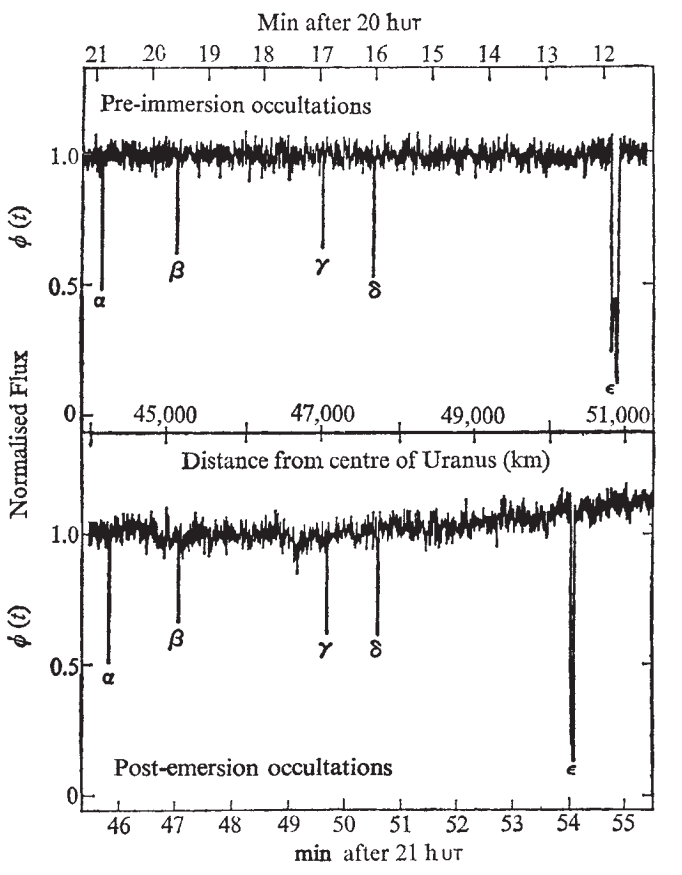
Today, the planet Uranus is in conjunction with the Sun. I don’t talk about Uranus that much, because it can’t be spotted in the sky with the naked eye. However, the James Webb Space Telescope observed it, and gave our clearest view of the planet since Voyager 2 flew past it in January 1986. Uranus has a system of rings, which were discovered in March 1977. Though not visible, they blocked the light of a star. Astronomers at the time were trying to get a more accurate diameter of the planet by timing the disappearance of a star behind the planet. Extra short dips in brightness before and after the main occultation revealed the existence of the rings. Uranus also has an extreme axial tilt of 98 degrees.
The astronomical event times given in this blog are for the Traverse City/Interlochen area of Michigan (Lat 44.7° N, Long 85.7° W; EDT, UT – 4 hours) unless stated otherwise. Times will be different for other locations.
Addendum


 Bob Moler's Ephemeris Blog