Archive
Ephemeris: 04/30/2026 – GTAS meeting tomorrow, The Space Race.
This is Ephemeris for Thursday, April 30th. Today the Sun will be up for 14 hours and 12 minutes, setting at 8:46, and it will rise tomorrow at 6:32. The Moon, 1 day before full, will set at 6:03 tomorrow morning.
The Grand Traverse Astronomical Society will host its May meeting tomorrow, May 1st at 9 PM at Northwestern Michigan College’s Joseph H Rogers Observatory. The later meeting time through July allows us to have viewing after the meeting start in darker skies. The program is a video called the Space Race. I’m not sure if it was the one 6 decades ago in the 1960s or the current one, which is in doubt. It will be informative either way. Afterward, about 10 PM if it’s clear, there will be viewing of the heavens through the observatory’s telescopes, featuring Jupiter, its cloud bands and moons. The observatory is located on Birmley Rd. South of Traverse City. Also, available on ZOOM, see gtastro.org.
The astronomical event times given in this blog are for the Traverse City/Interlochen area of Michigan (Lat 44.7° N, Long 85.7° W; EDT, UT – 4 hours) unless stated otherwise. Times will be different for other locations.
Addendum

Ephemeris: 04/29/2026 – Taking our weekly look at the whereabouts of the naked-eye planets
This is Ephemeris for Wednesday, April 29th. Today the Sun will be up for 14 hours and 9 minutes, setting at 8:45, and it will rise tomorrow at 6:34. The Moon, 2 days before full, will set at 5:42 tomorrow morning.
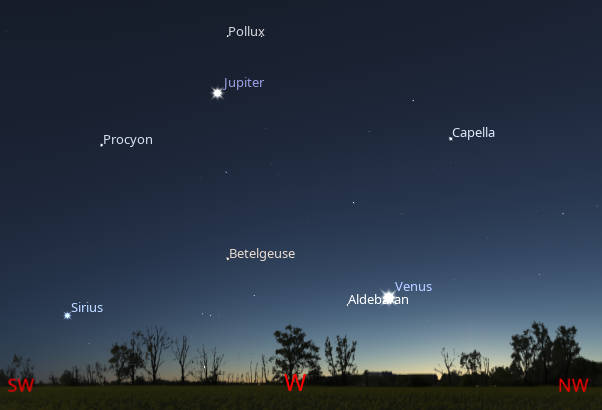
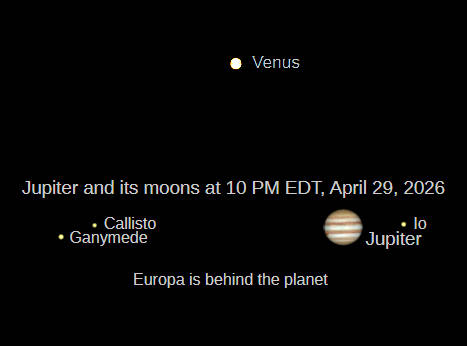
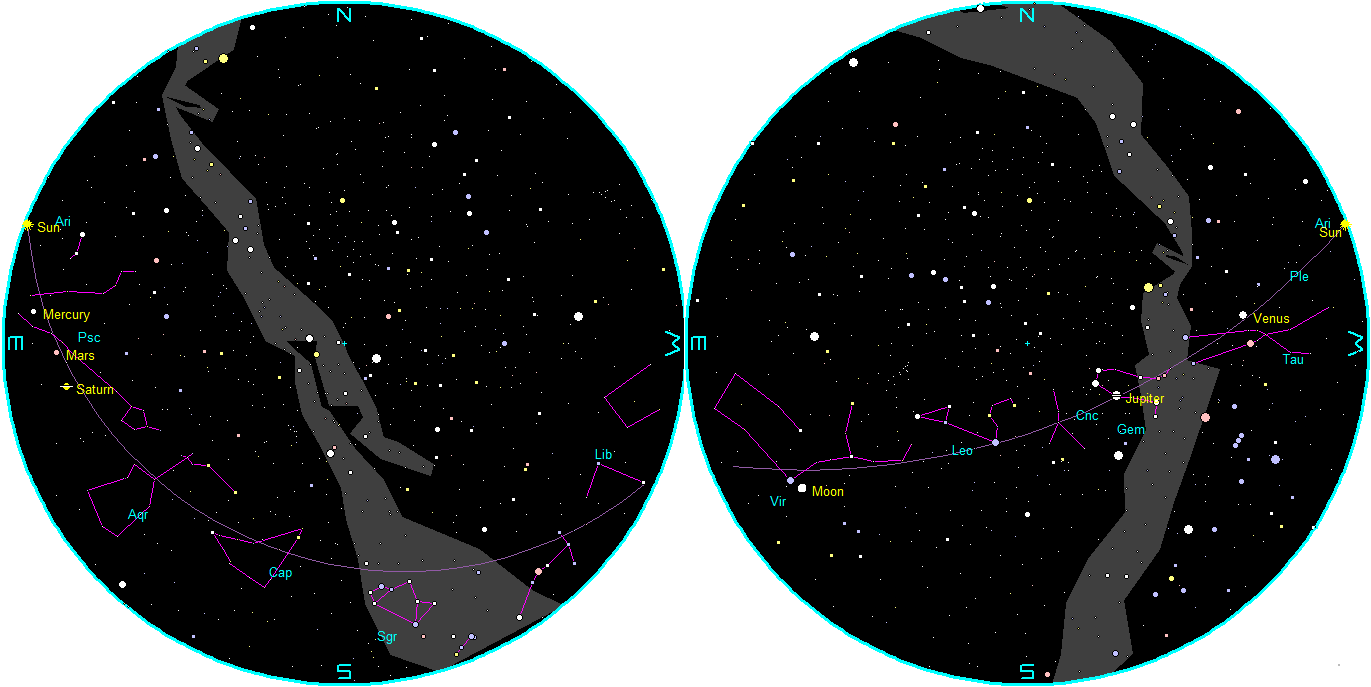
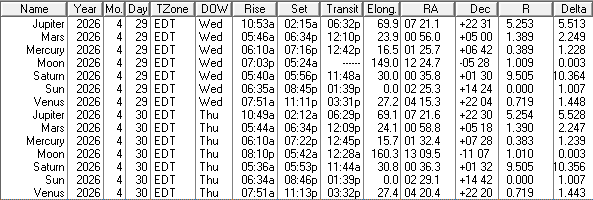
Let’s take our weekly look at the whereabouts of the naked-eye planets. By 9:30 PM tonight or about 45 minutes or so after sunset, Venus may be seen very low in the West. A telescope will show a very tiny disc on Venus, because it is still pretty much beyond the Sun, 136 million miles (217 million kilometers) away from us. Over the next 6 months it will be moving closer to us and becoming much larger. Jupiter is the brilliant star-like object in the western before 10 PM. It is above and left of the brighter Venus. Venus will set at 11:11 PM, while Jupiter will hold out until 2:12 AM. Meanwhile, Mercury, Mars and Saturn are breaking up just west of the Sun, but are still overwhelmed by bright morning twilight.
The astronomical event times given in this blog are for the Traverse City/Interlochen area of Michigan (Lat 44.7° N, Long 85.7° W; EDT, UT – 4 hours) unless stated otherwise. Times will be different for other locations.
Addendum
Ephemeris: 04/28/2026 – Stars spend most of their lives fueled by hydrogen
This is Ephemeris for Tuesday, April 28th. Today the Sun will be up for 14 hours and 7 minutes, setting at 8:44, and it will rise tomorrow at 6:35. The Moon, 3 days before full, will set at 5:24 tomorrow morning.
A star is a gaseous ball made mostly of hydrogen, which due to its mass crushes down in its core to create heat in the millions of degrees. Under those temperatures and pressures hydrogen nuclei, stripped of their electrons can collide to convert into helium and in doing so lose a tiny bit of mass that turns into energy which is used to sustain the star’s light and keep it stable. This hydrogen burning, so to speak, takes place during the longest period of a star’s life. And stars have a characteristic color based on their mass. Stars with little mass are cooler and appear a dim red. We call them red dwarfs. The nearest star to our solar system is a red dwarf called Proxima Centauri. It’s so dim that it’d be difficult to find with a pair of binoculars. And it’s only four light years away.
The astronomical event times given in this blog are for the Traverse City/Interlochen area of Michigan (Lat 44.7° N, Long 85.7° W; EDT, UT – 4 hours) unless stated otherwise. Times will be different for other locations.
Addendum
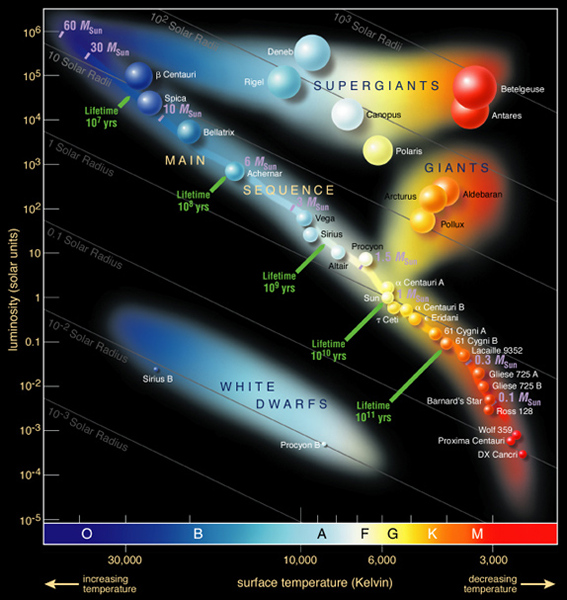
The HR diagram above shows the various types and brightness of stars. The relatively thin line of stars from upper left to lower right, called the main sequence, are stars that are running primarily on hydrogen as a fuel. At the bottom end of the main sequence small stars with a fraction of the sun’s mass. All these stars are near the sun. It doesn’t mean that we live in a bad neighborhood, but that the most numerous stars are red dwarfs, and we just can’t see them when they’re farther away. All the other stars are not using as hydrogen as their main fuel source. Stars the upper right are using heavier elements to produce energy from the fusion products of lighter elements, after having run out of hydrogen in their cores. The white dwarf stars in the lower part of the diagram no longer have active thermonuclear reactions in their cores and are cooling down and collapsing. A star with the mass of the sun, when it becomes a white dwarf, will shrink down to about the size of the earth.
Ephemeris: 04/27/2026 – Mare Orientale made a splash!
This is Ephemeris for Monday, April 27th. Today the Sun will be up for 14 hours and 4 minutes, setting at 8:42, and it will rise tomorrow at 6:37. The Moon, halfway from first quarter to full, will set at 5:06 tomorrow morning.
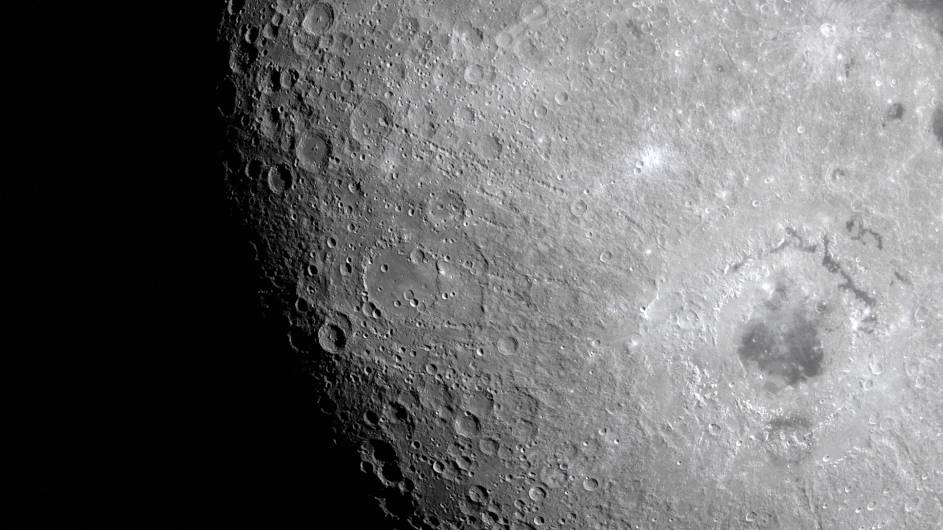
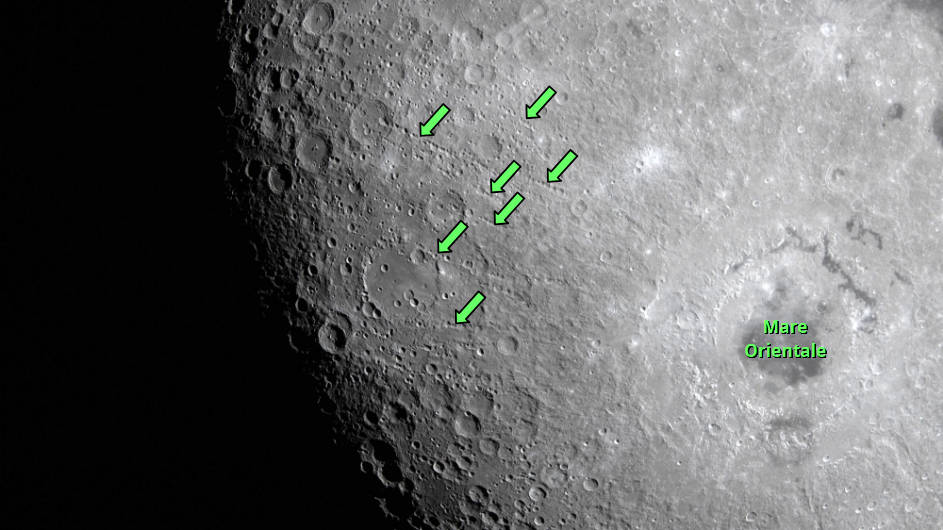
One of the pictures that the astronauts of Artemis 2 took of the far side of the moon was one that revealed chains of craters which appear to be emanating from the Sea on the edge of what we can see on the moon from the Earth, called Mare Orientale or the Eastern Sea. It was created by the impact of an asteroid onto the Moon’s surface, maybe 4 billion years ago, kicking out debris in all directions. Apparently the ejecta thrown out created chains of craters that appear to trace back to Orientale. They are most easily seen to the north and west of Orientale towards the terminator, the sunrise line, where the shadows are deeper. There’s probably chains of craters going in other directions, but they have no shadows.
The astronomical event times given in this blog are for the Traverse City/Interlochen area of Michigan (Lat 44.7° N, Long 85.7° W; EDT, UT – 4 hours) unless stated otherwise. Times will be different for other locations.
Addendum
Ephemeris: 04/24/2026 – Where did the lunar “seas” come from?
This is Bob Moler with Ephemeris for Arbor Day, Friday, April 24th. Today the Sun will be up for 13 hours and 55 minutes, setting at 8:39, and it will rise tomorrow at 6:41. The Moon, 1 day past first quarter, will set at 4:08 tomorrow morning.
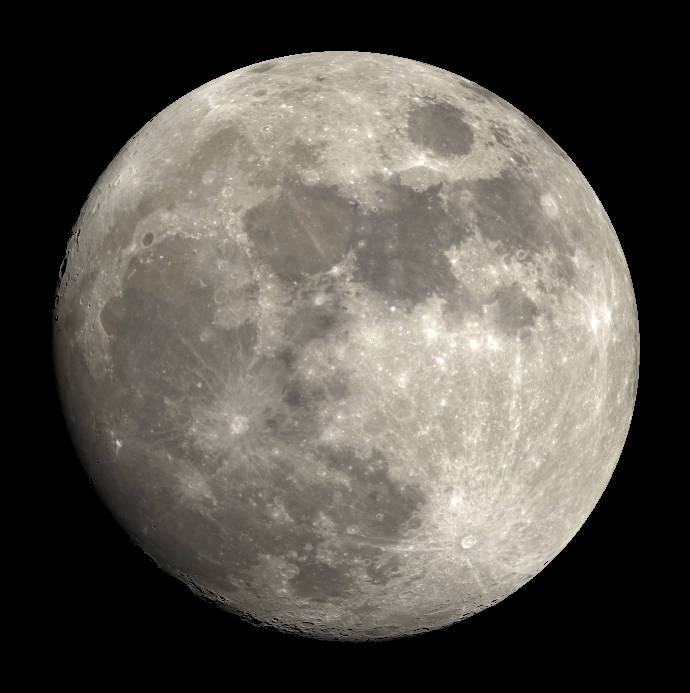
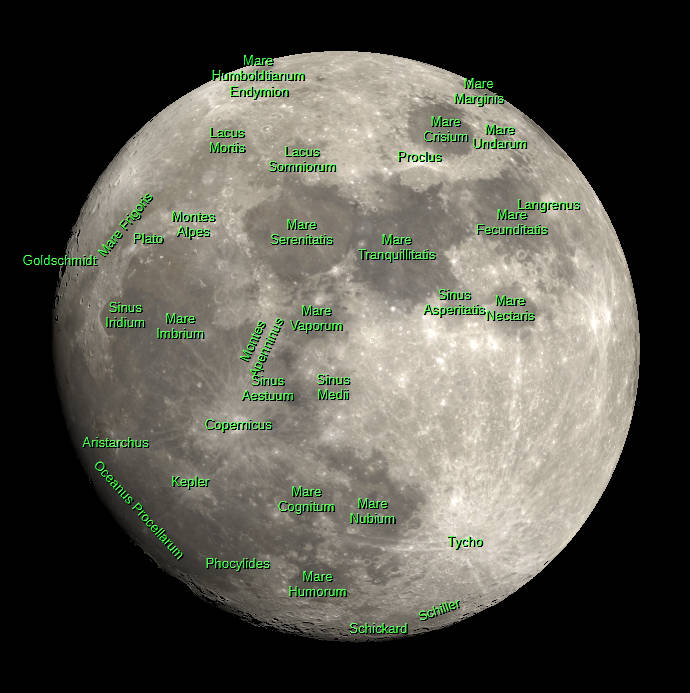
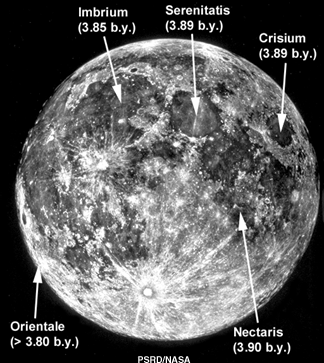
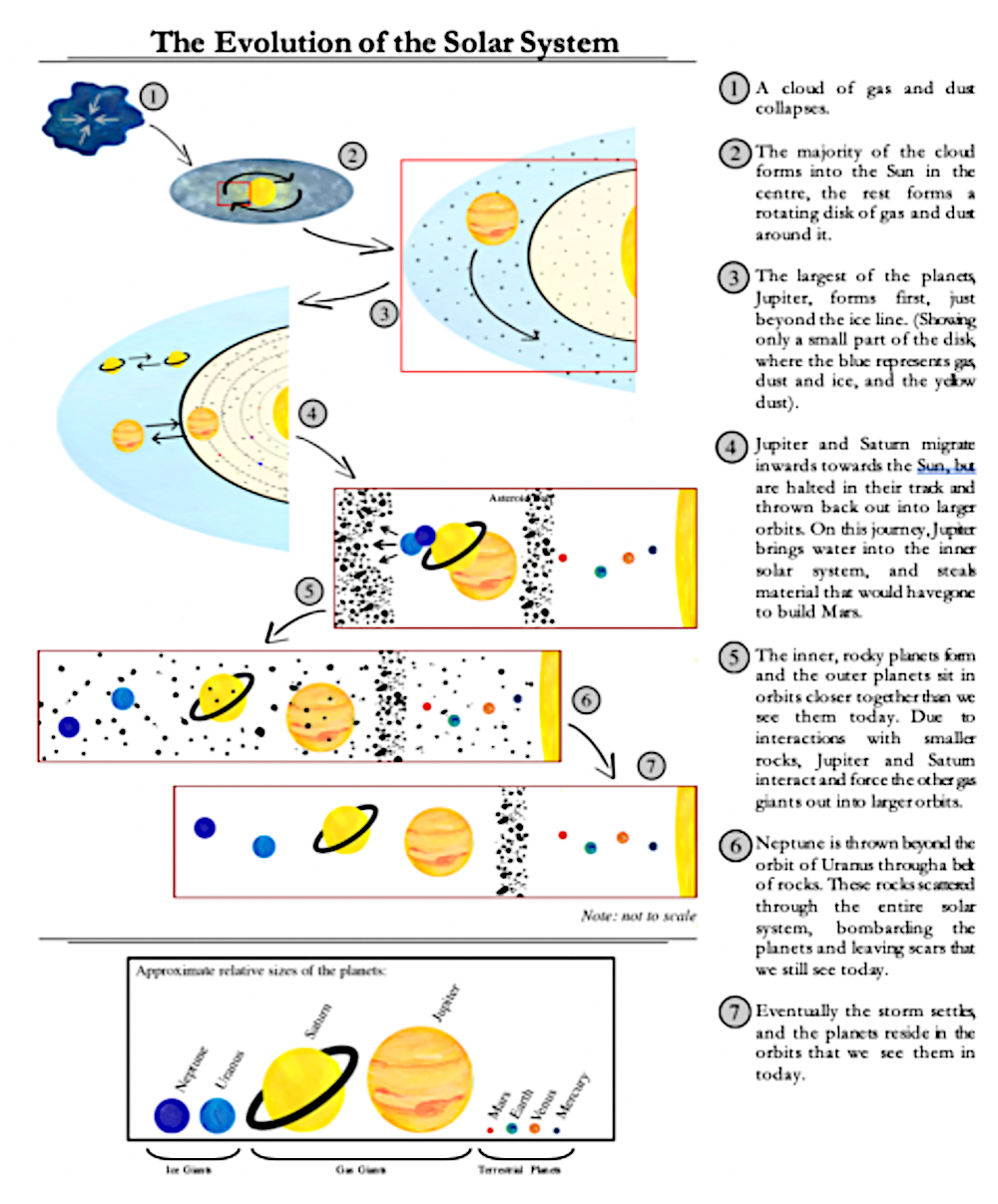
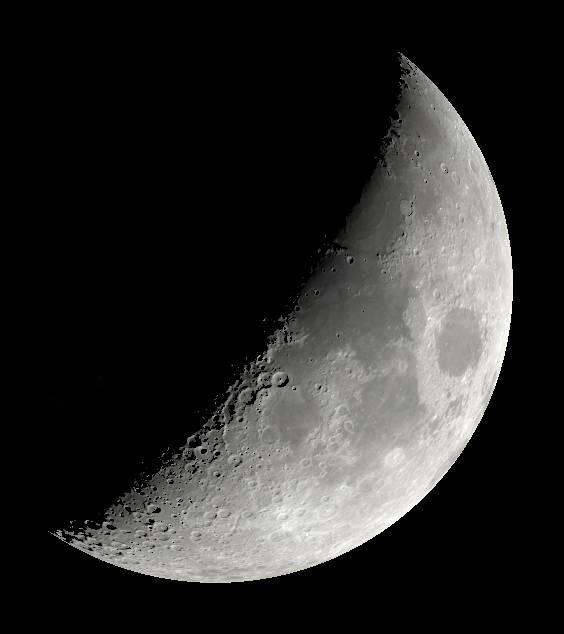
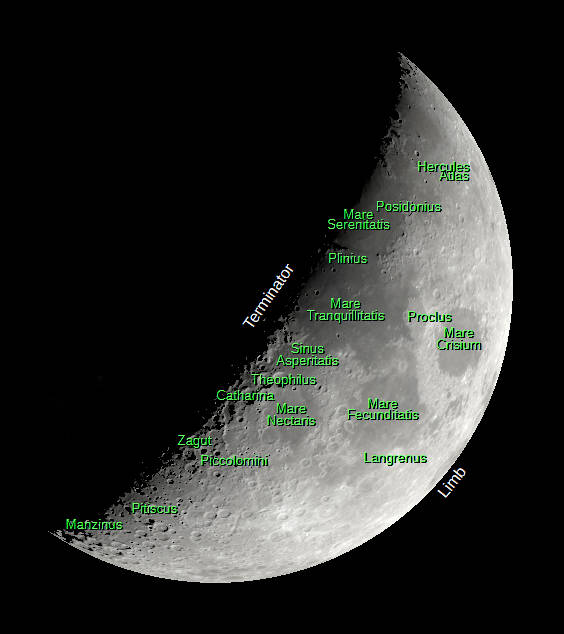
The face of the Moon is a bit more than half uncovered from our point of view, with first quarter occurring yesterday. It shows the string of lunar seas, those gray areas on the Moon which lead to the terminator, the Moon’s sunrise line. There is a larger sea called the Ocean of Storms on the eastern side of the Moon, as we see it. Most were created about 3.8 to 3.9 billion years ago by asteroid strikes. The same collisions happened to the Earth, but plate tectonics destroyed the evidence. Not so on the Moon. Many planetary scientists think it was the result of the Late Heavy Bombardment, caused by the changing orbits of mainly Saturn, Uranus and Neptune disrupting the asteroids, and sending them careening through the solar system.
The astronomical event times given in this blog are for the Traverse City/Interlochen area of Michigan (Lat 44.7° N, Long 85.7° W; EDT, UT – 4 hours) unless stated otherwise. Times will be different for other locations.
Addendum
Ephemeris: 04/23/2026 – Where did the Moon come from?
This is Ephemeris for Thursday, April 23rd. Today the Sun will be up for 13 hours and 52 minutes, setting at 8:37, and it will rise tomorrow at 6:43. The Moon, at first quarter today, will set at 3:42 tomorrow morning.
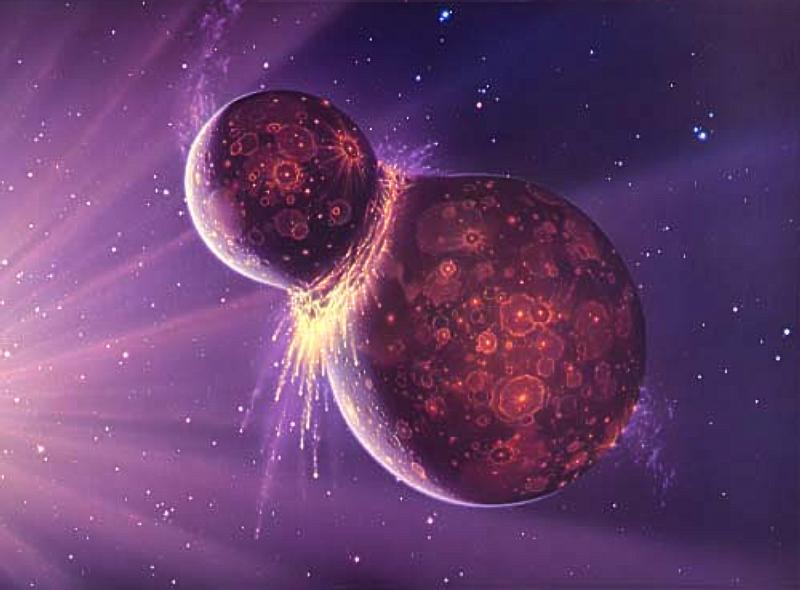
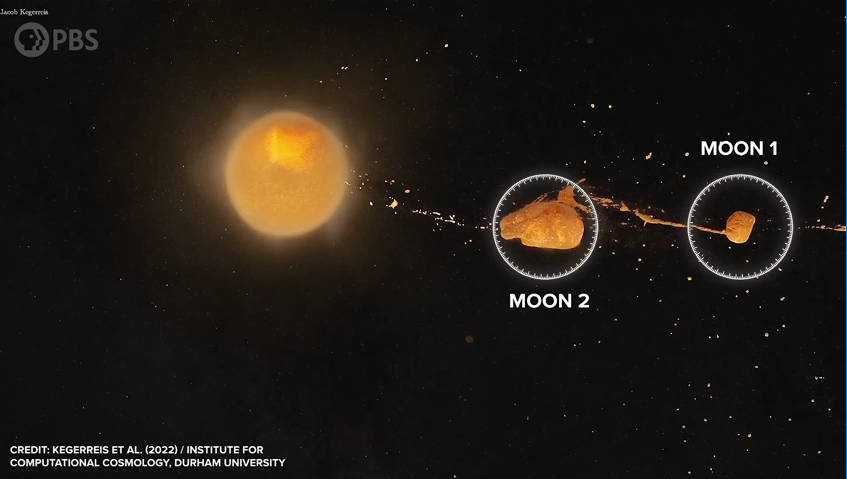
When one gazes upon the moon tonight the thought of where the moon came from might come to mind. Did it form with the Earth? Was it captured by the Earth? The latest thinking on the origin of the moon centers around a grazing collision with the Earth of a Mars sized body that has been given the name Theia, the mother of Selene, the goddess of the Moon, shortly after the Earth was formed. This is based on Apollo mission discoveries that the composition of the rocks on the moon are approximately the same as those of Earth’s crust. It’s been known for a while that there are two dense masses within the Earth about halfway to the center. One geologist has put forth that these masses could have been the core of Theia that sank into the Earth.
The astronomical event times given in this blog are for the Traverse City/Interlochen area of Michigan (Lat 44.7° N, Long 85.7° W; EDT, UT – 4 hours) unless stated otherwise. Times will be different for other locations.
Addendum
Ephemeris: 04/22/2026 – Taking our weekly look at the whereabouts of the naked-eye planets
This is Ephemeris for Earth Day, Wednesday, April 22nd. Today the Sun will be up for 13 hours and 50 minutes, setting at 8:36, and it will rise tomorrow at 6:45. The Moon, 1 day before first quarter, will set at 3:07 tomorrow morning.
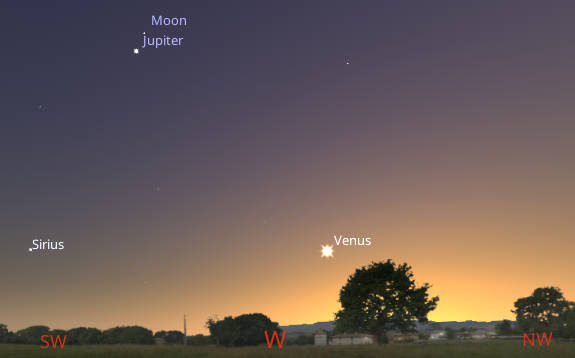
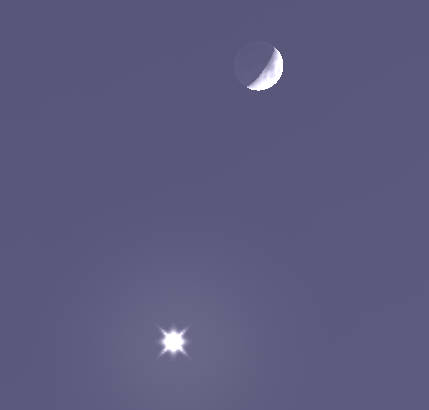
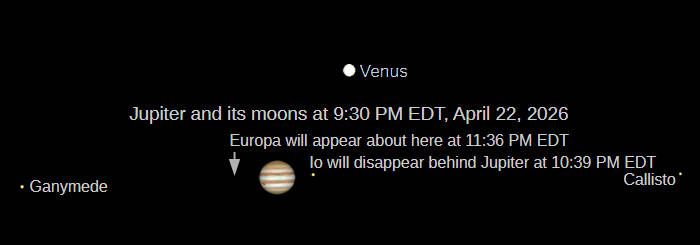
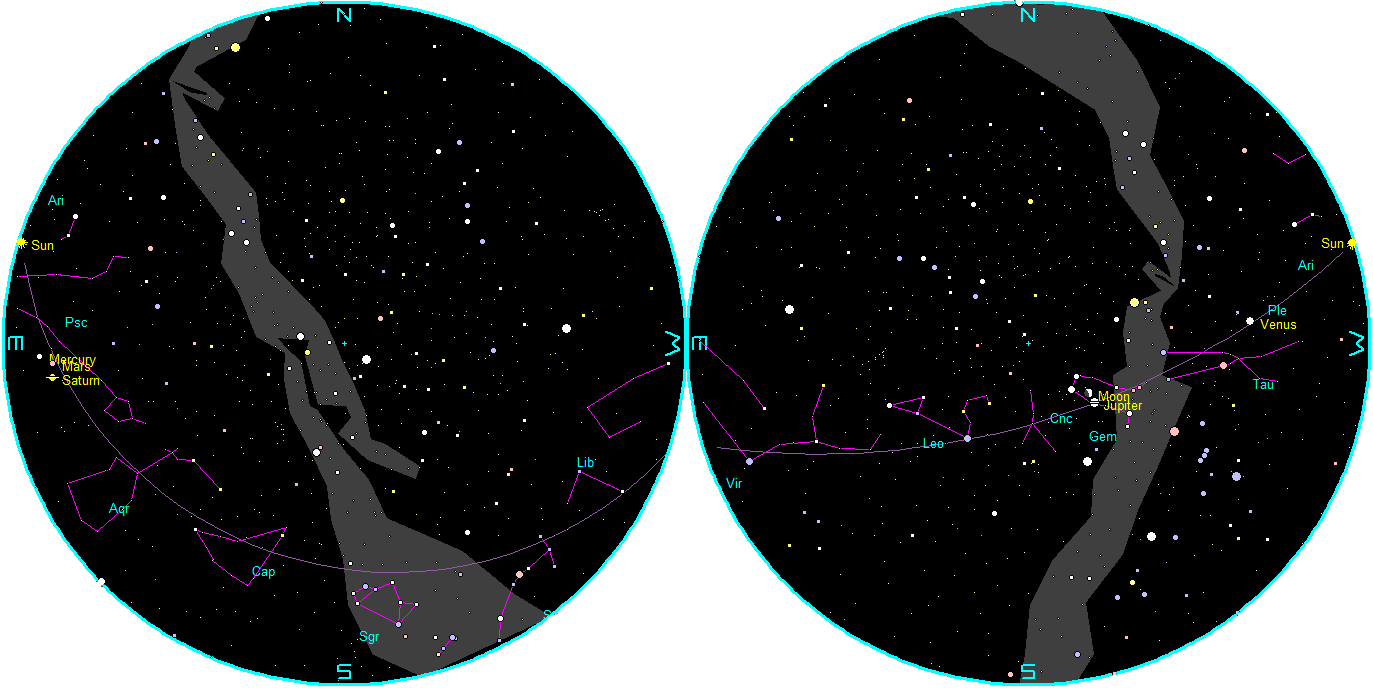
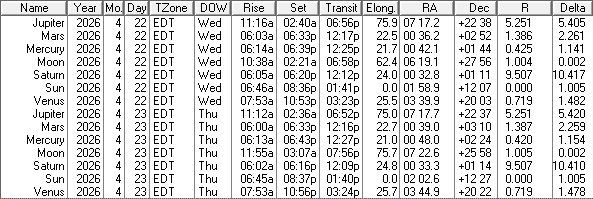
Let’s take our weekly look at the whereabouts of the naked-eye planets. By 9 PM tonight or about 30 minutes or so after sunset, Venus may be seen very low in the West. A telescope will show a very tiny disc on Venus, because it is still pretty much beyond the Sun, 138 million miles (222 million kilometers) away from us. Over the next 6 months it will be moving closer to us and becoming much larger. Jupiter is the brilliant star-like object high in the west-southwestern sky before 10 PM. It will appear just below the crescent Moon tonight. Venus will set at 10:54, while Jupiter will hold out until 2:30 AM. Meanwhile, Mercury, Mars and Saturn are still bunched up just west of the Sun, but are overwhelmed by bright morning twilight.
The astronomical event times given in this blog are for the Traverse City/Interlochen area of Michigan (Lat 44.7° N, Long 85.7° W; EDT, UT – 4 hours) unless stated otherwise. Times will be different for other locations.
Addendum
Ephemeris: 04/21/2026 – The Lyrid meteor shower reaches its peak tomorrow
This is Ephemeris for Tuesday, April 21st. Today the Sun will be up for 13 hours and 47 minutes, setting at 8:35, and it will rise tomorrow at 6:46. The Moon, 2 days before first quarter, will set at 2:21 tomorrow morning.
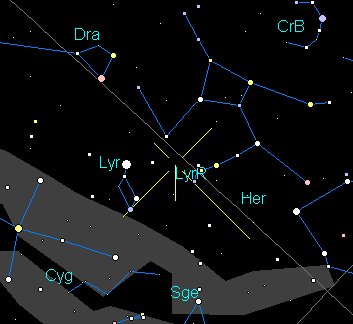
The second major meteor shower this year will reach its peak tomorrow afternoon around 3 PM (~19h UT). The best time to see it will be tomorrow morning after moonset at 2:21 AM. Astronomical twilight will begin to interfere after 5 AM. The other is tomorrow night starting 45 minutes later. The meteor shower is called the Lyrids, because they seem to come from near the constellation Lyra the harp and the bright star Vega. By 3 AM Vega will be high in the east. The radiant of the meteors is to the west of Vega, between Lyra and the dim constellation of Hercules. Though a major shower, the peak hourly rate is expected to be about 20 meteors an hour.
The astronomical event times given in this blog are for the Traverse City/Interlochen area of Michigan (Lat 44.7° N, Long 85.7° W; EDT, UT – 4 hours) unless stated otherwise. Times will be different for other locations.
Addendum
Ephemeris: 04/20/2026 – A seeming convergence of planets too close to the Sun to be seen from Michigan
This is Ephemeris for Monday, April 20th. Today the Sun will be up for 13 hours and 44 minutes, setting at 8:34, and it will rise tomorrow at 6:48. The Moon, halfway from new to first quarter, will set at 1:20 tomorrow morning.
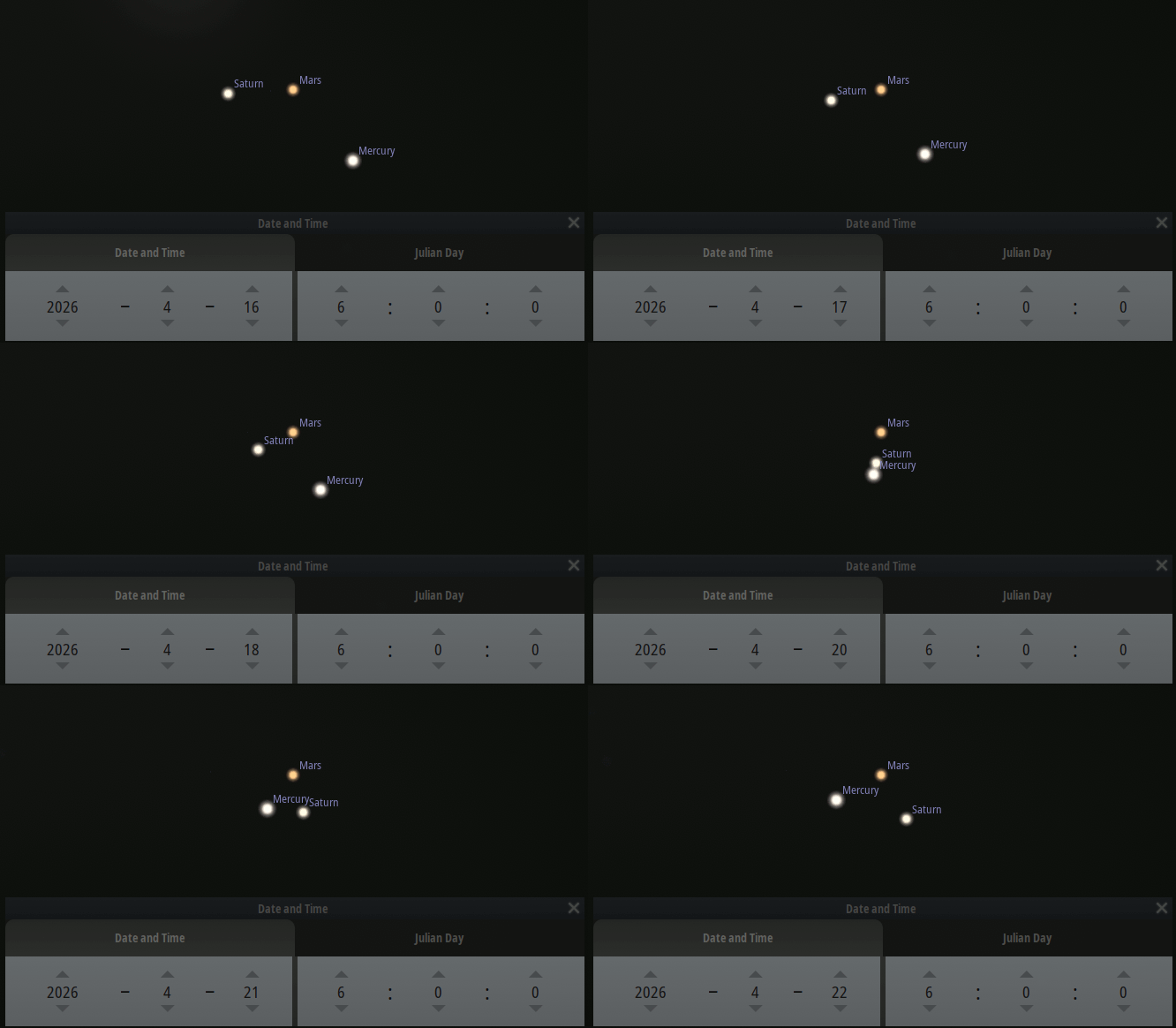
There’s a close planetary alignment this happening and today in the morning sky that we can’t see, of Mercury Mars and Saturn which are too close to the sun, and the time of year is not the best for seeing them. So they’re invisible to us but visible for folks in the Southern Hemisphere. Even the Artemis 2 astronauts talked about them when they went into solar eclipse on their trip around the moon. But the action is all happening yesterday and today. As of last Friday they were, from left to right, Saturn Mars and Mercury. As of today it’s almost a vertical arrangement with Mars on top Saturn in the middle and Mercury on the bottom and by tomorrow it will be Mercury on the bottom Venus on the top and Saturn off to the right.
The astronomical event times given in this blog are for the Traverse City/Interlochen area of Michigan (Lat 44.7° N, Long 85.7° W; EDT, UT – 4 hours) unless stated otherwise. Times will be different for other locations.
Addendum
Ephemeris: 04/17/2026 – The Moon’s Far Side isn’t dark!
This is Bob Moler with Ephemeris for Friday, April 17th. Today the Sun will be up for 13 hours and 35 minutes, setting at 8:30, and it will rise tomorrow at 6:53. The Moon is new today, and won’t be visible.
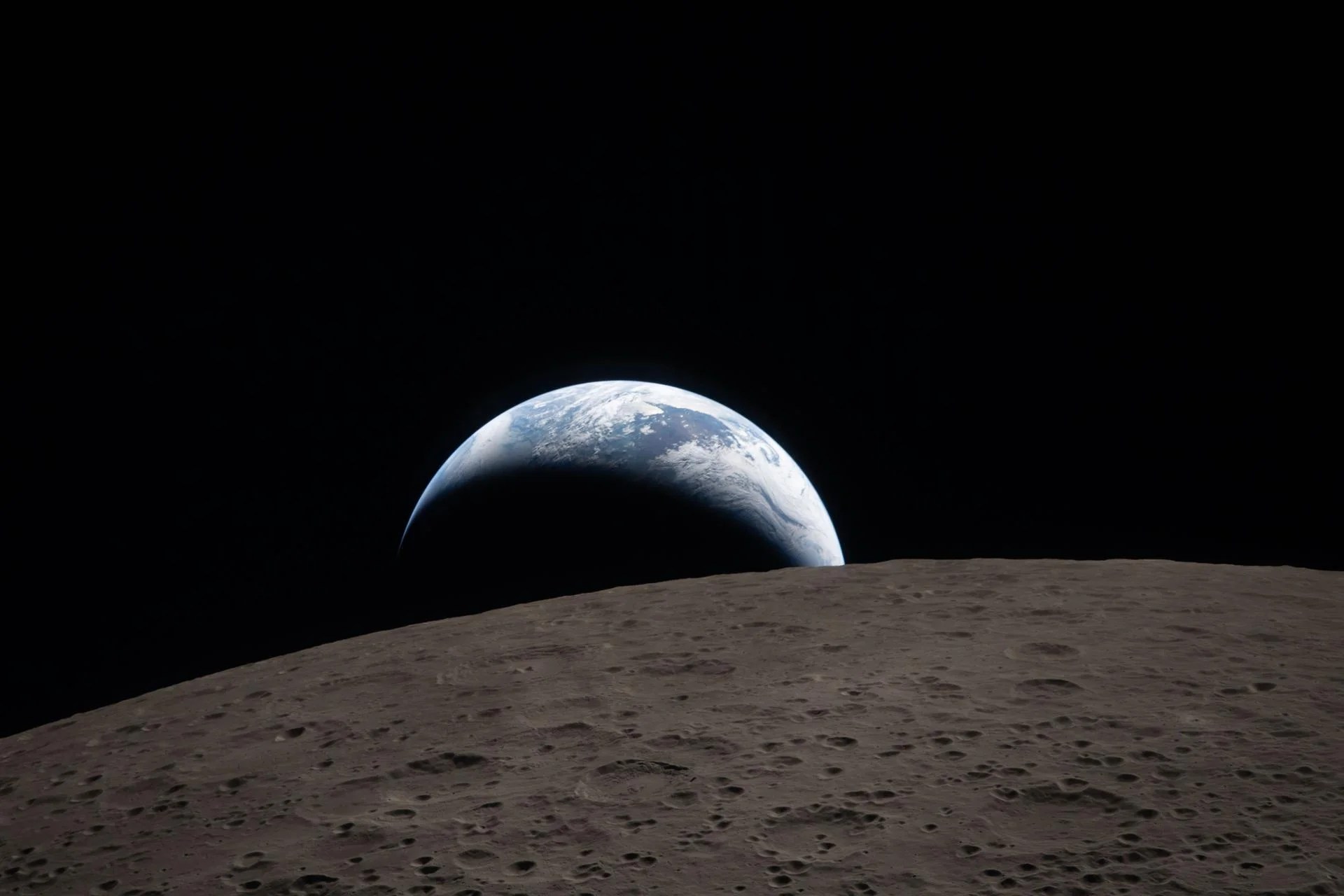
When I hear discussions about the Artemis 2 missions, some people who ought to know better still refer to the far side of the moon as the dark side. Officially we have the two faces of the moon: the near side and the far side. I’ll even accept front side and back side. Until 1959 no one had ever seen the far side of the moon so it was dark, in the sense that we could not see it. Not dark because of the lack of light. I’ve been thinking about it. The far side sees more light from the sun, so maybe we should call it the bright side. It certainly has fewer maria or seas, those dark patches that we see on the near side of the Moon. There’s only one on the far side, it’s called the Moscow Sea since the Russian spotted first. Mare Orientale, subject of much study by the Artemis 2 crew, straddles the near side-far side line. It’s closer to the sun when it’s fully illuminated than the near side by about half a million miles, and it doesn’t suffer solar eclipses to darken it like the near side, being already in night, like it always is, at full moon.
The astronomical event times given in this blog are for the Traverse City/Interlochen area of Michigan (Lat 44.7° N, Long 85.7° W; EDT, UT – 4 hours) unless stated otherwise. Times will be different for other locations.
Addendum