Archive
02/15/2019 – Ephemeris – Venus will pass Saturn Monday morning
Ephemeris for Friday, February 15th. Today the Sun will be up for 10 hours and 27 minutes, setting at 6:11, and it will rise tomorrow at 7:41. The Moon, 3 days past first quarter, will set at 5:21 tomorrow morning.
The planets Venus and Saturn cross paths in conjunction next Monday morning at about 9 a.m. This weekend you can watch them inch closer and closer together before sunrise. Venus is a whole lot brighter than Saturn and will be seen to move above Saturn Monday morning. As I noted on the Jupiter-Venus conjunction three and a half weeks ago, these two planets are nowhere close to each other. Venus will be 92.9 million miles (149.6 million km) away, about as far as the Sun. Saturn will be a bit over 1 billion miles (1.612 billion km) away, making Saturn almost 11 times farther away as Venus. The only effect this conjunction will have on me is that it will be a cool sight to see those two planets together in the sky.
The times given are for the Traverse City/Interlochen area of Michigan. They may be different for your location.
Addendum
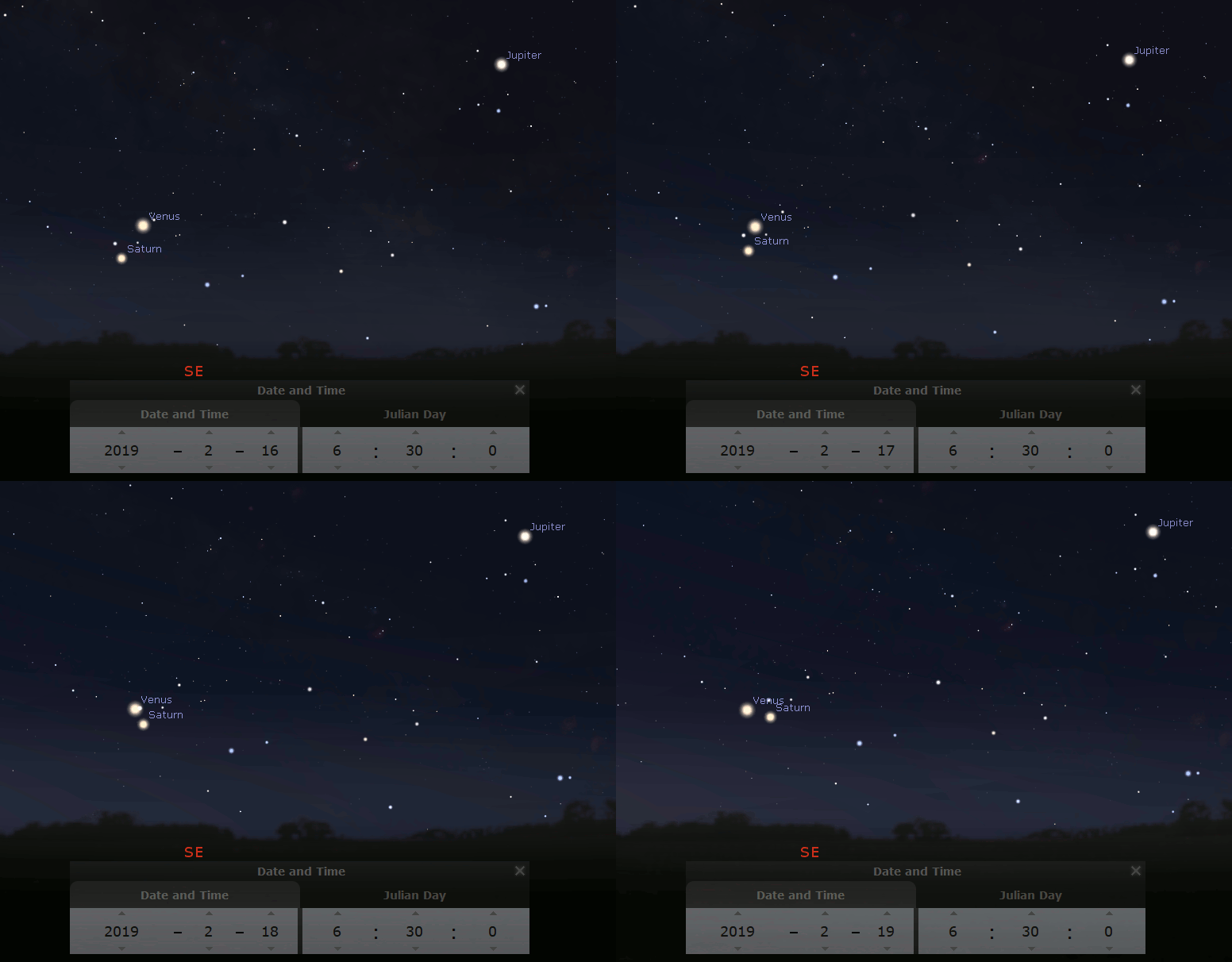
Daily animation of the morning planets featuring the Venus-Saturn conjunction at 6:30 a.m. on February 16th through 19th 2019. Click on the image to enlarge. Created using Stellarium and GIMP.
01/21/2019 – Ephemeris – Venus and Jupiter will pass each other tomorrow morning
Ephemeris for Martin Luther King Jr. Day, Monday, January 21st. Today the Sun will be up for 9 hours and 23 minutes, setting at 5:35, and it will rise tomorrow at 8:11. The Moon, at full today, will rise at 6:23 this evening.
I hope you’ve been noticing the bright planets Venus and Jupiter in the morning this month on the few mornings that have been clear. Jupiter and Venus have been drawing together. And tomorrow morning they will pass each other. The event is called a conjunction. To astronomers it’s a cool looking event, where the planets happen to be along the same line of sight. They are nowhere near each other in actuality. Venus is 76 million miles (120 million km) away, while Jupiter is 555 million miles (894 million km) away. It doesn’t affect anything on the Earth. It’s just cool looking. After this, Jupiter will move farther and farther from the Sun, while Venus will appear to fall back towards the Sun, even though they both are traveling eastward against the stars.
The times given are for the Traverse City/Interlochen area of Michigan. They may be different for your location.
Addendum
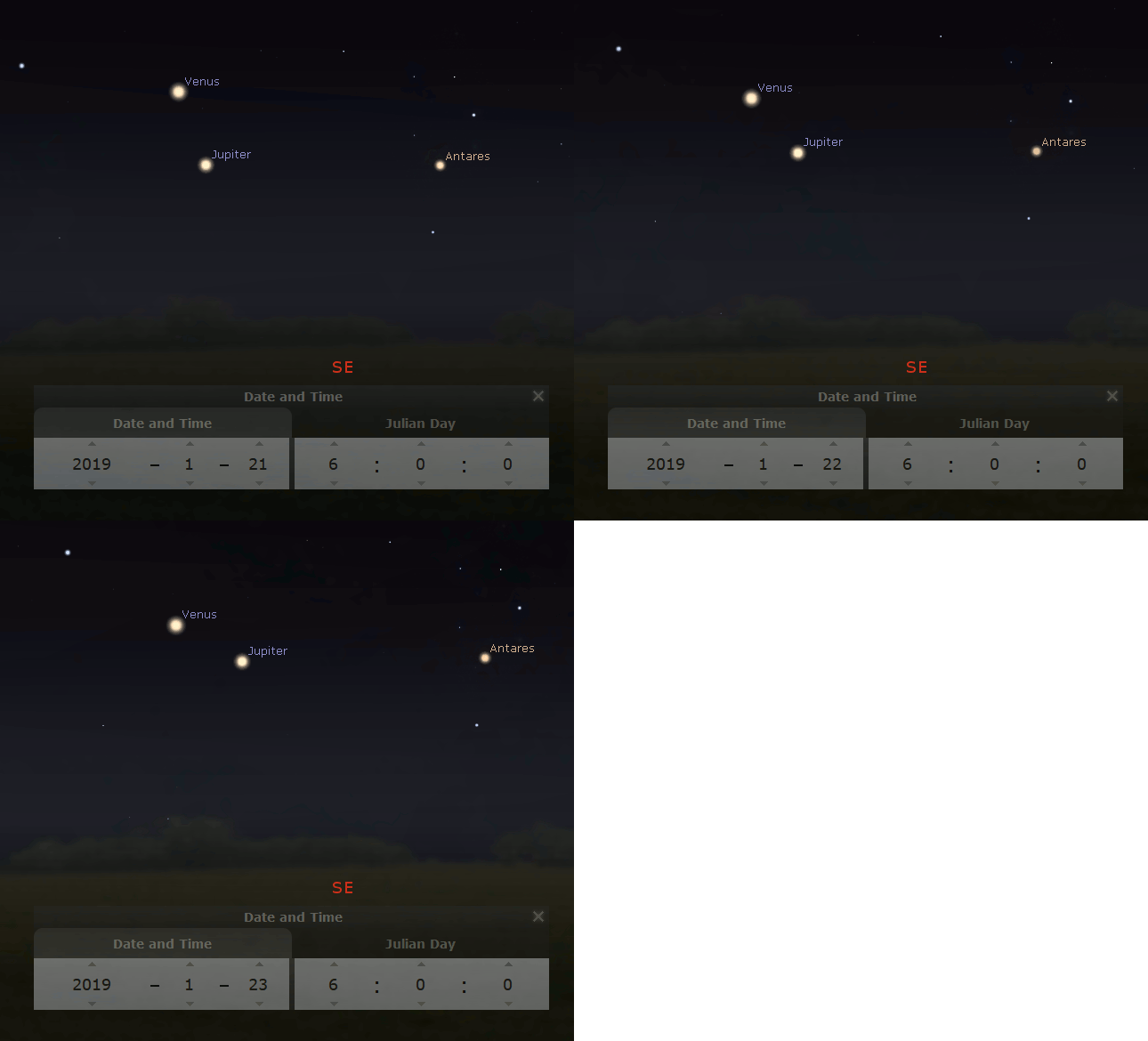
Three day animation of Venus and Jupiter on the 21st, 22nd, and 23rd of January 2019. Created using Stellarium and GIMP.
10/26/2018 – Ephemeris – Venus passes inferior conjunction with the Sun today
Ephemeris for Friday, October 26th. The Sun will rise at 8:12. It’ll be up for 10 hours and 27 minutes, setting at 6:40. The Moon, 2 days past full, will rise at 8:19 this evening.
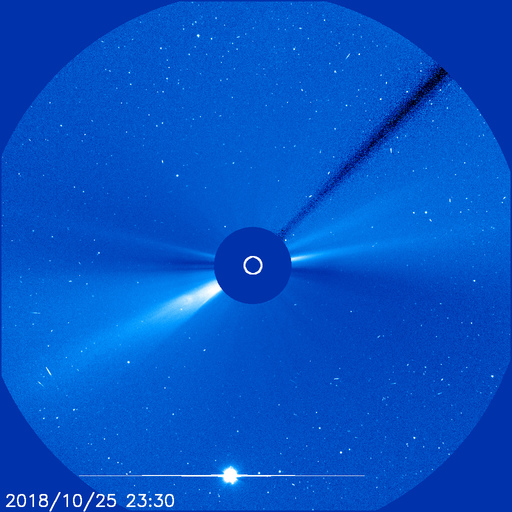
Later this morning the planet Venus will pass in inferior conjunction with the Sun, moving officially from the evening sky to the morning sky. Inferior conjunctions are when Venus is between the Earth and the Sun. We haven’t seen Venus for over a month, it setting too soon after the Sun to be spotted. It’s appearance in the morning sky will be much more sudden. On fall mornings the ecliptic, the path of the Sun and most planets is more vertical in the sky, opposite that of the evning sky, so that Venus will suddenly appear. Being south of the Sun, it will take 3 days, next Monday morning to rise with the Sun, but after that Venus will rise 8 minutes earlier each morning for a while. It should be easily visible in two weeks as the bright Morning Star
The times given are for the Traverse City/Interlochen area of Michigan. They may be different for your location.
04/02/2018 -Ephemeris – Mars is appearing to pass Saturn in the morning
Ephemeris for Monday, April 2nd. The Sun will rise at 7:21. It’ll be up for 12 hours and 49 minutes, setting at 8:11. The Moon, 2 days past full, will rise at 10:40 this evening.
At 3:02 this afternoon the planet Mars will pass the planet Saturn. The event is called a conjunction, which simply means they are on nearly the same line of sight from the Earth, and nothing more. It will make a pretty sight tomorrow morning before the sky gets too bright with reddish Mars being just below Saturn, by a bit less than 3 moon widths. Conjunctions of these two planets occur at intervals of two years give or take, since it involves the orbital motions of Mars and Saturn while viewing them from a third planet also orbiting the Sun.
Currently both planets are moving eastward against the stars. Saturn will slow and stop its motion on April 18th, while Mars will continue until June 28th. They will track westward for a while. This is because the Earth will be passing these planets this summer, which is called opposition (from the Sun). Saturn will reach opposition on June 27th, Mars on July 27th. Mars closest approach will occur four days later at a distance of 35.76 million miles (57.59 million kilometers). This is Mars’ closest approach to the Earth since August 27th, 2003. Expect the return of the Mars hoax emails this summer.
The times given are for the Traverse City/Interlochen area of Michigan. They may be different for your location.
Addendum
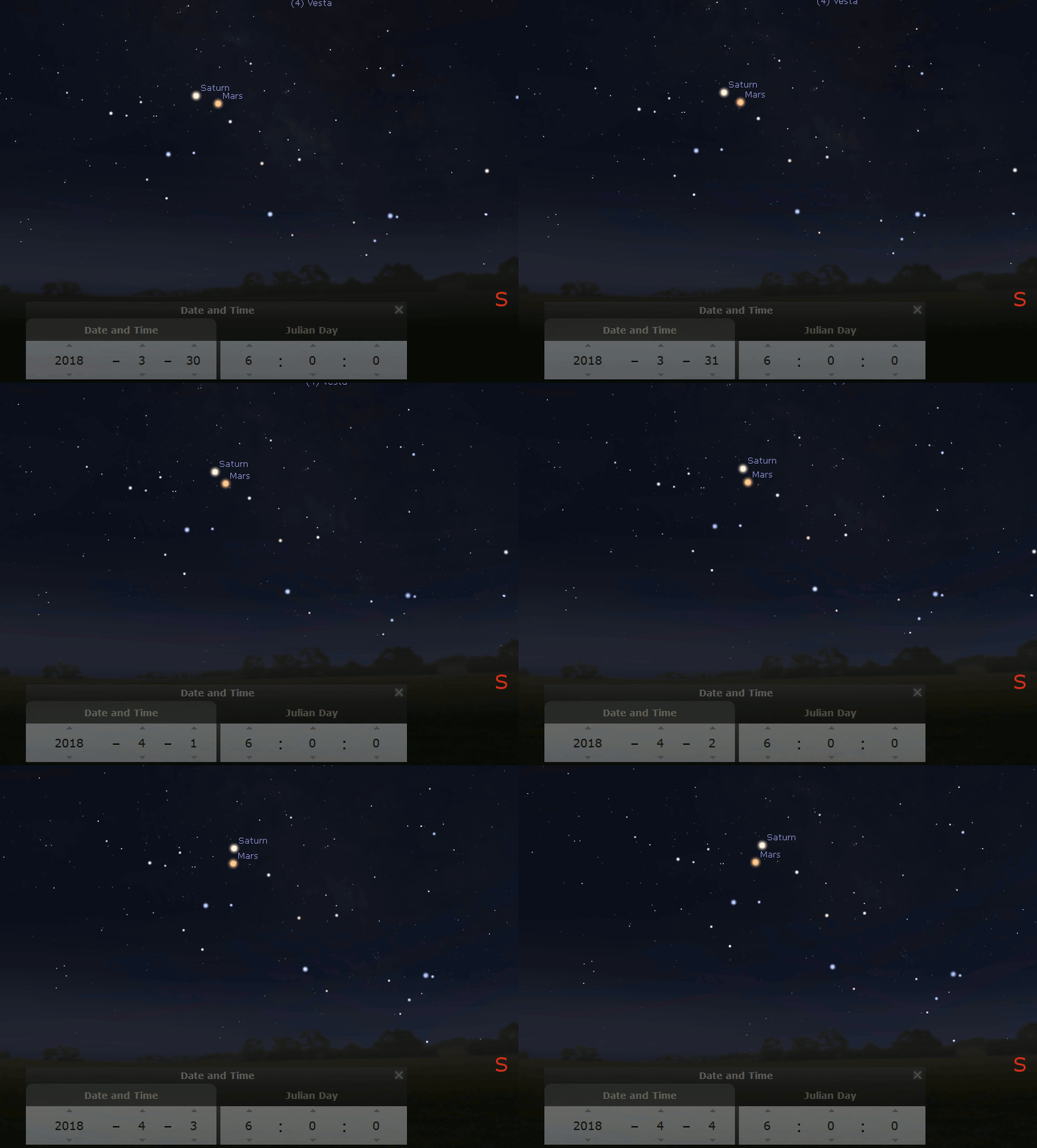
Conjunction animation of Mars passing Saturn at daily intervals at 6 a.m. for March 30 to April 4, 2018. This will occur above the Teapot asterism of the constellation of Sagittarius. Created using Stellarium and GIMP.
I covered the Mars hoax 5 years ago here on an August 27th when Mars was nowhere close to us.
03/29/2018 – Ephemeris – The Easter date is set by the first full moon of spring and a developing conjunction
Ephemeris for Thursday, March 29th. The Sun will rise at 7:29. It’ll be up for 12 hours and 37 minutes, setting at 8:06. The Moon, 2 days before full, will set at 7:21 tomorrow morning.
This Sunday, April 1st will be Easter for western churches. Because it falls on the first Sunday after the first full moon since March 21st. The Full Moon is Saturday the 31st. It happens that Passover begins at sundown the 31st. Orthodox churches will celebrate Easter on April 8th, a week later. It’s going to be a somewhat busy weekend in the sky also. Sunday Mercury will pass from the evening sky to the morning sky in an event called an inferior conjunction of the Sun. It is not visible, but folks in the southern hemisphere will easily spot Mercury late in April. In the morning sky Mars will pass below Saturn between the mornings of the 2nd and 3rd. They are close to the same brightness, but Mars is distinctly redder.
The times given are for the Traverse City/Interlochen area of Michigan. They may be different for your location.
Addendum
Conjunction animation of Mars passing Saturn at daily intervals at 6 a.m. for March 30 to April 4, 2018. This will occur above the Teapot asterism of the constellation of Sagittarius. Created using Stellarium ans GIMP.
03/22/2018 – Ephemeris – The bright star Aldebaran will appear below the Moon tonight
Ephemeris for Thursday, March 22nd. The Sun will rise at 7:42. It’ll be up for 12 hours and 15 minutes, setting at 7:57. The Moon, 2 days before first quarter, will set at 1:48 tomorrow morning.
The bright star Aldebaran will appear below the Moon tonight. Over the past two years we’ve seen the Moon cover Aldebaran in an event called an occultation on several occasions. There will be a similar occultation tonight for the far northern part of the Earth. Though the series of Aldebaran occultations won’t end until September this year, we won’t see any of them. The Next season of monthly Aldebaran occultations for the Earth won’t start until 2033. It will last a bit more than 2 years. We’ll see our share of those occultations then. Other bright, first magnitude, stars that can be occulted by the Moon are Pollux in Gemini, Regulus in Leo, Spica in Virgo and Antares in Scorpius.
The times given are for the Traverse City/Interlochen area of Michigan. They may be different for your location.
Addendum
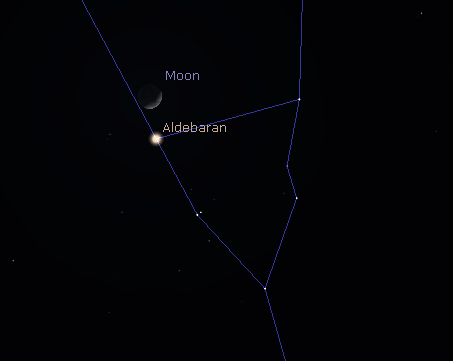
The star Aldebaran, the bloodshot eye of Taurus the bull at 9 p.m. tonight, March 22, 2018 to be seen below the crescent Moon. The rest of the face of Taurus, the V-shaped stars of the star cluster called the Hyades will be visible in binoculars. Created using Stellarium. The Moon will be brighter than Aldebaran, not the opposite as seen here.
02/09/2018 – Ephemeris – Morning planet high jinx
Ephemeris for Friday, February 9th. The Sun will rise at 7:51. It’ll be up for 10 hours and 11 minutes, setting at 6:02. The Moon, 2 days past last quarter, will rise at 4:05 tomorrow morning.
This past Wednesday morning the Moon passed Jupiter, Earlier this morning the Moon passed north of Mars, and on Sunday morning Saturn will appear south of The Moon. There is a once in about 2 year event, that is red Mars passing Antares, the red giant star in Scorpius, one of the easiest constellations to spot because it actually resembles a scorpion. The name Antares means “Rival of Mars” because they have the same color: Ant meaning anti and Ares is the Greek god of war and counterpart of the Roman god Mars. Mars will pass Antares on average of
every 22 ½ months, its period around the Sun. Since we are viewing it from a moving Earth, it varies. Mars will pass Antares next on January 19th, 2020.
The times given are for the Traverse City/Interlochen area of Michigan. They may be different for your location.
Addendum
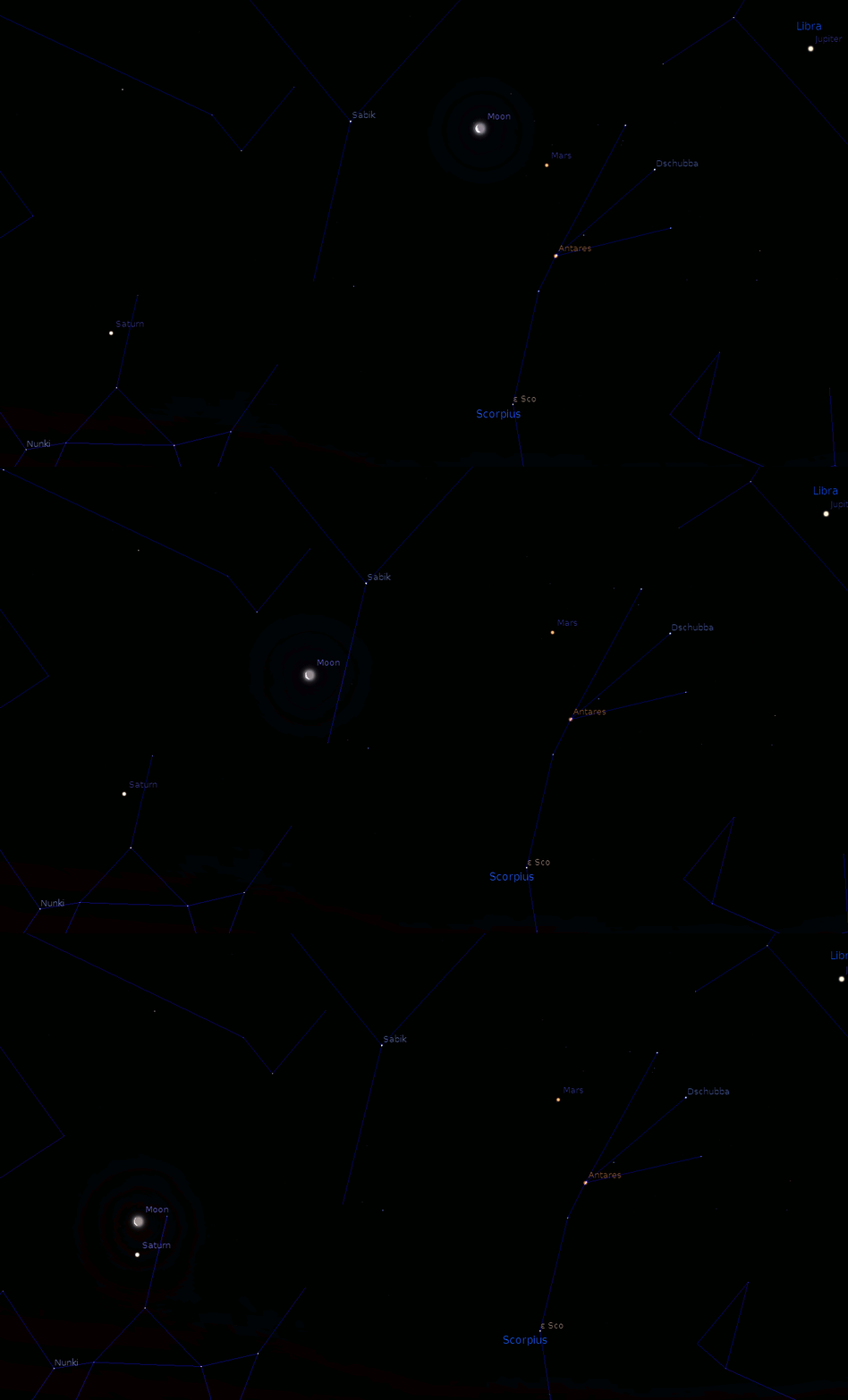
Morning planets and the Moon at 7 a.m. on the mornings of February 9, 10 and 11, 2018. See Mars changing position compared to Antares. Click on image to enlarge. Created using Stellarium and GIMP.
01/11/2018 – Ephemeris – This morning the Moon passes Jupiter and Mars
Jan 11. This is Bob Moler with Ephemeris for Thursday, January 11th. The Sun will rise at 8:18. It’ll be up for 9 hours and 5 minutes, setting at 5:23. The Moon, 3 days past last quarter, will rise at 4:19 tomorrow morning.
This morning the thin crescent Moon will be poised over Jupiter and Mars in the east southeast at 7 a.m. It will make a pretty sight for the eye and camera. I follow many amateur astronomers on Twitter with clearer skies than ours who take many great pictures of planetary conjunctions, the Moon and other wonders of the heavens.
There is space mission orbiting Jupiter right now. It doesn’t make great discoveries that shake up the astronomical world enough to make the national news. The Juno mission skims close and then away from Jupiter in order to ferret out its internal structure. It does contain a camera for the public that reveals the spectacular cloud formations of Jupiter’s polar cloudscapes.
The times given are for the Traverse City/Interlochen area of Michigan. They may be different for your location.
Addendum
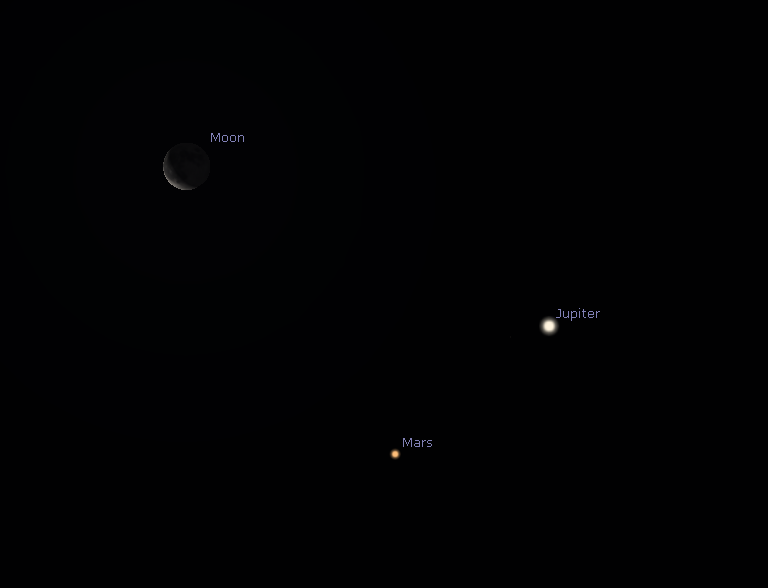
The Moon with Jupiter and Mars this morning January 11, 2018 at 7 a.m. Created using Stellarium.
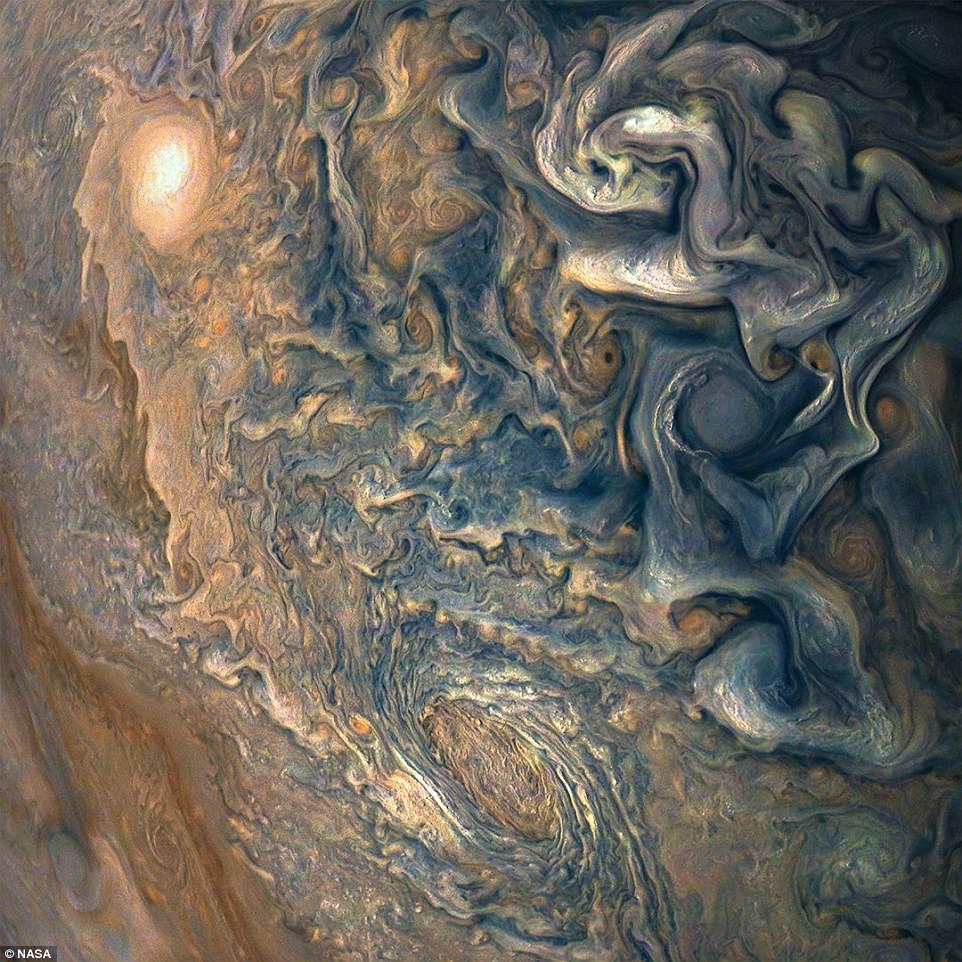
Some of Jupiter’s clouds photographed by NASA’s Juno spacecraft.
Ride along with Juno on its 6th close encounter (perijove 6) with Jupiter. Jove is another Roman name for Jupiter, by Jove!
Jupiter: Juno Perijove 06 from Seán Doran on Vimeo.
01/04/2018 – Ephemeris – Mars will pass Jupiter in the morning sky this weekend
Ephemeris for Thursday, January 4th. The Sun will rise at 8:20. It’ll be up for 8 hours and 55 minutes, setting at 5:15. The Moon, 3 days past full, will rise at 8:44 this evening.
We have, weather permitting, been watching Mars and Jupiter getting closer together day by day in the morning sky. Their paths will cross Saturday evening as Mars slips under Jupiter. However at that time they will be below our horizon. So Saturday morning the 6th Mars will be just to the lower right of the brighter Jupiter by a bit less than he diameter of the Moon and Sunday morning the 7th Mars will be left and below Jupiter by about the same amount. After that they will continue to separate. Jupiter will stay in the constellation of Libra and enter the evening sky in early May. The Earth will catch up to Mars at the end of July. Then it will be closer to the Earth than any time since 2003. It will come as close as 35.8 million miles (57.9 million km) from the Earth.
The times given are for the Traverse City/Interlochen area of Michigan. They may be different for your location.
Addendum
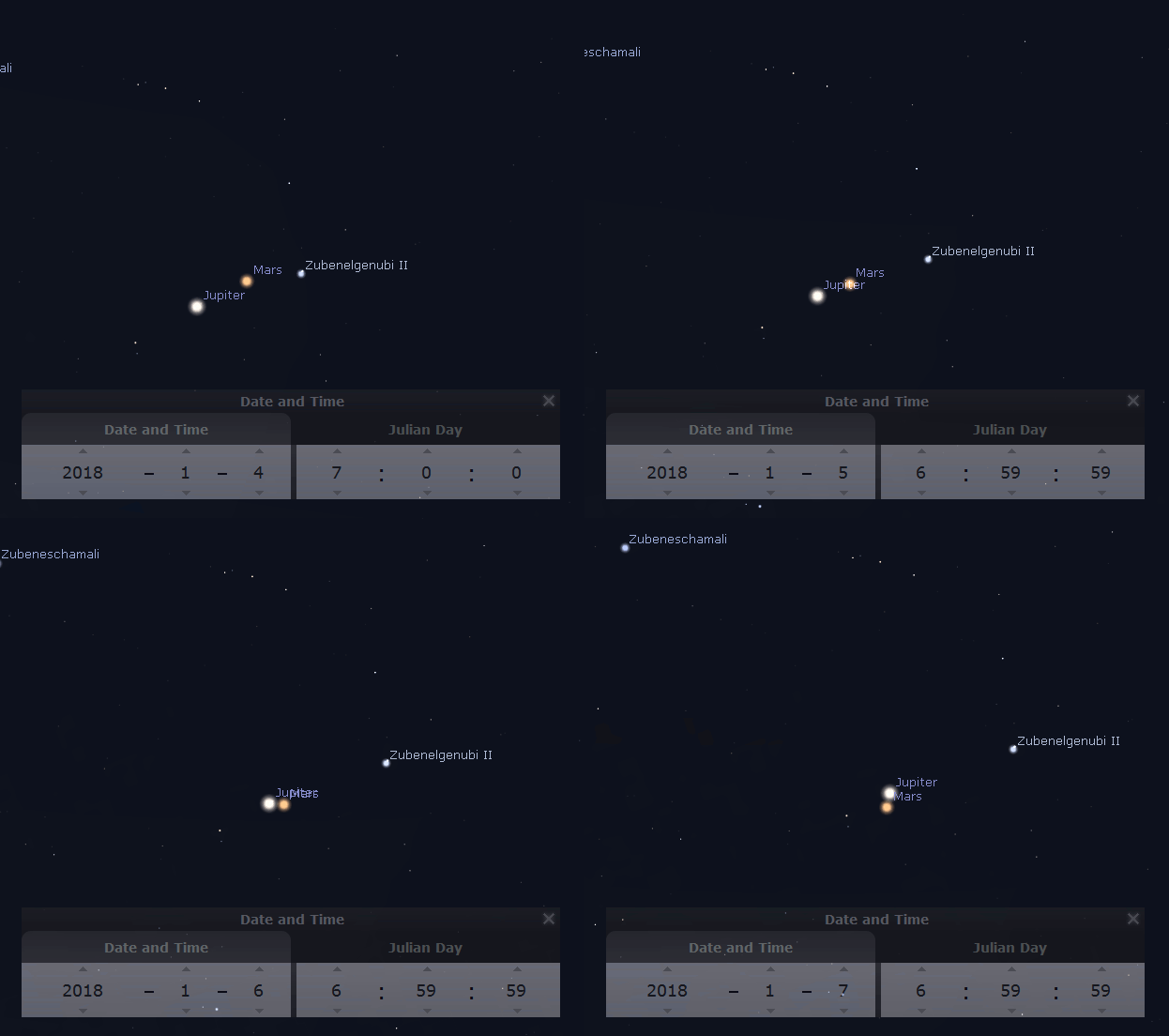
An animation of the Mars-Jupiter conjunction from January 4th thru 7th at 7 a.m.. The two named stars seen Zubenelgenubi and Zubeneschamali, stars in the constellation Libra, meaning south claw and north claw respectively. Claws of Scorpius, the constellation rising to the east. Created using Stellarium and GIMP.
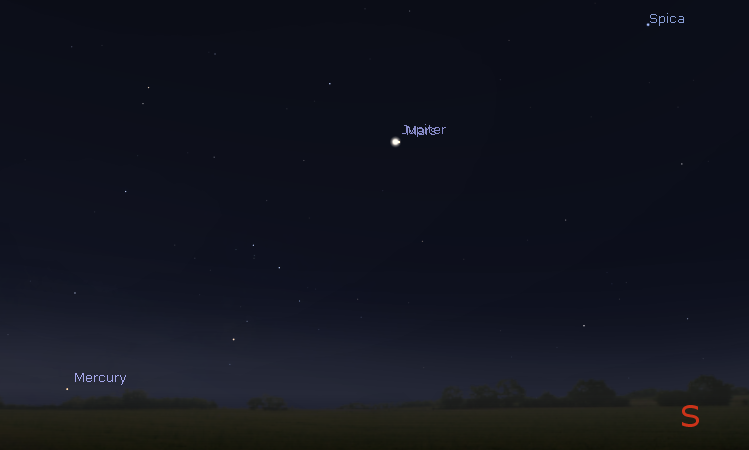
Morning planets at 7 a.m. January 6th, 2018. Mars and Jupiter labels are superimposed. Created with Stellarium.
12/25/2017 – Ephemeris – The 3 and 2 BC “Star of Bethlehem” conjunctions were repeated 3 and 2 years ago
Merry Christmas. This is Ephemeris for Christmas Day, Monday, December 25th. The Sun will rise at 8:18. It’ll be up for 8 hours and 49 minutes, setting at 5:07. The Moon, 1 day before first quarter, will set at 12:28 tomorrow morning.
August three years ago and June two years ago we had a near repeat of two very close conjunctions of Jupiter and Venus that occurred in 3 and 2 BC. These two conjunctions spaced by a month more than the human gestation period and seen against the constellation of Leo the lion, symbol of Judah could have brought the Magi, who were Persian astrologer-priests to Jerusalem, capital of Judea. The events could have signified the them the birth of a king of Judea. It was the interpretation of the scriptures by the scribes that actually sent them to Bethlehem. This version of the Star of Bethlehem seems to be the one that’s being accepted more and more by those who believe the Star had a physical reality.
The times given are for the Traverse City/Interlochen area of Michigan. They may be different for your location.
Addendum
I dredged these up from the Ephemeris archives
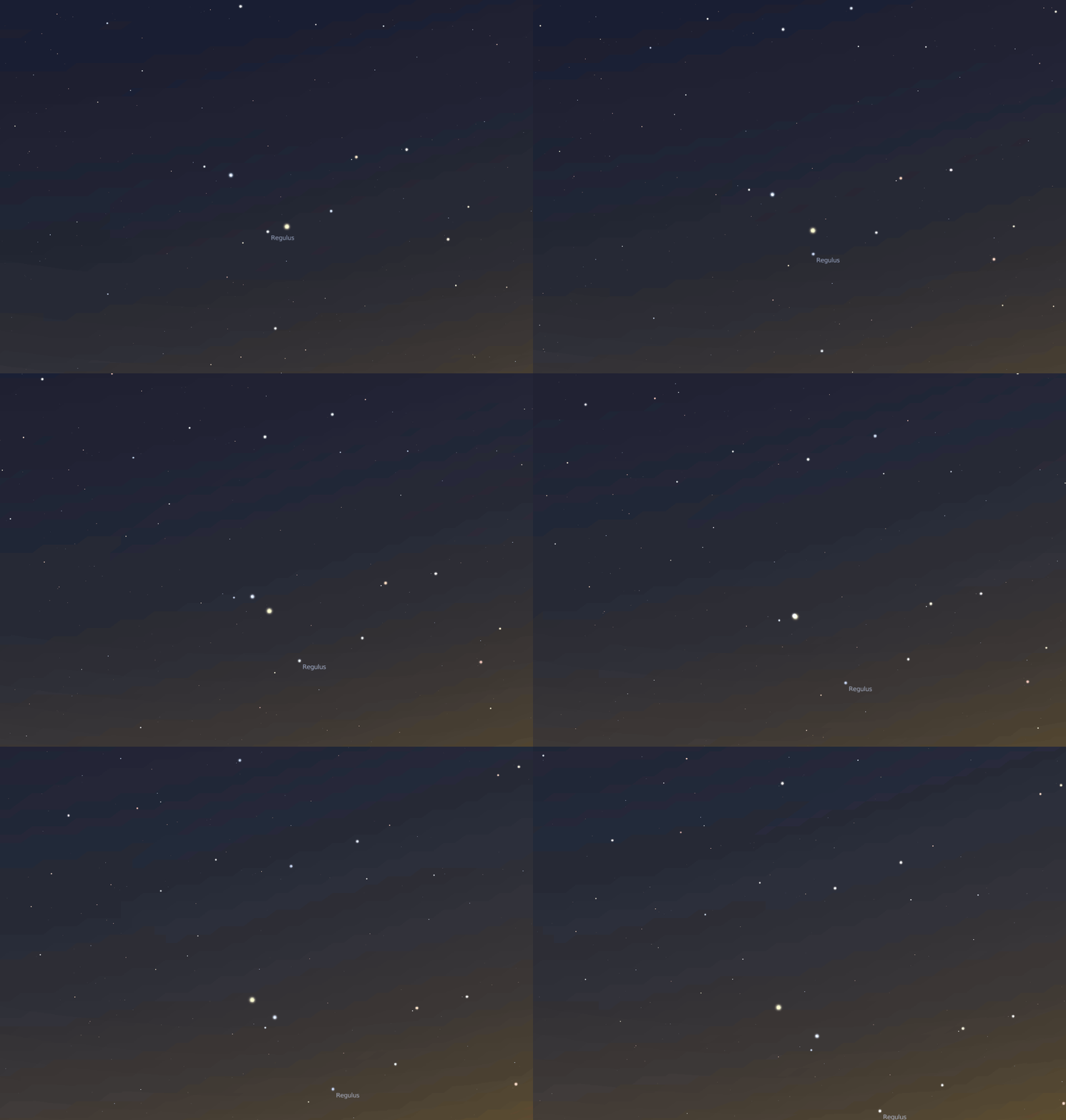
June 16, 2 BC just after sunset Jupiter and Venus again cross paths, at one point too close to be separated with the naked eye. Created using Stellarium.
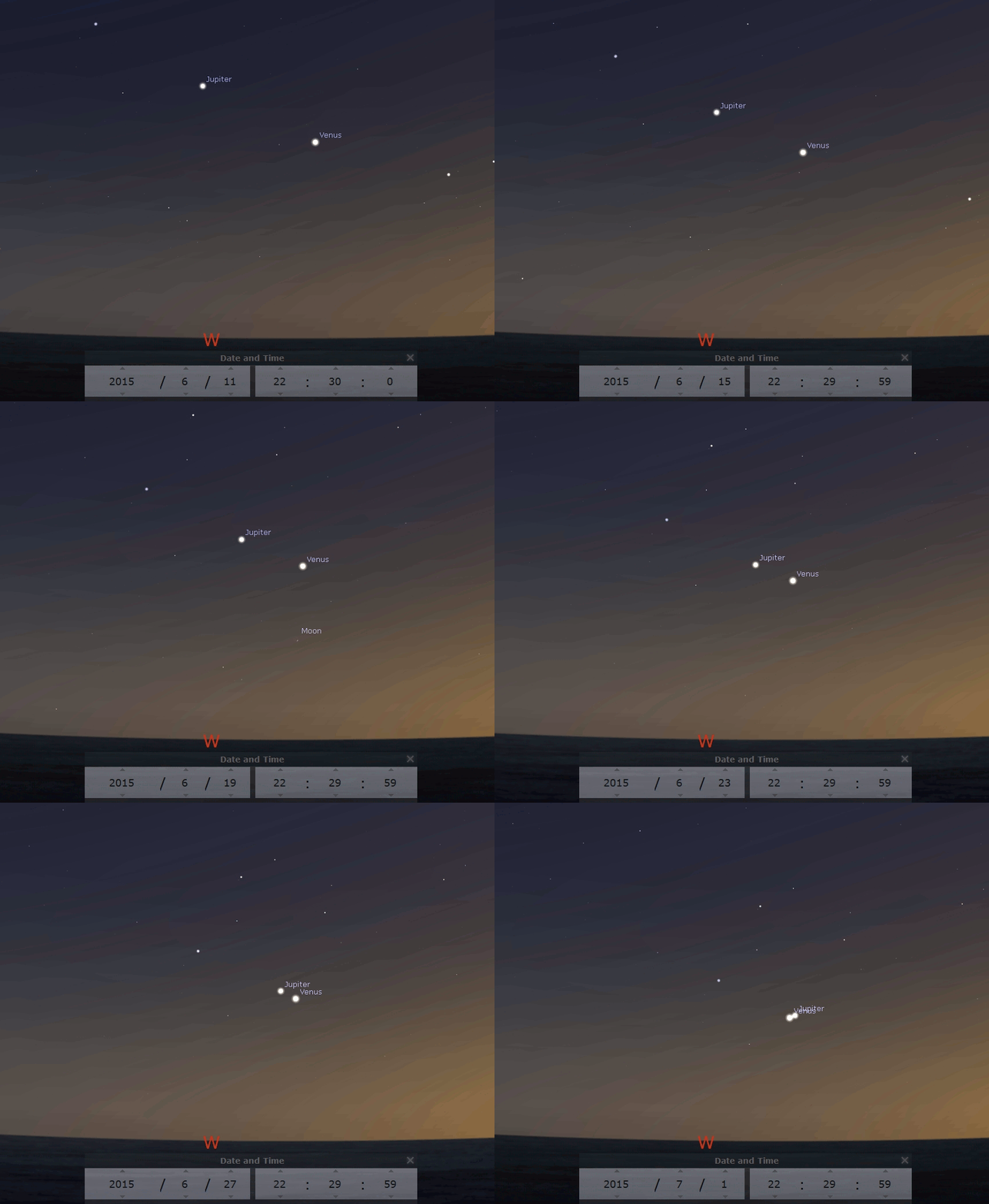
Jupiter-Venus approach animation June 11 to July 1, 2015 at 10:30 p.m. Created using Stellarium and GIMP. Click on image to enlarge.
A link to the 2015 posting is here. I didn’t realize until later that this was a near repeat of the 3 ans 2 BC conjunctions. Here’s a link to my posting of the August conjunction.
 Bob Moler's Ephemeris Blog