Archive
Ephemeris: 09/09/2024 – The Sun’s sibling star?
This is Ephemeris for Monday, September 9th. Today the Sun will be up for 12 hours and 48 minutes, setting at 8:03, and it will rise tomorrow at 7:16. The Moon, 2 days before first quarter, will set at 10:38 this evening.
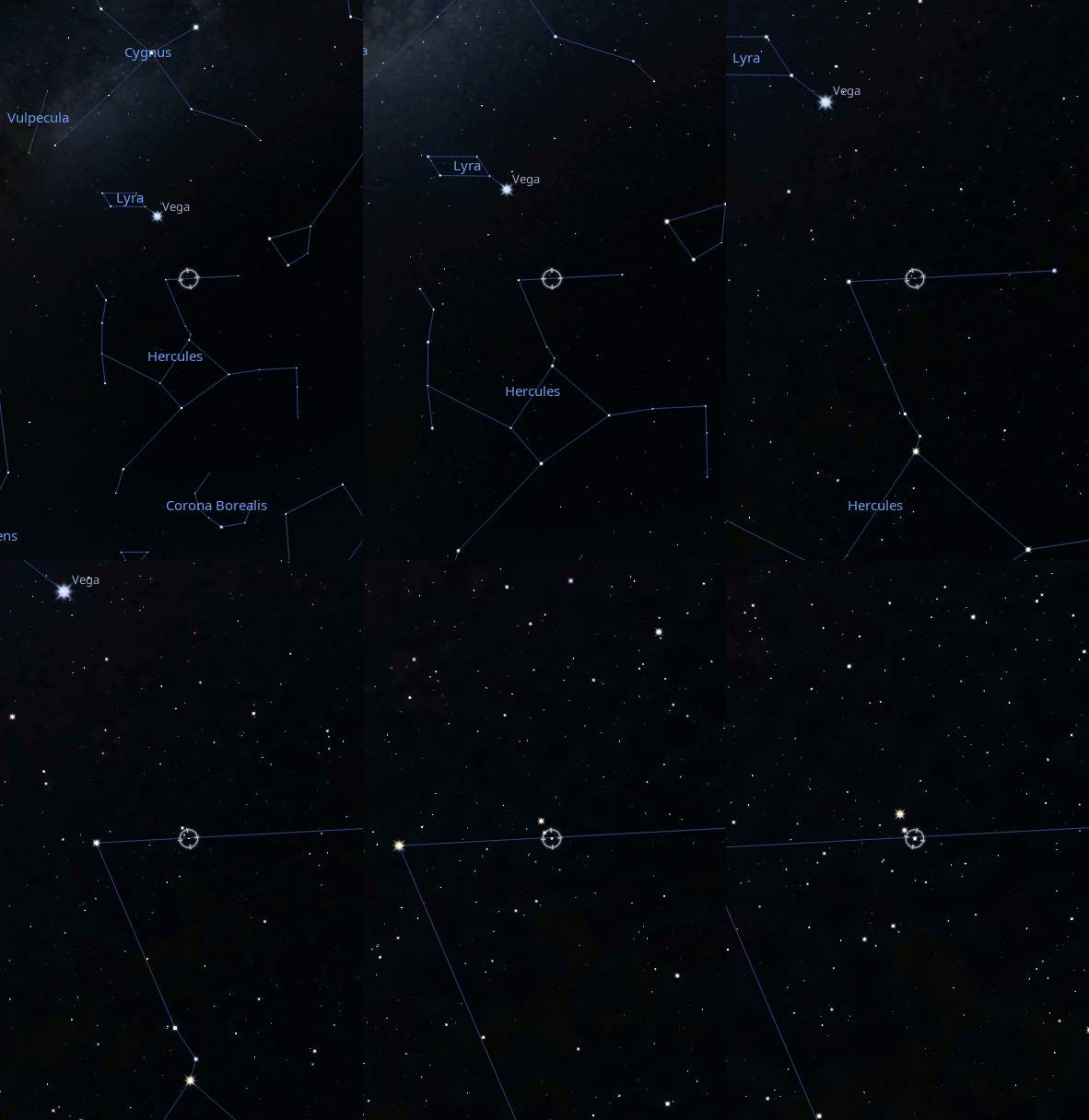
The Sun was born from a cloud, a nebula, of mostly hydrogen and helium with traces of heavier elements. Astronomers consider any element heaver than helium a metal. It was not born alone, but with many other stars in a star cluster, all at about the same time. The elements that are in the Sun’s atmosphere came from that nebula. Astronomers are wondering if there were any other stars they could see which were siblings of the Sun. Apparently they found one star that has the same metals in the same proportions as the Sun. That star is HD 162826, a dim star in the constellation Hercules, visible in binoculars. It’s a bit more massive than the Sun, and about 109 light years away. The Sun’s sibling stars have scattered far and wide.
The astronomical event times given are for the Traverse City/Interlochen area of Michigan (EDT, UT – 4 hours). Times will be different for other locations.
Addendum
Ephemeris: 05/14/2024 – Last Friday’s geomagnetic storm
This is Ephemeris for Tuesday, May 14th. Today the Sun will be up for 14 hours and 48 minutes, setting at 9:03, and it will rise tomorrow at 6:13. The Moon, 1 day before first quarter, will set at 3:08 tomorrow morning.
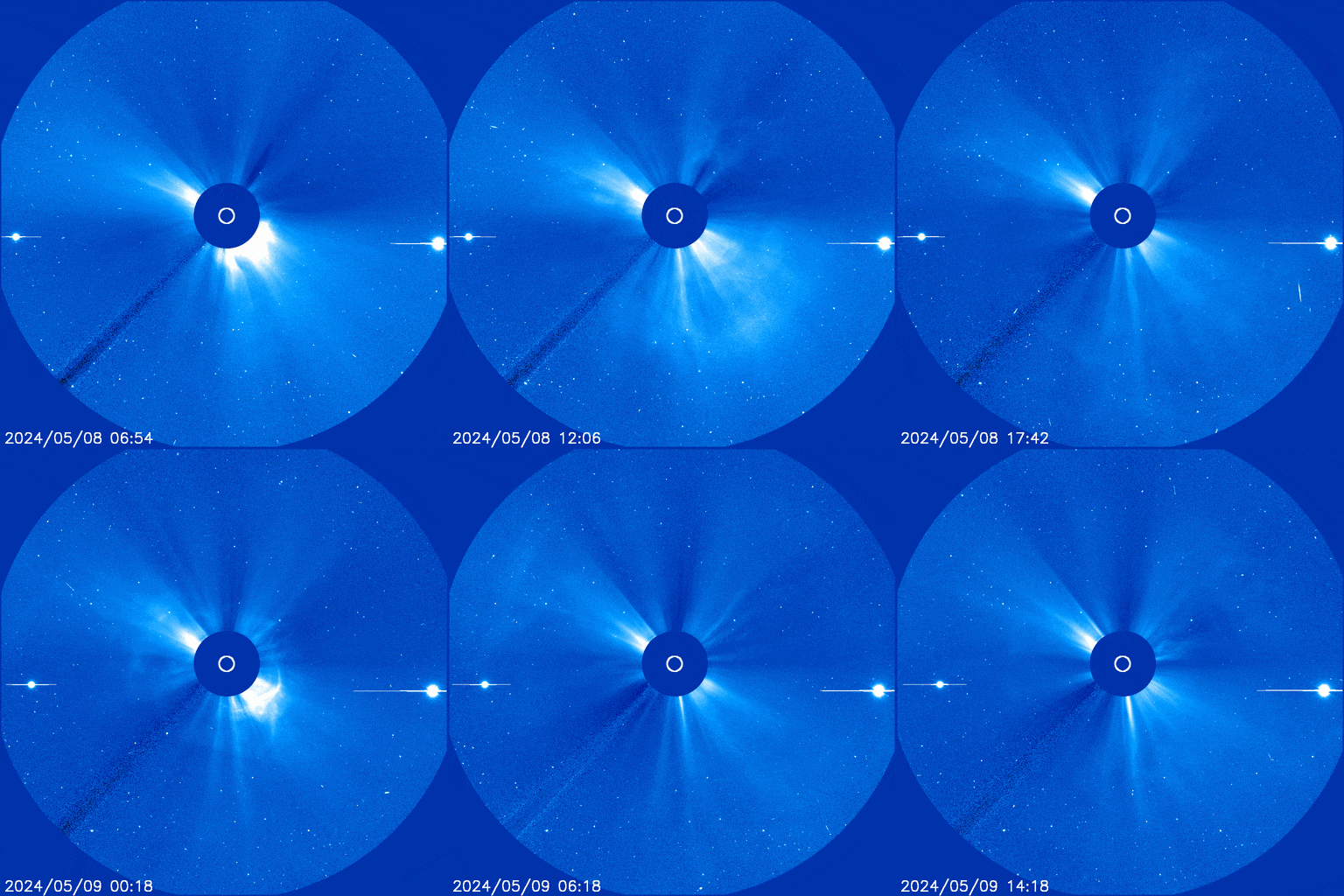
Last Friday night’s displays of the Northern Lights were seen as far as the Caribbean, making the greatest what is called a geomagnetic storm of the last 20 years, and up there with the greatest storms ever recorded. Last Wednesday there was an immense solar flare coming from a large sunspot group on the Sun. That group was large enough to be able to be seen with eclipse glasses. So you might want to keep those eclipse glasses handy, and check out the Sun every once in a while. Only the largest sunspot groups will be visible. The flare causes the ejection of the part of the Sun’s corona, what astronomers call the coronal mass ejection or CME for short. These charged particles were intercepted by the Earth’s magnetic field and caused the aurora we saw.
The astronomical event times given are for the Traverse City/Interlochen area of Michigan (EDT, UT–4 hours). They may be different for your location.
Addendum
06/29/2023 – Ephemeris – Learning about the Sun – sunspots
This is Ephemeris for Thursday, June 29th. Today the Sun will be up for 15 hours and 32 minutes, setting at 9:32, and it will rise tomorrow at 6:00. The Moon, 3 days past first quarter, will set at 3:10 tomorrow morning.
The face of the Sun is populated, from time to time, with dark spots, simply called sunspots. It is rare that a sunspot or sunspot group is large enough to see with eclipse glasses. Sunspots normally form in groups, and are called active regions, because they are sites of solar flares, explosions that would put the world’s entire nuclear arsenals to shame in a single explosion. The bright ball of the Sun that is sometimes called a surface is called the photosphere, a region of the Sun, where the gases are of low enough density so the transportation of energy from the Sun’s core changes from convection to radiation. It is within this convective region that magnetic fields form that cool the gas, making it darker, by restricting their movement.
The astronomical event times given are for the Traverse City/Interlochen area of Michigan (EDT, UT –4 hours). They may be different for your location.
Addendum
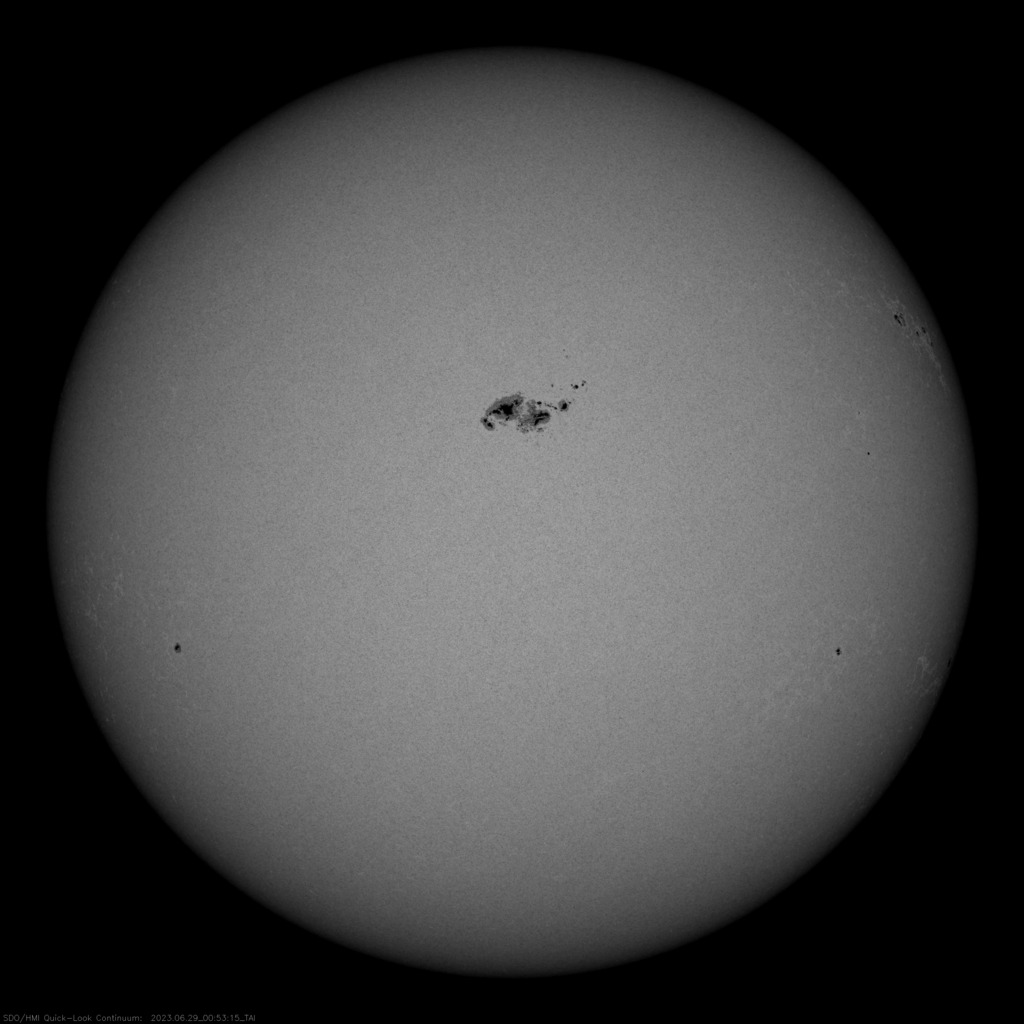
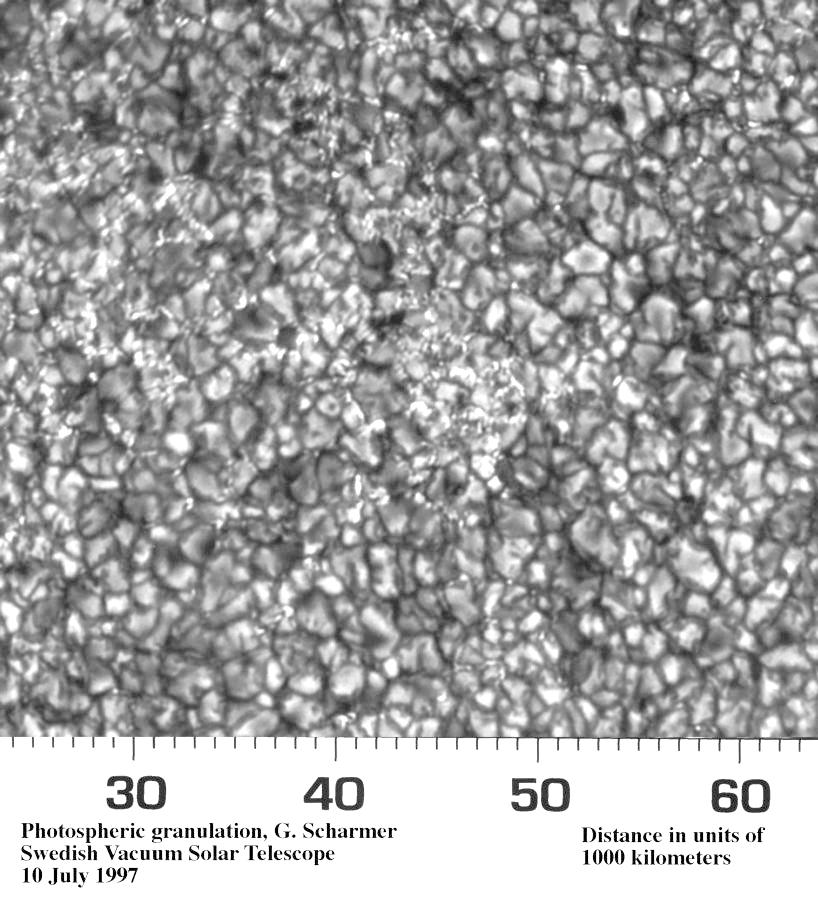
Other features of the photosphere are faculae (plural of facula), brighter areas of the photosphere, often associated with or are a precursor to sunspots. Faculae are best seen near the Sun’s limb (edge), as can be seen above. If the photosphere doesn’t appear smooth, that’s because it isn’t. The photosphere lies atop the convective zone of the Sun. The photosphere is populated by the tops of convection cells called granules, approximately 600 miles, or 1,000 kilometers wide and last only about 20 minutes.
 Bob Moler's Ephemeris Blog