Archive
Ephemeris: 11/15/2024 – What causes the tides?
This is Ephemeris for Friday, November 15th. Today the Sun will be up for 9 hours and 33 minutes, setting at 5:14, and it will rise tomorrow at 7:41. The Moon, at full today, will rise at 4:48 this evening.
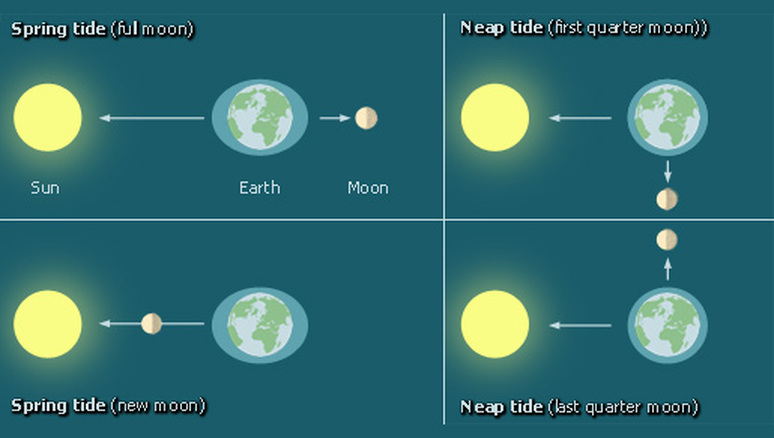
Today, at full moon, is one of the two highest tides of the month, the lunar month that is. The other highest tide comes at new moon. Both the Moon and the Sun cause tides because of their gravitational pull on the Earth. At new and full moon’s their gravitational pull gangs up on us. Since Earth is not a point body the gravitational pull of an object on the near side of the Earth pulls harder than it does on the opposite side of the Earth. Gravitational force diminishes with the square of the distance so it is the difference in the gravitational pull from one side to the other of the Earth that causes the tides to rise up on the side nearest and farthest from the gravitational pull of the moon and/or Sun. Since the Earth has a worldwide ocean, the water is free to slosh around and cause the tides.
The astronomical event times given are for the Traverse City/Interlochen area of Michigan (EST, UT – 5 hours). Times will be different for other locations.
Addendum
11/20/2012 – Ephemeris – Tides from Sandy to Galaxies
Ephemeris for Tuesday, November 20th. The sun will rise at 7:46. It’ll be up for 9 hours and 23 minutes, setting at 5:09. The moon, at first quarter today, will set at 12:50 tomorrow morning.
It was three quarters of the moon’s revolution ago or three weeks that the moon was full and adding to the storm surge of Hurricane Sandy. When the moon is full or new the moon’s greater tidal force adds to the sun’s giving us the highest tides called spring tides. Tides are caused by the difference in the gravitational pull on a body from on side to the other when two bodies are close. That’s why the moon exerts a greater tidal force than the sun, even thought its very much less massive. Tides just don’t occur in earth’s oceans. Jupiter’s tidal force tore apart Comet Shoemaker-Levy 9 two years before its more than 20 pieces plunged into Jupiter’s atmosphere in 1994. Colliding galaxies exhibit tidal tails.
Times are for the Traverse City/Interlochen area of Michigan. They may be different for your location.
Addendum
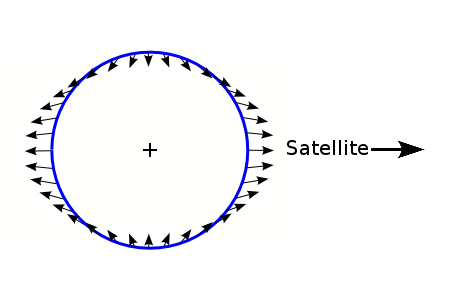
Tidal forces on a planet, the earth for instance by the moon. Source – Wikimedia.
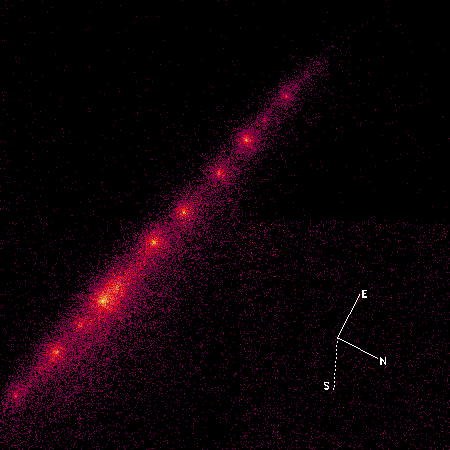
Comet Shoemaker-Levy 9 after a too close approach to Jupiter. The comet was torn into a “String of Pearls” by Jupiter,s immense tidal pull. They came back, crashing into Jupiter in July of 1994. Courtesy NASA Hubble Space Telescope.
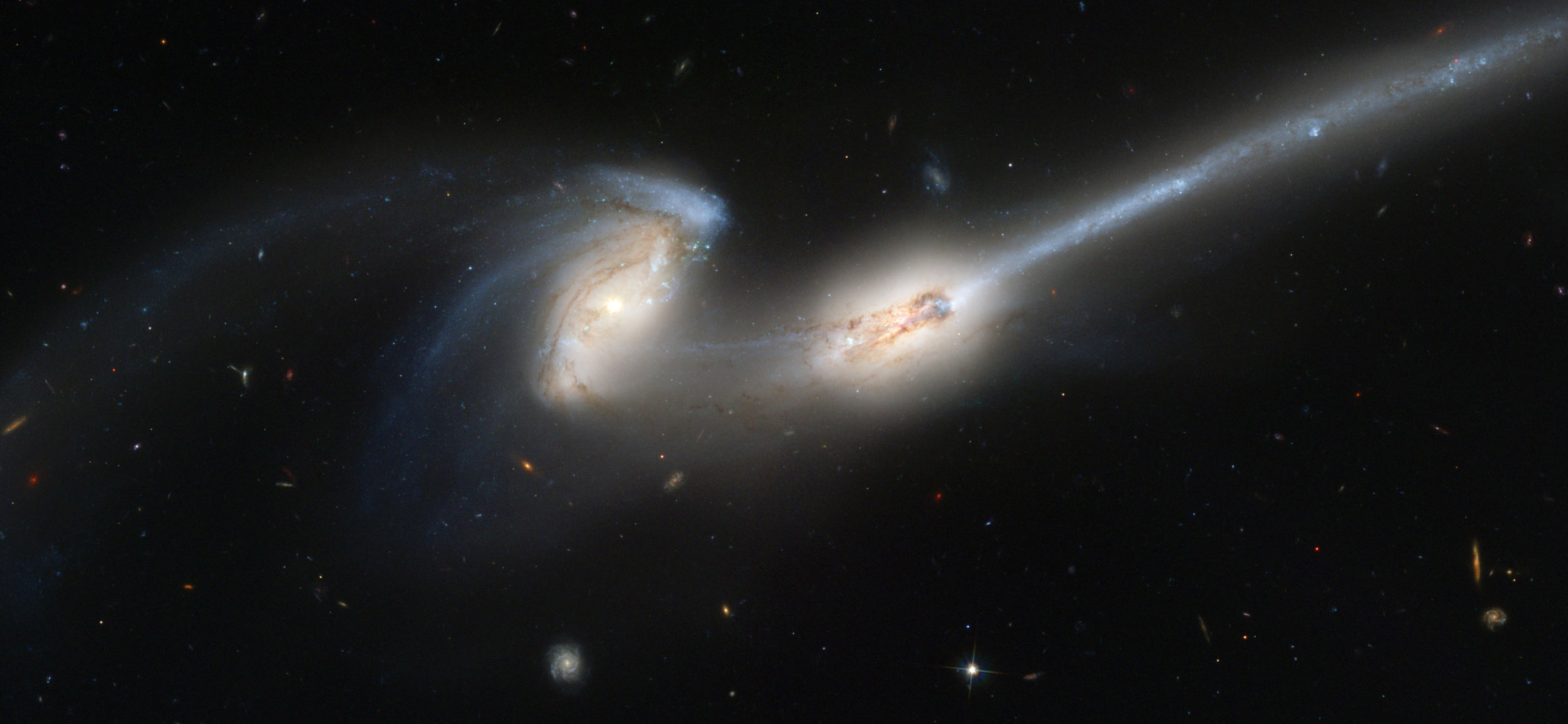
Two galaxies colliding, throwing off tidal tails as they close in. NGC4686 photo courtesy NASA and the Hubble Space Telescope.
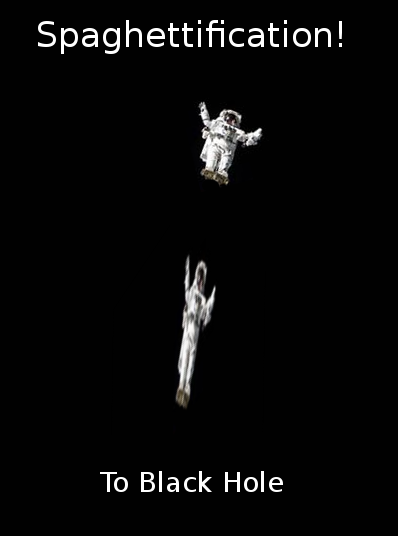
Don’t do this at home! Spaghettification by black hole. The intense gravitational gradient near a black hole will stretch a body, be it asteroid or astronaut as they approach a black hole.
 Bob Moler's Ephemeris Blog