Archive
Ephemeris: 03/10/2025 – Aristarchus, the brightest spot on the Moon, but not tonight
This is Ephemeris for Monday, March 10th. Today the Sun will be up for 11 hours and 39 minutes, setting at 7:42, and it will rise tomorrow at 8:01. The Moon, 4 days before full, will set at 7:11 tomorrow morning.
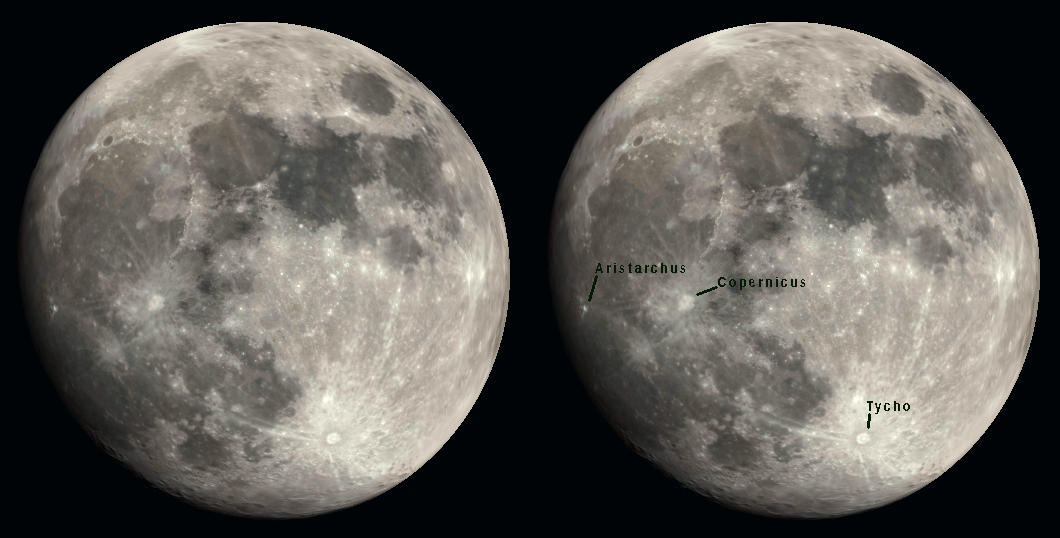
The moon tonight is bright. The sunrise line or terminator on the moon is crossing the large gray plain called Oceanus Procellarum, the largest of the moon’s seas. These seas were figments of the first telescopic observer’s imagination. They are really huge impact basins into which interior lava flowed. On the left edge of the Moon, just below center, this evening, at the terminator is a small shadow filled crater that might be visible in binoculars, but definitely telescopes. It’s called Aristarchus. It is a fairly new crater, probably less than a billion years old. As a rule the brighter the crater the newer it is. Aristarchus is the brightest spot on the Moon, when it is full. Visual astronomers have seen hazes and bright spots on rare occasions in and near Aristarchus.
The astronomical event times given are for the Traverse City/Interlochen area of Michigan (EST, UT – 5 hours). Times will be different for other locations.
Addendum
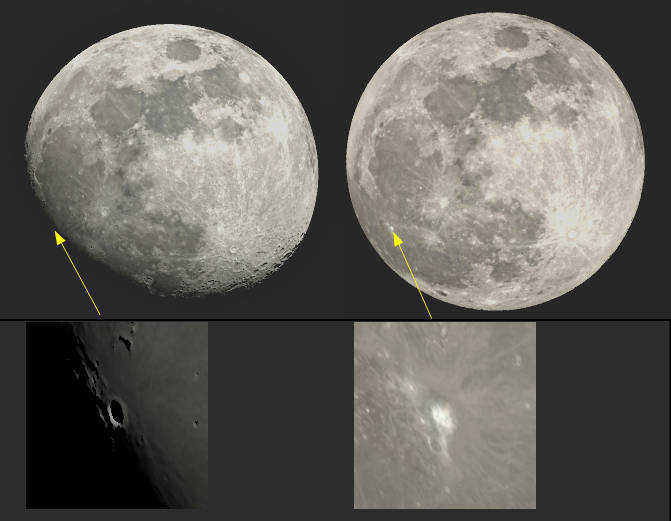
Aristarchus tonight, March 10, 2025, on the terminator (left), and Friday night, the 14th, before the total lunar eclipse starts. The enlargements show the telescopic view. Created using Stellarium, LibreOffice Draw and GIMP. The Moon doesn’t actually appear larger on the 14th. Apparently my field of view changed while getting the 14th’s image.
Ephemeris: 07/18/2024 The brightest spot on the Moon
This is Ephemeris for Thursday, July 18th. Today the Sun will be up for 15 hours and 7 minutes, setting at 9:22, and it will rise tomorrow at 6:15. The Moon, 3 days before full, will set at 3:40 tomorrow morning.
The moon tonight is bright. The sunrise line or terminator on the moon is crossing the large gray plain called Oceanus Procellarum, the largest of the moon’s seas. These seas were figments of the first telescopic observer’s imagination. They are really huge impact basins into which interior lava flowed. On the left side of the Moon is a bright spot in the gray expanse of Oceanus Procellarum visible in binoculars. In a telescope it is a crater called Aristarchus. It is a fairly new crater in lunar terms, probably less than a billion years old. As a rule the brighter the crater the newer it is. Aristarchus is the brightest spot on the Moon. Over the years visual astronomers have seen hazes and bright spots from time to time in and near Aristarchus.
The astronomical event times given are for the Traverse City/Interlochen area of Michigan (EDT, UT–4 hours). They may be different for your location.
Addendum
12/16/2021 – Ephemeris – The brightest spot on the Moon
This is Ephemeris for Thursday, December 16th. Today the Sun will be up for 8 hours and 49 minutes, setting at 5:03, and it will rise tomorrow at 8:14. The Moon, 2 days before full, will set at 6:53 tomorrow morning.
The Moon tonight is bright. The sunrise line or terminator on the moon is crossing the large gray plain called Oceanus Procellarum, the largest of the moon’s seas. These seas were figments of the first telescopic observers imagination. They are really huge impact basins into which interior lava flowed. On the upper left edge of the moon near the terminator is a bright spot visible in binoculars. In a telescope, it is a crater called Aristarchus. It is a fairly new crater, probably less than a billion years old. As a rule the brighter the crater the newer it is. Aristarchus is the brightest spot on the moon. Over the years, visual astronomers have seen hazes and bright spots from time to time in and near Aristarchus. Their cause is still a mystery.
The astronomical event times given are for the Traverse City/Interlochen area of Michigan (EST, UT – 5 hours). They may be different for your location.
Addendum
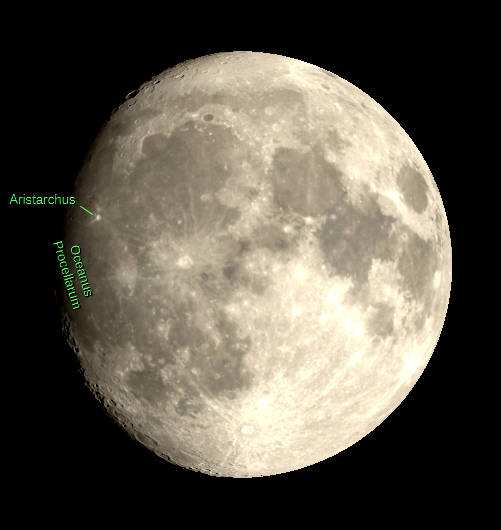
The brightest spots on the Moon as they might appear tonight, December 16, 2021. This is not a photograph. But created using Stellarium, presumably from lunar satellite photographs that simulate the phase and shadows.
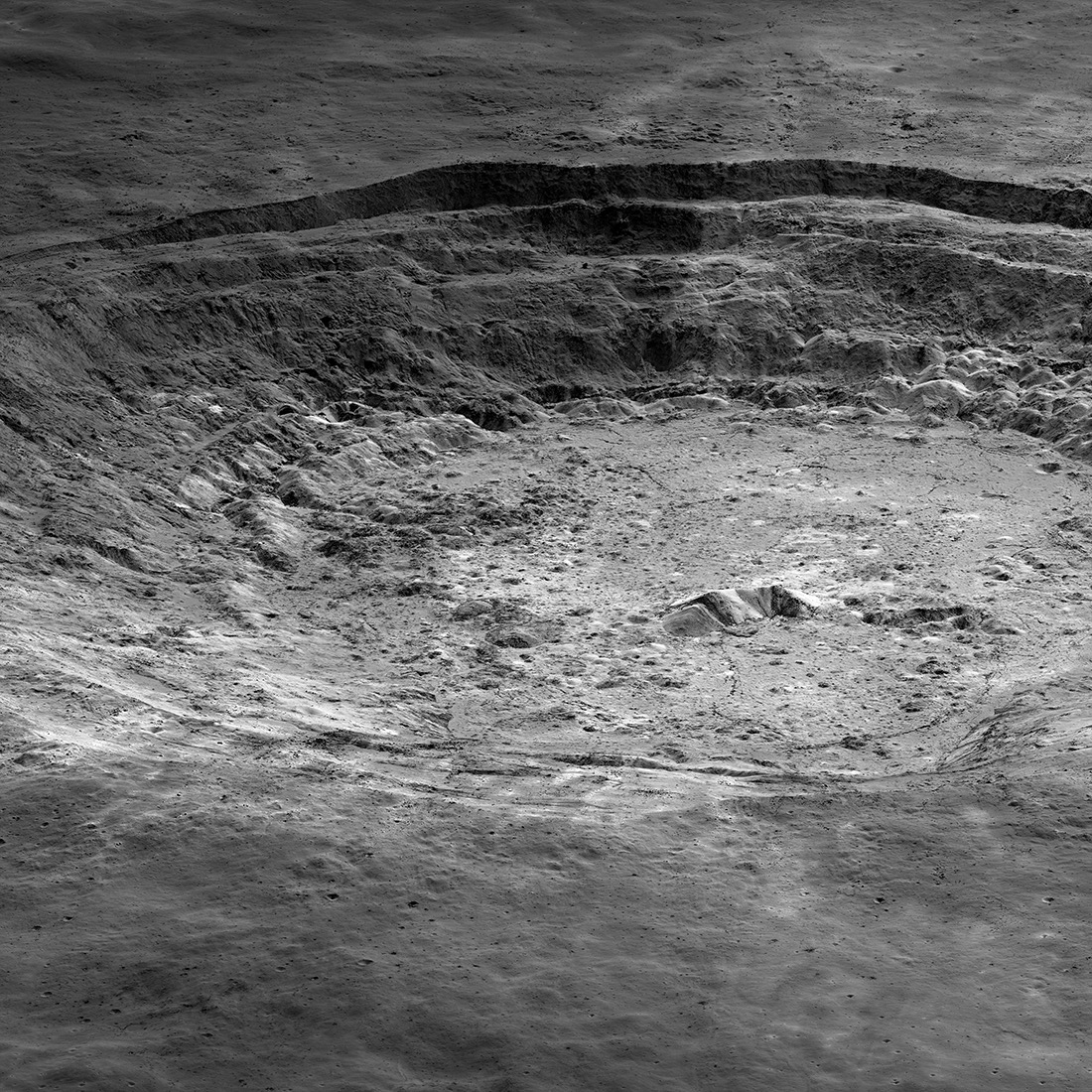
Oblique view of the crater Aristarchus from a lunar orbiting satellite. Credit: NASA/GSFC/Arizona State University.
04/23/2021 – Ephemeris – The gibbous Moon tonight
This is Ephemeris for Friday, April 23rd. Today the Sun will be up for 13 hours and 53 minutes, setting at 8:38, and it will rise tomorrow at 6:43. The Moon, halfway from first quarter to full, will set at 5:49 tomorrow morning.
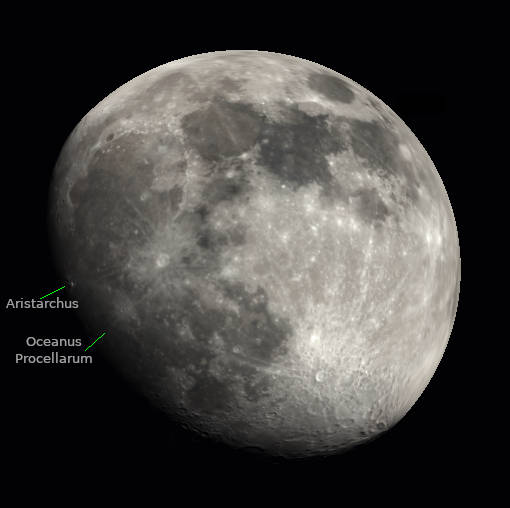
The Moon tonight is bright. The sunrise line or terminator on the Moon is crossing the large gray plain called Oceanus Procellarum, the largest of the Moon’s seas. These seas were figments of the first telescopic observer’s imagination. They are really huge impact basins into which interior lava flowed. On the upper left edge of the moon near the terminator is a bright spot visible in binoculars. In a telescope it is a crater called Aristarchus. It is a fairly new crater, probably 450 million years old. As a rule the brighter the crater the newer it is. Aristarchus is the brightest spot on the moon when it is seen during a full moon. Over the years visual astronomers have seen hazes and bright spots from time to time in and near Aristarchus.
The astronomical event times given are for the Traverse City/Interlochen area of Michigan. They may be different for your location.
Addendum
02/27/2018 – Ephemeris – The bright spot on the Moon tonight
Ephemeris for Tuesday, February 27th. The Sun will rise at 7:23. It’ll be up for 11 hours and 4 minutes, setting at 6:27. The Moon, 2 days before full, will set at 6:38 tomorrow morning.
The moon tonight is bright. The sunrise line or terminator on the moon is crossing the large gray plain called Oceanus Procellarum, the largest of the moon’s seas. These seas were figments of the first telescopic observers imagination. They are really huge impact basins into which interior lava flowed. On the upper left edge of the moon near the terminator is a bright spot on the moon visible in binoculars. In a telescope it is a crater called Aristarchus. It is a fairly new crater, probably less than a billion years old. As a rule the brighter the crater the newer it is. Aristarchus is the brightest spot on the moon. Over the years visual astronomers have seen hazes and bright spots from time to time in and near Aristarchus.
The times given are for the Traverse City/Interlochen area of Michigan. They may be different for your location.
Addendum
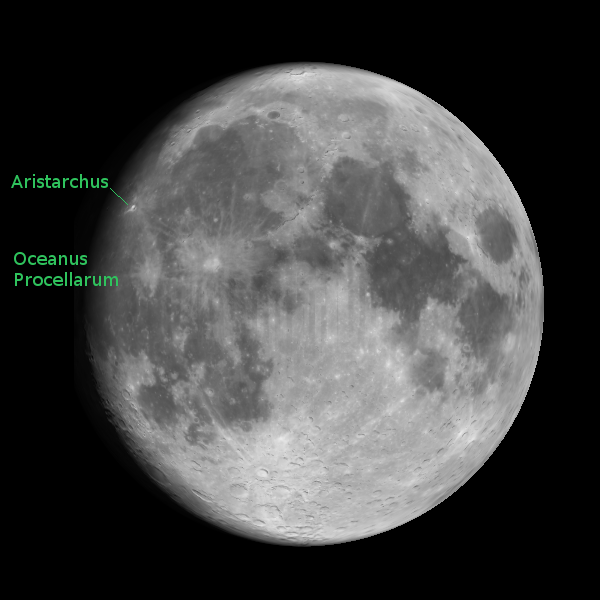
The Moon tonight at 9 p.m. February 27, 2018. Created using Virtual Moon Atlas.
The crater Aristarchus. Credit: Lunar and Planetary Institute.
11/10/16 – Ephemeris – Sunrise on Aristarchus
Ephemeris for Thursday, November 10th. The Sun will rise at 7:33. It’ll be up for 9 hours and 45 minutes, setting at 5:19. The Moon, 3 days past first quarter, will set at 3:35 tomorrow morning.
Tuesday I discussed the fact that the Moon appears to rock back and forth over the month due to it’s uneven motion around the Earth. Currently it’s still facing the direction of the Sun by nearly as far as it was on Tuesday, which is revealing a crater on the northeastern side of the Moon about a day earlier than average in the lunar monthly cycle. That crater is the brightest spot on the Moon, though it’s not that bright right now because that crater, called Aristarchus, is filled with shadow. That shadow will go away in a day or two. Aristarchus is visible in binoculars at the terminator, the advancing sunrise line on the Moon. Aristarchus is located on the flat lava plains that early telescopic astronomers thought were seas filled with water.
Times are for the Traverse City/Interlochen area of Michigan. They may be different for your location.
Addendum
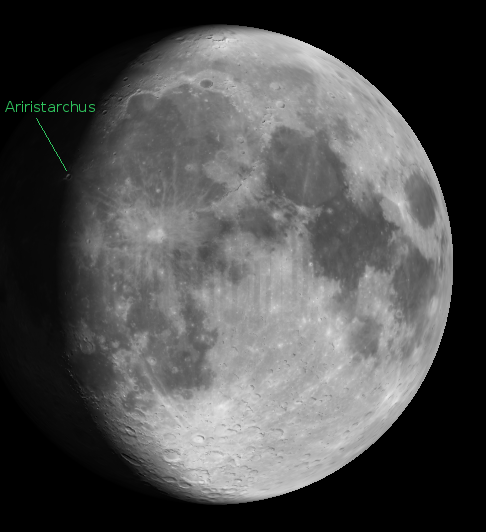
The moon with the Crater Aristarchus on the sunrise terminator at 9 p.m. November 10, 2016. Created using Virtual Moon Atlas.
06/16/2016 – Ephemeris – The Moon tonight
Ephemeris for Thursday, June 16th. Today the Sun will be up for 15 hours and 34 minutes, setting at 9:30, and it will rise tomorrow at 5:56. The Moon, half way from first quarter to full, will set at 4:23 tomorrow morning.
The Moon is bright as it moves toward full. In binoculars, the brightest spot on the Moon is visible on the left edge of the Moon at 10 p.m. In telescopes it becomes a crater named Aristarchus. The sea below Aristarchus where the terminator, the sunrise line cuts across is Oceanus Procellarum, the Ocean of Storms. Below that is the small circular sea called Mare Humorum, the Sea of Moisture. Below that we’re back in the lunar highlands with lots of large craters, rather to many
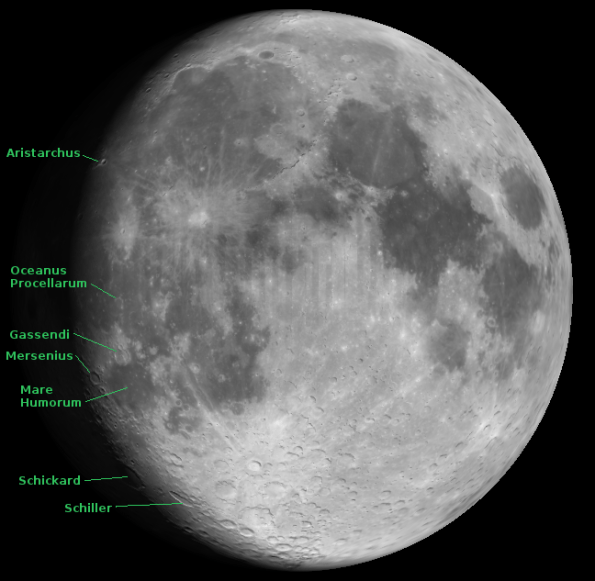
The Gibbous Moon at 10 p.m., June 16, 2016 showing some interesting features near the terminator.
to mention here. The transcripts of these programs with illustrations are available at bobmoler.wordpress.com. That’s Moler spelled simply M-O-L-E-R. The Moon illustration will point out the features I’ve discussed.
Times are for the Traverse City/Interlochen area of Michigan. They may be different for your location.
Addendum
 Bob Moler's Ephemeris Blog