Archive
Ephemeris: 05/20/2024 – Sunspots
This is Ephemeris for Monday, May 20th. Today the Sun will be up for 15 hours and 1 minute, setting at 9:10, and it will rise tomorrow at 6:07. The Moon, 3 days before full, will set at 4:52 tomorrow morning.
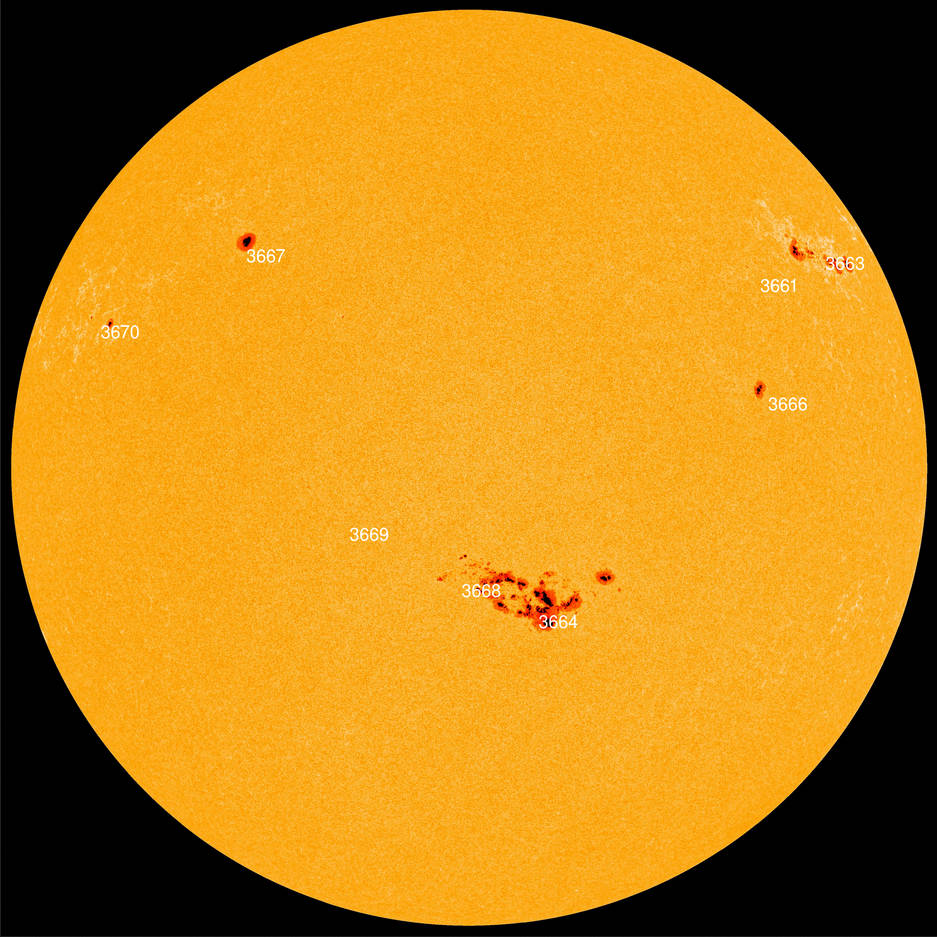
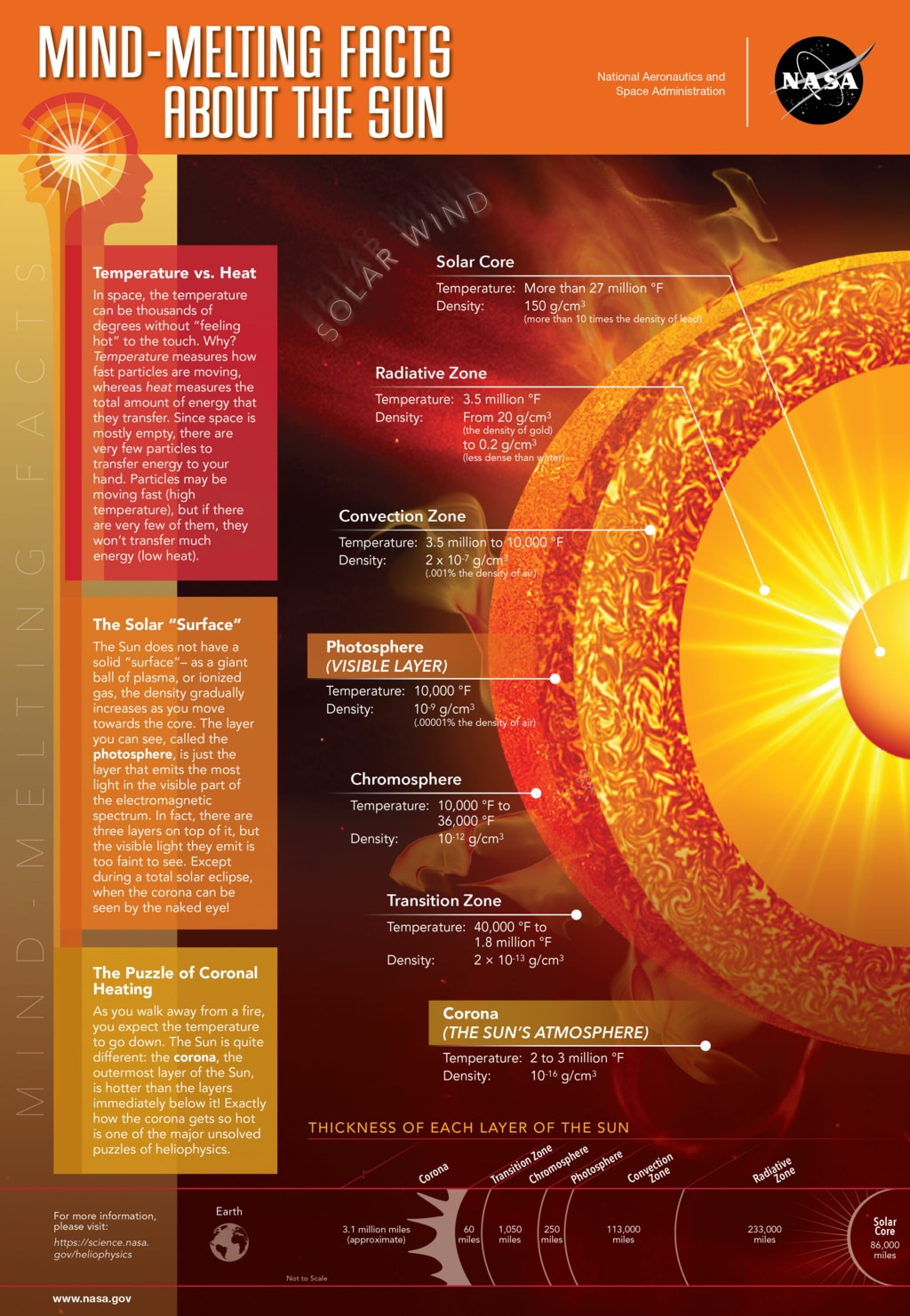
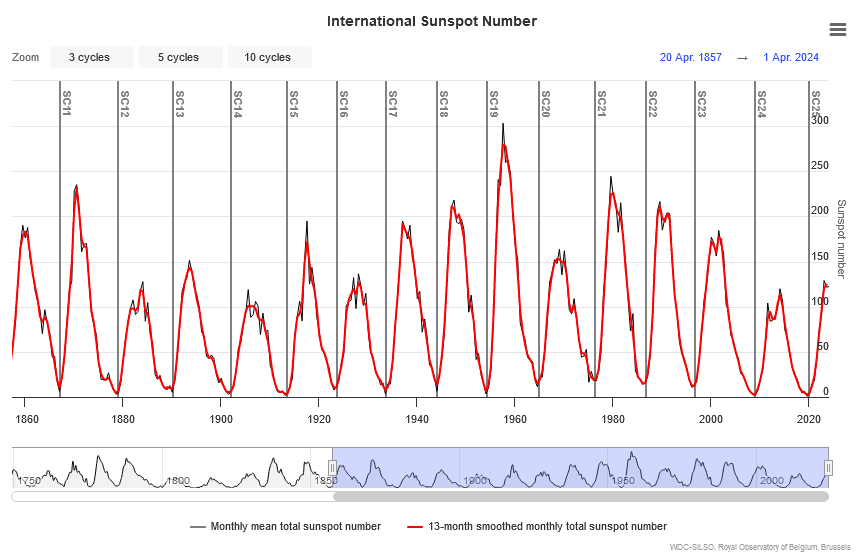
As can be seen with the northern light display more than a week ago that the Sun is becoming more active. It’s because particles, mostly protons, from the Sun in the form of the solar wind and enhancements in the solar wind called coronal mass ejections, tangle with the Earth’s magnetic field and stream through the upper atmosphere. The activity on the Sun is signaled by the ebb and flow of the number of dark spots called sunspots. Individual sunspots or sunspot groups only last for, maybe, a couple of weeks. They’re caused by the magnetic fields being generated in the Sun causing the gas to cool a bit and making them darker. Sunspot numbers ebb flow in a period of about 11 years, called a sunspot cycle. This sunspot cycle is reaching a higher peak than expected.
The astronomical event times given are for the Traverse City/Interlochen area of Michigan (EDT, UT–4 hours). They may be different for your location.
Addendum
A CME is heading our way – look for aurorae this weekend.
NOAA Space Weather Prediction Center has issued a warning:
2013-03-15 18:14 UTC G2 (Moderate) Geomagnetic Storm Expected
An Earth-directed coronal mass ejection (CME) was observed in conjunction with an R1 (Minor) solar flare radio blackout in the early hours of March 15th. This CME is expected to arrive late on March 16th, with G1 (Minor) geomagnetic storming forecast for the 16th and G2 (Moderate) storming forecast for the 17th. Stay tuned for updates.
A geomagnetic storm produces aurorae (auroras or northern and southern lights). The more intense the aurora the farther toward the equator it will appear.
A tip o’the old sunscreen to SpaceWeather.com for the heads up. You can sign up for alert emails from them too.
03/12/2012 – Ephemeris – Jupiter is level with Venus, also possible northern lights tonight
Ephemeris for Monday, March 12th. The sun will rise at 7:59. It’ll be up for 11 hours and 45 minutes, setting at 7:45. The moon, 2 days before last quarter, will rise at 1:33 tomorrow morning.
In the western evening sky, Jupiter and Venus are making a pass at each other. They shouldn’t, in the modern sense since Venus or Aphrodite of the Greeks was the daughter of Jupiter or Zeus. .Over this week we’ll watch as Jupiter slips below Venus to lead Venus in setting. Tonight Jupiter is level with and left of Venus. Venus will always be the brighter of the two. We also have an aurora watch for this evening. The sun has been active this weekend with a series of flares emanating from the largest sunspot group now visible called active region 1429. This group is rotating off so it’s flares soon won’t affect the earth. Check spaceweather.com for the latest. And check bobmoler.wordpress.com for an animation of the planet conjunction.
* Times are for the Traverse City/Interlochen area of Michigan. They may be different for your location.
Addendum
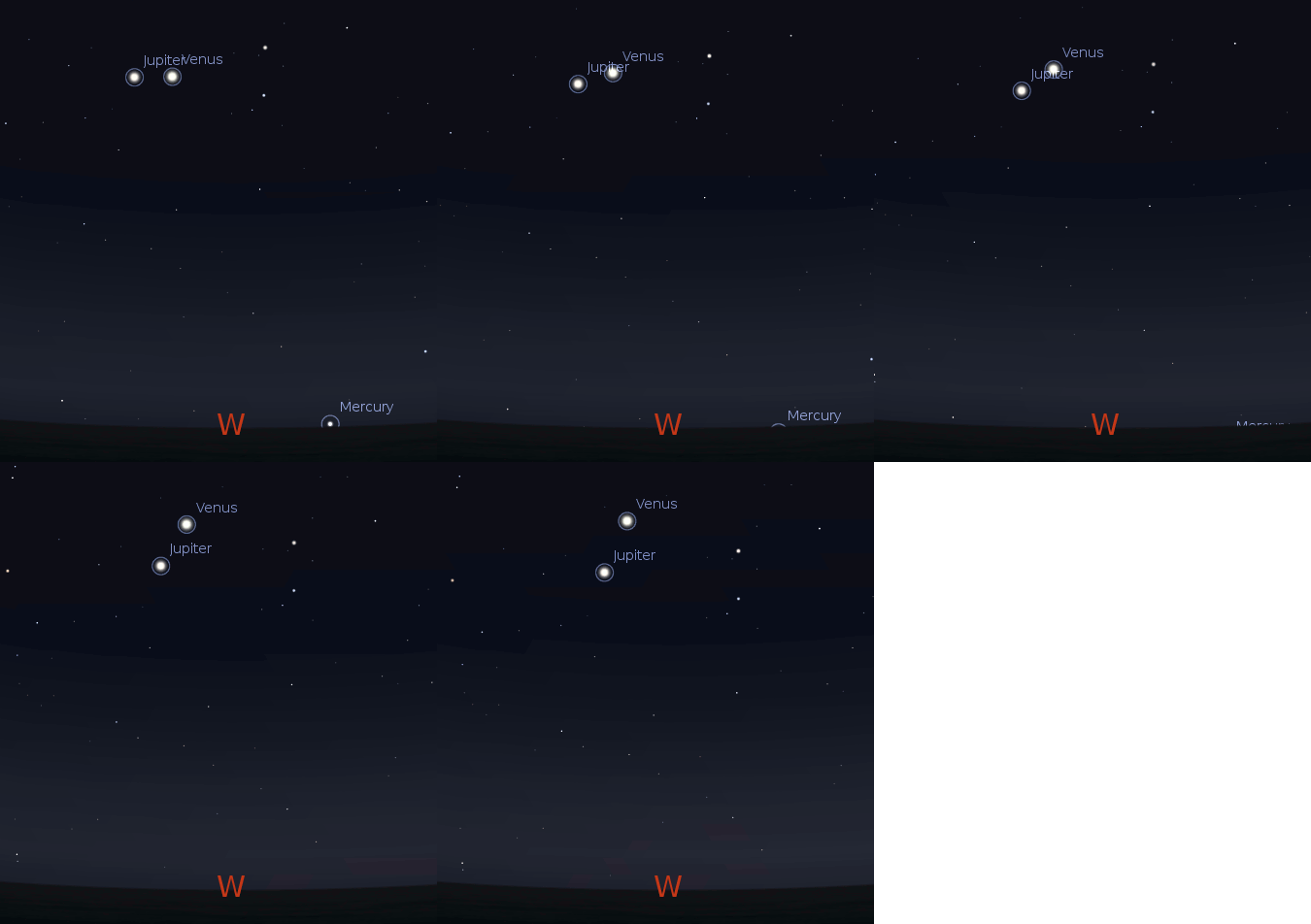
Jupiter and Venus at nightly intervals from March 12 to 16, 2012. Created using Stellarium.
The first frame of the animation is for tonight.
Aurora visible tonight 10/24/11
Check out this image:
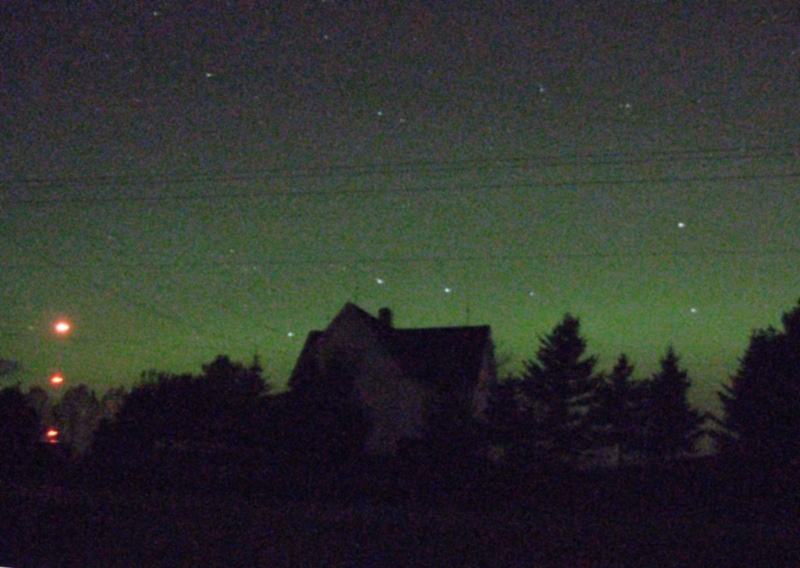
Aurora looking north at 10/24/2011 at 10:52 p.m.
According to SpaceWeather.com the earth was hit by a CME (Coronal Mass Ejection) at 2 p.m. eastern time. My thanks go to Sarah Johnson of Greenspire School for giving me the heads up on this. I’ve been busy working on my blog entries for later this week and was oblivious to the outside world.
Bad.
09/26/11 – Ephemeris – The sun is getting very active again
Monday, September 26th. The sun will rise at 7:34. It’ll be up for 11 hours and 58 minutes, setting at 7:32. The moon, 1 day before new, will rise at 7:53 tomorrow morning.
There is a large sunspot group rotating onto the earth facing side of the sun. It has already produced two large solar flares. Flares are explosions caused by the snapping of the magnetic field lines that cause the sunspots in the first place. The most energetic of these throw off a huge cloud of charged particles, protons, electrons, and alpha particles called a coronal mass ejection or CME at a couple of million miles an hour. It takes 36 to 48 hours for the cloud to reach the earth. Then it tangles with the earth’s magnetic field causing a geomagnetic storm. This is not good news for satellite operators and power and phone companies in the north. However for the rest of us, we get a chance to see the northern lights or Aurora Borealis. Saturday’s two flares from that sunspot group sent out a CME that we may catch the tail of later today.
* Times are for the Traverse City/Interlochen area of Michigan. They may be different for your location.
 Bob Moler's Ephemeris Blog