Archive
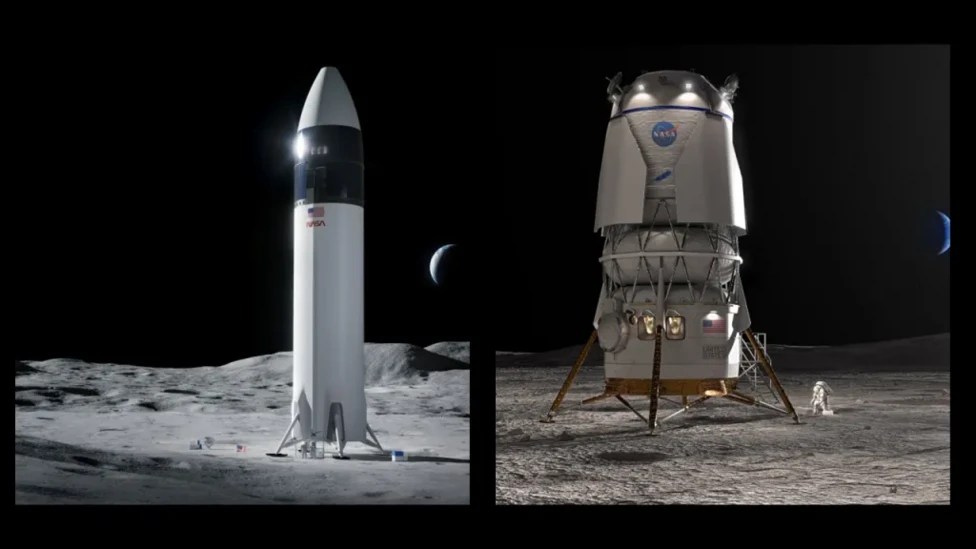
Ephemeris: 06/22/2026 – Will SpaceX and Blue Origin be ready for Artemis 3?
This is Ephemeris for Monday, June 22nd. Today the Sun will be up for 15 hours and 34 minutes, setting at 9:32, and it will rise tomorrow at 5:57. The Moon, 1 day past first quarter, will set at 1:53 tomorrow morning.
NASA and it’s partners SpaceX and Blue Origin are having problems on their way back to the Moon. On April 28th, Blue Origin’s New Glenn Rocket blew up doing a static firing of its engines, destroying the rocket and severely damaging the launch pad, the only one they had. History has shown that launch pads take a year or more to rebuild. The New Glen Rocket is to launch their moon lander. SpaceX had a partially successful flight of their Starship, but had loss of engines, and didn’t perform an in space relight of a starship engine, to prove they could deorbit it. These two companies are suppliers of the lunar landers, prototypes of which must be ready next year for the Artemis 3 mission and a real lander must be ready in 2028 to stay on schedule.
The astronomical event times given in this blog are for the Traverse City/Interlochen area of Michigan (Lat 44.7° N, Long 85.7° W; EDT, UT – 4 hours) unless stated otherwise. Times will be different for other locations.
Addendum