Archive
Ephemeris: 05/13/2024 – Viewing the Moon tonight
This is Bob Moler with Ephemeris for Monday, May 13th. Today the Sun will be up for 14 hours and 46 minutes, setting at 9:02, and it will rise tomorrow at 6:15. The Moon, 2 days before first quarter, will set at 2:44 tomorrow morning.
The crescent Moon tonight has what looks like a chain of three large craters near the terminator, visible in a low power telescope. The terminator is the line between day and night. Before the full moon, it’s the sunrise line. On closer inspection, these craters are of different ages. The north crater Theophilus, 63 miles in diameter and one of my favorite craters with a prominent central peak, looks relatively fresh. It’s not, it’s somewhat older than a billion years. The crater just south or below-left of it is Cyrillus, about the same size, which is almost 4 billion years old. Theophilus slightly overlaps Cyrillus. A bit farther south is Catharina, which again is about the same size and age range as Cyrillus, but seems more broken down than the other.
The astronomical event times given are for the Traverse City/Interlochen area of Michigan (EDT, UT–4 hours). They may be different for your location.
Addendum
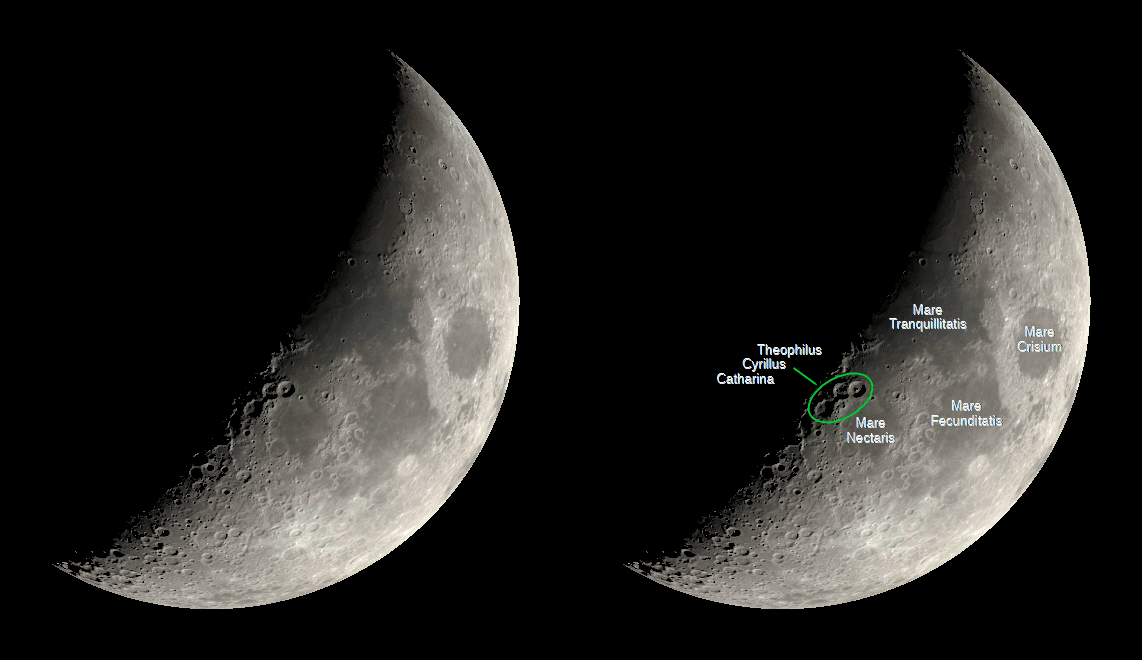
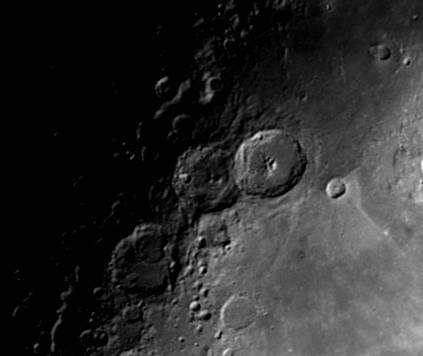
Ephemeris: 08/21/2023 – Looking at a trio of lunar craters tonight
This is Ephemeris for Monday, August 21st. Today the Sun will be up for 13 hours and 47 minutes, setting at 8:39, and it will rise tomorrow at 6:53. The Moon, 3 days before first quarter, will set at 10:48 this evening.
The crescent Moon tonight has what looks like a chain of three large craters near the terminator, visible in a low power telescope. The terminator is the line between day and night. Before the full moon, it’s the sunrise line. On closer inspection, these craters are of different ages. The north crater Theophilus, 63 miles in diameter and one of my favorite craters, looks relatively fresh. It’s not, it’s somewhat older than a billion years. The crater just south of it is Cyrillus, about the same size, which is almost 4 billion years old. Theophilus slightly overlaps Cyrillus. A bit farther south is Catharina, which again is about the same size and age range as Cyrillus, but seems more broken down than the other.
The astronomical event times given are for the Traverse City/Interlochen area of Michigan (EDT, UT –4 hours). They may be different for your location.
Addendum
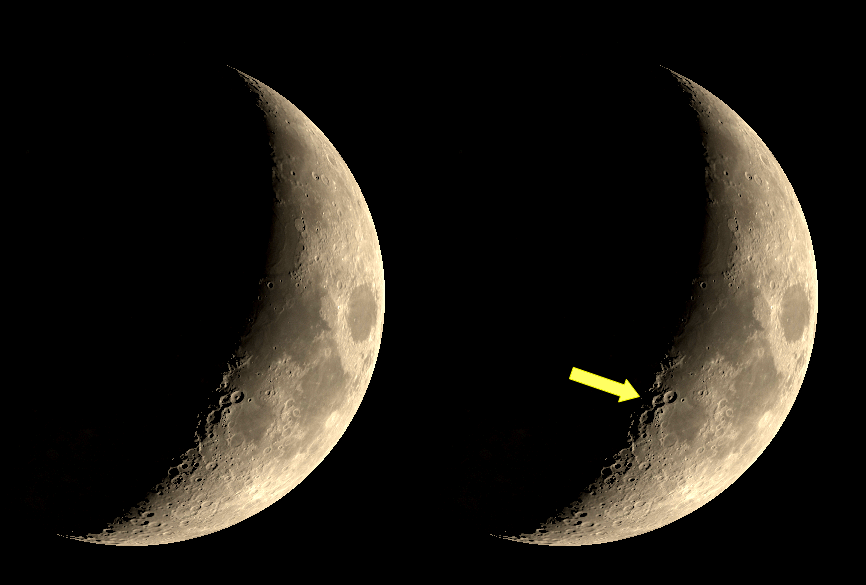
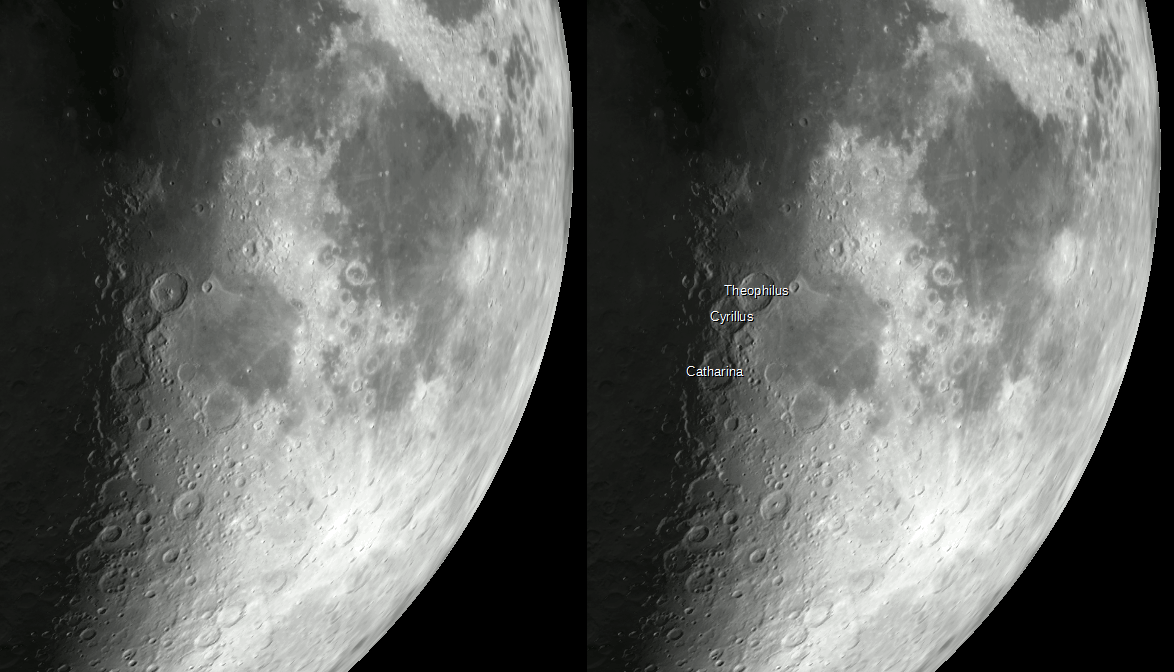
A closer look at these three craters for tonight at 10 pm. Created using Virtual Moon Atlas, LibreOffice Draw and GIMP.
 Bob Moler's Ephemeris Blog