Archive
04/24/2013 – Ephemeris – Where are the two bright planets this week?
Ephemeris for Wednesday, April 24th. The sun rises at 6:43. It’ll be up for 13 hours and 55 minutes, setting at 8:38. The moon, 1 day before full, will set at 6:24 tomorrow morning.
It’s time to check out the two remaining bright planets for this week. Jupiter is located in the constellation of Taurus, above the V shape of stars, the face of the bull and is in the west during the evening. It will set at 12:10 a.m. In the west northwest. Jupiter is still high enough as it gets dark to get a very good view of its cloud bands and satellites. The four moons that Galileo found are easy targets for small telescopes or even sharp-eyed binocular observers. The other bright planet Saturn will rise at 8:43 p.m. in the east southeast. It’s located in eastern Virgo, but us moving back a bit toward the bright star Spica to its right. Tonight the bright moon will be near Spica, so it may make both Saturn and Spica hard to spot.
Times are for the Traverse City/Interlochen area of Michigan. They may be different for your location.
Addendum
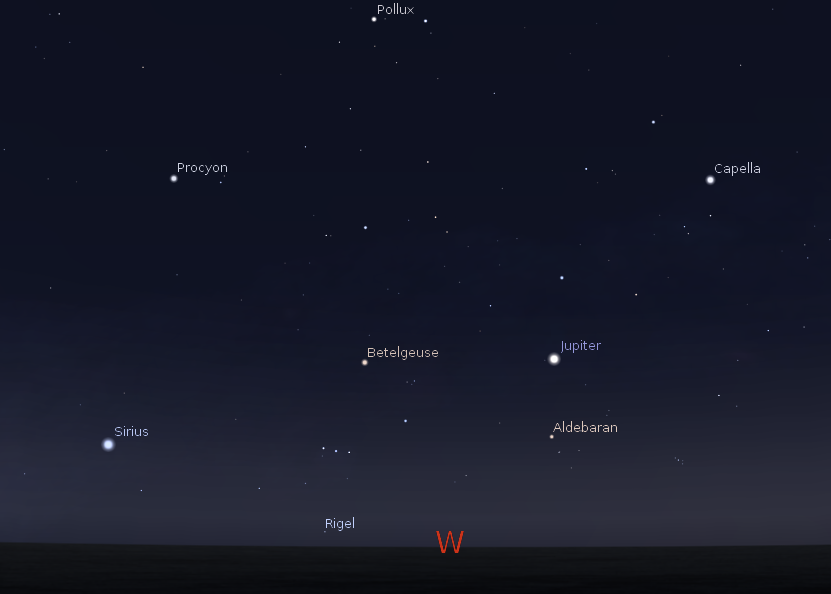
Jupiter and the fleeing stars of winter at 10 p.m. on April 24, 2013. Created using Stellarium.
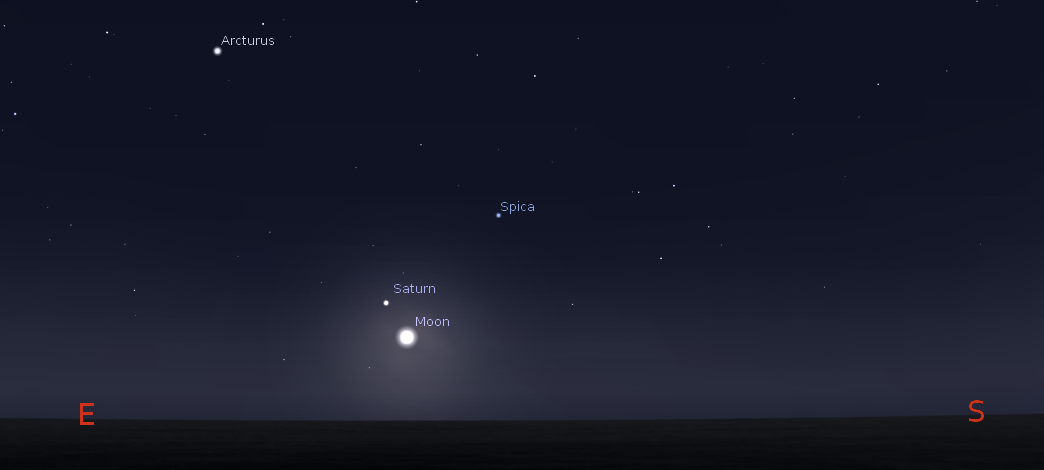
Saturn and the moon at 10 p.m. on April 24, 2013. Created using Stellarium.
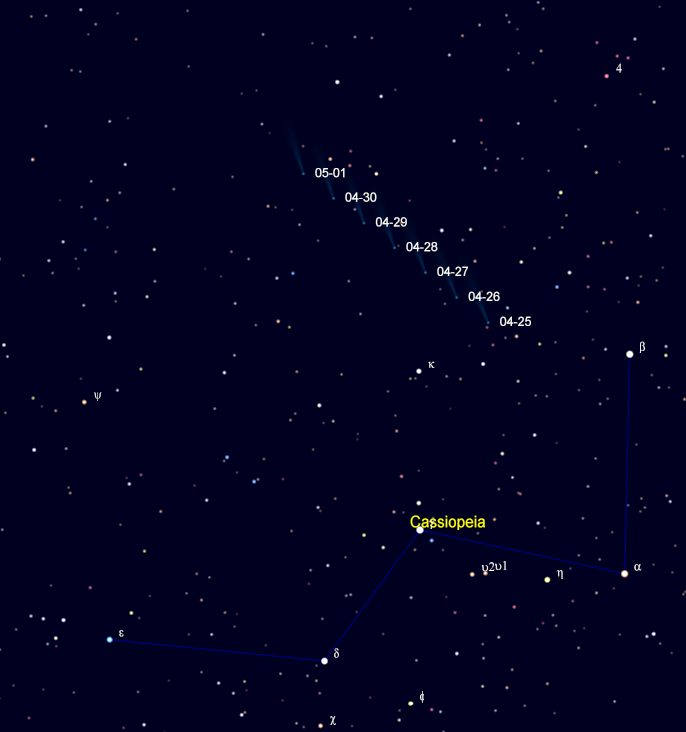
Our last look at Comet PanSTARRS at 5 a.m. on April 25 to May 1, 2013. Created using Cartes du Ciel (Sky Charts).
04/17/2013 – Ephemeris – Where are the bright planets this week?
Ephemeris for Wednesday, April 17th. The sun rises at 6:54. It’ll be up for 13 hours and 35 minutes, setting at 8:30. The moon, 1 day before first quarter, will set at 2:49 tomorrow morning.
It’s time to check out the two remaining bright planets for this week. I’m no longer going to cover Comet PanSTARRS here, since it has dropped below naked eye visibility, but I will provide finder charts in the Ephemeris blog at bobmoler.wordpress.com for the next few weeks. Jupiter is located in the constellation of Taurus, above the V shape of stars, the face of the bull and is in the west during the evening. It will set at 12:27 a.m. The other bright planet Saturn will rise at 9:13 p.m. in the east southeast. It’s located in eastern Virgo. It will pass due south at 2:27 a.m. Both planets are wonderful sights in telescopes. Jupiter with its cloud bands and moons, Saturn with those fantastic rings.
Times are for the Traverse City/Interlochen area of Michigan. They may be different for your location.
Addendum
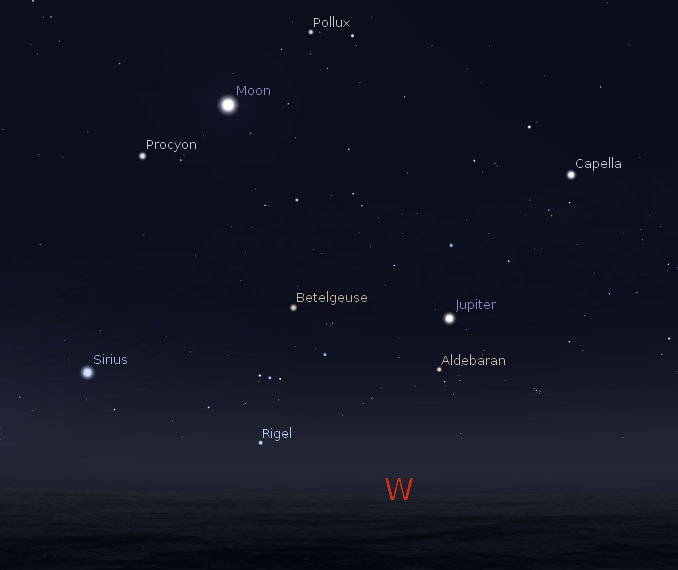
Jupiter and the setting stars of winter at 10 p.m., April 17, 2013. Created using Stellarium.
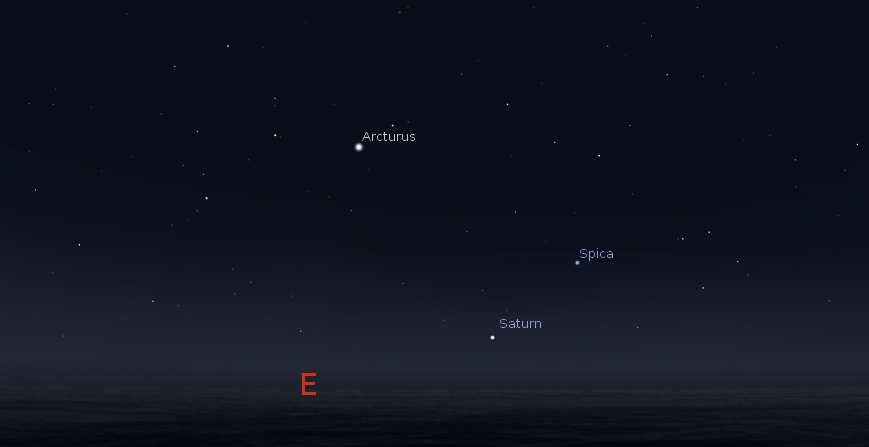
Saturn rising with the bright stars of late spring at 10 p.m., April 17, 2013. Created using Stellarium.
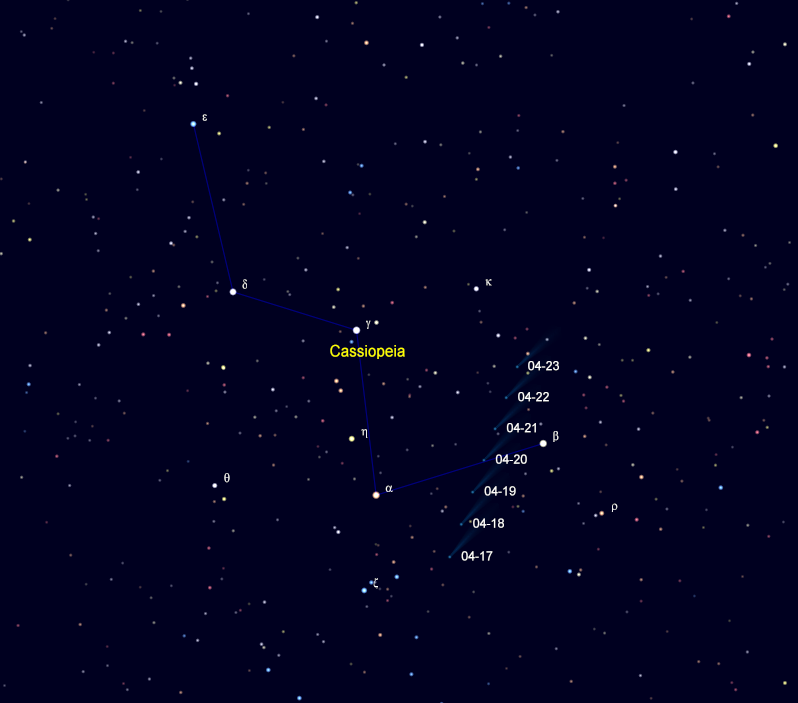
Comet PanSTARRS is moving through Cassiopeia from 04/17/13 to 4/23/13 at 11 p.m. low in the north north-east. Created using Cartes du Ciel (Sky Charts). It requires binoculars or telescope to spot.
04/10/2013 – Ephemeris – Where are Comet PanSTARRS and the two bright planets thia week?
Ephemeris for Wednesday, April 10th. The sun will rise at 7:06. It’ll be up for 13 hours and 14 minutes, setting at 8:21. The moon is new today, and won’t be visible.
It’s time to check out a comet and the two remaining bright planets for this week. Comet PanSTARRS is in the northwest in the evening, moving away from the sun and us, and getting a little higher in the sky as it moves northward. The comet will no longer set though it is best seen in the evening and mornings just after the end of evening twilight and before morning twilight. The comet is now down to near 6th magnitude, strictly a binocular object. Jupiter is located in the constellation of Taurus and is in the west during the evening. It will set at 12:51 a.m. The other bright planet Saturn will rise at 9:43 p.m. in the east southeast. It’s located in eastern Virgo. It will pass due south at 2:56 a.m. Both planets are wonderful sights in telescopes. Saturn has those wonderful rings.
Times are for the Traverse City/Interlochen area of Michigan. They may be different for your location.
Addendum
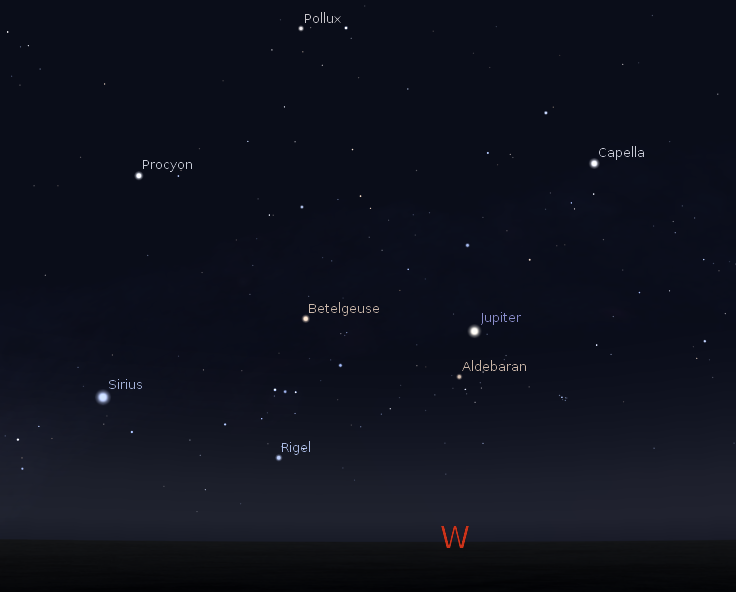
Jupiter and the setting winter stars at 10 p.m. on April 10, 2013. Created using Stellarium.
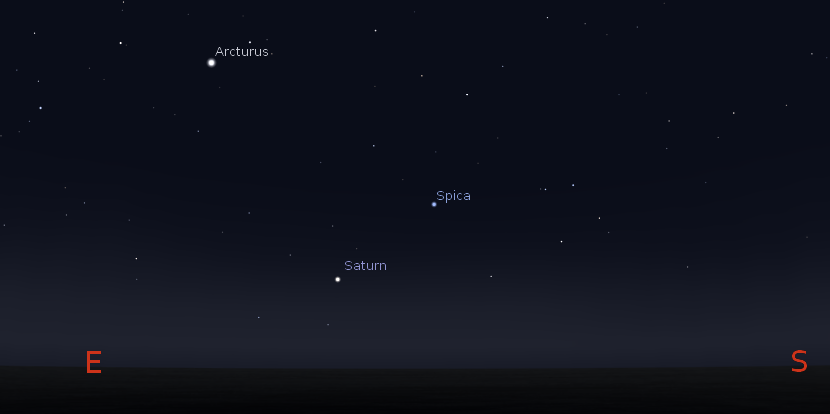
Saturn rising with bright stars of spring at 11 p.m. April 10, 2013. Created using Stellarium.
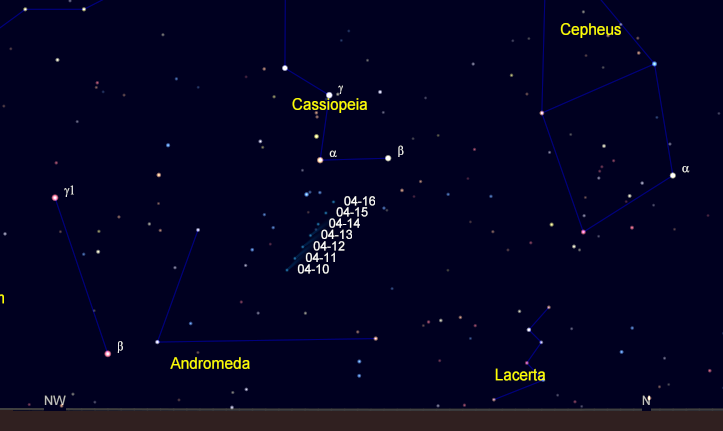
Comet PanSTARRS at the end of twilight at 10 p.m. for the seven days starting April 10, 2013. Created using Cartes du Ciel.
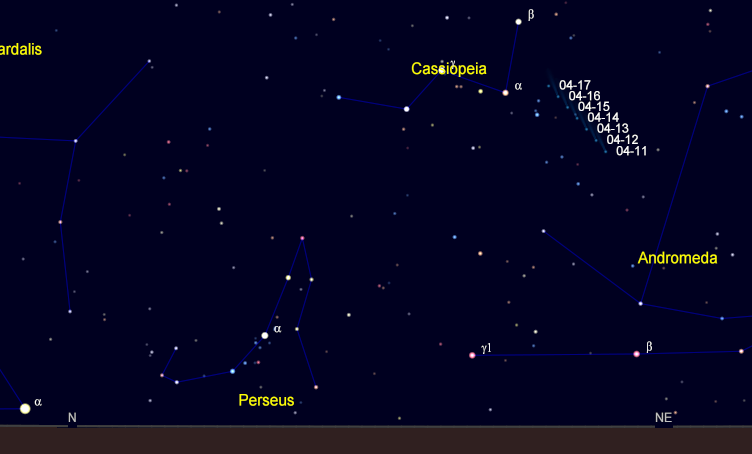
Comet PanSTARRS at the beginning of twilight 5:20 a.m. for the dates listed. Created using Cartes du Ciel.
04/03/2013 – Ephemeris – Where are Comet PanSTARRS and the bright planets this week?
Ephemeris for Wednesday, April 3rd. The sun will rise at 7:19. It’ll be up for 12 hours and 53 minutes, setting at 8:12. The moon, at last quarter today, will rise at 3:57 tomorrow morning.
It’s time to check out a comet and the two remaining bright planets for this week. Comet PanSTARRS is in the northwest, moving away from the sun, and getting a little higher in the sky as it moves northward rather than eastward. The comet will set at 11:22 p.m. The comet is now down to near 5th magnitude, strictly a binocular object. It’s also visible in the morning, rising at 3:04 a.m. Jupiter is located in the constellation of Taurus and is in the west during the evening. It will set at 1:16 a.m. The other bright planet Saturn will rise at 10:13 p.m. in the east southeast. It’s located in eastern Virgo. It will pass due south at 3:26 a.m. Both planets are wonderful sights in telescopes. Saturn is the most beautiful of planets with its rings.
Times are for the Traverse City/Interlochen area of Michigan. They may be different for your location.
Addendum
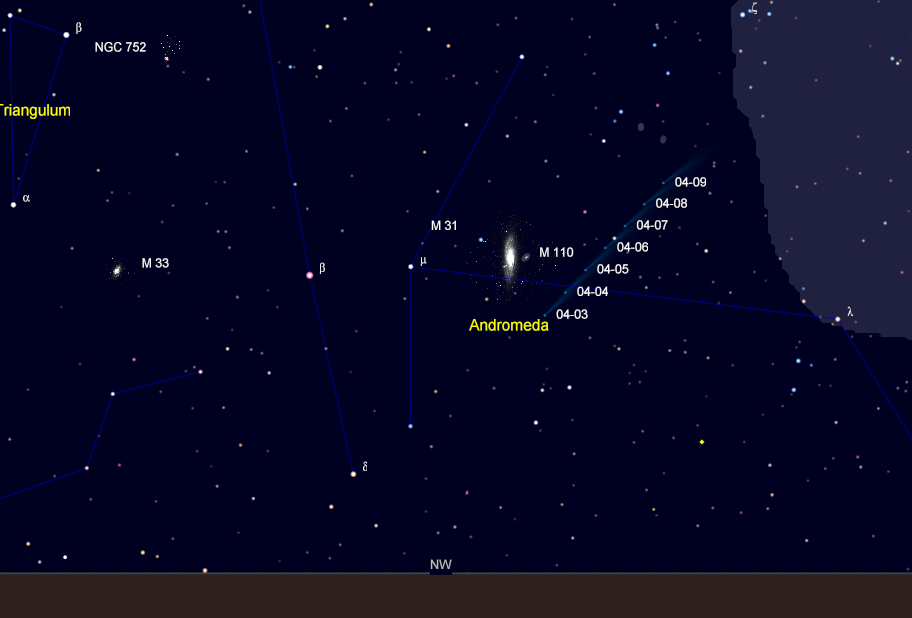
Comet PanSTARRS at 9:30 p.m. for the period April 3 through 9, 2013. Created using Cartes du Ciel.
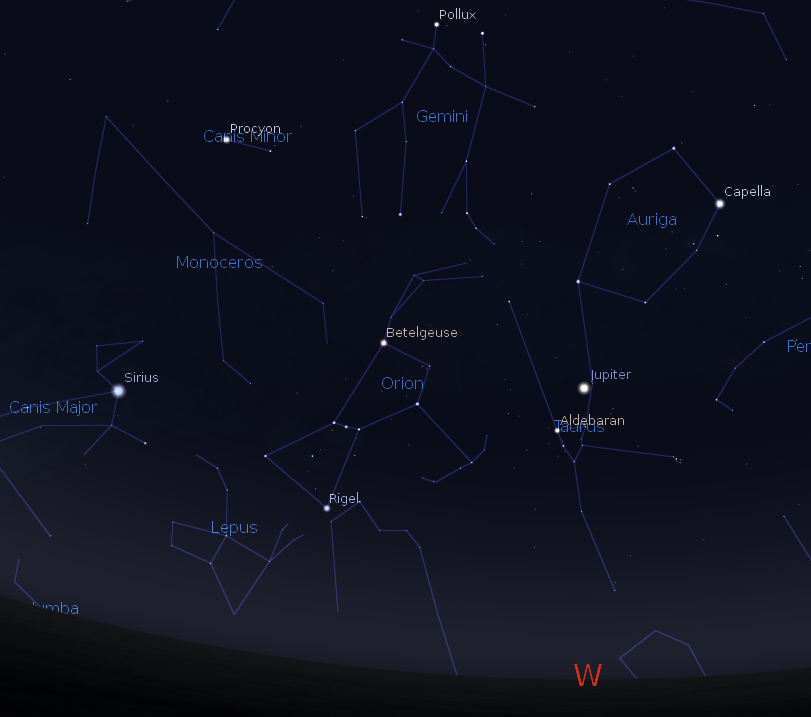
Jupiter with the setting constellations of winter at 10 p.m. on April 3, 2013. Created using Stellarium.
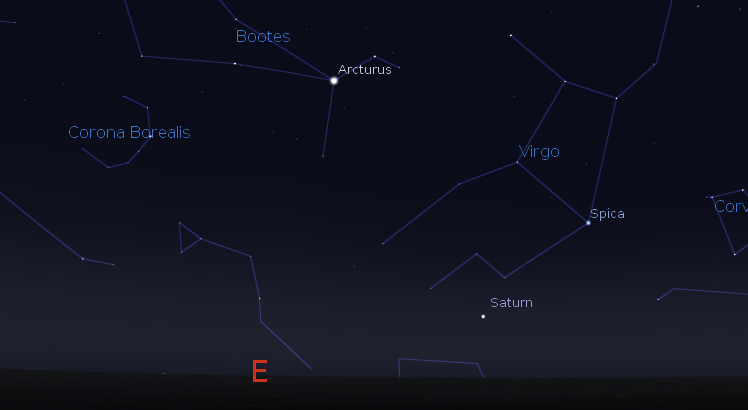
Saturn rising at 11:30 p.m. on April 3, 2013. Created using Stellarium.
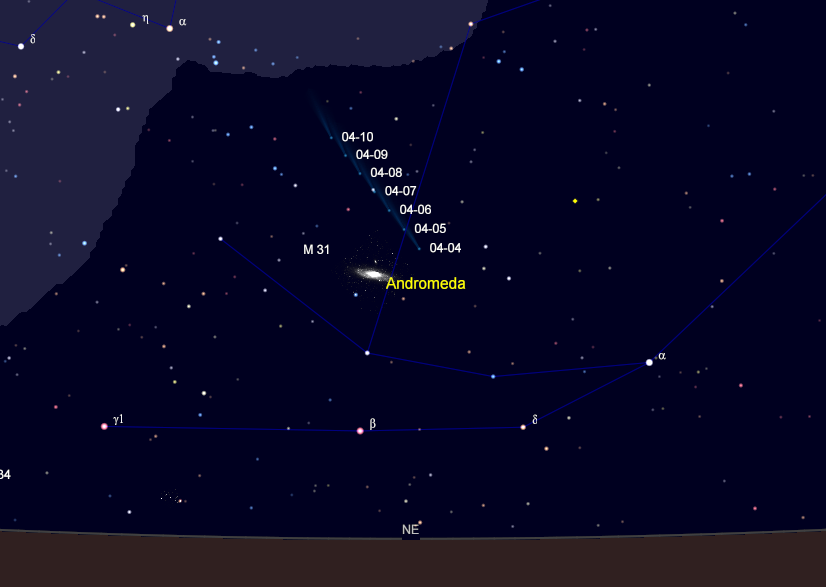
Comet PanSTARRS in the morning at 5:45 for the period April 4 through 10, 2013. Created using Cartes du Ciel.
03/27/2013 – Ephemeris – Where’s Comet PanSTARRS and the bright planets this week?
Ephemeris for Wednesday, March 27th. The sun will rise at 7:32. It’ll be up for 12 hours and 31 minutes, setting at 8:04. The moon, at full today, will rise at 8:49 this evening.
It’s time to check out a comet and the two remaining bright planets for this week. Comet PanSTARRS is in the northwest, moving away from the sun, and getting a little higher in the sky as it moves northward rather than eastward. The comet will set at 10:26. The comet is now down to near 4th magnitude, as bright as a relatively faint naked eye star. Jupiter is located in the constellation of Taurus and is in the high southwest during the evening. It will set at 1:35 a.m. Jupiter is a wonderful sight in telescopes with its cloud bands and its moons which change positions each night. The other bright planet Saturn will rise at 10:43 p.m. in the east southeast. It’s located in eastern Virgo. It will pass due south at 3:55 a.m. Saturn is the most beautiful of planets in a telescope.
Times are for the Traverse City/Interlochen area of Michigan. They may be different for your location.
Addendum
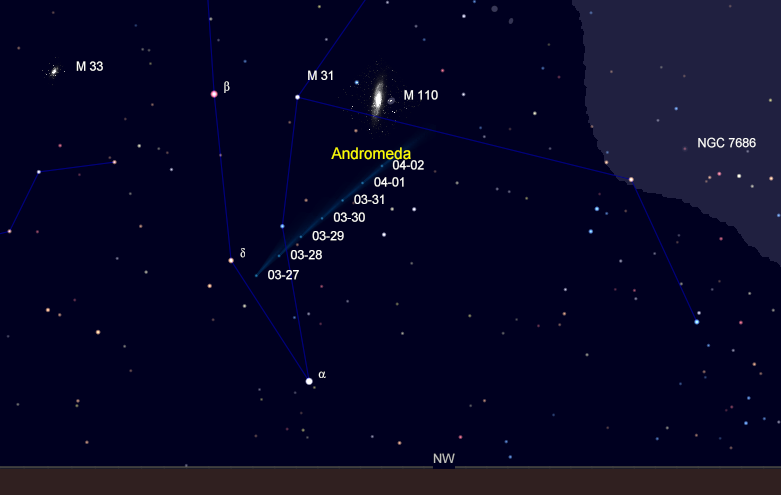
Comet PanSTARRS at about 9:15 p.m. from March 27 to April 2, 2013. Note that the comet will pass the Great Andromeda Galaxy in early April. Created using Cartes du Ciel.
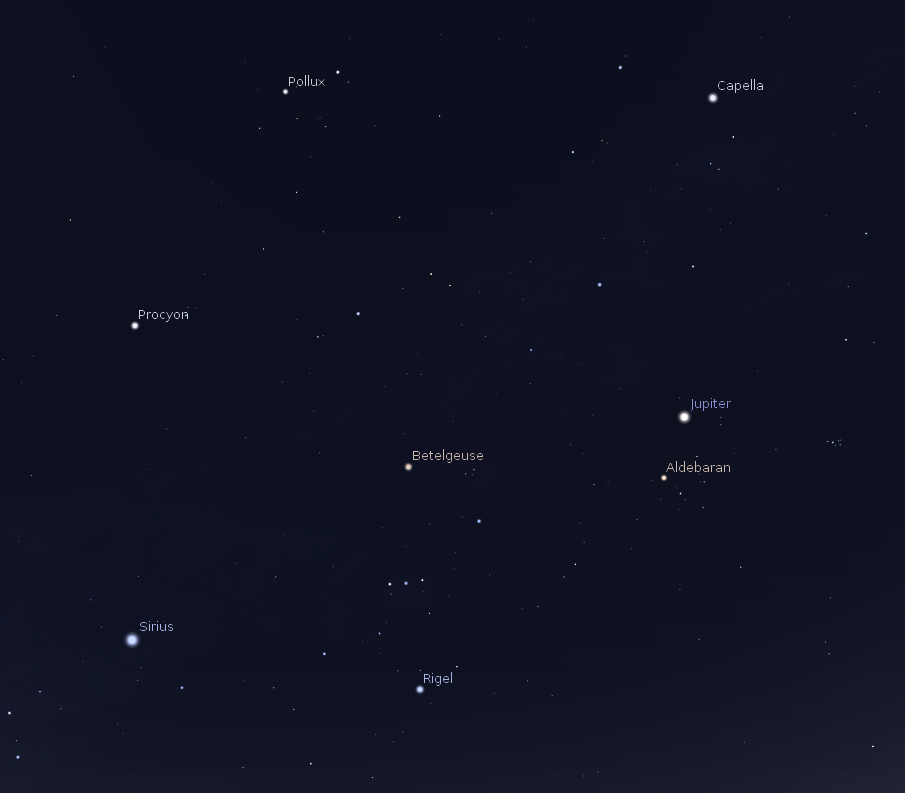
Jupiter with the stars of winter in a moon brightened sky at 9:30 p.m. March 27, 2013. Created using Stellarium.
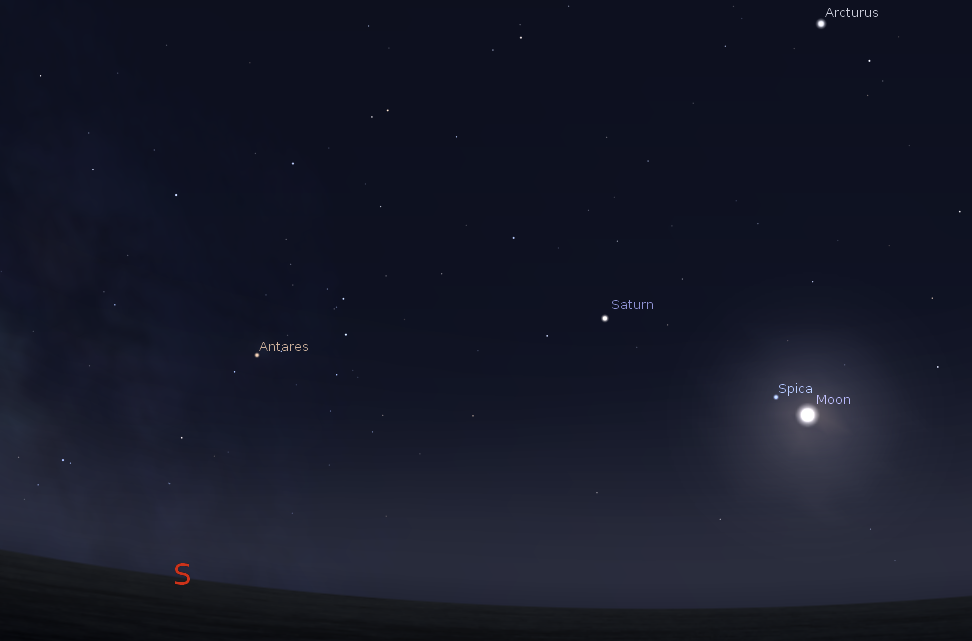
Saturn near Spica and the moon at 6 a.m. on March 28th. The moon will be passing Saturn on Friday afternoon, below the horizon. Created using Stellarium.
03/22/2013 – Ephameris – Comet PanSTARRS: Ancient and not so ancient fears of comets
Ephemeris for Friday, March 22nd. The sun will rise at 7:41. It’ll be up for 12 hours and 16 minutes, setting at 7:57. The moon, 3 days past first quarter, will set at 5:24 tomorrow morning.
Comet PanSTARRS is moving northward and away from the sun. It is slowly being seen higher in the west northwest when first spotted. The head of PanSTARRS’ brightness should be down to 3rd magnitude, as bright as the star in the Big Dipper that connects the handle to the bowl. Comets, in ancient times, were thought to be omens of the death of kings, famines and the such. Ancient astronomers and astrologers. were used to the motions of the planets, though they never really understood them, they could model the motions with varying degrees of accuracy. Comets were the wild cards, disrupting the plan of the gods, and so were considered bad news. Western astronomers from Aristotle up to Kepler thought they were atmospheric phenomena.
Times are for the Traverse City/Interlochen area of Michigan. They may be different for your location.
Addendum
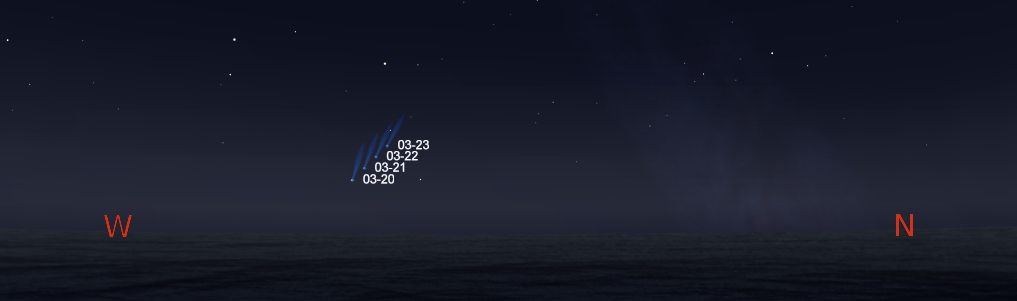
Comet PanSTARRS about an hour and a quarter after sunset for March 22 through the 25th. Created using Stellarium and Cartes du Ciel. Click on the image to enlarge.
Comets were thought to be bad news:

The comet of 1857
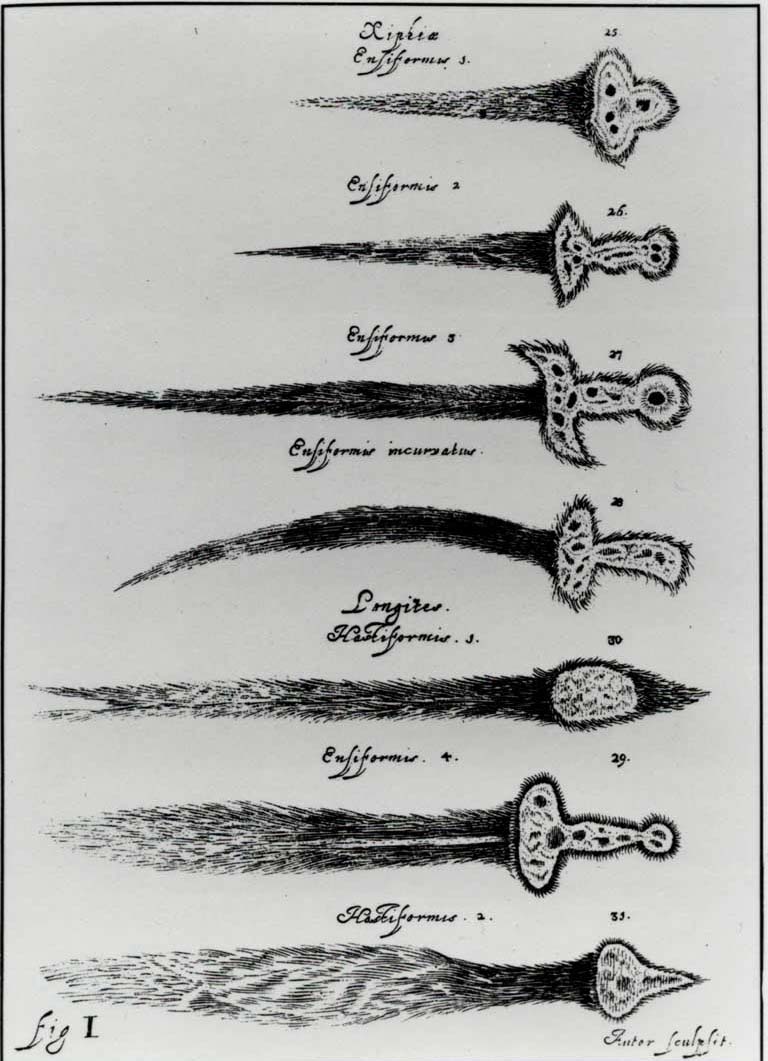
Comets as daggers or swords. Bad news? You bet.
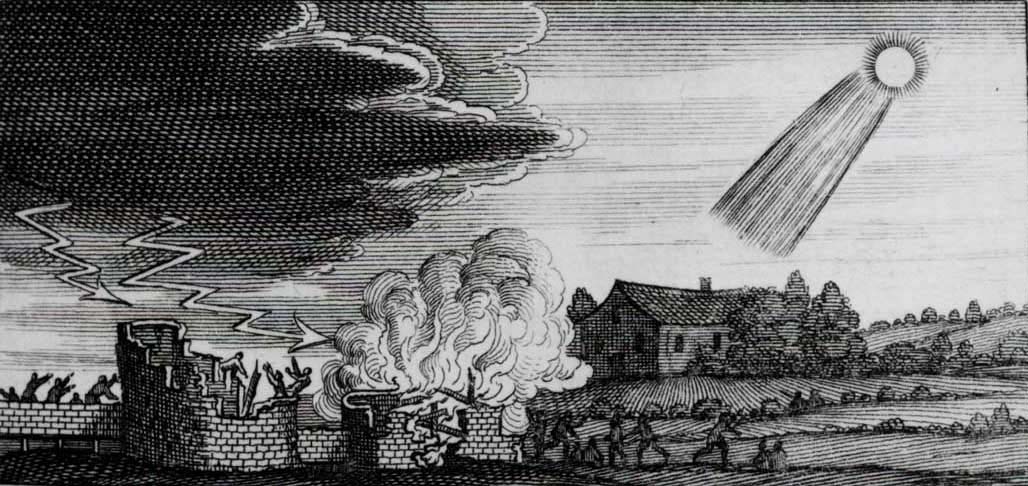
Comet leaves destruction in its wake. A woodcut.
03/21/2013 – Ephemeris – Where did Comet PanSTARRS come from?
Ephemeris for Thursday, March 21st. The sun will rise at 7:43. It’ll be up for 12 hours and 13 minutes, setting at 7:56. The moon, 2 days past first quarter, will set at 4:52 tomorrow morning.
Comet PanSTARRS is heading away from both the sun and the earth. It heading northward. Its orbit is inclined nearly 90 degrees away from the plane of the earth’s orbit. PanSTARRS will recede far past Neptune or the Kuiper Belt of objects that include the dwarf planet Pluto into the Oort cloud of cometary objects that extend out to a light year or 6 trillion miles from the sun. This cloud was named after Dutch astronomer Jan Oort. The comet may be ejected from the solar system. It’s orbit is currently calculated to be slightly hyperbolic. If that holds up, it will drift among the stars. It is thought that occasionally, in millions of years a star comes close or through the Oort cloud and scatters them.
Times are for the Traverse City/Interlochen area of Michigan. They may be different for your location.
Addendum
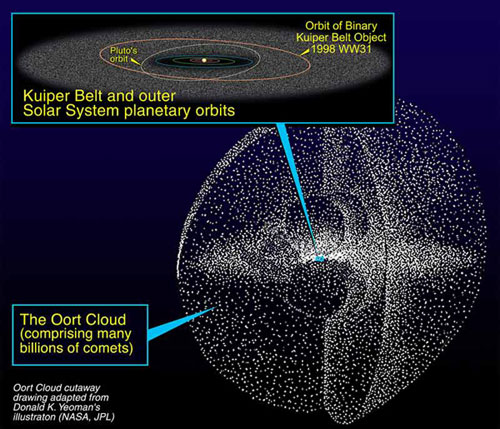
Artist’s impression of the Oort Cloud. (NASA/JPL). Hat Tip: Universe Today.
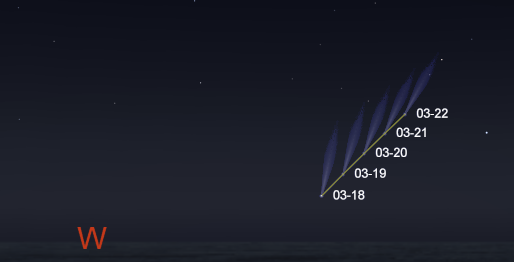
Comet PanSTARRS in the next 5 days at 9:15 p.m. Created using Stellarium and Cartes du Ciel.
03/20/2013 – Ephemeris – When does spring start, and where is Comet PanSTARRS and the bright planets this week?
Ephemeris for Wednesday, March 20th. The sun will rise at 7:45. It’ll be up for 12 hours and 10 minutes, setting at 7:55. The moon, 1 day past first quarter, will set at 4:17 tomorrow morning.
The sun will cross the earth equator shortly at 7:02 a.m. bringing the season of spring. It’s the vernal equinox. Comet PanSTARRS is in the west northwest low on the horizon. It can best be seen about 9:15 or so. It will set at 9:52 p.m. Jupiter is located in the constellation of Taurus and is in the high southwest during the evening. It will set at 2:00 a.m. Jupiter is a wonderful sight in telescopes with its cloud bands and its moons which change positions each night. The other bright planet Saturn will rise at 11:12 p.m. in the east southeast. It’s located in eastern Virgo. Saturn will pass due south at 4:24 a.m. Saturn is the most beautiful of planets when seen in telescopes. It will be in the southwest for early risers.
Times are for the Traverse City/Interlochen area of Michigan. They may be different for your location.
Addendum
Comet PanSTARRS in the next 5 days at 9:15 p.m. Created using Stellarium and Cartes du Ciel.
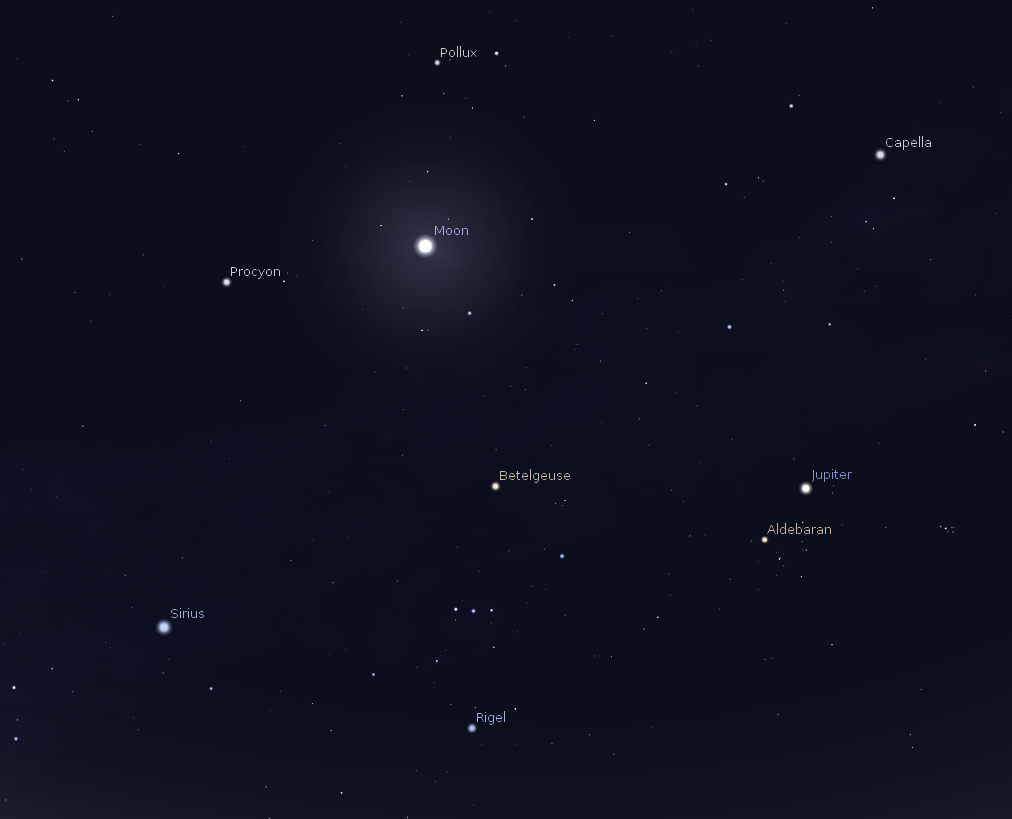
Jupiter, the moon and winter stars at 10 p.m. on March 20, 2013. Created using Stellarium.
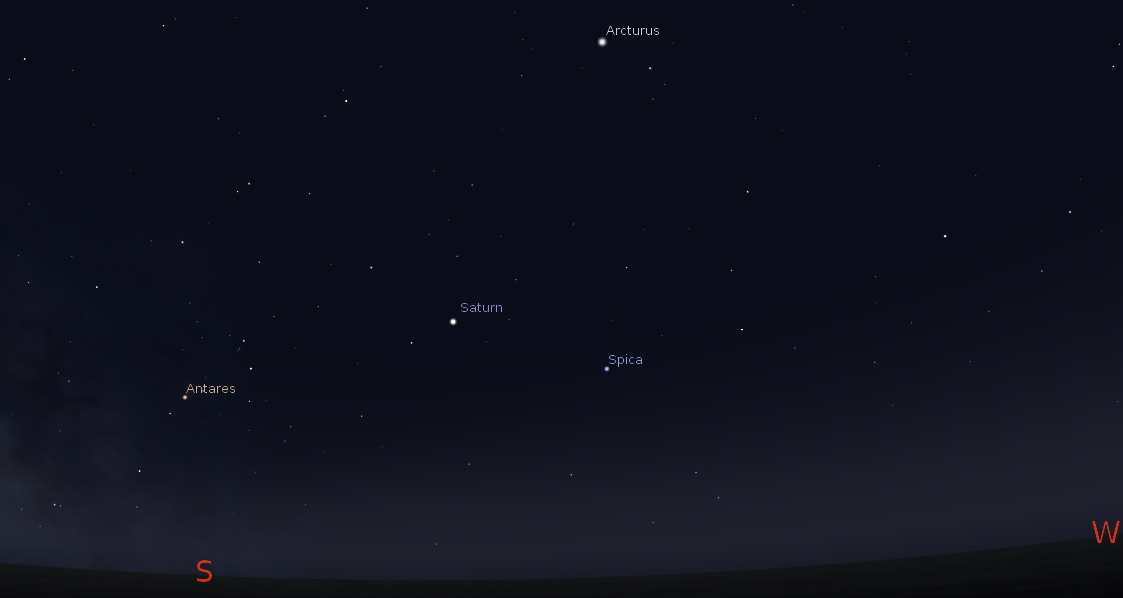
Saturn and the morning stars at 6 a.m. on March 21, 2013. Created using Stellarium.
03/19/2013 – Ephemeris – PanSTARRS, of course, plus a spring preview
Ephemeris for Tuesday, March 19th. The sun will rise at 7:47. It’ll be up for 12 hours and 6 minutes, setting at 7:53. The moon, at first quarter today, will set at 3:38 tomorrow morning.
Comet PanSTARRS continues to be seen low in evening twilight. It is moving now into the west northwest. When it becomes dark enough it will display a fan shaped tail in binoculars. It is moving away from both the sun and the earth. Tomorrow will see our own milestone as the earth moves into a position where the sun appears over the earth’s equator, and the sun sets at the south pole of the earth and rises at the north pole. It will be the vernal or spring equinox. Australians and other folks south of the equator may prefer to call it the March equinox, because for them autumn starts. The exact time the sun will appear to cross the equator heading northward will be 7:02 tomorrow morning. The sun will keep heading northward until June 21st.
Times are for the Traverse City/Interlochen area of Michigan. They may be different for your location.
Addendum
Comet PanSTARRS for this week’s weekdays at 9:15 p.m. Created using Stellarium and Cartes du Ciel.

The earth as seen from the sun near the vernal equinox. See the earth from north pole to south pole. Created using Celestia.
03/15/2013 – Ephemeris – The latest on Comet PanSTARRS and possible viewing Saturday
Ephemeris for Friday, March 15th. The sun will rise at 7:54. It’ll be up for 11 hours and 54 minutes, setting at 7:48. The moon, half way from new to first quarter, will set at 12:14 tomorrow morning.
This past Wednesday evening it was clear around here and Comet PanSTARRS was visible very low on the western horizon. Estimates say the comet is now brighter than predicted. There’s wonderful images on http://spaceweather.com, and https://bobmoler.wordpress.com, the one on my blog was taken by Scott Anttila from Royal Oak last night. It should bode well for great viewing for the next week or so. The comet will set at 9:24 p.m. tonight. Saturday there will be a Star Party at the NMC Observatory starting at 9 p.m. Come a bit early and trudge through the snow a bit to see the comet. It isn’t visible from the building. Bring your binoculars, it’s the best way to see it, and hope for clear skies.
Times are for the Traverse City/Interlochen area of Michigan. They may be different for your location.
Addendum
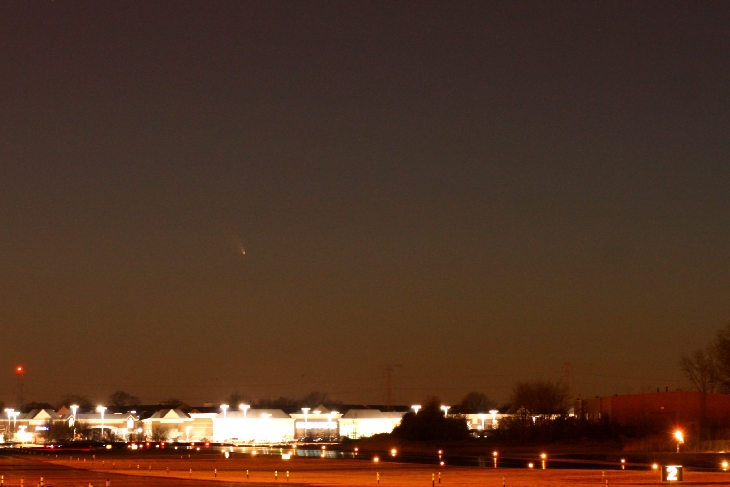
Comet PanSTARRS over Royal Oak, MI March 14, 2013. Photo taken by Scott Anttila. Click to enlarge.
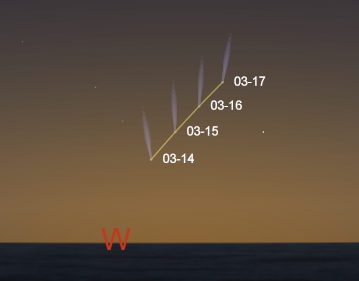
Comet PanSTARRS from March 14, 2013 through the 17th. Created using Stellarium and Cartes du Ciel.
 Bob Moler's Ephemeris Blog