Archive
Ephemeris: 10/24/2025 – How to spot the Double Cluster
This is Ephemeris for Friday, October 24th. Today the Sun will be up for 10 hours and 32 minutes, setting at 6:42, and it will rise tomorrow at 8:11. The Moon, 3 days past new, will set at 7:55 this evening.
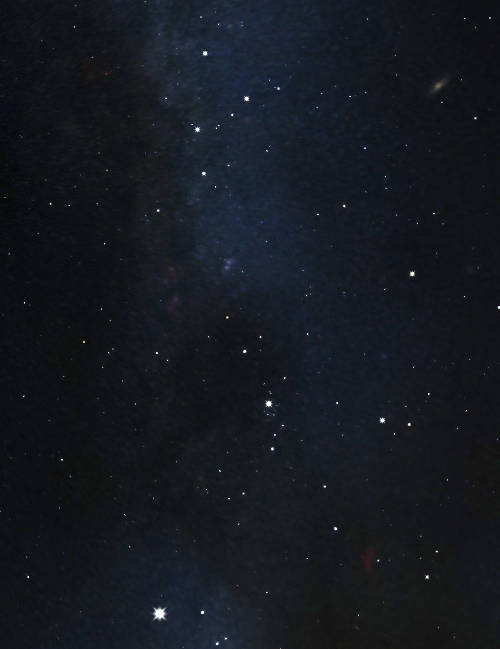
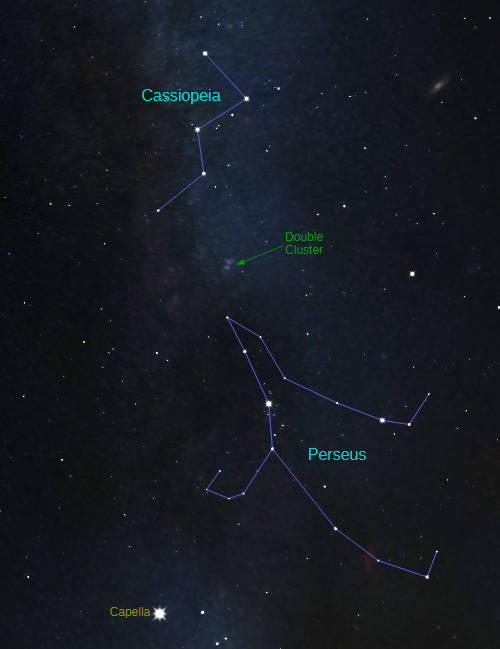
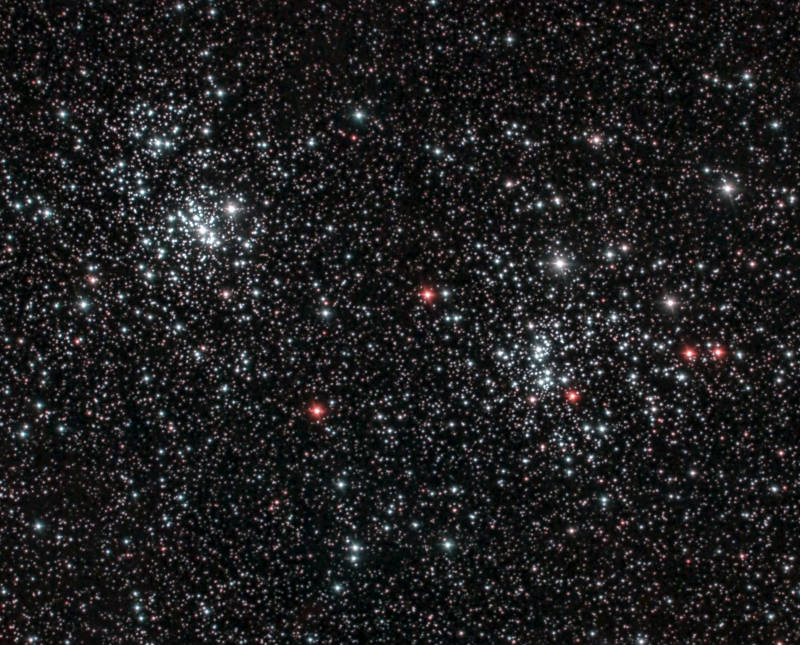
This pair of objects are about as dim as one can see with the naked eye, but very rewarding for binoculars or small telescope, the Double Cluster. It’s a fine pair of star clusters just below the W of the constellation of Cassiopeia the queen located in the northeast. Draw a vertical line down from the middle star of the W through the next star into the glow of the Milky Way. The Double Cluster appears to the unaided eye as a brighter glow of the Milky Way. This is confirmed with binoculars. But in a small telescope it becomes two clusters of sparkling diamonds. The clusters are much younger than the Sun, so their brightest stars are blue-white to our eyes. The average distance of the two from Earth is 7,500 light years.
The astronomical event times given in this blog are for the Traverse City/Interlochen area of Michigan (Lat 44.7° N, Long 85.7° W; EDT, UT – 4 hours) unless stated otherwise. Times will be different for other locations.
Addendum
02/24/2017 – Ephemeris – Winter star party at the Sleeping Near Dunes tomorrow night
Ephemeris for Friday, February 24th. The Sun will rise at 7:27. It’ll be up for 10 hours and 56 minutes, setting at 6:23. The Moon, 2 days before new, will rise at 6:53 tomorrow morning.
Tomorrow night the Grand Traverse Astronomical Society and the Rangers of the Sleeping Bear Dunes National Lakeshore will hold a star party at the Dune Climb parking lot from 7 to 9 p.m. but only if it is clear. Last Saturday night it happened to be clear, so I went out there to do some photography of the heavens, and the sky was spectacular with the brilliant constellation Orion dominating the southern sky. Its great star forming region, the Great Orion Nebula displaying its bright heart and wispy outer tendrils of gas and dust heading away from that nest of bright baby stars that are illuminating it. Venus is a shining beacon in the west until it sets into the dune. We might even be able to spot the faint Zodiacal Light in the west.
Times are for the Traverse City/Interlochen area of Michigan. They may be different for your location.
Addendum
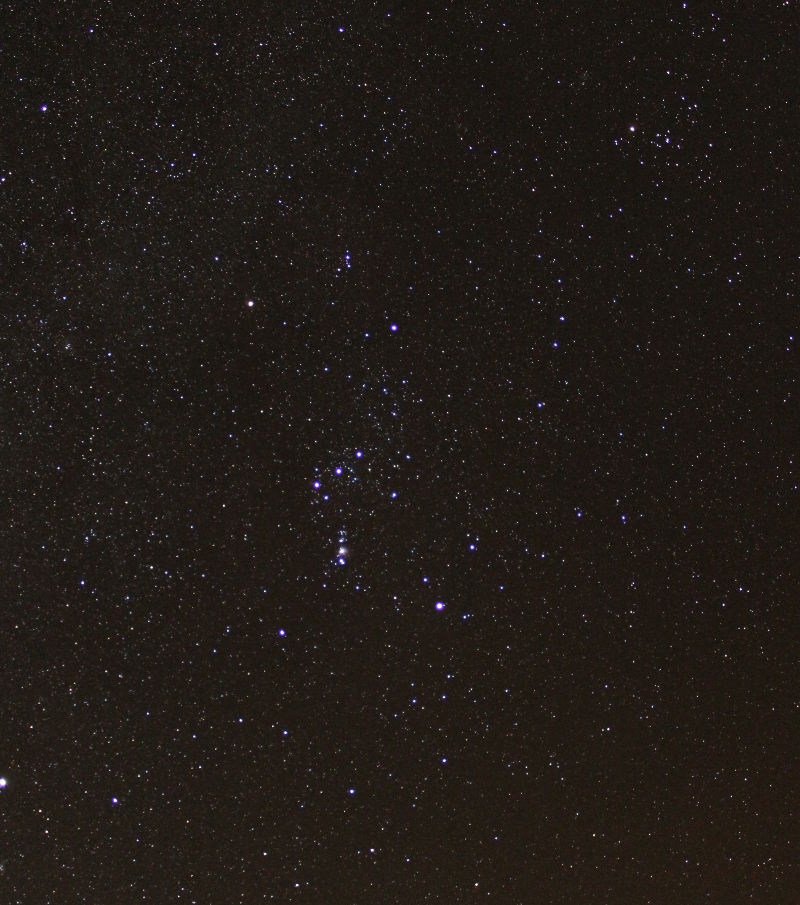
Orion in a 30 second exposure taken at the Sleeping Bear Dunes National Lakeshore Dune Climb February, 18, 2017 by Bob Moler. Click on image to enlarge a bit.
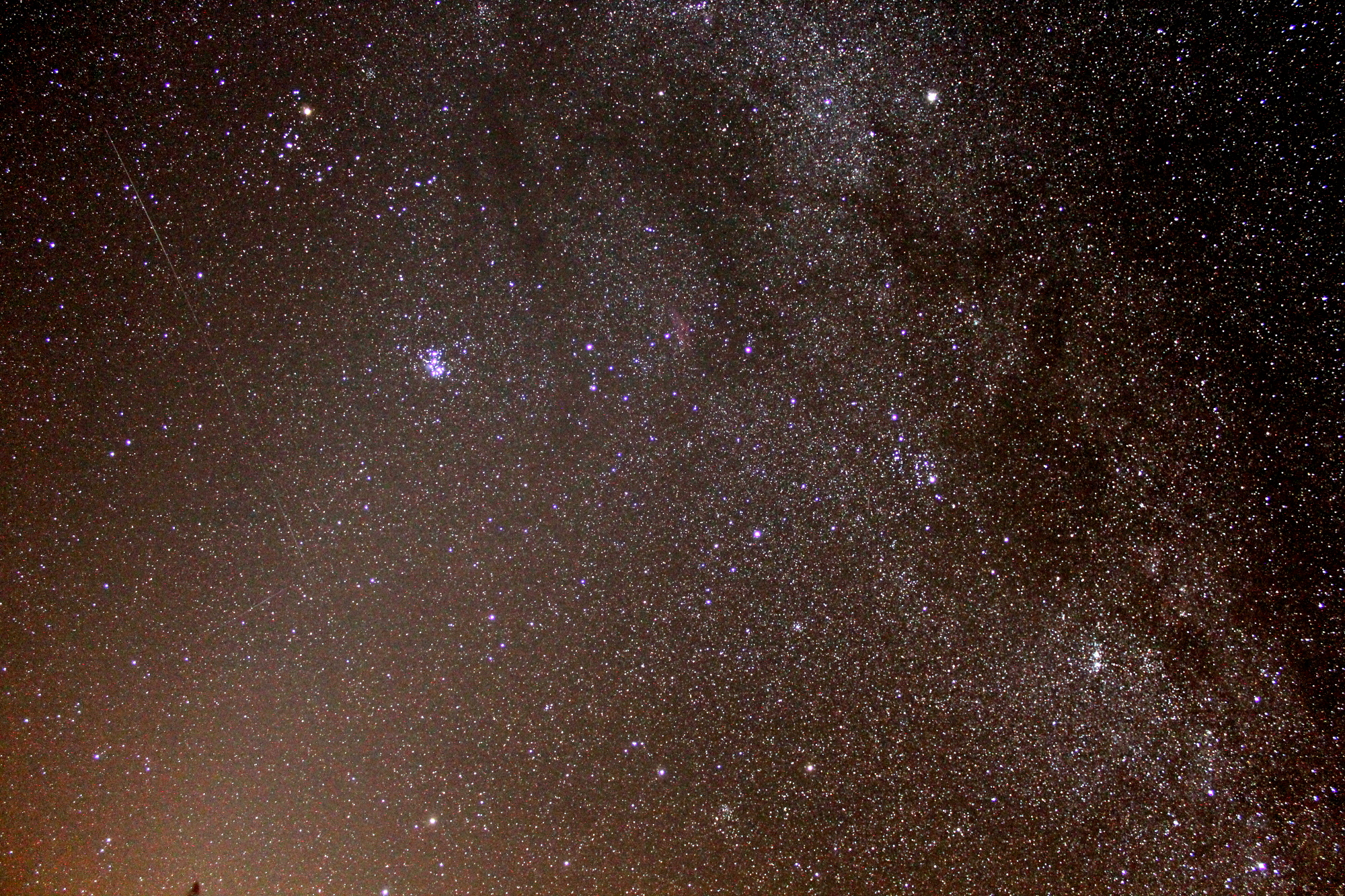
Area of the sky from the Hyades and Pleiades on the left to the Double Cluster on the right. While processing the image for this post I discovered two possible meteor trails on the left and below center. A 2 minute exposure taken at the Sleeping Bear Dunes National Lakeshore Dune Climb February, 18, 2017 by Bob Moler. Click on image to enlarge and see all the deep sky goodies in it..
10/17/2014 – Ephmeris – There’s a star party Saturday at the NMC Rogers Observatory
Ephemeris for Friday, October 17th. The sun will rise at 8:00. It’ll be up for 10 hours and 54 minutes, setting at 6:54. The moon, 2 days past last quarter, will rise at 2:47 tomorrow morning.
Tomorrow night the Grand Traverse Astronomical Society will host a Star Party at Northwestern Michigan College’s Rogers Observatory from 9 p.m. to 11 p.m. On tap, if it’s clear will be the wonders of both the summer and the autumn skies, The summer Milky Way is still visible moving off to the southwest with its star clusters and nebulae. The autumn sky has star clusters too, including the famous Pleiades, best seen in binoculars or telescope finders, and the wonderful Double Cluster. The autumn sky is also host to the closest spiral galaxy to us the Great Andromeda Galaxy, which will get a whole lot closer in 4 billion years. Come on out to the observatory on Birmley Road, about 2 miles south of South Airport Road.
Times are for the Traverse City/Interlochen area of Michigan. They may be different for your location.
Addendum
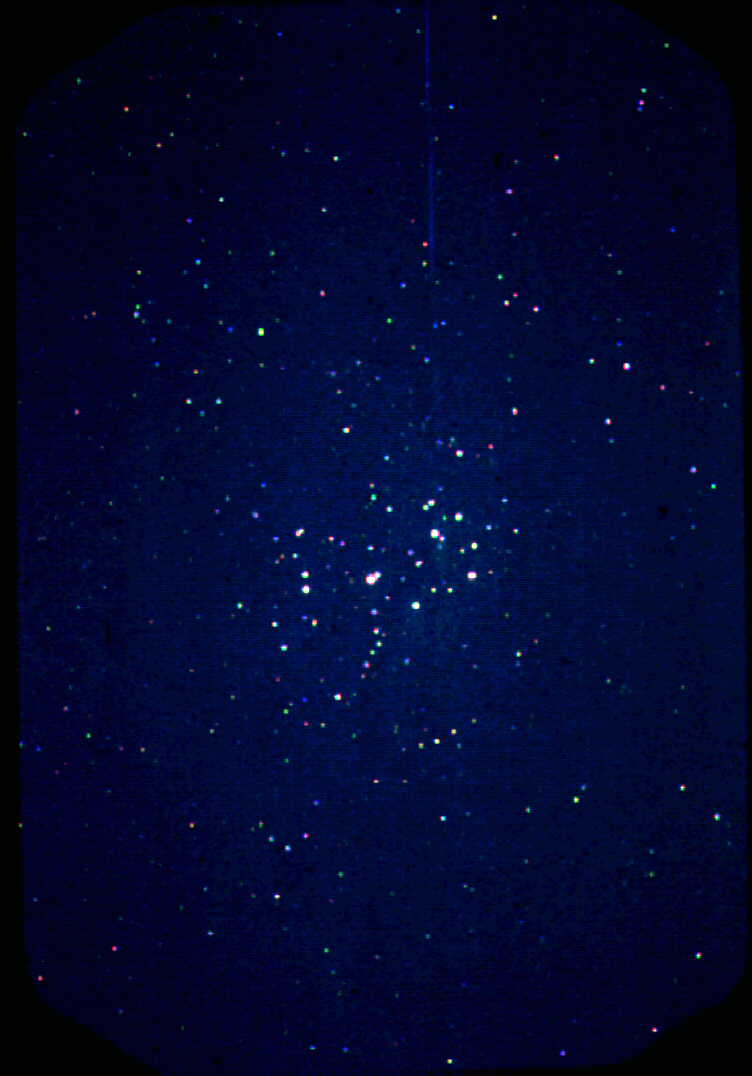
The Pleiades, about what you’d see in binoculars.
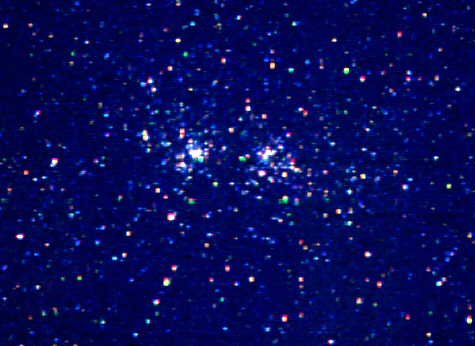
Double Cluster as it would be seen in a small telescope.
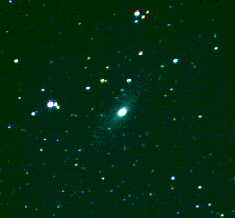
The Great Andromeda Galaxy (M31) as seen in binoculars. Visually even in a telescope the hub of this galaxy is all that is seen. However it also can be seen with the naked eye. However a telescope can also show its two satellite galaxies.
10/15/2012 – Ephemeris – Autumn wonders for binoculars or small telescope: The Double Cluster
Ephemeris for Monday, October 15th. The sun will rise at 7:58. It’ll be up for 10 hours and 58 minutes, setting at 6:57. The moon is new today, and won’t be visible.
This week we’ll be looking at some of the wonders of the autumn sky that might better be seen in binoculars or a small telescope. Tonight we turn our attention to the Double Cluster, a fine pair of star clusters just below the W of the constellation of Cassiopeia the queen located in the northeast. Draw a vertical line down from the middle star of the W through the next star into the glow of the Milky Way. The Double Cluster appears to the unaided eye as a brighter glow of the Milky Way. This is confirmed with binoculars. But in a small telescope it becomes two piles of sparkling diamonds. The clusters are much younger than the sun so their brightest stars are blue-white to our eyes. The average distance of the two from earth is 7,200 light years and the are 1200 light years from each other.
Times are for the Traverse City/Interlochen area of Michigan. They may be different for your location.
Addendum
Double Cluster as it would be seen in a small telescope.
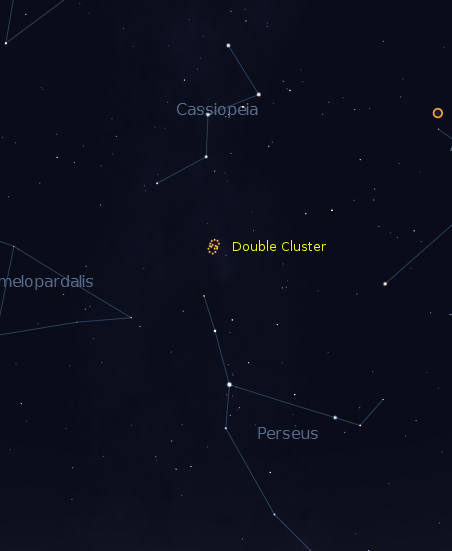
Chart for finding the Double cluster in October. Created using Stellarium.
 Bob Moler's Ephemeris Blog