Archive
Ephemeris: 04/18/2024 – Looking at the gibbous Moon tonight
This is Ephemeris for Thursday, April 18th. Today the Sun will be up for 13 hours and 39 minutes, setting at 8:32, and it will rise tomorrow at 6:50. The Moon, 3 days past first quarter, will set at 5:23 tomorrow morning.
At 10 tonight the gibbous moon will be bright. At the moon’s left edge, just coming into sunlight will be what looks like a large half crater at the edge of the lunar sea called Mare Imbrium, the Sea of Showers. That feature is Sinus Iridium, or Bay of Rainbows. The arc of its mountainous edge is rainbow shaped, but it is as colorless as the rest of the Moon. The crater Copernicus, left of the Moon’s center sports few shadows and appears mostly as a bright spot surrounded by its ray system of ejecta craters that appear bright when the sun is high in their sky. At the south end of the Moon are the lunar highlands, bright, rugged and covered by large, mostly very old craters. The largest of these craters is Clavius, named for Christophorus Clavius who helped establish our Gregorian Calendar.
The astronomical event times given are for the Traverse City/Interlochen area of Michigan (EDT, UT–4 hours). They may be different for your location.
Addendum
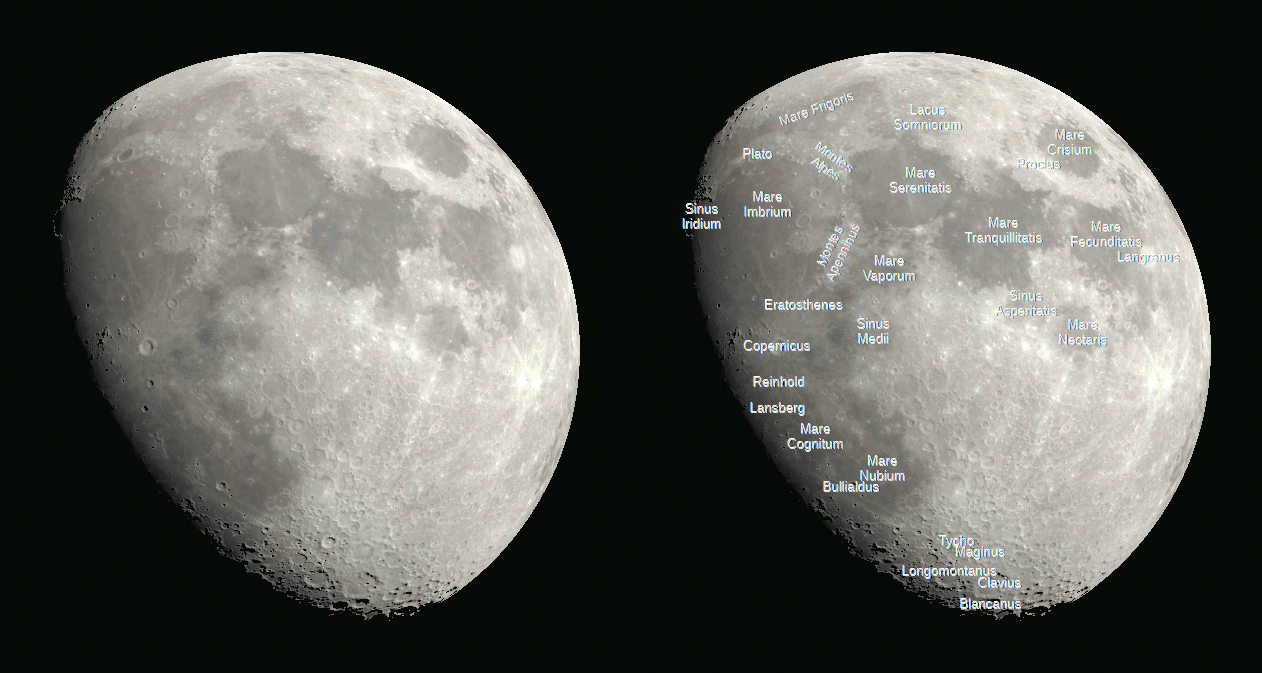
Translations of some lunar feature names according to Virtual Moon Atlas
Lacus Somniorum – Lake of Dreams
Mare Crisium – Sea of Crises
Mare Fecunditatis – Sea of Fertility
Mare Frigoris – Sea of Cold
Mare Imbrium – Sea of Showers
Mare Nectaris – Sea of Nectar
Mare Nubium – Sea of Clouds
Mare Serenitatis – Sea of Serenity
Mare Tranquillitatis – Sea of Tranquility
Mare Vaporum – Sea of Vapors
Montes Alpes – Alps Mountains
Montes Apenninus – Apennines Mountains
Sinus Asperitatis – Bay of Roughness
Sinus Iridium – Bay of Rainbows
Sinus Medii – Bay of the Center
Craters are generally named after astronomers, people of science, or explorers and are often Latinized.
Note that Mare is pronounced Mar-é.
Ephemeris: 02/15/2024 – Viewing the Moon tonight
This is Ephemeris for Thursday, February 15th. Today the Sun will be up for 10 hours and 26 minutes, setting at 6:10, and it will rise tomorrow at 7:42. The Moon, 1 day before first quarter, will set at 1:48 tomorrow morning.
Let’s look at the Moon again this evening. The moving terminator or sunrise line on the Moon has moved westward, though it looks like eastward to us. It shows Mare Crisium, or Sea of Crises, near the Moon’s edge, which is surrounded by the bright highlands, and to the left and below is the Sea of Fertility. Above that is Mare Tranquillitatis, where the Apollo 11 spacecraft Eagle landed, and below Tranquility are two small dark areas that look like seas, but only the bottom one is, it’s the Sea of Nectar, Mare Nectaris. Between it and Tranquility is the Bay of Roughness or Sinus Asperitatis, which sounds better in the original Latin.
The astronomical event times given are for the Traverse City/Interlochen area of Michigan (EST, UT –5 hours). They may be different for your location.
Addendum
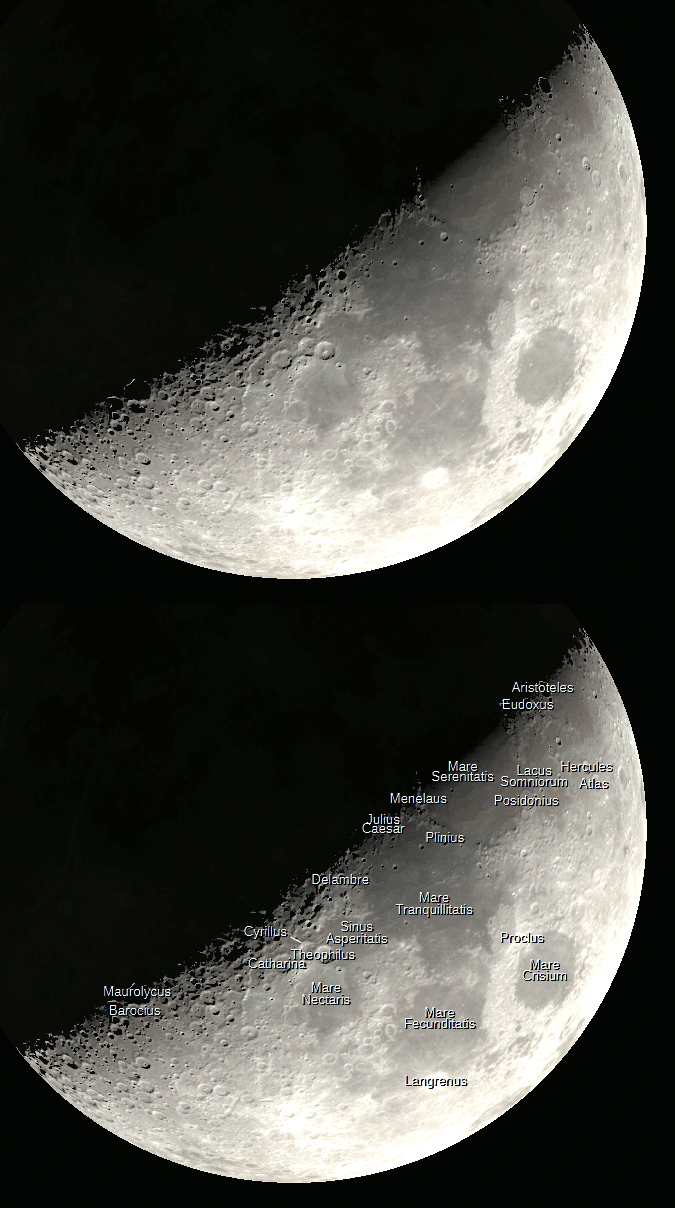
Translations of some lunar feature names according to Virtual Moon Atlas
Lacus Somniorum – Lake of Dreams
Mare Crisium – Sea of Crises
Mare Fecunditatis – Sea of Fertility
Mare Nectaris – Sea of Nectar
Mare Serenitatis – Sea of Serenity
Mare Tranquillitatis – Sea of Tranquility
Sinus Asperitatis – Bay of Roughness
 Bob Moler's Ephemeris Blog