Archive
Ephemeris: 07/18/2024 The brightest spot on the Moon
This is Ephemeris for Thursday, July 18th. Today the Sun will be up for 15 hours and 7 minutes, setting at 9:22, and it will rise tomorrow at 6:15. The Moon, 3 days before full, will set at 3:40 tomorrow morning.
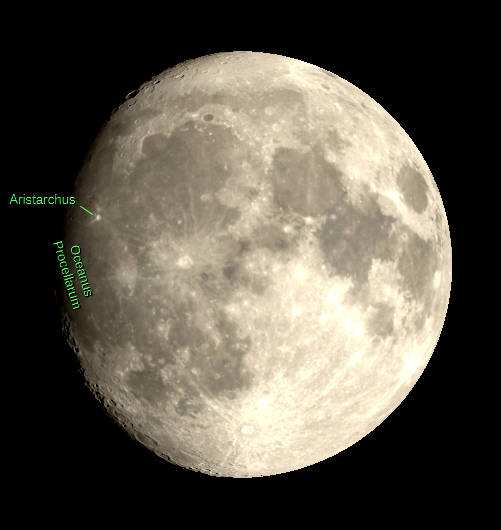
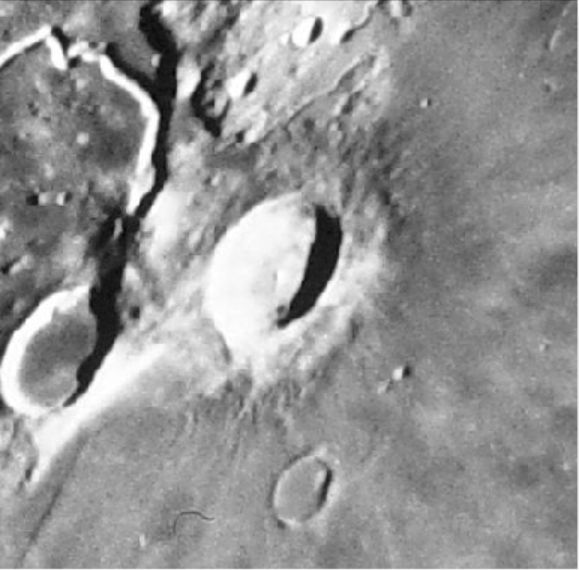
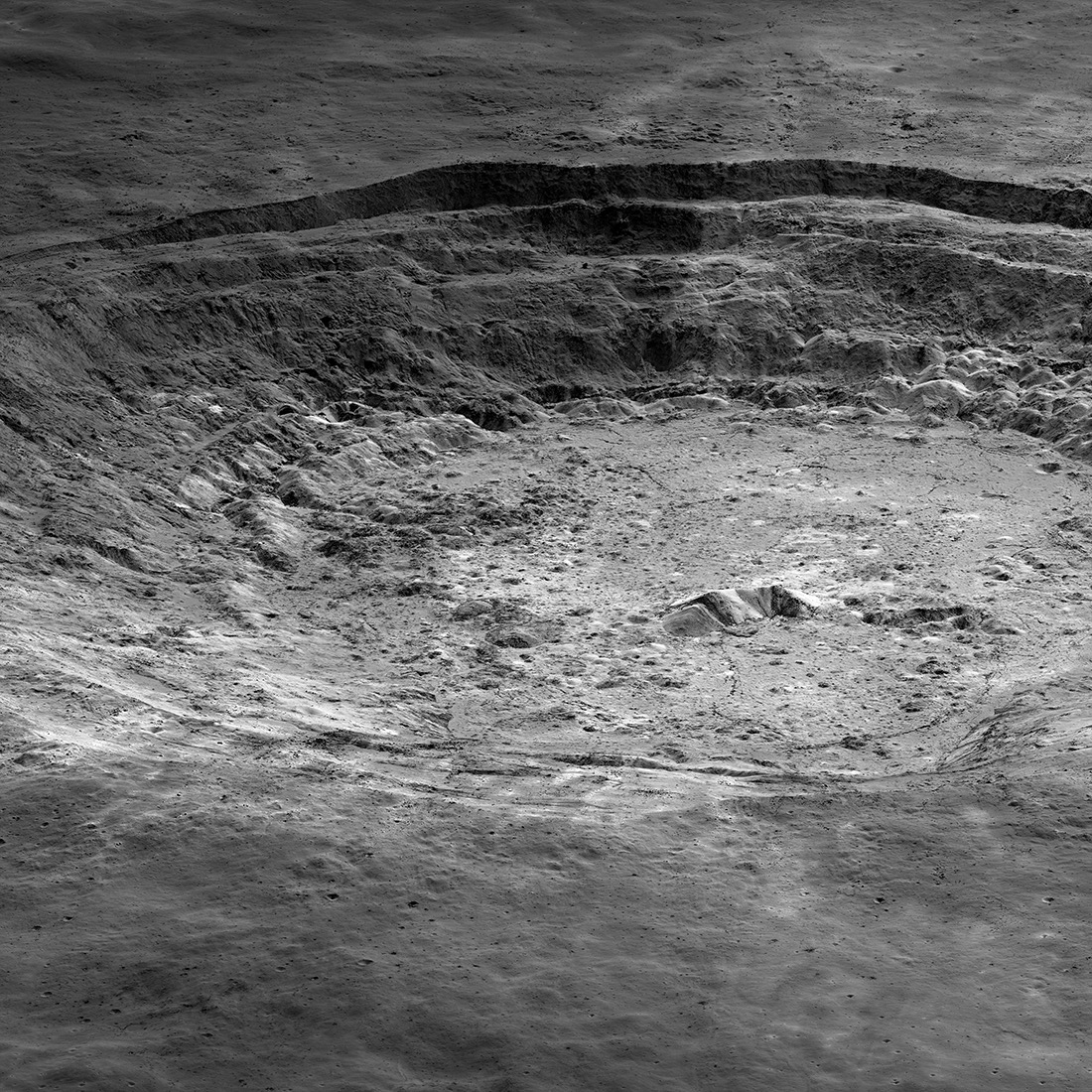
The moon tonight is bright. The sunrise line or terminator on the moon is crossing the large gray plain called Oceanus Procellarum, the largest of the moon’s seas. These seas were figments of the first telescopic observer’s imagination. They are really huge impact basins into which interior lava flowed. On the left side of the Moon is a bright spot in the gray expanse of Oceanus Procellarum visible in binoculars. In a telescope it is a crater called Aristarchus. It is a fairly new crater in lunar terms, probably less than a billion years old. As a rule the brighter the crater the newer it is. Aristarchus is the brightest spot on the Moon. Over the years visual astronomers have seen hazes and bright spots from time to time in and near Aristarchus.
The astronomical event times given are for the Traverse City/Interlochen area of Michigan (EDT, UT–4 hours). They may be different for your location.
Addendum
04/23/2021 – Ephemeris – The gibbous Moon tonight
This is Ephemeris for Friday, April 23rd. Today the Sun will be up for 13 hours and 53 minutes, setting at 8:38, and it will rise tomorrow at 6:43. The Moon, halfway from first quarter to full, will set at 5:49 tomorrow morning.
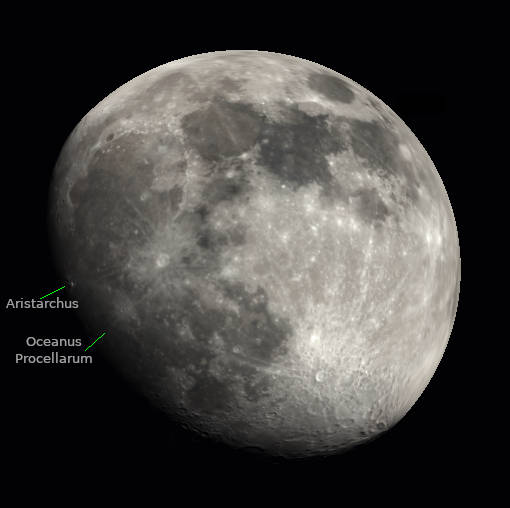
The Moon tonight is bright. The sunrise line or terminator on the Moon is crossing the large gray plain called Oceanus Procellarum, the largest of the Moon’s seas. These seas were figments of the first telescopic observer’s imagination. They are really huge impact basins into which interior lava flowed. On the upper left edge of the moon near the terminator is a bright spot visible in binoculars. In a telescope it is a crater called Aristarchus. It is a fairly new crater, probably 450 million years old. As a rule the brighter the crater the newer it is. Aristarchus is the brightest spot on the moon when it is seen during a full moon. Over the years visual astronomers have seen hazes and bright spots from time to time in and near Aristarchus.
The astronomical event times given are for the Traverse City/Interlochen area of Michigan. They may be different for your location.
Addendum
02/27/2018 – Ephemeris – The bright spot on the Moon tonight
Ephemeris for Tuesday, February 27th. The Sun will rise at 7:23. It’ll be up for 11 hours and 4 minutes, setting at 6:27. The Moon, 2 days before full, will set at 6:38 tomorrow morning.
The moon tonight is bright. The sunrise line or terminator on the moon is crossing the large gray plain called Oceanus Procellarum, the largest of the moon’s seas. These seas were figments of the first telescopic observers imagination. They are really huge impact basins into which interior lava flowed. On the upper left edge of the moon near the terminator is a bright spot on the moon visible in binoculars. In a telescope it is a crater called Aristarchus. It is a fairly new crater, probably less than a billion years old. As a rule the brighter the crater the newer it is. Aristarchus is the brightest spot on the moon. Over the years visual astronomers have seen hazes and bright spots from time to time in and near Aristarchus.
The times given are for the Traverse City/Interlochen area of Michigan. They may be different for your location.
Addendum
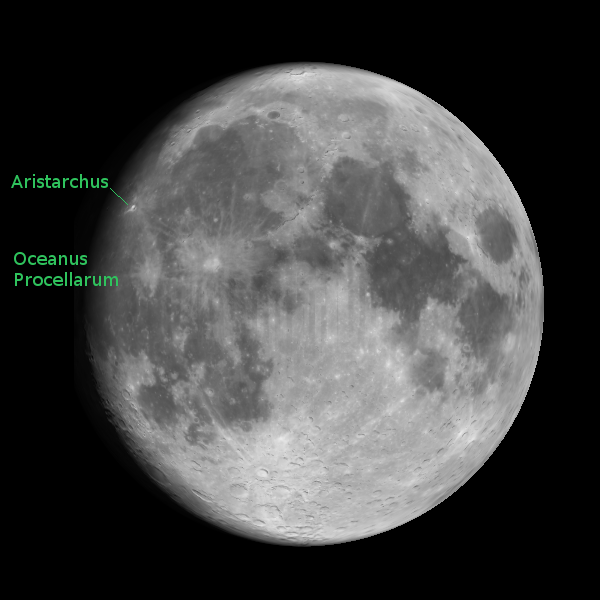
The Moon tonight at 9 p.m. February 27, 2018. Created using Virtual Moon Atlas.
The crater Aristarchus. Credit: Lunar and Planetary Institute.
10/11/2016 – Ephemeris – Looking at the Moon tonight
Ephemeris for Tuesday, October 11th. The Sun will rise at 7:53. It’ll be up for 11 hours and 10 minutes, setting at 7:04. The Moon, 2 days past first quarter, will set at 3:26 tomorrow morning.
We looked at the Moon in the last program, now 24 hours later the sunrise terminator has moved farther west, our east uncovering more landscape. The Moon rotates once in about 29 ½ days in relation with the Sun. This is the same time it orbits the Earth from new Moon to the next. We call that a lunation or lunar month. Near the upper left corner of the Moon is what looks like a half crater. It’s called Sinus Iridium, the Bay of Rainbows. It’s at the edge of Mare Imbrium or Sea of Showers. To the south cut by the terminator is Oceanus Procellarum, the flat Ocean of Storms. South of that is the small Mare Humorum, the Sea of Vapors. Between then is a distinctive crater Gassendi. South of all that is the odd shaped crater Schiller.
Times are for the Traverse City/Interlochen area of Michigan. They may be different for your location.
Addendum
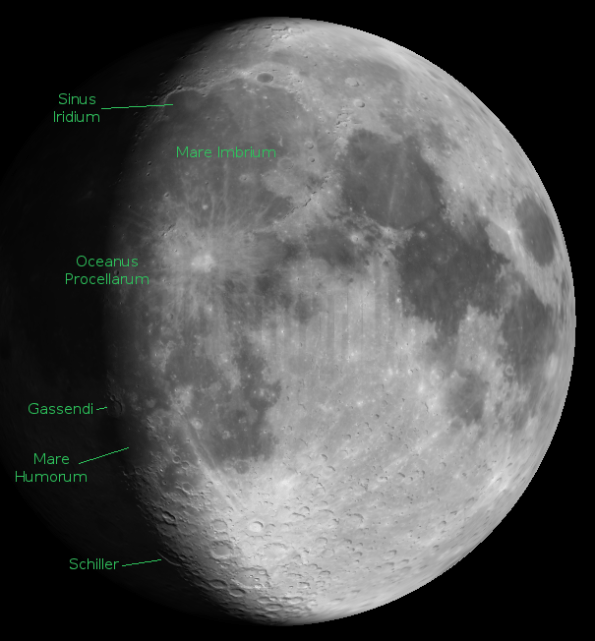
The Moon at 9 p.m. October 11, 2016. Created using Virtual Moon Atlas.
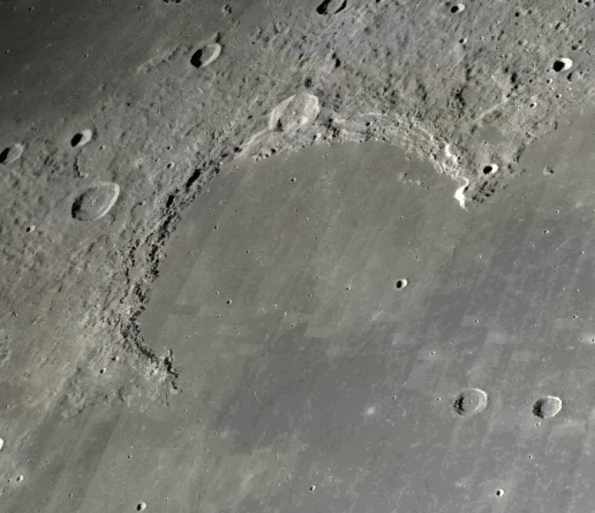
Sinus Iridium photographed by the Lunar Reconnaissance Orbiter as texture mapped on the globe of the Virtual Moon Atlas.
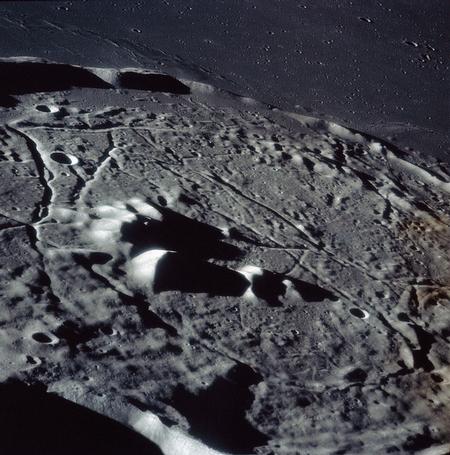
The crater Gassendi from Apollo 16 – NASA
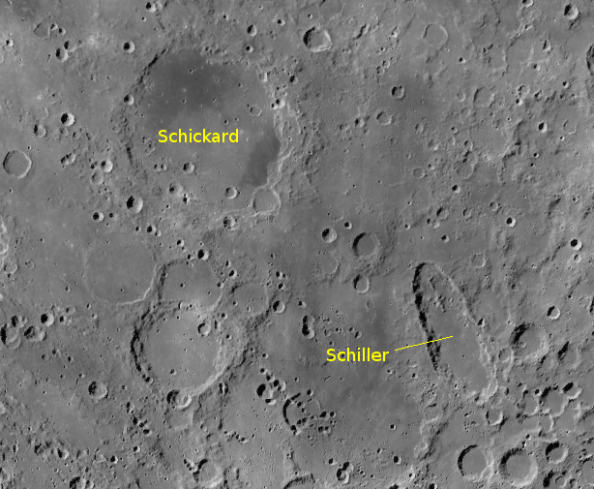
The craters Schickard and Schiller as seen from above from the Lunar Reconnaissance Orbiter. The Sun will start to rise on Schickard tomorrow night. Credit NASA from Virtual Moon Atlas.
07/15/2016 – Ephemeris – The Moon tonight
Ephemeris for Friday, July 15th. Today the Sun will be up for 15 hours and 13 minutes, setting at 9:25, and it will rise tomorrow at 6:12. The Moon, half way from first quarter to full, will set at 3:35 tomorrow morning.
The Moon is bright as it moves toward full. In binoculars, the brightest spot on the Moon is visible on the left edge of the Moon at 10 p.m. In telescopes it becomes a crater named Aristarchus. The sea below Aristarchus where the terminator, the sunrise line cuts across is Oceanus Procellarum, the Ocean of Storms. Below that is the small circular sea called Mare Humorum, the Sea of Moisture. North of Humorum is a large crater with low walls and a multiple central peak called Gassendi. Below that we’re back in the lunar highlands with lots of large craters. One of those craters, near the terminator is oddly elongated. It’s Schiller, 108 by 43 miles (174 X 69 km) in size.
Times are for the Traverse City/Interlochen area of Michigan. They may be different for your location.
Addendum
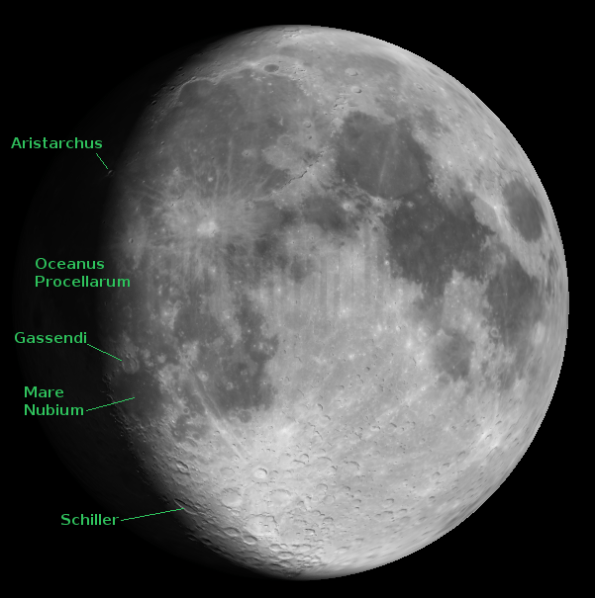
The gibbous Moo at 10 p.m. July 15, 2016 showing some interesting features near the terminator. Created using Virtual Moon Atlas.
The crater Gassendi from Apollo 16 – NASA
06/16/2016 – Ephemeris – The Moon tonight
Ephemeris for Thursday, June 16th. Today the Sun will be up for 15 hours and 34 minutes, setting at 9:30, and it will rise tomorrow at 5:56. The Moon, half way from first quarter to full, will set at 4:23 tomorrow morning.
The Moon is bright as it moves toward full. In binoculars, the brightest spot on the Moon is visible on the left edge of the Moon at 10 p.m. In telescopes it becomes a crater named Aristarchus. The sea below Aristarchus where the terminator, the sunrise line cuts across is Oceanus Procellarum, the Ocean of Storms. Below that is the small circular sea called Mare Humorum, the Sea of Moisture. Below that we’re back in the lunar highlands with lots of large craters, rather to many
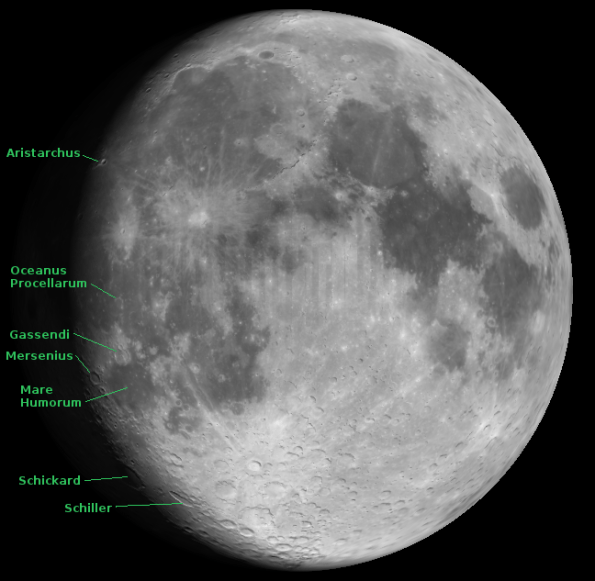
The Gibbous Moon at 10 p.m., June 16, 2016 showing some interesting features near the terminator.
to mention here. The transcripts of these programs with illustrations are available at bobmoler.wordpress.com. That’s Moler spelled simply M-O-L-E-R. The Moon illustration will point out the features I’ve discussed.
Times are for the Traverse City/Interlochen area of Michigan. They may be different for your location.
Addendum
02/17/2014 – Ephemeris – Viewing tonight’s waning gibbous moon
Ephemeris for President’s Day, Monday, February 17th. The sun will rise at 7:39. It’ll be up for 10 hours and 34 minutes, setting at 6:13. The Moon, 3 days past full, will rise at 9:17 this evening.
The bright Moon is now a waning gibbous phase, The right edge of the Moon is now in night as the sunset terminator slowly advances across the moon. Tonight the Sea of Fertility is half in daylight on the right side of the Moon. A telescope looking at it can spot the double crater of Messier and Messier A, a funny impact where the small asteroid skipped producing two craters and a double ray of ejecta. On the other side of the moon the largest sea Oceanus Procellarum, or Ocean of Storms can be seen in its entirety to the left limb of the moon. It happens that the moon is rotated toward us on that side, an effect called libration. The effect is due to the moon’s uneven velocity around the earth.
Times are for the Traverse City/Interlochen area of Michigan. They may be different for your location.
Addendum
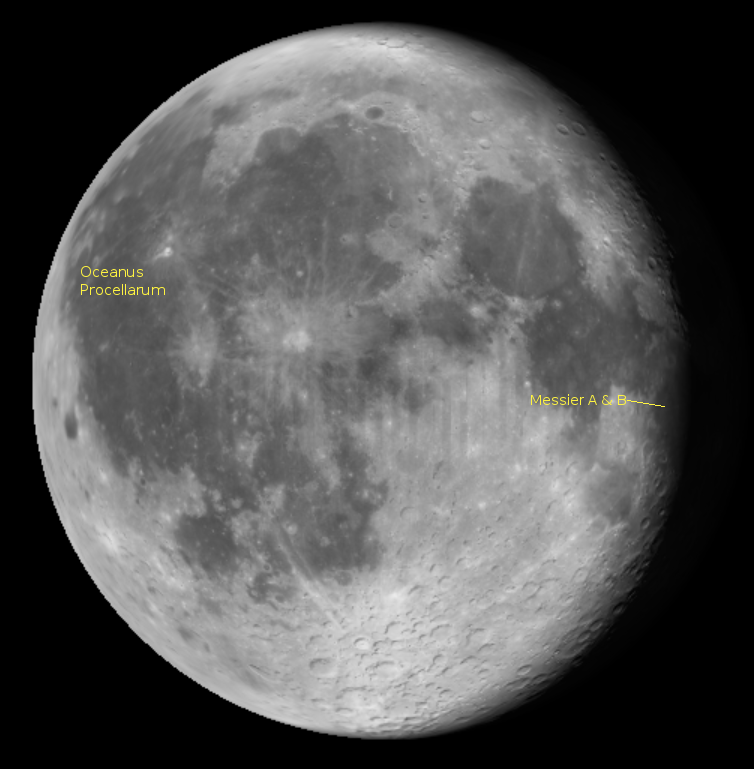
The moon at 9 p.m. on February 17, 2014 showing Oceanus Procellarum and the craters Messier A and B. Created using Virtual Moon Atlas.
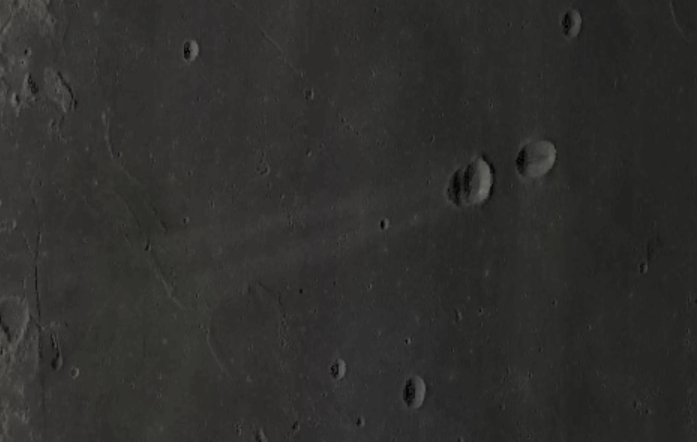
Closeup of the craters Messier A and B showing their twin rays. Created using Virtual Moon Atlas and the Lunar Reconnaissance Orbiter images. Credit: NASA.
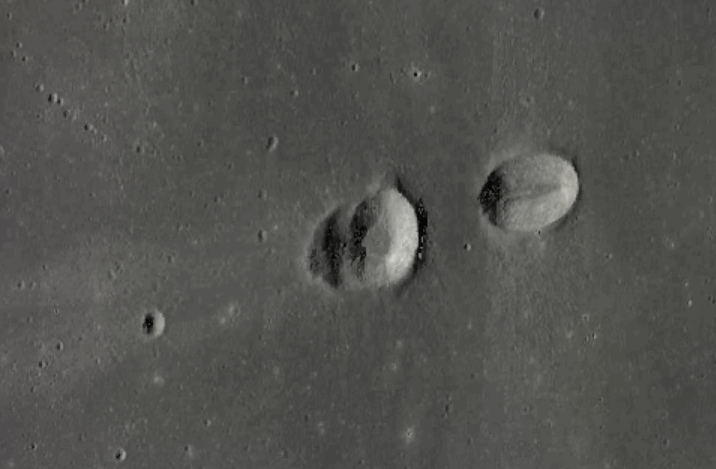
Extreme closeup of the craters Messier A and B showing their twin rays. Created using Virtual Moon Atlas and the Lunar Reconnaissance Orbiter images. Credit: NASA.
07/11/11 – Ephemeris – The moon’s Oceanus Procellarum
Monday, July 11th. Today the sun will be up for 15 hours and 19 minutes, setting at 9:27. The moon, 3 days past first quarter, will set at 3:25 tomorrow morning. Tomorrow the sun will rise at 6:08.
The moon tonight is a big fat gibbous phase. The terminator, now before full moon is the sunrise line that creates tonight’s phase. It’s crossing the large sea called Oceanus Procellarum or the Ocean of Storms. It is the moon’s largest sea, though really a lava basin. This is easily seen with the unaided eye and binoculars. The moon has never had oceans or seas of water. That impression was in the eyes of early telescopic observers of the moon , who even thought there was life on the moon. Oceanus is huge, by lunar standards, 434 by 303 miles with indistinct walls. Lunar seas are actually huge craters with an age over 3 billion years.
* Times are for the Traverse City/Interlochen area of Michigan. They may be different for your location.
Addendum
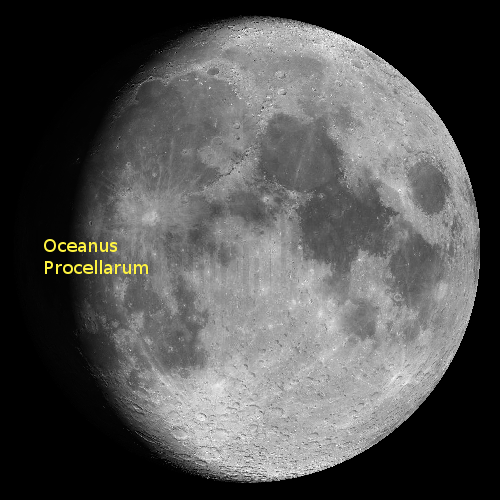
The moon's Oceanus Procellarum. Image from the Virtual Moon Atlas.
06/13/11 – Ephemeris – The lunar crater Aristarchus
Monday, June 13th. Today the sun will be up for 15 hours and 31 minutes, setting at 9:28. The moon, 2 days before full, will set at 4:39 tomorrow morning. Tomorrow the sun will rise at 5:56.
The moon tonight is bright. The sunrise line or terminator on the moon is crossing the large gray plain called Oceanus Procellarum, the largest of the moon’s seas. These seas were figments of the first telescopic observers imagination. They are really huge impact basins into which interior lava flowed. On the upper left edge of the moon near the terminator is a bright spot on the moon visible in binoculars. In a telescope it is a crater called Aristarchus. It is a fairly new crater, probably less than a billion years old. As a rule the brighter the crater the newer it is. Aristarchus is the brightest spot on the moon. Over the years visual astronomers have seen hazes and bright spots from time to time in and near Aristarchus.
* Times are for the Traverse City/Interlochen area of Michigan. They may be different for your location.
Addendum
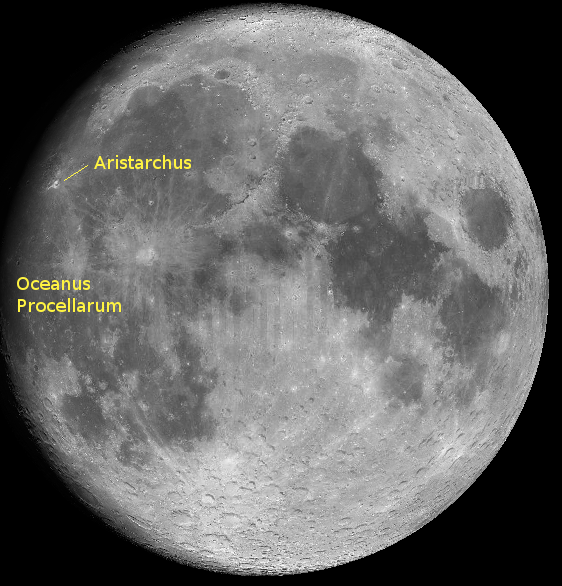
The moon with Aristarchus. Created with Virtual Moon Atlas.
 Bob Moler's Ephemeris Blog