Archive
Ephemeris: 01/21/2025 – How to find the Great Orion Nebula
This is Ephemeris for Tuesday, January 21st. Today the Sun will be up for 9 hours and 24 minutes, setting at 5:36, and it will rise tomorrow at 8:11. The Moon, at last quarter today, will rise at 2:01 tomorrow morning.
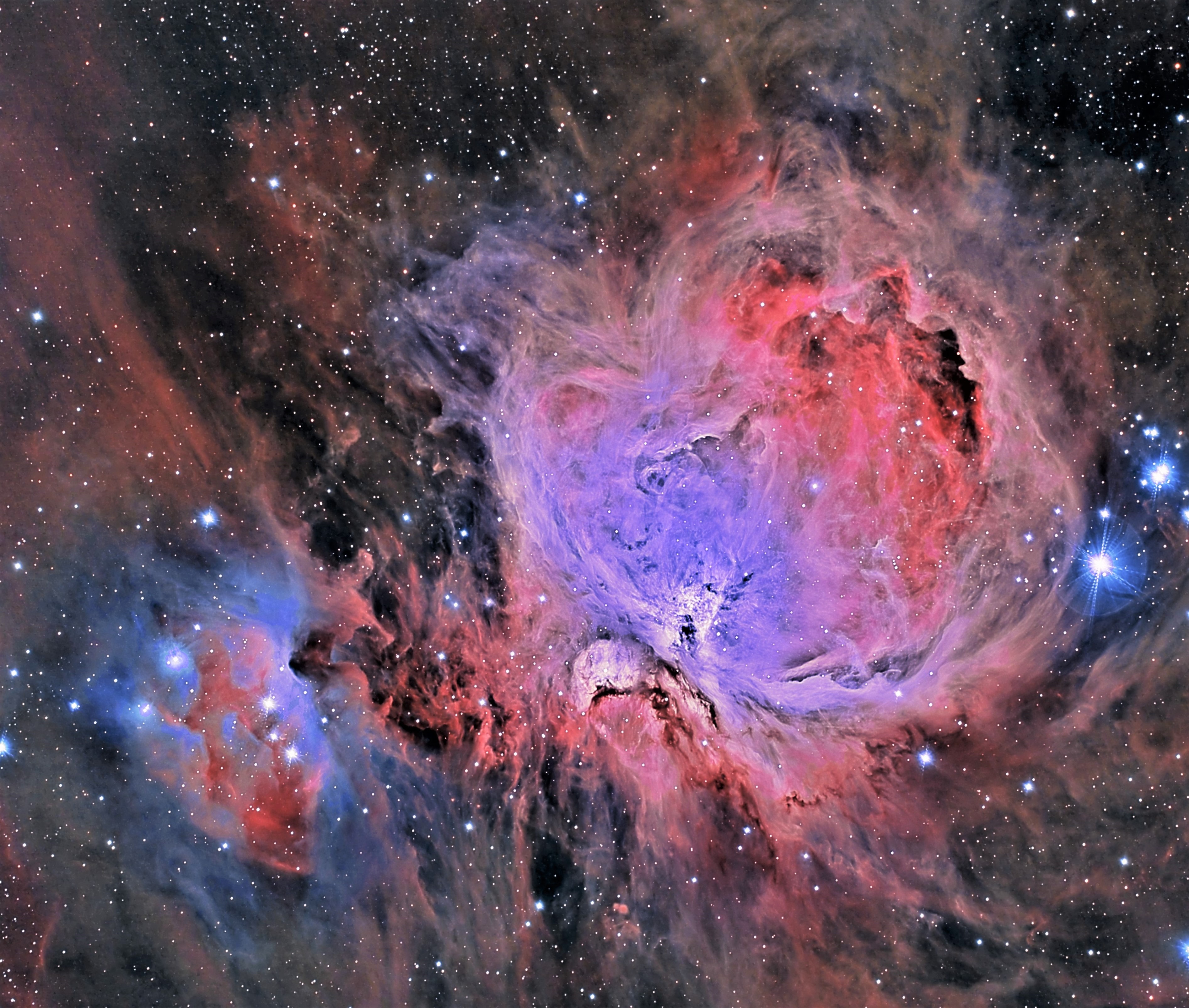
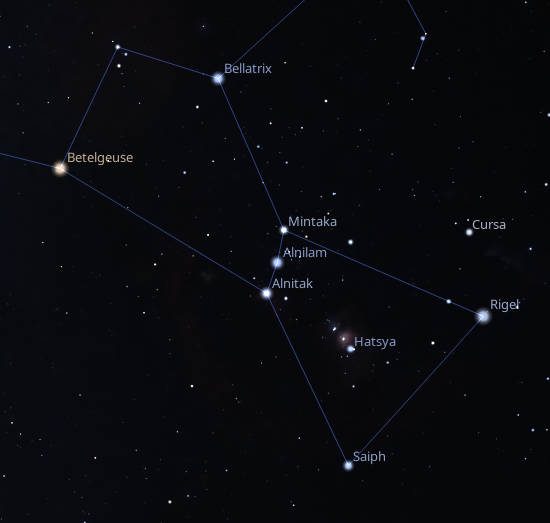
The constellation Orion the hunter is in the southeast at 8 PM. Its rectangle of four stars lean to the left and frame his belt of three stars in a straight line in the center of the rectangle. Below the belt is what appear to the unaided eye as three more stars arranged in a shorter straight line, his sword. Binoculars aimed at the middle stars of the sword will find a glowing haze around those stars. That is the Great Orion Nebula, also known as Messier 42 or M 42. It is the birthplace of stars, illuminated by a clutch of four hot young stars. Besides stars and protostars being born in the nebula, there are also many double planets not belonging to stars discovered by the James Webb Space Telescope. The planets are only detectable in the infrared, Webb’s specialty.
The astronomical event times given are for the Traverse City/Interlochen area of Michigan (EST, UT – 5 hours). Times will be different for other locations.
Addendum
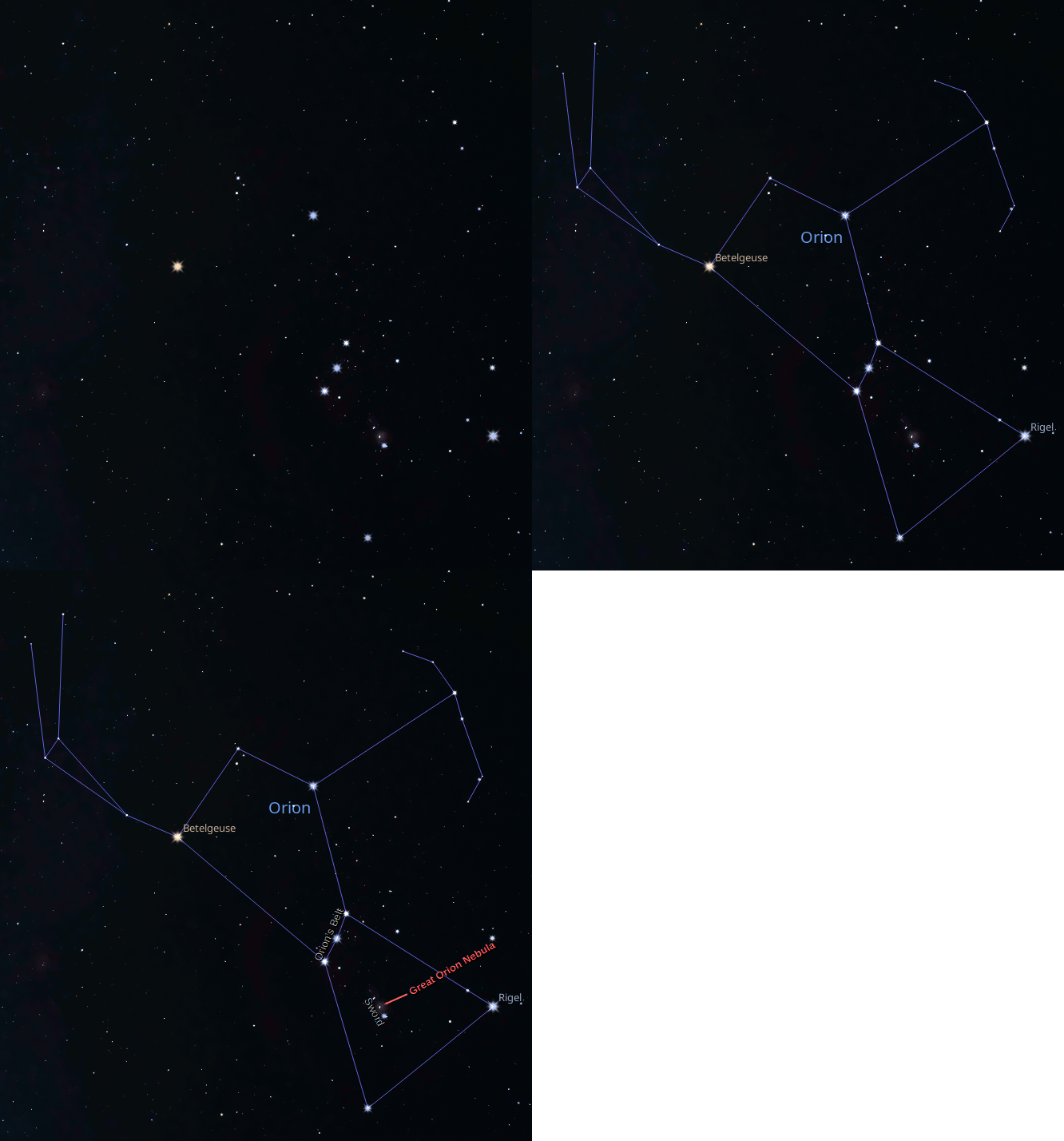
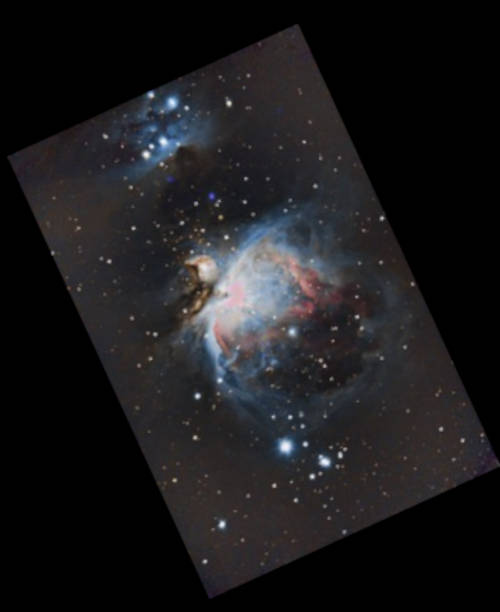
The blog’s archive has many other posts about the Great Orion Nebula and other nebulae in Orion.
Ephemeris: 01/05/2024 – The Great Orion Nebula
This is Ephemeris for Friday, January 5th. The Sun will rise at 8:20. It’ll be up for 8 hours and 56 minutes, setting at 5:16. The Moon, 2 days past last quarter, will rise at 3:18 tomorrow morning.
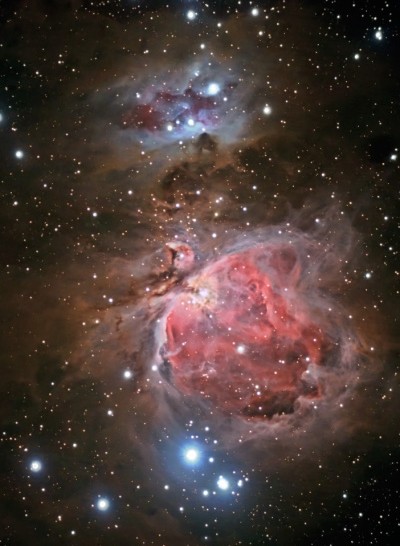
The constellation Orion the hunter is in the south-southeast at 9 p.m. Its upright rectangle of four stars frame his belt of three stars in a straight line and still tilt a bit to the left. Below the belt is what appear to the unaided eye as three more stars arranged vertically, his sword. Binoculars aimed at the middle stars of the sword will find a glowing haze around those stars. That is the Great Orion Nebula, also known as Messier 42 or M42. It is the birthplace of stars, and is even illuminated by a clutch of four hot young stars. Besides stars and protostars being born in the nebula, there are also many double planets not belonging to stars discovered by the James Webb Space Telescope. The planets are only detectable in the infrared, Webb’s specialty.
The astronomical event times given are for the Traverse City/Interlochen area of Michigan (EST, UT –5 hours). They may be different for your location.
Addendum
Ephemeris: 01/04/2024 – Viewing Orion’s Belt
This is Ephemeris for Thursday, January 4th. The Sun will rise at 8:20. It’ll be up for 8 hours and 55 minutes, setting at 5:15. The Moon, 1 day past last quarter, will rise at 2:10 tomorrow morning.
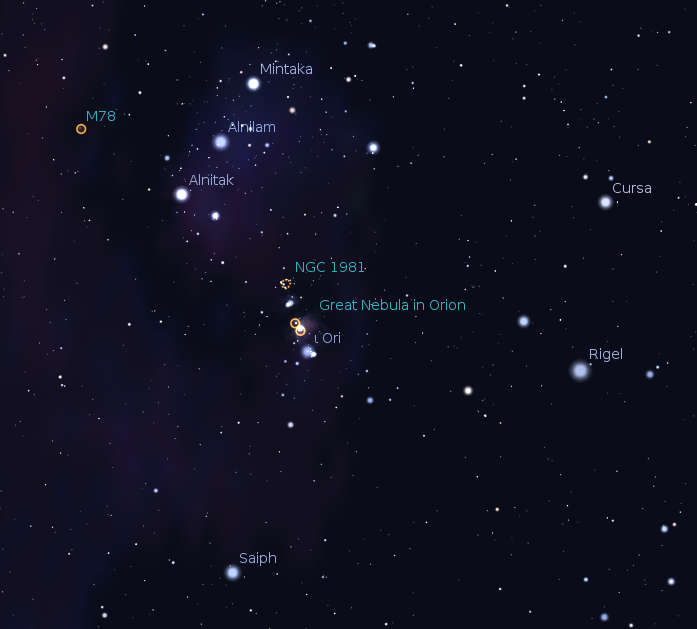
Orion’s belt of three stars is one of the most noticeable star groupings in the sky. There are no other groups of three bright stars in a straight line visible anywhere else in the sky. The star’s names from left to right are Alnitak, Alnilam and Mintaka. They are actually a bit farther away than the other bright stars of Orion. Alnilam, the center star, is over three times the distance of red giant Betelgeuse above them and over twice as far as blue white giant star Rigel below them. Alnilam is 375 thousand times brighter than the Sun. These three stars were also known as Frigga’s Spindle by the Norsemen. Frigga, also known as Freya, is the goddess from which we get the name of the day of the week we call Friday.
The astronomical event times given are for the Traverse City/Interlochen area of Michigan (EST, UT –5 hours). They may be different for your location.
Addendum
02/05/2019 – Ephemeris – The Great Orion Nebula
Ephemeris for Tuesday, February 5th. Today the Sun will be up for 9 hours and 59 minutes, setting at 5:56, and it will rise tomorrow at 7:56. The Moon, 1 day past new, will set at 6:47 this evening.
The closest star nursery to us is the Great Orion Nebula, 1,344 light years away give or take 20 light years. A light year is about 6 trillion miles, if you want to pace it out. It’s located in the constellation Orion’s sword that hangs below his belt. In as little as a pair of binoculars it shines by emission and reflection of the light of a clutch of four stars at its heart, that astronomers have called the Trapezium. These extremely hot baby stars are not destined to live long. Unlike the Sun’s 10 billion year life time these stars lifespan will be measured in millions of years. Yet do not mourn for them, Even now stars are forming in their dusty cocoons in the nebula. The Trapezium stars death will provide the material for new stars.
The times given are for the Traverse City/Interlochen area of Michigan. They may be different for your location.
Addendum
The lower part of Orion with the Great Orion Nebula. Created using Stellarium.
The Great Orion Nebula (M42) long exposure photograph by Scott Anttila. Includes all the sword stars.
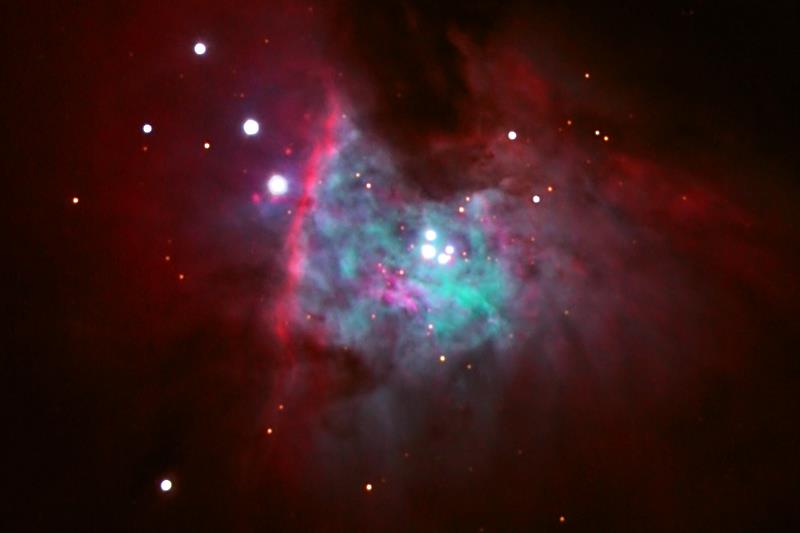
The Trapezium stars in the inner part of the Great Orion Nebula. Image by Scott Anttila
03/10/2015 – Ephemeris – The Great Orion Nebula
Ephemeris for Tuesday, March 10th. The Sun will rise at 8:04. It’ll be up for 11 hours and 37 minutes, setting at 7:42. The Moon, 3 days before last quarter, will rise at 12:43 tomorrow morning.
The constellation of Orion the hunter, now in the south at 9 p.m., contains the most beautiful star forming region in the northern sky. It is the Great Orion Nebula. A nebula is simply a cloud. Back in the early days of telescopes it was anything that appeared fuzzy. Today it’s any cloud, whether of gas or dust, light or dark. The Great Orion Nebula is made up of gas, which is ionized and shines by fluorescence by the ultraviolet light of a clutch of four stars in its heart called the Trapezium. The nebula can be glimpsed with binoculars surrounding what looks like the center star of the vertical line of three stars that appears as the sword hanging from Orion’s belt. It’s the bright end of a large dark cloud that’s behind the bright stars of Orion.
Times are for the Traverse City/Interlochen area of Michigan. They may be different for your location.
Addendum
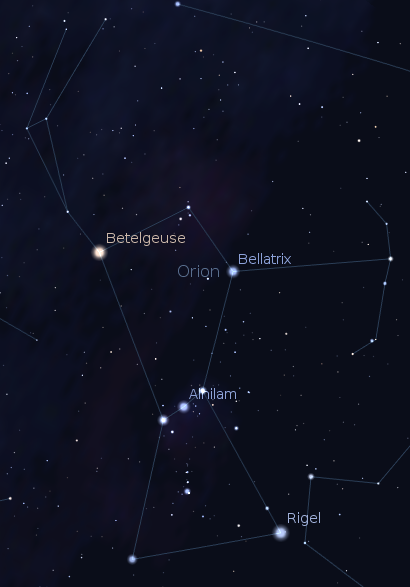
Orion upright and due south. Created using Stellarium.
The lower part of Orion with the Great Orion Nebula. Created using Stellarium.
Inner part of the Great Orion Nebula with the Trapezium. Image by Scott Anttila
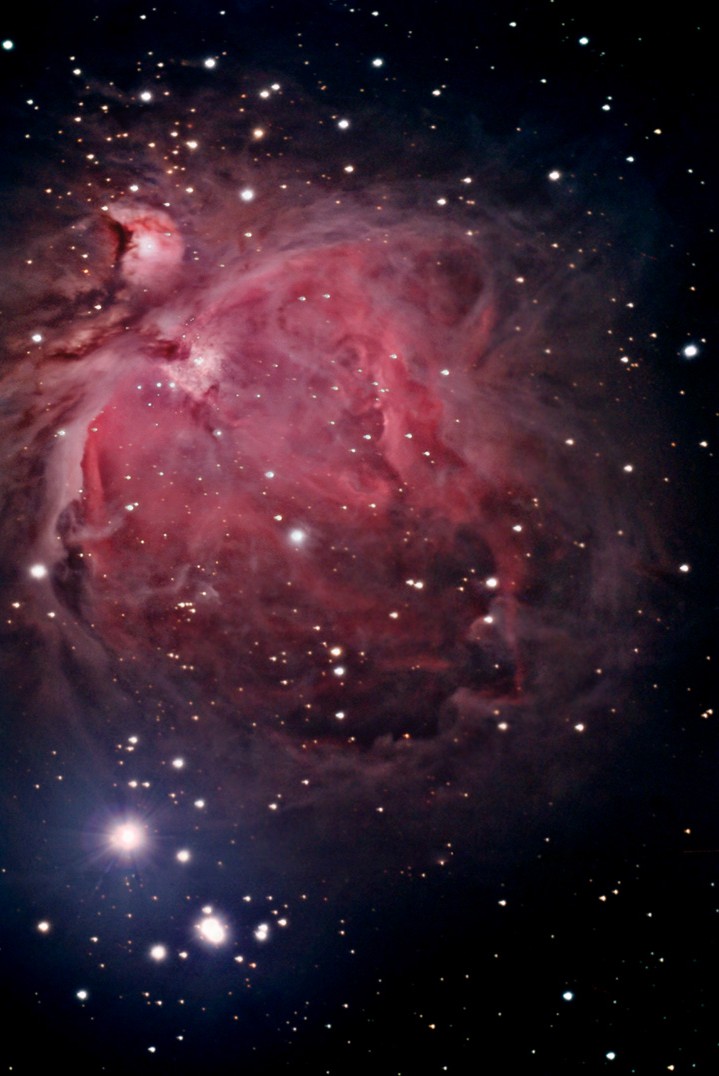
Great Orion Nebula by Scott Anttila
 Bob Moler's Ephemeris Blog