Archive
Ephemeris: 08/12/2025 – A brief shot at viewing the Perseid meteors under darkened, but not dark skies
This is Ephemeris for Tuesday, August 12th. Today the Sun will be up for 14 hours and 10 minutes, setting at 8:52, and it will rise tomorrow at 6:43. The Moon, 3 days past full, will rise at 10:26 this evening.
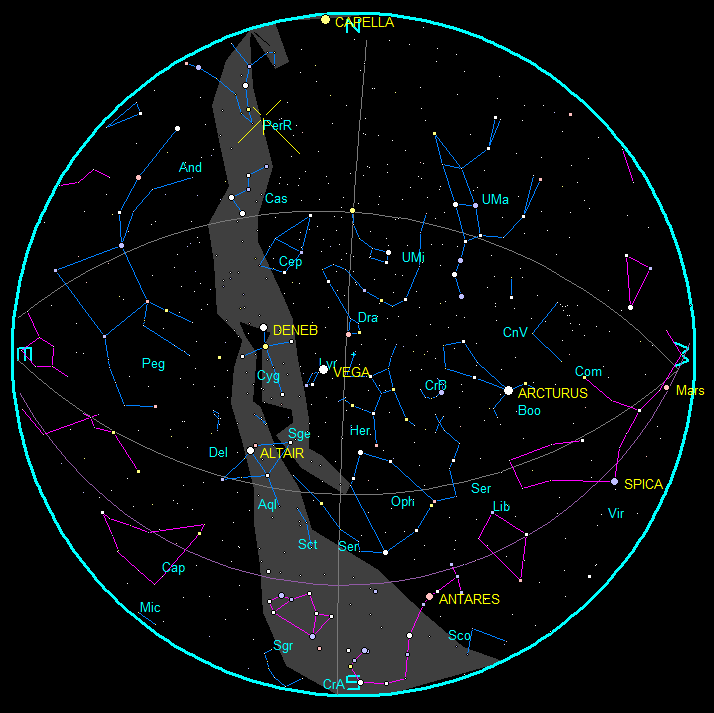
Tonight we get a second chance to see some of the Perseid meteor shower. As I said yesterday, the Moon is going to interfere with this year’s display. But, there is a small interval during twilight this evening, before the moon rises, where the sky could be dark enough to see more than a few Perseids. For nearly half an hour after 10 PM, it might be dark enough to see the Perseids under reasonably dark skies. The radiant where the meteors appear to come from will be low in the north northeast, about 17° above the horizon which means the expected number of meteors one would see in a half hour would be about 15 and with a not quite dark skies probably be a little less than that. But it is a chance to see the Perseids this year.
The astronomical event times given in this blog are for the Traverse City/Interlochen area of Michigan (Lat 44.7° N, Long 85.7° W; EDT, UT – 4 hours) unless stated otherwise. Times will be different for other locations.
Addendum
Ephemeris: 08/11/2025 – The best times to see the Perseid meteor shower
This is Ephemeris for Monday, August 11th. Today the Sun will be up for 14 hours and 13 minutes, setting at 8:54, and it will rise tomorrow at 6:42. The Moon, 2 days past full, will rise at 10:06 this evening.
Tonight’s most interesting astronomical events will occur tomorrow morning. The Perseid meteor shower will reach its peak tomorrow afternoon, so tomorrow morning and Wednesday morning will be about the best times to see the meteors, except that the bright Moon is going to interfere. So only the brightest meteors will be visible. Bonus: in morning twilight tomorrow the planets Venus and Jupiter will be in conjunction, meaning they’ll be at their closest appearance to each other by a little bit less than twice the width of the Moon apart. Early risers may have been noticing that Venus and Jupiter will have been slowly approaching each other, with Jupiter below and left of Venus. Tomorrow morning, Jupiter will pass just above Venus.
The astronomical event times given in this blog are for the Traverse City/Interlochen area of Michigan (Lat 44.7° N, Long 85.7° W; EDT, UT – 4 hours) unless stated otherwise. Times will be different for other locations.
Addendum
Ephemeris: 08/08/2024 – The source of the Perseid Meteor Shower
This is Ephemeris for Thursday, August 8th. Today the Sun will be up for 14 hours and 20 minutes, setting at 8:58, and it will rise tomorrow at 6:38. The Moon, halfway from new to first quarter, will set at 10:47 this evening.
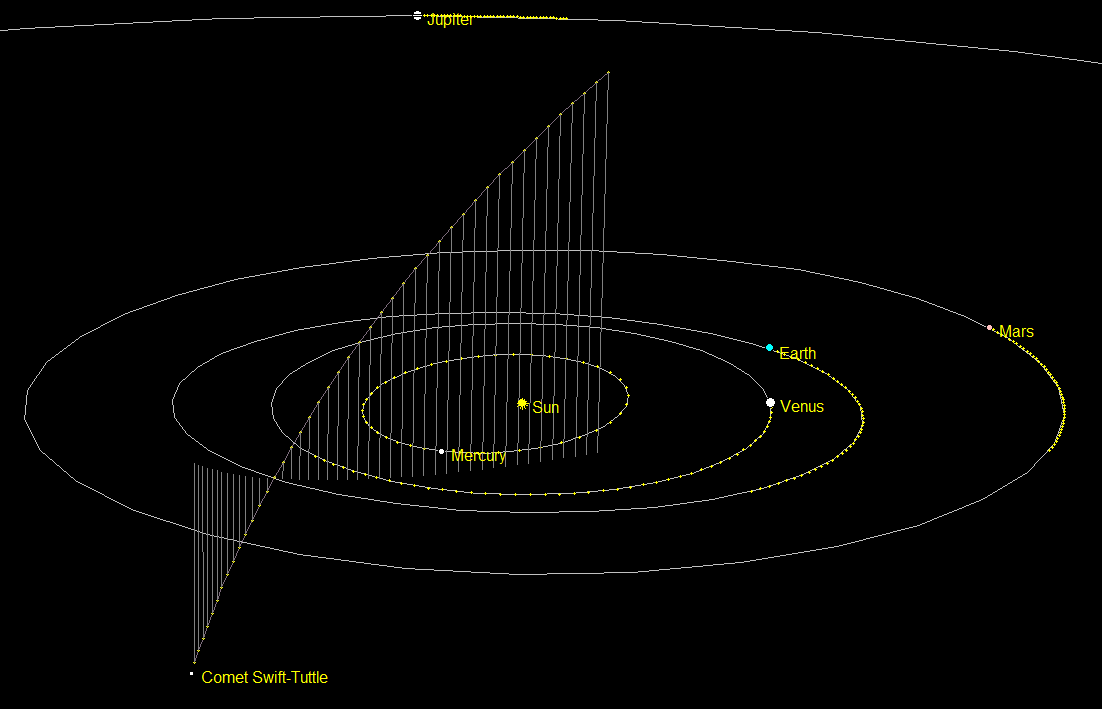
The source of the Perseid meteor shower is Comet Swift-Tuttle, first discovered in 1862 buy Lewis Swift and Horace Parnell Tuttle. The comet was expected back around 1982, but it didn’t show. Its orbit was recalculated and was expected around 1992, when it indeed showed up. The comet has a 130 or so year orbit of the Sun which does vary from appearance to appearance. The comet appears to be in resonance with Jupiter’s orbit of the Sun, going around once in the same time Jupiter goes around the Sun 11 times. Its next appearance in the inner solar system will be in the year 2126, when it is expected to be quite bright then, coming relatively close to the Earth.
The astronomical event times given are for the Traverse City/Interlochen area of Michigan (EDT, UT–4 hours). Times will be different for other locations.
Addendum
Ephemeris: 08/06/2024 – Looking toward the Perseid Meteor Shower
This is Ephemeris for Tuesday, August 6th. Today the Sun will be up for 14 hours and 25 minutes, setting at 9:01, and it will rise tomorrow at 6:36. The Moon, 2 days past new, will set at 10:15 this evening.
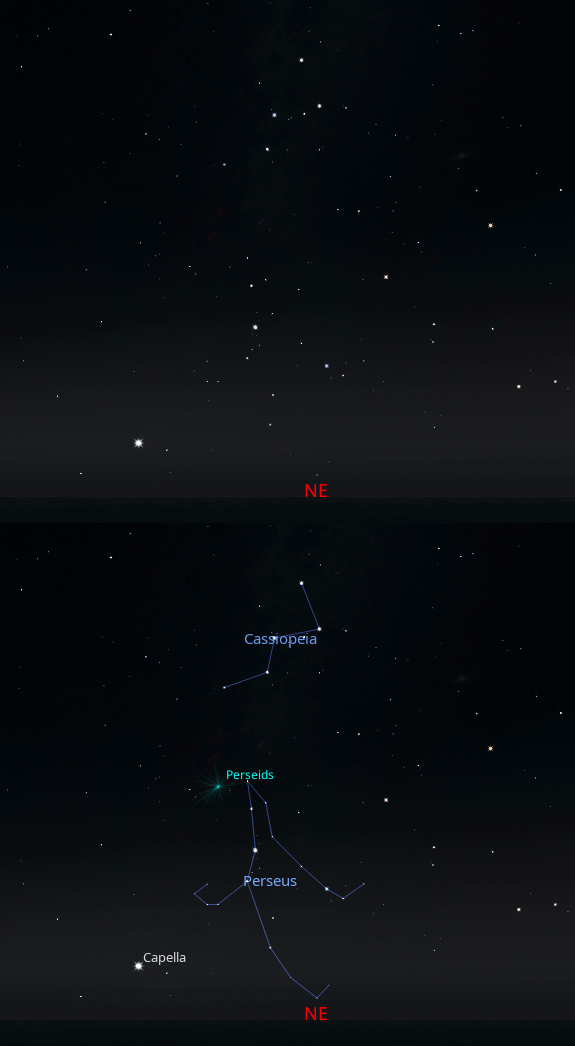
Next Monday morning we’ll see the peak of the Perseid meteor shower. They’re called the Perseids because they seem to come from the constellation of Perseus the hero which is below the W shaped constellation of Cassiopeia in the northeast in the evenings now. The reason they appear to come from the same direction is that they were shed by a comet whose name is Swift-Tuttle discovered in 1862 it’s been around many times before that, though not recognized as such. The first mention of the Perseids in history comes from the year 36 CE, though they were assuredly visible but unrecognized before that. In the past they’ve been known as the Tears of Saint Lawrence because their peak is near the feast date of that martyr. Perseids can be seen now, though not in peak numbers.
The astronomical event times given are for the Traverse City/Interlochen area of Michigan (EDT, UT–4 hours). Times will be different for other locations.
Addendum
Ephemeris: 08/11/2023 – The Perseid meteor shower will reach its peak tomorrow night to early Sunday morning
This is Ephemeris for Friday, August 11th. Today the Sun will be up for 14 hours and 14 minutes, setting at 8:54, and it will rise tomorrow at 6:41. The Moon, 3 days past last quarter, will rise at 2:32 tomorrow morning.
The Perseid meteor shower at its peak and will be visible all night tomorrow. It won’t have to compete with the Moon until after 3:30 am Sunday morning. The meteors will be seen all over the sky, However Perseid meteors can be backtracked to a spot below the W shaped constellation of Cassiopeia, in the area of the constellation Perseus. As the night progresses, the radiant point will be rising higher in northeast. So lay down on a blanket in a dark location, keep mosquito repellent handy, dress warmly, because the ground and air will be chilly and dewy. Bring some hot coffee or chocolate to drink. And enjoy up to 60 meteors an hour at the peak in the morning. They will be near peak all weekend.
The astronomical event times given are for the Traverse City/Interlochen area of Michigan (EDT, UT –4 hours). They may be different for your location.
Addendum
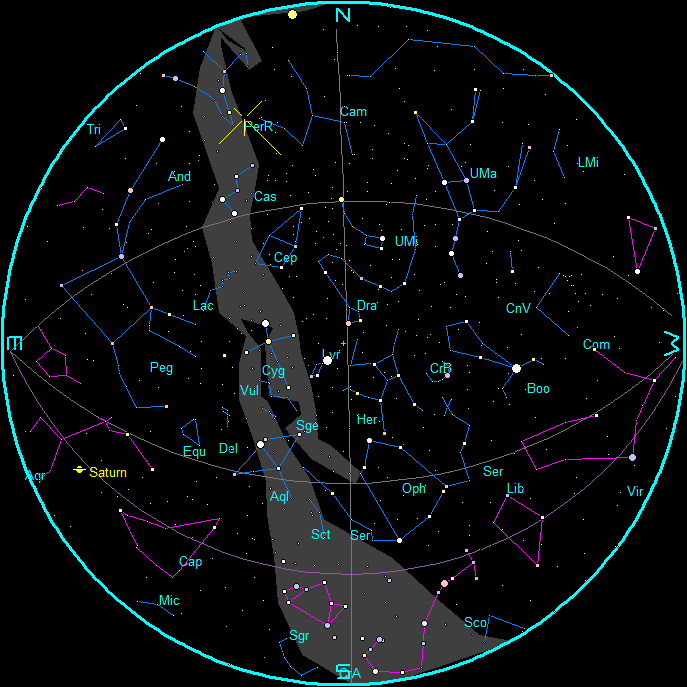
The Dome of the sky for the night of August 12th and 13th, 2023 at 10:30 PM for northern Michigan. The Perseid radiant is in the northeast and fairly low in the sky, and marked in yellow with the caption PerR. It will continue to rise in the northeast throughout the night. The constellation names are abbreviated. Their full names can be found here. Large images can be truncated on the right. Click or tap on the image to enlarge and display the complete image. Created using my LookingUp app.
The cool thing about viewing the meteor shower early in the evening is that the meteoroids enter the Earth’s atmosphere at a grazing angle, so they seem to last longer and have longer trains. I remember one early evening meteor traveling down the Milky Way, like it was a highway.
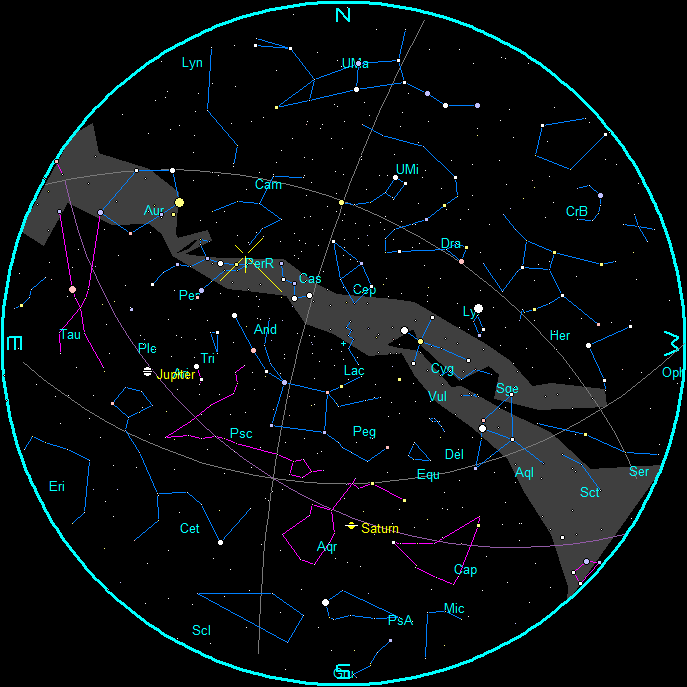
The Dome of the sky for August 12th and 13th, 2023 at 3 AM for northern Michigan. The Perseid radiant is in the northeast, much higher in the sky, and marked in yellow with the caption PerR. The constellation names are abbreviated. Their full names can be found here. Large images can be truncated on the right. Click or tap on the image to enlarge and display the complete image. Created using my LookingUp app.
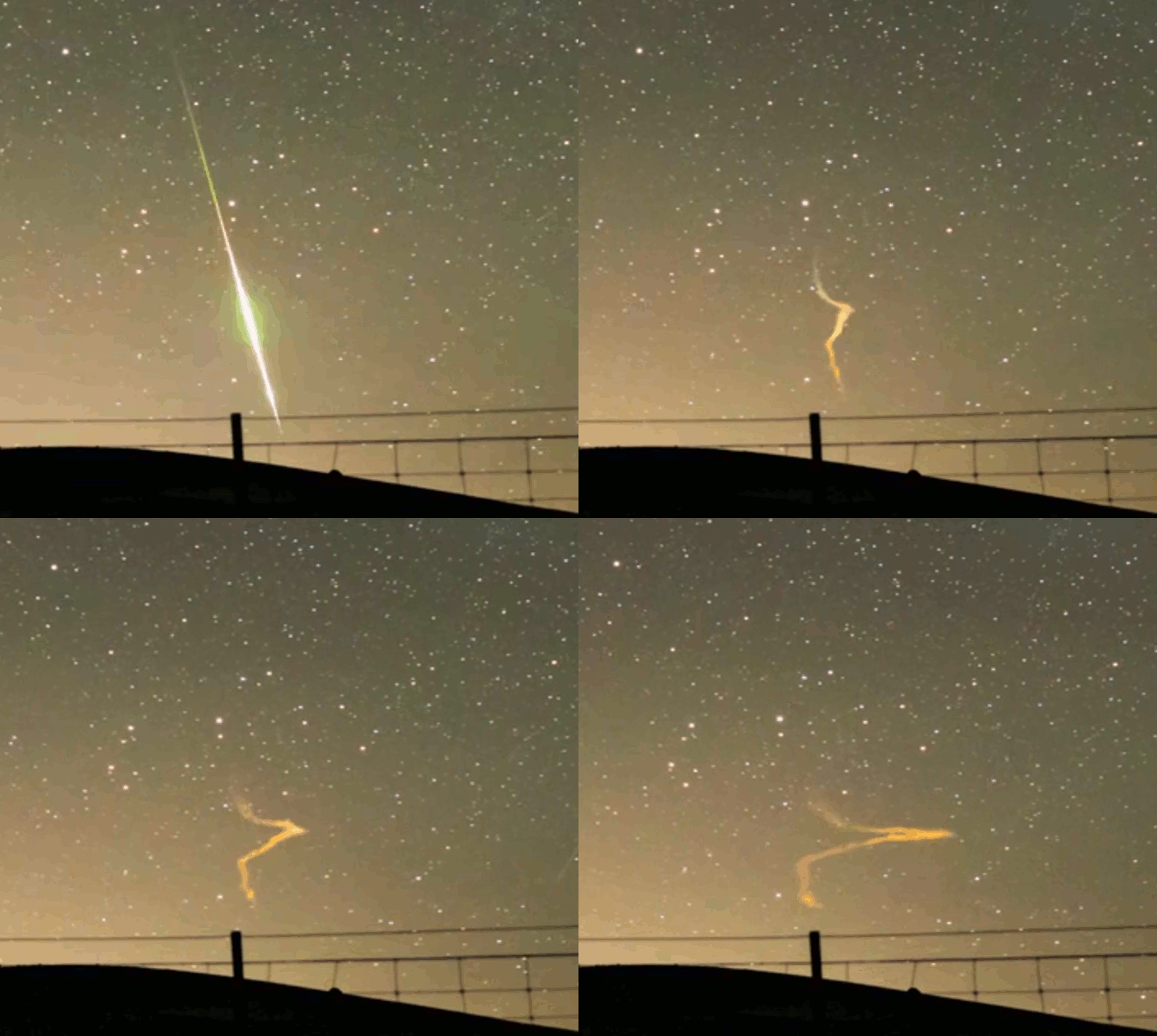
Binoculars come in handy to view the luminous trains that the brightest Perseids leave behind for a short time.
Ephemeris: 08/10/2023 – The Perseid meteor shower will reach its peak early Sunday morning
This is Bob Moler with Ephemeris for Thursday, August 10th. Today the Sun will be up for 14 hours and 17 minutes, setting at 8:56, and it will rise tomorrow at 6:40. The Moon, 2 days past last quarter, will rise at 1:43 tomorrow morning.
Back before astronomers recognized the major meteor shower that occurs at this time of year, the streaks of light in the sky of “falling” or “shooting” stars were called, by Christians, the Tears of Saint Lawrence, who was martyred on this day in the year 258. The bits of comet debris, ranging from the size of sand grains to that of a pea, hit our atmosphere at 38 miles (59 kilometers) per second and quickly vaporize due to friction, causing the streak of light we call a meteor. They are called the Perseids since they appear to come from the constellation of Perseus, located in the northeastern sky. They will be best seen Saturday night and into Sunday morning, with rates of up to one a minute, on average, especially in the early morning hours.
The astronomical event times given are for the Traverse City/Interlochen area of Michigan (EDT, UT –4 hours). They may be different for your location.
Addendum
The Dome of the sky for the night of August 12th and 13th, 2023 at 10:30 PM for northern Michigan. The Perseid radiant is in the northeast and fairly low in the sky, and marked in yellow with the caption PerR. It will continue to rise in the northeast throughout the night. The constellation names are abbreviated. Their full names can be found here. Large images can be truncated on the right. Click or tap on the image to enlarge and display the complete image. Created using my LookingUp app.
The Dome of the sky for August 12th and 13th, 2023 at 3 AM for northern Michigan. The Perseid radiant is in the northeast, much higher in the sky, and marked in yellow with the caption PerR. The constellation names are abbreviated. Their full names can be found here. Large images can be truncated on the right. Click or tap on the image to enlarge and display the complete image. Created using my LookingUp app.
Remember, the meteors only seem to come from the radiant. They will appear all over the sky! The meteors of a shower travel in parallel paths, like train tracks, disappearing to a point in the distance.
08/12/2022 – Ephemeris – The Perseid meteor shower reached its peak tonight with a bright moon
This is Ephemeris for Friday, August 12th. Today the Sun will be up for 14 hours and 11 minutes, setting at 8:53, and it will rise tomorrow at 6:42. The Moon, 1 day past full, will rise at 9:48 this evening.
The Perseid meteor shower will reach its peak tonight as the nearly full Moon rises. Only the brightest of these meteors will be visible in the bright moonlit sky. Next year the Moon will be less bright and will only interfere in the early morning hours. Comet Swift-Tuttle is responsible for shedding the tiny bits of rock that end up orbiting the Sun near its path. The Earth plows through these particles every year at this time, giving us a great sky show, which at peak on a dark morning provide 60 or more of these so-called shooting stars per hour. The members of the Perseids will all seem to come from the northeastern sky, from the top of the constellation of Perseus the hero. The star figure to me instead looks like the cartoon roadrunner running up the sky.
The astronomical event times given are for the Traverse City/Interlochen area of Michigan (EDT, UT – 4 hours). They may be different for your location.
Addendum
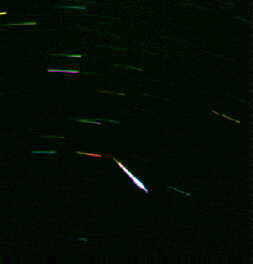
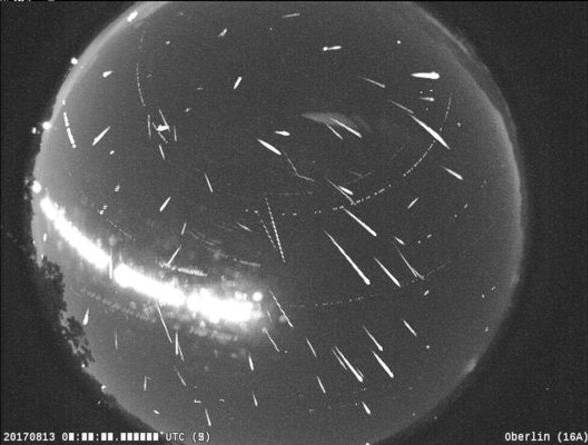
Perseid fireballs in one of NASA’s all sky cameras during the morning hours of August 13, 2017. This is a long time exposure. The bright swath in the image is the Moon that morning. Since it is a time exposure, the radiant is also moving with the earth’s rotation, so the meteors only seem to come from the northeastern sky. North is at the top, and East is to the left. The Moon that morning was 1 day before last quarter, so tonight’s Moon will be even brighter. Credit NASA.
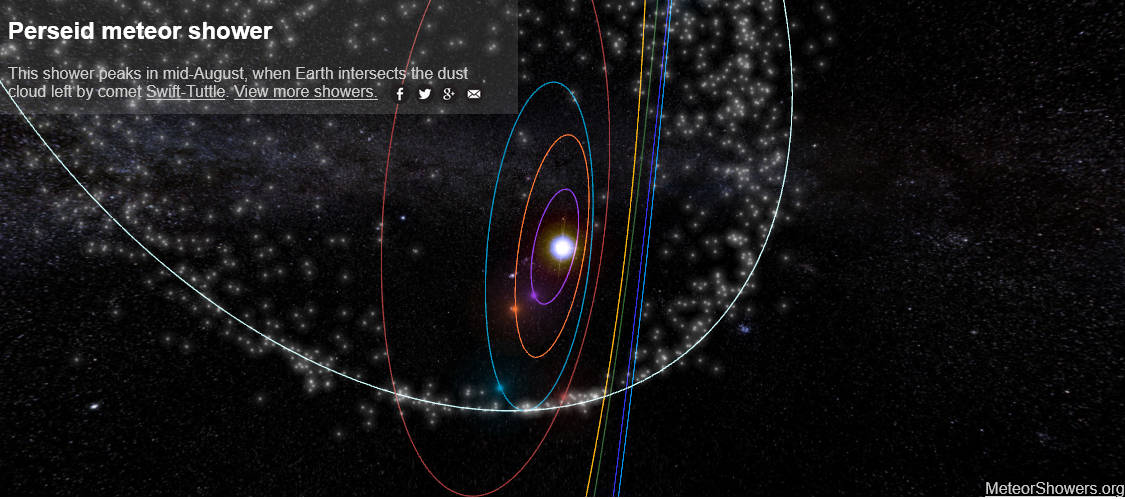
Screen capture of an interactive animation of the orbits of the Perseid meteoroids and the inner planets. The planets move counterclockwise, while the meteoroids move clockwise and cross the Earth’s orbital plane at a high angle. Image taken from the International Meteor Organization, imo.net. Interactive animation by MeteorShowers.org.
07/25/2022 – Ephemeris – Getting an early look at the Perseid Meteor Shower
This is Ephemeris for Monday, July 25th. Today the Sun will be up for 14 hours and 55 minutes, setting at 9:16, and it will rise tomorrow at 6:22. The Moon, 3 days before new, will rise at 3:57 tomorrow morning.
The annual Perseid meteor shower, which will reach its peak on the evening of August 12th has the full moon to contend with. So the best time to spot these meteors is before the peak. Members of this meteor shower can be spotted from July 17th to August 24th, but in much reduced numbers. They are best seen after midnight, however since the point in the sky they seem to come from, the radiant, is always above the horizon, they can be spotted any time at night. They will seem to come from the northeastern part of the sky, and below the letter W shaped constellation of Cassiopeia. The Southern Delta Aquariid meteors coming from the southeast after 11 pm will predominate. Its radiant, the point from which the meteors will seem to come from, will be near the Moon. The Southern Delta Aquariids will reach their peak on the 30th of this month, with dark skies. The Southern Delta Aquariid radiant will rise about 11 pm now, and it will be possible to spot one of its meteors until the Moon rises. The hourly rates of the Perseids will increase each night until the Moon starts to interfere with the shower in early August.
The astronomical event times given are for the Traverse City/Interlochen area of Michigan (EDT, UT – 4 hours). They may be different for your location.
Addendum
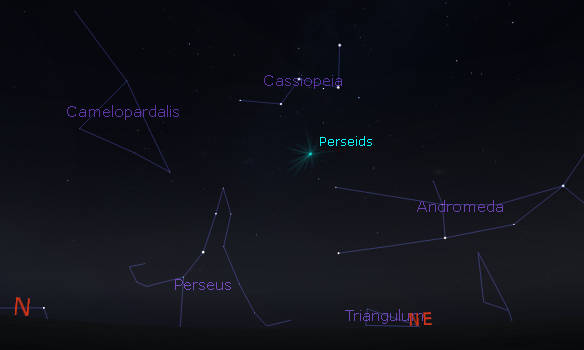
Finder chart for Perseid Radiant for August 25, 11pm. The radiant point will move slowly to the left for the duration of the meteor shower over the next month. By August 12th, the shower’s peak, the radiant will be just left of the top star of Perseus. Created using Stellarium.
08/12/2021 – Ephemeris – It’s not too late to see the Perseids
This is Ephemeris for Thursday, August 12th. Today the Sun will be up for 14 hours and 10 minutes, setting at 8:52, and it will rise tomorrow at 6:43. The Moon, 3 days before first quarter, will set at 11:13 this evening.
It’s not too late to see the Perseid meteors. The projected peak of the shower is expected to be between 3 and 6 this afternoon. So the meteor shower should still be quite active. It has been my experience that the numbers of meteors decline more rapidly than they increase before the peak. NASA can determine their orbits using all sky cameras placed at different locations to get their paths by triangulation. The cameras have shutters the interrupt the meteor track at a specific interval, which allow them to determine the meteor’s speed and are able to calculate the particle’s orbit of the Sun. An animation of these orbital tracks can be found on the International Meteor Organization website imo.net.
The astronomical event times given are for the Traverse City/Interlochen area of Michigan (EDT, UT – 4 hr). They may be different for your location.
Addendum
I’ve been talking about the Perseid meteor shower all week, so far. Click on the calendar dates to the upper right to review those posts.
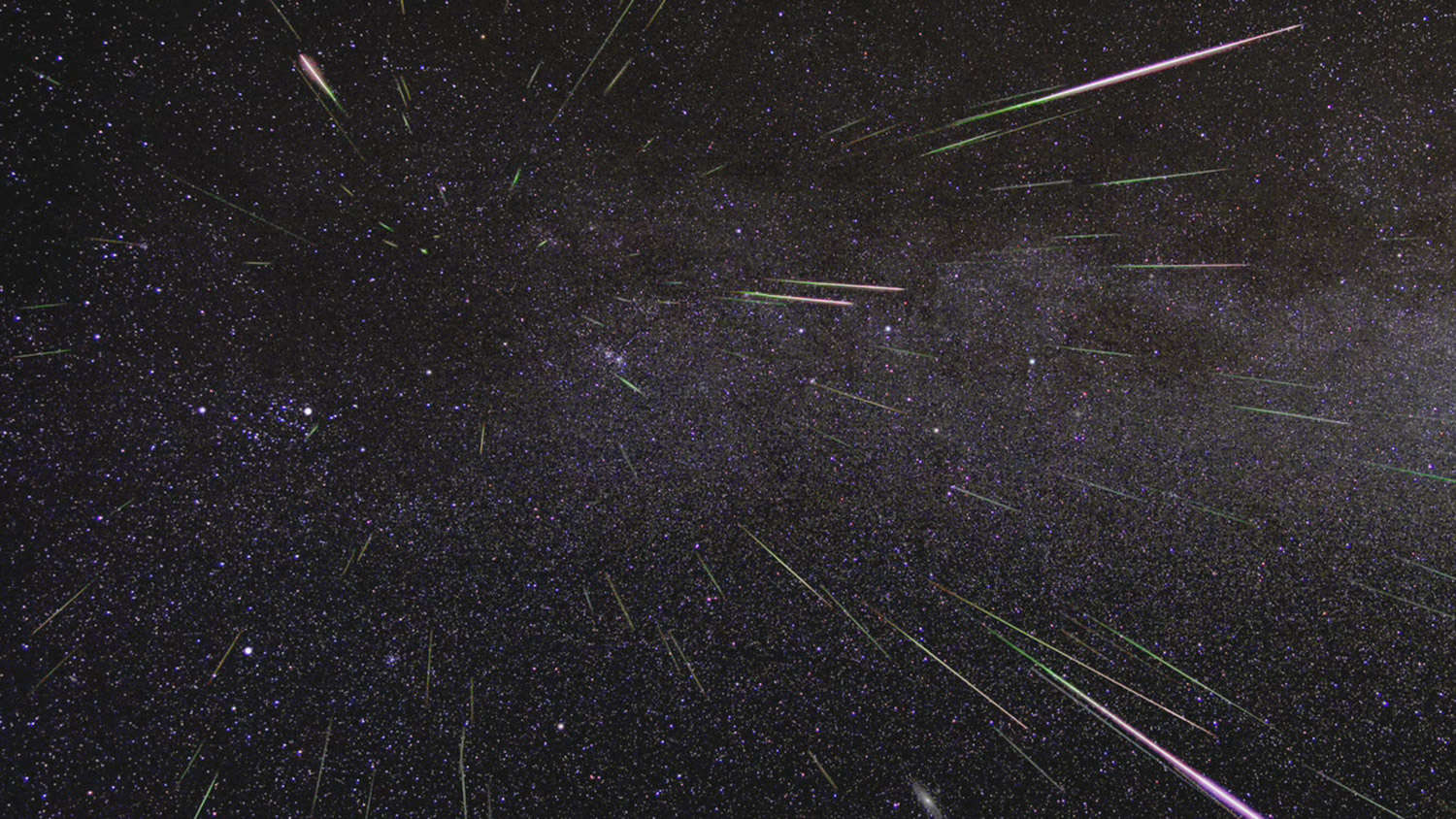
A Perseid outburst from 2009. Credit NASA/JPL via Phil Plait’s Bad Astronomy.
Perseid fireballs in one of NASA’s all sky cameras during the morning hours of August 13, 2017. This is a long time exposure. The bright swath in the image is the Moon that morning. Since it is a time exposure, the radiant is also moving with the earth’s rotation, so the meteors only seem to come from the northeastern sky. North is at the top, and East is to the left. Credit NASA.
08/11/2021 – Ephemeris – Let’s search for the naked-eye planets for this week, and meteors tonight
This is Bob Moler with Ephemeris for Wednesday, August 11th. Today the Sun will be up for 14 hours and 13 minutes, setting at 8:54, and it will rise tomorrow at 6:42. The Moon will be 3 days past new tonight.
Let’s search for the naked-eye planets for this week. Venus and the Moon will be close together tonight, with Venus below and right of the waxing crescent Moon by 9:30 tonight. Venus will set at 10:18 pm. With the Moon following at 10:50. By 10 pm, Jupiter and Saturn will be seen low in the southeastern sky. The brighter Jupiter will be easy to spot at that hour. Saturn will be dimmer, but a bit higher and to its right. Tonight and especially in the morning hours tomorrow, the Perseid meteors will be at their peak. These bits of Comet Swift-Tuttle, liberated by the comet’s prior passes in through the warmth of the inner solar system, will flash into incandescence as they enter the Earth’s atmosphere at interplanetary speeds.
The astronomical event times given are for the Traverse City/Interlochen area of Michigan (EDT, UT – 4 hr). They may be different for your location.
Addendum
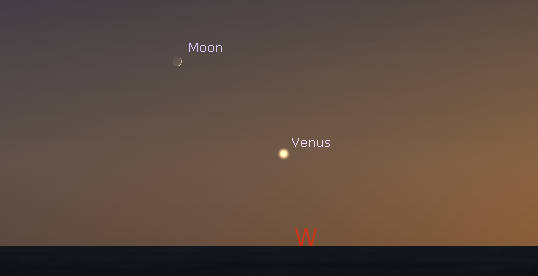
Venus and the 3-day-old Moon ion evening twilight at 9:45 tonight, August 11, 2021. Created using Stellarium.
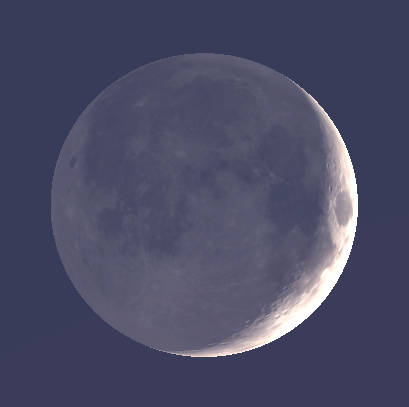
The Moon as it might appear in binoculars tonight, August 11, 2021, with earth shine on its night side, illuminated by the bright Earth in its sky.
Created using Stellarium.
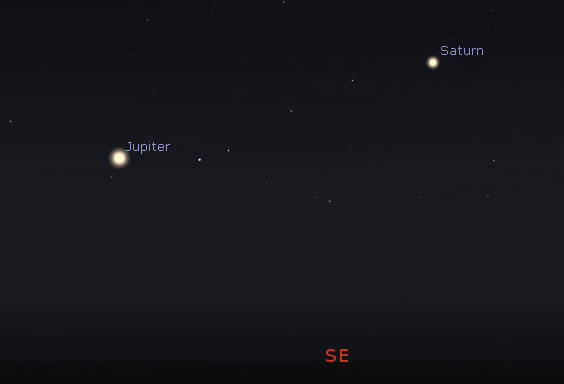
Jupiter and Saturn in the southeastern sky at 10:30 in the evening tonight, August 11, 2021. Created using Stellarium.
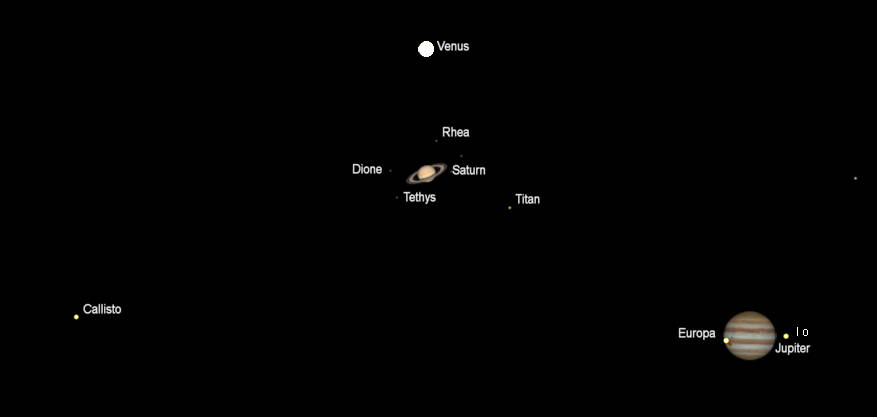
Telescopic view of the bright planets (north up) as they would be seen in a small telescope, with the same magnification, this evening, at 10 pm August 11, 2021. Apparent diameters: Venus, 13.40″; Saturn 18.57″, its rings 43.26″; Jupiter, 49.00″. Jupiter’s moon have a cluster of events in the evening. See below. The ” symbol means seconds of arc (1/3600th of a degree.) Click on the image to enlarge it. Created using Cartes du Ciel (Sky Charts).
                Jupiter's Satellite events
Moon      Event            EDT (pm-11th, am-12th) UT (12th)
Europa    Shadow enters    10:00 pm               02:00
Europa    Transit starts   10:25 pm               02:25
Io        Eclipse starts   10:41 pm               02:41
Europa    Shadow exits     12:51 am               04:51
Ganymede  Occultation ends  1:06 am               05:06
Io        Occultation ends  1:11 am               05:11
Europa    Transit ends      1:12 am               05:12
The above times were determined using Stellarium, and may be off by several minutes.
Shadow events are when a satellite’s shadow is cast onto the face of the planet
Transit events are when the satellite passes in front of the planet
Eclipse events are when a satellite passes through the planet’s shadow
Occultation events are when the satellite passes behind the planet
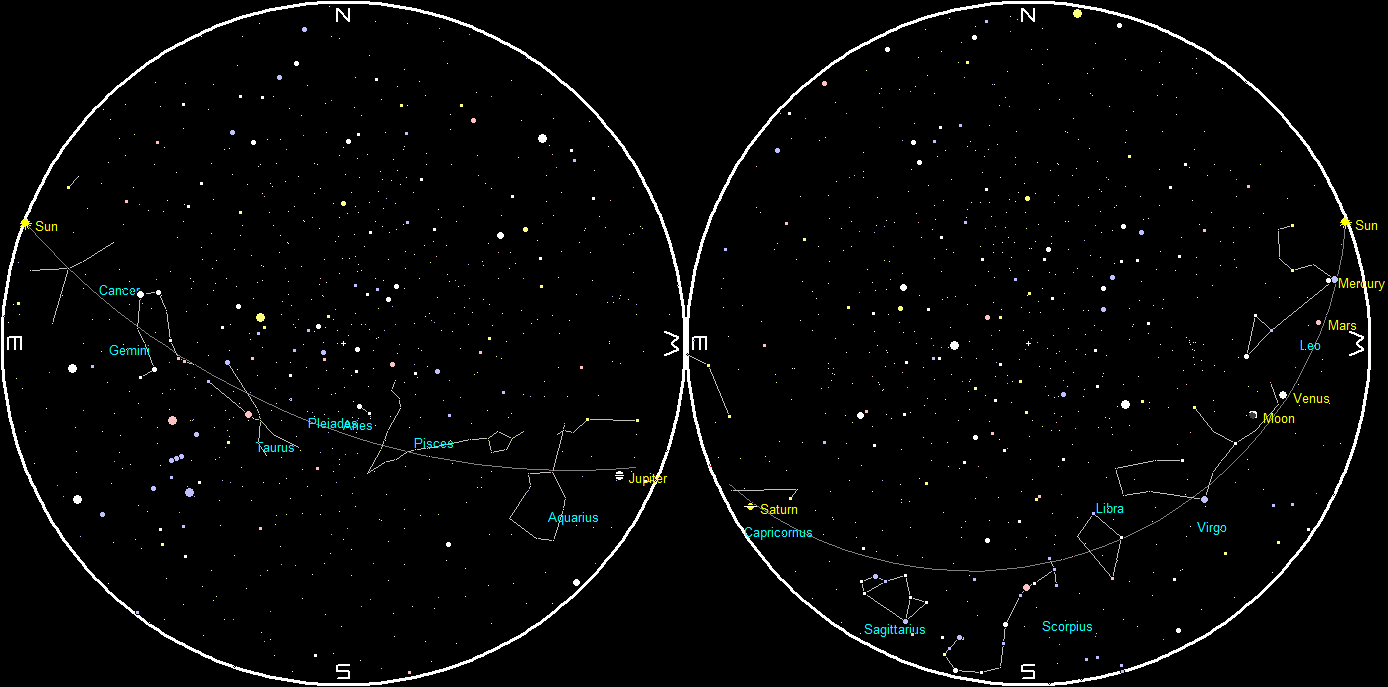
Planets and the Moon at sunset and sunrise of a single night, starting with sunset on the right on August 11, 2021. The night ends on the left with sunrise on the 12th. Click on the image to enlarge. Created using my LookingUp program.
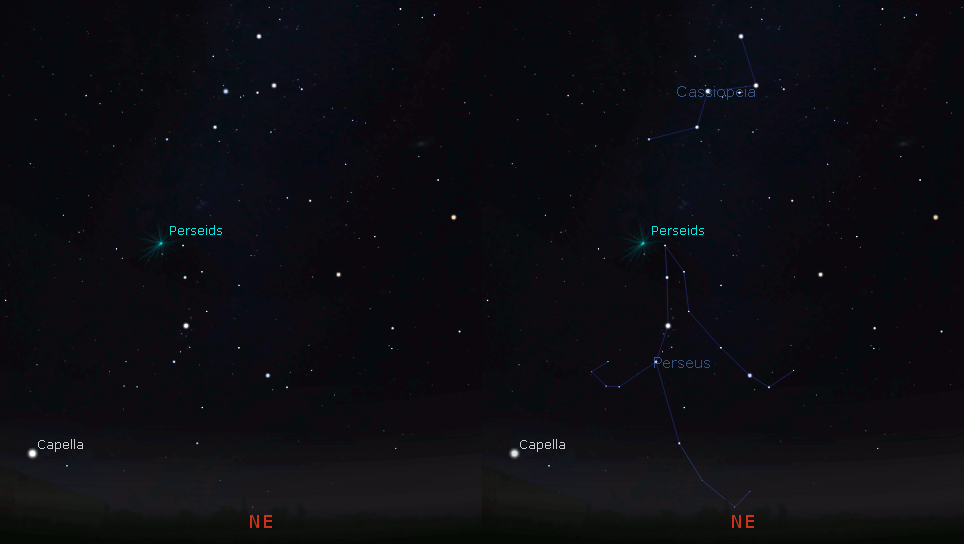
Perseid Radiant finder automation for midnight, August 11th. Created using Stellarium and GIMP.
More on the Perseids on Monday and Tuesday’s posts.
 Bob Moler's Ephemeris Blog