Archive
Ephemeris: 09/09/2024 – The Sun’s sibling star?
This is Ephemeris for Monday, September 9th. Today the Sun will be up for 12 hours and 48 minutes, setting at 8:03, and it will rise tomorrow at 7:16. The Moon, 2 days before first quarter, will set at 10:38 this evening.
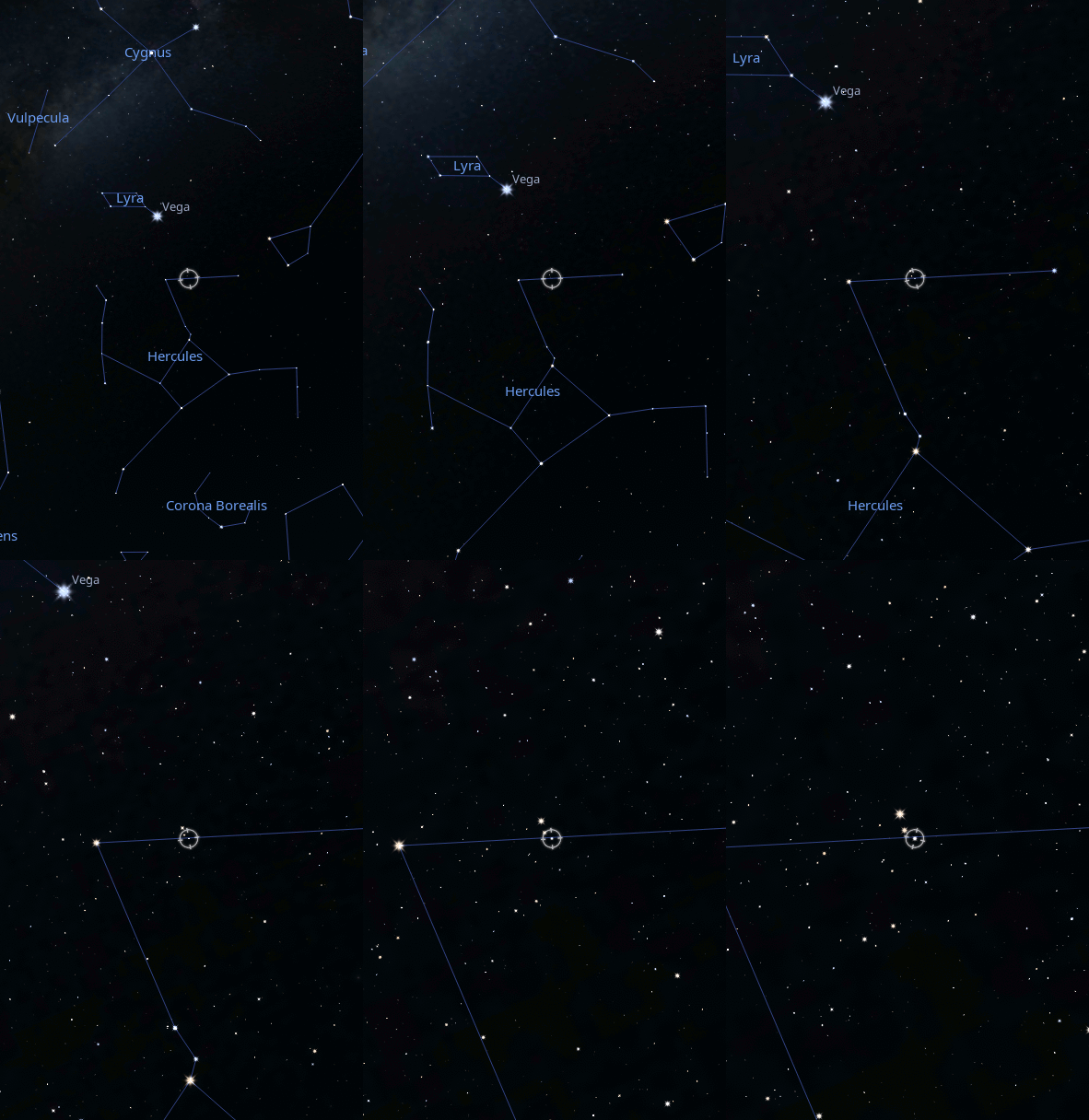
The Sun was born from a cloud, a nebula, of mostly hydrogen and helium with traces of heavier elements. Astronomers consider any element heaver than helium a metal. It was not born alone, but with many other stars in a star cluster, all at about the same time. The elements that are in the Sun’s atmosphere came from that nebula. Astronomers are wondering if there were any other stars they could see which were siblings of the Sun. Apparently they found one star that has the same metals in the same proportions as the Sun. That star is HD 162826, a dim star in the constellation Hercules, visible in binoculars. It’s a bit more massive than the Sun, and about 109 light years away. The Sun’s sibling stars have scattered far and wide.
The astronomical event times given are for the Traverse City/Interlochen area of Michigan (EDT, UT – 4 hours). Times will be different for other locations.
Addendum
 Bob Moler's Ephemeris Blog