Archive
12/27/2012 – Ephemeris – That was the year that was.
Ephemeris for Thursday, December 27th. The sun will rise at 8:18. It’ll be up for 8 hours and 50 minutes, setting at 5:09. The moon, 1 day before full, will set at 8:10 tomorrow morning.
The end of the year is the perfect time to look back at the astronomical events of the year. There was a partial solar eclipse in May and the rare transit of Venus across the sun in June. You’ll have to wait until 2117 for the next one. In July came news that the Large Hadron Collider had detected something that sure looked like the long sought Higgs Boson. August brought the spectacular landing of the Mars Science laboratory, aka: The Curiosity rover, on Mars to begin an at least one martian year exploration. In September the Dawn spacecraft bid farewell to the asteroid Vesta after a year exploring that remarkable asteroid, cranking up its ion engine for a three year journey to the dwarf planet Ceres. The satellites Ebb and Flow completed their mission to map the moon’s interior.
Times are for the Traverse City/Interlochen area of Michigan. They may be different for your location.
Addendum
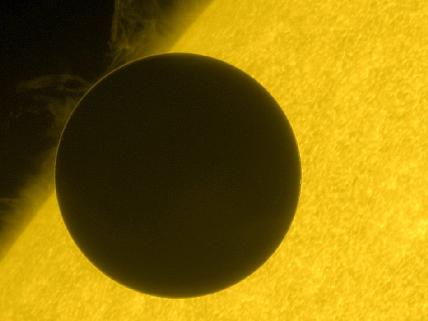
Hinode Views the 2012 Venus Transit. Credit: JAXA/NASA/Lockheed Martin
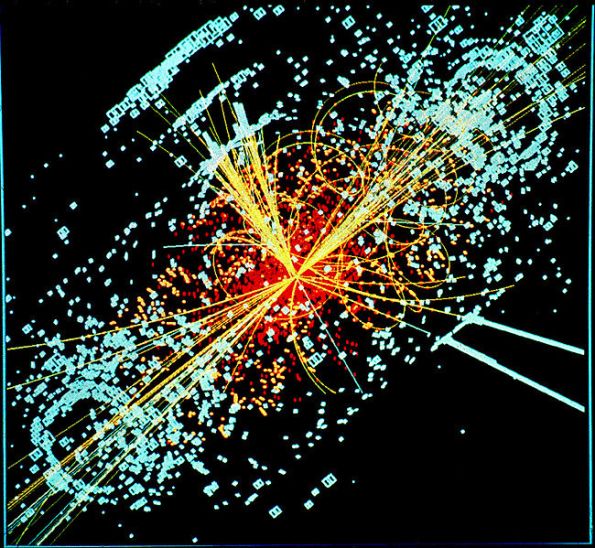
An example of simulated data modeled for the CMS particle detector on the Large Hadron Collider (LHC) at CERN. Here, following a collision of two protons, a Higgs boson is produced which decays into two jets of hadrons and two electrons. The lines represent the possible paths of particles produced by the proton-proton collision in the detector while the energy these particles deposit is shown in blue. Credit CERN.
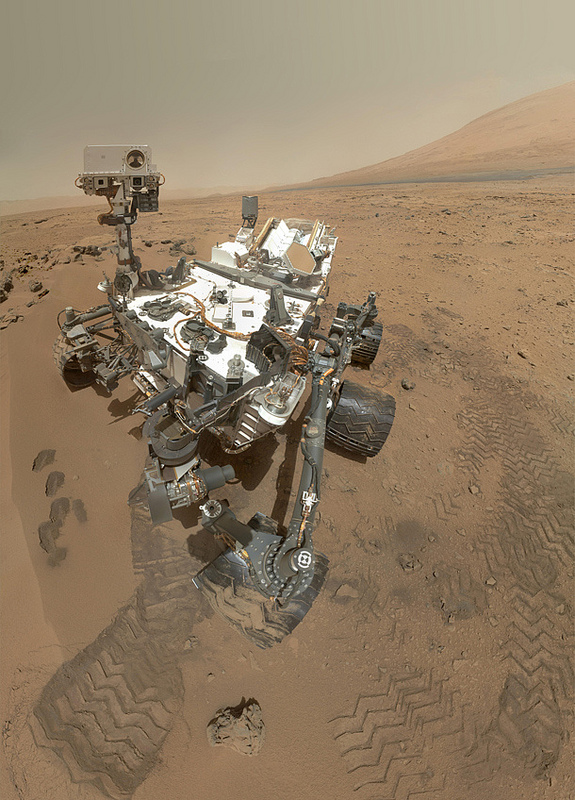
Curiosity rover self portrait. Credit: NASA/JPL-Caltech/Malin Space Science Systems
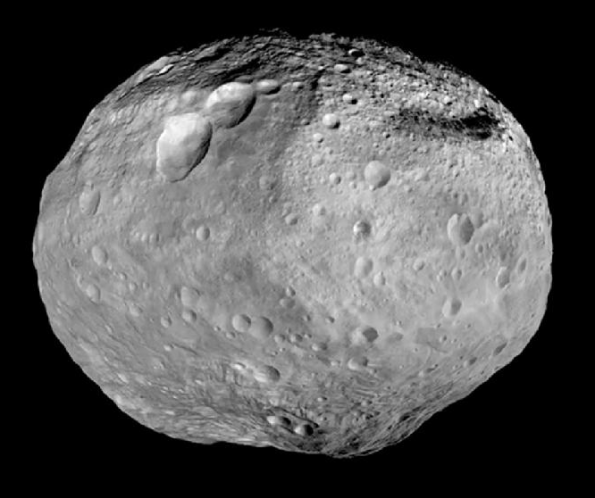
Looking back at Vesta as Dawn headed off to Ceres. Credit: NASA/JPL-Caltech/UCAL/MPS/DLR/IDA
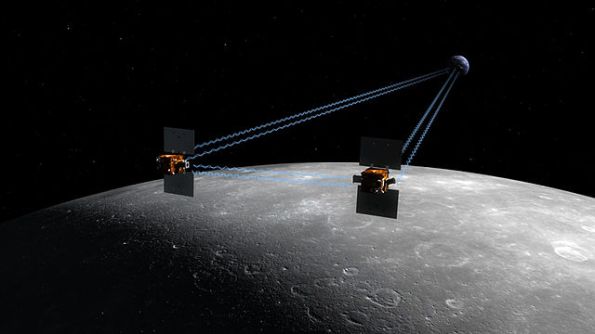
The Grail Spacecraft Ebb and Flow made the most detailed gravitational map of the moon to map its interior; orbiting as close as 15 miles above the surface. They were intentionally crashed into a crater wall on December 17th. Artist conception credit: NASA.
Grand Traverse Astronomical Society’s Transit of Venus Watch – What a Time!
This was a fantastic event at Traverse City’s Open Space on the bay front. The clouds that threatened all day parted and dissolved to reveal a perfect sky. Hundreds of people turned out. Here are some crowd shots I made with my Android phone, plus one of the transit.
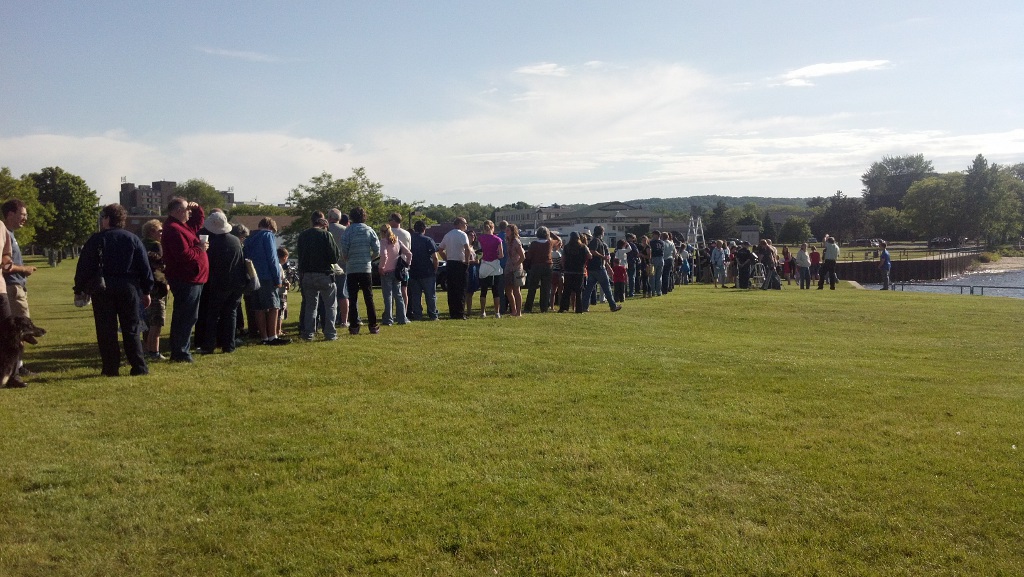
Most of a huge line to see the transit with the GTAS’ 25″ Dobsonian telescope.
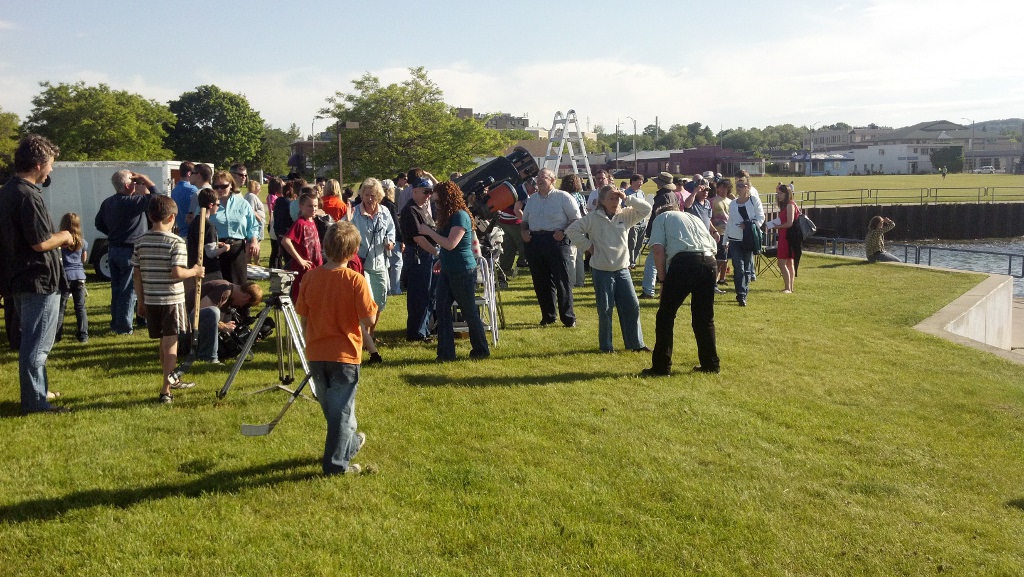
Transit Crowds near the telescopes.
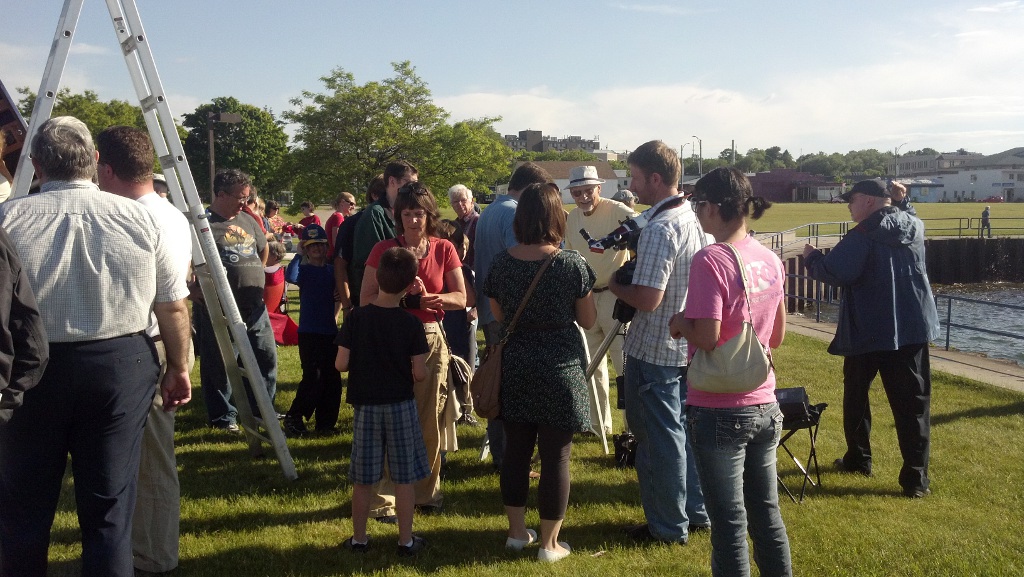
More of the Transit Crowd an Bill Renis manning our Lunt Hydrogen Alpha Solar Telescope.
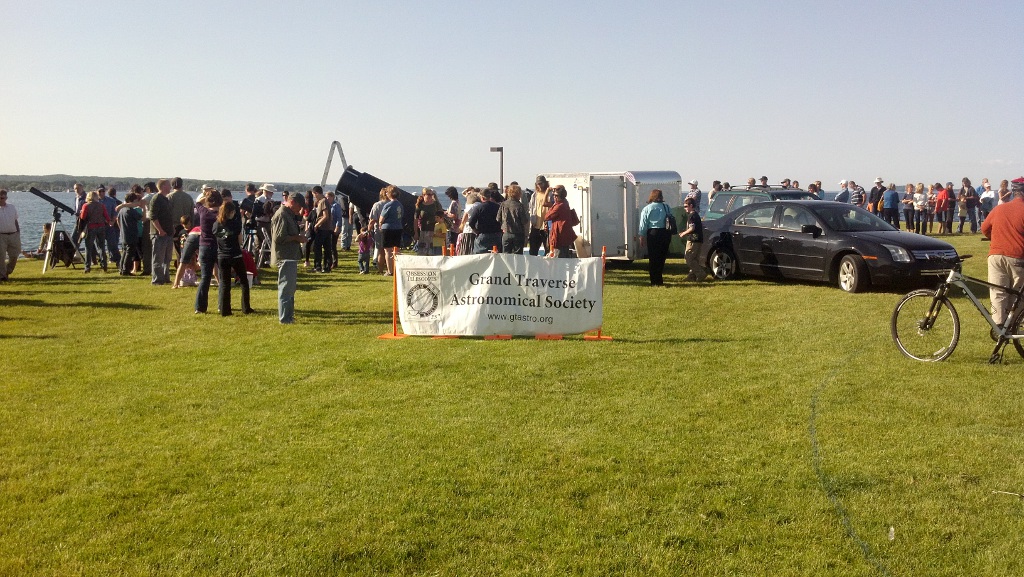
A look at the crowd and our GTAS Banner.
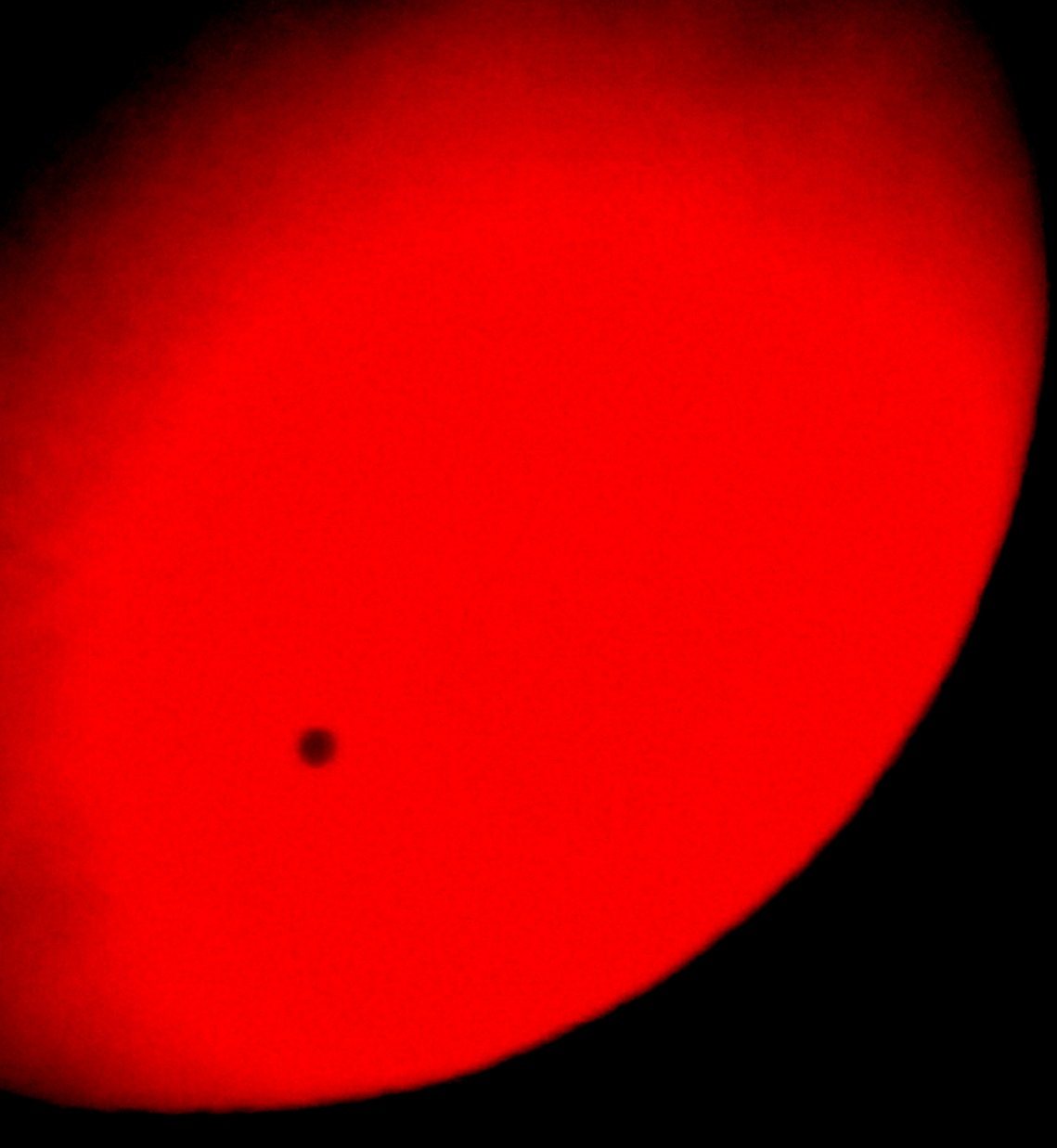
Venus against the sun taken at 8:49 p.m. through the Lunt solar telescope and a Droid Bionic phone.
Update (06/22/2012)
I received photographs from Gary and Eileen Carlisle and put them on the gtastro.org website. Here are theirs below. Eileen took the crowd shots, while Gary took the transit shot just before sunset as the crowds thinned. Gary’s crowd estimate was 500 folks.
More information: The transit started at 6:04 p.m. EDT. I spotted first contact through the Lunt. It took another minute or so to spot it in the white light telescopes. The Lunt showed the sun’s chromosphere that extends some 6,000 miles above the sun’s photosphere. The transit ended fro us as the sun set into the hills of Leelanau County across the west arm of Grand Traverse Bay.
The location we viewed from was the Open Space Park on the bay front in Traverse City, Michigan US. It is also used as the main venue of the National Cherry festival in early July and free outdoors screenings of movies at the Traverse City Film Festival in late July or early August.
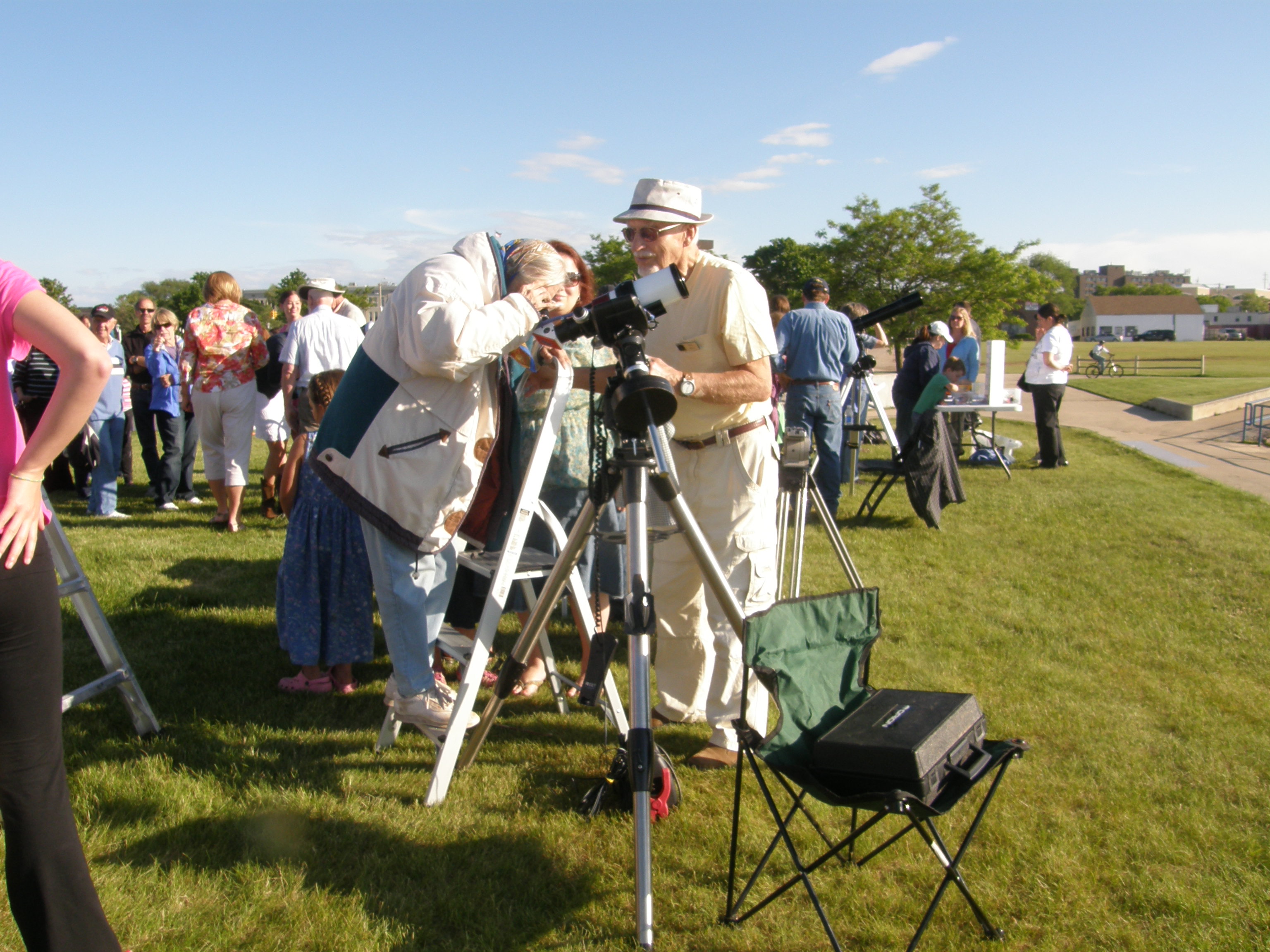
Bill Renis (yellow shirt, white hat and sunglasses) helping a person view the transit using the Lunt Solar Telescope. This was also the society’s 30th anniversary. Bill and I were the only two charter members attending.
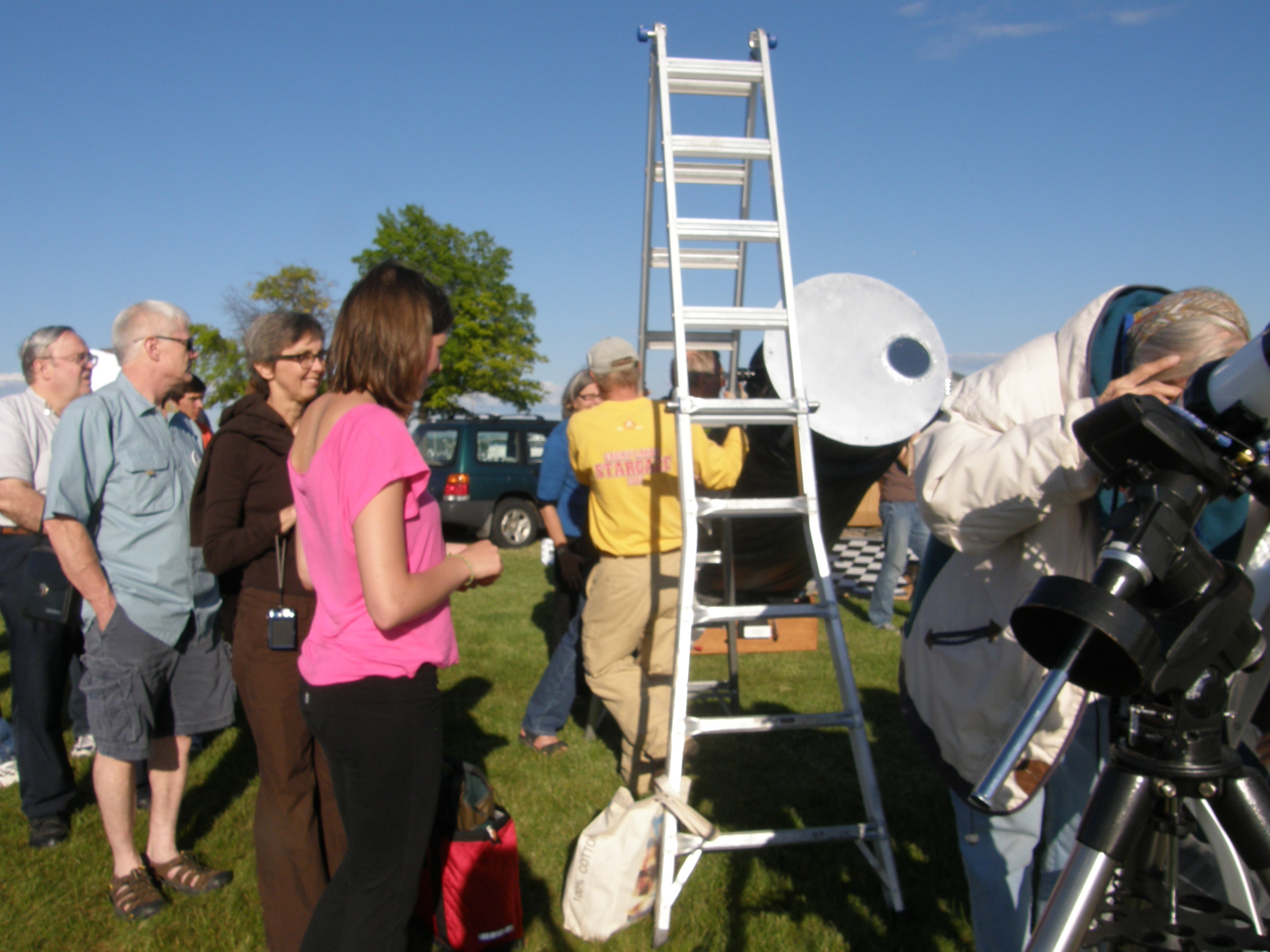
We brought out our Obsession 25″ telescope, stopped down to 8 inches with a solar filter. It gave excellent images. I saw second contact without the annoying teardrop effect.
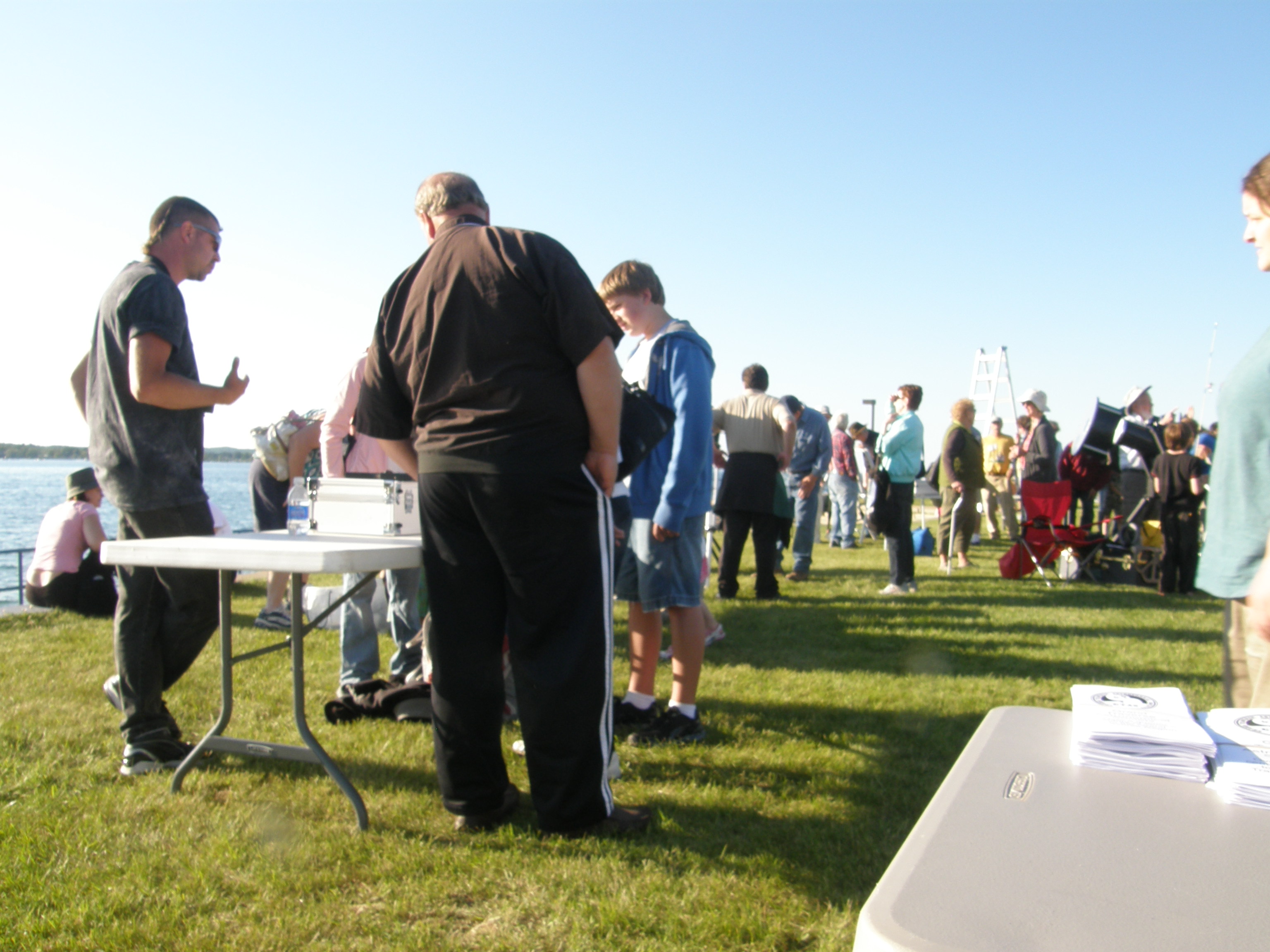
Our “Meteorite Man” Joe Brooks brings out his meteorite collection for our events.
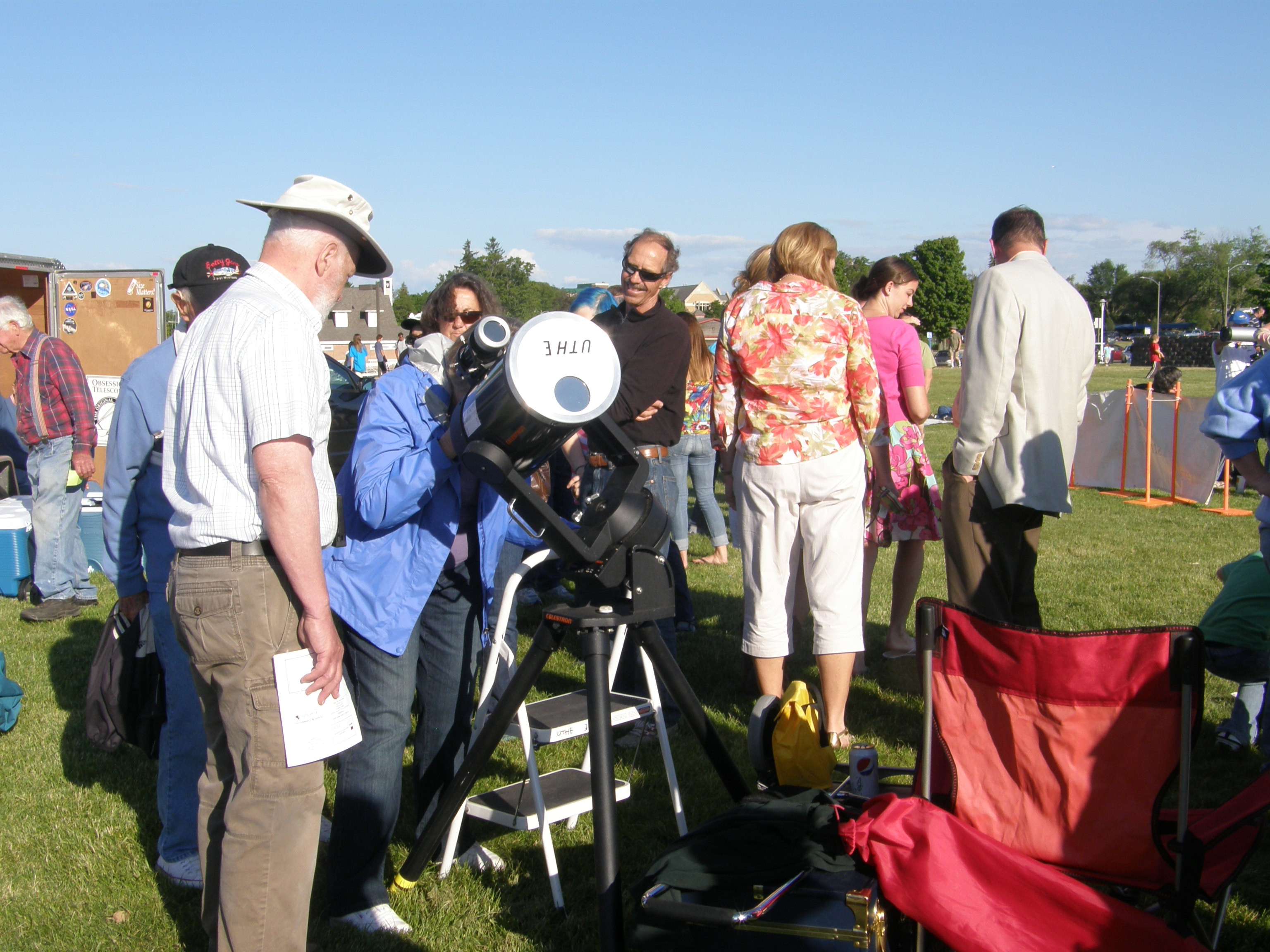
Member Ron Uthe brought his 8″ telescope to the event.
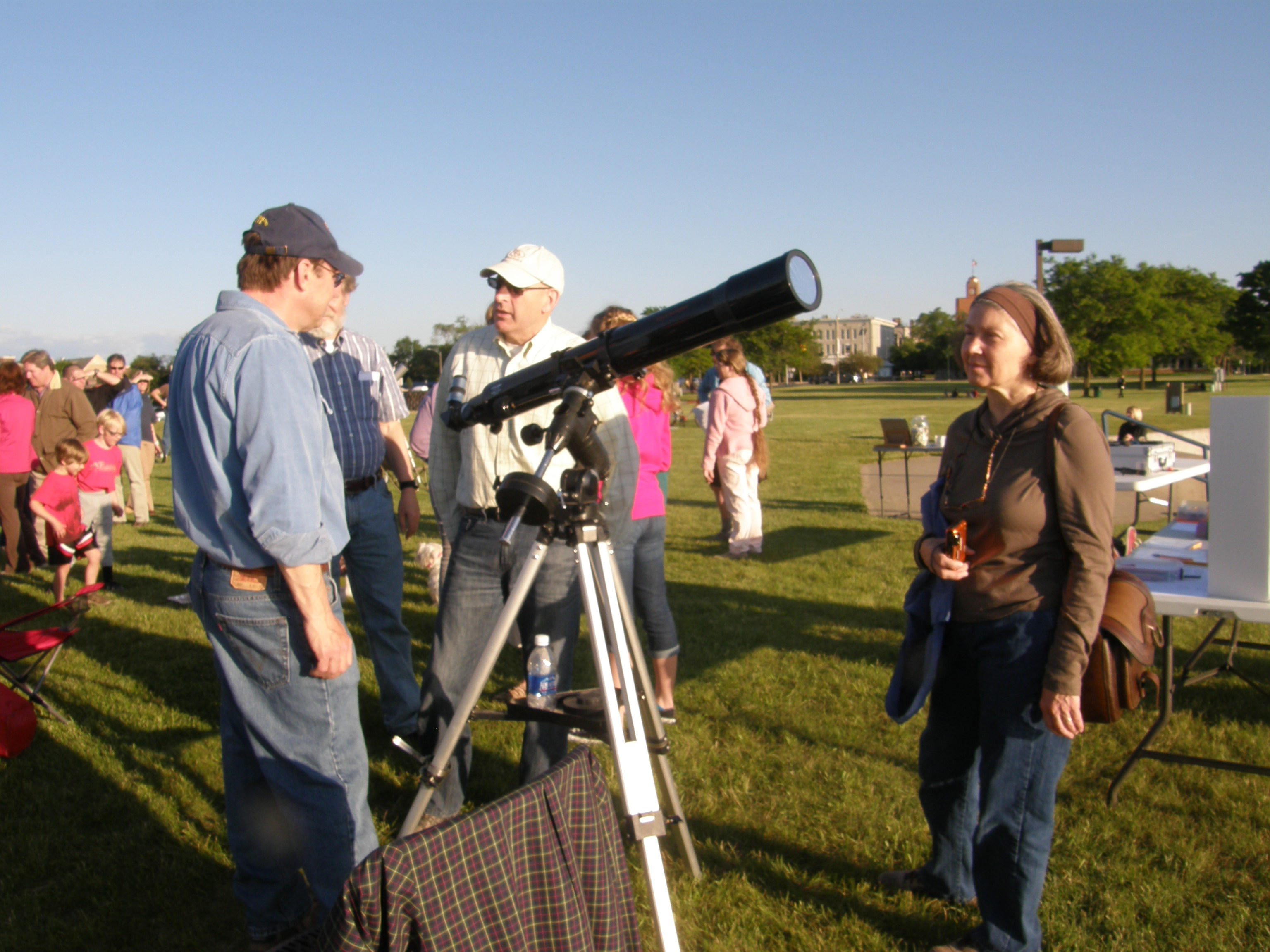
This is GTAS president Rich Kuschell’s 4″ refractor.
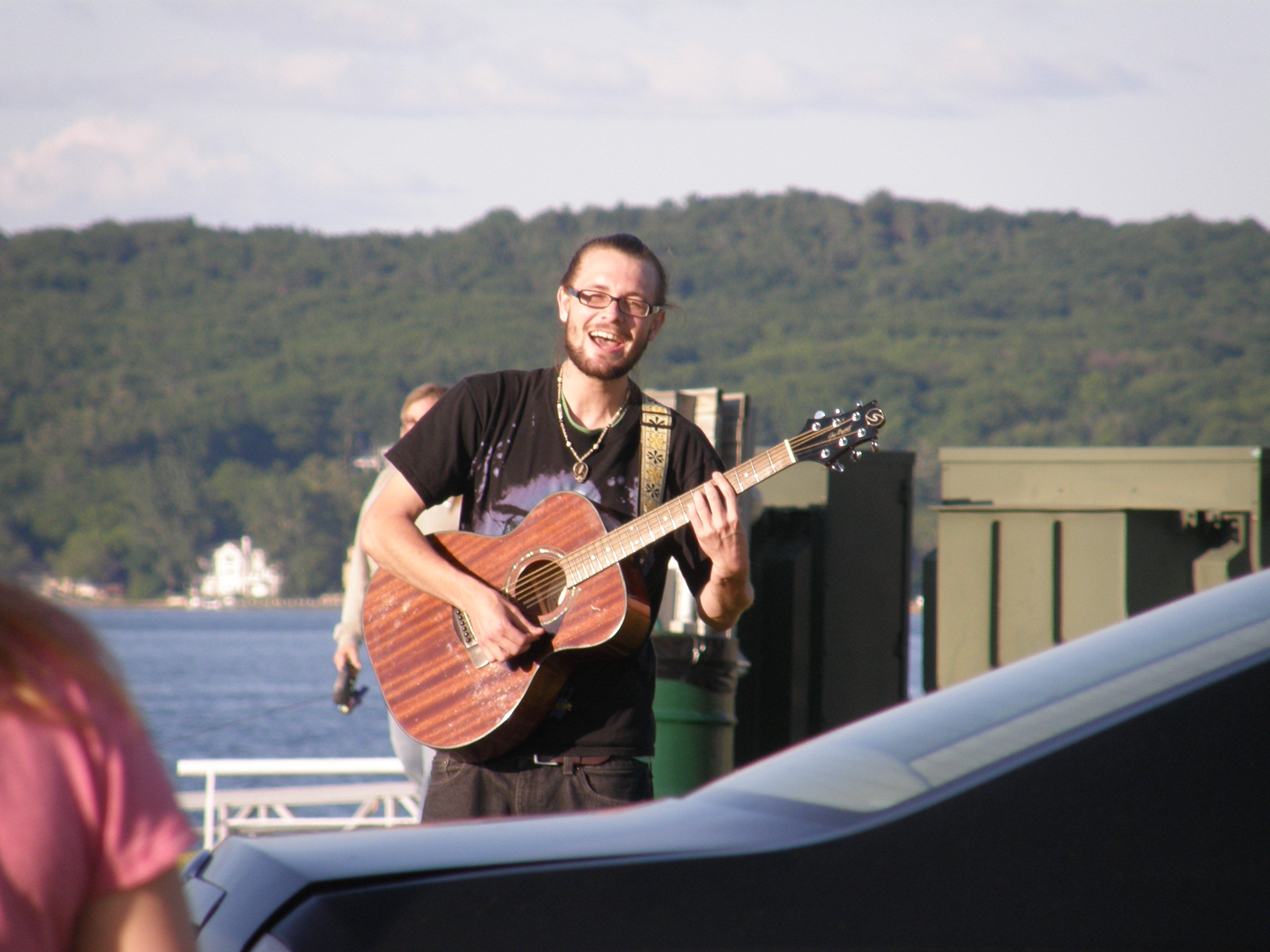
A little impromptu musical accompaniment.
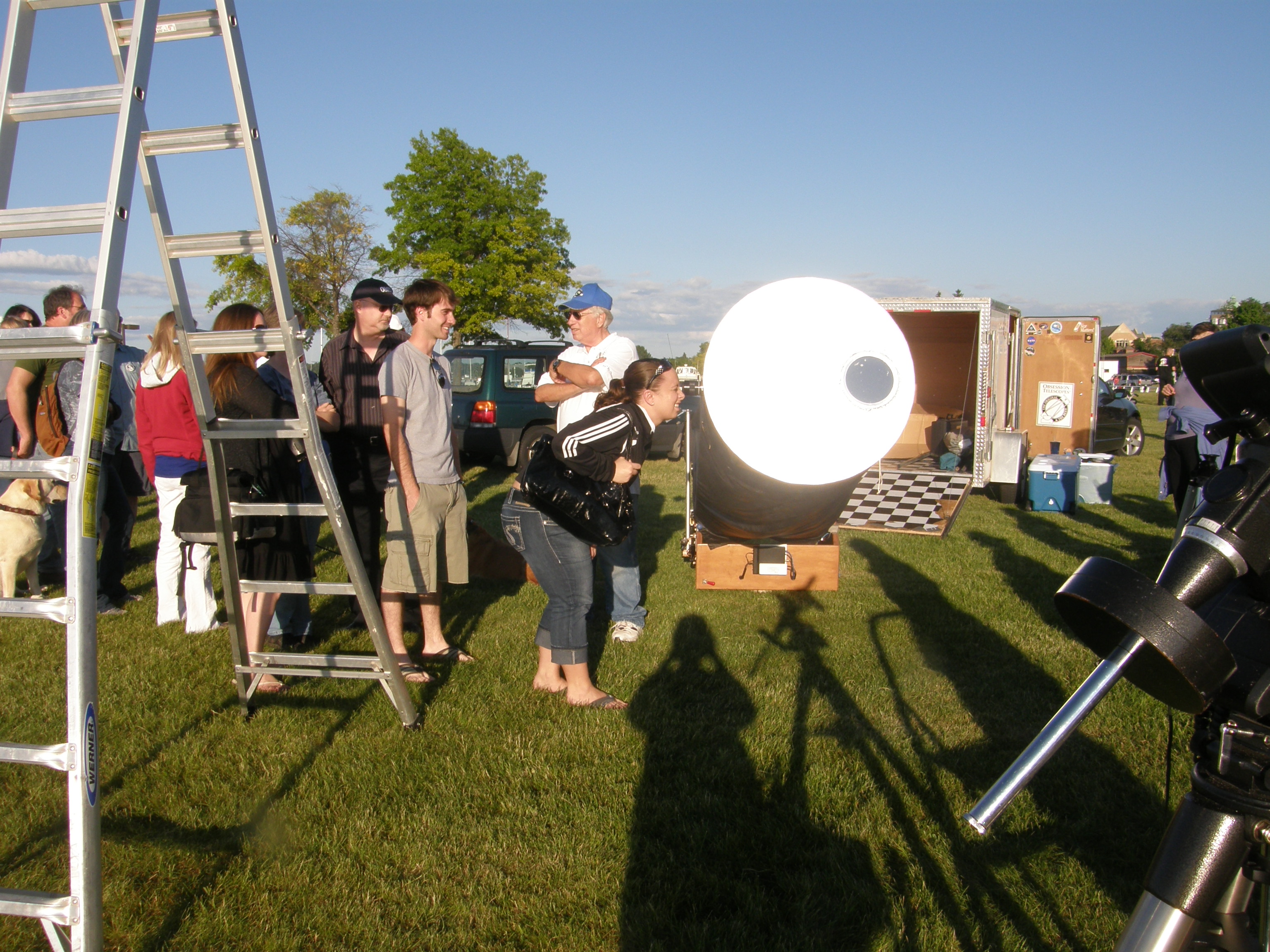
The sun’s getting low now. That’s me in the blue cap.
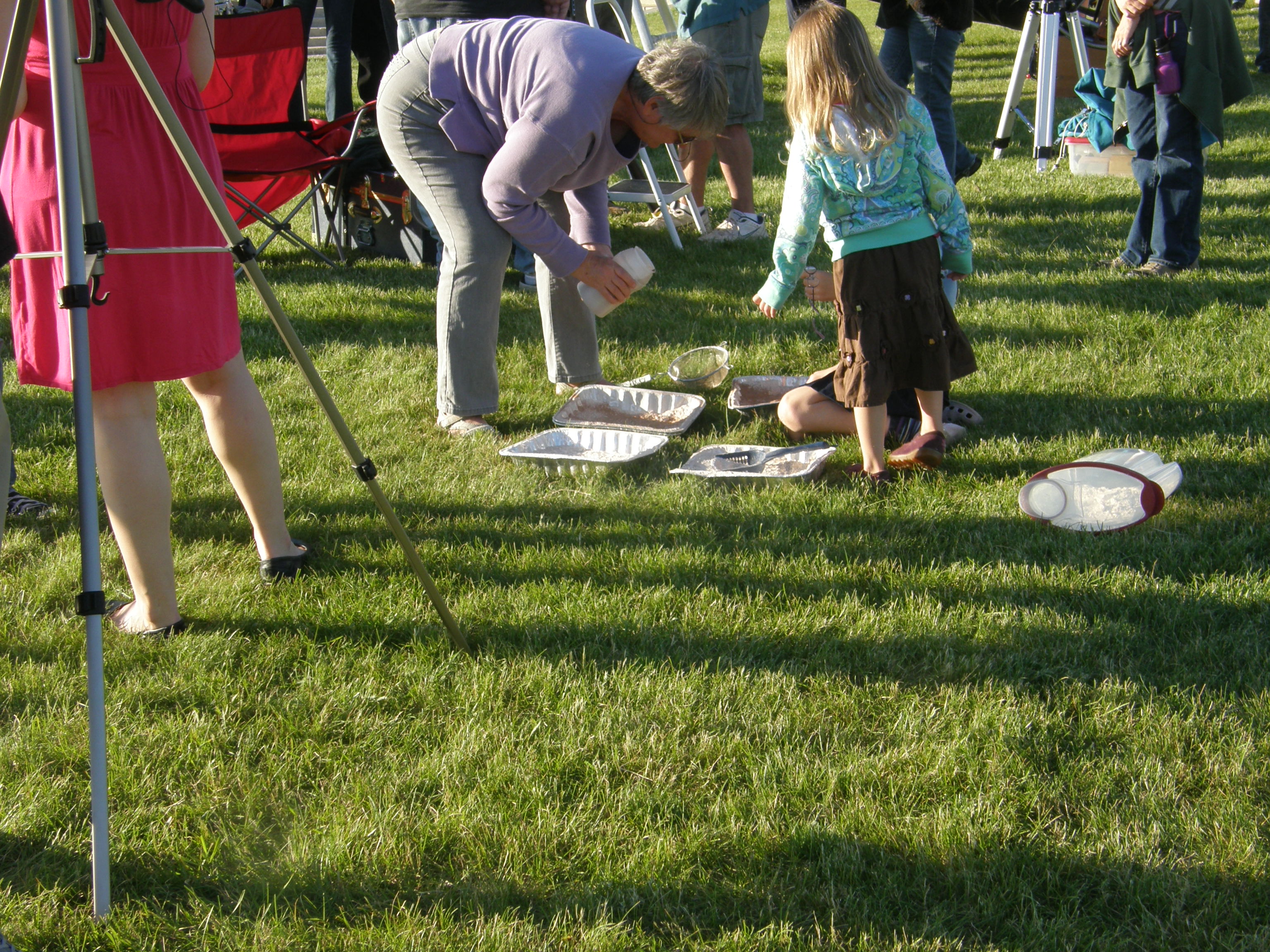
The small kids got a chance to create moon craters in pans of flour covered by chocolate drink powder.
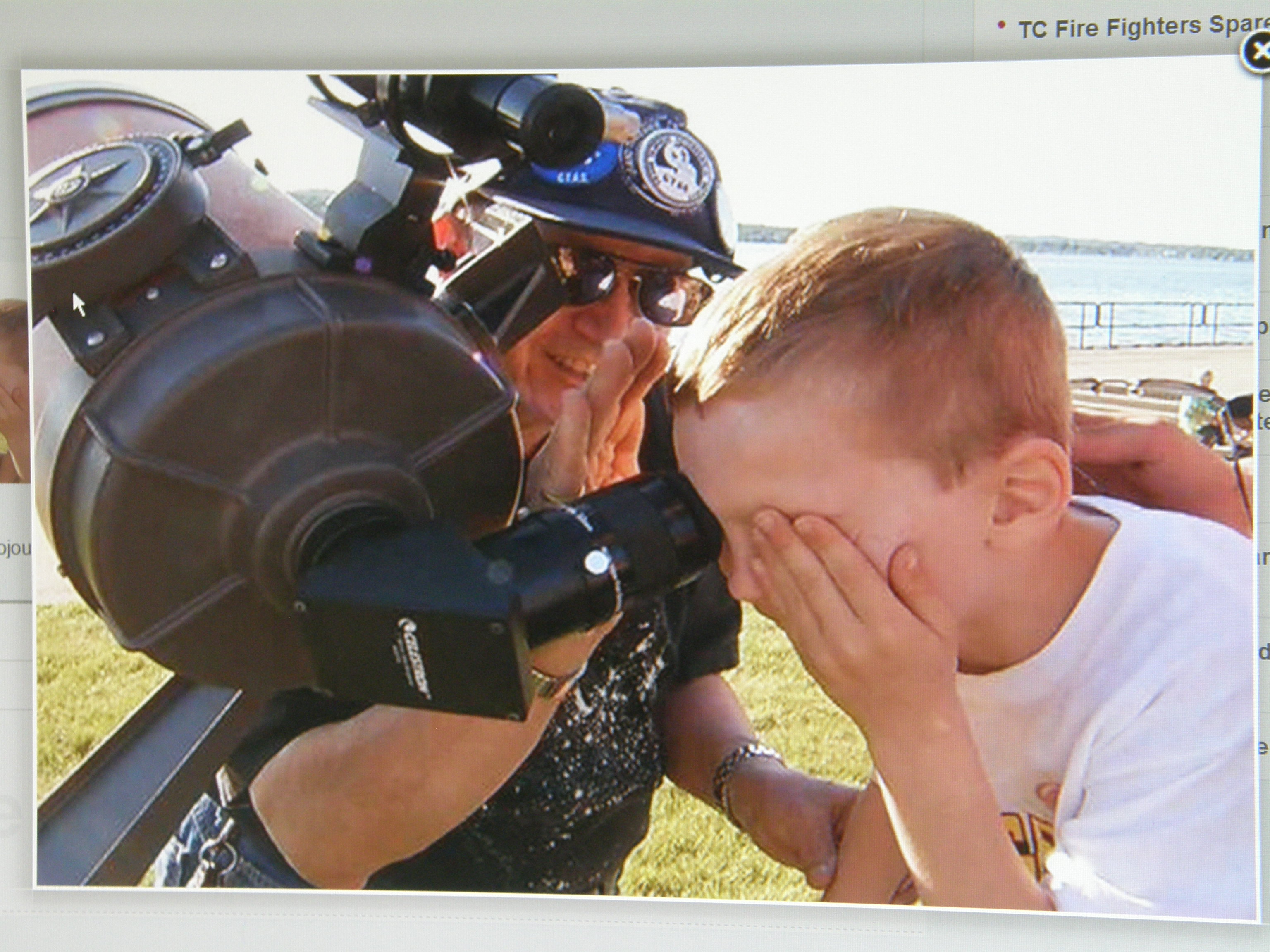
Gary Carlisle shielding the sun for a young man viewing through his 8″ telescope.
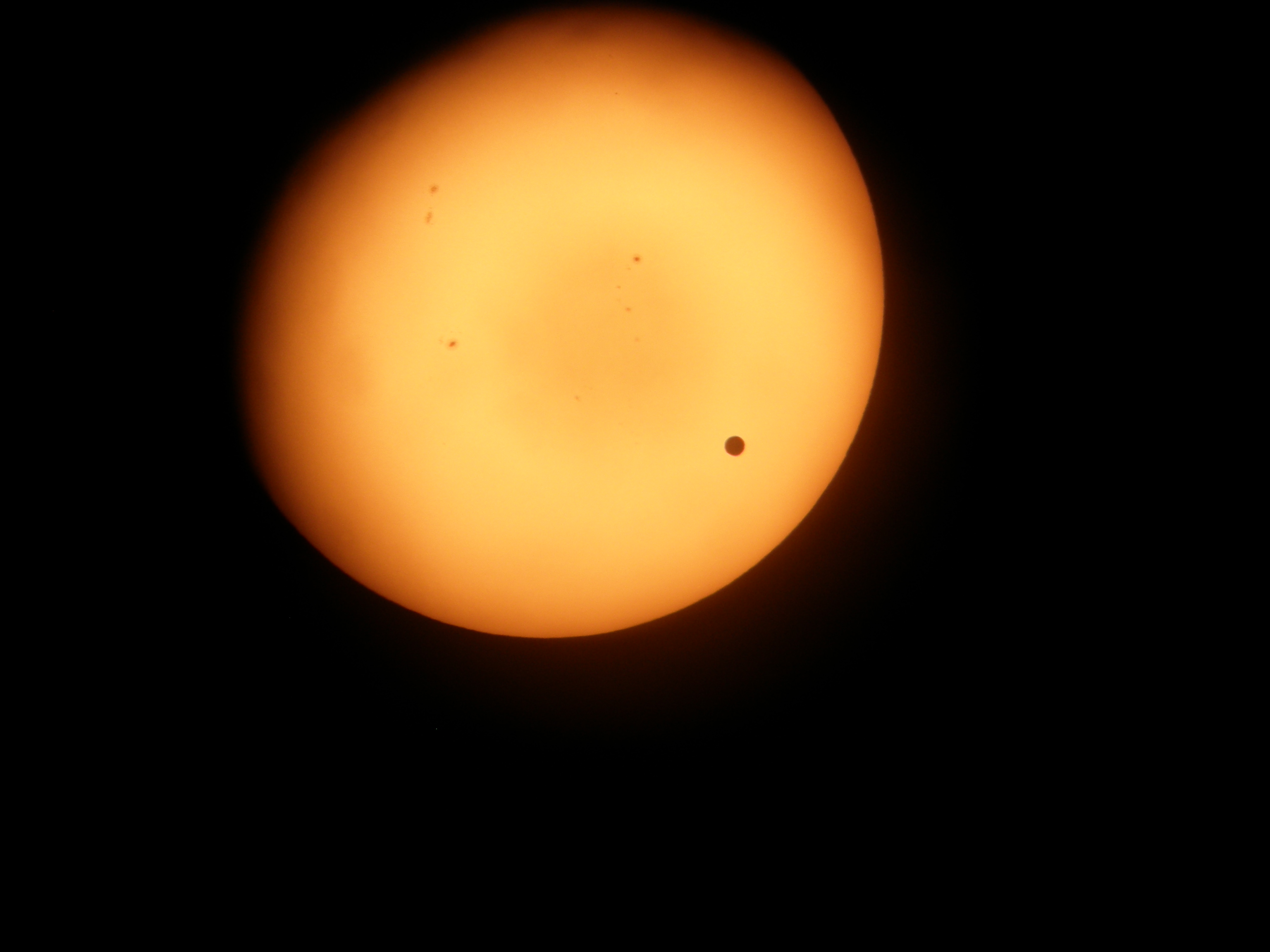
Gary’s photo of the transit.
06/05/2012 – Ephemeris – Transit of Venus is today!
Ephemeris for Tuesday, June 5th. Today the sun will be up for 15 hours and 25 minutes, setting at 9:24. The moon, 1 day past full, will rise at 10:46 this evening. Tomorrow the sun will rise at 5:58.
Early this evening we will see a rare event, the transit of the planet Venus across the sun. This will start at a few minutes after 6 p.m. When Venus will start crossing the sun from near the top. While the transit will last nearly 7 hours, we’ll see about 3 hours of it, clouds willing before the sun sets. The safety precautions are the same as viewing a solar eclipse, that is Do Not Look Directly At The Sun. Safe approved solar filters that fit in front of a telescope, projection of the sun’s image with a telescope or binoculars are the ways to view this event. The Grand Traverse Astronomical Society will be at the Open Space in Traverse City at 6 p.m. tonight for safe views of the event. The next transit of Venus will be in 2117.
Times are for the Traverse City/Interlochen area of Michigan. They may be different for your location.
Addendum
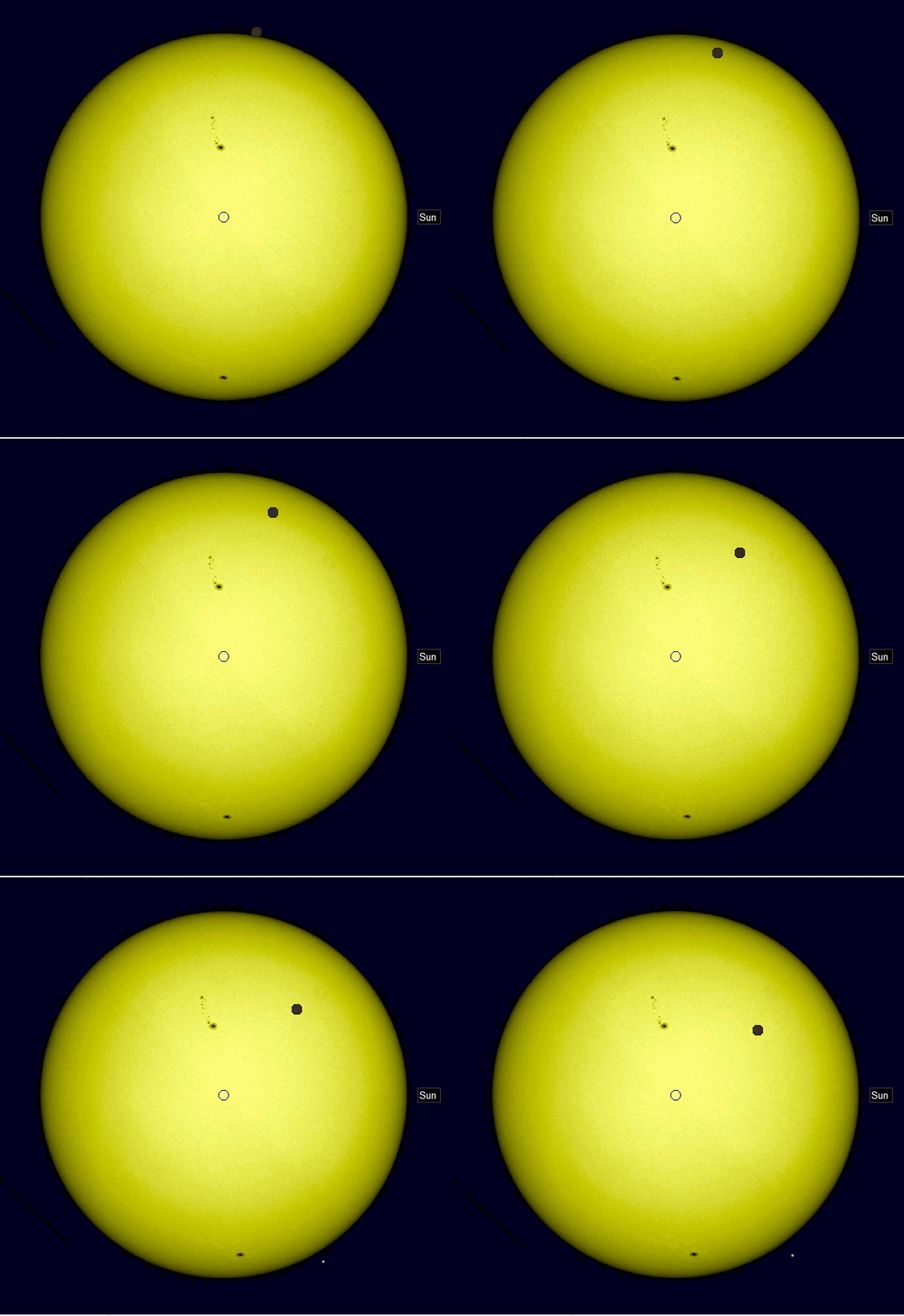
Animation of the Transit of Venus from Northern Michigan. Created using cartes du Ciel.
The Animation starts with Venus at contact 1, and every half hour until sunset. That’s why the transit ends abruptly.
For more information check out this NASA page.
How to observe the sun? The same techniques that are use to view a solar eclipse.
06/04/2012 – Ephemeris – Rare Transit of Venus is tomorrow
Ephemeris for Monday, June 4th. Today the sun will be up for 15 hours and 24 minutes, setting at 9:23. The moon, at full today, will rise at 9:51 this evening. Tomorrow the sun will rise at 5:58.
A partial eclipse of the moon is in progress this morning, but it started at moon set at 6 a.m. Tomorrow is a much rarer event, a transit of Venus across the face of the sun. This will start at a few minutes after 6 p.m. When Venus will start crossing the sun from near the top. While the transit will last nearly 7 hours, we’ll see about 3 hours of it, clouds willing. The safety precautions are the same as viewing a solar eclipse, that is Do Not Look Directly At The Sun. Safe approved solar filters that fit in front of a telescope, projection of the sun’s image with a telescope or binoculars are the ways to view this event. The Grand Traverse Astronomical Society will be at the Open Space in Traverse City at 6 p.m. Tomorrow for safe views of the event.
Times are for the Traverse City/Interlochen area of Michigan. They may be different for your location.
Addendum
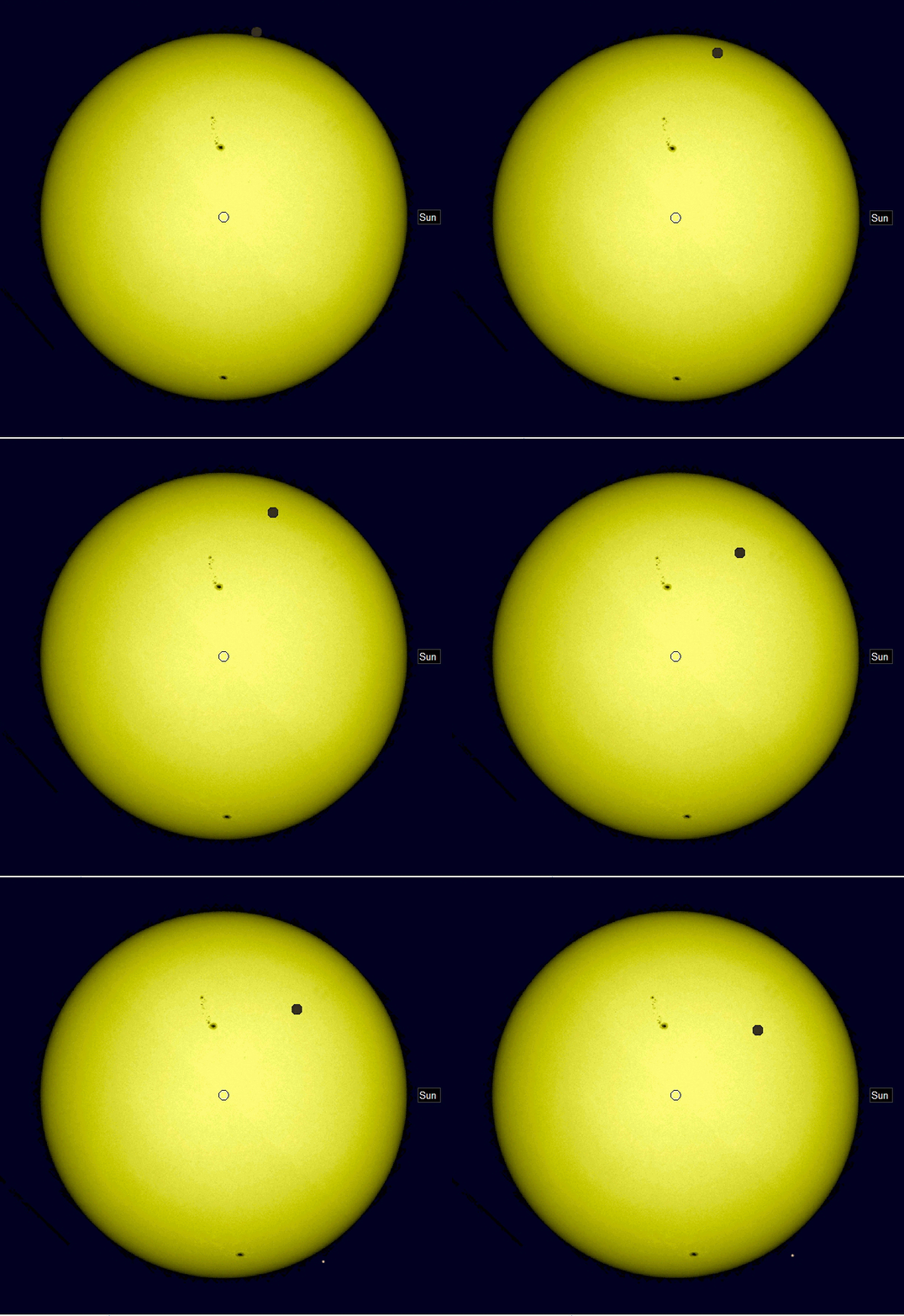
Transit of Venus as seen from the Grand Traverse Region. Created using Cartes du Ciel.
These plots are in 30 minute intervals starting around 6:10 p.m.
03/16/2012 – Ephemeris – Jupiter and Venus: Where do they go from here?
Ephemeris for Friday, March 16th. The sun will rise at 7:52. It’ll be up for 11 hours and 58 minutes, setting at 7:50. The moon, 2 days past last quarter, will rise at 5:02 tomorrow morning.
Now that the conjunction of Jupiter and Venus us over, what happens next? Well, Jupiter will continue to head westward toward the sun, and soon will be caught up into twilight. Its and principally the earths motion will move it behind the sun on May 13th. Venus still has 11 days before it reaches its greatest elongation from the sun, then it too will appear to head back toward the sun. It will actual cross in front of the sun on the evening of June 5th, where we will see the first part of the extremely rare transit of Venus. These transits occur in pairs 8 years apart separated by more than a century. The last was in 2004, the next will occur in 2117. Observations of these in the 18th century helped determine the distance to the sun.
* Times are for the Traverse City/Interlochen area of Michigan. They may be different for your location.
Addendum
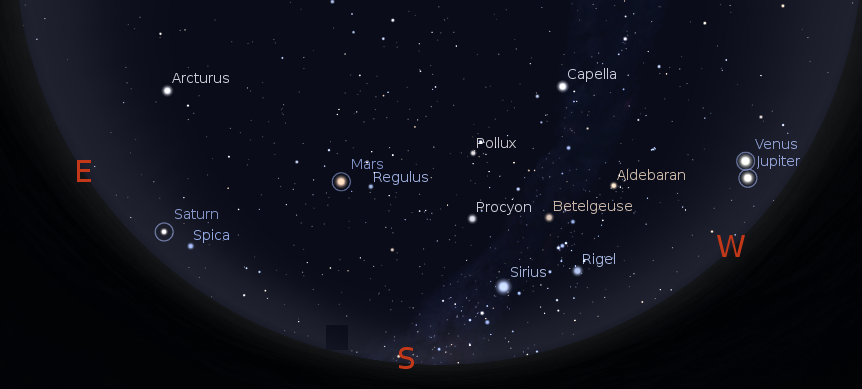
The planets at 11 p.m. March 14, 2012. Created using Stellarium.
The last step of the animation shows Jupiter and Venus tonight.
12/30/11 – Ephemeris – The best 2012 astronomical events
Friday, December 30th. The sun will rise at 8:19. It’ll be up for 8 hours and 51 minutes, setting at 5:10. The moon, 2 days before first quarter, will set at 12:02 tomorrow morning.
Let’s look ahead at next year’s astronomical events for this last Ephemeris of 2011. What won’t happen will be the end of the world on December 21st. There is no planet Nibiru. The closest alignment of the sun at the winter solstice and the center of the galaxy was in 1997. What will happen is partial eclipse of the sun, or about a half hour of it, before sunset on May 20th. An extremely rare transit of Venus, that is the planet Venus will cross the face of the sun on June 5th for us. We’ll see about 3 hours of it before sunset that day. The sun will continue to be more active next year with more sunspots and more displays of the northern lights. It will also be a good year for the Perseid meteor shower of August and the Geminids of December.
* Times, as always are for the Traverse City/Interlochen area of Michigan.
11/10/11 – Ephemeris – The planet Venus
Thursday, November 10th. The sun will rise at 7:32. It’ll be up for 9 hours and 48 minutes, setting at 5:20. The moon, at full today, will rise at 5:05 this evening.
The planet Venus is about to become visible low in the southwest after sunset. It might be visible a half hour after sunset. Venus is way beyond the sun now and coming around toward the earth. It will take some months to move around the sun toward the earth. As it does it will grow in size and its phase will wane. In white light Venus appears as a featureless cloud covered ball. It is illuminated by the sun, and so its appearance will change as it moves around the sun. And when it passes between the earth and the sun on June 6th next year, it will do so in grand style by passing in front of the sun as a transit of Venus which will not reoccur for 105 years. From our location, we will be able to see he start of that transit in the late afternoon.
* Times are for the Traverse City/Interlochen area of Michigan. They may be different for your location.
 Bob Moler's Ephemeris Blog