Archive
05/23/2023 – Ephemeris – Let’s observe the four-day-old Moon
This is Bob Moler with Ephemeris for Tuesday, May 23rd. Today the Sun will be up for 15 hours and 5 minutes, setting at 9:12, and it will rise tomorrow at 6:06. The Moon, halfway from new to first quarter, will set at 1:25 tomorrow morning.
The four-day-old Moon has uncovered a sea below Mare Crisium or Sea of Crises. It’s Mare Fecunditatis, or the Sea of Fertility. It appears to have been created in the first period of the Moon’s history from 4.55 billion years to 3.92 billion years ago, called the pre- Nectarian geological period, while Mare Crisium is a bit younger, from 3.92 to 3.85 billion years ago, the Nectarian period. Both periods were named for Mare Nectaris, or Sea of Nectar, a small sea next to the Sea of Fertility just coming into sunlight. There are two small, but remarkable craters in the Sea of Fertility called Messier and Messier A which appear to be the result of a double asteroid impact, where it looks like the Moon was struck at a low angle, sending debris out in one direction.
The astronomical event times given are for the Traverse City/Interlochen area of Michigan (EDT, UT –4 hours). They may be different for your location.
Addendum
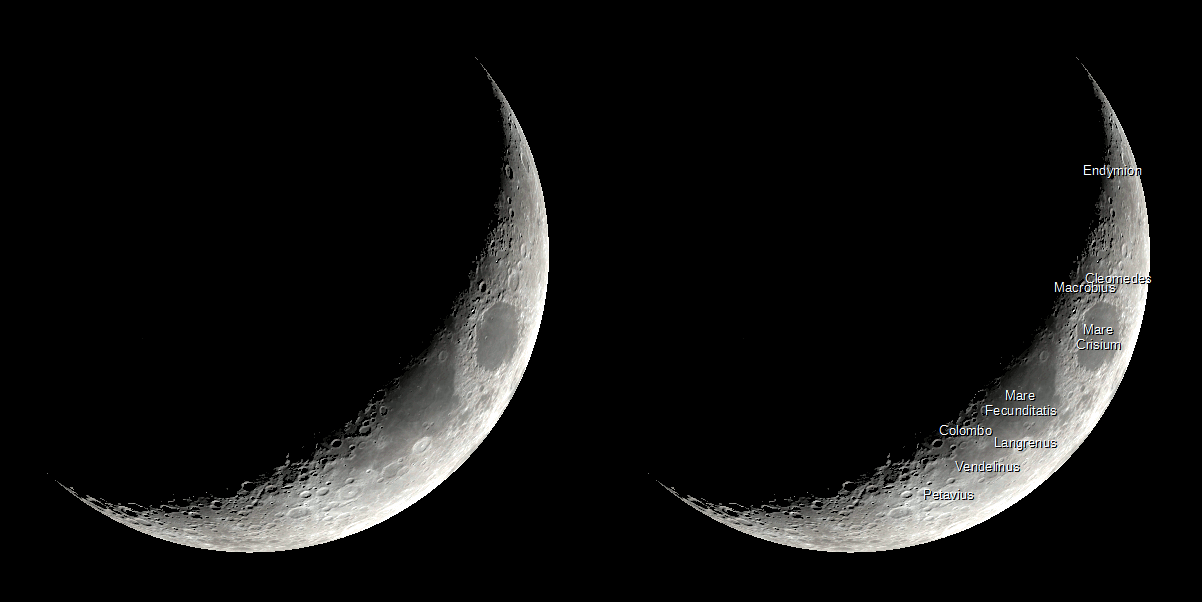
4 day old Moon with selected features labeled for May 23, 2023, at 10 pm. Created using Stellarium, LibreOffice Draw and GIMP.
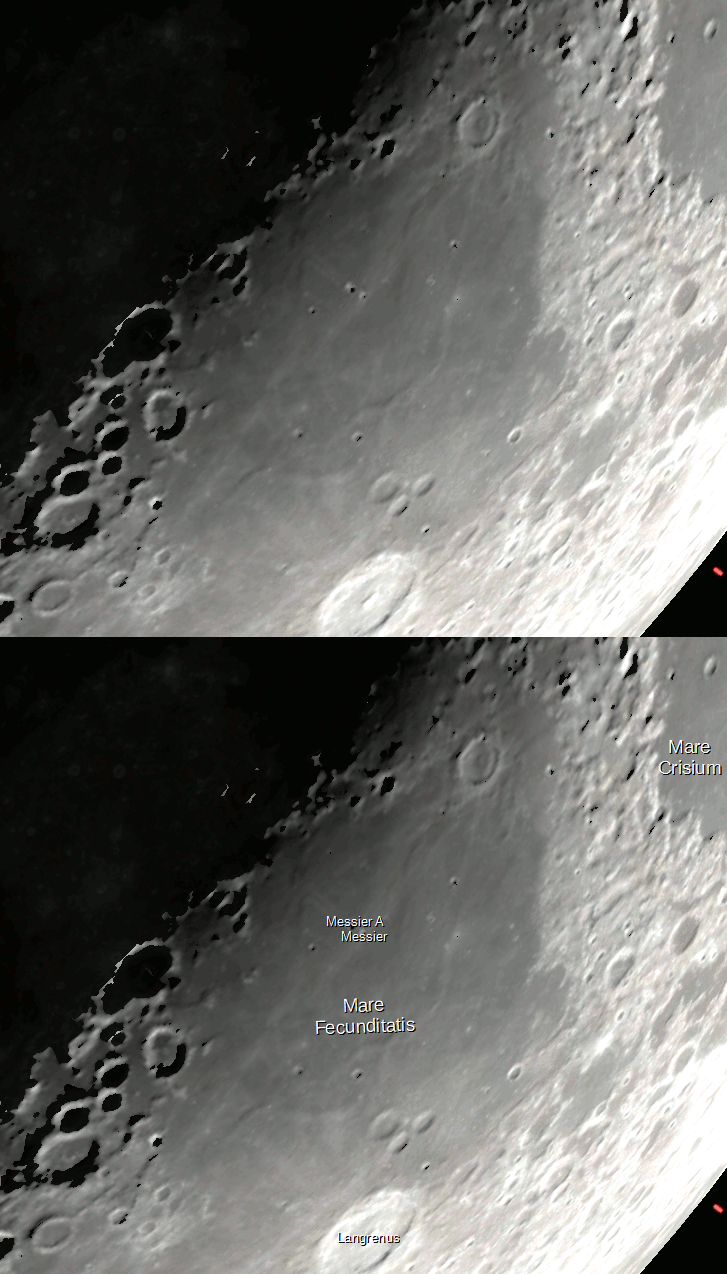
Mare Fecunditatis, 4 day old Moon with the 2 Messier craters labeled. Created using Stellarium, LibreOffice Draw and GIMP.
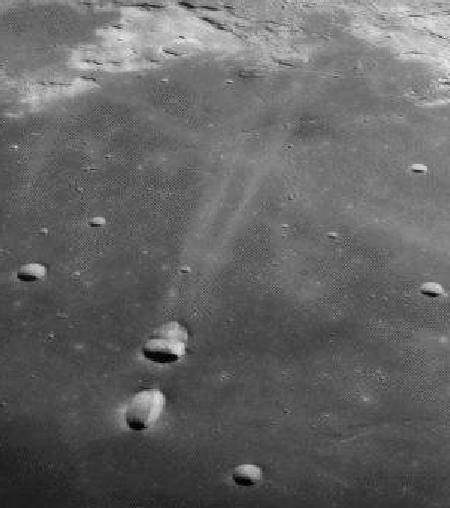
Messier craters from the Apollo astronauts. Credit NASA.
05/22/2023 – Ephemeris – Exploring the three-day-old Moon
This is Ephemeris for Monday, May 22nd. Today the Sun will be up for 15 hours and 4 minutes, setting at 9:11, and it will rise tomorrow at 6:06. The Moon, 3 days past new, will set at 12:43 tomorrow morning.
Tonight we will see the three-day-old moon low in the west. It may exhibit earthshine. That is, its night side will be illuminated by the Earth’s day side. Just as the earthly night is illuminated by moonlight, especially when the Moon is near full, the night side of the Moon, when near new, is illuminated by earthlight. In binoculars or telescope, the large dark spot, on the Moon’s right edge, is Mare Crisium, or Sea of Crises. The large crater below and a bit left of that sea is Langrenus, named after a 17th century Belgian engineer and mathematician who produced the first lunar map with nomenclature. Langrenus appears as a bright spot as the Sun rises higher for it. Also check out the south end of the cusp of the crescent for a lone mountain peak catching the Sun.
The astronomical event times given are for the Traverse City/Interlochen area of Michigan (EDT, UT –4 hours). They may be different for your location.
Addendum
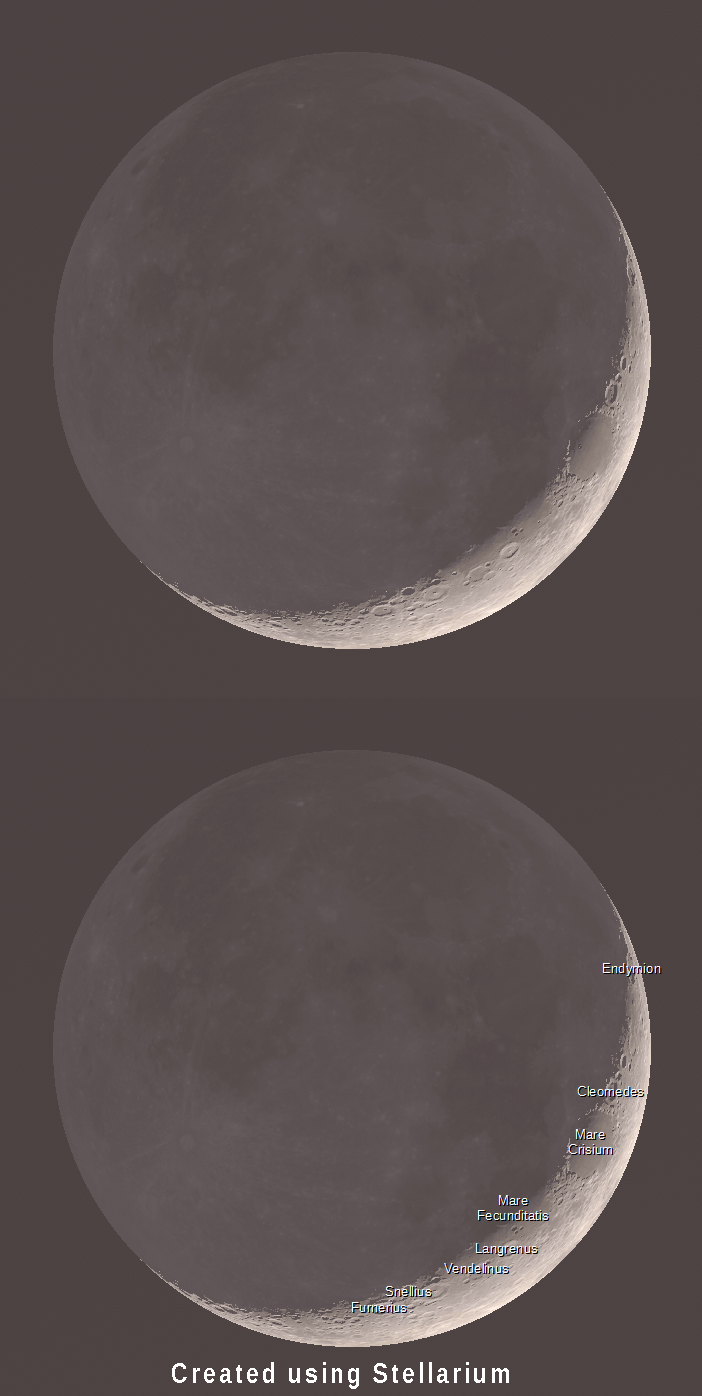
An annotated three old Moon as it might appear in binoculars or a small telescope tonight, May 22, 2023, at 10 pm. Click or tap on the image to enlarge it. Created using Stellarium, LibreOffice Draw and GIMP.
 Bob Moler's Ephemeris Blog