Archive
01/21/2015 – Ephemeris – Our weekly look at the bright planets and a comet
Ephemeris for Wednesday, January 21st. The sun will rise at 8:12. It’ll be up for 9 hours and 23 minutes, setting at 5:35. The moon, 1 day past new, will set at 7:29 this evening.
Lets take a look at the bright planets and a pretty bright comet for this week. Venus and Mercury are close low in the southwest by 6:30 p.m.. Mercury is about 8 moon widths at about 4 o’clock angle from the brighter Venus. Tonight the Noon will be above and between them. Mercury will set at 6:59, while Venus will set at 7:22 p.m. Mars appear above and left of Venus in the southwest, and is in the constellation of Aquarius. The Red Planet will set tonight at 8:41 p.m. Jupiter will rise in the east at 6:59 p.m. It’s near the sickle-shaped head of Leo the lion. Early risers will be able to spot Saturn which will rise in the east-southeast at 3:57 a.m. Comet Lovejoy, visible in binoculars, is a bit more than the width of a fist to the right of the Pleiades.
Times are for the Traverse City/Interlochen area of Michigan. They may be different for your location.
Addendum
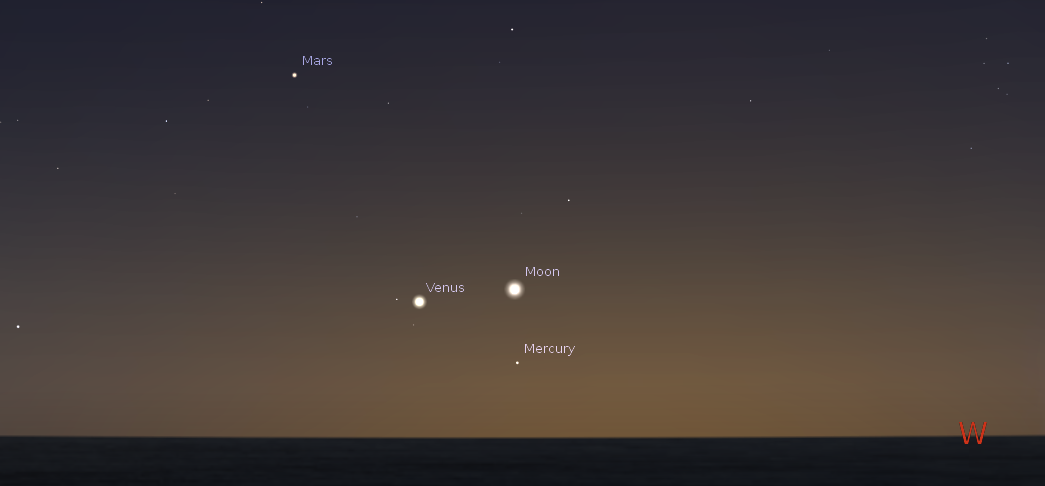
Venus, Mercury and the crescent Moon, which will be a lot dimmer than seen here, with Mars at 6:30 p.m. January 21, 2015. Created using Stellarium.
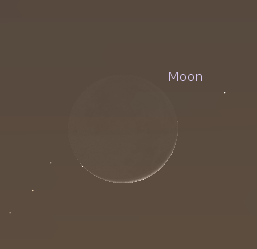
One day old Moon at 6:30 p.m., January 21, 2015. Created using Stellarium.
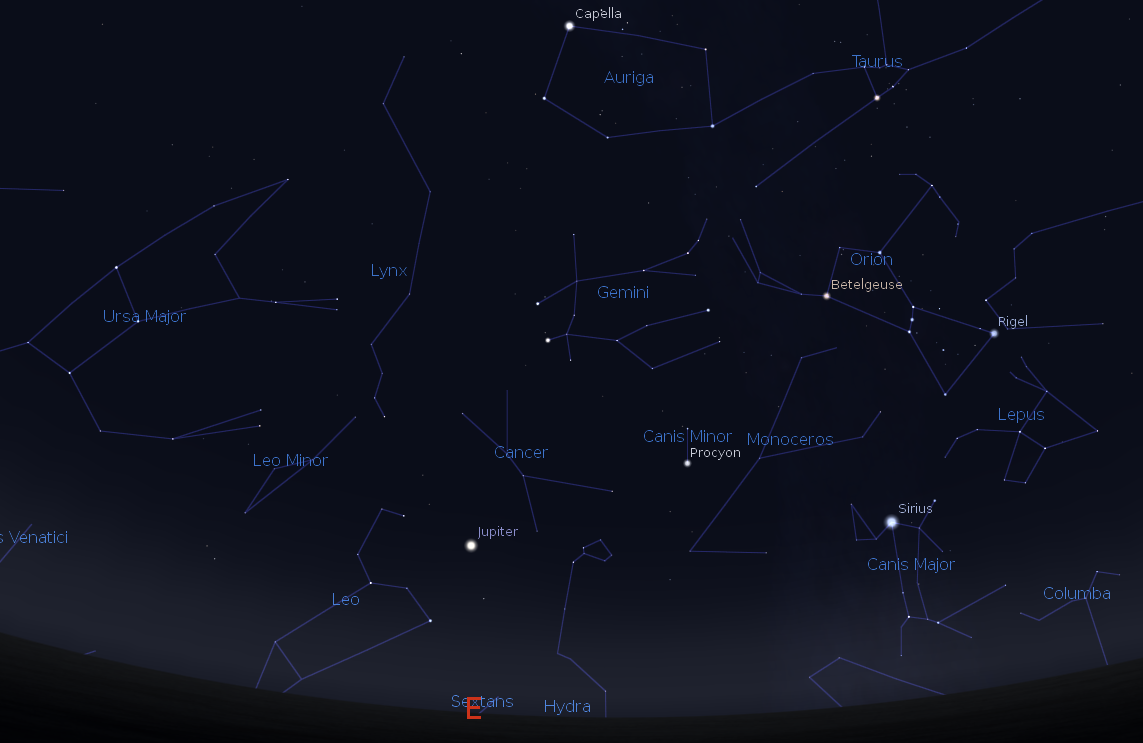
Jupiter and the winter constellations at 9 p.m., January 21, 2015. Created using Stellarium.
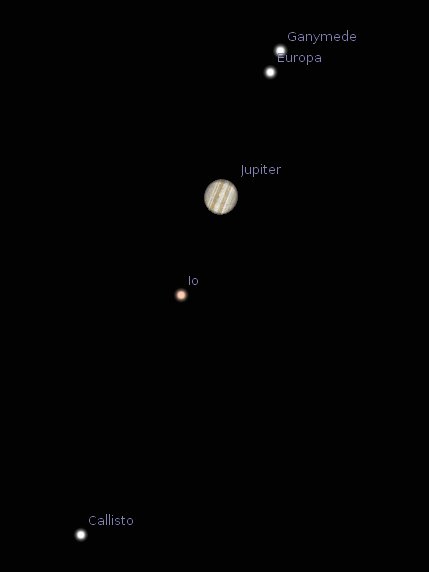
Jupiter and 4 Galilean moons through a telescope. The moon’s aren’t really that bright compared to Jupiter. The time for this observation will be 9 p.m. January 21, 2015. Created using Stellarium.
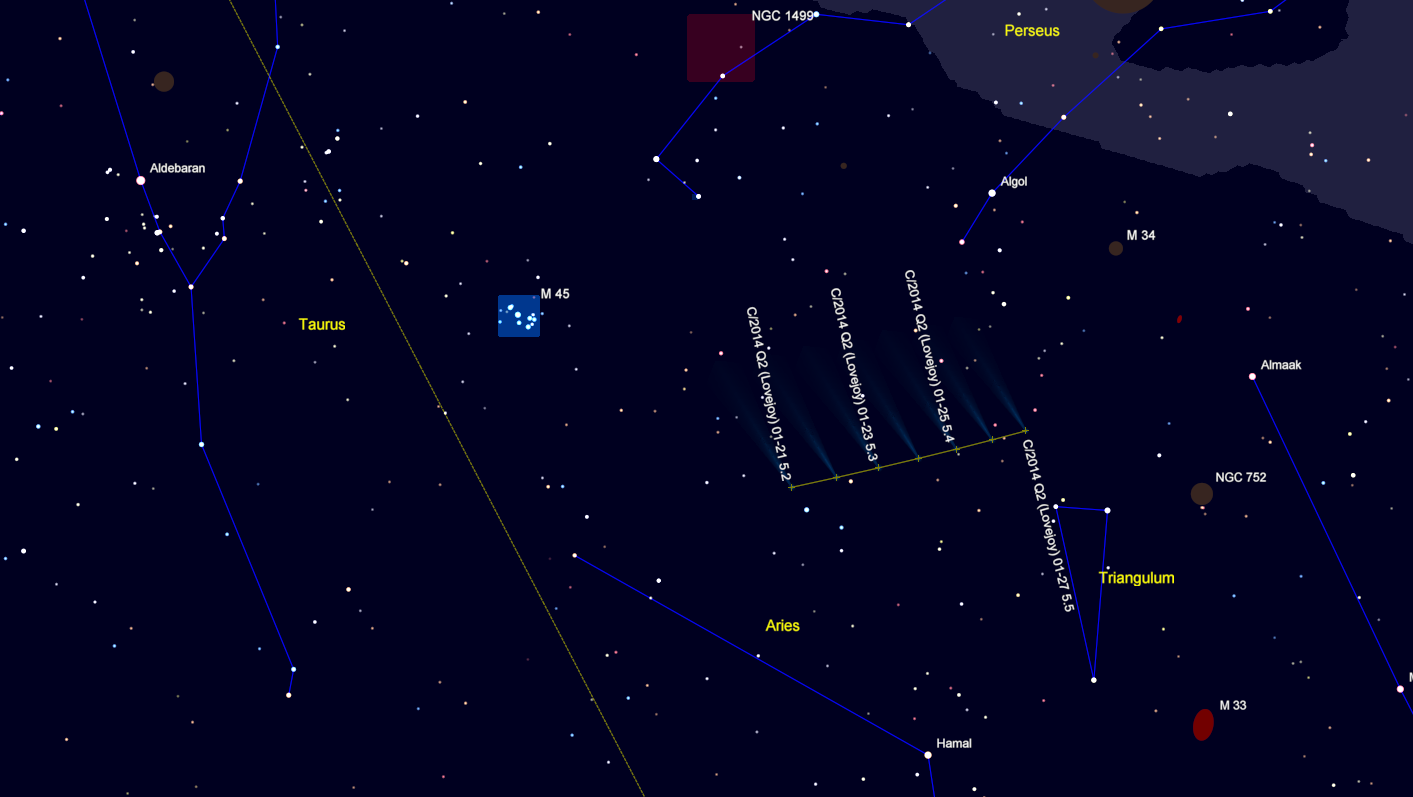
The track of Comet Lovejoy for the next week (from 1/21/2015 to 1/27/2015 at 9 p.m.) Created using Cartes du Ceil (Sky Charts).
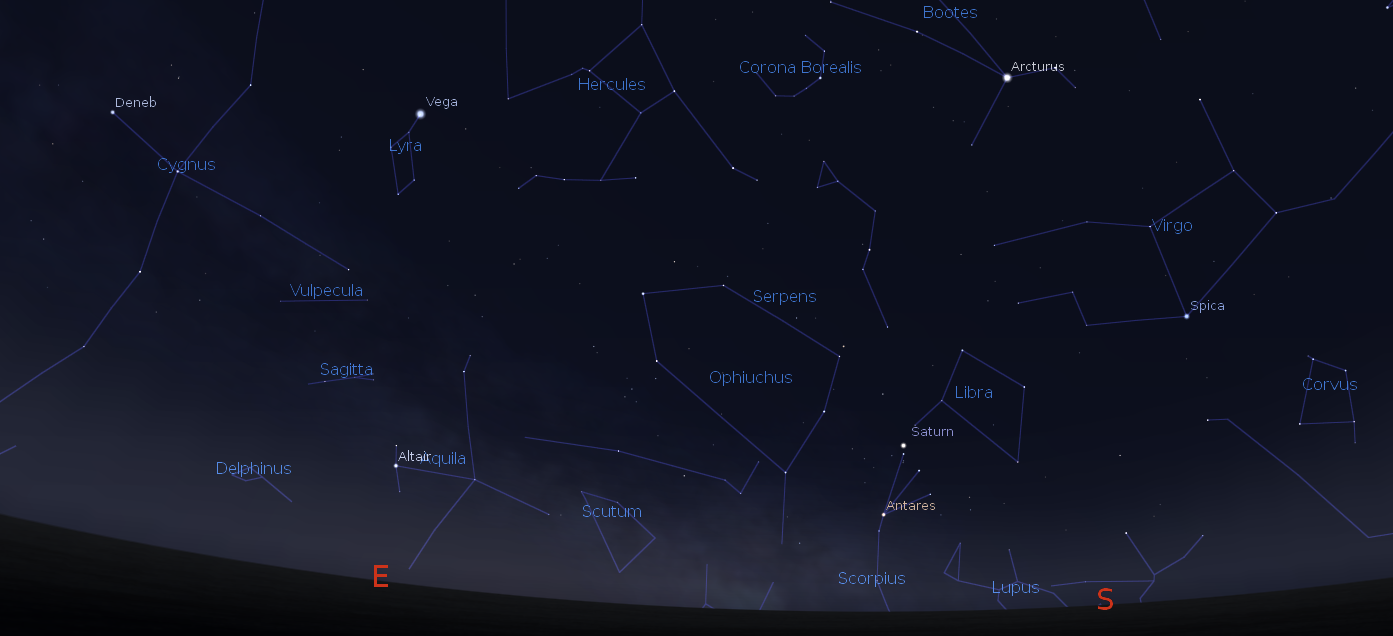
What we need in the depths of winter, a preview of the summer stars, 5 months hence, but at 7 a.m. January 22, 2015. Saturn is visible in Scorpius. Created using Stellarium.
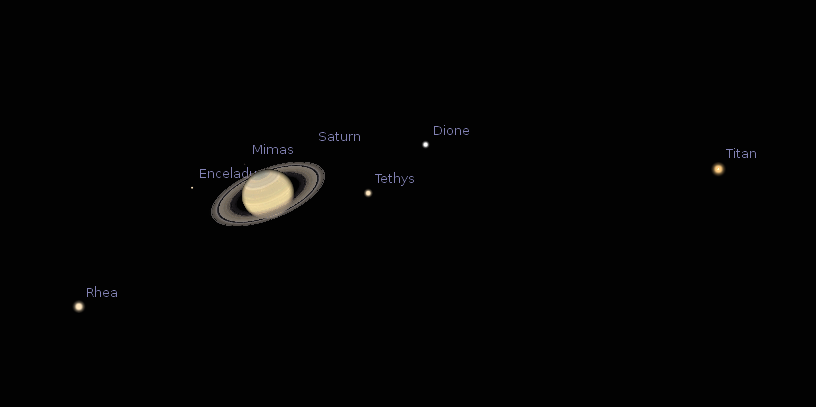
Saturn and its moons at 7 a.m., January 22, 2015. Actually only Titan would be visible in small telescopes. Created using Stellarium.
 Bob Moler's Ephemeris Blog