02/28/2018 – Ephemeris – Let’s take our weekly look at the bright planets
Ephemeris for Wednesday, February 28th. The Sun will rise at 7:22. It’ll be up for 11 hours and 7 minutes, setting at 6:29. The Moon, 1 day before full, will set at 7:17 tomorrow morning.
Let’s take our weekly look at the bright planets. Two of the bright naked eye planets are in the evening sky, but very close to the Sun. Venus will be visible low in the Western twilight from about 6:50 until before it sets at 7:29. Mercury is creeping up on Venus from below, tonight about 5 Moon widths at 5 o’clock down from Venus. It will set at 7:18. Mercury will appear to pass Venus Sunday night and will become higher than Venus in the sky until about March 20th. In the morning Jupiter will rise at 12:39 tomorrow morning, with Mars rising at 2:59. Saturn will end the procession, rising at 4:10 a.m. At 6 tomorrow morning bright Jupiter will be in the south to the left of it is dimmer Mars. Saturn is low in the southeast.
The times given are for the Traverse City/Interlochen area of Michigan. They may be different for your location.
Addendum
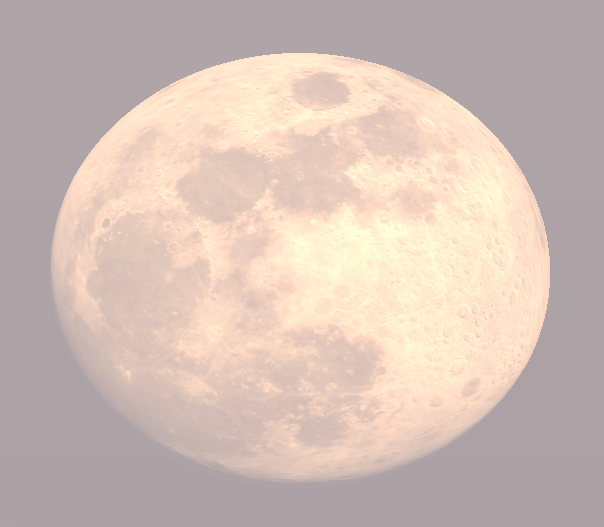
Moon rise at around 5:10 p.m. tonight February 28 2018 with daylight washing it out. Note the squished Moon due to atmospheric refraction which bends the light up. The lower in the sky it is the greater the bending of the light. This also happens to the Sun. Created using Stellarium as a built in effect.
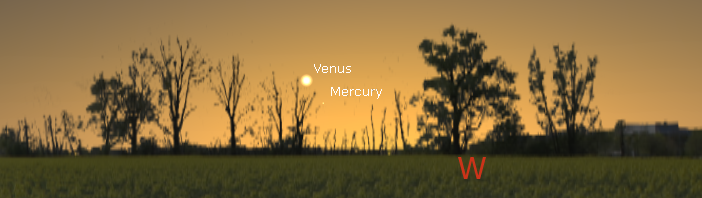
Venus and Mercury, low in the west at 6:45 p.m., February 28, 2018. Created using Stellarium.
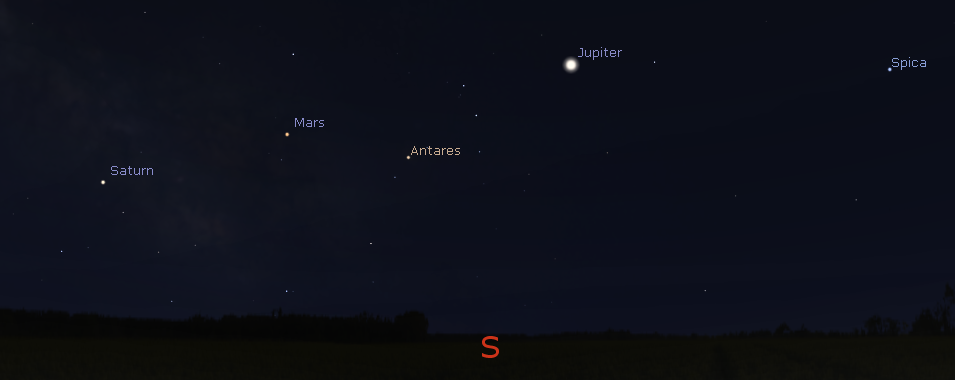
The morning planets of Jupiter, Mars and Saturn. Seen at 6 a.m. tomorrow morning March 1, 2018. Click on image to enlarge. Created using Stellarium.
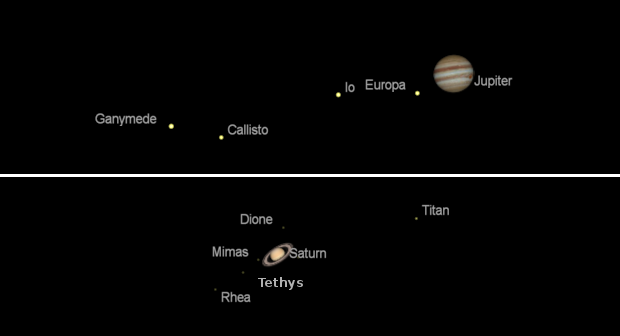
Jupiter and Saturn with heir brighter satellites tomorrow morning at 6 a.m. March 1, 2018. They are displayed at the same scale. Saturn in about twice as far as Jupiter. Its disk is a bit smaller than Jupiter’s so it appears about half as large. The extent of the rings appear to be about the same as Jupiter’s diameter. Created using Cartes du Ciel (Sky Charts). Oops, left in Mimas, which is much smaller and dimmer than the other satellites.
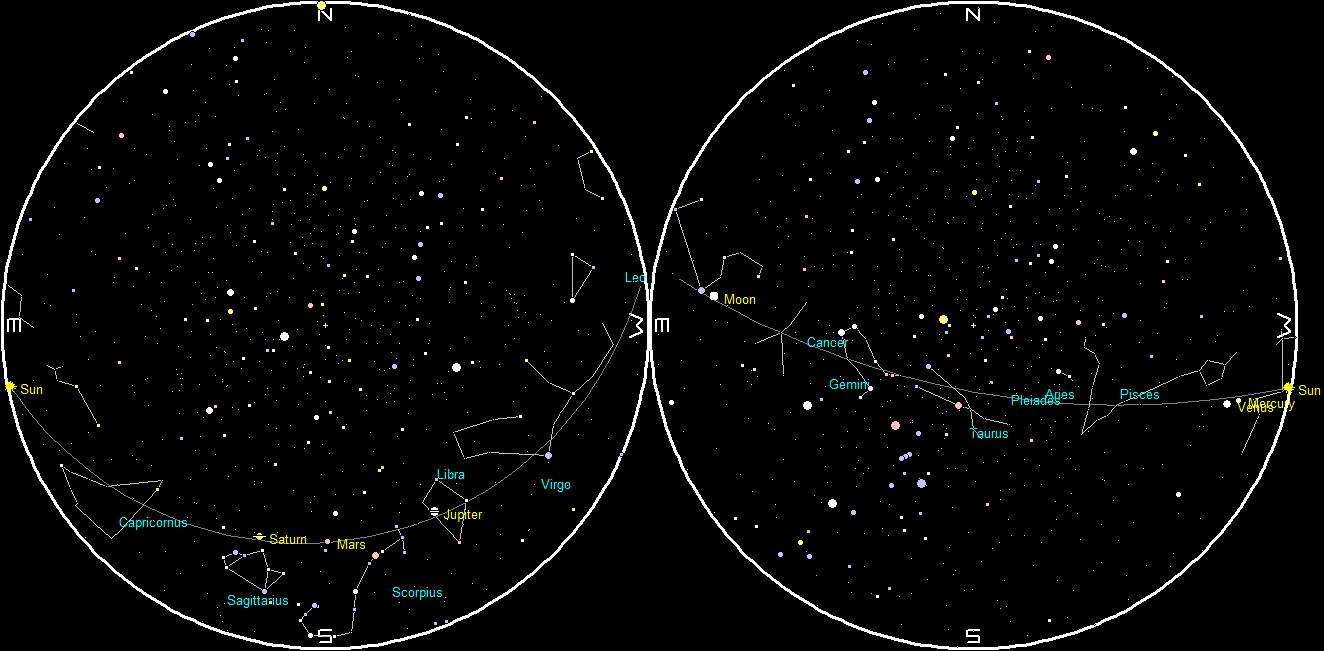
Planets at sunset and sunrise of a single night starting with sunset on the right on February 28, 2018. The night ends on the left with sunrise on March 1st. Click on the image to enlarge. Created using my LookingUp program.
 Bob Moler's Ephemeris Blog