06/12/2023 – Ephemeris -Finding Hercules among the stars
This is Ephemeris for Monday, June 12th. Today the Sun will be up for 15 hours and 31 minutes, setting at 9:28, and it will rise tomorrow at 5:56. The Moon, 2 days past last quarter, will rise at 3:13 tomorrow morning.
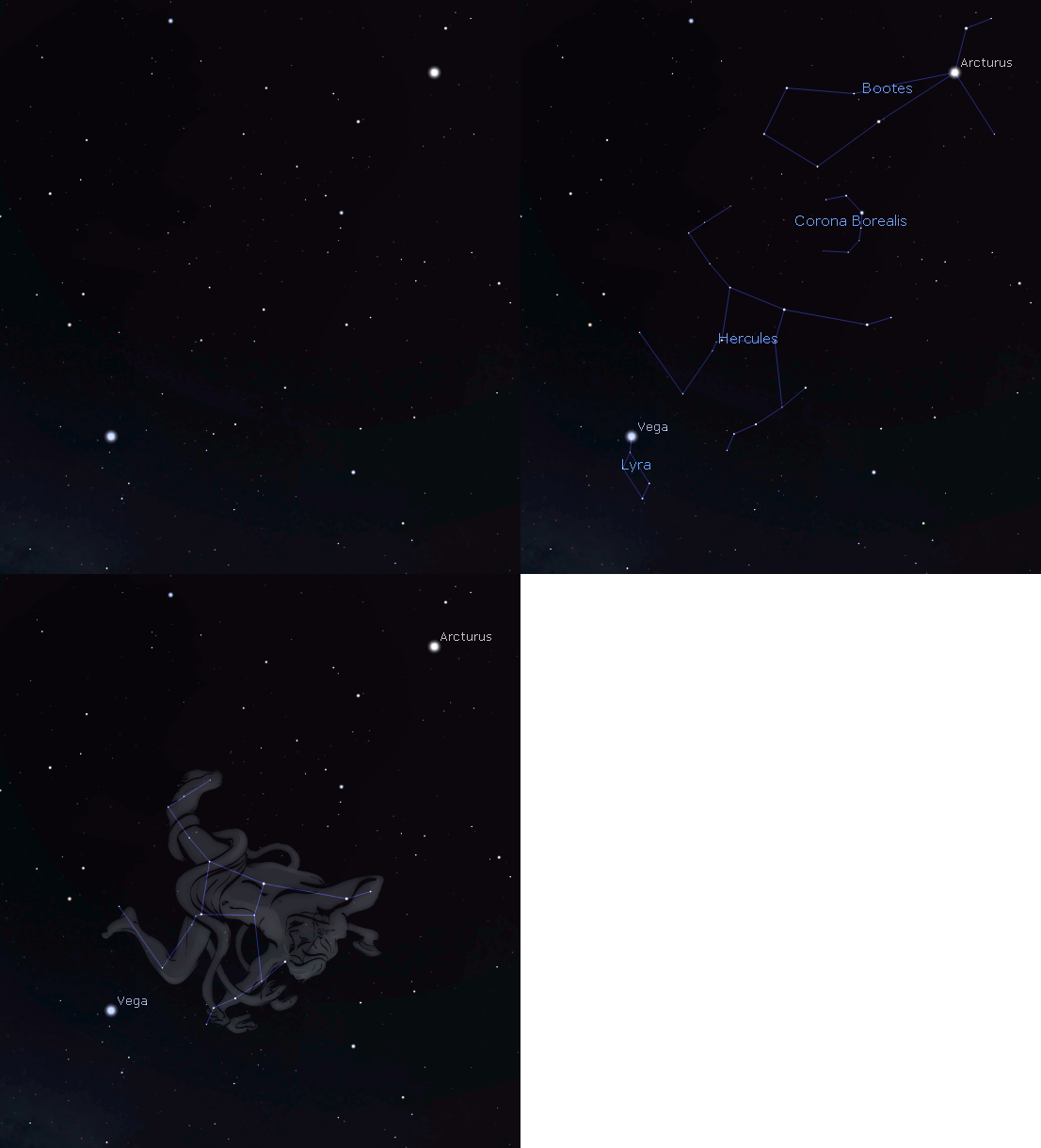
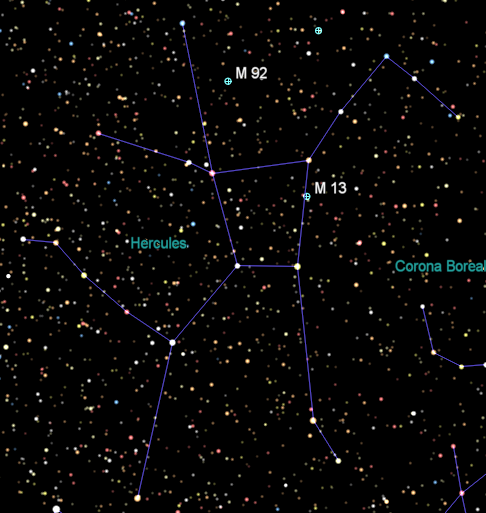
Orion, the hard luck mythical Greek hunter, gets a splashy constellation in the winter sky, but the greatest hero of all, Hercules, gets a dim group of stars on the border between the spring and summer stars. At 11 p.m. Hercules is high in the east-southeast. It is located above and right of the bright star Vega, in the east. Hercules’ central feature is a keystone shaped box of stars, called, of course, the Keystone of Hercules tilted to the left, which represents the old boy’s shorts. From the top and left corner stars extend lines of stars that are his legs, from the bottom and right stars, the rest of his torso and arms extend. So in one final indignity, he’s upside down in our sky. For those with a telescope, Hercules contains the beautiful globular star cluster Messier 13.
The astronomical event times given are for the Traverse City/Interlochen area of Michigan (EDT, UT –4 hours). They may be different for your location.
Addendum

 Bob Moler's Ephemeris Blog