Ephemeris: 01/12/2024 – Mercury is at greatest western elongation from the Sun today
This is Ephemeris for Friday, January 12th. Today the Sun will be up for 9 hours and 6 minutes, setting at 5:24, and it will rise tomorrow at 8:17. The Moon, 1 day past new, will set at 6:49 this evening.
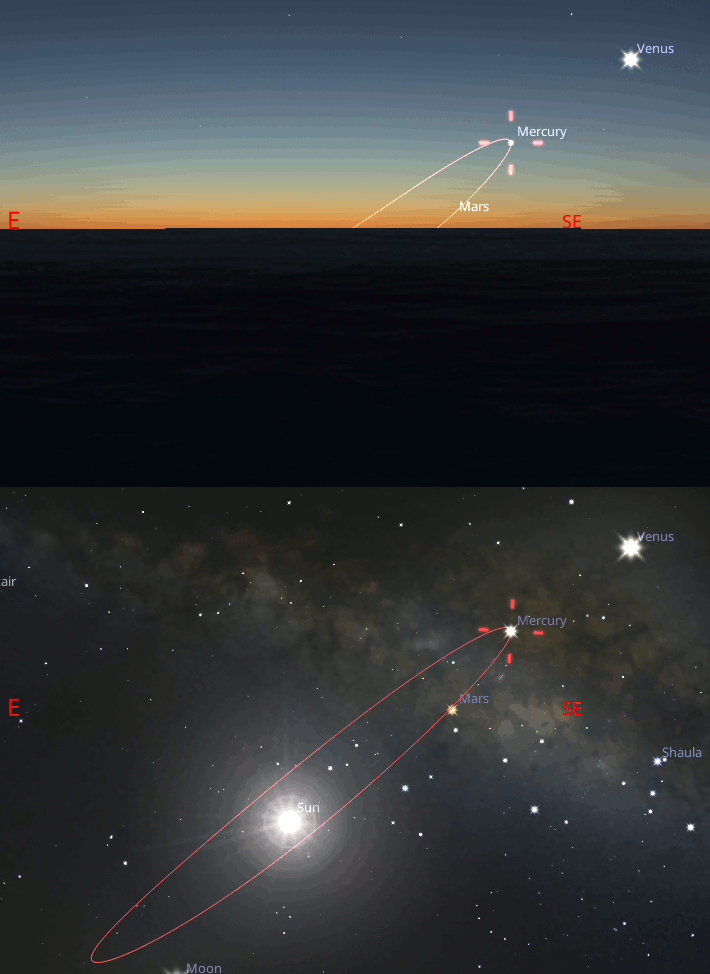
The planet Mercury is reaching its greatest western elongation or separation west of the Sun today at a 23.5 degrees angle, which is pretty good actually, although the angle above the horizon where we see Mercury at this point in the year is not the best. However, Venus can be used to spot Mercury because Mercury will be to the lower left of Venus. Binoculars are always helpful in spotting Mercury for the first time. From now until about a week from now Mercury will not move very much in relationship to Venus, but it will be getting somewhat brighter as its phase goes from half illuminated to more gibbous towards full. Early in the spring it will be seen in the evening sky, at a little bit better angle above the horizon, although it will be it will not be as far away from the Sun. Created using Stellarium and GIMP.
The astronomical event times given are for the Traverse City/Interlochen area of Michigan (EST, UT –5 hours). They may be different for your location.
Addendum
 Bob Moler's Ephemeris Blog