Archive
Ephemeris: 10/03/2025 – Astronomy Society meeting tonight
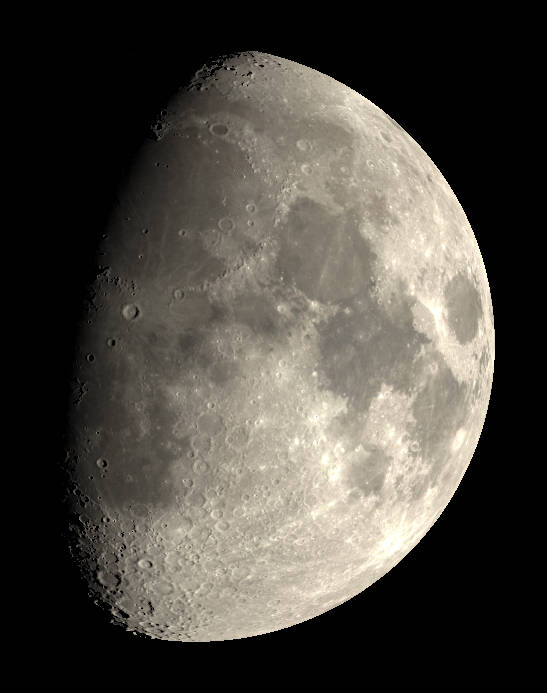
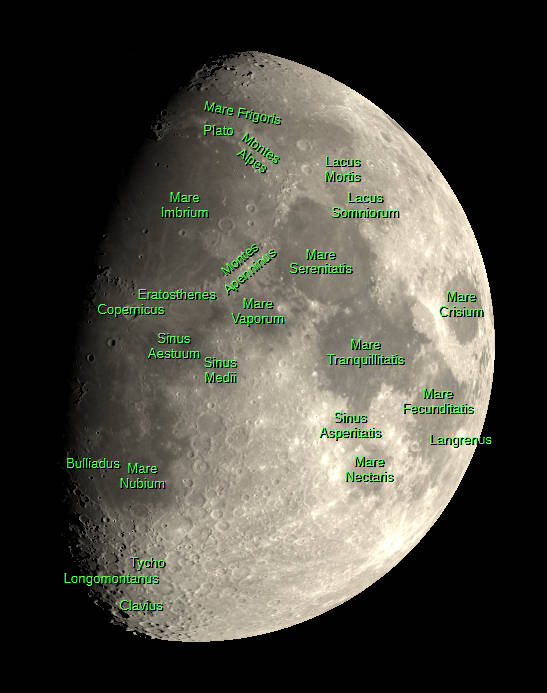
This is Bob Moler with Ephemeris for Friday, October 3rd. Today the Sun will be up for 11 hours and 35 minutes, setting at 7:19, and it will rise tomorrow at 7:44. The Moon, 3 days before full, will set at 4:26 tomorrow morning.
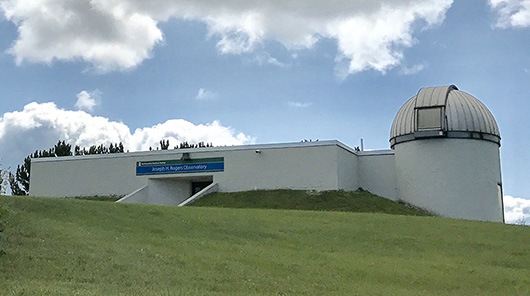
The Grand Traverse Astronomical Society will host its October meeting tonight at 8 PM at Northwestern Michigan College’s Joseph H Rogers Observatory. I’m also in the dark as to the program. It’s always interesting, even if there is no formal program. Discussions among members with expertise in a variety of interests. Astronomy is the science of everything. After all, the Earth is a planet too. After the meeting, around 9 PM, weather permitting, there will be viewing of the Moon and whatever we can find in the twilight. The observatory is located south of Traverse City on Birmley Rd. The meeting will also be available via Zoom. Instructions will be on the society’s website, gtastro.org.
The astronomical event times given in this blog are for the Traverse City/Interlochen area of Michigan (Lat 44.7° N, Long 85.7° W; EDT, UT – 4 hours) unless stated otherwise. Times will be different for other locations.
Addendum
Ephemeris: 10/02/2025 – The Artemis 2 mission may launch early next year
This is Bob Moler with Ephemeris for Thursday, October 2nd. Today the Sun will be up for 11 hours and 38 minutes, setting at 7:20, and it will rise tomorrow at 7:43. The Moon, 3 days past first quarter, will set at 3:10 tomorrow morning.
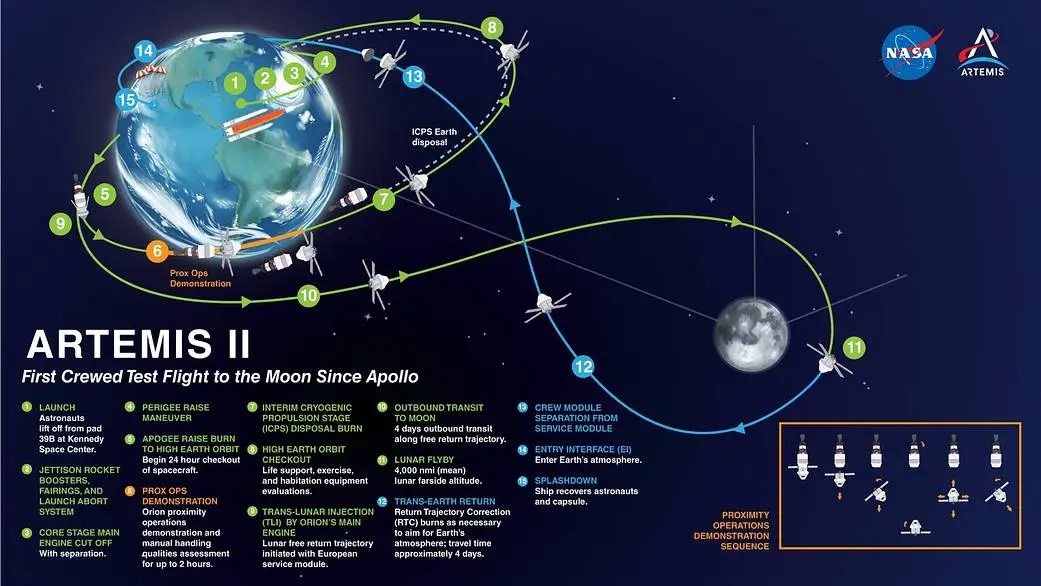
The Artemis 2 mission to send the crew around the moon and back is slated for early next year, which surprised me a bit because the launch window was moved up to earlier next year to between February 5th and April 26 about 2 1/2 months. That doesn’t mean that the mission could slip to later in the year, recalling the delays of the Artemis 1 mission. This mission is to send four people in the Orion capsule around the moon. It is crewed by three Americans and a Canadian, three men and a woman, three whites and a black. They’re the same four astronauts. I’m sure the current administration would have screamed DEI, if it wasn’t too late to break up the crew.
The astronomical event times given in this blog are for the Traverse City/Interlochen area of Michigan (Lat 44.7° N, Long 85.7° W; EDT, UT – 4 hours) unless stated otherwise. Times will be different for other locations.
Addendum
Ephemeris: 10/01/2025 – Our weekly look at the whereabouts of the naked-eye planets
This is Ephemeris for Wednesday, October 1st. Today the Sun will be up for 11 hours and 41 minutes, setting at 7:22, and it will rise tomorrow at 7:42. The Moon, 2 days past first quarter, will set at 1:55 tomorrow morning.
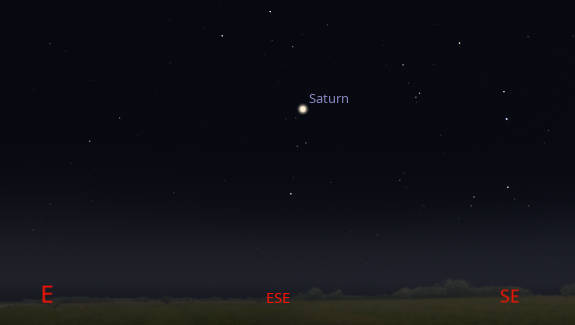
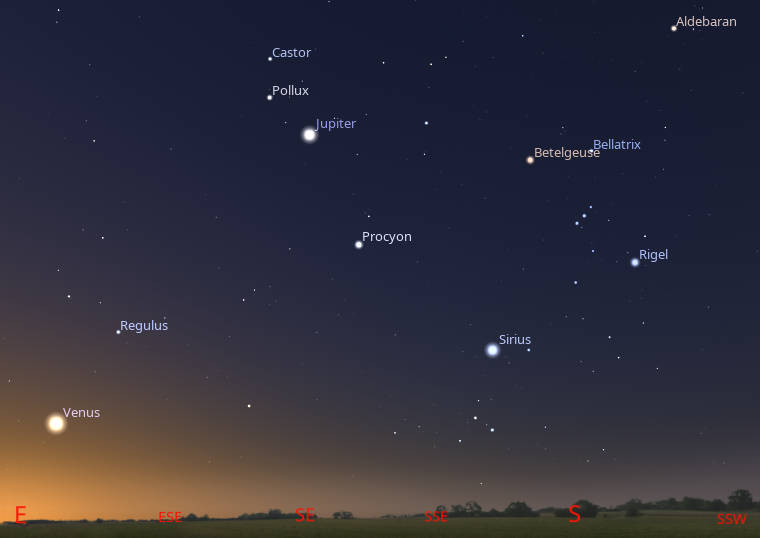
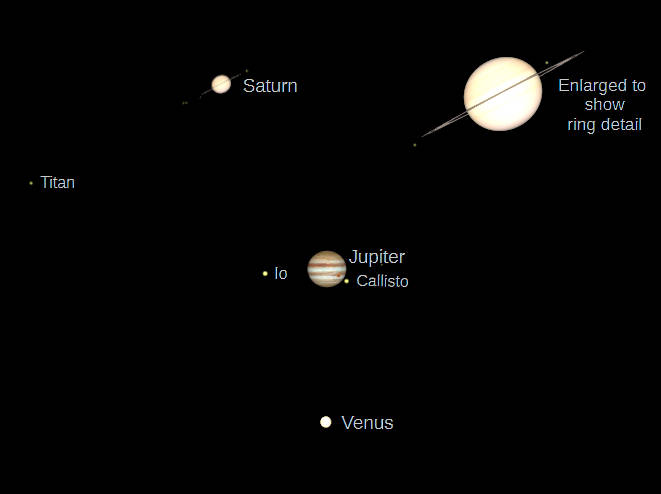
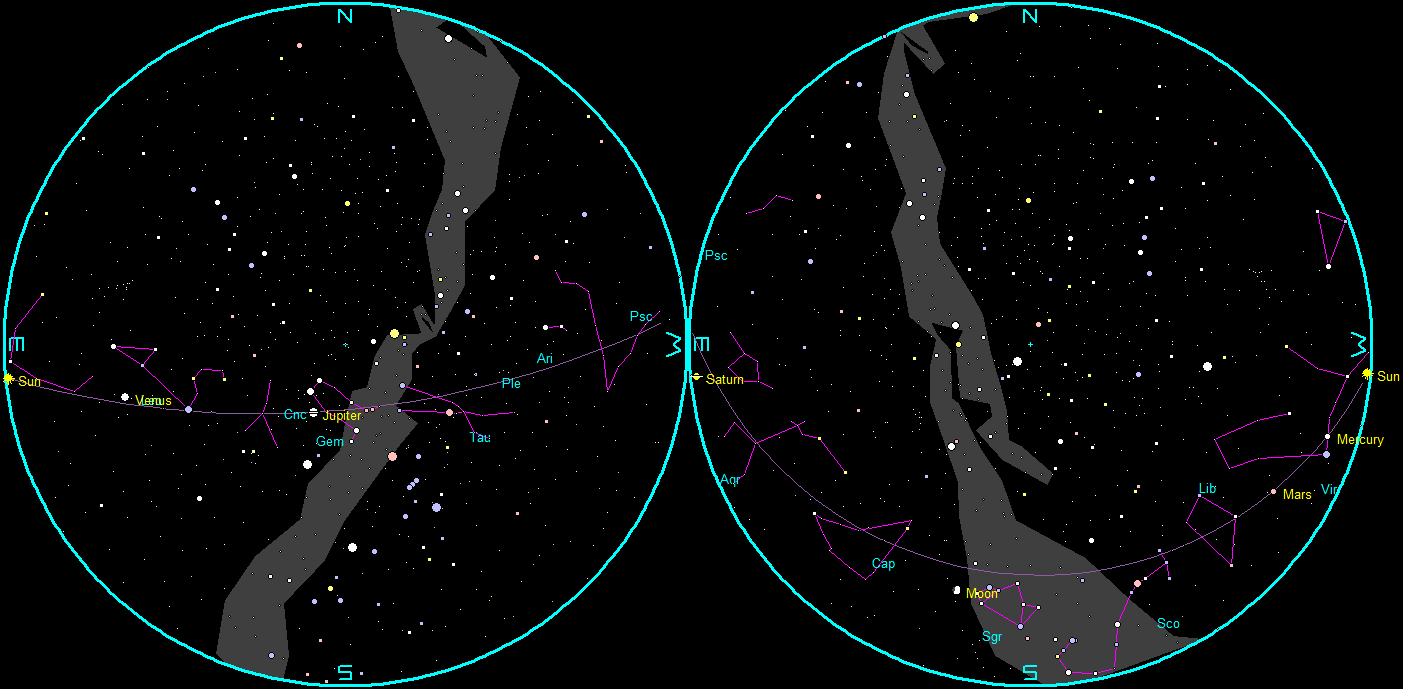
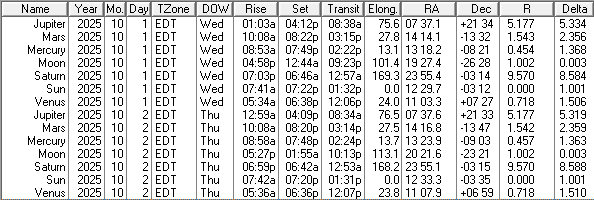
Let’s take our weekly look at the whereabouts of the naked-eye planets. Saturn rises before sunset in the east. It is the brightest star like object in the eastern to southeastern sky in the evening. In a telescope Saturn sports a very thin ring, 1.5° from being edge on. Saturn has an axial tilt of about 27°, so it has seasons like the Earth and since its rings are over its equator, when they go edge on to the Sun, it is an equinox for it, which happened this past May. Earth, being close to the Sun, sees nearly the same thing. Now the ring angle for us will decrease to about a third of a degree by November 23rd before increasing. By 7 AM, Jupiter will appear high in the southeast, under the stars of Gemini. With brighter Venus low in the east.
The astronomical event times given in this blog are for the Traverse City/Interlochen area of Michigan (Lat 44.7° N, Long 85.7° W; EDT, UT – 4 hours) unless stated otherwise. Times will be different for other locations.
Addendum
 Bob Moler's Ephemeris Blog