Ephemeris: 10/16/2026 – A look at Saturn’s amazing moon Enceladus
This is Ephemeris for Friday, October 16th. Today the Sun will be up for 10 hours and 56 minutes, setting at 6:56, and it will rise tomorrow at 8:00. The Moon, 2 days before first quarter, will set at 10:26 this evening.
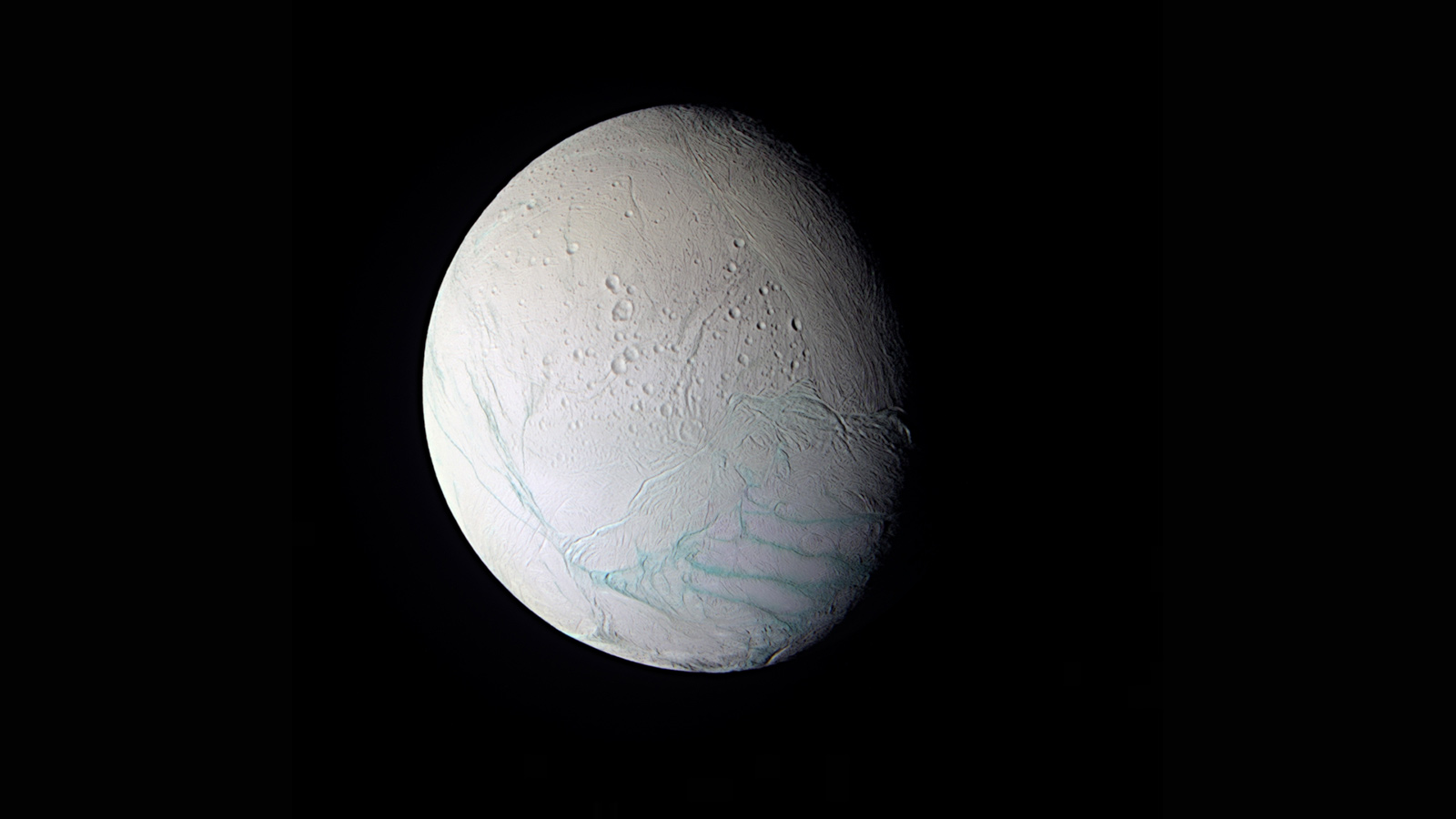
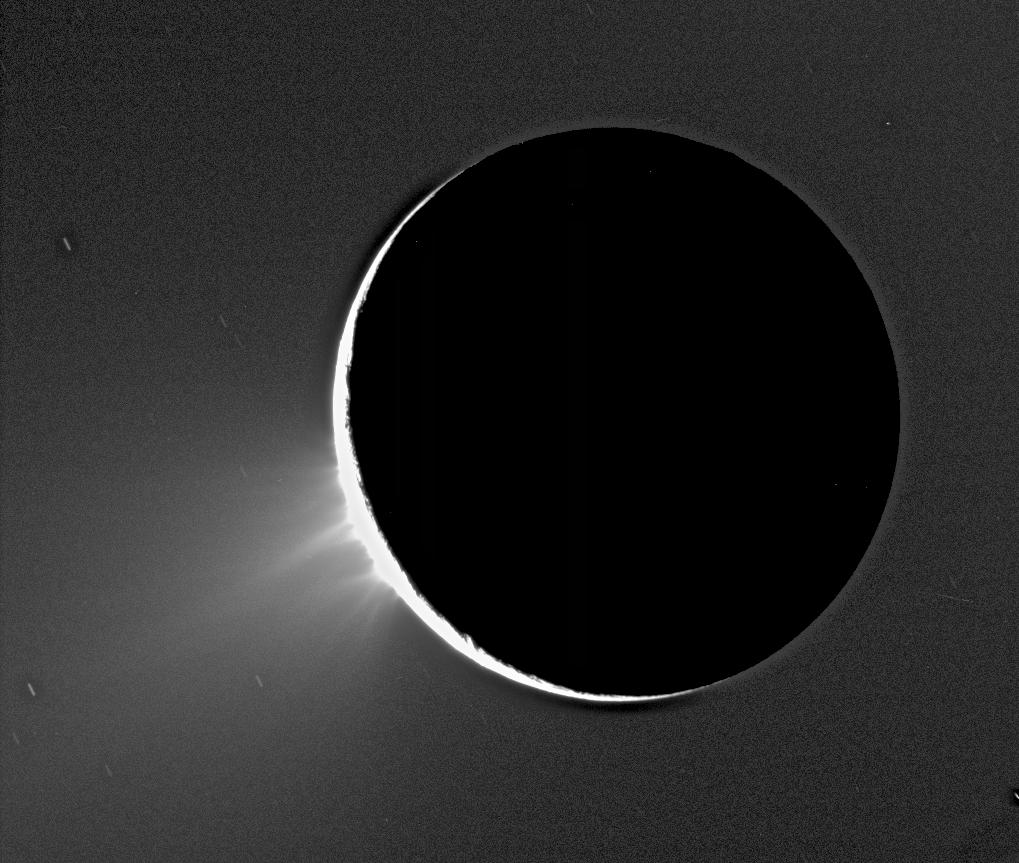
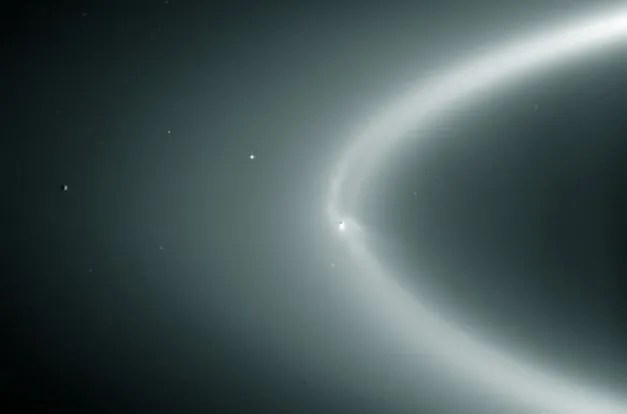
The most surprising of the many surprises of Saturn’s moons found by the Cassini spacecraft, 20 years ago, were the geysers erupting from the south polar region of the small moon Enceladus. A series of geysers emanating from deep fissures that looked like blue tigers stripes spewed forth a fine icy mist into the vacuum of space. It actually creates a ring around Saturn, called the E ring. It’s a very diffuse ring, not at all like the others, amd not visible from Earth. Enceladus has a diameter of about 310 miles, and a density of 1.6 times that of water. It is the most reflective body in the solar system, mainly because it travels within the E ring made of its own water ice that continually snows upon its surface.
The astronomical event times given in this blog are for the Traverse City/Interlochen area of Michigan (Lat 44.7° N, Long 85.7° W; EDT, UT – 4 hours) unless stated otherwise. Times will be different for other locations.
Addendum