Archive
Ephemeris: 10/16/2026 – A look at Saturn’s amazing moon Enceladus
This is Ephemeris for Friday, October 16th. Today the Sun will be up for 10 hours and 56 minutes, setting at 6:56, and it will rise tomorrow at 8:00. The Moon, 2 days before first quarter, will set at 10:26 this evening.
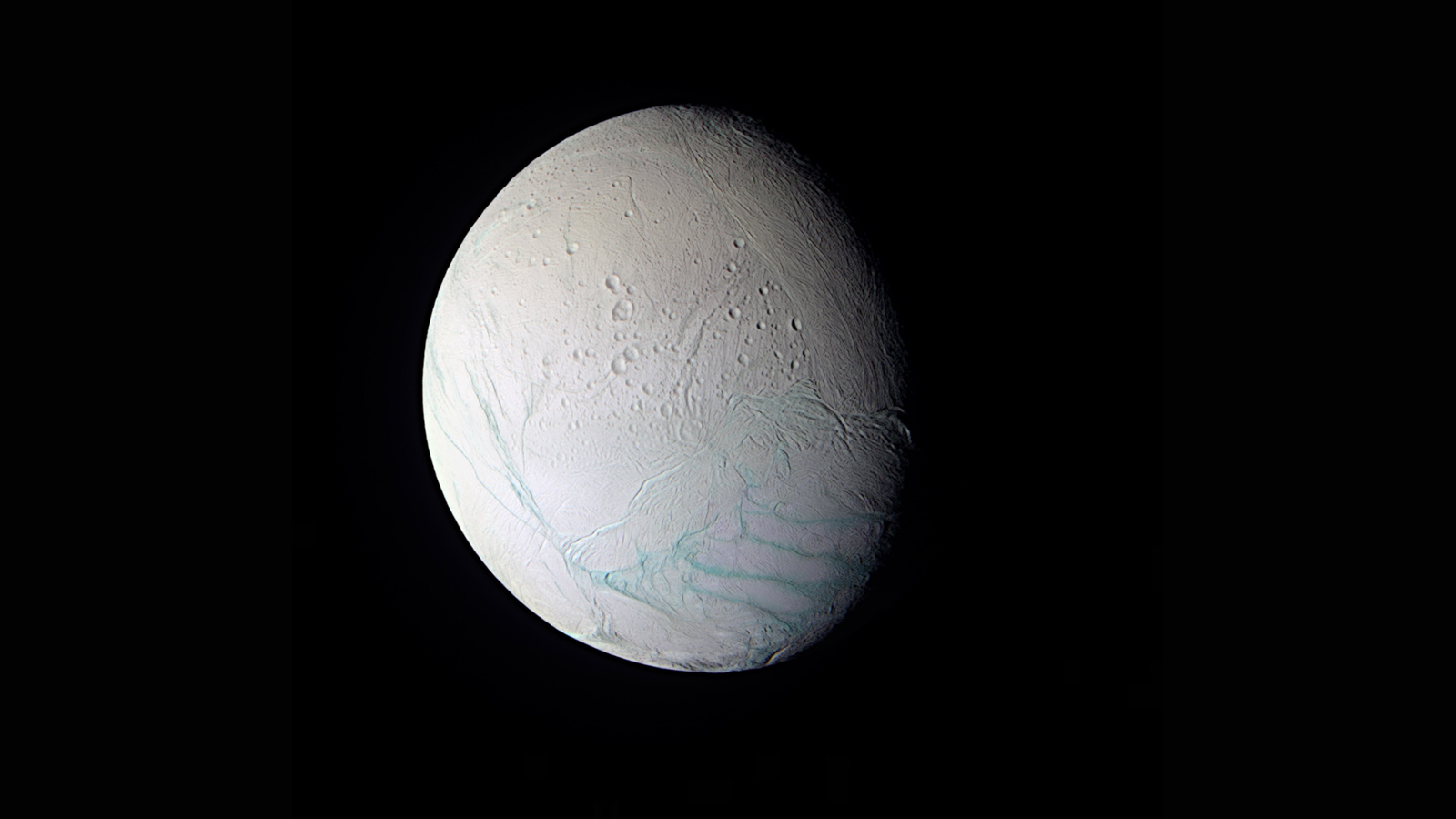
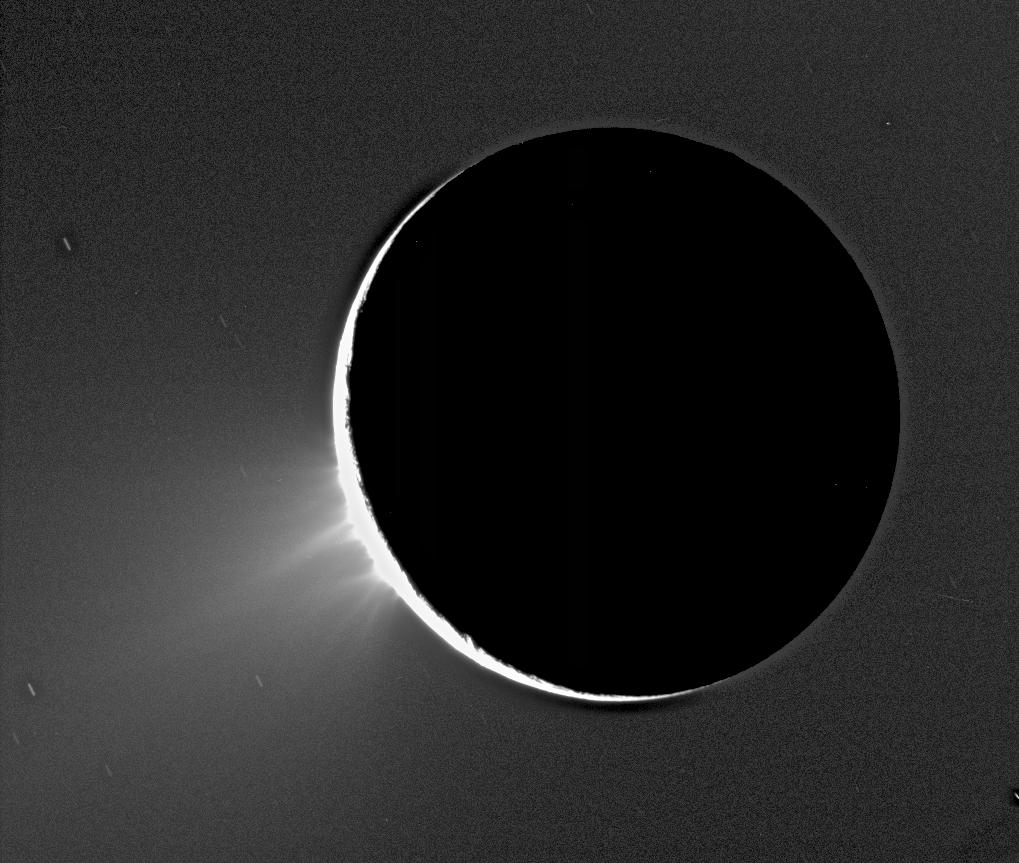
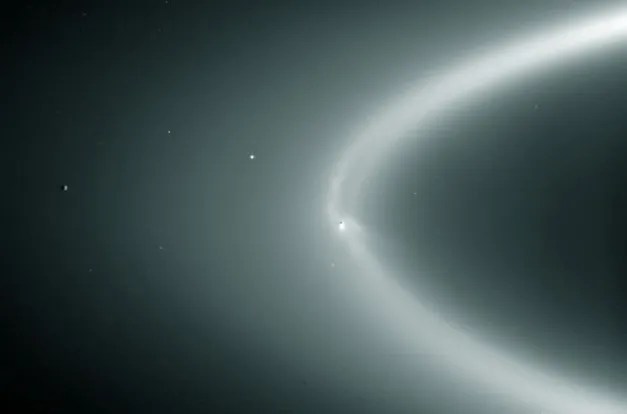
The most surprising of the many surprises of Saturn’s moons found by the Cassini spacecraft, 20 years ago, were the geysers erupting from the south polar region of the small moon Enceladus. A series of geysers emanating from deep fissures that looked like blue tigers stripes spewed forth a fine icy mist into the vacuum of space. It actually creates a ring around Saturn, called the E ring. It’s a very diffuse ring, not at all like the others, amd not visible from Earth. Enceladus has a diameter of about 310 miles, and a density of 1.6 times that of water. It is the most reflective body in the solar system, mainly because it travels within the E ring made of its own water ice that continually snows upon its surface.
The astronomical event times given in this blog are for the Traverse City/Interlochen area of Michigan (Lat 44.7° N, Long 85.7° W; EDT, UT – 4 hours) unless stated otherwise. Times will be different for other locations.
Addendum
10/10/2019 – Ephemeris – Saturn’s moon Enceladus may have the building blocks of life
Ephemeris for Thursday, October 10th. Today the Sun will be up for 11 hours and 15 minutes, setting at 7:07, and it will rise tomorrow at 7:52. The Moon, 3 days before full, will set at 5:23 tomorrow morning.
Even though the Cassini mission to Saturn ended two years ago its data will be will be studied for decades by scientists around the world. One of Cassini’s discoveries were geysers of water ice being ejected from the small moon Enceladus, that creates Saturn’s tenuous E ring. Two instruments aboard Cassini, a mass spectrometer and a cosmic dust analyzer, discovered organic compounds in the geysers and the E ring. Further analysis by German geologists found nitrogen-oxygen molecules among the ice grains. These are like the constituent compounds that make up amino acids which on Earth make up the proteins of life. Currently both NASA and the Europeans are considering return missions to Enceladus.
The times given are for the Traverse City/Interlochen area of Michigan. They may be different for your location.
Addendum
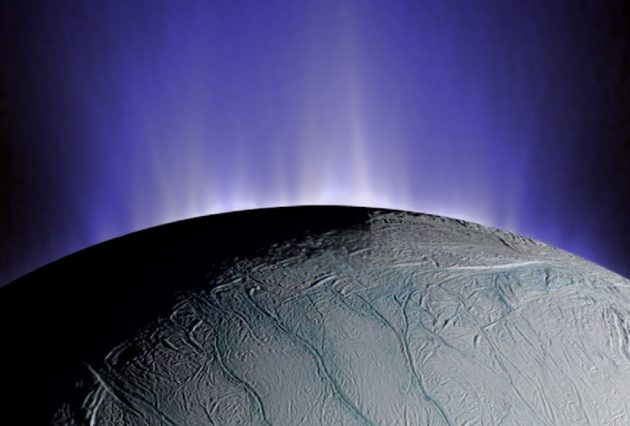
Enceladus, a small moon of Saturn spews continues to geysers of water rom cracks in its south polar region indicating an ocean below its frozen icy exterior. Sampling the plumes with the right instruments may detect life on this small world without the need for drilling. Credit: NASA/JPL – Caltech
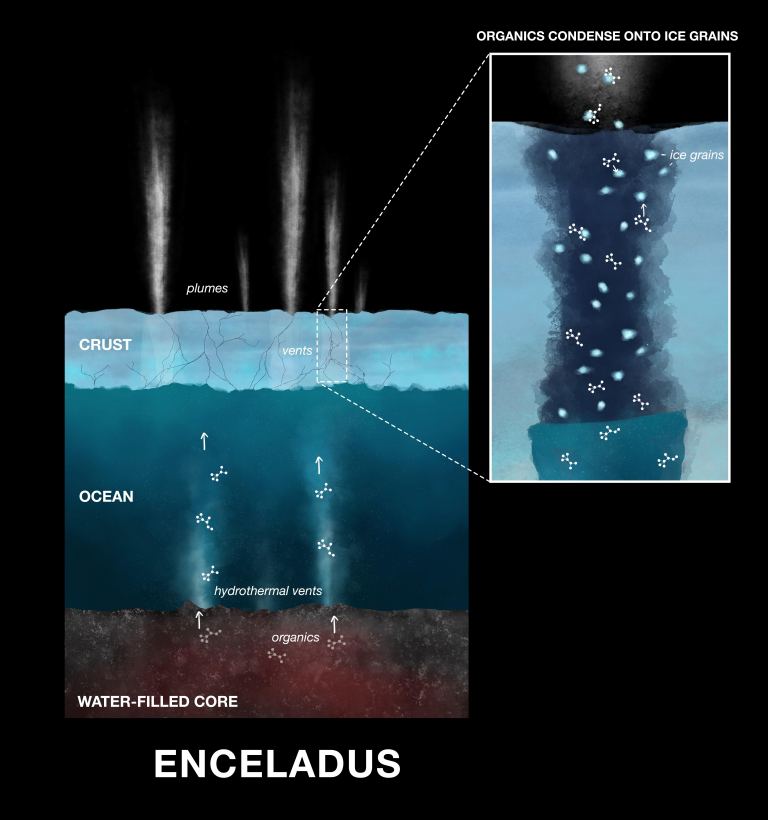
How organic compounds are attached to ice grains and ejected from Enceladus. Credit: NASA/JPL – Caltech.
04/22/2019 – Ephemeris – Earth Day
Ephemeris for Earth Day, Monday, April 22nd. Today the Sun will be up for 13 hours and 49 minutes, setting at 8:36, and it will rise tomorrow at 6:45. The Moon, 3 days past full, will rise at 12:24 tomorrow morning.
A good slogan for this Earth Day or any day is “Support your local planet.” As an amateur astronomer I look around the solar system at all the habitable planets. The Earth is it. Mars may be terraformed at great expense, that is made more earth-like. There may be life in the oceans of Jupiter’s moon Europa, or Saturn’s Enceladus, but they are not habitable for us. Terraforming (stopping and reversing climate change) the Earth would be the easiest and much more practical. One look at our nearest neighbor Venus will show us our fate, hopefully in billions of years from now, a hell hole of heat and a crushing atmosphere. Our job is push-off that day as far as we can, and keep the Earth a blue-green oasis in the solar system.
The times given are for the Traverse City/Interlochen area of Michigan. They may be different for your location.
Addendum
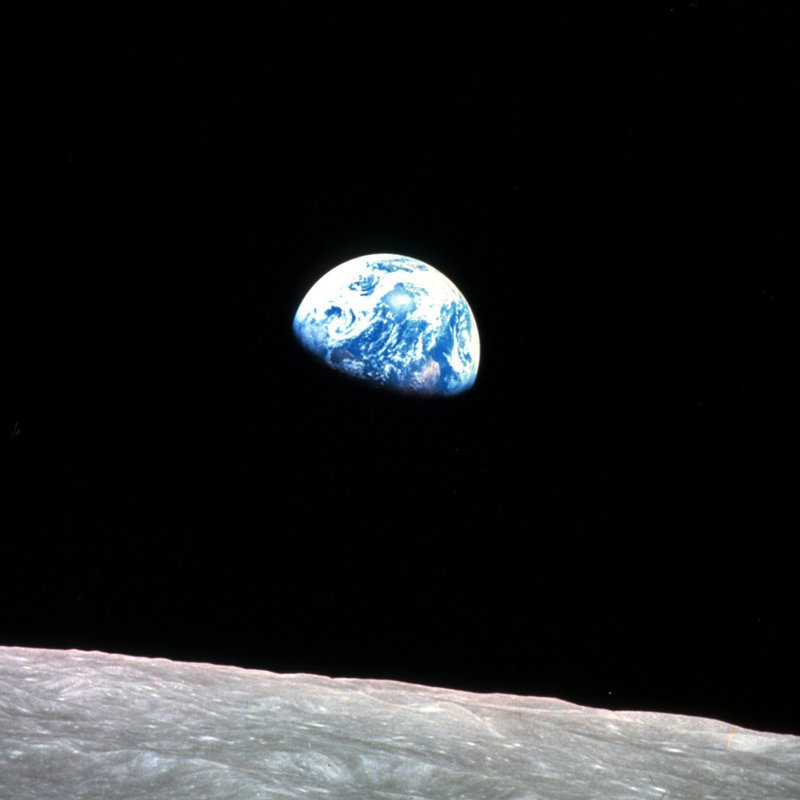
Earth rising above the Moon’s limb from Apollo 8. Credit: NASA/Apollo 8
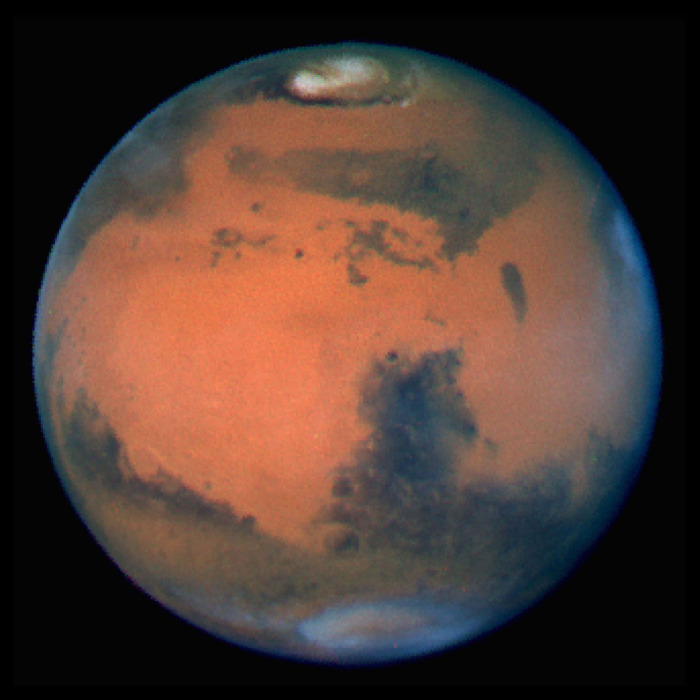
Mars had its day, but that ended about 3 billion years ago. Being half the size of the Earth, Mars cooled down, lost its magnetic field, so the solar wind stripped away most of its atmosphere and water. Credit NASA.
Europa, one of the four Galilean moons of Jupiter and easily seen in small telescopes, is slightly smaller than our Moon. Under that thick icy shell lurks an ocean with more water than all the Earth’s oceans. There’s probably volcanic vents like the black smokers in Earth’s oceans where a whole ecology of extremophiles could live like they do on Earth. Credit: NASA.
Enceladus, a small moon of Saturn spews continuous geysers of water from cracks in its south polar region indicating an ocean below its frozen icy exterior. Sampling the plumes with the right instruments may detect life on this small world without the need for drilling. Credit: NASA.
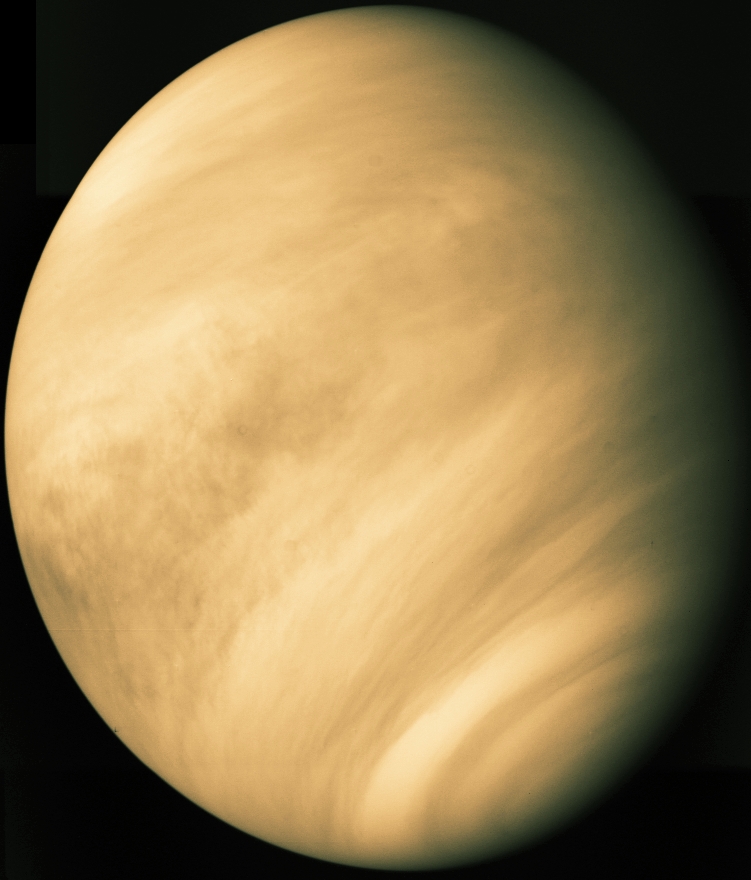
Is this our future? Venus had the misfortune of ending up too close to the Sun. It has a hellish landscape of nearly 900 degrees F, and 90 times the Earth’s atmospheric pressure. Its clouds consist of sulfuric acid. Talk about a runaway greenhouse effect and acid rain… Credit: NASA.
05/28/2015 – Ephemeris – Saturn’s satellites
Thursday, May 28th. Today the Sun will be up for 15 hours and 14 minutes, setting at 9:17. The Moon, 3 days past first quarter, will set at 3:56 tomorrow morning and tomorrow the Sun will rise at 6:02.
Saturn has a lot of moons, even if you don’t count the billions of ring particles circling the planet. The count is up to 62, five short of Jupiter’s 67 at last count. The largest is Titan which is larger than Mercury, a world with a thick nitrogen atmosphere and liquid filled lakes. At its distance from the Sun, some 10 times Earth’s and receiving only one percent the heat we get the lakes are filled with methane and ethane while the surface rocks are water ice. The small moon Enceladus spews salty water geysers at its south pole. The more distant moon Iapetus is half black and half white and has an equatorial mountain range that rings it like a walnut. Another moon Hyperion appears like it’s honeycombed.
Times are for the Traverse City/Interlochen area of Michigan. They may be different for your location.
Addendum
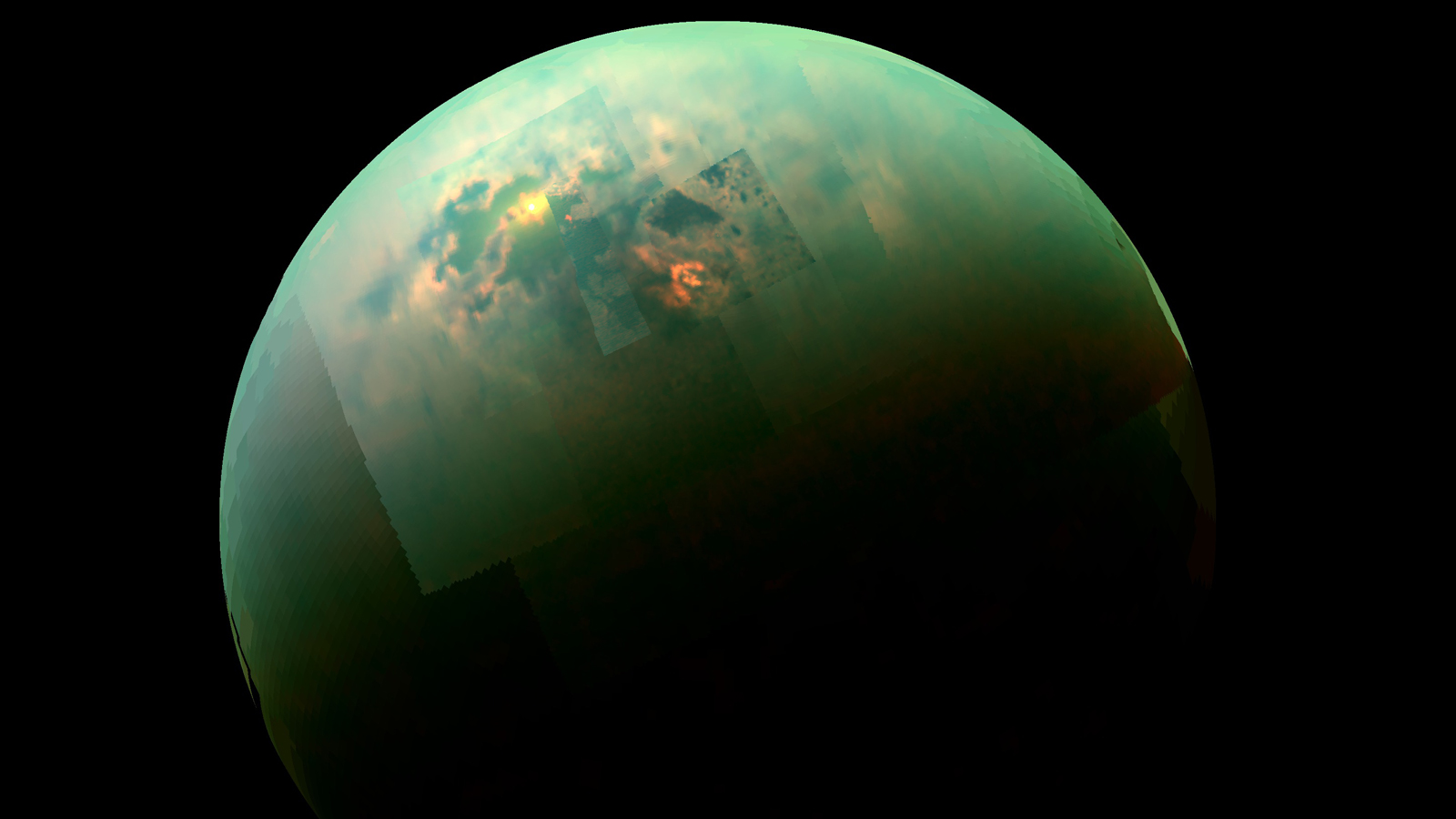
Titan in a false color near infrared view, showing the Sun’s light glinting off a north polar sea. Credit: NASA/JPL.
Enceladus’ south polar geysers create the E ring. Credit: NASA/JPL.
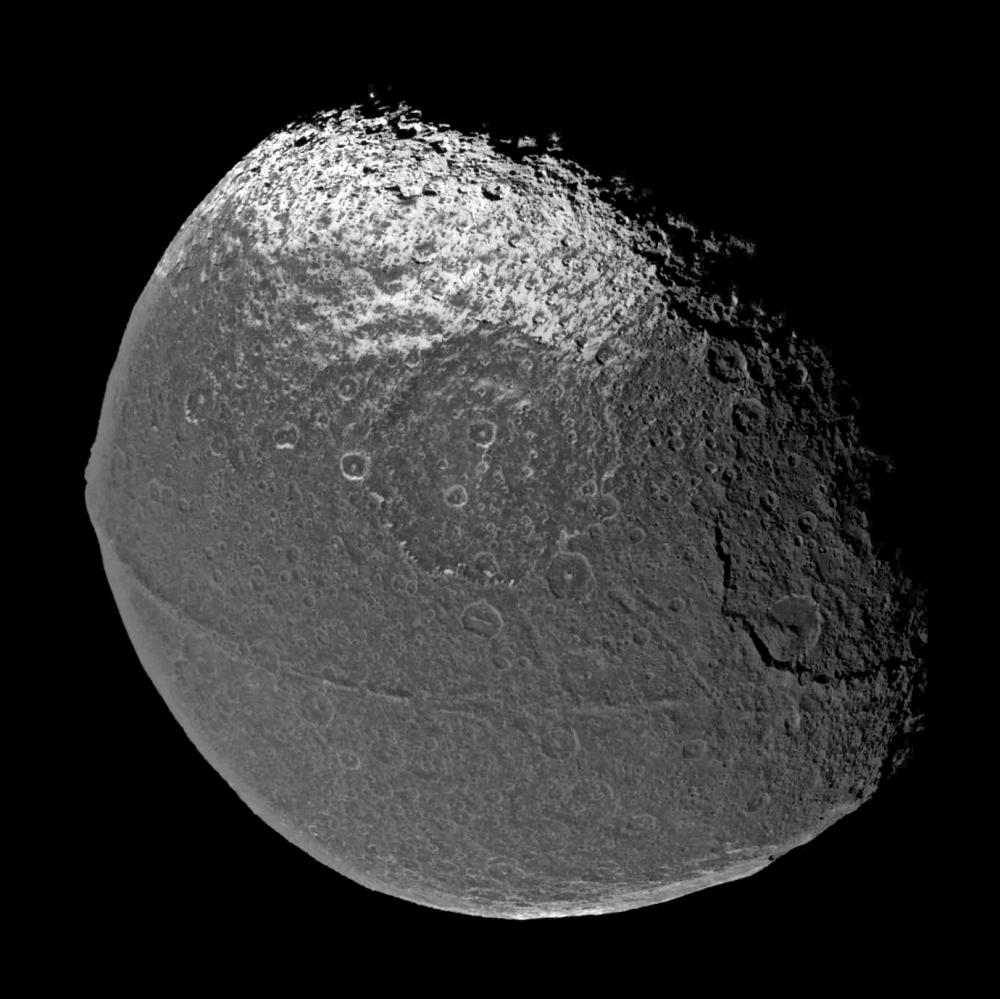
Iapetus showing mostly its dark side and equatorial mountain ridge. Credit: NASA/JPL.
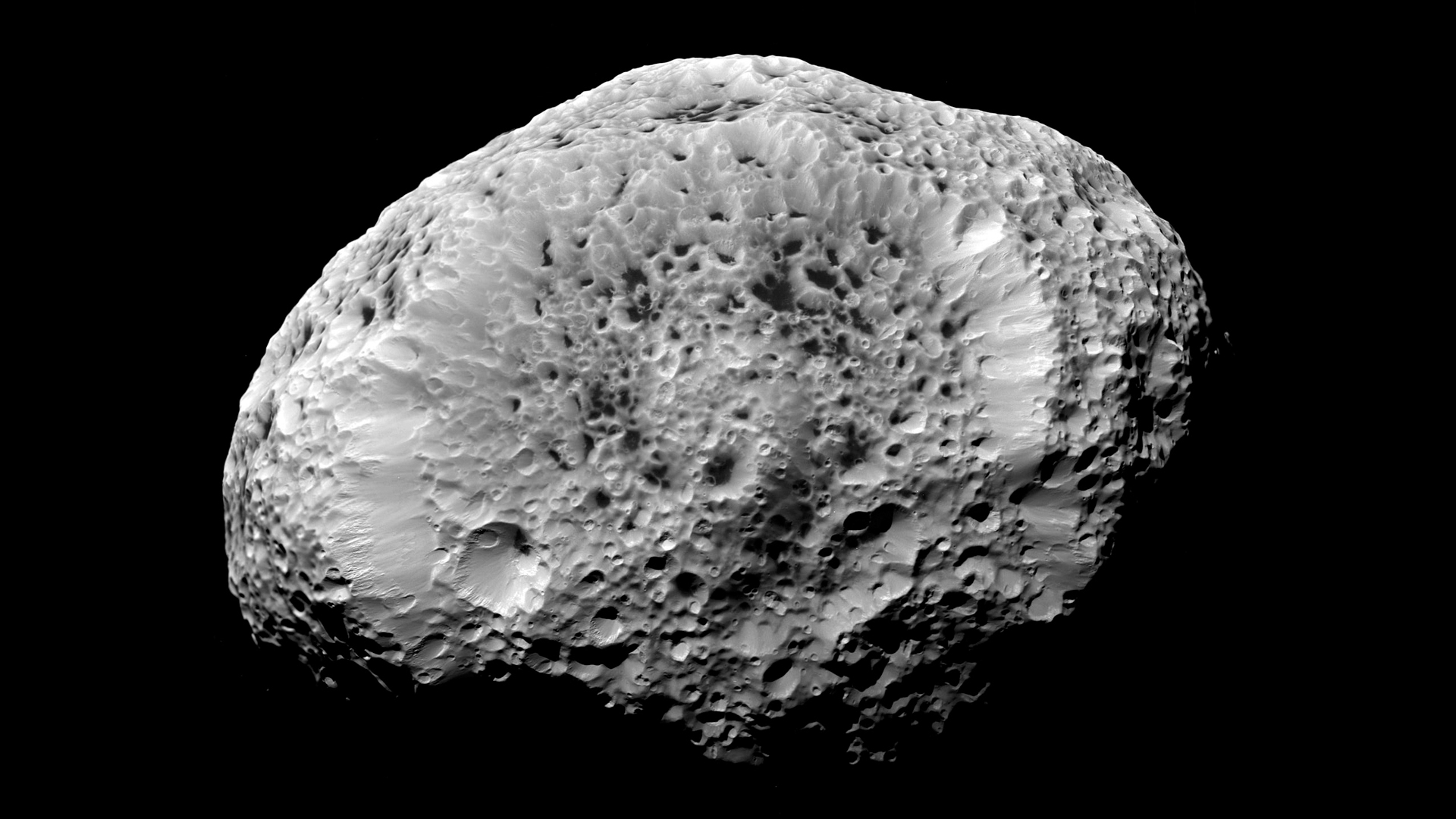
The weird moon Hyperion. It’s half as dense as ice. Credit: NASA/JPL:

