Archive
Ephemeris: 09/15/2026 – Two small but interesting constellations in and near the Summer Triangle
This is Ephemeris for Tuesday, September 15th. Today the Sun will be up for 12 hours and 31 minutes, setting at 7:53, and it will rise tomorrow at 7:22. The Moon, 3 days before first quarter, will set at 9:34 this evening.
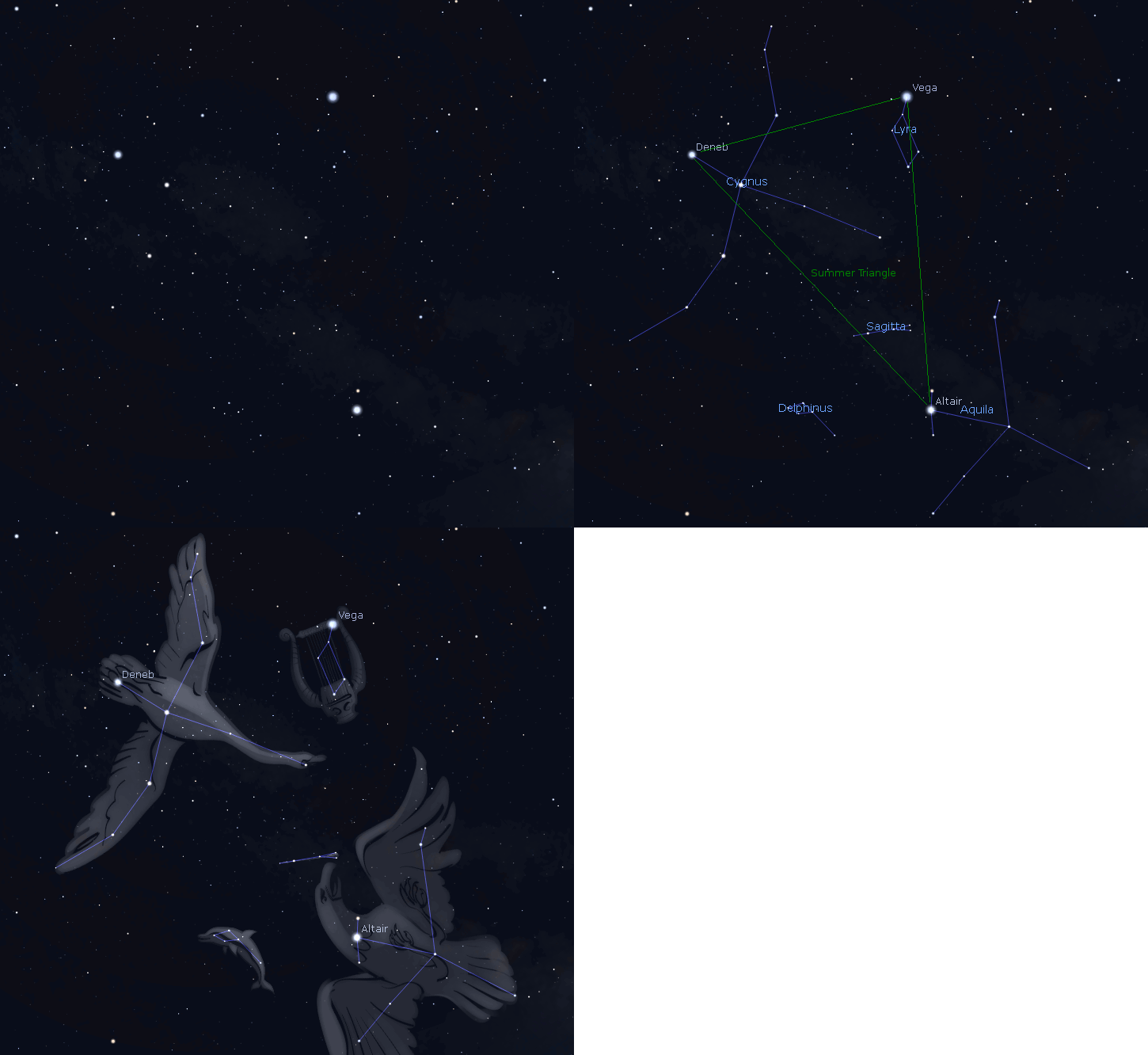
There are two small constellations in and near the Summer Triangle of bright stars. Both are near Altair the bottom star of the triangle in the south. The first is Delphinus the dolphin to the left of Altair. Delphinus is made-up of a small squished box of stars with another star below. It does look a dolphin leaping out of the water. The legendary Greek poet Arion, according to myth, was rescued by a dolphin. Also the little squished box is an asterism called Job’s Coffin, though no one knows the origin of that name. The second constellation is above Altair, and within the Summer Triangle. It is called Sagitta the arrow. The stars do line up to look like a short arrow. It’s supposed to represent Cupid’s dart.
The astronomical event times given in this blog are for the Traverse City/Interlochen area of Michigan (Lat 44.7° N, Long 85.7° W; EDT, UT – 4 hours) unless stated otherwise. Times will be different for other locations.
Addendum
Ephemeris: 09/14/2026 – The young September Moon slowly enters the evening sky
This is Ephemeris for Monday, September 14th. Today the Sun will be up for 12 hours and 34 minutes, setting at 7:55, and it will rise tomorrow at 7:21. The Moon, half way from new to first quarter, will set at 9:07 this evening.
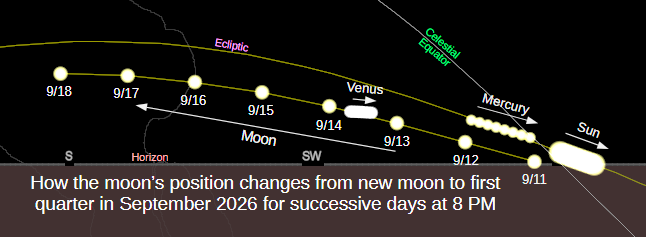
Something interesting is happening to the moon in late summer and early autumn. The moon, when either near new or near full, tends to hang low near the horizon for a long time. We are now about 4 days past new moon, and it is hanging low in the southwestern sky, and will set only about an hour and 12 minutes after the sun. Later this month we’ll have the Harvest Moon when the moon rises at short daily intervals later each night around full moon. I call it the Harvest Moon effect and that allowed farmers of old together in their crops by extending twilight. What the young moon does right now is keeping it really low in the sky so as a crescent it’s not easy to observe low on the southwestern horizon.
The astronomical event times given in this blog are for the Traverse City/Interlochen area of Michigan (Lat 44.7° N, Long 85.7° W; EDT, UT – 4 hours) unless stated otherwise. Times will be different for other locations.
Addendum
Ephemeris: 09/11/2026 – Star Party tomorrow night if it’s clear
This is Ephemeris for Friday, September 11th. Today the Sun will be up for 12 hours and 43 minutes, setting at 8:00, and it will rise tomorrow at 7:18. The Moon, 1 day past new, will set at 8:04 this evening.
Tomorrow night, Saturday, September 12th, the Grand Traverse Astronomical Society will join the park Rangers at the Sleeping Bear Dunes National Lakeshore’s Dune Climb for a star party from 9 to 11 PM or later, if clouds permit. Both of our previous star parties this year have been clouded out We’re hoping the third time is a charm. Visible tomorrow night, will be the planet Saturn, now showing its rings. Last year the rings were nearly edge on and very difficult to see as more than a line, but they’re opening up this year. Also featured will be the summer Milky Way in the waning days of summer, when we can look towards the center of our Galaxy, to all the star clusters and clouds of gas and dust called nebulae. Plus as a bonus, we get an early look at one of the features of the fall sky the great Andromeda Galaxy.
The astronomical event times given in this blog are for the Traverse City/Interlochen area of Michigan (Lat 44.7° N, Long 85.7° W; EDT, UT – 4 hours) unless stated otherwise. Times will be different for other locations.
Addendum

Ephemeris: 09/10/2026 – Finding Pegasus the winged horse of Greek myth
This is Ephemeris for Thursday, September 10th. Today the Sun will be up for 12 hours and 46 minutes, setting at 8:02, and it will rise tomorrow at 7:17. The Moon is new today, and won’t be visible.
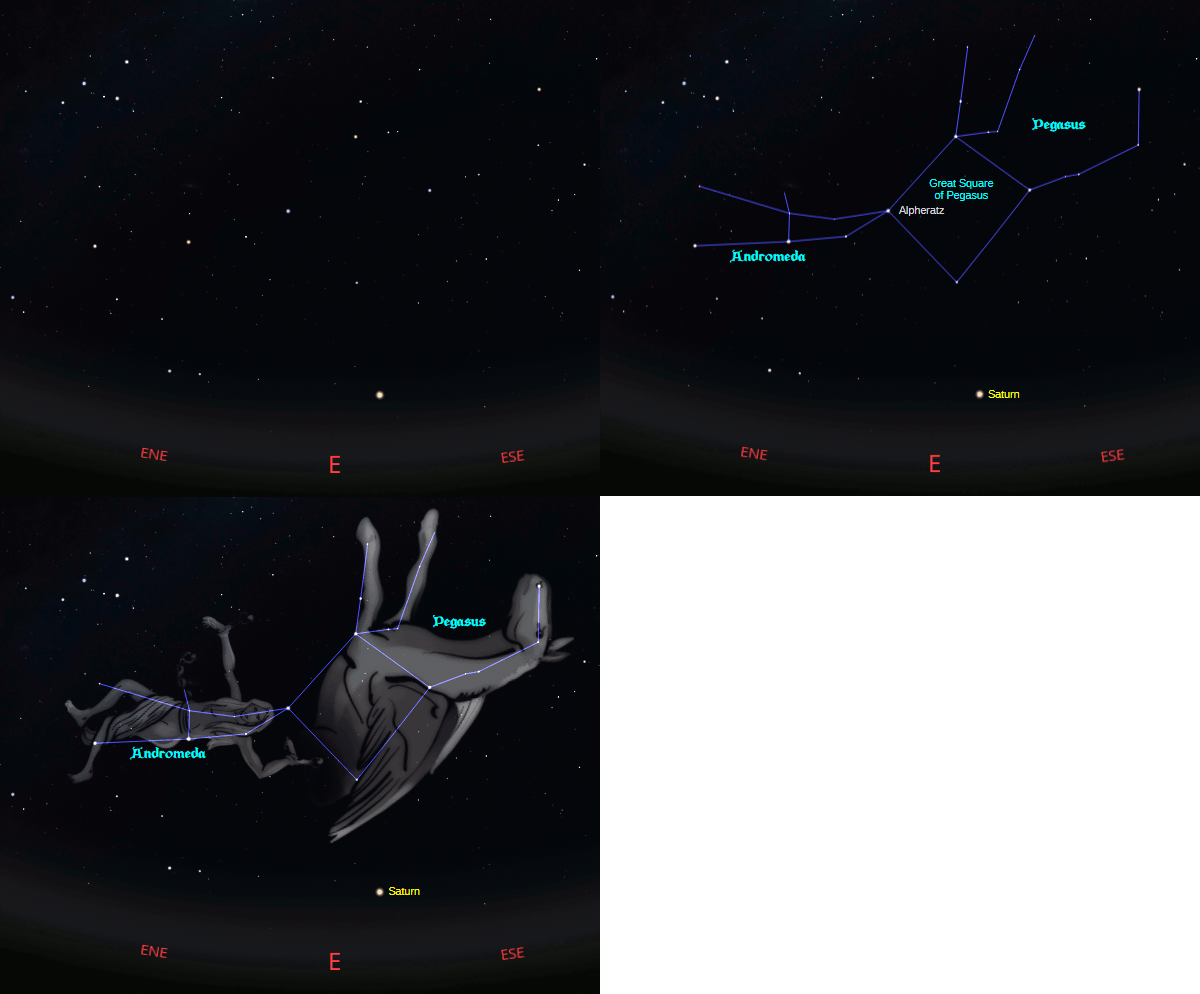
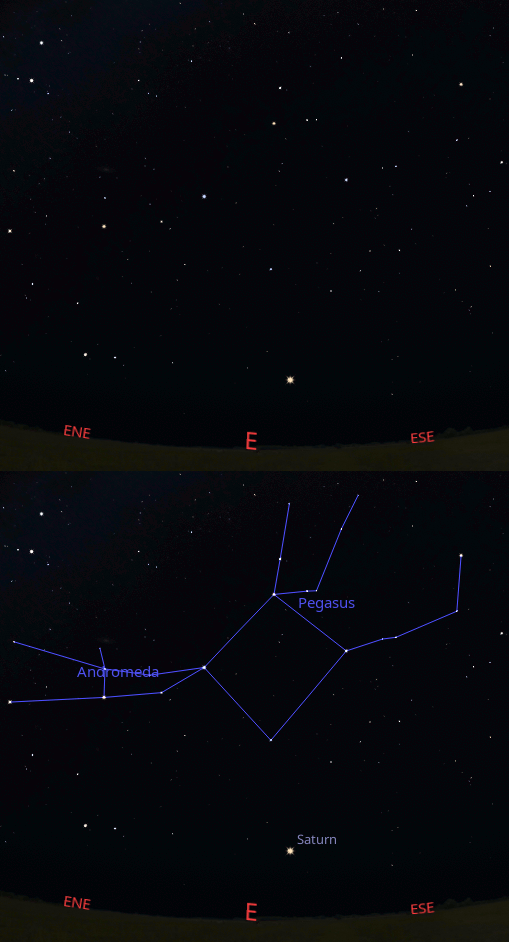
Saturn is low in the eastern sky at 10 PM. This is the brightest “star” in that direction. Above Saturn is the Great Square of Pegasus, a large, nearly perfect square of stars, standing on one corner. This is the front part of the body of Pegasus the flying horse. He’s climbing to the upper right, following the rotation of the sky. But it’s flying upside down, having its neck and head extend from the rightmost star of the square. From the top star are his forelegs extend. From the leftmost star extend two curved lines of stars which may look like hind legs, but belong to another constellation, Andromeda the Princess. Pegasus’ wings are not seen in the stars. Pegasus is part of a Greek myth, which has been made into two movies, both titled Clash of the Titans. But no actual Titans were used in the movies. All gods and godesses in the movie were their decendents.
The astronomical event times given in this blog are for the Traverse City/Interlochen area of Michigan (Lat 44.7° N, Long 85.7° W; EDT, UT – 4 hours) unless stated otherwise. Times will be different for other locations.
Addendum
Ephemeris: 09/09/2026 – Taking our weekly look at the whereabouts of the naked-eye planets
This is Ephemeris for Wednesday, September 9th. Today the Sun will be up for 12 hours and 49 minutes, setting at 8:04, and it will rise tomorrow at 7:15. The Moon, 1 day before new, will rise at 6:35 tomorrow morning.
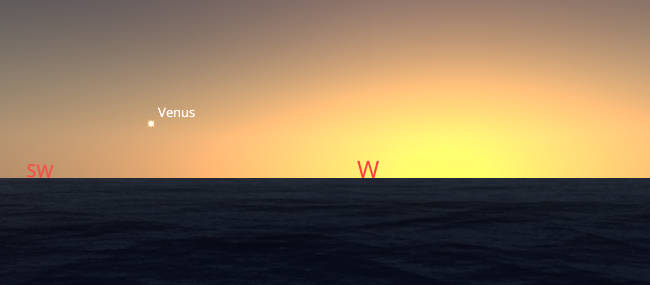
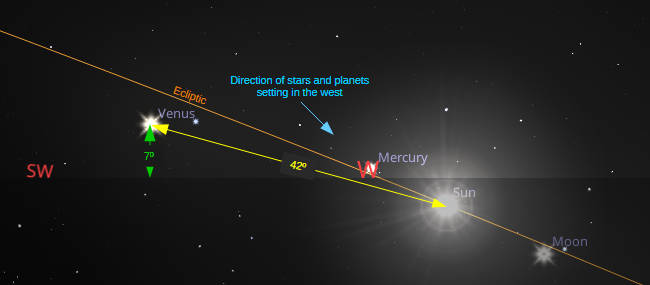
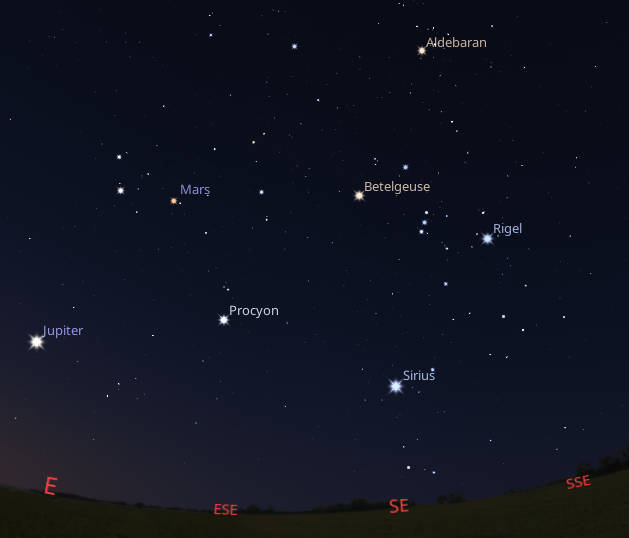
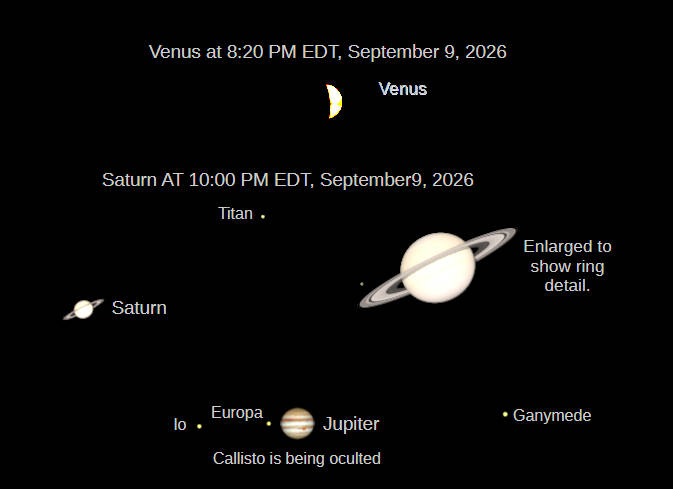
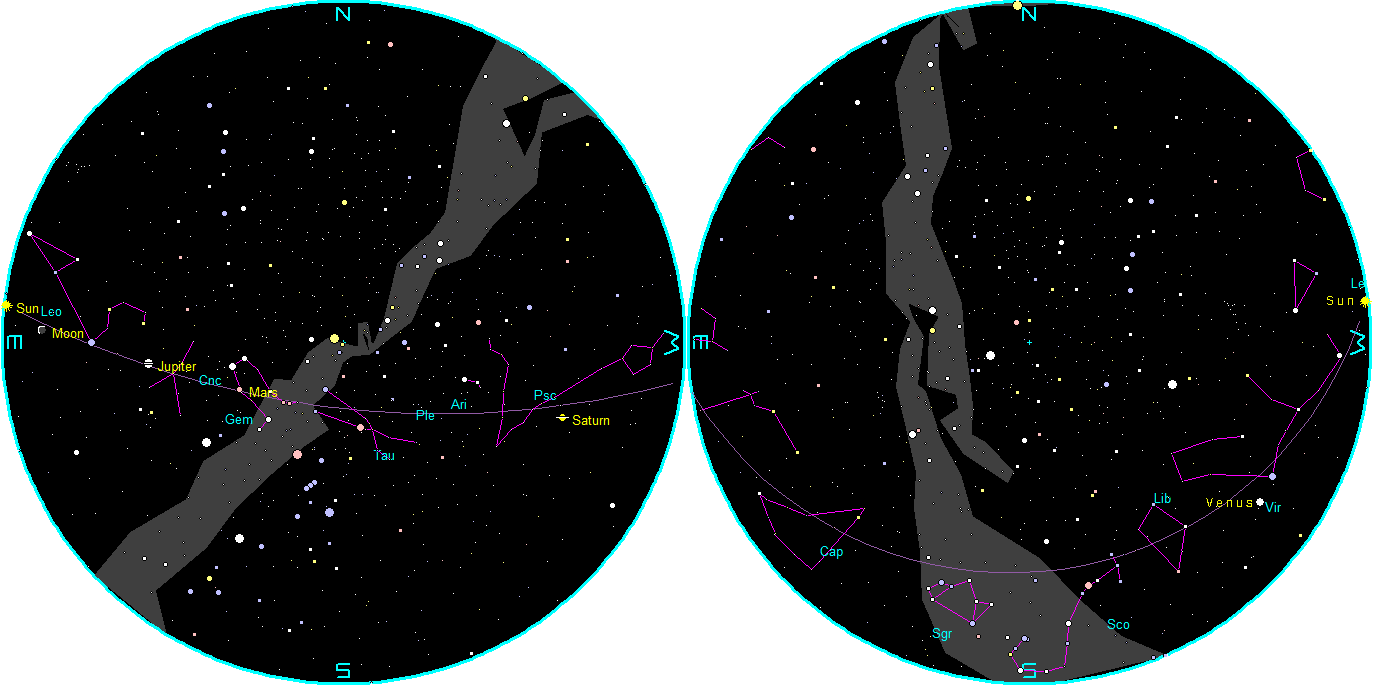
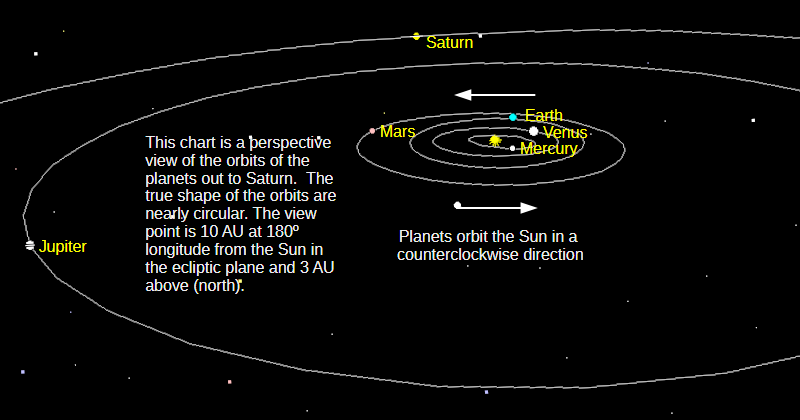
Let’s take our weekly look at the whereabouts of the naked-eye planets. By 8:20 tonight,nearly a half-hour after sunset, Venus will be spotted very low in the west southwestern sky. Though at a 42º angle from the sun, it’ll only be 7º above the horizon then. A telescope will show a small crescent disk of the planet. It is now rapidly approaching earth in its orbit, at 45.9 million miles (73.9 mil km) away from us. Venus is becoming an ever decreasing crescent as its apparent diameter grows in telescopes. Saturn will rise at 9:08 PM in the east. At 6 AM, Mars and Jupiter will be in the east. Jupiter is brightest and lowest while Mars has the competition of brighter stars in Gemini.
The astronomical event times given in this blog are for the Traverse City/Interlochen area of Michigan (Lat 44.7° N, Long 85.7° W; EDT, UT – 4 hours) unless stated otherwise. Times will be different for other locations.
Addendum
Ephemeris: 09/08/2026 – Where is the Sun heading to?
This is Ephemeris for Tuesday, September 8th. Today the Sun will be up for 12 hours and 52 minutes, setting at 8:06, and it will rise tomorrow at 7:14. The Moon, 2 days before new, will rise at 5:18 tomorrow morning.
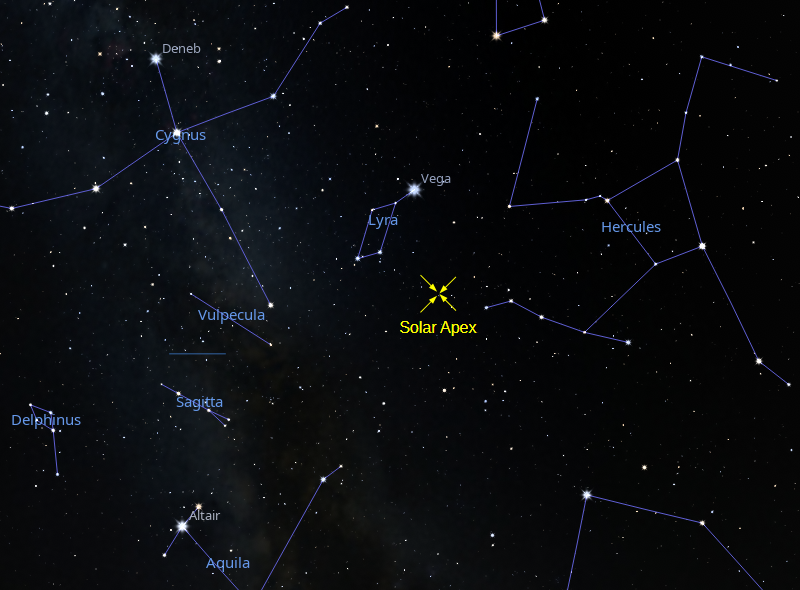
We know that the Earth orbits the sun, but where is the sun going? The sun orbits the center of the Milky Way moving something like 137 miles (220 kilometers) per second in the direction of Cygnus the Swan. It takes about 200 to 250 million years to orbit the center of the galaxy. However, the sun has a motion with respect to the general flow of stars in our neighborhood orbiting the center of the galaxy. Where the sun is heading is it called the solar apex. That point is it just a little bit south of the star Vega which is high in the south in the evening. Vega is the brightest star of this Summer Triangle, which includes Altair to the southeast and Deneb to the east. The sun’s motioned towards the apex that is about 8 miles (13 kilometers) per second.
The astronomical event times given in this blog are for the Traverse City/Interlochen area of Michigan (Lat 44.7° N, Long 85.7° W; EDT, UT – 4 hours) unless stated otherwise. Times will be different for other locations.
Addendum
Ephemeris: 09/07/2026 – Unsung heros of Apollo
This is Ephemeris for Labor Day, Monday, September 7th. Today the Sun will be up for 12 hours and 55 minutes, setting at 8:08, and it will rise tomorrow at 7:13. The Moon, half way from last quarter to new, will rise at 3:58 tomorrow morning.
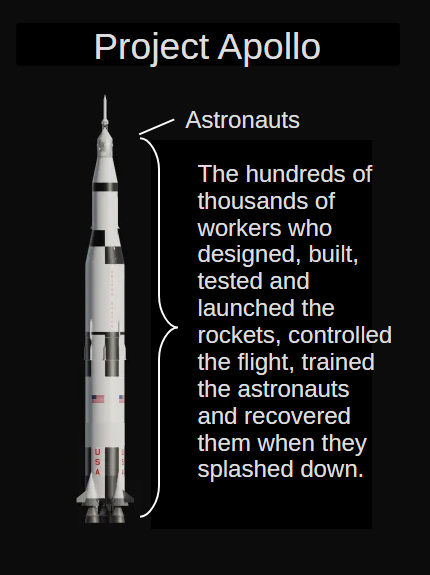
Today is the day we salute all workers. I’d like to remember hundreds of thousands of unsung workers in the 1960s who built and launched machines that went to places no one had gone before namely, space and eventually to the moon. Back then as in now, building rockets and spacecraft is not an assembly line operation, exactly. These are not exact copies of each other for the most part, there was always changes and upgrades with every single one. No two are exactly the same. Space hardware are always in development and inprovements eek out every last bit of performance possible. It takes skill and dedication to build something with the specs always changing, and then getting it right every time.
The astronomical event times given in this blog are for the Traverse City/Interlochen area of Michigan (Lat 44.7° N, Long 85.7° W; EDT, UT – 4 hours) unless stated otherwise. Times will be different for other locations.
Addendum
Ephemeris: 09/04/2026 – GTAS meeting: Meteorites and Quasicrystals
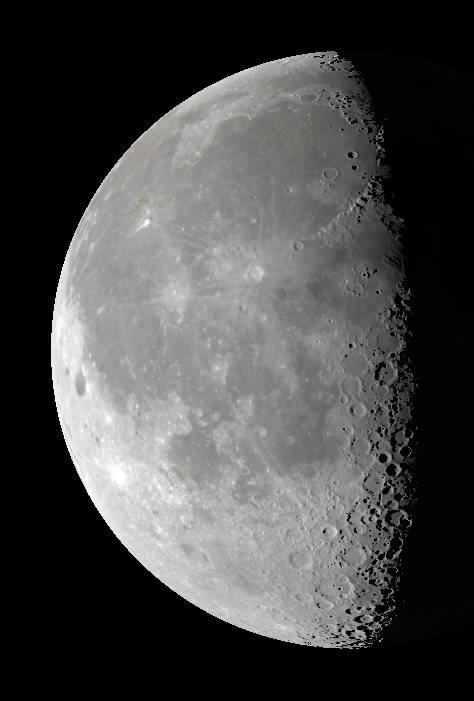
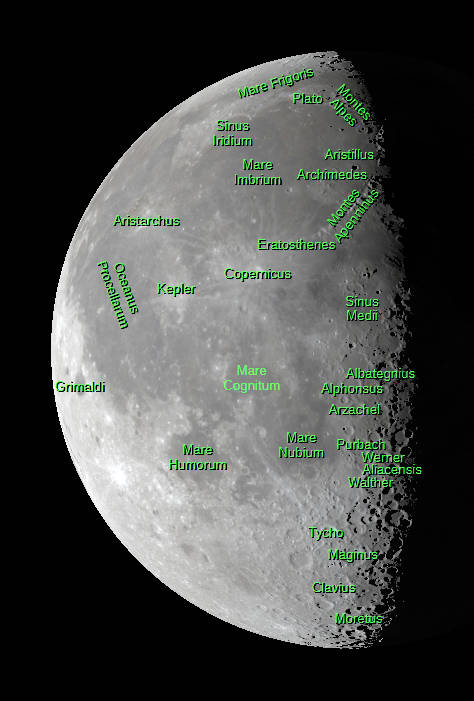
This is Ephemeris for Friday, September 4th. Today the Sun will be up for 13 hours and 5 minutes, setting at 8:13, and it will rise tomorrow at 7:10. The Moon, at last quarter today, will rise at 12:11 tomorrow morning.
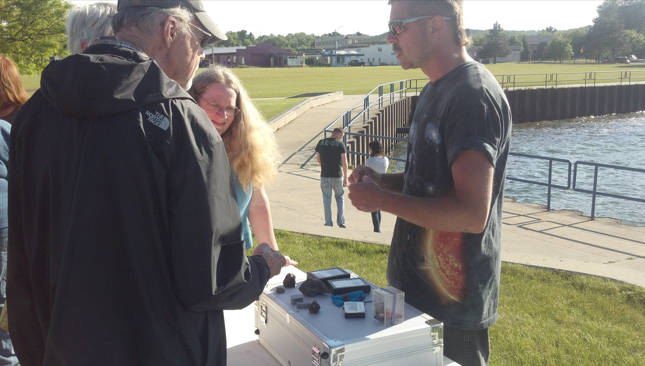
The Grand Traverse Astronomical Society (GTAS) will host its September meeting tonight at 8 PM at Northwestern Michigan College’s Joseph H Rogers Observatory. Joe Brooks our Meteorite Man will present a talk about meteorites and quasicrystals and have meteorites to display. Without giving too much away, NASA has been growing and studying quasicrystals. They have interesting properties, which among other things hold promise in sensors and high efficiency solar cells. Afterward, about 9 PM if it’s clear, there will be viewing of the heavens through the observatory’s telescopes. The observatory is located on Birmley Rd. The meeting is also on Zoom, see gtastro.org for more information.
The astronomical event times given in this blog are for the Traverse City/Interlochen area of Michigan (Lat 44.7° N, Long 85.7° W; EDT, UT – 4 hours) unless stated otherwise. Times will be different for other locations.
Addendum
Ephemeris: 09/03/2026 – Finding the North American Nebula
This is Ephemeris for Thursday, September 3rd. Today the Sun will be up for 13 hours and 8 minutes, setting at 8:15, and it will rise tomorrow at 7:08. The Moon, 1 day before last quarter, will rise at 11:15 this evening.
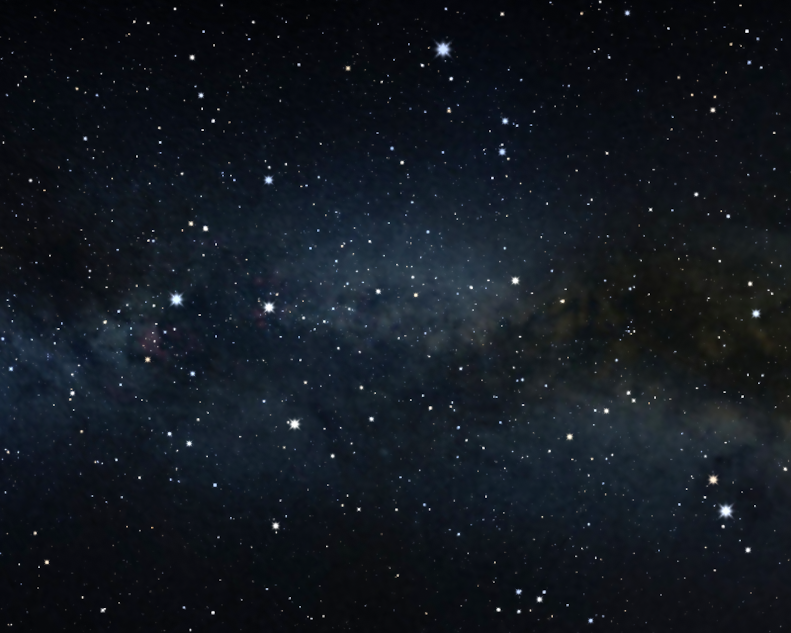
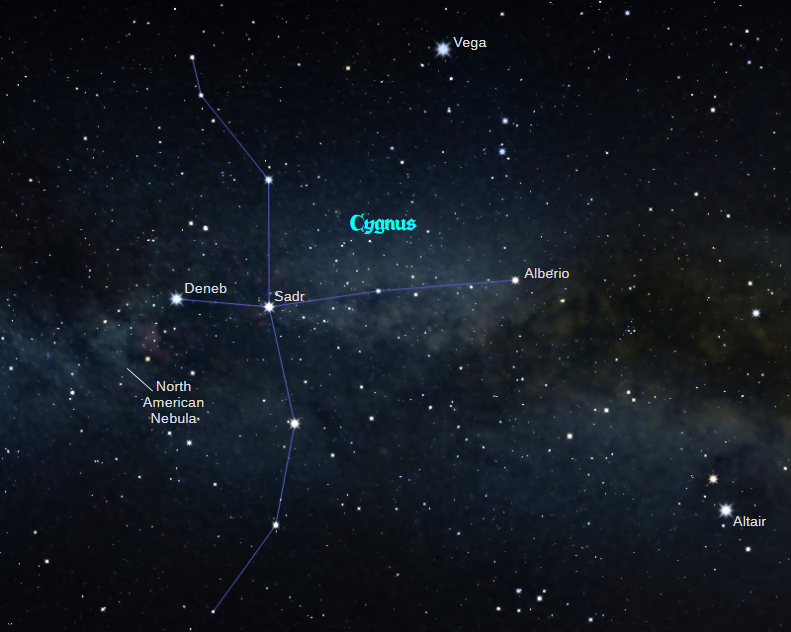
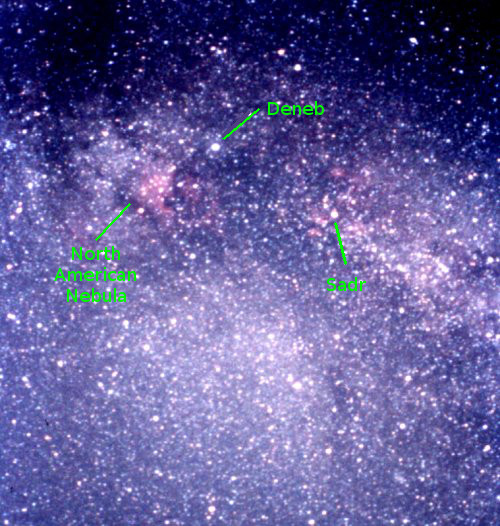
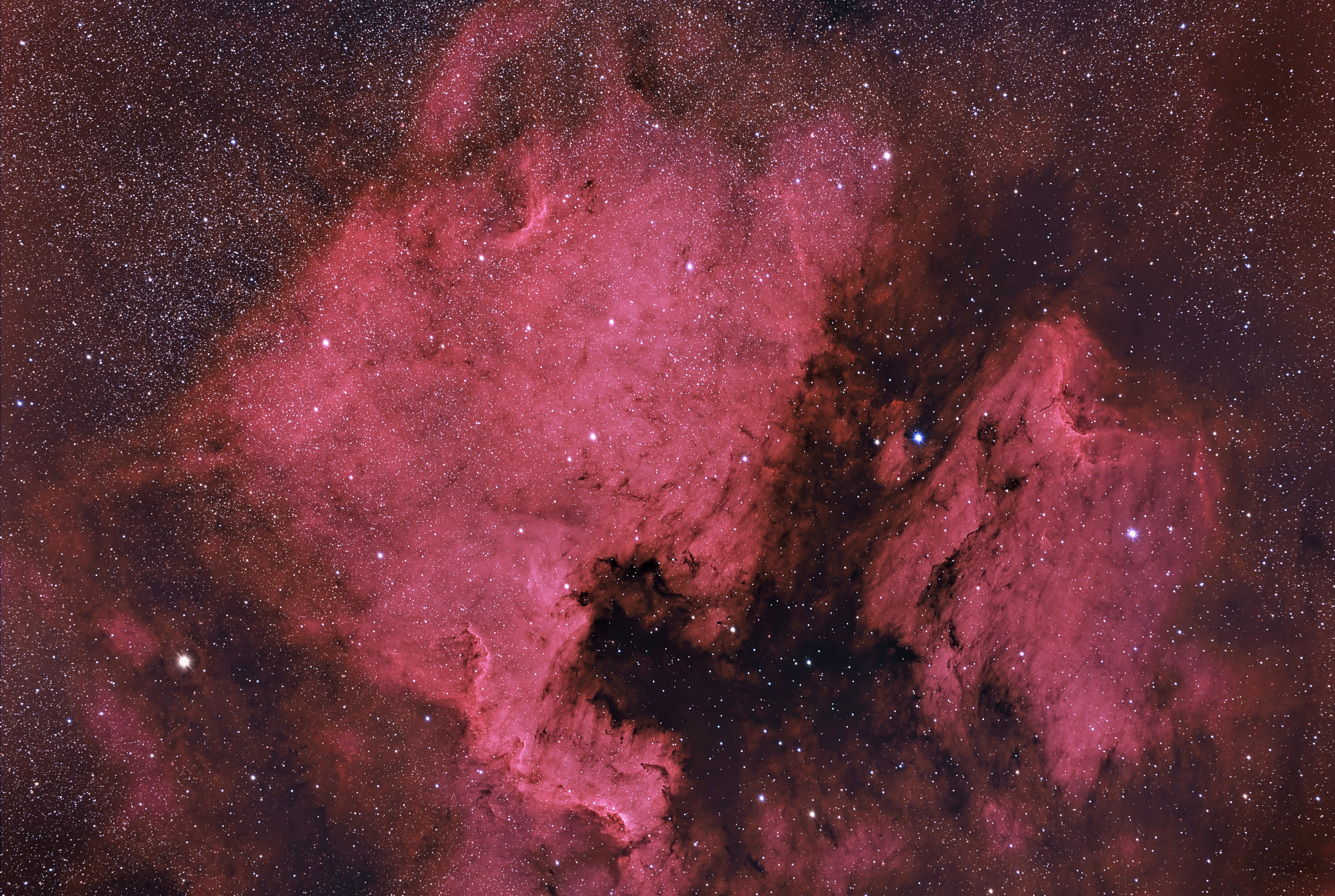
Most of what we see in the Milky Way are just masses of stars, but there are bright clouds of gas, or to name them properly: emission nebulae. These bright clouds are areas of star formation. It is the ultraviolet light from young massive stars that light up the clouds they were formed from. A bright one, easily visible in binoculars, is just about overhead at 10 p.m. Called the North American Nebula, a glow, that in photographs is shaped much like our continent, is just east of the star Deneb which is practically overhead in the evening. Deneb is the northernmost star of the Summer Triangle, and brightest star in Cygnus the swan or Northern Cross. There are many other nebulae in the Milky Way, visible in binoculars and small telescopes. Many enjoyable hours can be spent sweeping the Milky Way for nebulae and star clusters.
The astronomical event times given in this blog are for the Traverse City/Interlochen area of Michigan (Lat 44.7° N, Long 85.7° W; EDT, UT – 4 hours) unless stated otherwise. Times will be different for other locations.
Addendum
Ephemeris: 09/02/2026 – Taking our weekly look at the whereabouts of the naked-eye planets
This is Ephemeris for Wednesday, September 2nd. Today the Sun will be up for 13 hours and 11 minutes, setting at 8:17, and it will rise tomorrow at 7:07. The Moon, 2 days before last quarter, will rise at 10:33 this evening.
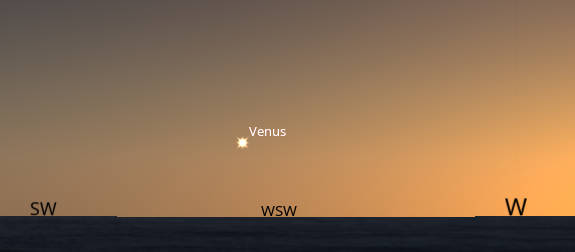
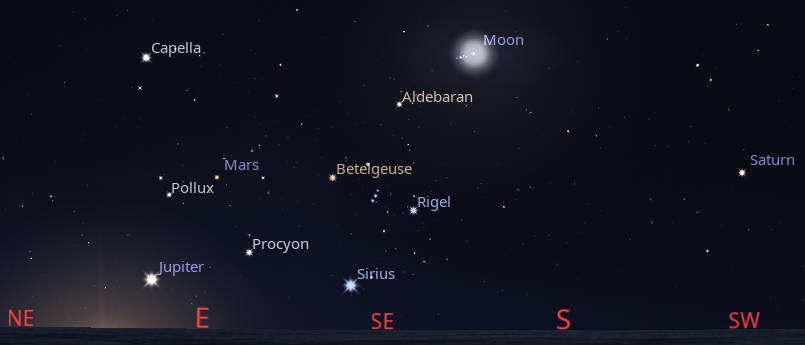
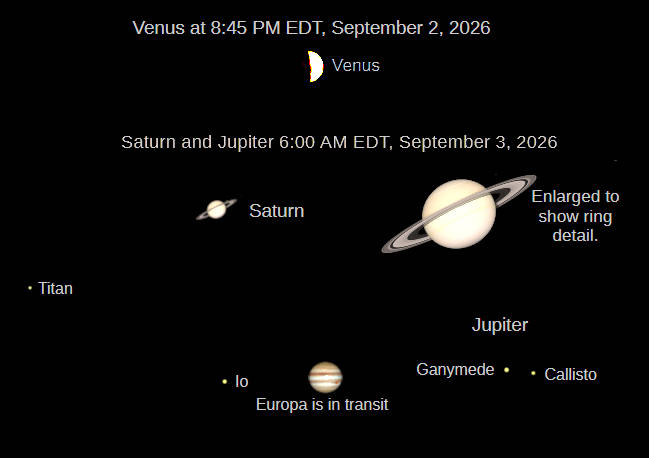
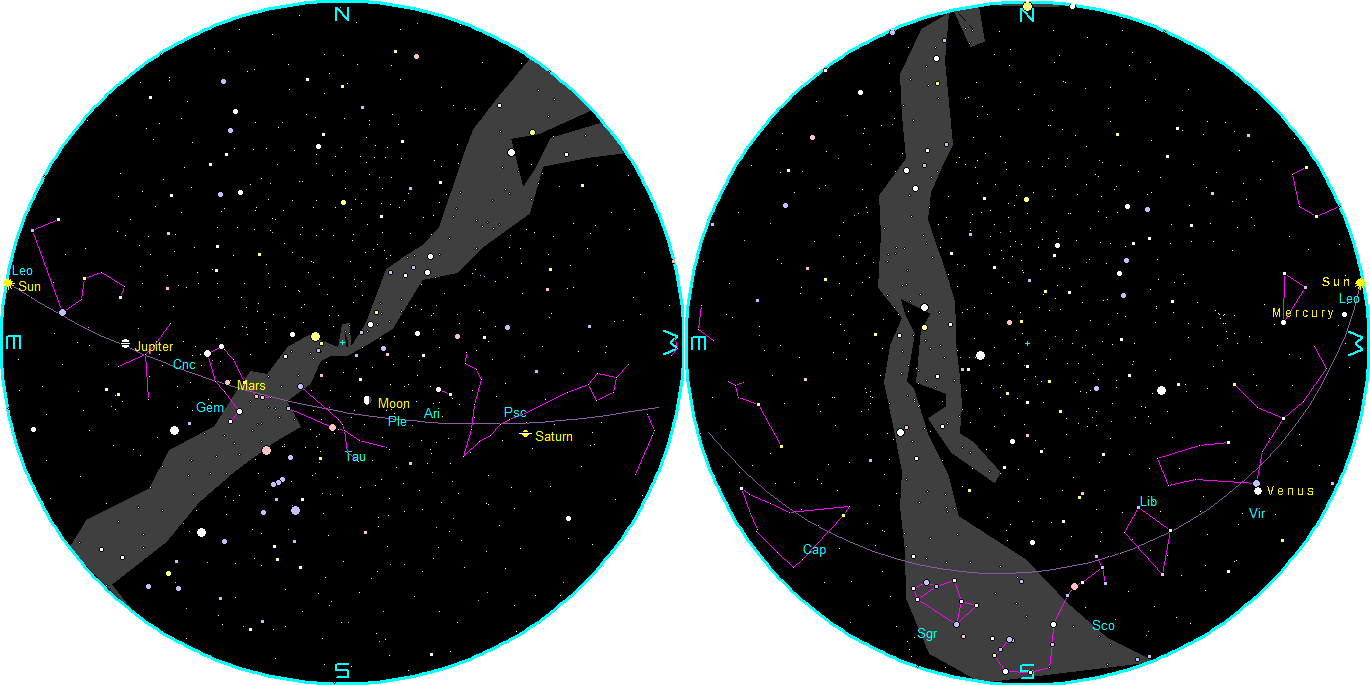
Let’s take our weekly look at the whereabouts of the naked-eye planets. By 8:45 PM tonight, a nearly a half-hour after sunset, Venus will be spotted low in the west southwestern sky. Though at a 44º angle from the sun, it’ll only be 6º above the horizon then. A telescope will show a small crescent disk of the planet. It is now rapidly approaching earth in its orbit, at 50.8 million miles (81.8 mil km) away from us. Venus is becoming an ever decreasing crescent as its apparent diameter grows in telescopes. At 6 AM, Saturn will be alone in the southwest, while Mars and Jupiter will be in the east. Jupiter is brightest and lowest while Mars has the competition of brighter stars in Gemini.
The astronomical event times given in this blog are for the Traverse City/Interlochen area of Michigan (Lat 44.7° N, Long 85.7° W; EDT, UT – 4 hours) unless stated otherwise. Times will be different for other locations.
Addendum
 Bob Moler's Ephemeris Blog