Ephemeris: 10/29/2026 – Algol, the perfect Halloween star
This is Ephemeris for Thursday, October 29th. Today the Sun will be up for 10 hours and 18 minutes, setting at 6:35, and it will rise tomorrow at 8:18. The Moon, halfway from full to last quarter, will rise at 9:02 this evening.
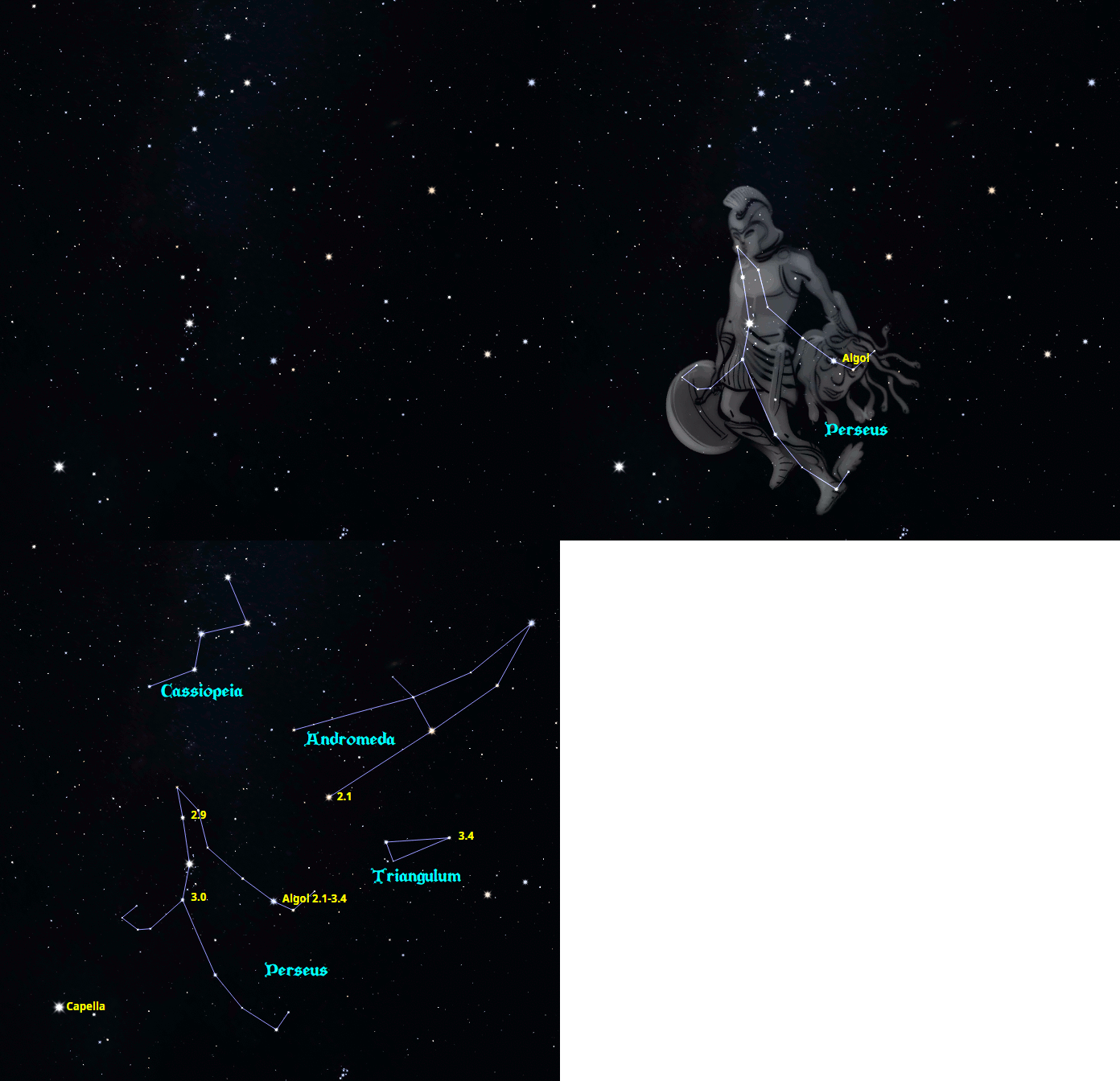
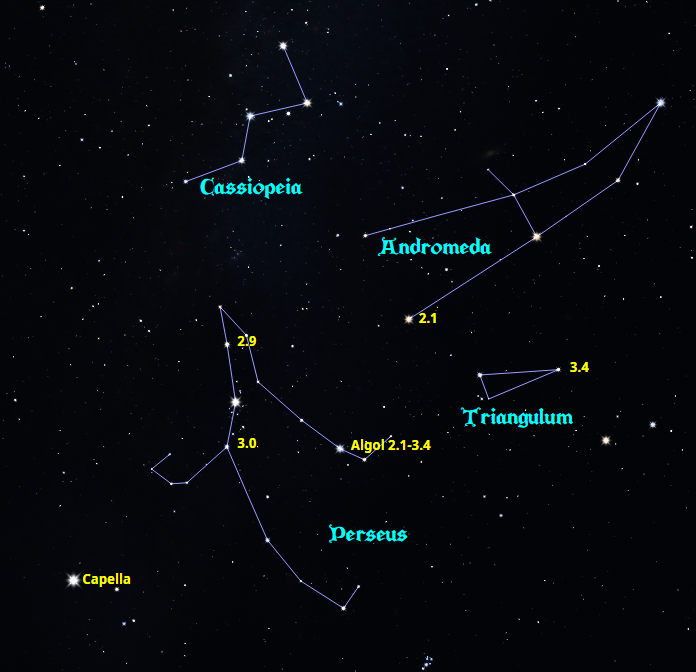
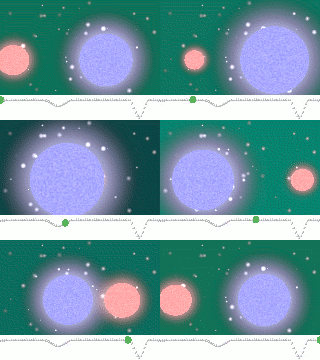
Not all the ghosts and goblins out Saturday night will be children. One will be out every night because it’s a star. Its name is Algol, from the Arabic for Ghoul Star or Demon Star. It’s normally the second-brightest star in the constellation Perseus the hero, visible in the northeast this evening. The star is located where artists have drawn the severed head of Medusa, whom he had slain. Medusa was so ugly that she turned all who gazed upon her to stone. Algol is her still glittering eye. The star got these names before we knew what was wrong with it. It does a slow wink every two days, 21 hours. That’s because Algol is two stars that eclipse each other.
The astronomical event times given in this blog are for the Traverse City/Interlochen area of Michigan (Lat 44.7° N, Long 85.7° W; EDT, UT – 4 hours) unless stated otherwise. Times will be different for other locations.
Addendum
Here’s a link to Sky & Telescope’s Minima of Algol page, to calculate the times when Algol reaches minimum brightness. Note that it uses your computer’s current time settings. Running it now in October, will cause November’s times to remain on Daylight Saving Time. Though an hour’s difference won’t make much difference in Algol’s brightness to the naked eye: (https://skyandtelescope.org/stargazing-and-observing/the-minima-of-algol/)