Archive
Ephemeris: 09/16/2024 – Quadruple lunar events tomorrow night!
This is Ephemeris for Monday, September 16th. Today the Sun will be up for 12 hours and 26 minutes, setting at 7:50, and it will rise tomorrow at 7:24. The Moon, 1 day before full, will set at 6:34 tomorrow morning.
Tomorrow night there will be 4 lunar events occurring at the same time. Coincidence? I think not. The Moon will be full. The other events can only occur at full moon. It’s the Harvest Moon, the closest full moon to the autumnal equinox. It also happens to be a supermoon with the Moon reaching perigee, it’s closest to the Earth of the month a few hours later. Finally, the Moon will be partially eclipsed. By 9:45 PM the Moon may appear somewhat duller to the upper left than to the lower right. This is the Moon deep inside the Earth’s outer shadow called the penumbra. The actual partial phase of the eclipse will occur from 10:13 PM to 11:16 PM with the maximum occurring at 10:44 PM. With only 8 1/2 % of the Moon’s diameter covered.
The astronomical event times given are for the Traverse City/Interlochen area of Michigan (EDT, UT – 4 hours). Times will be different for other locations.
Addendum
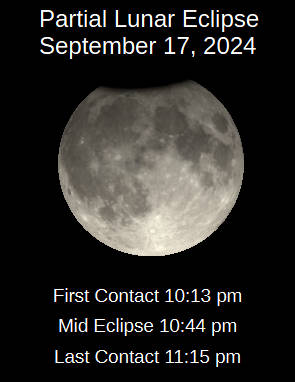
The eclipse will be visible in whole or in part for North America except for extreme western Alaska, also South America, Europe, Africa, and Western Asia. The times in Universal Time (UT): September 18, 2024, first contact 02:13, mid-eclipse 02:44, last contact 03:15.
Ephemeris: 07/12/2024 – Star Party tomorrow night at Sleeping Bear Dunes National Lakeshore
This is Bob Moler with Ephemeris for Friday, July 12th. Today the Sun will be up for 15 hours and 17 minutes, setting at 9:27, and it will rise tomorrow at 6:10. The Moon, 1 day before first quarter, will set at 12:42 tomorrow morning.
Tomorrow night, Saturday, July 13th, the Sleeping Bear Dunes National Lakeshore will team up with the Grand Traverse Astronomical Society to host a star party at the Dune Climb from 9 to 11 PM or later. It won’t be a star party only, because the featured attraction will be the first quarter Moon. To my mind, this is the best time to view the Moon, showing its craters with deep shadows near the terminator or sunrise line which crosses the Moon slowly over the month. There are no planets out in the evening, but we do have some interesting stars to look at besides the Moon. And the bright International Space Station will be seen moving from west to northeast, passing through the bowl of the Big Dipper around 10:28 pm.
The astronomical event times given are for the Traverse City/Interlochen area of Michigan (EDT, UT–4 hours). They may be different for your location.
Addendum
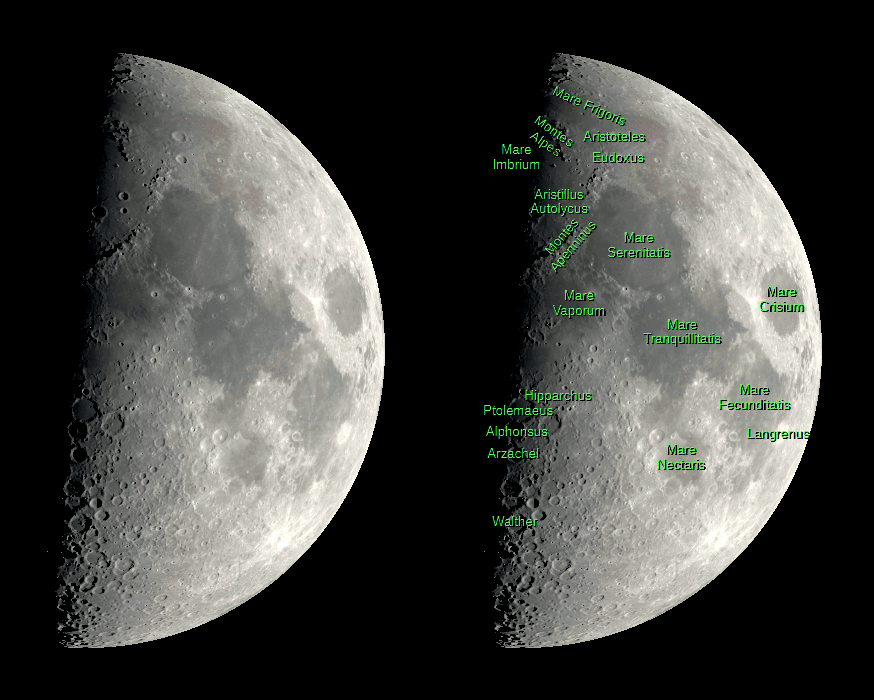
Translations of some lunar feature names according to Virtual Moon Atlas
Mare Crisium – Sea of Crises
Mare Fecunditatis – Sea of Fruitfulness
Mare Frigoris – Sea of Cold
Mare Imbrium – Sea of Showers
Mare Nectaris – Sea of Nectar
Mare Serenitatis – Sea of Serenity
Mare Tranquillitatis – Sea of Tranquility
Mare Vaporum – Sea of Vapors
Montes Alpes – Alps Mountains
Montes Apenninus – Apennines Mountains
Craters are named for persons, real or otherwise.
Ephemeris: 07/04/2024 – The Earth at aphelion
This is Ephemeris for Independence Day, Thursday, July 4th. Today the Sun will be up for 15 hours and 27 minutes, setting at 9:31, and it will rise tomorrow at 6:03. The Moon, 1 day before new, will rise at 5:10 tomorrow morning.
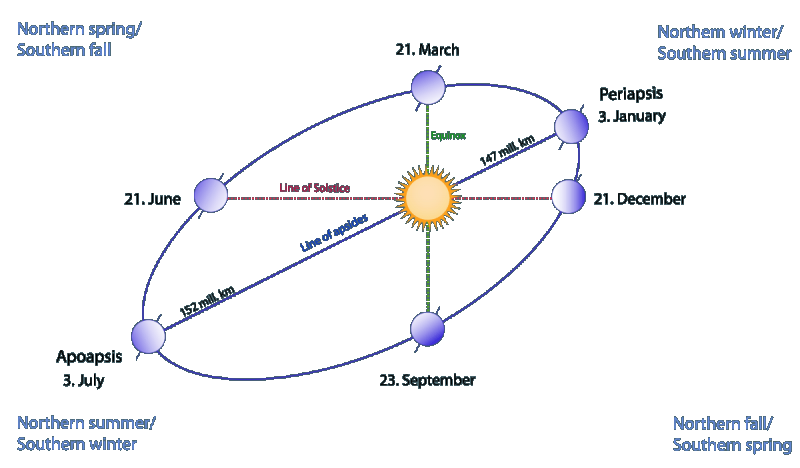
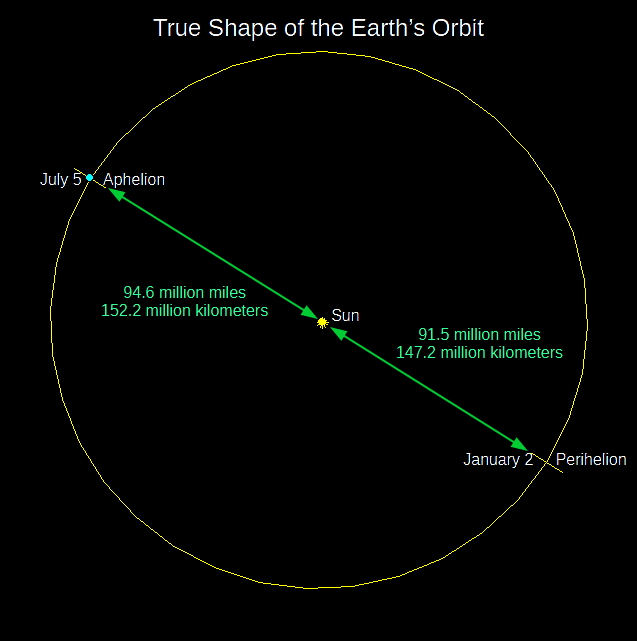
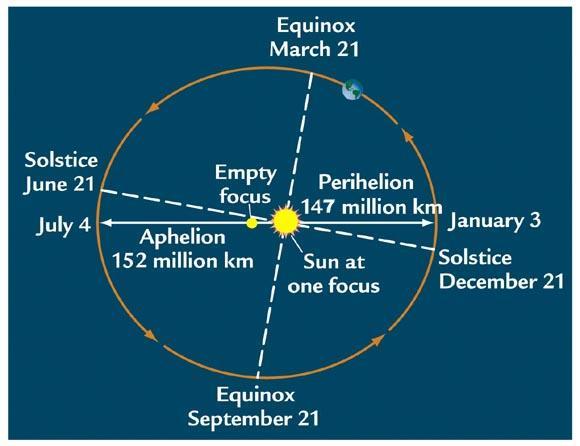
Tomorrow morning at 1:59 AM , actually overnight tonight, the Earth will reach aphelion from the Sun, the farthest it gets from it during the year. Earth will be 94 and a half million miles away from the Sun, a bit farther than our normal 93 million. In a planet’s orbit of the Sun, the Earth is no exception, it moves slowest when farthest from the Sun than when it’s nearest. It doesn’t make much difference in the amount of heat we get from the Sun being only 1 1/2% farther than average. But it makes summer the longest season at 94 days, versus winter’s 89 days. OK, I know it doesn’t feel like it here in Northern Michigan, but count the days between each solstice and the next equinox.
The astronomical event times given are for the Traverse City/Interlochen area of Michigan (EDT, UT–4 hours). They may be different for your location.
Addendum
Ephemeris: 04/23/2024 – We are awaiting a bright nova
This is Bob Moler with Ephemeris for Tuesday, April 23rd. Today the Sun will be up for 13 hours and 54 minutes, setting at 8:38, and it will rise tomorrow at 6:42. The Moon, at full today, will rise at 8:40 this evening.
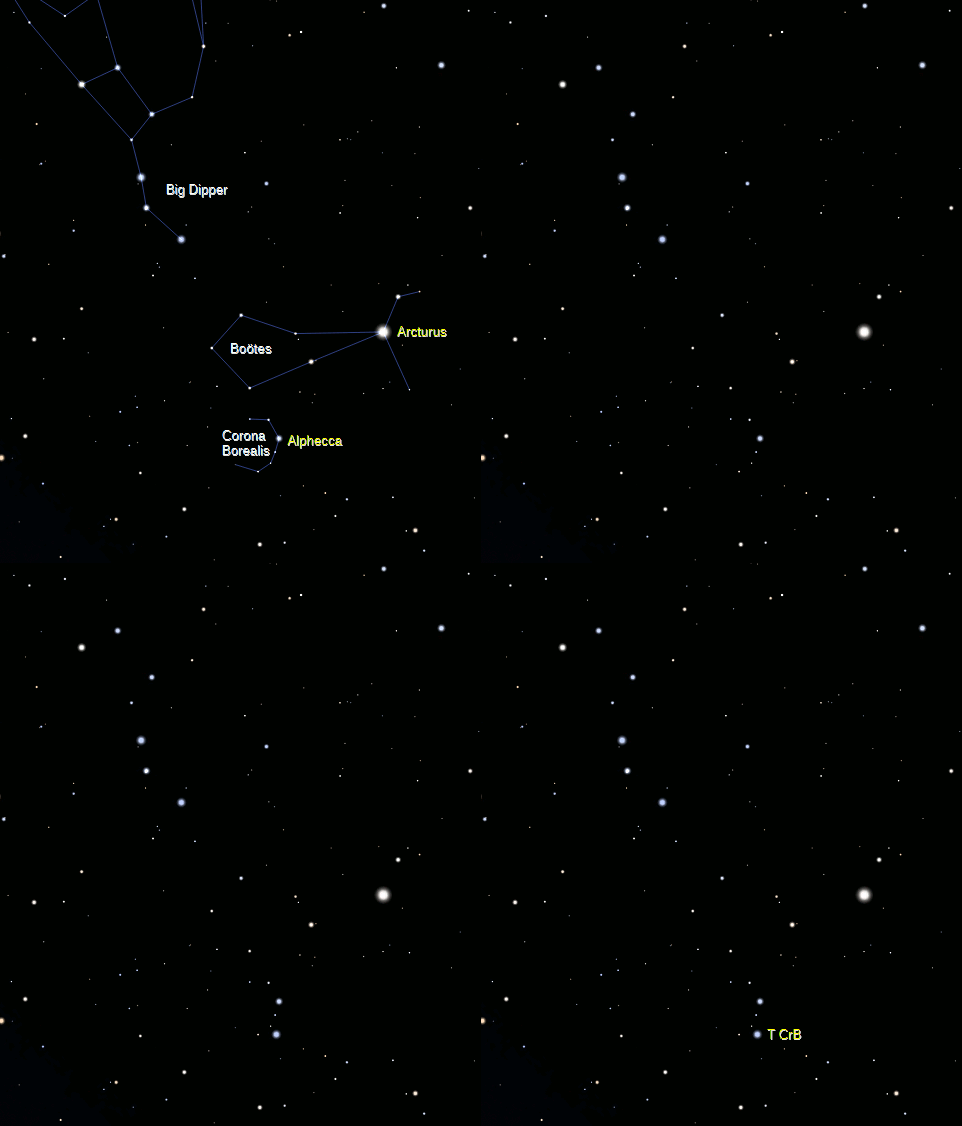
There is an event rarer than the appearance of Halley’s Comet. It’s an explosion of a star called T Coronae Borealis which means it’s in the constellation of the Northern Crown. Corona is a semicircle of stars located left of the bright star Arcturus, pointed to by the handle of the Big Dipper. The letter T means that it’s a variable star. It is something called a cataclysmic variable, or recurrent nova, and it blows up about every 80 years. The last time it did this was in 1946. Its brightness dips about 11 months before it goes kablooey. That dip has already happened. The star doesn’t destroy itself. It’s actually a white dwarf that’s siphoning off gases from a red giant star that it’s orbiting. When enough hydrogen gets accumulated, it ignites.
The astronomical event times given are for the Traverse City/Interlochen area of Michigan (EDT, UT–4 hours). They may be different for your location.
Addendum
Ephemeris: 04/09/24 – When is the next solar eclipse?
This is Ephemeris for Tuesday, April 9th. Today the Sun will be up for 13 hours and 13 minutes, setting at 8:21, and it will rise tomorrow at 7:06. The Moon, 1 day past new, will set at 9:58 this evening.
I hope you’ve had a good eclipse and were able to view it. I don’t know if you saw the eclipse or if I saw the eclipse since this is being recorded before the events. However, it’s time to look at the next time you might be able to see a solar eclipse. Our next Great American Eclipse isn’t for 21 years on August 12th 2045, which I won’t make, guaranteed. But we have some other minor solar eclipses visible in our area before that eclipse. Our next eclipse will be about 11% eclipse that’ll occur August 12th of 2026, just two years away. It’s not much compared to the 89% yesterday for our area. There will be an even tinier eclipse on January 26th of 2028. Just 2.5% of the Sun’s diameter will be covered. The best of the next three eclipses occurs on January 14th 2029, when the Moon encroaches on 69% of the Sun’s diameter. There are five more partial eclipses visible before 2045.
The astronomical event times given are for the Traverse City/Interlochen area of Michigan (EDT, UT–4 hours). They may be different for your location.
Addendum
Ephemeris: 04/08/2024 – Solar Eclipse Today!
This is Ephemeris for Monday, April 8th. Today the Sun will be up for 13 hours and 10 minutes, setting at 8:19, and it will rise tomorrow at 7:08. The Moon is new today, and won’t be visible.
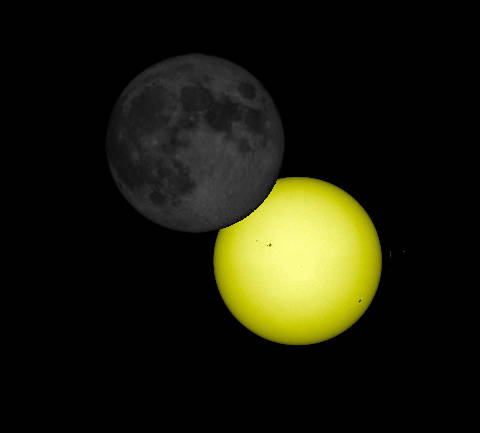
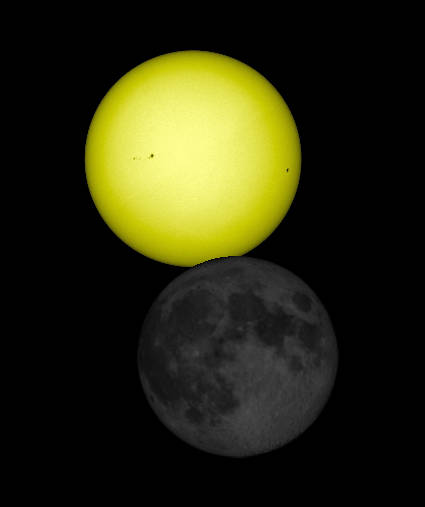
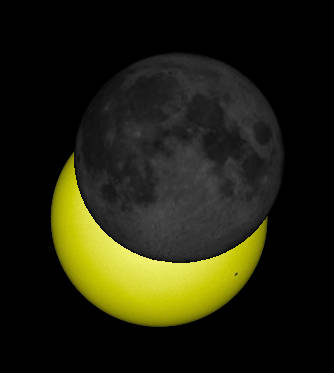
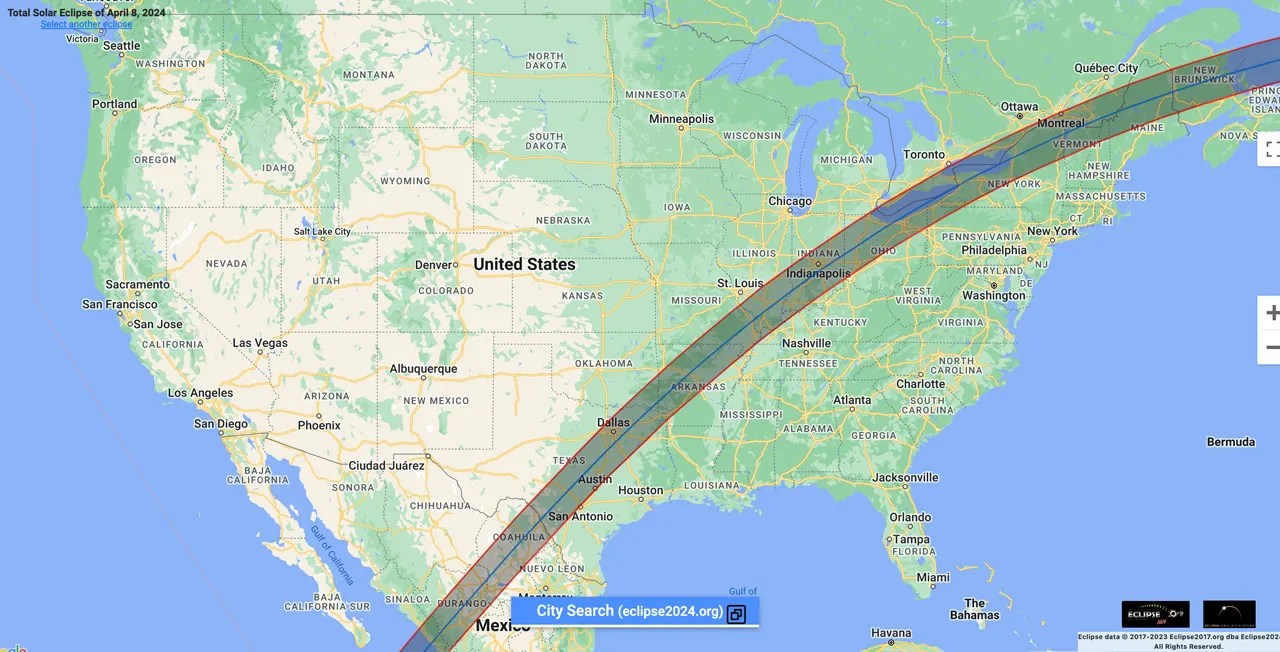
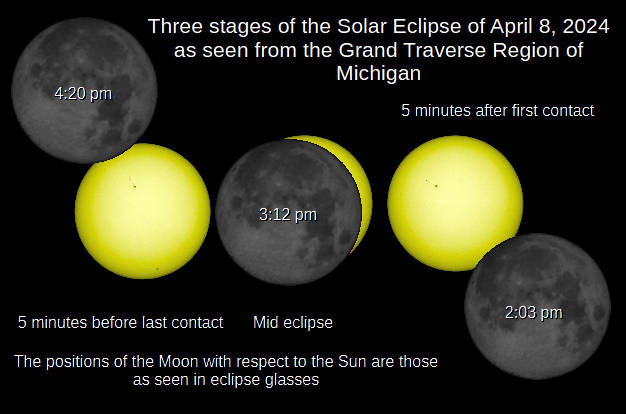
This afternoon there will be a total eclipse of the sun in the United States. But right here it’ll be a very deep partial eclipse, with the moon covering nearly 90% of the sun. For the Grand Traverse Area of Michigan, it will begin at 1:58 PM, mid-eclipse will be at 3:12 PM and the eclipse will end at 4:25 PM. In deep partial eclipses I’ve noticed that the sunlight has a slight yellowish hue. It’s possible effect of the Sun’s edge being cooler than the rest of the disk. Even if it’s cloudy here NASA will broadcast the eclipse from eight points along its route from Texas to Maine. It’s on the Internet on NASA’s YouTube channel, or in an Internet browser type NASA and ECLIPSE. Look for a link for nasa.gov, and you should be able to find out where that feed is. Good Luck!
The astronomical event times given are for the Traverse City/Interlochen area of Michigan (EDT, UT–4 hours). They may be different for your location.
Addendum
Ephemeris: 04/05/2024 – A ready-made eclipse projector
This is Ephemeris for Friday, April 5th. Today the Sun will be up for 13 hours, setting at 8:16, and it will rise tomorrow at 7:13. The Moon, 3 days before new, will rise at 6:24 tomorrow morning.
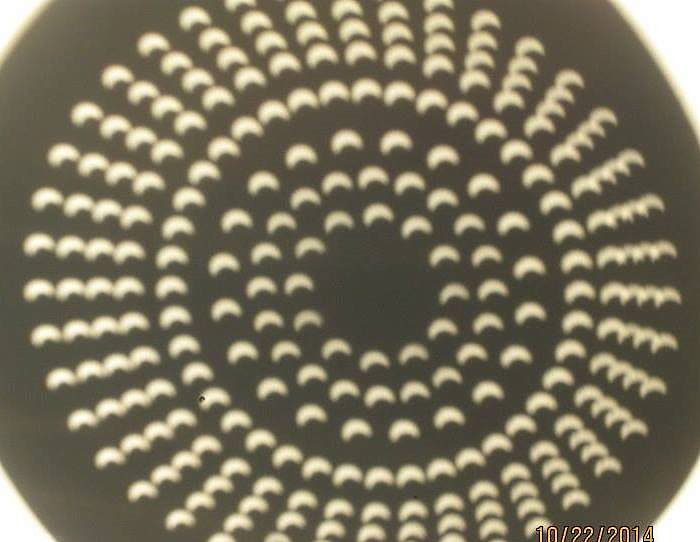
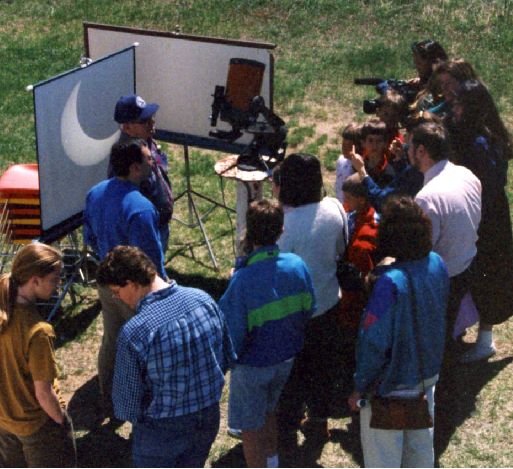
One quick and easy way to view next Monday’s eclipse via projection will be to use a calendar. All those little drain holes are actually pinholes, and will allow you to see multiple images of the eclipsed Sun. Multiple suns will be projected on whatever its shadow falls on. So that’s a quick and easy way of doing it. You may want to plug up some of the holes though, or the images might overlap. The eclipse will start for IPR listening area at 1:58 pm give or take a minute or two, mid-eclipse will be around 3:12 pm and the eclipse will end at 4:25 pm. If you’re wearing eclipse glasses the moon will move from lower right to upper left. If you’re using the pinhole projection method the moon will move from the upper right to lower left.
The astronomical event times given are for the Traverse City/Interlochen area of Michigan (EDT, UT–4 hours). They may be different for your location.
Addendum
Ephemeris: 04/04/2024 – Viewing the eclipse with pinhole projection.
This is Bob Moler with Ephemeris for Thursday, April 4th. Today the Sun will be up for 12 hours and 57 minutes, setting at 8:14, and it will rise tomorrow at 7:15. The Moon, 3 days past last quarter, will rise at 6:01 tomorrow morning.
If you have eclipse glasses and even if you don’t a good way perhaps the best way to view the solar eclipse is to use projection specifically pinhole projection the pinhole can act like a lens and with something as bright as the sun can cast a good visible image of the sun. Probably the best way to do it is to find a long box and cut a hole in one end. Have one long side open or partially open to view the Sun’s projected image. Cover the hole with aluminum foil and then make pinholes of various sizes, about half inch apart. The bigger the pinhole the brighter the Sun’s image but also the fuzzier it will be. The smaller the hole the sharper and dimmer the sun will be. For the IPR listening area the eclipse will start around 1:58 pm, and end around 4:25 pm.
The astronomical event times given are for the Traverse City/Interlochen area of Michigan (EDT, UT–4 hours). They may be different for your location.
Addendum
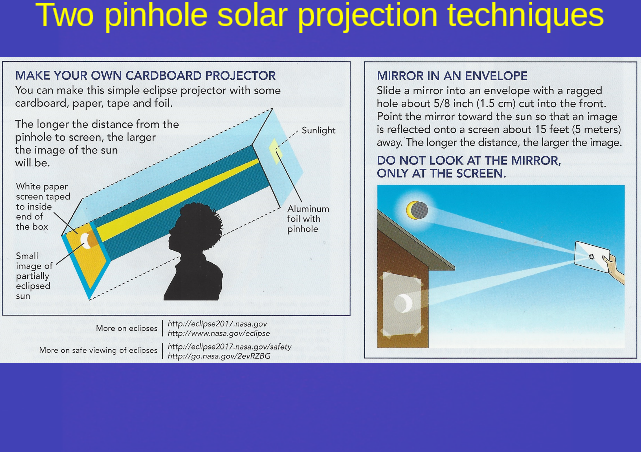
A long box can be used to project the image inside. The diameter of the pin hole is a compromise between sharpness and brightness of the image.
…The farther the image is projected the larger it is.
The throw of the image can be increased by using a mirror masked with a quarter of a inch or larger hole and sending the image 10 or more feet away.
Ephemeris: 02/19/2024 – A Kilonova may have exploded close to the Earth 3.5 million years ago
This is Ephemeris for President’s Day, Monday, February 19th. Today the Sun will be up for 10 hours and 38 minutes, setting at 6:16, and it will rise tomorrow at 7:36. The Moon, 3 days past first quarter, will set at 6:00 tomorrow morning.
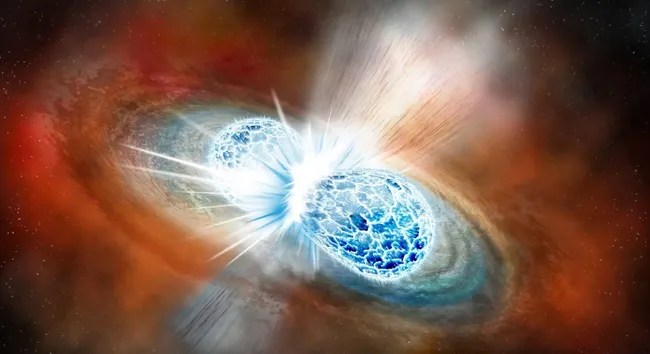
One wouldn’t think that astronomy can be studied by taking samples of sediments from the ocean floor, but it can. One of the rare isotopes of iron is found there, iron 60, it is radioactive and has a half-life of about 2.5 million years. That means in 2.5 million years half of it would decay, and in another 2.5 million years half of the remaining half would decay, and so on. So its presence means it would have arrived relatively recently, compared to the four and a half billion year age of the Earth. One of the thoughts about its origin is that it came from a nearby kilonova, which is a collision of two neutron stars that occurred about 3.5 million years ago. A kilonova is brighter than a nova by about a thousand times, hence its name, but not as bright as a supernova.
The astronomical event times given are for the Traverse City/Interlochen area of Michigan (EST, UT –5 hours). They may be different for your location.
Addendum
And https://phys.org/news/2023-12-scientists-evidence-nearby-kilonova-million.html
Ephemeris: 01/02/2024 – We’re closest to the Sun today
This is Ephemeris for Tuesday, January 2nd. The Sun will rise at 8:20. It’ll be up for 8 hours and 53 minutes, setting at 5:13. The Moon, 1 day before last quarter, will rise at 12:01 tomorrow morning.
We start off the year with the Earth being really close to the Sun. As a matter of fact at 6:59 pm the Earth will reach perihelion, that is as close as it gets to the Sun for the entire year at 91.41 million miles (147.10 million kilometers). It’s not as big a deal as it seems, because the Earth varies only plus or minus a million and a half miles from the Sun over the year out of 93 million miles. It doesn’t make much difference in the amount of heat we get from the Sun. However, it’s much less than what the tilt of the Earth’s axis does to give us our seasons, but what it does do is alter the length of the seasons, and makes winter the shortest season. It’s shorter by about four days than summer, even though in Northern Michigan it doesn’t really seem like it. Today is also the date of the latest sunrise of the year.
The astronomical event times given are for the Traverse City/Interlochen area of Michigan (EST, UT –5 hours). They may be different for your location.
Addendum
 Bob Moler's Ephemeris Blog