Archive
Ephemeris: 09/02/2025 – 3I/ATLAS, interstellar visitor
This is Ephemeris for Tuesday, September 2nd. Today the Sun will be up for 13 hours and 10 minutes, setting at 8:17, and it will rise tomorrow at 7:07. The Moon, 2 days past first quarter, will set at 1:54 tomorrow morning.
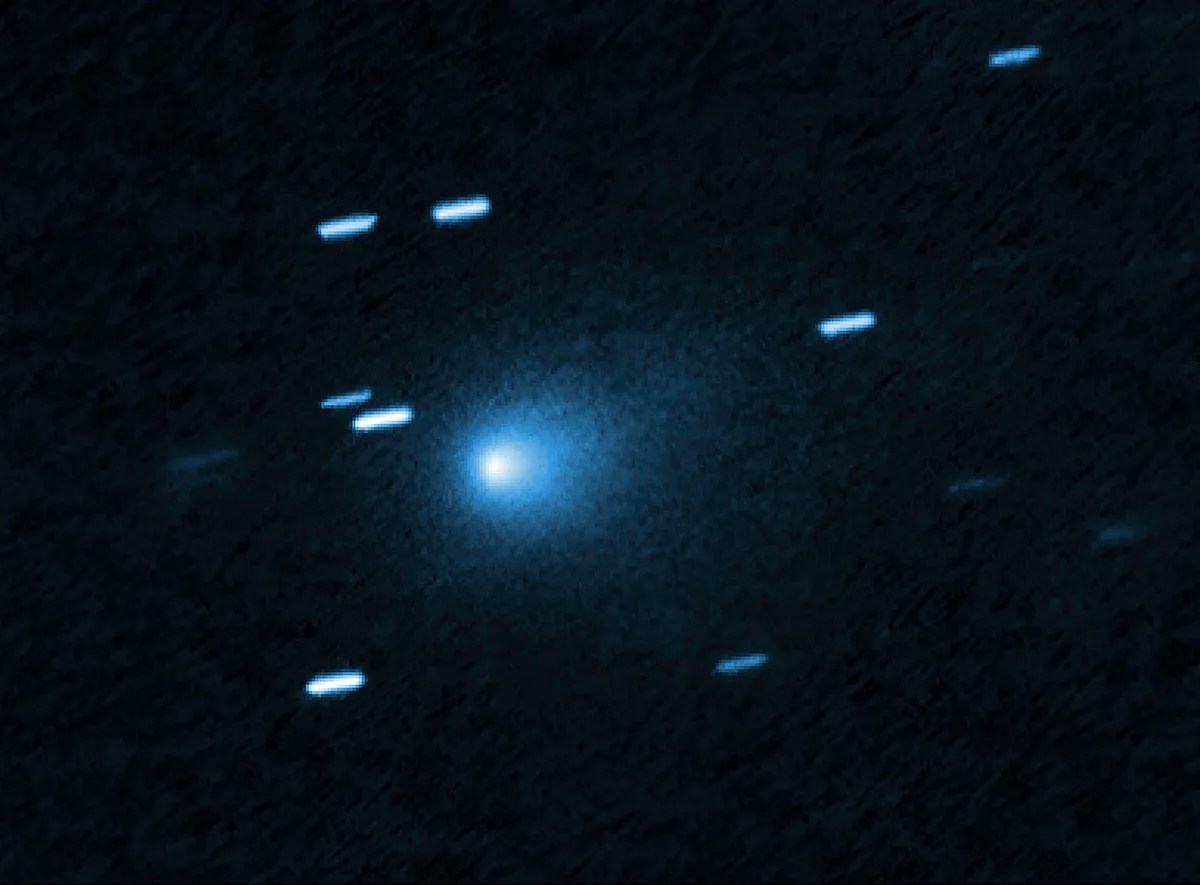
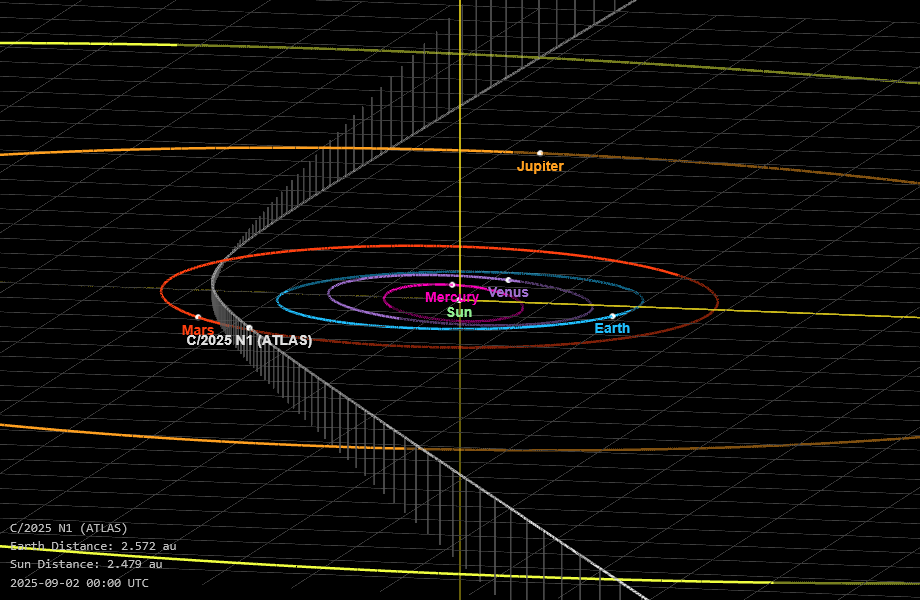
Interstellar visitor 3I/ATLAS was discovered a couple of months ago. We are lucky because it was discovered on its way into the inner solar system. The first interstellar visitor, 1I/‘Oumuamua, we didn’t spot until it had already passed and on its way out. It turns out that the chemical composition of this interstellar visitor, which astronomers think is a comet, has a great deal of carbon dioxide in its atmosphere compared to water. In the universe water is the third most common molecule after diatomic hydrogen and diatomic oxygen. But this comet appears to have about 8 times more carbon dioxide than water. Some astronomers think the 3I/ATLAS is 3 billion years older than the solar system making it 7 1/2 billion years old.
The astronomical event times given in this blog are for the Traverse City/Interlochen area of Michigan (Lat 44.7° N, Long 85.7° W; EDT, UT – 4 hours) unless stated otherwise. Times will be different for other locations.
Addendum
Ephemeris: 08/26/2025 – Update on our expected nova T Coronae Borealis
This is Ephemeris for Tuesday, August 26th. Today the Sun will be up for 13 hours and 31 minutes, setting at 8:29, and it will rise tomorrow at 6:59. The Moon, 3 days past new, will set at 9:44 this evening.
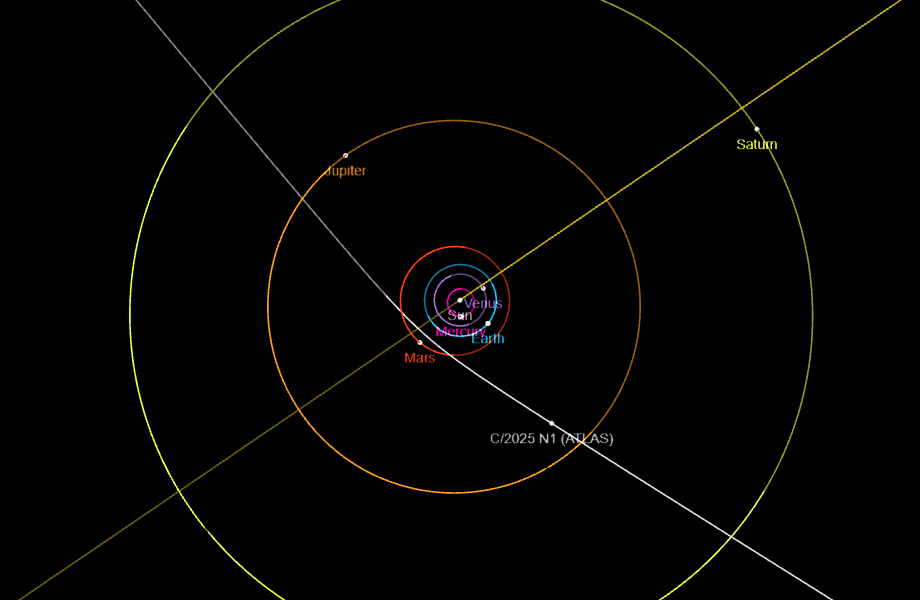
There is a star in the constellation of Corona Borealis, the Northern Crown, which astronomers are expecting to become a nova which means become rapidly very bright. The initial predictions favored last year, 2024, but it has yet to explode. The star’s designation is T Coronae Borealis, or T CrB for short. It’s a variable star designation. And an explosion occurs on one member of this binary star system about every 80 years. The last time was in 1946. Jean Schneider* of the Paris Observatory thinks they found a pattern within the 80-year time frame. The 227.6-day period of the white dwarf star orbiting its much larger primary. This seems to match the last three explosions. So the next likely date will be November 10th this year. We’ll see.
The astronomical event times given in this blog are for the Traverse City/Interlochen area of Michigan (Lat 44.7° N, Long 85.7° W; EDT, UT – 4 hours) unless stated otherwise. Times will be different for other locations.
* I found a link to this on the spaceweather.com website in a section called T CrB Nova Watch.
Addendum
Ephemeris: 07/08/2025 – A third interstellar visitor discovered
This is Bob Moler with Ephemeris for Tuesday, July 8th. Today the Sun will be up for 15 hours and 23 minutes, setting at 9:29, and it will rise tomorrow at 6:06. The Moon, 2 days before full, will set at 4:20 tomorrow morning.
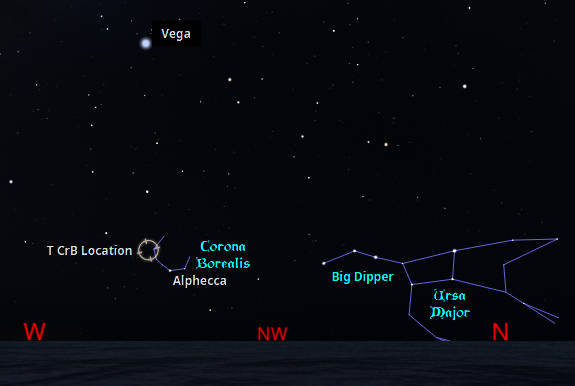
One week ago the third interstellar interloper to the solar system was discovered. It’s known as 3I/ATLAS. The “I” means interstellar. That is, it came from another star system. It is heading in now, crossing the asteroid belt. It will reach its closest to the Sun on October 29th, at about the distance of Mars, which it will get very close to by the way, and head out into interstellar space. This is an incredibly fast object, far exceeding the escape velocity of the Sun, and its path is only deflected by 17° by its encounter by the Sun’s gravitational force. Due to it high speed, it was first thought to be a Near Earth Object. Pre-discovery photographs showed that it was much more distant. With the new Rubin Observatory coming online we’ll discover many more.
The astronomical event times given in this blog are for the Traverse City/Interlochen area of Michigan (Lat 44.7° N, Long 85.7° W; EDT, UT – 4 hours) unless stated otherwise. Times will be different for other locations.
Addendum
Ephemeris: 06/24/2024 – Waiting for a bright nova*
This is Ephemeris for Monday, June 24th. Today the Sun will be up for 15 hours and 34 minutes, setting at 9:32, and it will rise tomorrow at 5:58. The Moon, 3 days past full, will rise at 12:09 tomorrow morning.
The small constellation of Corona Borealis, or Northern Crown appears about a third of the way between the bright star Arcturus, high in the south and the star Vega in the east. It is a small semicircle of stars with the brighter star called Alphecca near the center of the arc of stars. Sometime this year, we hope, another bright star will appear there. A nova of a dim star brightening about 1,600 times normal near that circle of stars. It has done it before. It has the designation of T Coronae Borealis (T CrB for short), and is a recurrent nova of a white dwarf star that suffers an explosion about once every 80 years. So this year we need to be looking out for that stellar explosion, which will be bright for only a few days, so one must be vigilant to spot it.
The astronomical event times given are for the Traverse City/Interlochen area of Michigan (EDT, UT–4 hours). They may be different for your location.
* The word ‘nova’ comes from the Latin Nova Stella, meaning New Star.
Addendum
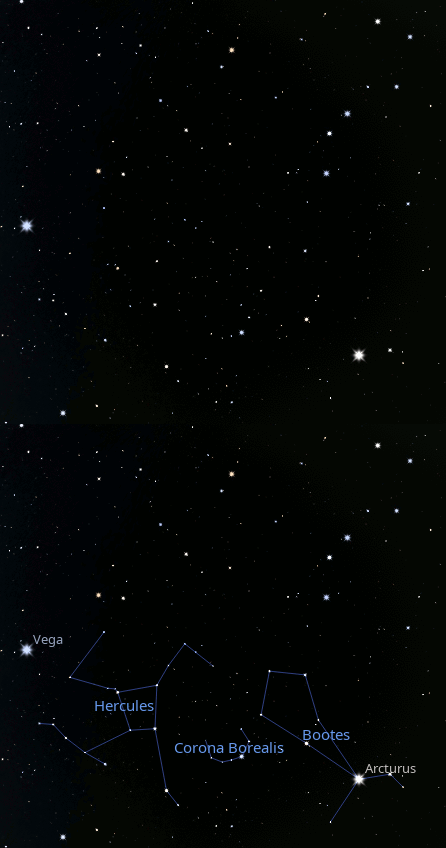
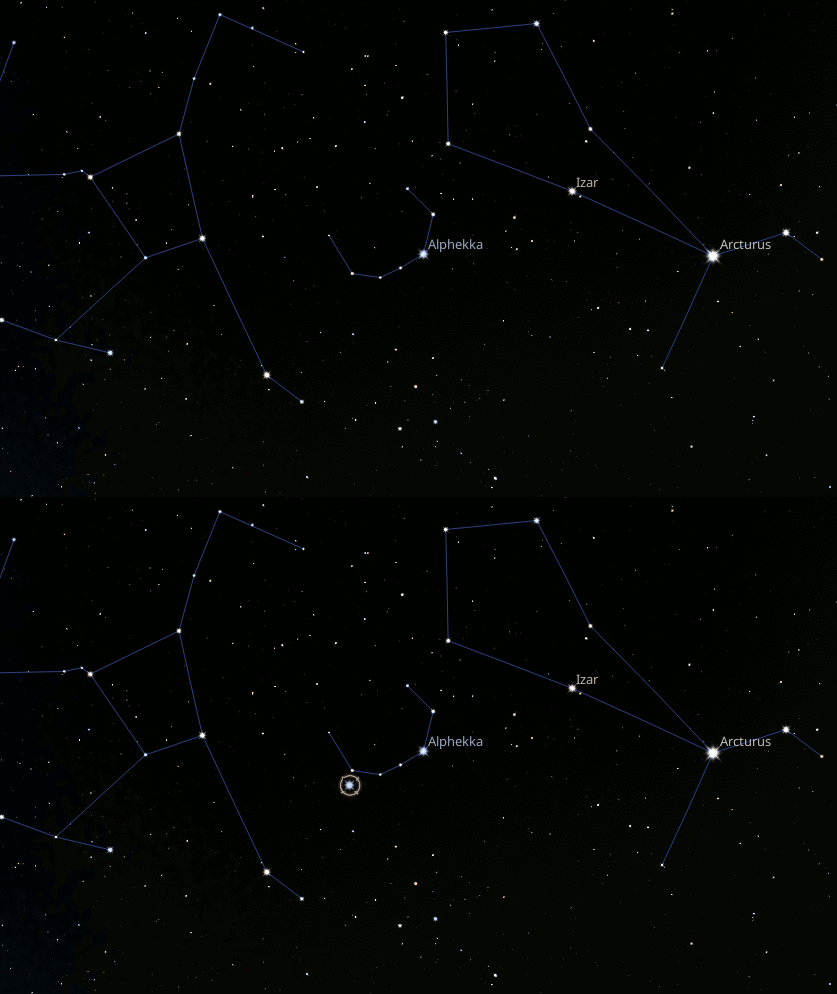
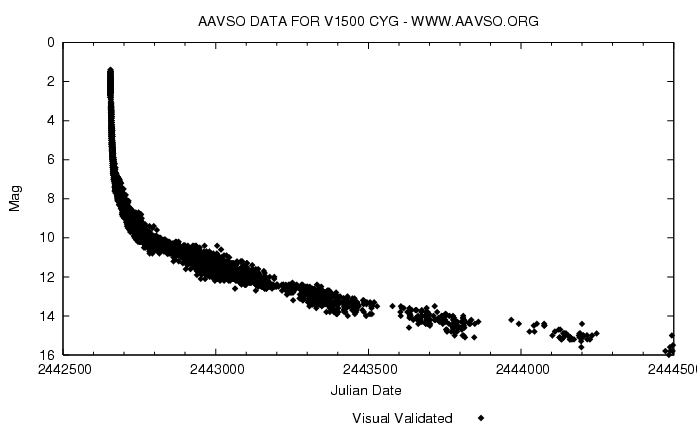
NASA has post about T CrB here: https://www.nasa.gov/centers-and-facilities/marshall/nasa-global-astronomers-await-rare-nova-explosion/
Ephemeris: 04/23/2024 – We are awaiting a bright nova
This is Bob Moler with Ephemeris for Tuesday, April 23rd. Today the Sun will be up for 13 hours and 54 minutes, setting at 8:38, and it will rise tomorrow at 6:42. The Moon, at full today, will rise at 8:40 this evening.
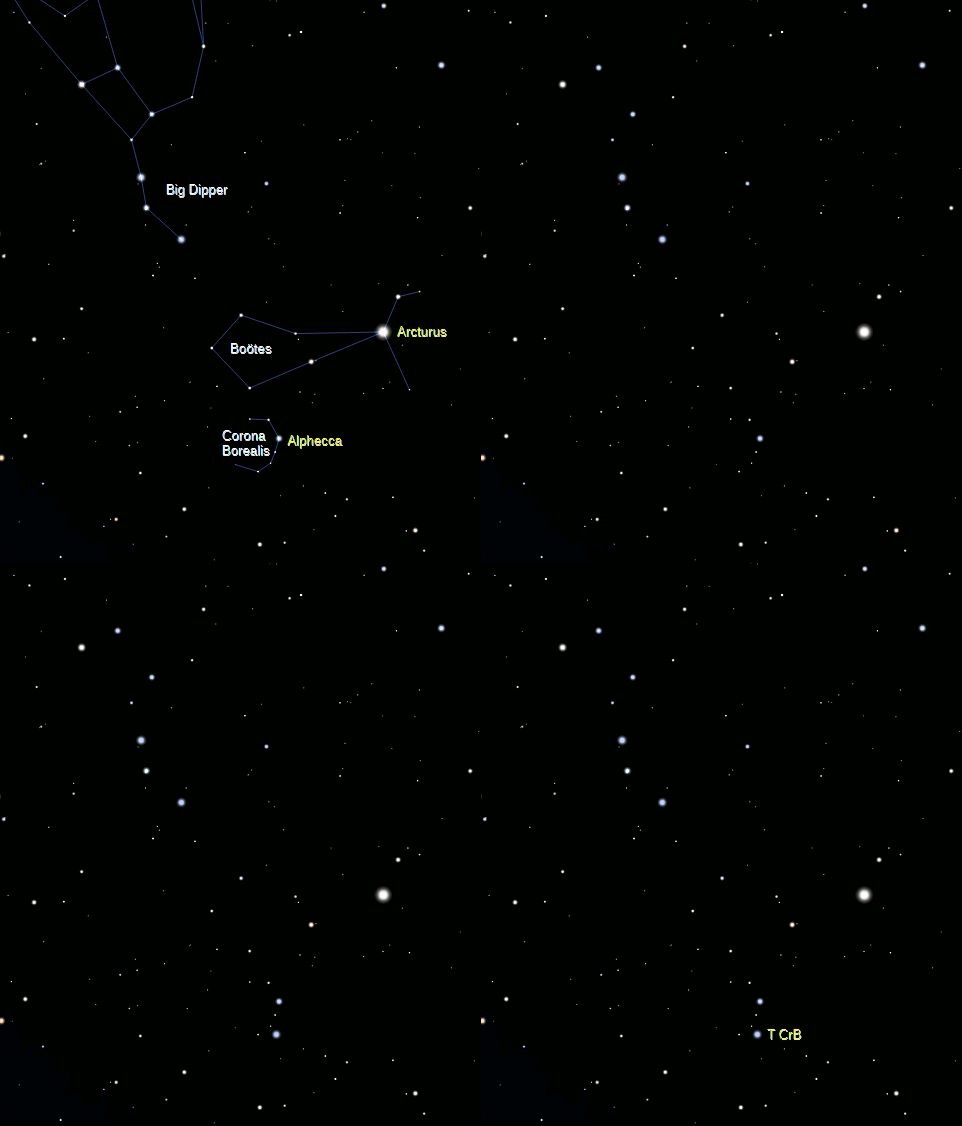
There is an event rarer than the appearance of Halley’s Comet. It’s an explosion of a star called T Coronae Borealis which means it’s in the constellation of the Northern Crown. Corona is a semicircle of stars located left of the bright star Arcturus, pointed to by the handle of the Big Dipper. The letter T means that it’s a variable star. It is something called a cataclysmic variable, or recurrent nova, and it blows up about every 80 years. The last time it did this was in 1946. Its brightness dips about 11 months before it goes kablooey. That dip has already happened. The star doesn’t destroy itself. It’s actually a white dwarf that’s siphoning off gases from a red giant star that it’s orbiting. When enough hydrogen gets accumulated, it ignites.
The astronomical event times given are for the Traverse City/Interlochen area of Michigan (EDT, UT–4 hours). They may be different for your location.
Addendum
Ephemeris: 10/26/2023 – A closer look at Jupiter’s moon Io
This is Ephemeris for Thursday, October 26th. Today the Sun will be up for 10 hours and 28 minutes, setting at 6:40, and it will rise tomorrow at 8:13. The Moon, 2 days before full, will set at 6:36 tomorrow morning.
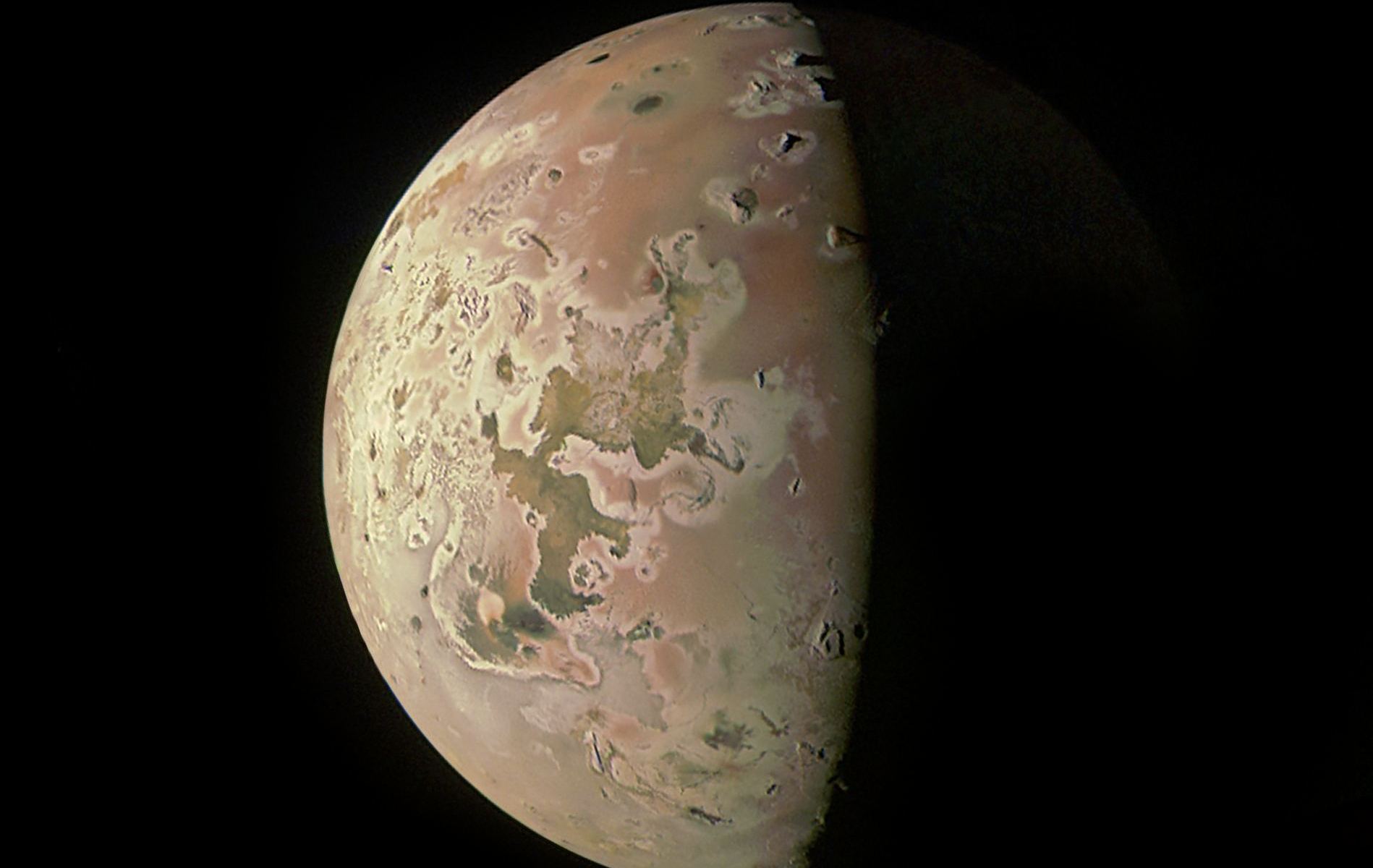
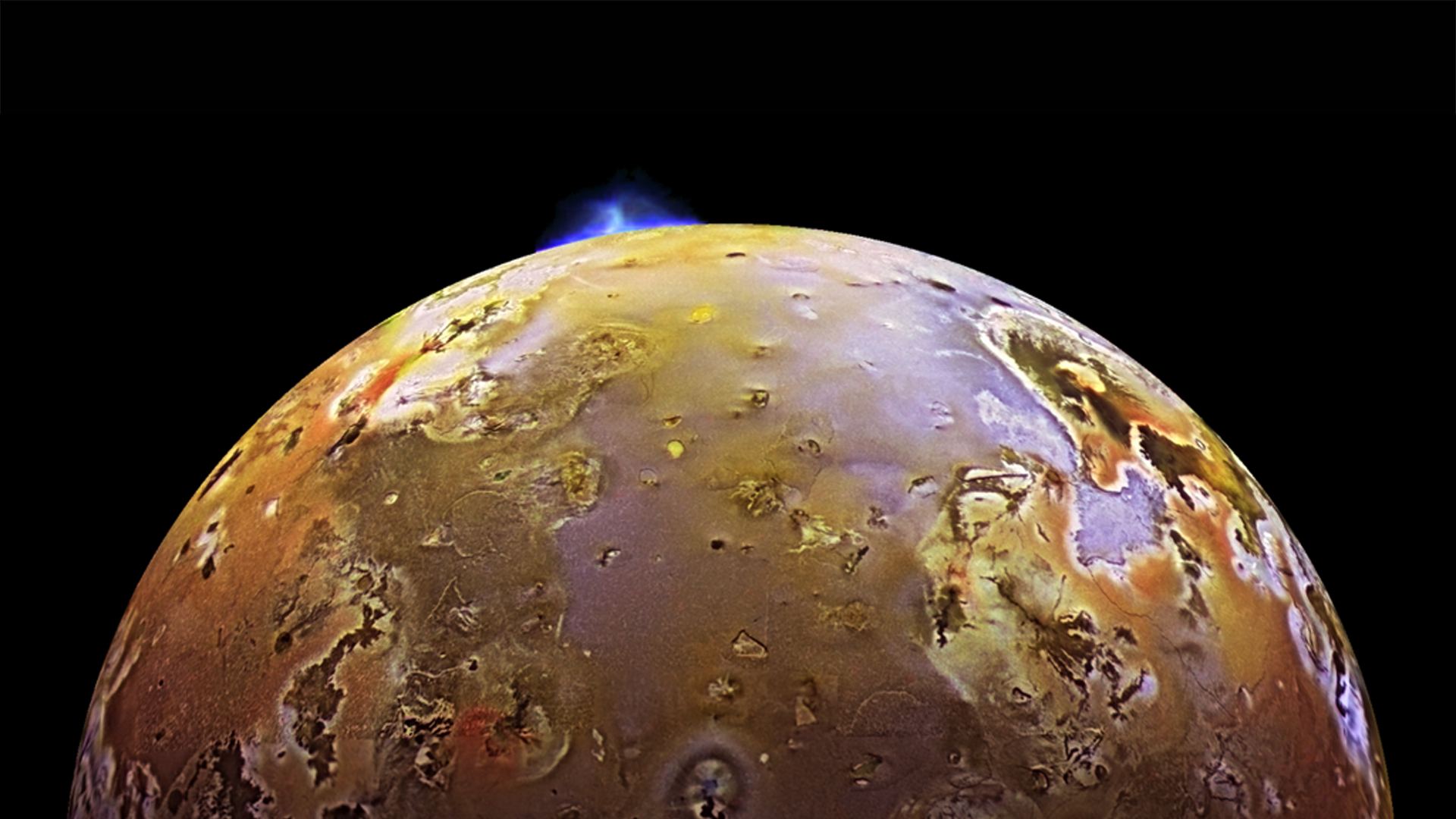
My favorite moon of Jupiter has been Io ever since the Voyager 1 spacecraft discovered volcanoes on it. It turns out that Io is the most volcanic body in the solar system and perhaps the least studied of the Galilean moons of Jupiter. Most of the probes that have swung by or orbited Jupiter never got very close to Io, so we never really got a good close look at it. Well, now we are getting that closer look. The Juno spacecraft, which was sent to Jupiter to work out the interior of Jupiter using gravitational effects on its orbit, has now completed its main mission and its orbit has precessed so that now comes close to Io. The Juno spacecraft has a camera, mainly there for the public, which is showing amazing closeups of this moon.
The astronomical event times given are for the Traverse City/Interlochen area of Michigan (EDT, UT –4 hours). They may be different for your location.
Addendum
02/07/2023 – Ephemeris – A new view on the creation of our Moon
Feb 7. This is Bob Moler with Ephemeris for Tuesday, February 7th. Today the Sun will be up for 10 hours and 5 minutes, setting at 5:59, and it will rise tomorrow at 7:53. The Moon, 2 days past full, will rise at 7:58 this evening.
Is this how the Moon came to be? After the Apollo missions, NASA decided to look at the crust of the Moon which apparently is much like the Earth’s and came up to the conclusion that a Mars sized body they called Theia, after the mother of the twins Apollo and Artemis, crashed into the Earth at about a 45-degree angle, and caused a ring of debris around the Earth that would be maintained for a long time. In a newer simulation, the collision could actually create two blobs of material, a large one that became our Moon, in orbit, with about one percent of the Earth’s mass, and a smaller mass that fell back onto the Earth.
The astronomical event times given are for the Traverse City/Interlochen area of Michigan (EST, UT –5 hours). They may be different for your location.
Addendum
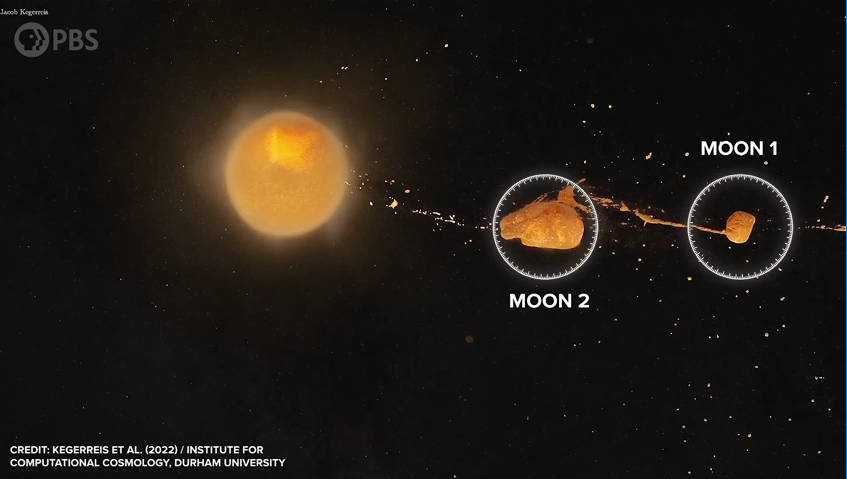
A new simulation on how the Moon formed. Credit: PBS.
11/18/2022 – Ephemeris – Fomalhaut’s disappearing “planet”
This is Ephemeris for Friday, November 18th. Today the Sun will be up for 9 hours and 27 minutes, setting at 5:11, and it will rise tomorrow at 7:45. The Moon, 2 days past last quarter, will rise at 2:32 tomorrow morning.
The lonely bright star low in the south at 8 p.m. these evenings is Fomalhaut, the harbinger of autumn in my book, and about to leave as winter approaches. Fomalhaut is a young white star only about 400 million years old with a disk of dust surrounding it. Near an outer dust ring, in 2008 the Hubble Space Telescope discovered a spot. Four years later, astronomers discovered that the spot had moved along the dust lane and announced the first direct discovery of an exoplanet. In 2010 and 2012 the planet now dubbed Fomalhaut b or Dagon was observed again. However, it appears to be dissipating. It might be an expanding cloud of debris that’s the result of two asteroids colliding. We’ll keep watching.
The astronomical event times given are for the Traverse City/Interlochen area of Michigan (EST, UT -5 hours). They may be different for your location.
Addendum
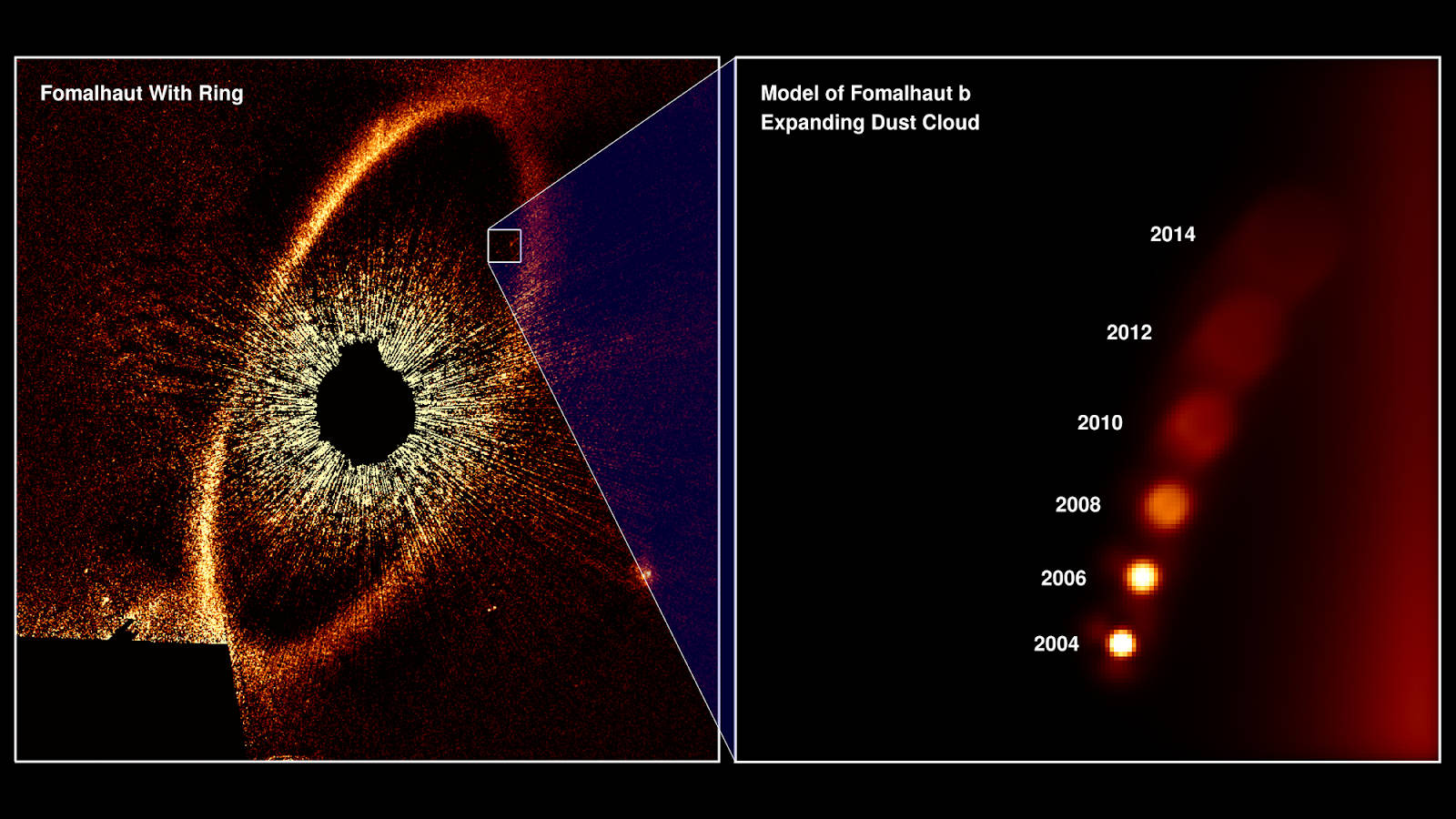
Hubble Space Telescope image of Fomalhaut’s ring and model of the disappearing dust cloud that was first thought to be a planet. Credit: Space Telescope Science Institute.
05/16/2022 – Ephemeris – A peek at the monster at the center of the Milky Way
This is Ephemeris for Tuesday, May 17th. Today the Sun will be up for 14 hours and 54 minutes, setting at 9:06, and it will rise tomorrow at 6:11. The Moon, 1 day past full, will rise at 11:33 this evening.
This past Thursday the Event Horizon Telescope Collaboration released an image of the black hole at the center of the Milky Way, 27,000 light years away In the direction of the constellation of Sagittarius, which is currently visible low in the south in the morning hours. How they got the image is too complex to explain here, not that I know how they did it. It appears as a fuzzy donut with three bright areas around the edges. The dark center is the shadow of the black hole, because no light can escape it, plus it severely bends any light that comes near it. The light we’re seeing it is in millimeter microwaves, rather than the nanometer wavelengths of visible light. Part of the fuzziness of the image is due to the motion of the material surrounding it.
The astronomical event times given are for the Traverse City/Interlochen area of Michigan (EDT, UT – 4 hours). They may be different for your location.
Addendum
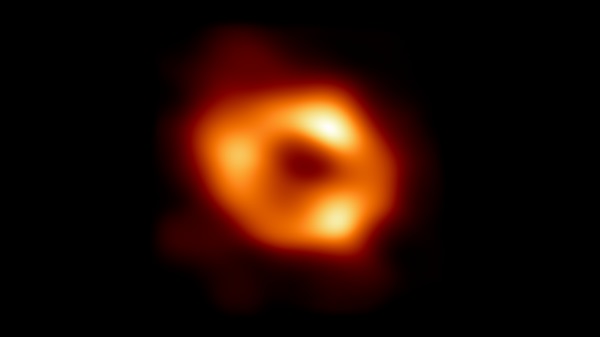
This is the image released May 12, 2022 by the Event Horizon Telescope Collaboration.
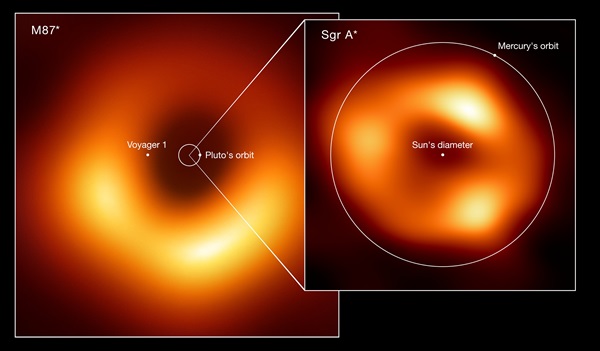
M87* size compared to Sagittarius A*. The size of a black hole is directly related to its mass. The asterisk * is pronounced “Star”. Credit: Event Horizon Telescope Collaboration.
It looks like I’ll have to update my presentation, What Lurks in the Center of the Milky Way? Astronomers were already sure it was a black hole, but the donut appearance of Sagittarius A* clinched it.
Off topic
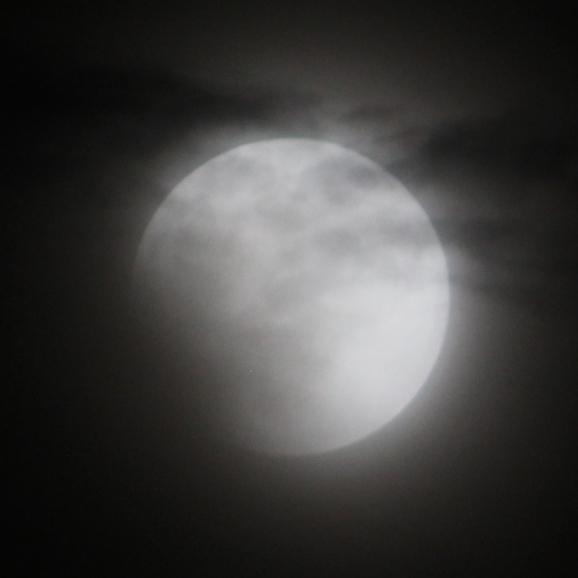
Last night’s (May 15/16) lunar eclipse, shortly after the partial eclipse began behind clouds. I often checked until totality, but it seems to get worse. I may have missed brief clearings. When I got up, it was clear… Figures.
05/10/2022 – Ephemeris – Event Horizon Telescope Collaboration will announce “groundbreaking Milky Way results” on Thursday
This is Ephemeris for Tuesday, May 10th. Today the Sun will be up for 14 hours and 38 minutes, setting at 8:58, and it will rise tomorrow at 6:19. The Moon, 2 days past first quarter, will set at 4:25 tomorrow morning.
This Thursday, May 12th at 13:00 UT (9 am our time EDT) the Event Horizon Telescope Collaboration will announce “groundbreaking Milky Way results.” Their words. Their first groundbreaking result came in three years ago with the release of an image of the billion solar mass black hole in the heart of the giant galaxy M 87 over 50 million light years away. Beforehand, I was expecting the results to concern a more nearby black hole called Sagittarius A* (pronounced Sagittarius A Star) at the center of our galaxy, only 25 to 27 thousand light years away. That turned out to be much more difficult than the one in M 87, due to the amount of dust and gas in the way. So maybe this time they have done it. We’ll all find out this Thursday.
The astronomical event times given are for the Traverse City/Interlochen area of Michigan (EDT, UT – 4 hours). They may be different for your location.
Addendum
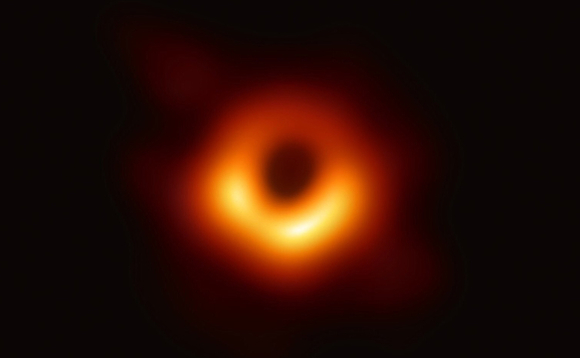
The first image of the black hole in M87. Credit Event Horizon Telescope.
The Event Horizon Telescope isn’t a single telescope. But millimeter wavelength radio telescopes spaced out to use the diameter of the Earth as its simulated aperture. The ability to resolve tiny objects at great distances depends on the wavelength of the radiation and the size of the telescope aperture. So the smaller the wavelength and the larger the aperture, the greater the resolution of the telescope or array.
The observation of all the telescopes must be performed at the same time, recording the observations on terabyte magnetic disks. The disks are brought to a single location for processing together to actually produce the image, which takes a while.
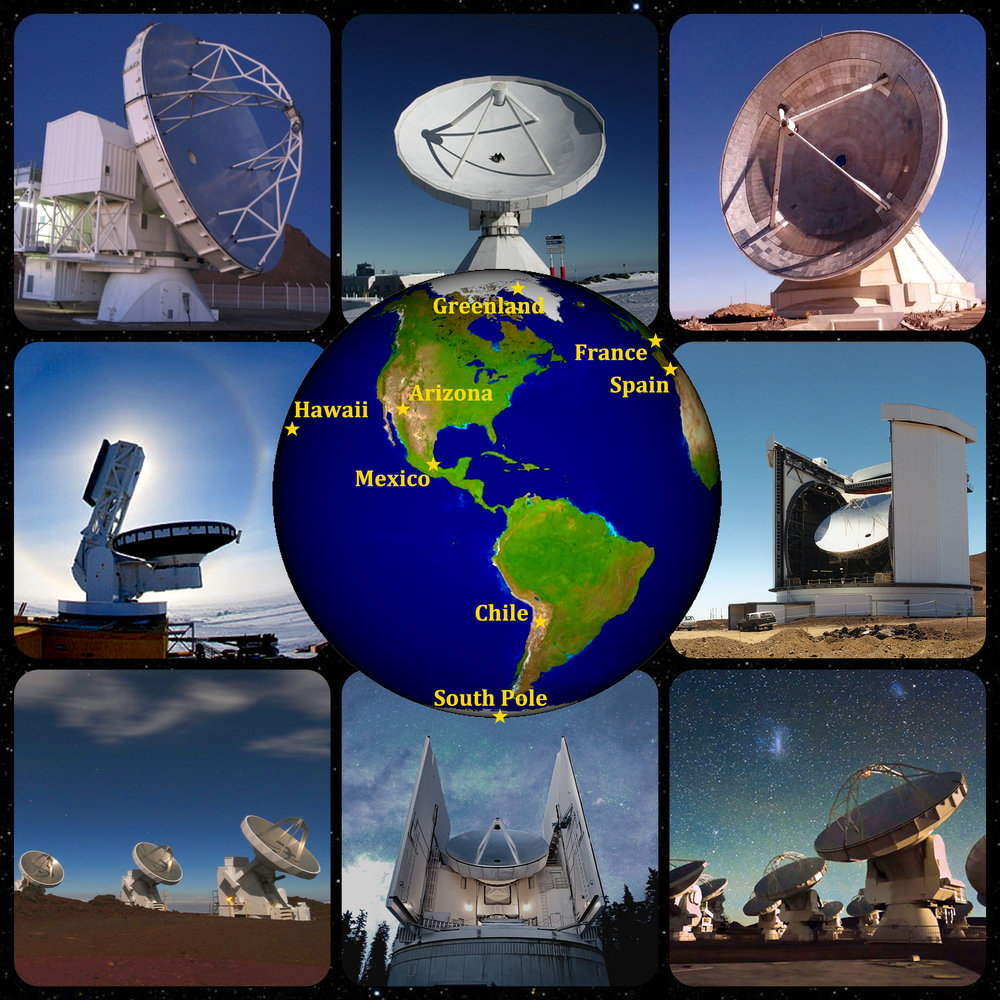
Event Horizon Telescope component radio telescopes. Credits: © APEX, IRAM, G. Narayanan, J. McMahon, JCMT/JAC, S. Hostler, D. Harvey, ESO/C. Malin.
 Bob Moler's Ephemeris Blog