Archive
Ephemeris: 11/01/2024 – Grand Traverse Astronomical Society Meeting tonight
This is Ephemeris for Friday, November 1st. The Sun will rise at 8:21. It’ll be up for 10 hours and 9 minutes, setting at 6:30. The Moon is new today, and won’t be visible.
The Grand Traverse Astronomical Society will host its November meeting tonight at 8:00 PM at Northwestern Michigan College’s Joseph H Rogers Observatory. This will be an unstructured meeting, and a good time for anyone interested to ask knowledgeable members anything about the sky or, since Christmas is coming, about what kind of telescope to buy. Afterward, about 9 PM if it’s clear, there will be viewing of the heavens through the observatory’s telescopes, featuring Saturn, Jupiter and the wonders of the Milky Way, including nebulae, open and globular star clusters, containing hundreds to hundreds of thousands of stars. The observatory is located on Birmley Rd. South of Traverse City between Garfield and Keystone roads.
The astronomical event times given are for the Traverse City/Interlochen area of Michigan (EDT, UT – 4 hours). Times will be different for other locations.
Addendum
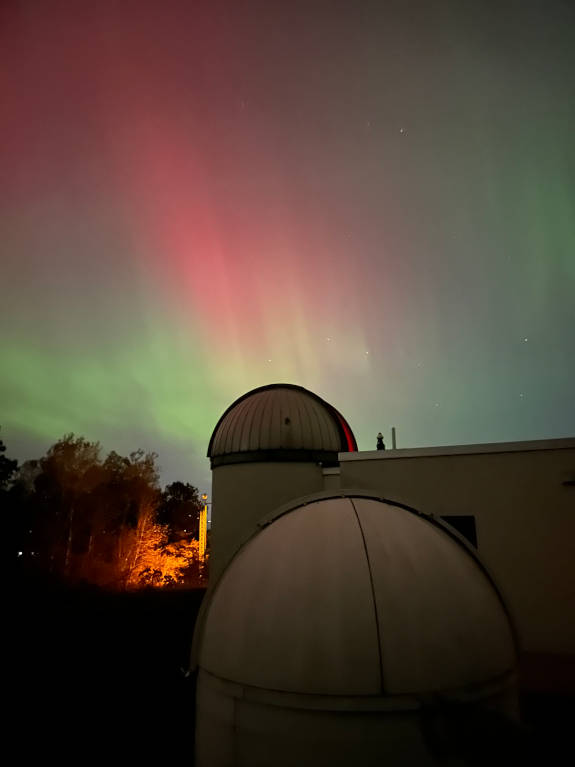
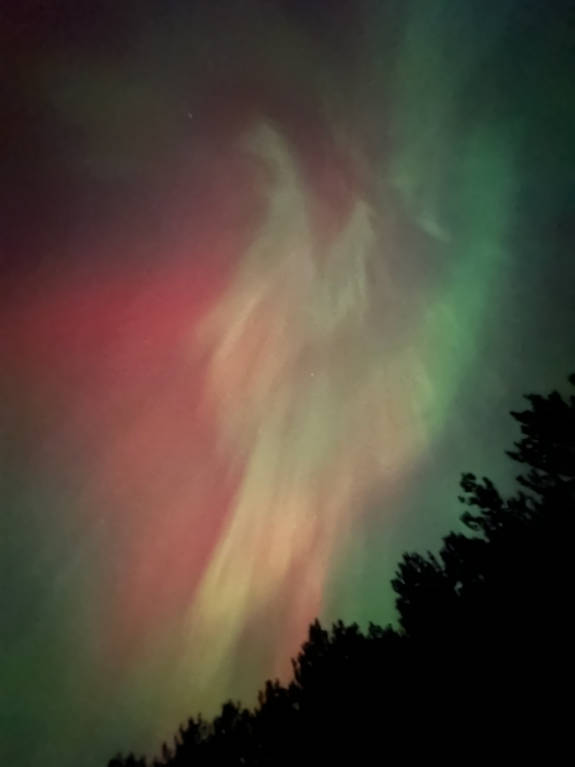
One of the discussion items will be the currently active sun in how it affects the earth.
04/17/2023 – Ephemeris – I’m back. And a look ahead
This is Ephemeris for Monday, April 17th. Today the Sun will be up for 13 hours and 34 minutes, setting at 8:30, and it will rise tomorrow at 6:53. The Moon, 3 days before new, will rise at 6:23 tomorrow morning.
I’m back, still in physical therapy, but hopefully to stay. The next year and a half will see some spectacular celestial events, plus the Sun is getting unusually active this solar cycle, which means more displays of the northern lights or aurora borealis. For us, the first event will be a partial eclipse of the Sun on Saturday, October 14th. It’s an annular or ring eclipse, where the Moon is too far away to completely block the Sun, leaving a ring of light at its peak for a narrow path in the southwestern US. Then next April, a total solar eclipse will occur. Much more of the Sun will be blocked for us. Then the following October we might get to see a bright comet, if it performs as expected. Comet Tsuchinshan-ATLAS was discovered three months ago.
The astronomical event times given are for the Traverse City/Interlochen area of Michigan (EST, UT –4 hours). They may be different for your location.
Addendum
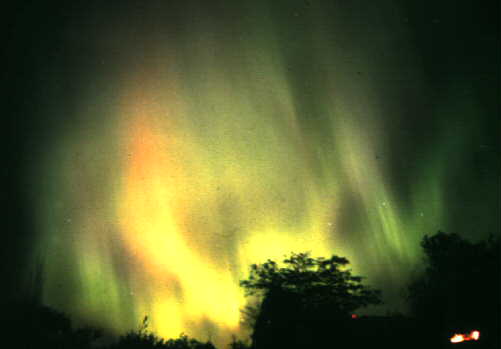
An aurora display from a couple of sunspot cycles ago. Credit: Bob Moler.
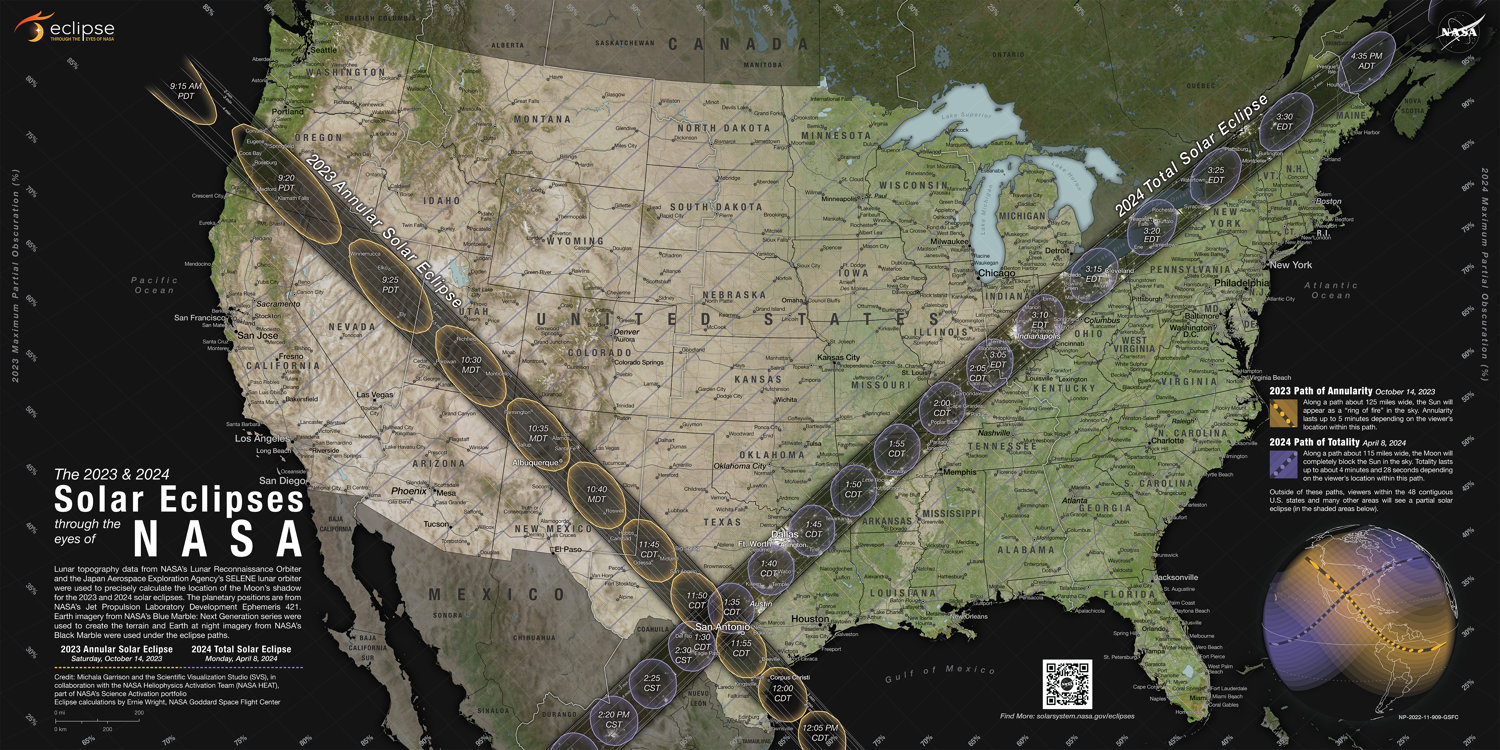
NASA Eclipse Map for the United States for the annular eclipse of October 14, 2023, and total eclipse of April 8, 2024. The tracks are the path of annularity, where the ring of light around the Moon is seen, and the path of totality, where the Sun’s face is completely covered by the Moon. Subtract 4 hours from the times given to convert to Eastern Daylight Saving Time. Click on the image to enlarge it. Credit NASA.
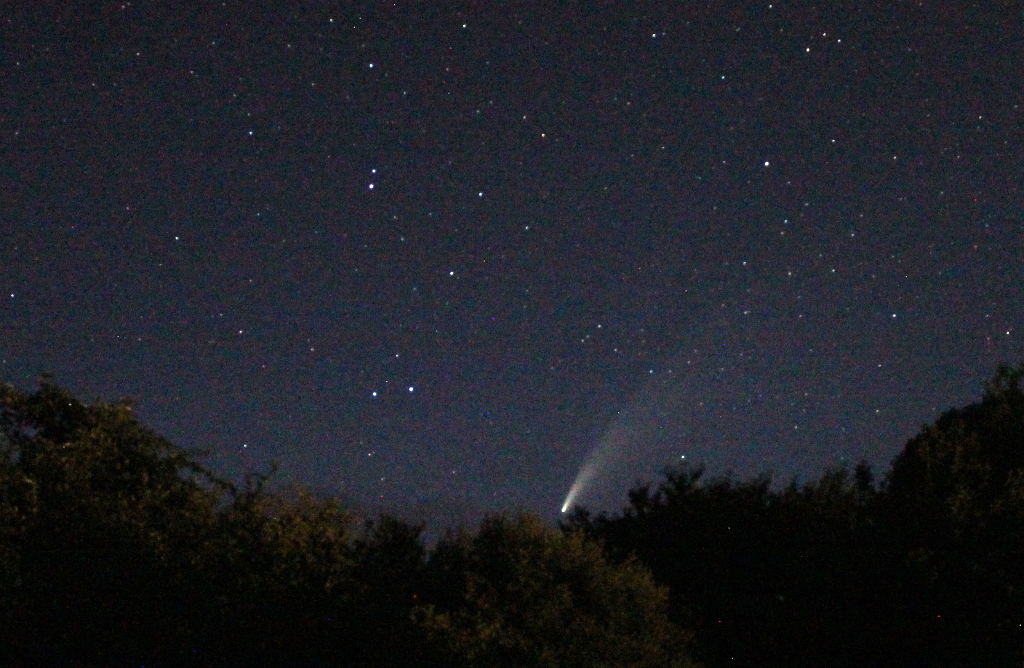
Comet NEOWISE from backyard over tall shrubbery 11:18 pm, July 16, 2020. I didn’t have time to focus properly, which actually accentuates the stars. Comet Tsuchinshan-ATLAS has the potential of being many times brighter. It was seen in the northeast before sunrise and in the northwest after sunset. Our new comet will be best seen low in the southwest in the evening.
11/07/2017 – Ephemeris Extra – G2 Geomagnetic Storm in progress
There an enhanced chance for auroras (northern lights) tonight.
check out http://spaceweather.com/ or http://www.swpc.noaa.gov/.
09/07/2017 – Ephemeris Extra – The Earth is currently under a G4 Geomagnetic Storm – Aurora’s may be visible
Aurora Alert
At this time (0300 UT September 8, 2017) the Earth is experiencing a strong geomagnetic storm see Spaceweather.com.
Also check out the NOAA Space Weather Prediction Center. Check the Aurora Forecast.
07/15/17 – Ephemeris Extra – Possible Auroras to be visible this weekend
The National Oceanic and Atmospheric Administration (NOAA) Space Weather Prediction Center has issued a Geomagnetic Storm Watch for 16-17 July 2017 UT (Universal Time). The watch period starts tonight for the US. The 16th UT starts at 8 p.m. tonight, the 15th EDT. What it means, among other things, is that the Aurora Borealis (Northern Lights) may be visible from the northern tier of states in the United States and Canada, Scotland, Scandinavia, and Russia. And maybe even farther south. See the map below:
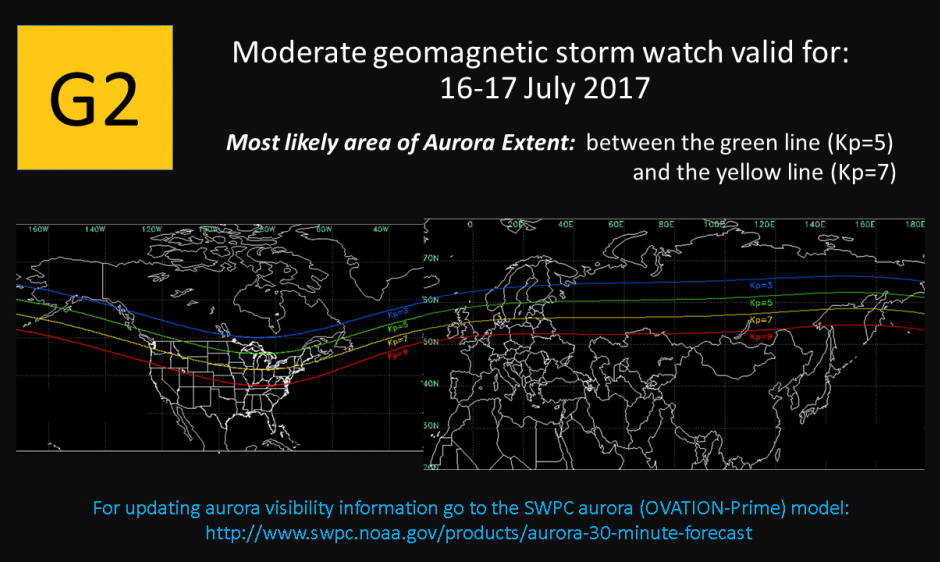
From the NOAA website. Click on the image to enlarge. Click here for the link mentioned in the image: http://www.swpc.noaa.gov/products/aurora-30-minute-forecast.
This alert was issued due to a Coronal Mass Ejection (CME) from the large, but decaying, sunspot group AR2665 at 2:09 UT on the 14th (10:09 p.m. on the 13th EDT). The CME is expected to encounter the Earth’s magnetosphere on the 16th.
A tip of the old observer’s hat to spaceweather.com for the heads up email.
03/17/16 – Ephemeris – Why are there no green stars?
Ephemeris for St. Patrick’s Day, Thursday, March 17th. The Sun will rise at 7:50. It’ll be up for 12 hours and 1 minute, setting at 7:52. The Moon, 2 days past first quarter, will set at 5:10 tomorrow morning.
Today we celebrate the patron saint of the Emerald Isle. And green is the color of the day. When we look to the skies we don’t see a lot of green. Well, maybe in the Hubble Space Telescope’s false color photographs like the original Pillars of Creation, where green represents hydrogen, and in the northern lights. The colors we see in stars are red or orange if they are cooler than the Sun, yellow if they are the same temperature as the Sun, and white or bluish if hotter than the Sun. In the spectrum of light we can see, green is in the middle, between yellow and blue. As a matter of fact the Sun radiates its energy most heavily in the green. So if you got rid of those other colors the Sun itself would be green.
Times are for the Traverse City/Interlochen area of Michigan. They may be different for your location.
Addendum
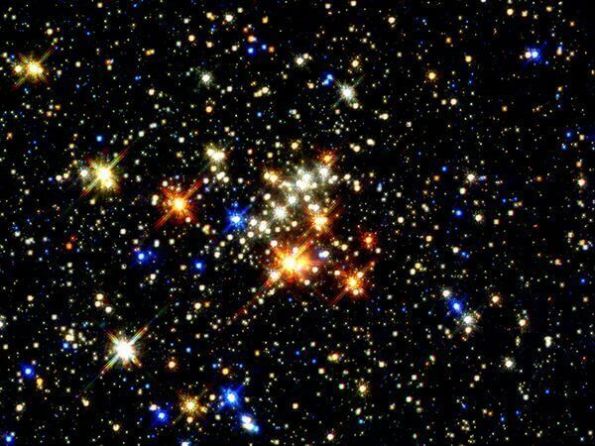
Star cluster showing star colors, probably enhanced. Source uncredited image from planetsforkids.org.
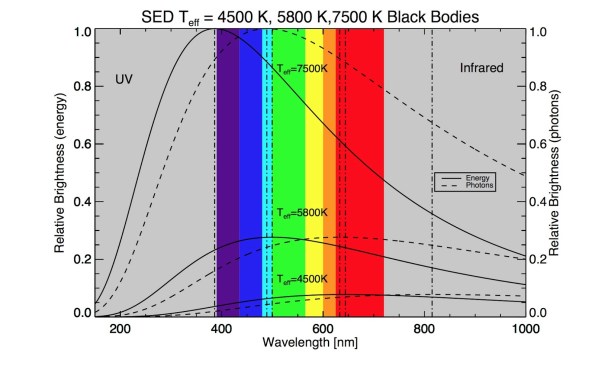
“Black body” Radiation Curves by temperatures. The Sun’s surface temperature is around 5800 Kelvin. Note the peak radiation besides increasing in amplitude slides from red to blue with increasing temperature.
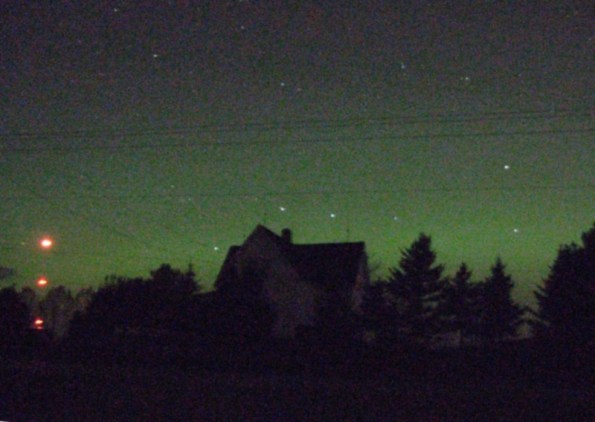
Aurora looking north at 10/24/2011 at 10:52 p.m. The first color visible in an aurora or northern lights is green. More active aurorae give off other colors. Credit: Bob Moler.
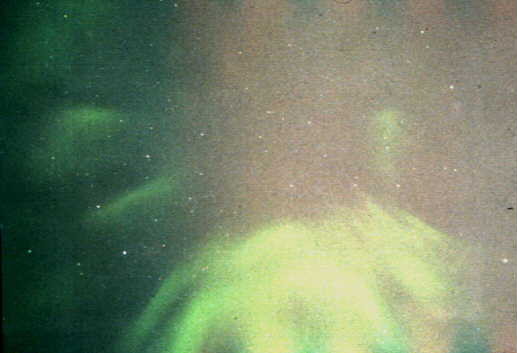
Looking overhead in an active aurora, and the variety of colors, even green. Credit: Bob Moler.
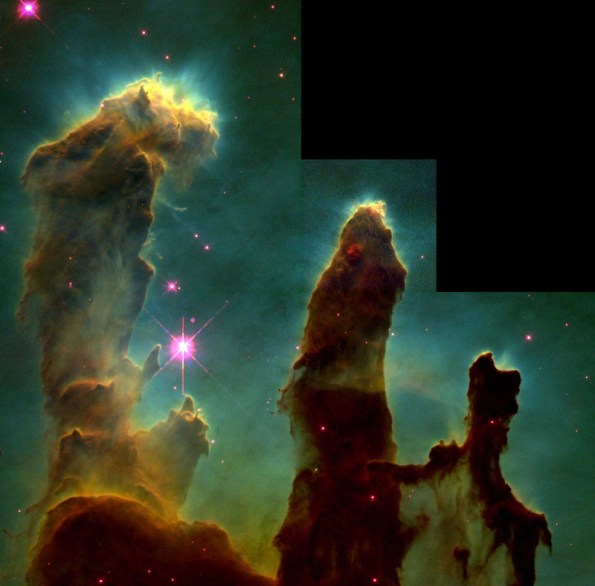
Pillars of Creation in false color by the Hubble Telescope. Sometimes the colors are given to specific elemental emissions, of shifted because the colors represent radiation that is invisible to the human eye. Credit: NASA/ESA/HST.
Extra: 03/17/2015 – A geomagnetic storm is raging now
Looks like we’re in for aurorae A.K.A. northern lights tonight. There were displays of the aurora this morning over the northern tier of states according to spaceweather.com. It still could be going on tonight.
Tip ‘o the old observers cap to Don Flegel and Spaceweather.com.
A CME is heading our way – look for aurorae this weekend.
NOAA Space Weather Prediction Center has issued a warning:
2013-03-15 18:14 UTC G2 (Moderate) Geomagnetic Storm Expected
An Earth-directed coronal mass ejection (CME) was observed in conjunction with an R1 (Minor) solar flare radio blackout in the early hours of March 15th. This CME is expected to arrive late on March 16th, with G1 (Minor) geomagnetic storming forecast for the 16th and G2 (Moderate) storming forecast for the 17th. Stay tuned for updates.
A geomagnetic storm produces aurorae (auroras or northern and southern lights). The more intense the aurora the farther toward the equator it will appear.
A tip o’the old sunscreen to SpaceWeather.com for the heads up. You can sign up for alert emails from them too.
08/02/2012 – Ephemeris – The sun’s kicking up again this week
Thursday, August 2nd. The sun rises at 6:30. It’ll be up for 14 hours and 35 minutes, setting at 9:05. The moon, 1 day past full, will rise at 9:05 this evening.
With the sun really being active, there’s a good chance we’ll see several displays of the northern lights of aurora borealis. Those south of the equator will see the southern equivalent, the aurora australis. There’s an active group of sunspots rotating onto the earth-side face of the sun that should give us a chance to see the aurora in the next week or so. Sunspots are caused by tremendous magnetic fields generated below the bright photosphere we rather improperly call the sun’s surface. The sun has no solid surface, it’s all gas. The magnetic fields cool the gas, making it darker. The spots are maybe at a temperature 2,000 degrees cooler than the rest of the photosphere which is about 10,000 degrees Fahrenheit. In complex sunspot groups there is a potential for huge explosions.
Times are for the Traverse City/Interlochen area of Michigan. They may be different for your location.
Addendum
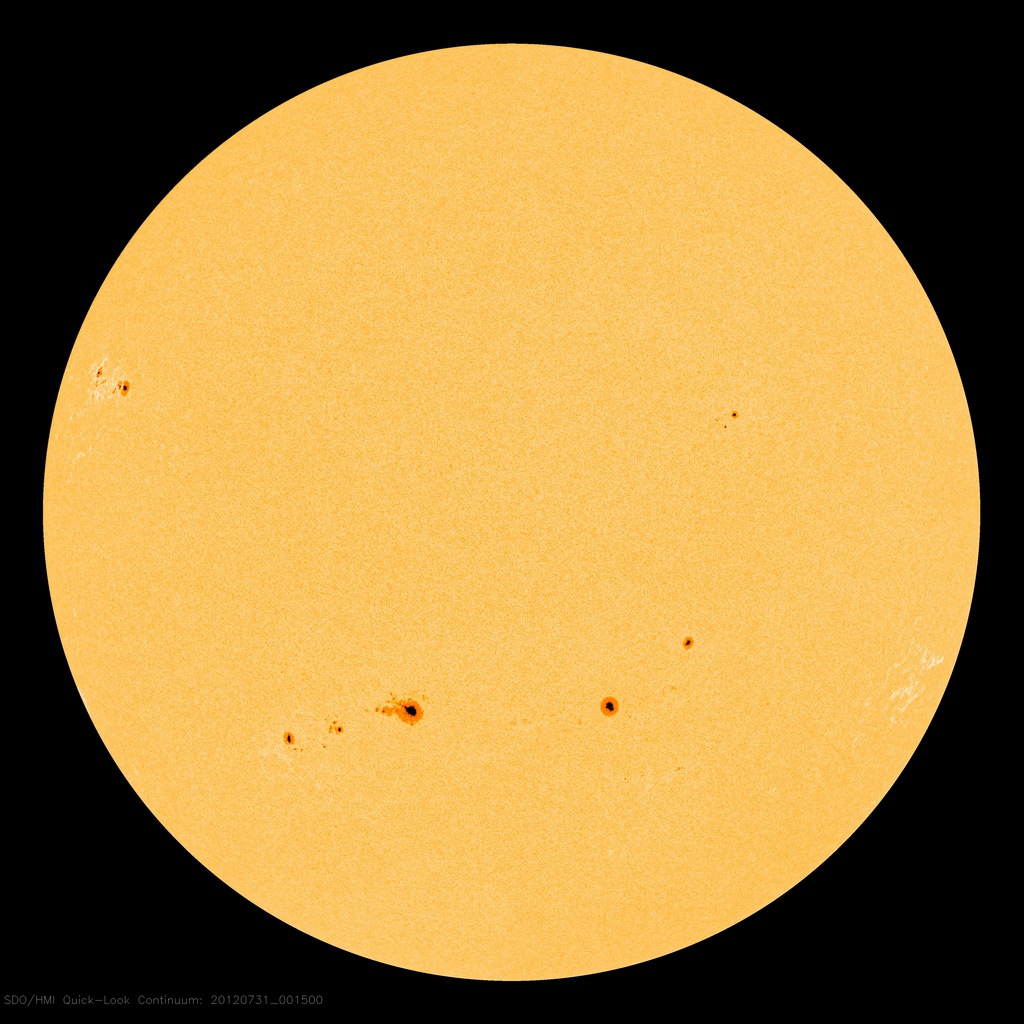
Solar Dynamics Observatory white light image of the sun from Monday. Credits NASA / SDO. Click on image to enlarge.
Solar flare might give us an aurora Friday night to Saturday morning
A huge x-ray flare occurred in the huge sunspot group (AR 1520) now on the sun. We might be affected by about 2:20 a.m. EDT Saturday the 14th, give or take 7 hours. So check the skies Friday night. Go to spaceweather.com for more information.
 Bob Moler's Ephemeris Blog