Archive
Ephemeris: 04/18/2025 – How the date of Easter is calculated
This is Ephemeris for Good Friday, Friday, April 18th. Today the Sun will be up for 13 hours and 39 minutes, setting at 8:32, and it will rise tomorrow at 6:51. The Moon, 2 days before last quarter, will rise at 2:40 tomorrow morning.
Easter will be celebrated by all Christian churches this Sunday. Easter is a movable feast in that it falls on a different date each year following the first full moon of spring. It’s an attempt to follow the Jewish Passover, which starts on the 15th of the month of Nisan. The Jewish calendar being a lunar calendar, the 15th is generally the night of the full moon. And since the Last Supper was a Seder, according to at least one Gospel, the Christian church wanted to link Easter with Passover as closely as possible using the Roman solar based (Julian) calendar. The months didn’t follow the cycle of the Moon anymore and where the year was 365.25 days long. Passover started at sunset last Sunday. The western churches adopted the Gregorian calendar to keep in sync with the seasons. The Orthodox churches didn’t, but Easter is so late that they match this year. They kept the old Julian Calendar and other considerations to calculate the date of Easter.
The astronomical event times given are for the Traverse City/Interlochen area of Michigan (EDT, UT – 4 hours). Times will be different for other locations.
Addendum
Ephemeris: 02/03/2025 – Did the groundhog see his shadow yesterday?
Did it matter?
This is Ephemeris for Monday, February 3rd. Today the Sun will be up for 9 hours and 55 minutes, setting at 5:54, and it will rise tomorrow at 7:57. The Moon, 2 days before first quarter, will set at 12:35 tomorrow morning.
I don’t know if Punxsutawney Phil saw his shadow yesterday morning or not, but February 2nd was a special day to the ancients. It is celebrated as a cross-quarter day, the middle of the season of winter, though the real date of the middle of winter is tomorrow. And if Phil saw his shadow, and we do get 6 more weeks of winter, that’s OK too. By the calendar, it’s actually more like 6 ½ weeks to the vernal or spring equinox the official end of winter, plus this is Northern Michigan. I don’t know if Phil is any better or worse than the National Weather Service at long range forecasts. Of the other cross-quarter days, two others stand out. They are May 1st, May Day; and Halloween.
The astronomical event times given are for the Traverse City/Interlochen area of Michigan (EST, UT – 5 hours). Times will be different for other locations.
Addendum


Ephemeris: 05/21/2024 – Looking ahead to the summer solstice
This is Ephemeris for Tuesday, May 21st. Today the Sun will be up for 15 hours and 3 minutes, setting at 9:11, and it will rise tomorrow at 6:07. The Moon, 2 days before full, will set at 5:14 tomorrow morning.
Summer is coming. Days are definitely warmer. The Sun’s out longer. Yesterday we passed the 15 hours of daytime. Summer will start a month from yesterday on the 20th of June. We normally expect the solstices on the 21st of June and 21st of December and the equinoxes on the 21st of March and the 23rd of September. However, we haven’t had, in our time zone at least, spring start on the 21st of March since 1987. The slow wondering of the equinox and solstice dates are due to the fact that the seasonal year, also called the tropical year, is not exactly 365 and a quarter days long. It is slightly shorter than that, which is the reason in 1582 Pope Gregory the 13th decreed that the calendar would be reformed which is the Gregorian Calendar we have now.
The astronomical event times given are for the Traverse City/Interlochen area of Michigan (EDT, UT–4 hours). They may be different for your location.
Addendum
I talk about the calendar in much more detail in this post: https://bobmoler.wordpress.com/2016/02/28/02282016-ephemeris-extra-the-years-of-our-lives/
Ephemeris: 03/29/2024 – Calculating the date of Easter
This is Ephemeris for Good Friday, March 29th. Today the Sun will be up for 12 hours and 39 minutes, setting at 8:07, and it will rise tomorrow at 7:26. The Moon, 3 days before last quarter, will rise at 1:09 tomorrow morning.
Easter will be celebrated by Western Christian churches this Sunday. Easter is a movable feast in that it falls on a different date each year following the first full moon of spring. It was an attempt to follow the Jewish Passover, which starts on the 15th of the month of Nisan. The Jewish calendar being a lunar calendar, the 15th is generally the night of the full moon, sometimes called the Paschal Full Moon. And since the Last Supper was a Seder, according to at least one Gospel, the Christian church wanted to link Easter with Passover as closely as possible using the Roman solar based (Julian) calendar. That’s not always the case, especially with our current Gregorian Calendar. Passover this year begins at sunset April 22nd because the Jewish lunar calendar is tied to the Julian Calendar.
The astronomical event times given are for the Traverse City/Interlochen area of Michigan (EDT, UT–4 hours). They may be different for your location.
Addendum
Ephemeris: 03/15/2024 – The Ides of March
This is Ephemeris for Ides of March, Friday, March 15th. Today the Sun will be up for 11 hours and 55 minutes, setting at 7:49, and it will rise tomorrow at 7:52. The Moon, 2 days before first quarter, will set at 3:01 tomorrow morning.
Our calendar is derived from the Roman calendar. The Ides is the only named day ion the Roman calendar that we’re familiar with today, the Ides of March. On this day in 44 BCE Roman Emperor Julius Caesar was assassinated. The Ides of a month is the 13th of the month except for March, May, July, and October when it’s the 15th. The Roman calendar has two other named days. The 1st of the month is called Kalend, from which we get our word calendar. The other day is Nones which is the 5th day of the month except for March, May, July, and October when it’s on the 7th. The other days are countdown days to those dates so tomorrow will be the 17th day before the Kalend of April. The countdown is to 1 not 0, if you’re counting.
My source: https://www.slideserve.com/jonah/roman-calendar
The astronomical event times given are for the Traverse City/Interlochen area of Michigan (EDT, UT–4 hours). They may be different for your location.
Addendum

This being a leap year, I will spend more time on these programs talking about the calendar. As you may know, we no longer use the Julian calendar for our normal calendar keeping functions. We use the Gregorian Calendar which is a modification of the Julian Calendar that was first made in the year 1582 CE. As we get closer to Easter I will delve into the Gregorian Calendar because it has everything to do with the date of Easter.
Ephemeris: 03/11/2024 – The Moon and the month
This is Ephemeris for Monday, March 11th. Today the Sun will be up for 11 hours and 43 minutes, setting at 7:44, and it will rise tomorrow at 7:59. The Moon, 1 day past new, will set at 9:44 this evening.
Tonight’s one-day old moon can be seen in the West shortly after sunset. Astrophysicist Dr. Rebecca Smethurst has a channel on YouTube under the name Dr. Becky. She calls it a toenail moon, because it looks like a toenail clipping. If you look real close, the rest of the Moon may be there. It’s not your eyes playing tricks on you, it’s the Earth shining on the Moon, illuminating the night side of it. For those using lunar calendars this would be day one or two of the lunar month. Since astronomically the Moon was new at 4 am yesterday morning our time. Folks in Europe and Asia may have seen the Moon in the sky last night. The Islamic lunar calendar requires the actual sighting of the new moon to start the month.
The astronomical event times given are for the Traverse City/Interlochen area of Michigan (EST, UT –5 hours). They may be different for your location.
Addendum
A note: being a leap year I will have more than my normal amount of posts about the calendar and problems with the calendar.
Ephemeris: 02/27/2024 – Thursday is the Intercalary Day
This is Bob Moler with Ephemeris for Tuesday, February 27th. Today the Sun will be up for 11 hours and 2 minutes, setting at 6:27, and it will rise tomorrow at 7:22. The Moon, 3 days past full, will rise at 9:47 this evening.
Thursday we’re going to have one of those special days that only occur once every 4 years making this a leap year. It’s the intercalary day that compensates for that fact that the Earth takes 365 and a bit short of a quarter day to orbit the sun. That orbit is a year, and those quarter days are accumulated and added as the last day of February in years divisible by 4. The Gregorian reform makes a slight adjustment to most century years, making century years not divisible by 400 ordinary years to keep the calendar in sync with the seasons. The Romans, from who we’ve gotten our calendar considered the month of February as unlucky, and so they shortened it most years to 28 days. Enjoy your extra day Thursday.
The astronomical event times given are for the Traverse City/Interlochen area of Michigan (EST, UT –5 hours). They may be different for your location.
Addendum


No calendar is perfect. The average year of the Julian Calendar is 11 minutes and 14 seconds longer than the actual seasonal year which it is trying to model. By the time of the papacy of Pope Gregory XIII from 1572 to 1585 CE the error in the Julian calendar versus the actual seasons had grown to 10 days since the Julian Calendar was established 16 centuries before. The reason the Church was concerned was that Easter was slowly advancing toward summer, and Easter is a more important feast than Christmas, but is related to the Jewish Feast of Passover. I’ll discuss the formula for determining Easter as we get closer to it. However, the Gregorian calendar reform came in two parts: Ten days were dropped from the calendar between October 4th and 15th in the year 1582 and after that the every four year leap day rule, that is years evenly divided by 4, was modified so that on century years, that is years ending in 00, but not divisible by 400, became ordinary years, that is no leap days, this will keep the calendar in sync with the seasons for several millennia. This calendar reform occurring after the Reformation meant that only the Catholic countries adopted it. It took almost until the present day for everyone to adopt it. For ecclesiastical purposes the Orthodox Churches still used the Julian Calendar.
Ephemeris: 02/02/2024 – It’s Groundhog Day!
This is Bob Moler with Ephemeris for Groundhog Day, Friday, February 2nd. Today the Sun will be up for 9 hours and 51 minutes, setting at 5:52, and it will rise tomorrow at 8:00. The Moon, at last quarter today, will rise at 2:11 tomorrow morning.
I’m not sure if Punxsutawney Phil will see his shadow this morning or not, but February 2nd was a special day to the ancients. It is also Candlemas day for the Catholic Church, and it is celebrated as a cross-quarter day, the middle of the season of winter, though the exact date of the middle of winter is the 4th. And if Phil sees his shadow, and we do get 6 more weeks of winter, that’s OK too. By the calendar, it’s actually more like 6 ½ weeks to the vernal or spring equinox and the official end of winter. Of the other cross-quarter days, two others stand out. They are May 1st, May Day; and Halloween. The way this year has been going, winter has had a hard time getting started. The temperatures are above normal and the snowfall is below normal. A lot of grass is showing, and the bay isn’t even thinking of freezing over.
The astronomical event times given are for the Traverse City/Interlochen area of Michigan (EST, UT –5 hours). They may be different for your location.
Addendum


Ephemeris: 01/01/2024 – Why does the year start on January 1st?
Happy New Year! This is Ephemeris for New Year’s Day, Monday, January 1st 2024. The Sun will rise at 8:20. It’ll be up for 8 hours and 52 minutes, setting at 5:12. The Moon, 2 days before last quarter, will rise at 10:58 this evening.
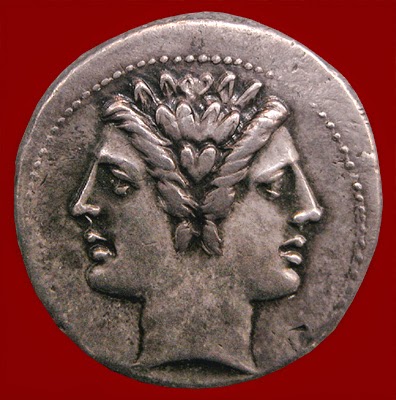
Here we are January 1st the start of a new year. So why does the year start on January 1st? For a long time the Romans started their year in the middle of March near the vernal equinox, the Ides of March to be specific. The Hebrew calendar was the lunar calendar of either 12 or 13 months in a year so that 19 years in their lunar calendar was exactly 19 years on the Roman or Julian solar calendar. The Greeks until Roman times had a lunar calendar dictated haphazardly by every city state. Their year started with the summer solstice around mid-June. The Romans initially had a 10-month calendar. When they finally added those two months, the first they named after the god Janus the god of beginnings and endings, who had two faces, looking backward to the past and forward to the future.
The astronomical event times given are for the Traverse City/Interlochen area of Michigan (EST, UT –5 hours). They may be different for your location.
Addendum
02/06/2023 – Ephemeris – The Persephone Period is ending
This is Ephemeris for Monday, February 6th. Today the Sun will be up for 10 hours and 2 minutes, setting at 5:58, and it will rise tomorrow at 7:54. The Moon, 1 day past full, will rise at 6:53 this evening.
All over the Interlochen Public Radio broadcasting region, the Persephone period is ending. What’s the Persephone period? The Persephone period is a time when the daylight hours drop below 10 hours a day. Around here, this would affect natural lighted greenhouses, since our world is still covered in snow. This is because plants don’t grow very well with less than 10 hours of sunlight. It is named for the Greek goddess Persephone, who is goddess of crops that are sewn. She was kidnapped by her uncle Hades, the god of the Underworld, and was made his bride and became Queen of the Underworld. However, every time she went down to the underworld all the plants on the surface of the earth died, so Zeus made an arrangement with Hades that she could only be in the underworld for part of the year.
The astronomical event times given are for the Traverse City/Interlochen area of Michigan (EST, UT –5 hours). They may be different for your location.
Addendum
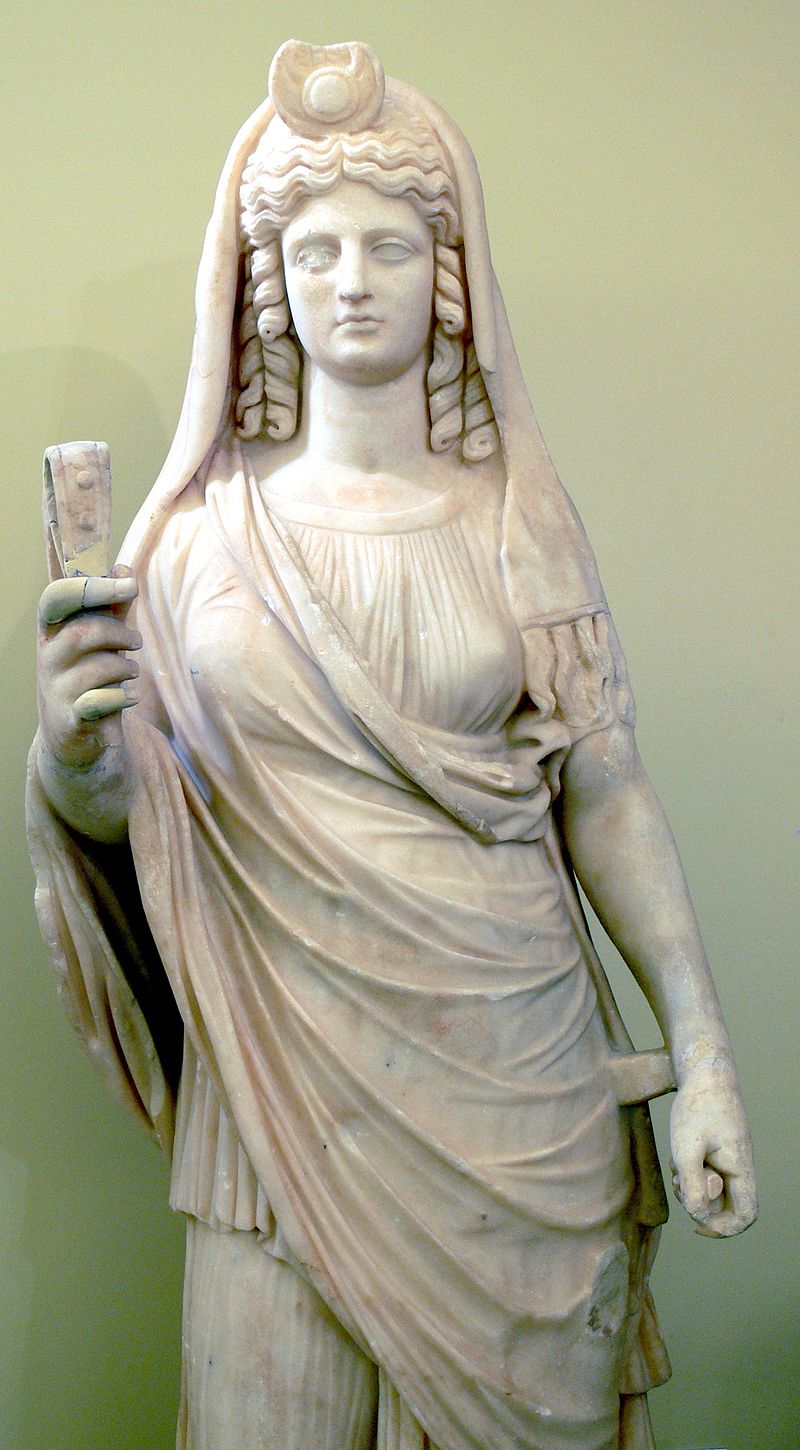
Statue of Persephone-Isis at the Heraklion Archaeological Museum, Crete. Credit: Wolfgang Sauber.
In the Interlochen/ Traverse City area, the Persephone period runs from about November 5th to about February 6th. Of course, we make up for it in late spring and early summer with up to 15 1/2 hours of daylight near the summer solstice.
 Bob Moler's Ephemeris Blog