Archive
10/15/2019 – Ephemeris – The celestial Fisher paints the fall colors
Ephemeris for Tuesday, October 15th. Today the Sun will be up for 11 hours even, setting at 6:58, and it will rise tomorrow at 7:59. The Moon, 2 days past full, will rise at 8:14 this evening.
The tree leaves are turning to reds and yellows as we advance into autumn. The native Anishinaabe peoples, whose homeland we share, have a story about how that came to be. Of how a magical weasel-like creature called the Fisher or in the native language, Ojiig, brought summer to the Earth from Skyland. For his trouble he was shot with an arrow in his only vulnerable spot, the tip of his tail. As he fell to Earth the Great Spirit, Manitou caught him and placed him in the sky where we see the Great Bear (Ursa Major) and the Big Dipper. Every autumn late at night we see his tail, the handle of the dipper, swoop down to the ground where his tail paints the leaves with his blood.
The times given are for the Traverse City/Interlochen area of Michigan. They may be different for your location.
Addendum
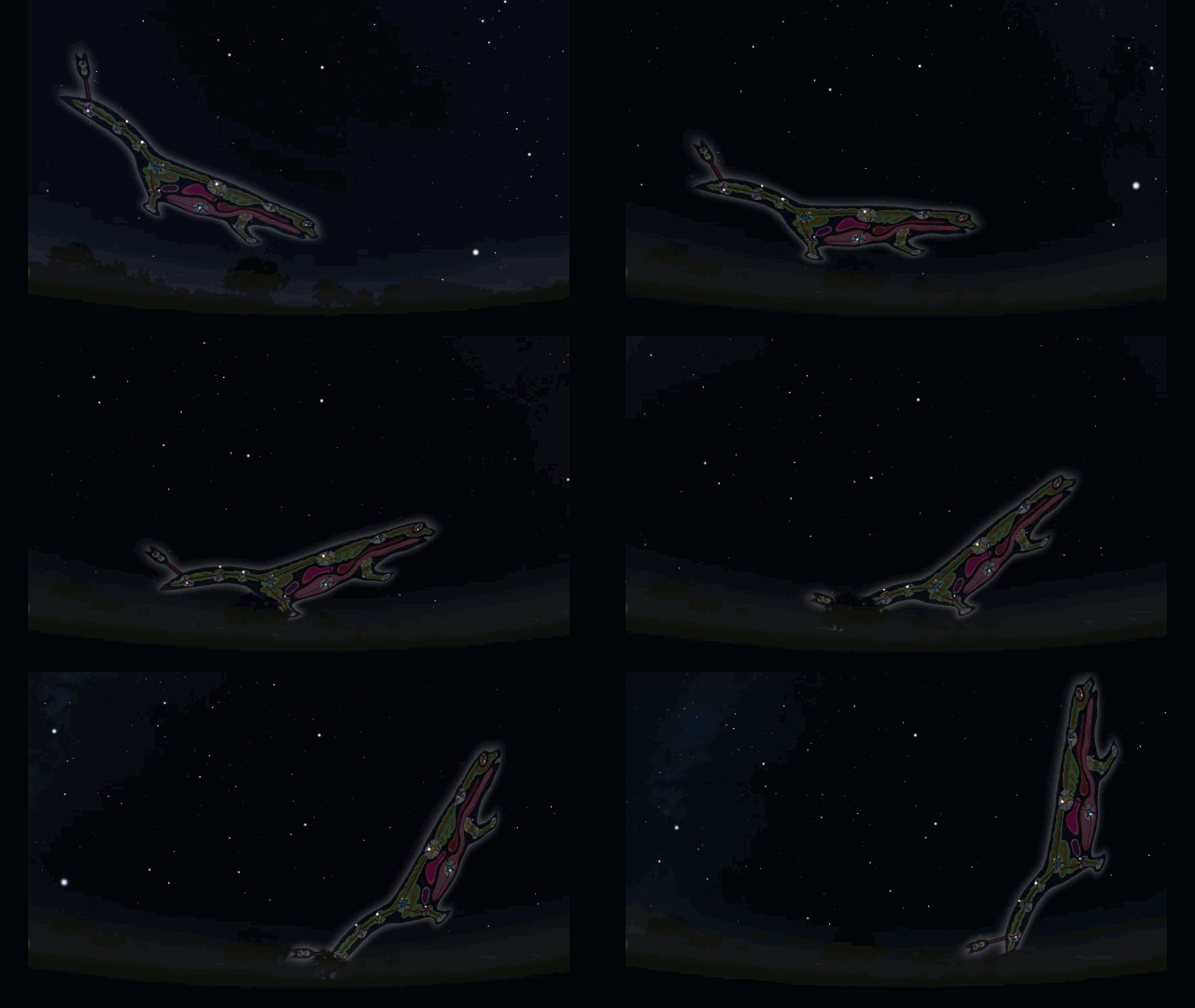
An animation of Fisher brushing his tail along the horizon on autumn nights. Created using Stellarium.
The constellation art is part of the latest versions of Stellarium. Ojibwe (Anishinaabe) constellation art by Annette S Lee and William Wilson from Ojibwe Sky Star Map Constellation Guide, ISBN 978-0-615-98678-4.
See the version of the story I learned: The story of the Fisher Star.
There are other variations of the story, and other adventures of the Fisher. Perform an Internet search for: Fisher or Fisher Star or Ojiig.
09/24/2019 – Ephemeris – Cassiopeia the “W” shaped constellation
Ephemeris for Tuesday, September 24th. Today the Sun will be up for 12 hours and 4 minutes, setting at 7:36, and it will rise tomorrow at 7:33. The Moon, 3 days past last quarter, will rise at 3:13 tomorrow morning.
The stars of the autumn skies slowly are replacing the summer stars from the east. Look in the northeastern sky by 9 p.m. and you can find the W shaped constellation of Cassiopeia the queen. Cassiopeia is so far north that it never sets for us in Michigan. It is opposite the pole star Polaris from the Big Dipper. There’s a dim star that appears above the middle star of the W which turns the W into a very crooked backed chair. Cassiopeia, in Greek mythology, represents a queen of ancient Ethiopia, the W represents the profile of her throne. She enters in to the great autumn story whose other characters are also seen in the stars as the constellations Andromeda, Pegasus, Perseus, Cetus and her husband Cepheus.
For my retelling of the Greek myth that links these autumn constellations click here.
The times given are for the Traverse City/Interlochen area of Michigan. They may be different for your location.
Addendum
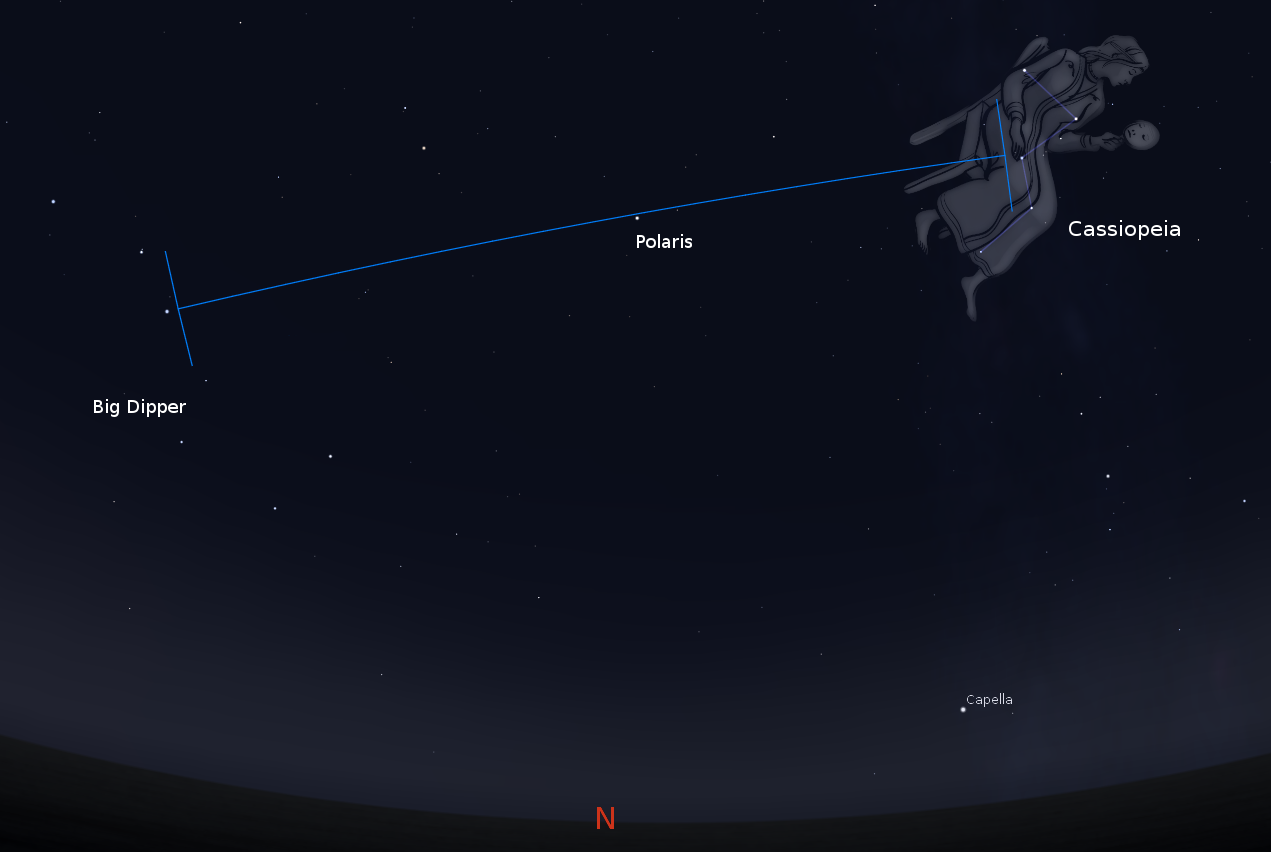
Cassiopeia, in the northeast is opposite Polaris from the Big Dipper. For 9 p.m. in late September. Created using Stellarium. Artistic credit: Johan Meuris.
Ephemeris Extra – The Great Star Story of Autumn
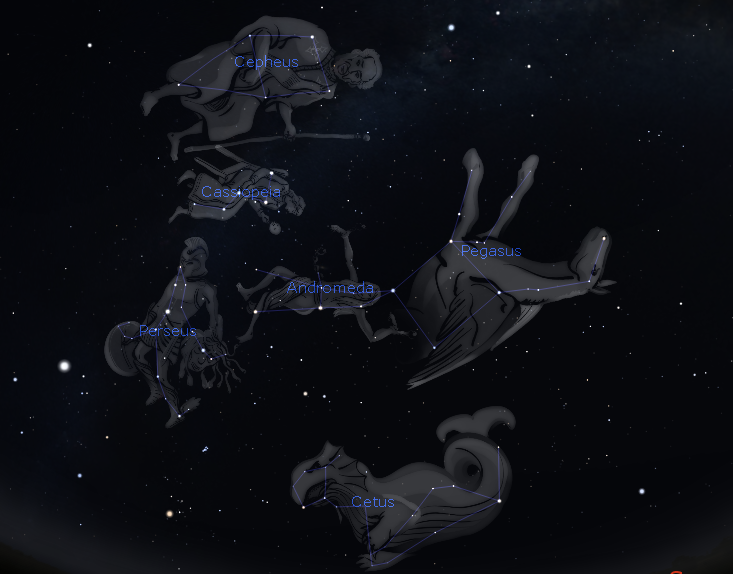
The constellations of the great star story of autumn. Looking southeast on October 31 at 10 p.m. Created using Stellarium.
The great star wheel of the sky rolls on. In the evening sky gone are the stars of spring, and going are the southern stars of summer. In the morning sky before sunrise the stars of an early winter evening.
A constant in both skies are the stars of autumn: rising in the evening and setting in the morning. In no other part of the sky do so many constellations take part in a single story
The constellations, as seen above are Cepheus, Cassiopeia, Andromeda, Perseus, Pegasus, and Cetus. And their story goes like this:
In distant Ethiopia a crisis was brewing. King Cepheus and Queen Cassiopeia were at wits end as how to stop it. A giant sea monster named Cetus was ravaging the country’s coastal cities destroying them and devouring the inhabitants.
The king and queen consulted the temple oracle as to what happened and what could be done to save their country. The oracle intoned gravely that the fault was Cassiopeia’s. Suddenly the queen knew what happened. Cassiopeia was very beautiful and she had vainly boasted to all who could hear that she was more beautiful than even the sea nymphs, the lovely daughters of the sea god Poseidon.
The sea nymphs had heard of Cassiopeia’s boast and complained to their father. Poseidon, like any father, was angered, and being a god was able to do something about. Being a god means never having to say your sorry when you do something really mean. He loosed the monster Cetus upon the Ethiopians.
The oracle said that to appease the monster and Poseidon Cassiopeia would have to sacrifice her daughter the Princess Andromeda to the monster. That is how young Andromeda was chained to the rocks on the sea shore to await her doom…
Far away in ancient Greece a wedding was about to take place between the beautiful Princess Danaë and King Polydectes. Danaë’s son Perseus, fathered by Zeus, but that’s another story, wasn’t too happy about the proposed union, and Polydectes wanted the boy gone.
When Perseus asked Polydectes what he wanted for a wedding gift, he said, “I want the head of Medusa.” The boy immediately and foolhardedly agreed to get it for him.
Merdusa, it turns out, was one of three sisters, the Gorgons, who had snakes for hair. They were so ugly that one glimpse of them would turn the beholder to stone. Medusa was the only mortal one.
Luckily Perseus had the favor of the god Hermes and Athene. They armed him with Hermes’ winged sandals, a helmet that made him invisible, a pouch that would expand to hold an object of any size, a shiny mirror shield, and a sword.
Thus armed Perseus was told to find the Graiae or the gray women, who could tell him where the lair of the Gorgons was. They were three in number and shared but one eye and one tooth among them which they passed from one to another to use.
The Graiae refused to help Perseus. But he was able to force them to help by snatching their one eye while it was being passed from one to another. They told him that the Gorgons dwelt in the shore of the river Ocean at the edge of the world in perpetual twilight.
In approaching the lair of the Gorgons Perseus put on the helmet of invisibility. He approached Medusa stepping backwards, cautiously peering only at Medusa’s indistinct image in his shield. Perseus then swept his sword in a backhanded way and managed to sever Medusa’s head. It is said that Athene guided his hand.
Amazingly, springing full grown from Medusa’s blood was the winged white stallion Pegasus. After placing Medusa’s head in the pouch, Perseus mounted Pegasus for the trip home.
Cruising high in the sky over the Ethiopian coast Perseus spotted a horrific sight. There far below the beautiful Andromeda, in chains; her screams reaching his ears. Then he spotted why she was screaming. A short distance away, crawling out of the surf was the monster Cetus, heading towards Andromeda. Perseus immediately sizes up the situations and swooped with Pegasus down to a spot between Andromeda and the monster. Then, burying his head in his shoulder drew out the head of Medusa from the pouch and held it in front of Cetus. The head was as lethal in death as in life, and the monster was promptly turned to stone. Replacing the head in the pouch, Perseus freed Andromeda. They flew off to, well supposedly, live happily ever after.
Oh yes. Perseus did present the head of Medusa to his step father Polydectes. He, of course, was also turned to stone when he laid eyes on it.
There you have it a story connecting the autumn constellations of Cepheus, Cassiopeia, Andromeda, Perseus, Pegasus and Cetus.
Cepheus is a dim church steeple of a constellation. Its dim star Delta is a variable star, the prototype of an important class of distance measuring stars called Cephieds in its honor. Cassiopeia is the famous W shaped constellation that along with Cepheus doesn’t set at our latitude.
Perseus looks to me more like the cartoon roadrunner than a hero. As the ancients saw him, he is holding the head of Medusa, whose still glittering eye is the star Algol, a variable star which ghastly winks at us every 2 days and 21 hours.
Andromeda’s modern claim to fame is the great galaxy that lies beyond her stars, the Great Andromeda Galaxy which has the designation M31. The galaxy is faintly visible to the unaided eye on dark nights. The farthest you can see without optical aid. The galaxy lies some 2.5 million light years away.
Pegasus can be easily found by the square of stars the form his body. It’s called the Great Square of Pegasus.
What can be said about Cetus. It now represents a whale, not a monster. Its star Mira, which means “Wonderful”, slowly varies in brightness over 330 days from a star barely visible in binoculars to a 2nd or 3rd magnitude star.
Look up on an autumn evening and recapture the wonder the ancients had as they looked upward at the stars.
06/27/2019 – Ephemeris – The constellation of Lyra the lyre or harp
Ephemeris for Thursday, June 27th. Today the Sun will be up for 15 hours and 33 minutes, setting at 9:32, and it will rise tomorrow at 5:59. The Moon, 2 days past last quarter, will rise at 3:13 tomorrow morning.
High up in the eastern sky at 11 p.m. can be found a bright star just north of a small, narrow, but very distinctive parallelogram of stars. They are the stars of the constellation Lyra the harp. The bright star is Vega, one of the twenty one brightest first magnitude stars. Vega is actually the 4th brightest night-time star. The harp, according to Greek mythology, was invented by the Greek god Hermes. The form of the harp in the sky, is as he had invented it: by stretching strings across a tortoise shell. Hermes gave it to his half-brother Apollo, who in turn gave it to the great musician Orpheus. The Sun has a motion with respect to most stars around it. Its direction is towards the vicinity of Lyra.
The times given are for the Traverse City/Interlochen area of Michigan. They may be different for your location.
Addendum
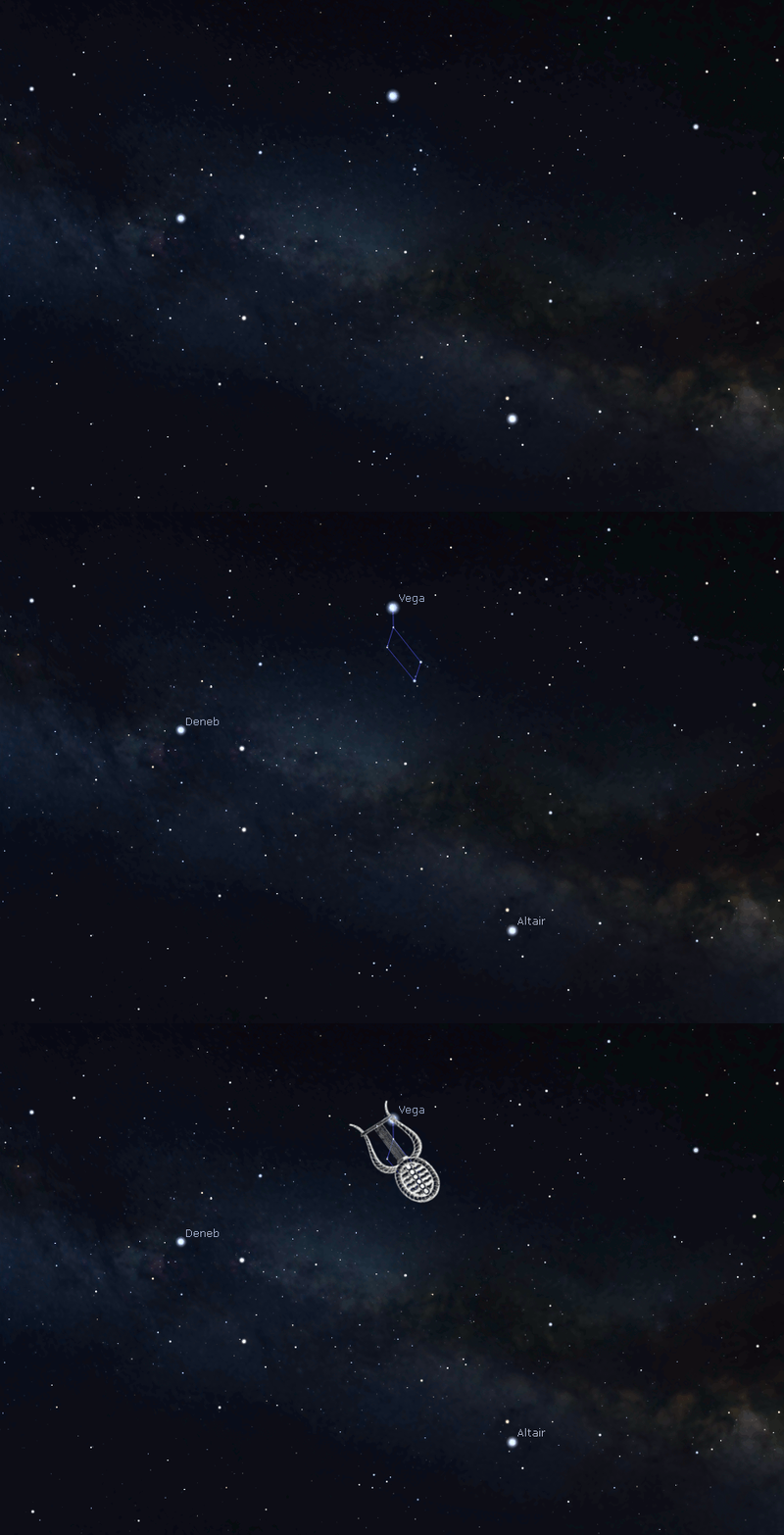
Animated Lyra finder chart. The lyre image not supplied by Stellarium but is from The World’s Earliest Music by Hermann Smith, Figure 60, A Project Gutenberg eBook, and captioned “The Chelys or Greek Tortoiseshell Lyre”. Click on the image to enlarge. Created using Stellarium.
06/20/2019 – Ephemeris – Hercules wuz robbed!
Ephemeris for Thursday, June 20th. Today the Sun will be up for 15 hours and 34 minutes, setting at 9:31, and it will rise tomorrow at 5:57. The Moon, 3 days past full, will rise at 12:12 tomorrow morning.
Orion, the hard luck mythological Greek hunter gets a splashy constellation in the winter sky, but the greatest hero of all, Hercules, gets a dim group of stars on the border between the spring and summer stars. At 11 p.m. Hercules is high in the southeast. It is located above and right of the bright star, Vega in the east. Hercules’ central feature is a keystone shaped box of stars, called the Keystone, which represents the old boy’s shorts. From each top corner extend lines of stars that are his legs, from the bottom stars, the rest of his torso and arms extend. So in one final indignity he’s upside down in our sky. Some see him crouched down, club upraised holding the Hydra about to throttle it. For those with a telescope it contains the beautiful globular star cluster M13.
The times given are for the Traverse City/Interlochen area of Michigan. They may be different for your location.
Addendum
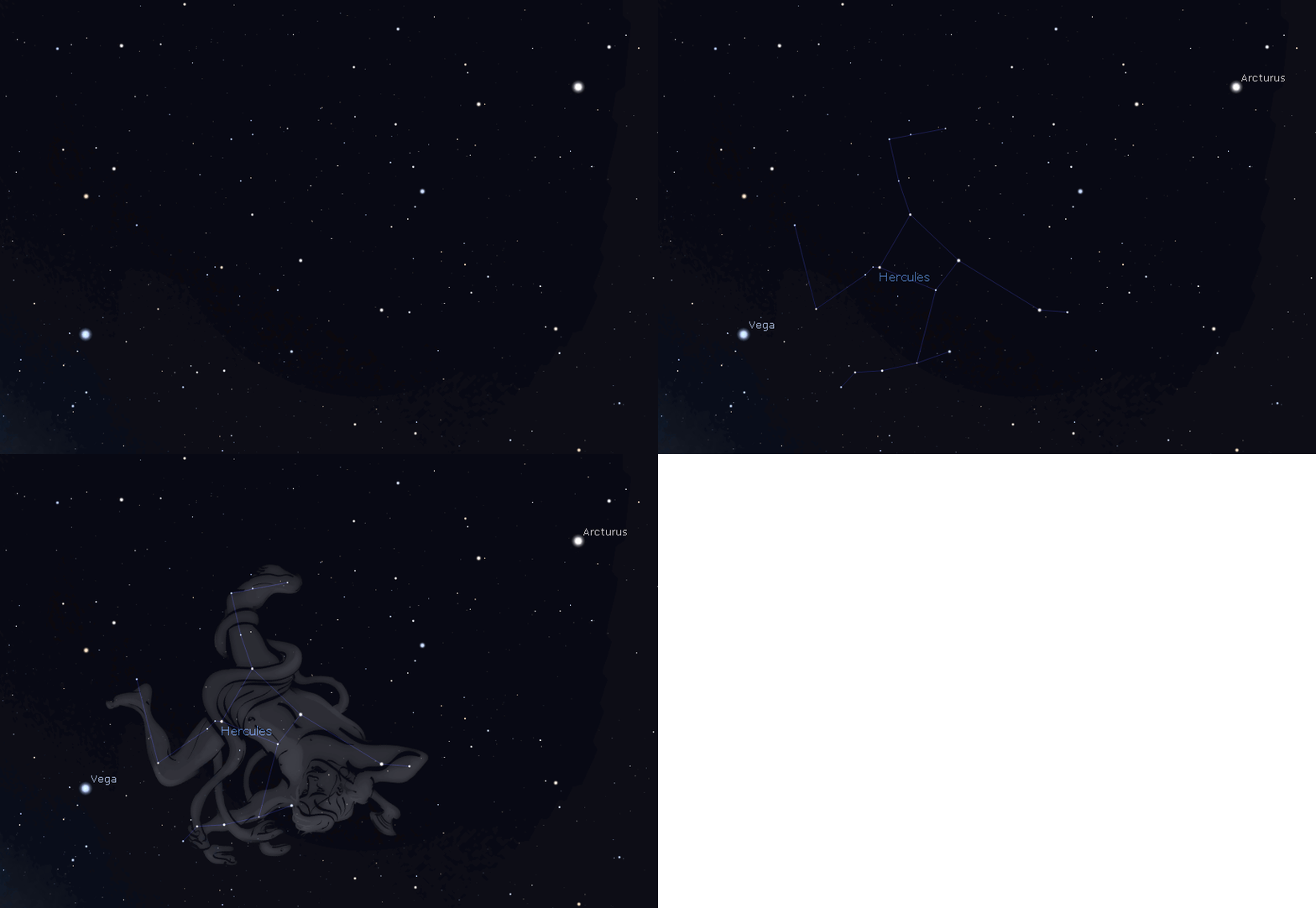
Hercules animation showing neighboring stars at 11 p.m. for mid June, Click on image to enlarge. Created using Stellarium and GIMP.
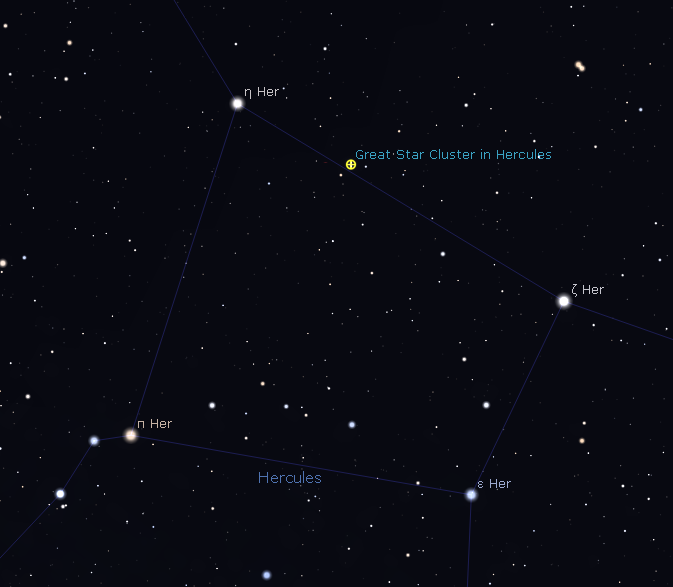
Stars and M13 (Great Star Cluster in Hercules) visible in binoculars in the Keystone of Hercules. Click in the image to enlarge. Created using Stellarium.
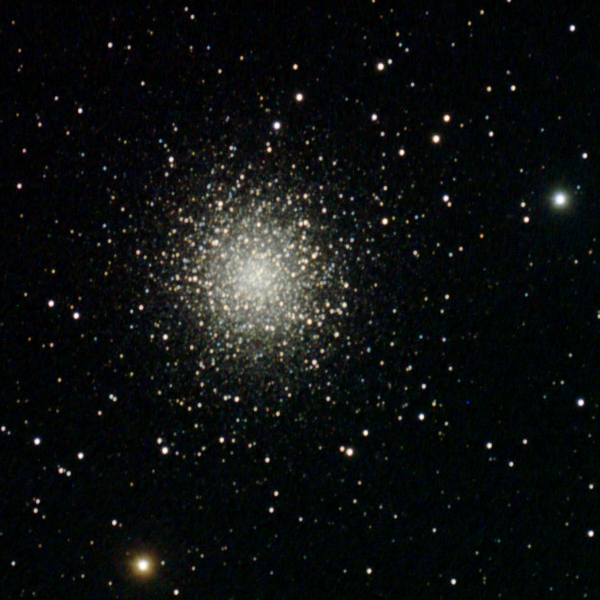
M13, the Great Globular Star Cluster in Hercules. It takes a telescope with an aperture (diameter) of 6 inches (150 mm) to begin the resolve the stars in it. Credit: Scott Anttila
05/23/2019 – Ephemeris – A look at the constellation of Corona Borealis
Ephemeris for Thursday, May 23rd. Today the Sun will be up for 15 hours and 5 minutes, setting at 9:12, and it will rise tomorrow at 6:06. The Moon, 3 days before last quarter, will rise at 1:37 tomorrow morning.
High in the east-southeast at 11 this evening can be seen a small nearly circular constellation of Corona Borealis, the Northern Crown. It is just below Boötes, the kite shaped constellation off the handle of the Big Dipper. According to Greek myth the crown was given by the gods to the princess Ariadne, daughter of King Minos of Crete. The crown is more like a tiara with the bright star Alphecca at the front. To the Anishinaabe people, who are natives of our region it is the Sweat Lodge. Part of what we call Hercules next to it is the Exhausted Bather, who is lying on the ground after the ceremony. The seven stones that are heated for the Sweat Lodge are the Pleiades, now too close to the Sun to be seen.
The times given are for the Traverse City/Interlochen area of Michigan. They may be different for your location.
Addendum
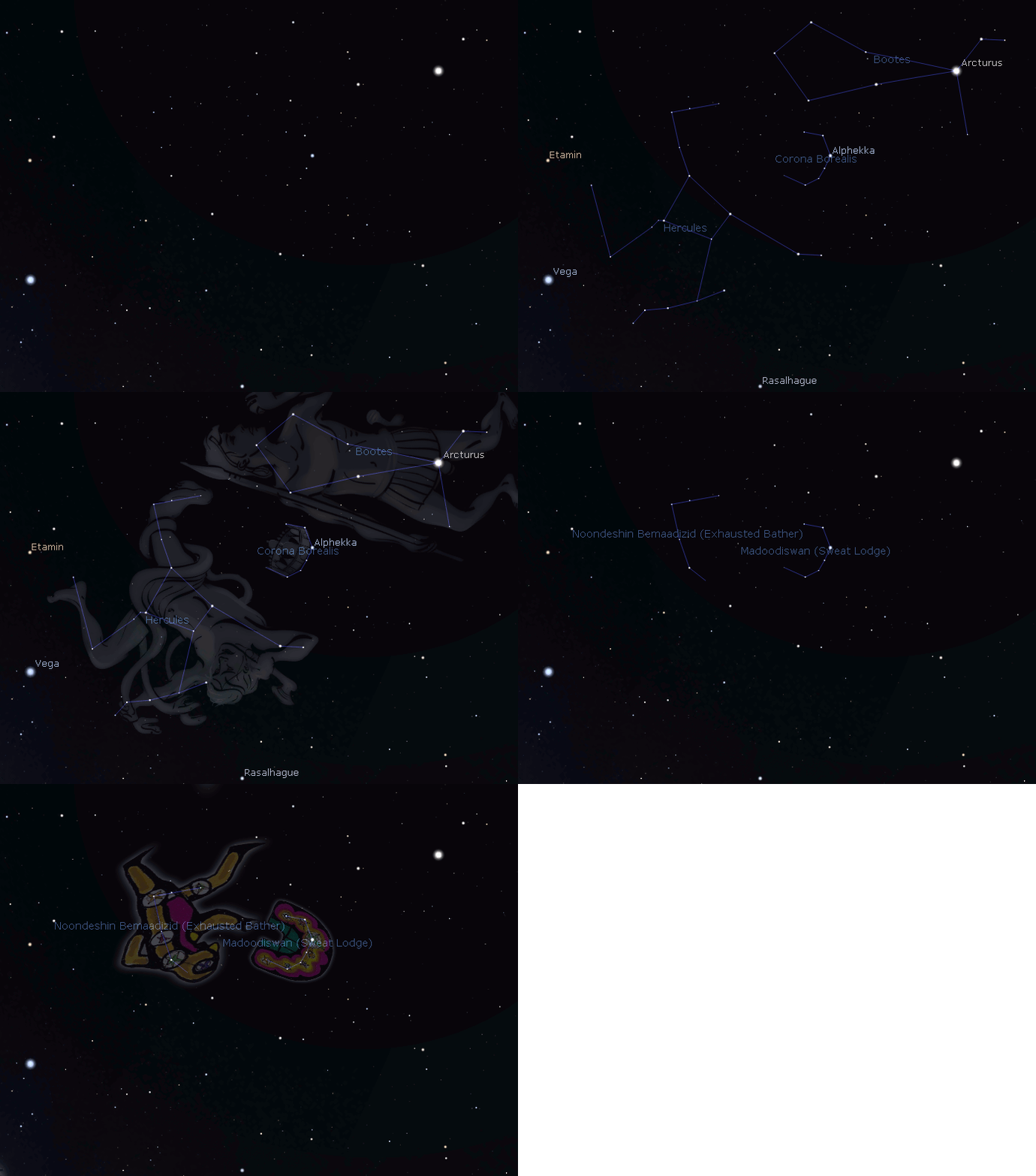
Animated Corona Borealis Finder Chart looking to the east-southeast at 11 p.m. May 23rd Click on the image to enlarge. Created using Stellarium and GIMP.
05/02/2019 – Ephemeris – Apollo and the constellations of Corvus, Crater and Hydra
Ephemeris for Thursday, May 2nd. Today the Sun will be up for 14 hours and 17 minutes, setting at 8:48, and it will rise tomorrow at 6:30. The Moon, 2 days before new, will rise at 6:18 tomorrow morning.
The small constellation of Corvus the crow is located low in the south at 10:30 this evening. It’s made of 5 dim stars, but the pattern is a distinctive distorted box with two stars at the upper left marking that corner. To the right is a fainter constellation of a thick stemmed goblet called Crater. Both appear above the long constellation of Hydra the water snake who is slithering just above the southern horizon. In Greek mythology Corvus, then white, was the god Apollo’s pet. He once bid Corvus to take a cup and fetch him some water. Corvus however dallied and waited for a green fig to ripen. Corvus grabbed a snake and returned with a story on how the snake had delayed him. The angry Apollo turned the crow and all crows to this day black.
The times given are for the Traverse City/Interlochen area of Michigan. They may be different for your location.
Addendum
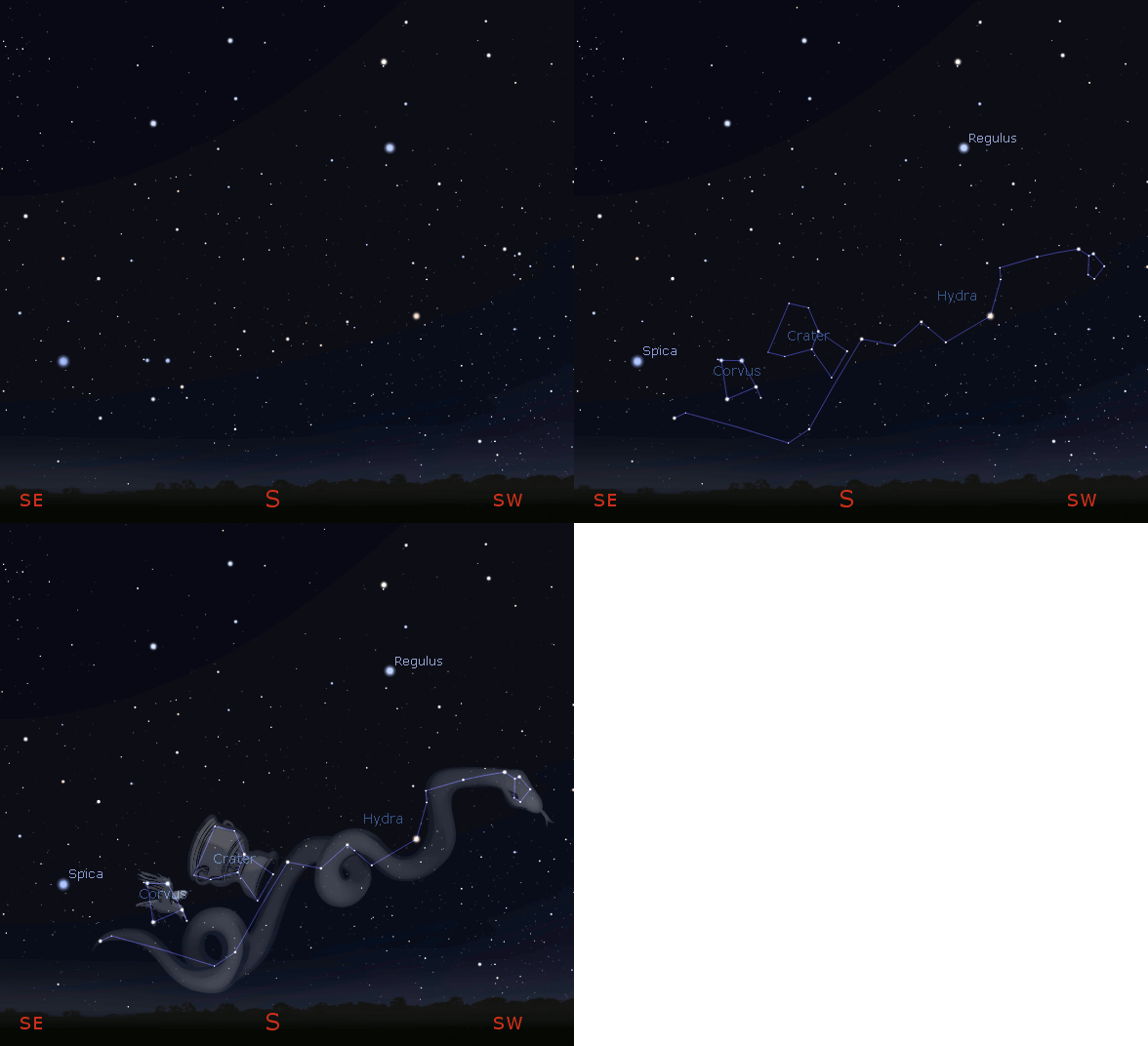
Corvus, Crater and Hydra finder chart for 10 p.m. May 2, 2019. Created using Stellarium and GIMP.
04/26/2019 – Ephemeris – The story of Ursa Major and Boötes
Ephemeris for Arbor Day, Friday, April 26th. Today the Sun will be up for 14 hours even, setting at 8:41, and it will rise tomorrow at 6:39. The Moon, at last quarter today, will rise at 3:39 tomorrow morning.
Seen in the east at 10 p.m. tonight is the kite shaped constellation of Boötes the herdsman. The bright star Arcturus is at the bottom of the kite to the right. It is pointed to by the arc of the handle of the Big Dipper, higher in the east. Boötes represents a young hunter named Arcas, son of Callisto, a beautiful young lady who had the misfortune of being loved by Zeus the chief of the Greek gods. Zeus’ wife Hera, found out about it, and since she couldn’t punish Zeus, turned the poor woman into a bear. Arcas, many years later, unaware of the events surrounding his mother’s disappearance was about to kill the bear when Zeus intervened and placed them both in the sky to save her, as Arcas still pursues her across the sky nightly.
The times given are for the Traverse City/Interlochen area of Michigan. They may be different for your location.
Addendum
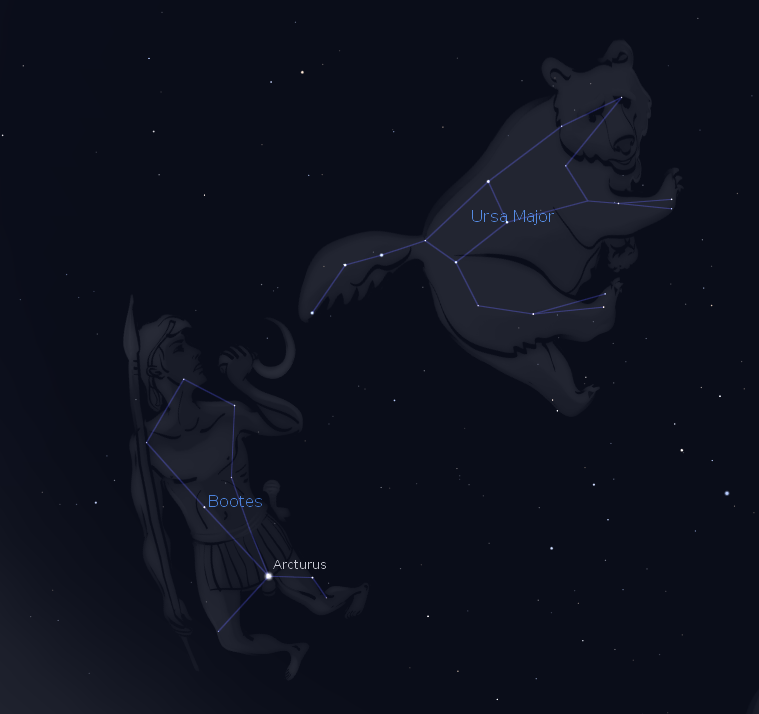
Bootes and Ursa Major aka Arcas chasing Callisto around the pole of the sky. Created using Stellarium.
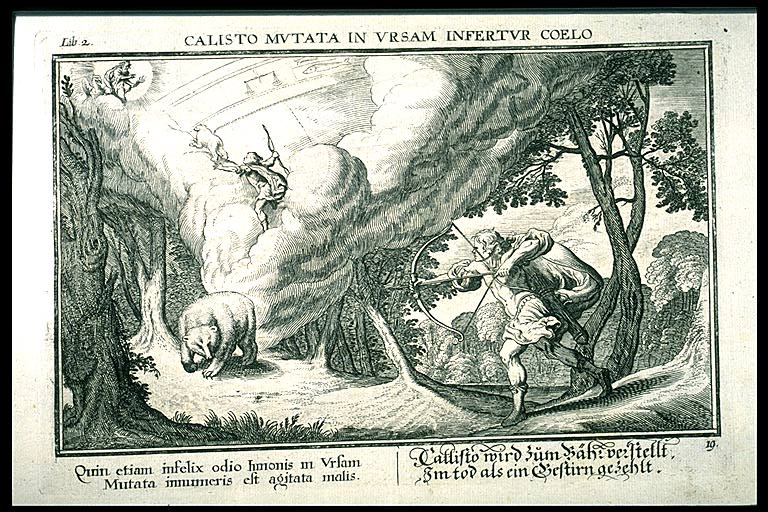
Arcas about to slay the bear by the 17th century artist Baur. Source: University of Virginia Electronic Text Center
04/23/2019 – Ephemeris – The story of Coma Berenices
Ephemeris for Tuesday, April 23rd. Today the Sun will be up for 13 hours and 52 minutes, setting at 8:37, and it will rise tomorrow at 6:43. The Moon, 3 days before last quarter, will rise at 1:24 tomorrow morning.
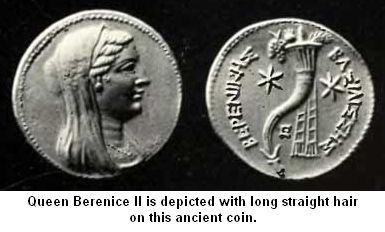
High in the southeast at 10 p.m. is a tiny and faint constellation of Coma Berenices, or Berenice’s hair. In it are lots of faint stars arrayed to look like several strands of hair. The whole group will fit in the field of a pair of binoculars, which will also show many more stars. The hank of hair was supposed to belong to Berenice, a real Queen of Egypt, of the 3rd century BCE. who cut off her golden tresses and offered them to the gods for the safe return of her husband from war. Her husband did return safe, and at that same time her hair disappeared from the temple. The oracle of the temple pointed to this constellation showing that her sacrifice was enshrined in the stars.
The times given are for the Traverse City/Interlochen area of Michigan. They may be different for your location.
Addendum
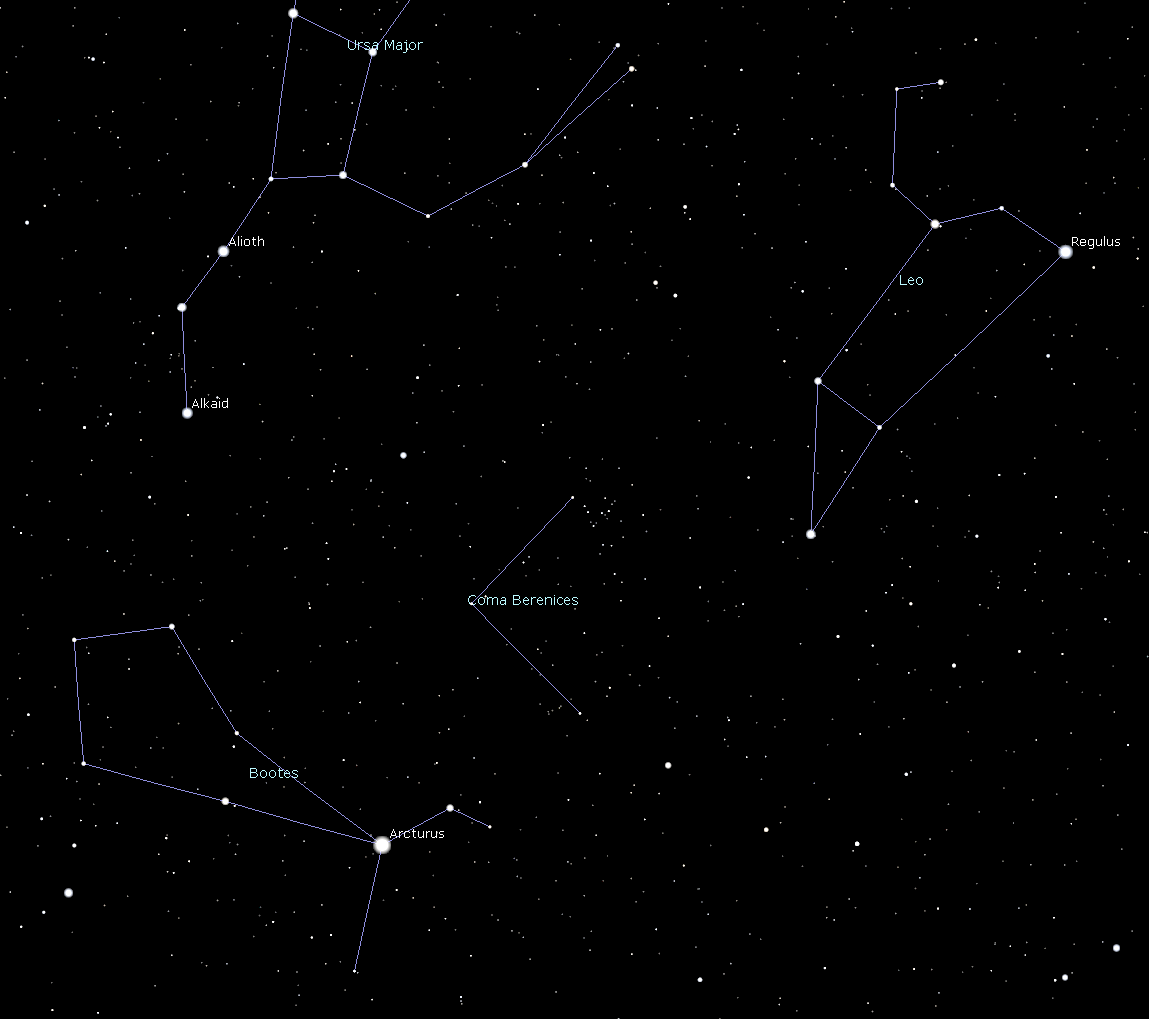
Coma Berenices and neighboring constellations at 10 p.m. on April 16, 2015. Note that only the upper right star of the upside down L shape actually belongs to the cluster. Created using Stellarium.
03/22/2019 – Ephemeris – The Great Underwater Panther
Ephemeris for Friday, March 22nd. Today the Sun will be up for 12 hours and 14 minutes, setting at 7:57, and it will rise tomorrow at 7:40. The Moon, 2 days past full, will rise at 10:07 this evening.
The Anishinabe peoples of the Great Lakes Region, which includes the Ottawa, Chippewa and Ojibwe Indians have one constellation of winter I know of. It is The Winter Maker which uses many of Orion’s stars and whose arms stretch from Aldebaran in Taurus the bull to Procyon the Little Dog Star, embracing the whole of the winter sky. Now that spring is here he is sinking into the west. The first constellation of spring is Curly Tail, or the Great Underwater Panther. Which uses the stars of Leo the lion’s backward question mark as its tail and the small knot of stars that are the head of Hydra the water snake below Cancer the crab as its head. Keep off the thinning ice or break through and be snatched by the great panther that lives below.
The times given are for the Traverse City/Interlochen area of Michigan. They may be different for your location.
Addendum
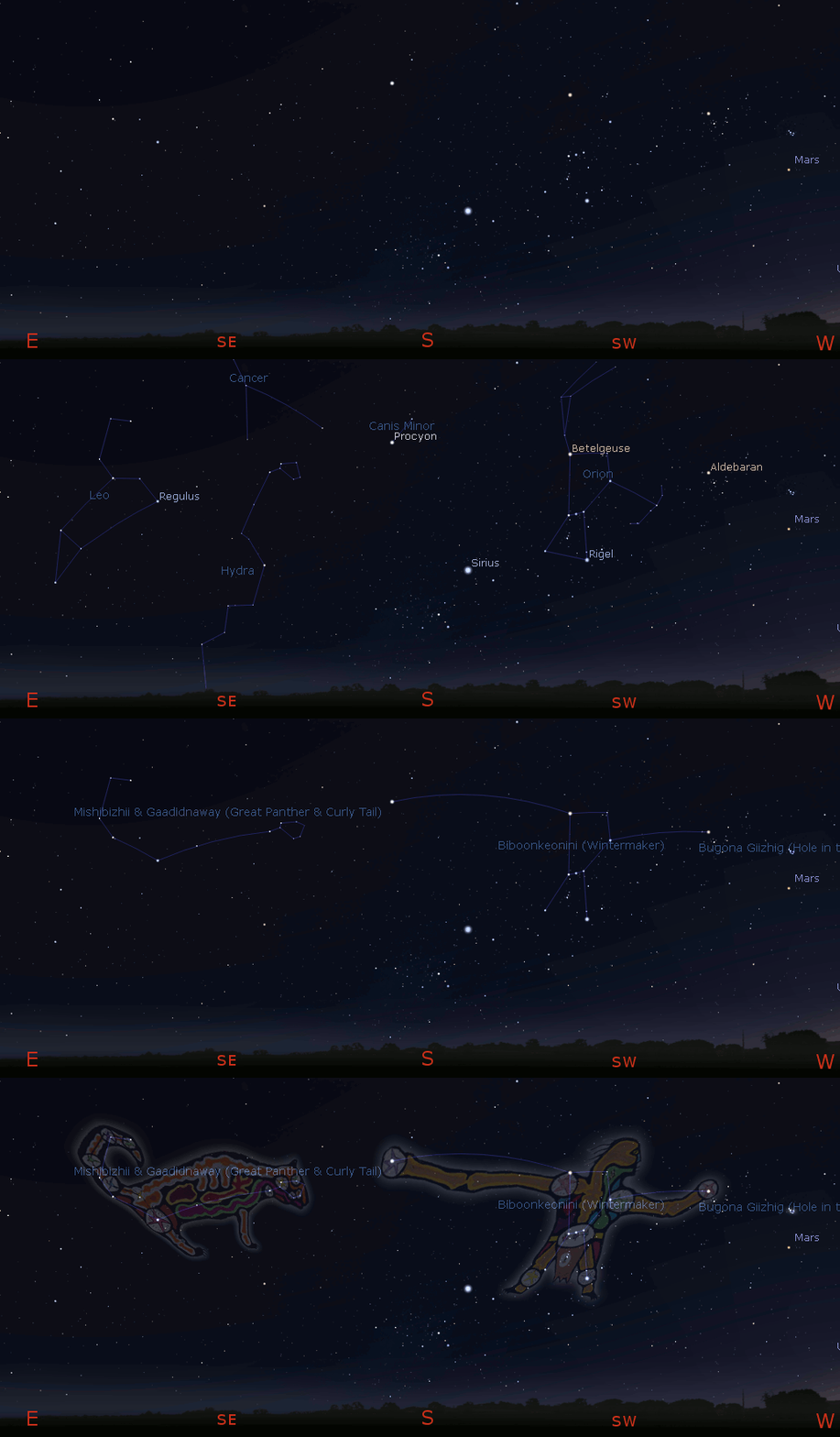
Great Underwater Panther finder animation relating western to Anishinaabe constellations for 9 p.m. March 22, 2019. Click on the image to enlarge. Created using Stellarium.
The constellation art is part of the latest versions of Stellarium. Ojibwe (Anishinaabe) constellation art by Annette S Lee and William Wilson from Ojibwe Sky Star Map Constellation Guide, by A. Lee, W Wilson, C Gawboy, J. Tibbetts. ISBN 978-0-615-98678-4.
 Bob Moler's Ephemeris Blog