Archive
Ephemeris: 06/18/2026 – Looking to summer with the Summer Triangle
This is Ephemeris for Thursday, June 18th. Today the Sun will be up for 15 hours and 34 minutes, setting at 9:31, and it will rise tomorrow at 5:56. The Moon, 3 days before first quarter, will set at 12:36 tomorrow morning.
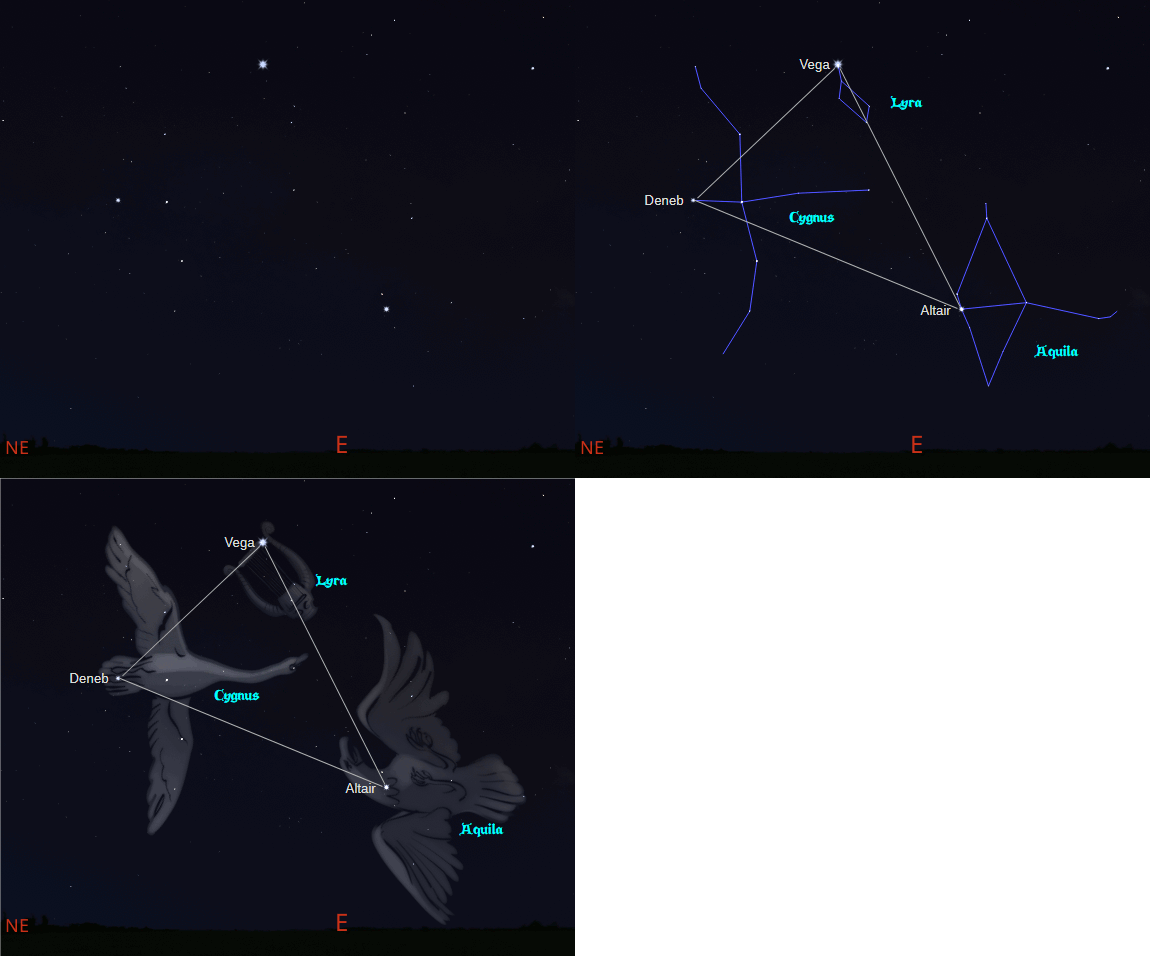
Summer skies are coming. It’s only 3 days until summer officially arrives. Looking to the eastern sky at 11 PM are three of the brightest stars in a large triangle. The top star Vega is about halfway up the sky to the zenith, and the brightest of the three. It’s in the small constellation of Lyra the harp. Lowest of the stars and just about due east is Altair in Aquila the eagle. Completing the triangle is Deneb in the northeast in the tail of Cygnus the swan or the head of the horizontal Northern Cross. These three stars make up the Summer Triangle, which isn’t an official constellation. It’s one of the many informal star patterns called asterisms. The Summer Triangle will be in our evening sky moving slowly westward until December.
The astronomical event times given in this blog are for the Traverse City/Interlochen area of Michigan (Lat 44.7° N, Long 85.7° W; EDT, UT – 4 hours) unless stated otherwise. Times will be different for other locations.
Addendum
Ephemeris: 06/11/2026 – Finding the celestial dragon, Draco
This is Bob Moler with Ephemeris for Thursday, June 11th. Today the Sun will be up for 15 hours and 31 minutes, setting at 9:28, and it will rise tomorrow at 5:56. The Moon, halfway from last quarter to new, will rise at 3:28 tomorrow morning.
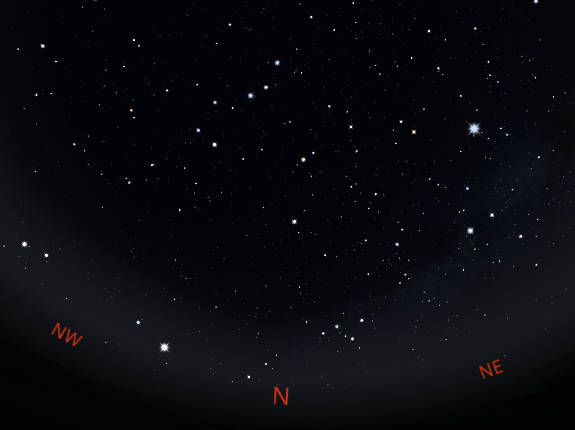
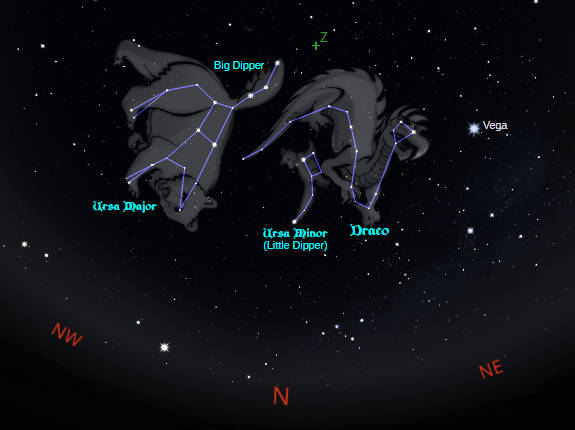
High in the northern sky at 11 p.m. lies the twisted constellation, of Draco the dragon. This dragon is more like the snakelike Chinese dragon than the dinosaur-like dragon of European legend. I find it better sneak up on its tail, to trace him out in the stars. Draco’s tail starts, or ends, between the bowl of the Big Dipper and the Little Dipper high in the north. The Dragon is seen in a line of stars that extends parallel to the handle of the Big Dipper before curving around the bowl of the Little Dipper then bends back down to the level of Polaris in the north-northeast before turning toward the east. The head of Draco is an odd box of stars near the bright star Vega, high in the east. Though not made up of very bright stars, Draco has an easy shape to trace.
The astronomical event times given in this blog are for the Traverse City/Interlochen area of Michigan (Lat 44.7° N, Long 85.7° W; EDT, UT – 4 hours) unless stated otherwise. Times will be different for other locations.
Addendum
Ephemeris: 06/04/2026 – Finding Lyra the harp
This is Bob Moler with Ephemeris for Thursday, June 4th. Today the Sun will be up for 15 hours and 24 minutes, setting at 9:23, and it will rise tomorrow at 5:58. The Moon, halfway from full to last quarter, will rise at 12:57 tomorrow morning.
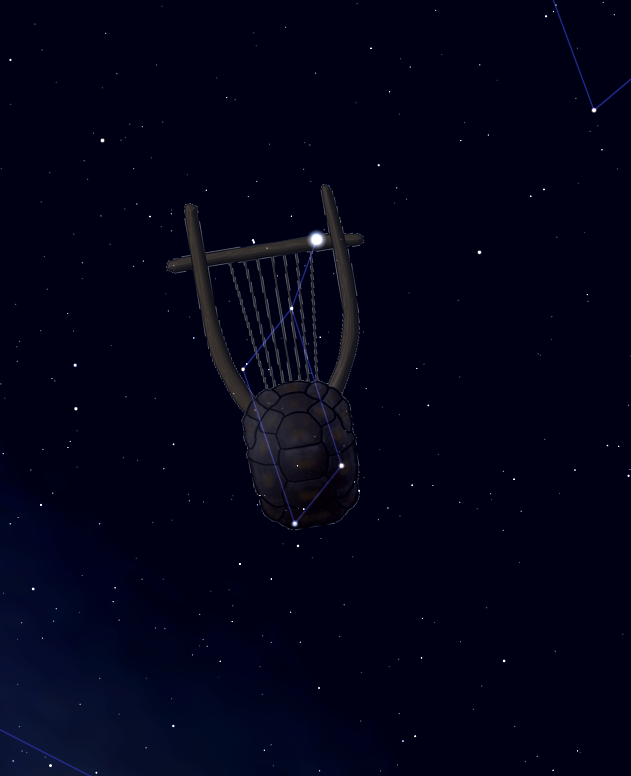
Halfway up the sky in the east at 11 PM, one can find a bright star just above a small, narrow, but very distinctive parallelogram of stars. They are the stars of the constellation Lyra the harp. The bright star is Vega, the 5th brightest nighttime star. To the Romans, the star Vega represented a falling eagle or vulture. Apparently they never made the distinction between the two species. It is a pure white star and serves as a calibration star for color and brightness. In the evening, it is the top-most star of the Summer Triangle. The harp, according to Greek mythology, was invented by the god Hermes. The form of the harp, in the sky, is as he had invented it: by stretching strings across a tortoise shell. Hermes gave it to his half-brother Apollo, who in turn gave it to the legendary musician Orpheus.
The astronomical event times given in this blog are for the Traverse City/Interlochen area of Michigan (Lat 44.7° N, Long 85.7° W; EDT, UT – 4 hours) unless stated otherwise. Times will be different for other locations.
Addendum
Ephemeris: 07/24/2025 – Vega, nearing the zenith in the evening now
This is Ephemeris for Thursday, July 24th. Today the Sun will be up for 14 hours and 56 minutes, setting at 9:17, and it will rise tomorrow at 6:21. The Moon is new today, and won’t be visible.
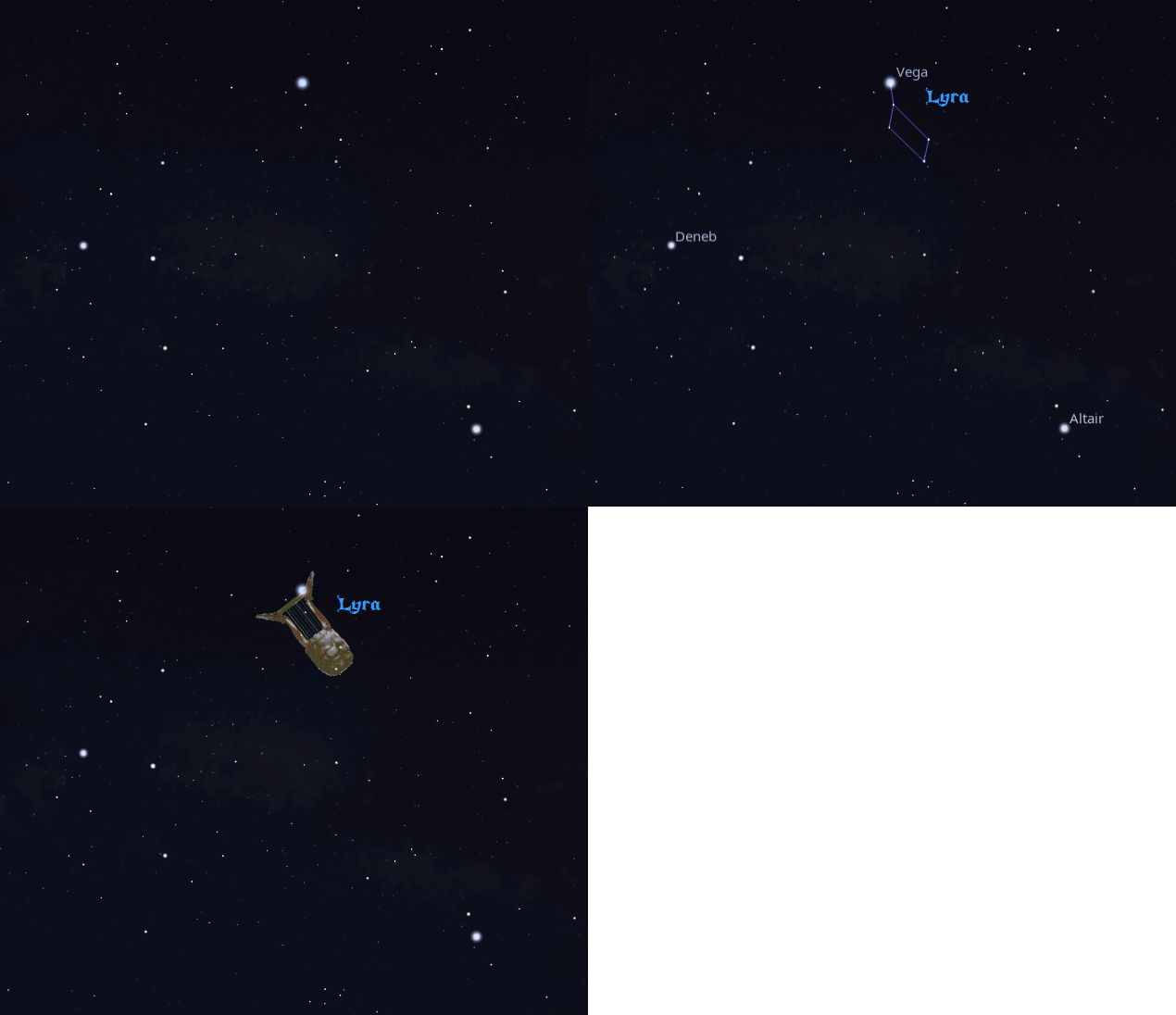
Vega, in the constellation Lyra the harp, is the highest bright star In the east and brightest star of the Summer Triangle also rising in that direction. It is an important and much studied star, first as a standard for brightness for the magnitude scale at almost exactly zero. In 1983 the Infrared Astronomy Satellite, IRAS, discovered an excess of infrared radiation coming from the star. It seems now that there are two orbiting rings around the star, an inner warm ring and an outer cold ring. This is somewhat like the two disks of material the Sun has: The asteroid belt between Mars and Jupiter and the Kuiper belt, beyond Neptune. No planets have yet been discovered around Vega, but I wouldn’t bet against it.
The astronomical event times given in this blog are for the Traverse City/Interlochen area of Michigan (Lat 44.7° N, Long 85.7° W; EDT, UT – 4 hours) unless stated otherwise. Times will be different for other locations.
Addendum
Ephemeris: 6/24/2025 – Lyra, the heavenly harp
This is Ephemeris for Tuesday, June 24th. Today the Sun will be up for 15 hours and 34 minutes, setting at 9:32, and it will rise tomorrow at 5:58. The Moon, 1 day before new, will rise at 5:36 tomorrow morning.
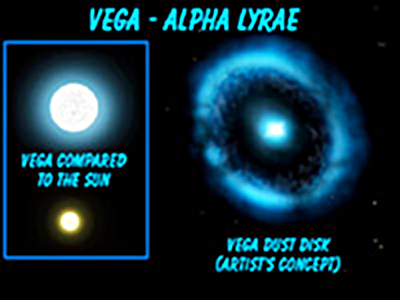
Fairly high in the east at 11 p.m. can be found a bright star just above a small, narrow, but very distinctive parallelogram of stars. They are the stars of the constellation Lyra the harp. The bright star is Vega, the 5th brightest nighttime star. To the Romans, the star Vega represented a falling eagle or vulture. Apparently they never made the distinction between the two species. It is a pure white star and serves as a calibration star for color and brightness. In the evening, it is the top-most star of the Summer Triangle. The harp, according to Greek mythology, was invented by the god Hermes. The form of the harp, in the sky, is as he had invented it: by stretching strings across a tortoise shell. Hermes gave it to his half-brother Apollo, who in turn gave it to the legendary musician Orpheus.
The astronomical event times given in this blog are for the Traverse City/Interlochen area of Michigan (Lat 44.7° N, Long 85.7° W; EDT, UT – 4 hours) unless stated otherwise. Times will be different for other locations.
Addendum
Ephemeris: 06/13/2025 – Finding the Summer Triangle
This is Ephemeris for Friday, June 13th. Today the Sun will be up for 15 hours and 32 minutes, setting at 9:29, and it will rise tomorrow at 5:56. The Moon, 2 days past full, will rise at 11:59 this evening.
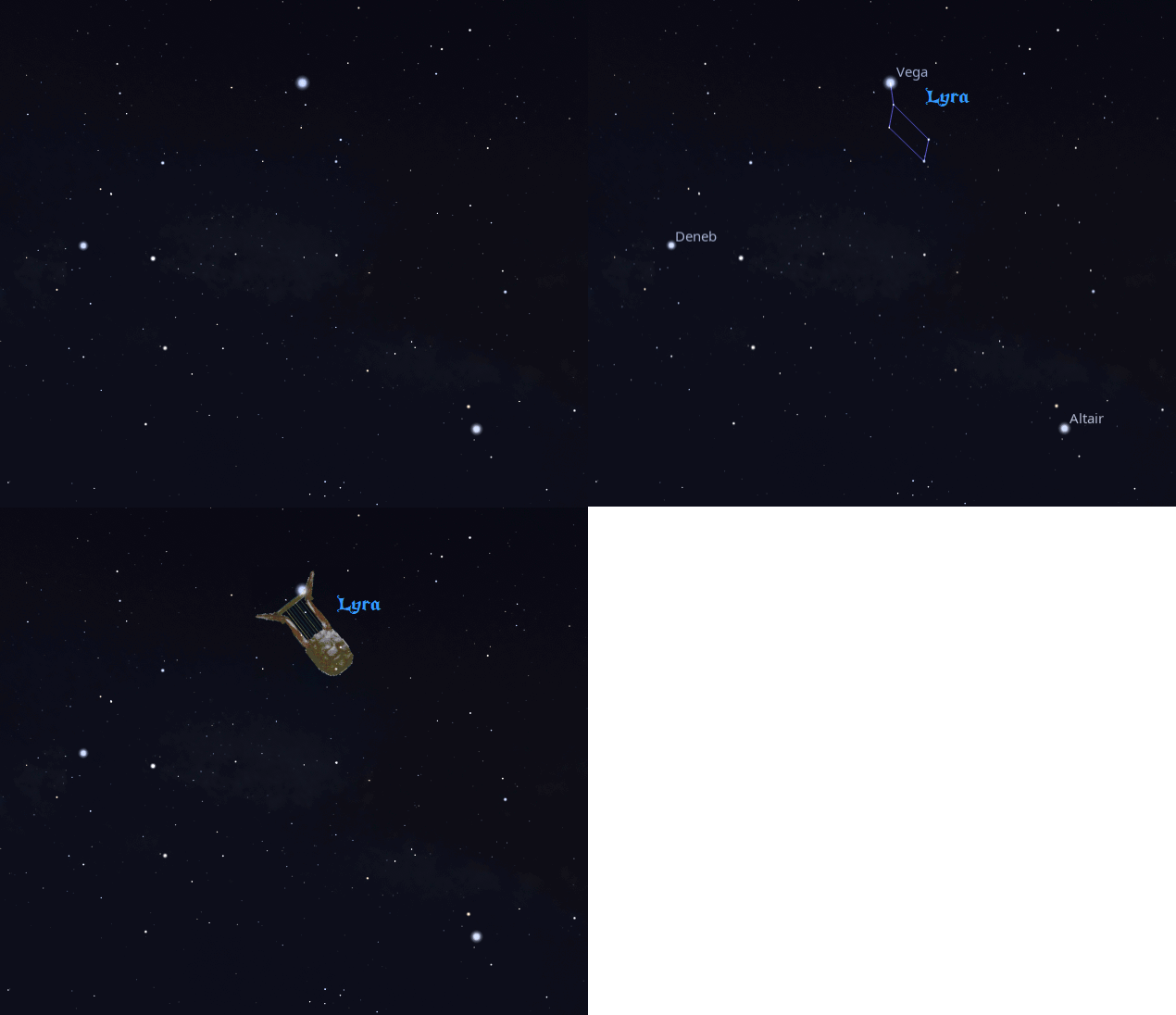
Summer skies are coming. It’s only 7 days until summer officially arrives. Looking to the eastern sky at 11 pm are three of the brightest stars in a large triangle. The top star Vega is about halfway up the sky to the zenith, and the brightest of the three. It’s in the small constellation of Lyra the harp. Lowest of the stars and just about due east is Altair in Aquila the eagle. Completing the triangle is Deneb in the northeast in the tail of Cygnus the swan or the head of the horizontal Northern Cross. These three stars make up the Summer Triangle, which isn’t an official constellation. It’s one of the many informal star patterns called asterisms. The Summer Triangle will be in our evening sky moving slowly westward until December.
The astronomical event times given in this blog are for the Traverse City/Interlochen area of Michigan (Lat 44.7° N, Long 85.7° W; EDT, UT – 4 hours) unless stated otherwise. Times will be different for other locations.
Addendum
Ephemeris: 05/22/2025 – Finding Hercules among the spring stars
This is Bob Moler with Ephemeris for Thursday, May 22nd. Today the Sun will be up for 15 hours and 5 minutes, setting at 9:12, and it will rise tomorrow at 6:06. The Moon, 2 days past last quarter, will rise at 3:51 tomorrow morning.
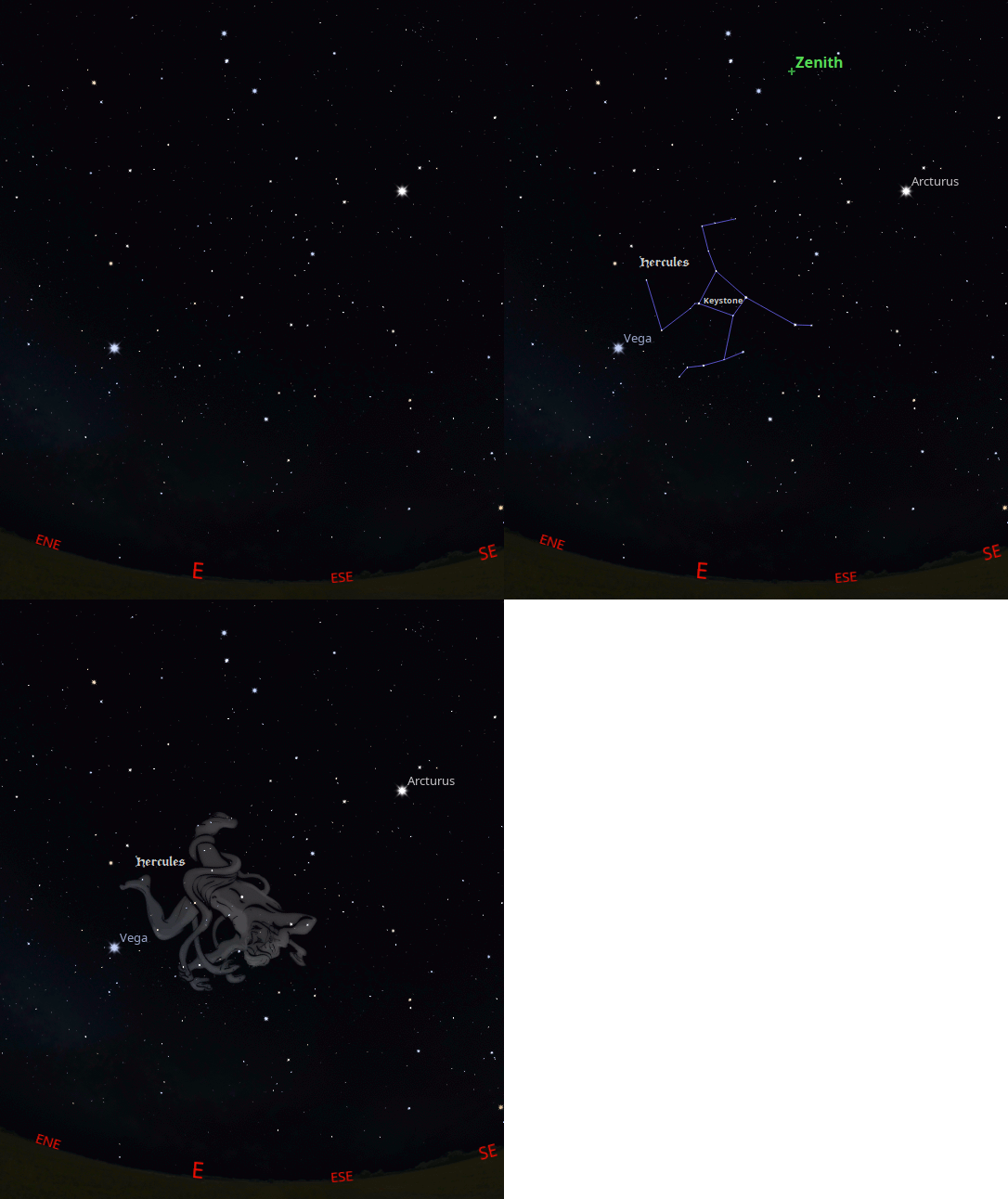
In the eastern sky at 11 PM about a third of the way along the line from the bright star Vega in the east northeast and Arcturus high in the southeast is the constellation of Hercules the hero. It’s kind of hard to spot, although it’s one distinctive feature is the box of four stars called the Keystone of Hercules which means it’s wider at the top than at the bottom. That is his body. He’s upside down in the sky according to how they draw the picture of Hercules. Most of his stars are reasonably dim. This is the great hero of Greek myth. While in the winter sky the bright and splashy constellation of Orion the hunter, was kind of a hard luck hero, with no real accomplishments. Hercules has an astronomical jewel that I’ll talk about tomorrow.
The astronomical event times given in this blog are for the Traverse City/Interlochen area of Michigan (Lat 44.7° N, Long 85.7° W; EDT, UT – 4 hours) unless stated otherwise. Times will be different for other locations.
Addendum
Ephemeris: 05/20/2025 – Corona Borealis, Ariadne’s Crown
This is Ephemeris for Tuesday, May 20th. Today the Sun will be up for 15 hours and 1 minute, setting at 9:10, and it will rise tomorrow at 6:08. The Moon, at last quarter today, will rise at 3:12 tomorrow morning.
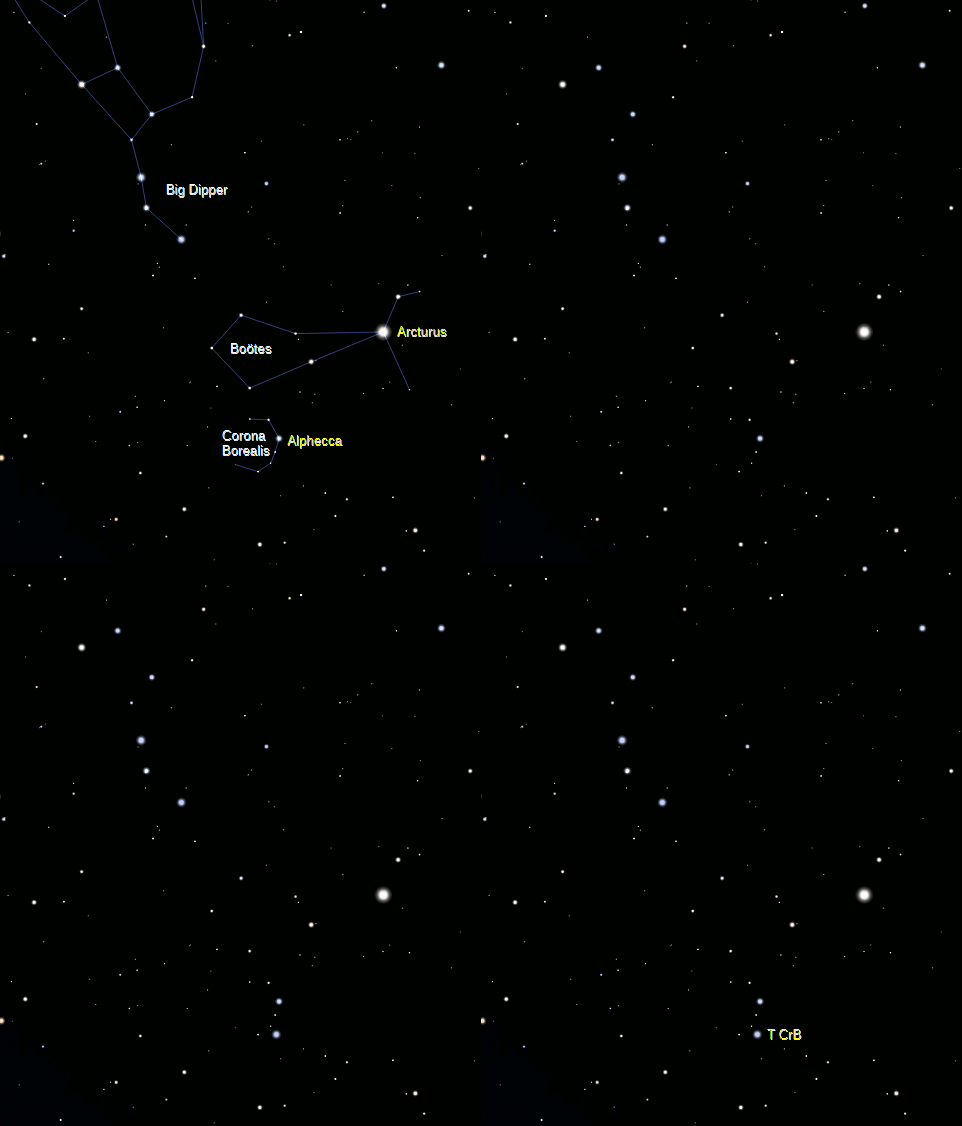
There are two bright stars in the eastern part of the sky. High in the southeast at 11 PM is Arcturus, and in the east northeast, lower down is the star Vega. A third of the way between Arcturus and Vega is a small arc of stars called Corona Borealis, the northern crown. It is a small constellation. The brightest star in it is called Alphecca. According to Greek mythology it is the crown given to Princess Ariadne, daughter of King Minos of Crete. Of interest in the next year or so is a possibility of a nova or bright star appearing just south of that arc of stars for about a week. It is a recurrent nova, which explodes about every 80 years. The last time was in 1946, so the next time would be within the next year or so. And astronomers are breathlessly waiting for that to happen.
The astronomical event times given in this blog are for the Traverse City/Interlochen area of Michigan (Lat 44.7° N, Long 85.7° W; EDT, UT – 4 hours) unless stated otherwise. Times will be different for other locations.
Addendum
Ephemeris: 05/16/2025 – Two bright stars, alike but different
This is Bob Moler with Ephemeris for Friday, May 16th. Today the Sun will be up for 14 hours and 52 minutes, setting at 9:05, and it will rise tomorrow at 6:12. The Moon, halfway from full to last quarter, will rise at 1:21 tomorrow morning.
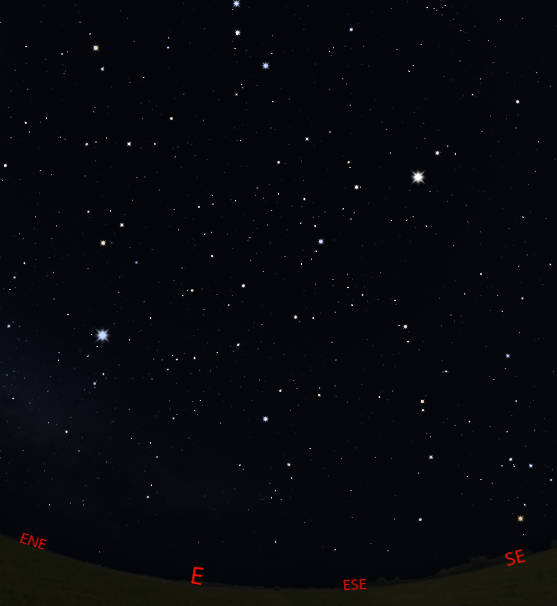
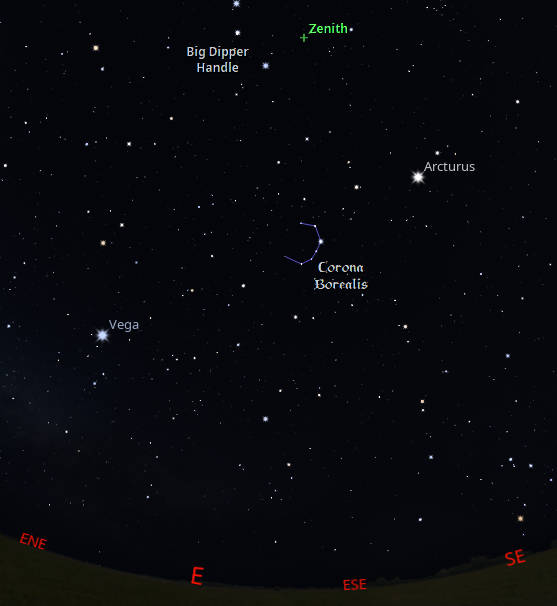
Two stars which I’ve been known to confuse in the twilit sky in late spring and late summer are Arcturus and Vega. These stars have about the same brightness and in some lists of stars swap places between the 4th and 5th brightest stars in the sky. Arcturus is an orangish star, now high in the southern sky in the evening, while Vega is a pure white star which to my eyes tends towards a little tinge of blue. Vega is high in the south, actually almost overhead, in the late summer. Now, in mid to late Spring Vega is rather low in the northeastern sky. Arcturus is a cool star on the outside which has depleted the hydrogen in its core and is a red giant star, while the younger and more massive Vega, still turning hydrogen into helium.
The astronomical event times given in this blog are for the Traverse City/Interlochen area of Michigan (Lat 44.7° N, Long 85.7° W; EDT, UT – 4 hours) unless stated otherwise. Times will be different for other locations.
Addendum
Ephemeris: 07/30/2024 – The heavenly harp
This is Ephemeris for Tuesday, July 30th. Today the Sun will be up for 14 hours and 42 minutes, setting at 9:10, and it will rise tomorrow at 6:28. The Moon, 3 days past last quarter, will rise at 2:08 tomorrow morning.
After it gets dark, nearly overhead, appears the bright star Vega, the brightest of the stars of the Summer Triangle. It is part of the constellation called Lyra the harp. The form of the harp is a lyre, which has a U-shaped frame with a bar across the top, the strings are strung from the bar down to the base of the U. According to Greek myth it was invented by the god Hermes who used a tortoise shell as the base of the U. He gave it to Apollo, who in turn gave it to Orpheus. Orpheus had the greatest musical talent. His singing and lyre playing would make animals and even inanimate objects dance. The constellation itself consists of Vega and a parallelogram of four stars which are seen below it.
The astronomical event times given are for the Traverse City/Interlochen area of Michigan (EDT, UT–4 hours). They may be different for your location.
Addendum