Archive
01/15/2021 – Ephemeris – The constellation Lepus the hare
This is Bob Moler with Ephemeris for Friday, January 15th. Today the Sun will be up for 9 hours and 12 minutes, setting at 5:28, and it will rise tomorrow at 8:15. The Moon, 2 days past new, will set at 8:17 this evening.
Orion, the central winter constellation is seen in the southern sky this evening. He is a hunter, as artists depict him, he is preoccupied with the charge of Taurus the bull from the upper right. At Orion’s feet, and unnoticed by him is the small constellation of Lepus the hare. It’s very hard to see a rabbit in its eight dim stars: however, I can see a rabbit’s head ears and shoulders. A misshapen box is the head and face of this critter facing to the left. His ears extend upwards from the upper right star of the box, and the bend forward a bit. Two stars to the right of the box and a bit farther apart hint at the front part of the body. In Lepus telescopes can find M79, a distant globular star cluster, one of the few visible in the winter sky.
The event times given are for the Traverse City/Interlochen area of Michigan. They may be different for your location.
Addendum
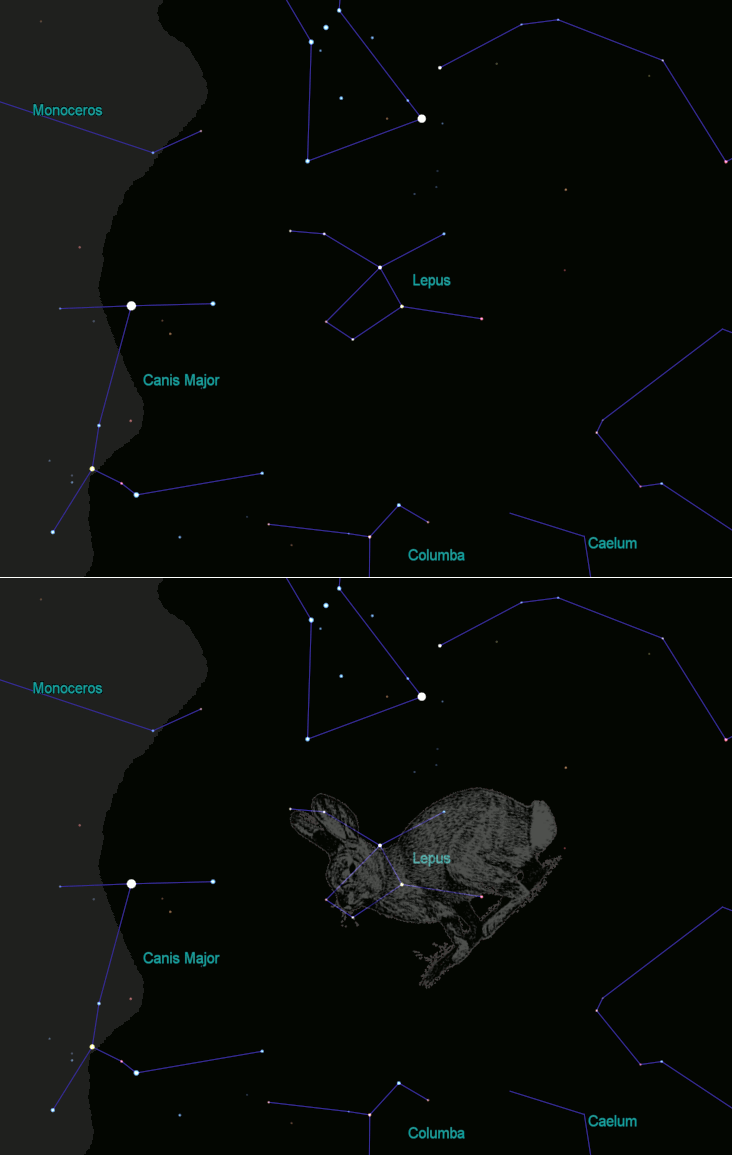
My view of Lepus the hare. Star field from Cartes du Ciel. Desert Cottontail drawing from Arizona-Senora Desert Museum website. Superimposed with GIMP.

An animation showing the stars, constellations and artwork of Lepus, Orion and Taurus from Stellarium. The constellation lines suggest a rabbit ears TV antenna. Created using Stellarium and GIMP.
01/14/2021 – Ephemeris – The constellation of Auriga the charioteer
This is Bob Moler with Ephemeris for Thursday, January 14th. Today the Sun will be up for 9 hours and 10 minutes, setting at 5:27, and it will rise tomorrow at 8:16. The Moon, 1 day past new, will set at 7:06 this evening.
The constellation Auriga the charioteer is nearly overhead at 9 p.m. It is a pentagon of stars, with the brilliant star Capella at one of its corners. Capella represents a she-goat he’s carrying. A narrow triangle of stars nearby Capella are her kids. The Kids is an informal constellation or asterism. Within and near that pentagon, binoculars and telescopes will find several star clusters, groups of hundreds of stars born in the clump we still see them in. These star clusters will appear as fuzzy spots in binoculars. One called M38 is near the center of the pentagon. Another, M36 is to the east of it. Still another star cluster, M37, is farther east, just outside the pentagon. The M designations come from Charles Messier who 250 years ago ran into them while looking for comets.
The event times given are for the Traverse City/Interlochen area of Michigan. They may be different for your location.
Addendum
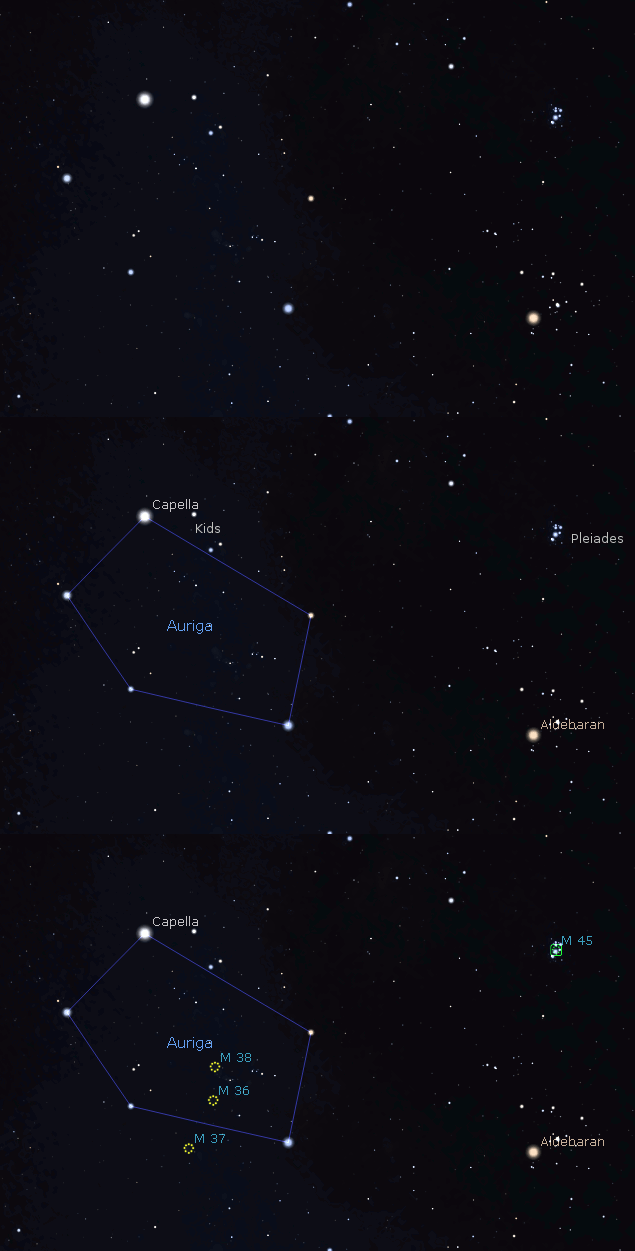
Auriga finder animation showing the Kids, nearby stars including Aldebaran and the sideways V shape of the Hyades (unlabeled) of Taurus the bull and the Pleiades AKA M 45. Created using Stellarium and GIMP.
01/12/2021 – Ephemeris – The celestial river Eridanus
This is Bob Moler with Ephemeris for Tuesday, January 12th. Today the Sun will be up for 9 hours and 7 minutes, setting at 5:25, and it will rise tomorrow at 8:17. The Moon, 1 day before new, will rise at 8:58 tomorrow morning.
One of the more obscure constellations around is Eridanus, which depicts a river. The river starts near the lower right corner of Orion, near the bright star Rigel and flows to the right then down near the southwestern horizon, then it meanders along the horizon to the south before turning below the horizon. One has to travel to the far south to see the southern terminus of the river, the bright star Achernar. Writers over the ages have seen here the Nile and the Earth circling river Ocean of the flat earth days. Achernar is actually two stars, the brightest was discovered to be the flattest star known, due to its rapid spin. The dimensions of Achernar A has been determined to be twice as wide across its equator than from pole to pole. It’s 139 light years away.
The event times given are for the Traverse City/Interlochen area of Michigan. They may be different for your location.
Addendum
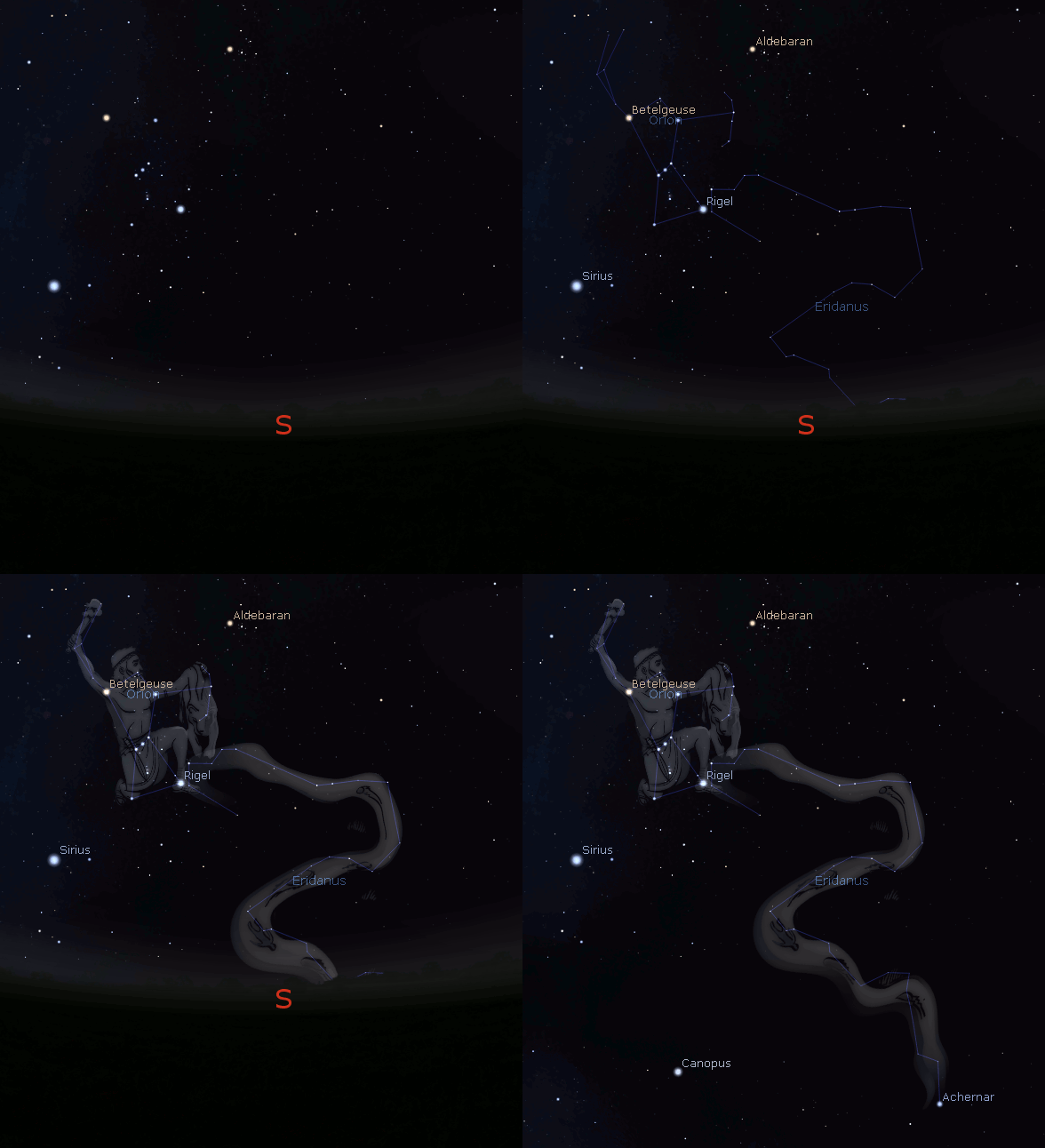
An animation of the constellation Eridanus which is a river that flows from Rigel in Orion to the star Achernar below our southern horizon at latitude 45 degrees north. Create using Stellarium and GIMP.
01/11/2021 – Ephemeris – Procyon, the before the Dog Star
This is Bob Moler with Ephemeris for Monday, January 11th. Today the Sun will be up for 9 hours and 5 minutes, setting at 5:23 pm, and it will rise tomorrow at 8:17 am. The Moon, 2 days before new, will rise at 8:05 tomorrow morning.
Visible low in the east at 8 p.m. appears the star Procyon. To its right and below is Sirius the brightest night-time star. Procyon is the bright star in the constellation Canis Minor, or lesser dog. I can find only one other star in Canis Minor. Perhaps it’s a hot dog. If Sirius, in Canis major is the Dog Star then Procyon should be the Little Dog Star. However, Procyon is an interesting name. It means “Before the dog”, which is an allusion to the fact that Procyon, though east of Sirius actually rises before it. This is due to Procyon’s more northerly position. This effect doesn’t work south of the equator, however. Sirius will rise at about 7:30 tonight. Procyon is a star much like Sirius but is 32% farther away. It’s 11.4 to Sirius’ 8.6 light years away.
The event times given are for the Traverse City/Interlochen area of Michigan. They may be different for your location.
Addendum
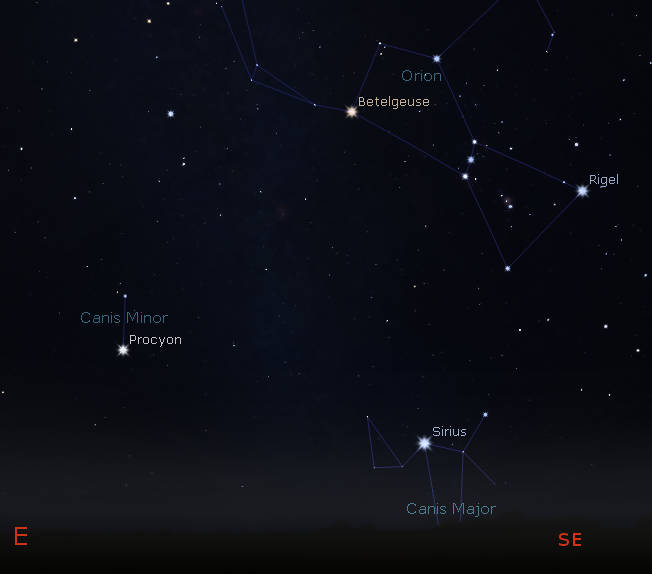
Orion and his hunting dogs in early winter (8 pm, January 11, 2021) showing that Procyon does rise before Sirius.
01/07/2021 – Ephemeris – The constellations Orion and Taurus interact
This is Bob Moler with Ephemeris for Thursday, January 7th. Today the Sun will be up for 8 hours and 59 minutes, setting at 5:19, and it will rise tomorrow at 8:19. The Moon, 1 day past last quarter, will rise at 3:13 tomorrow morning.
There are several instances in the Greek heavens where constellations appear to interact with one another. This is true with Orion the hunter and Taurus the bull. Taurus, whose face is the letter V of stars with orangish Aldebaran as his angry bloodshot eye is charging down on Orion, who has raised a lion skin shield on one arm and an upraised club in the other, ready to strike. They have been frozen in this pose for millennia. Stars below and right of the letter V of the Bull’s face suggest the front part of his body and his front legs charging at Orion. Orion also has two hunting dogs, Canis Major and Canis Minor. Canis Major with its dazzling star Sirius will rise around 7:30 on a line extended down from Orion’s belt.
The event times given are for the Traverse City/Interlochen area of Michigan. They may be different for your location.
Addendum
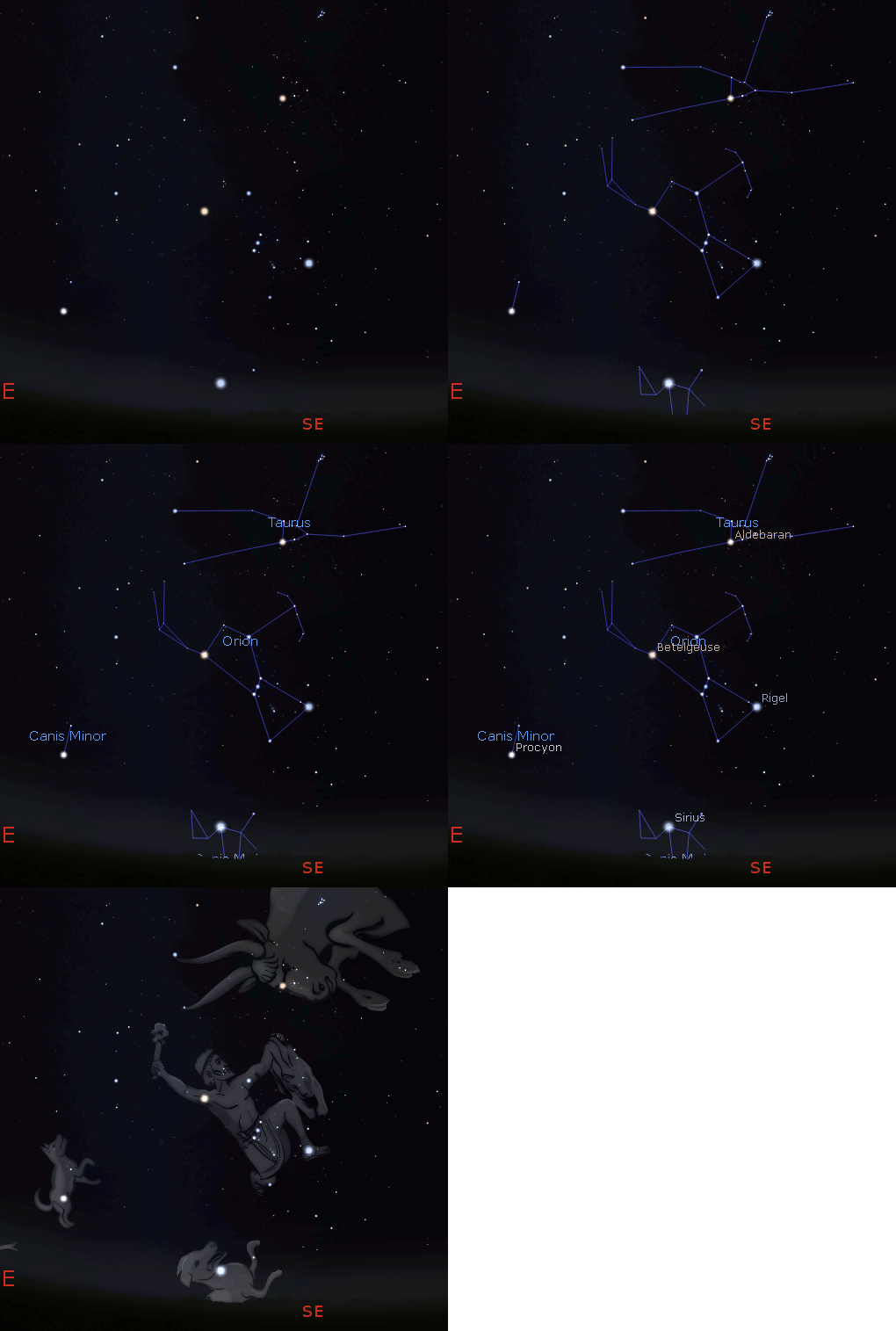
The Orion-Taurus Tableau. Seen around 8 pm, January 7, 2021. Created using Stellarium.
01/05/2021 – Ephemeris – Orion’s named stars and their meanings
This is Ephemeris for Tuesday, January 5th. Today the Sun will be up for 8 hours and 57 minutes, setting at 5:17, and it will rise tomorrow at 8:19. The Moon, 1 day before last quarter, will rise at 12:42 tomorrow morning.
The constellation of Orion the hunter is visible in the southeast at 8 p.m. The names of the stars of Orion are interesting in themselves. Starting at the top left of the seven bright stars of Orion’s torso is Betelgeuse the bright red star, whose name means something like “Armpit of the Giant”. The star in Orion’s other shoulder is Bellatrix the “Amazon Star”. Below are the three stars of Orion’s belt, from left to right; Alnitak, Alnilam and Mintaka. Their names mean “Girdle”, “Belt of Pearls”, and “Belt” respectively. Down to Orion’s knees we look on the left to the star Saiph pronounced “Safe”* which means “Sword”, though it is a star in his knee. Finally, there’s the bright blue-white star Rigel whose name means “Left Leg of the Giant” in Orion’s other knee. These are the important stars that make up the figure of Orion in the sky. [BTW. most star names are Arabic, and what survives of them is just a part of the original Arabic phrases.]
* In the radio program I pronounced the word then spelled it out.
The event times given are for the Traverse City/Interlochen area of Michigan. They may be different for your location.
Addendum
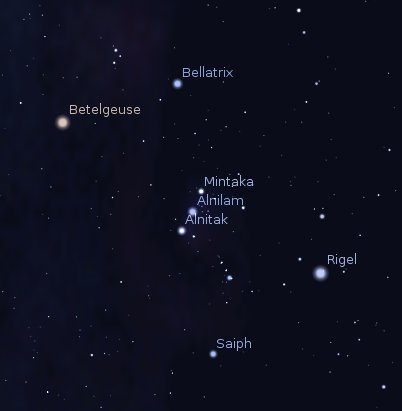
The named stars of Orion. Created using Stellarium.
12/15/2020 – Ephemeris – Hyades, the face of Taurus the bull
This is Ephemeris for Tuesday, December 15th. Today the Sun will be up for 8 hours and 49 minutes, setting at 5:02, and it will rise tomorrow at 8:14. The Moon, 1 day past new, will set at 6:03 this evening.
The face of the constellation Taurus the bull looks like the letter V sideways above the rising Orion the Hunter in the east at 9 p.m. The bright star at the tip of a letter V of stars is Aldebaran. Look with binoculars at the letter V shape and you will see the stars of the Hyades star cluster The Hyades is the closest star cluster to us, at about 153 light years. And is important for that reason. Before satellites like Hipparcos and Gaia the Hyades was the only star cluster that could be directly measured by a technique called parallax, using the radius of the Earth’s orbit as one side of a surveyors enormous triangle. Its many stars at the same distance were used to determine distances of star clusters even farther away. Additional techniques based on the distance of the Hyades allowed us to measure distances to the nearest galaxies.
The event times given are for the Traverse City/Interlochen area of Michigan. They may be different for your location.
Addendum
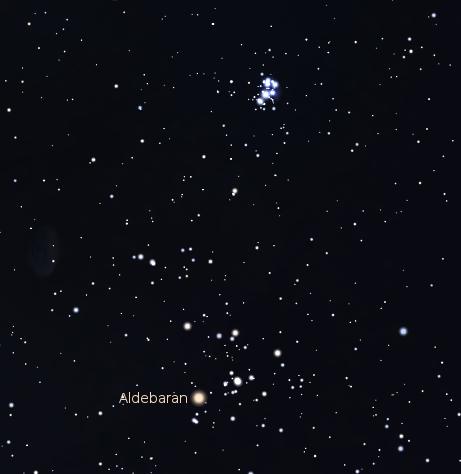
Aldebaran in the ‘V’ shape of the Hyades (The face of Taurus the bull) with the Pleiades above. Aldebaran is not part of the Hyades, being about halfway between us and the cluster. Created using Stellarium.
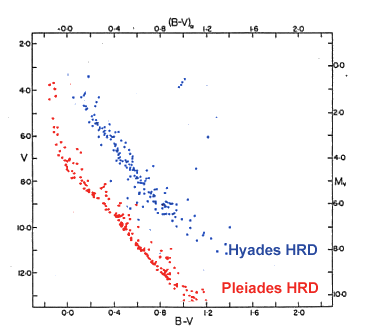
HR diagram showing the Hyades and Pleiades. Credit: European Southern Observatory.
The Hertzsprung–Russell diagram or HR diagram is one of the great astronomical tools developed in the early 20th century by plotting stars by surface temperature horizontally (hot to cool, left to right) and brightness vertically. It turns out that stars in the prime of life and shining via converting hydrogen to helium lie on a diagonal line from hot and bright from the upper left to cool and dim to the lower right. The line is called the main sequence. In plotting the Hyades stars against other star cluster stars the vertical displacement of the main sequence line is a function of the relative distances of the two star clusters from us. This is just one of the uses of the HR diagram.
12/08/2020 – Ephemeris – Finding Taurus the bull
This is Ephemeris for Tuesday, December 8th. Today the Sun will be up for 8 hours and 54 minutes, setting at 5:02, and it will rise tomorrow at 8:08. The Moon, 1 day past last quarter, will rise at 1:39 tomorrow morning.
Orion is the big splashy constellation in the east southeast by 9 in the evening. Above it is another famous constellation Taurus the bull. Its face is a letter V shape of stars on its side with the open end of the V to the left. The bright star at the lower left end of the sideways V is the ruddy star Aldebaran, the Bull’s angry bloodshot eye. The bull is charging down at Orion. The Pleiades, also known as the seven sisters, is the cluster of stars in his shoulder, above the V. The stars in the face of Taurus, except for Aldebaran belong to a star cluster like the Pleiades, but closer and older, called the Hyades. In Greek mythology the Hyades are half sisters to the Pleiades, all fathered by the god Atlas.
The event times given are for the Traverse City/Interlochen area of Michigan. They may be different for your location.
Addendum
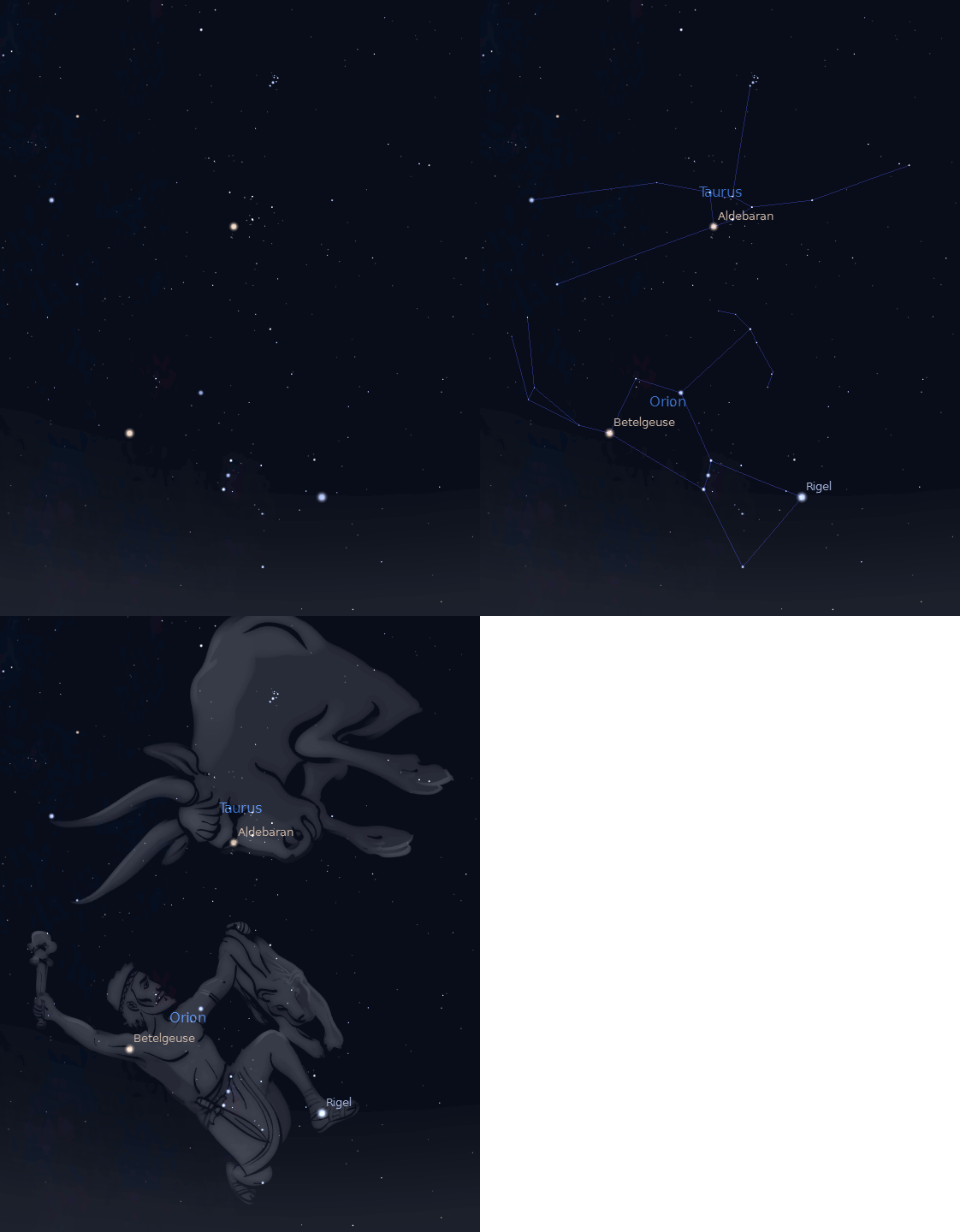
Three views of Taurus the bull and Orion the hunter for 9 p.m. on December 8th. Created using Stellarium and GIMP.
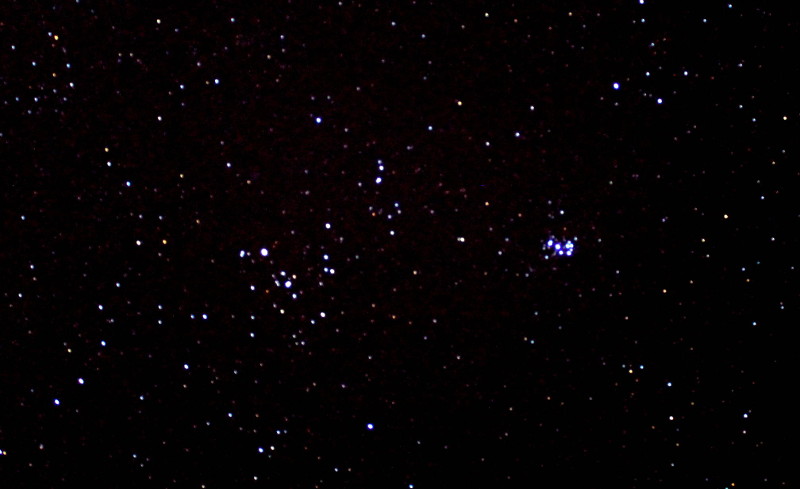
The Pleiades (right) and the Hyades (left) in this photograph I took January 4, 2016. The orientation is a bit different from how it appears in early December.
12/07/2020 – Ephemeris – Looking forward to the best of winter: Orion
This is Ephemeris for Monday, December 7th. Today the Sun will be up for 8 hours and 55 minutes, setting at 5:02, and it will rise tomorrow at 8:07. The Moon, at last quarter today, will rise at 12:25 tomorrow morning.
Orion, the central constellation of the winter evening sky will be completely risen by 9 this evening. Then it can be seen low in the east-southeast it’s upright rectangle of stars tilted to the left. The topmost star to the left in this rectangle is the famous red giant star Betelgeuse, which is reportedly dimming again. It’s in Orion’s shoulder. In his other shoulder is Bellatrix, a name known to Harry Potter fans. In his knees are Rigel, a blue-white giant star and Saiph. In the center of the rectangle are three stars in a straight line, now almost vertically arranged, Orion’s belt. And below his belt what seem to be three more stars, his sword. In the center of the sword stars can be found, with binoculars or telescope, Orion’s most famous feature, the Great Orion Nebula.
The event times given are for the Traverse City/Interlochen area of Michigan. They may be different for your location.
Addendum
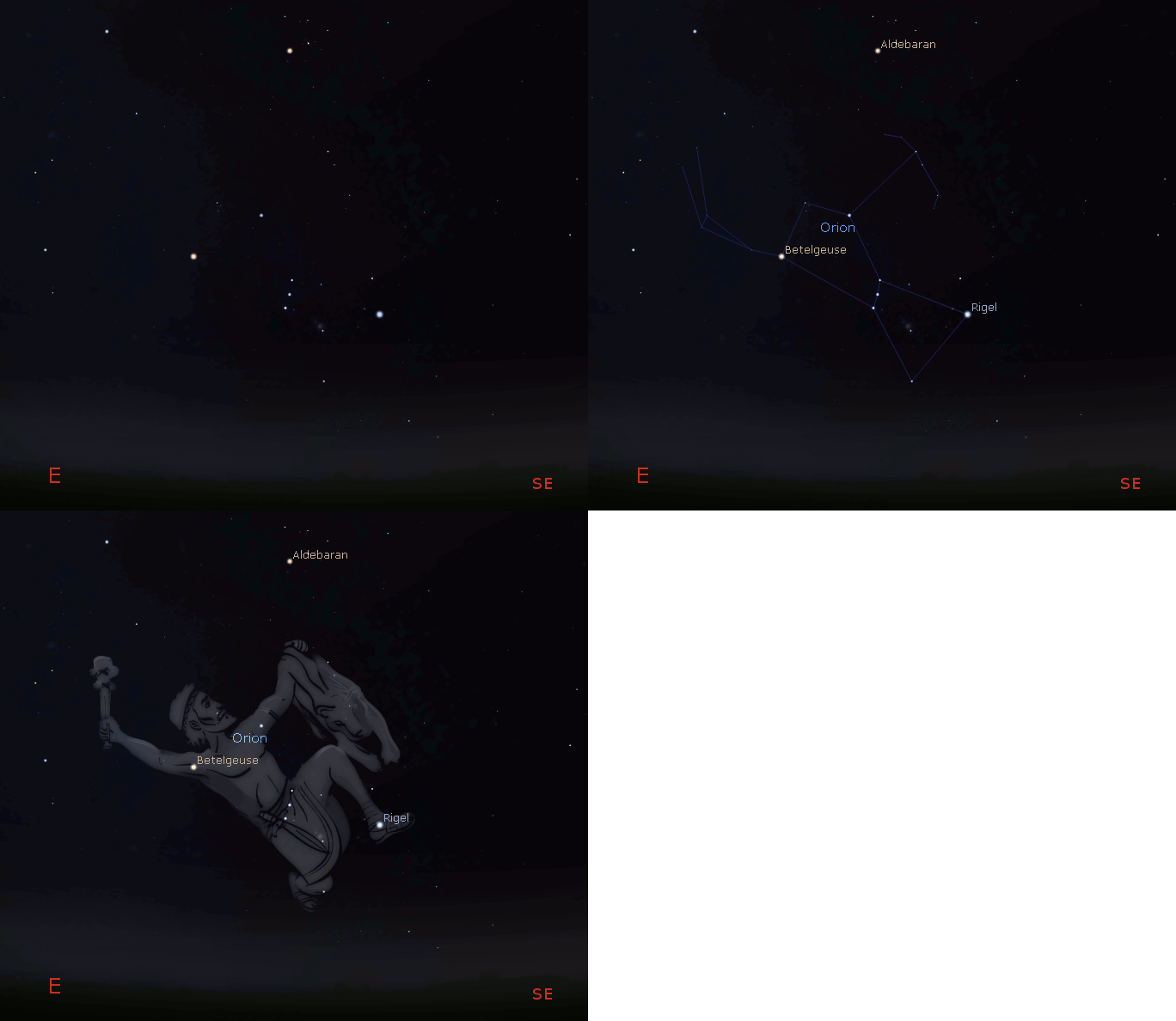
Orion early December finder animation for 9 pm December 7th. Created using Stellarium and GIMP.
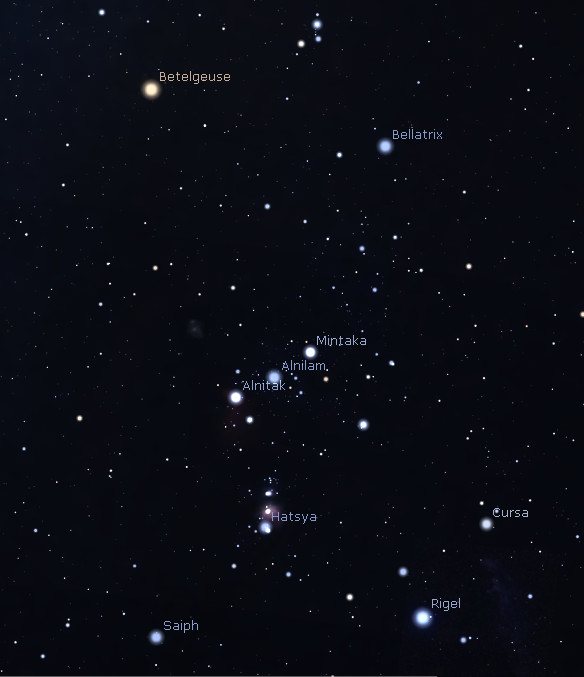
Orion’s named stars including the belt stars. Cursa, though named belongs to the neighboring constellation Eridanus the river. Created using Stellarium.
11/17/2020 – Ephemeris – The Pleiades in legends from different cultures
This is Ephemeris for Tuesday, November 17th. Today the Sun will be up for 9 hours and 29 minutes, setting at 5:12, and it will rise tomorrow at 7:44. The Moon, 2 days past new, will set at 7:23 this evening.
Let’s look at how some other cultures saw the Pleiades, the star cluster that is seen in the eastern sky these evenings. To the Anishinaabe native peoples around here the Pleiades is the “Hole in the Sky” or the seven stones that are heated for the sweat lodge ceremony. To the Kiowa these were sister stars that had been whisked into the sky from the top of Devils Tower in Wyoming where they were threatened by a huge bear. In Norse mythology these were the goddess Freya’s hens. The name we know them by has rather misty origins. Some think the Greek name is from the mother of the seven sisters, Pleione. The Greek word for sail is similar to Pleiades, and it seems the appearance of the Pleiades in the morning sky saw the best sailing weather in the Mediterranean.
The event times given are for the Traverse City/Interlochen area of Michigan. They may be different for your location.
Addendum

Seven maidens being attacked by a giant bear, having fled to the top of Devil’s Tower in Wyoming. Painting by Herbert Collins, https://www.nps.gov/deto.
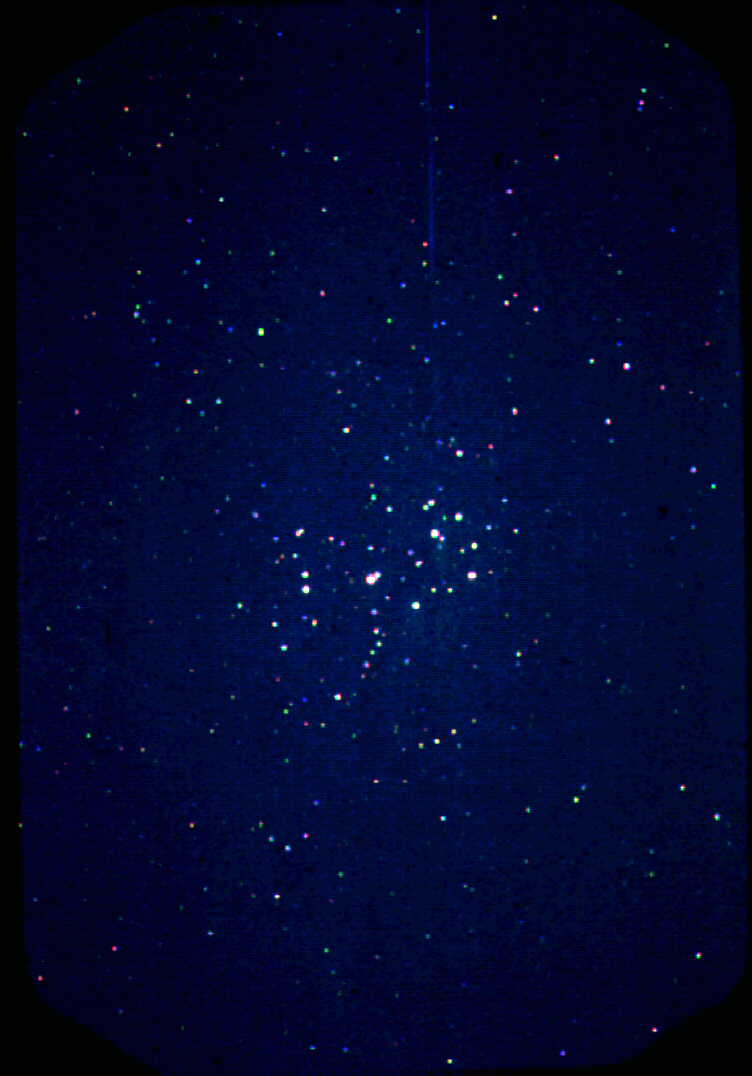
The Pleiades, about what you’d see in binoculars, more than the 6 or 7 stars visible to the naked eye. The brighter stars are Freya’s Hens and also the Seven Sisters and Indian maidens. Credit Bob Moler.
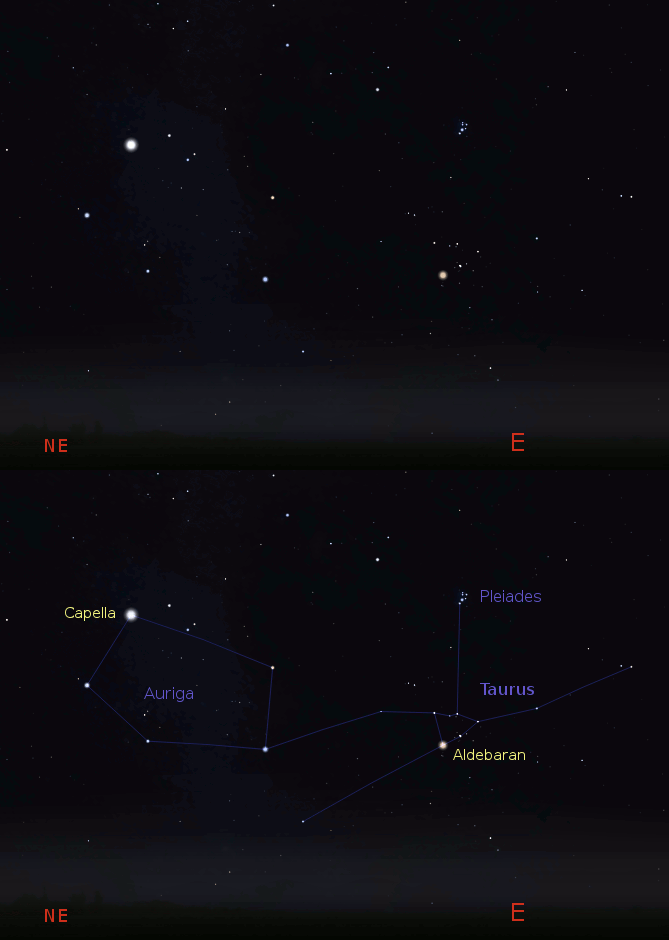
Pleiades finder animation looking east about 8 pm in mid-November. Created using Stellarium.
 Bob Moler's Ephemeris Blog