Archive
Ephemeris: 01/05/2026 – We just passed perihelion… Can’t you feel the warmth?
This is Ephemeris for Monday, January 5th. Today the Sun will be up for 8 hours and 57 minutes, setting at 5:16, and it will rise tomorrow at 8:19. The Moon, 2 days past full, will rise at 8:10 this evening.
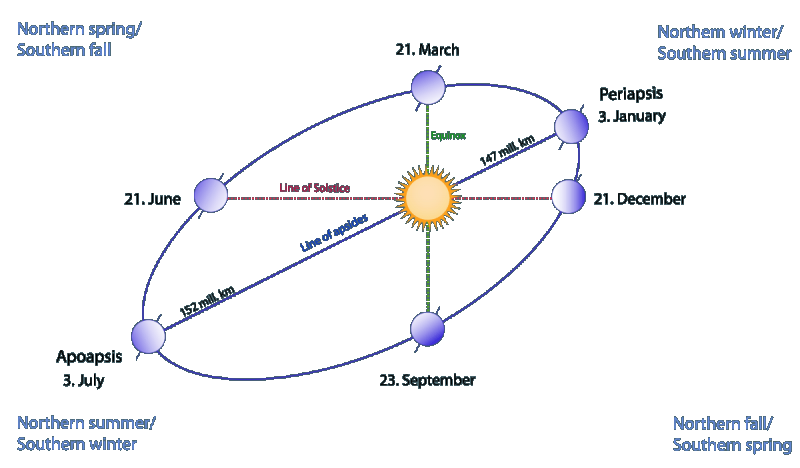
While we were busy with other matters, several astronomical events happened over the weekend. First, on Friday we had our latest sunrise, so our lengthening days are beginning to show up in the morning now. On Saturday the Earth passed perihelion, that is its closest point in its orbit to the Sun. That doesn’t make things any warmer, but it does make winter the shortest season by about four days shorter than summer. Not that you could tell in Northern Michigan. The distance of the Earth from the Sun is still hanging around 91.4 million miles. The earth is moving faster so we move through winter quicker. Also, there was a meteor shower, the Quadrantids, which peaked on Saturday, but was pretty much wiped out by the full moon.
The astronomical event times given in this blog are for the Traverse City/Interlochen area of Michigan (Lat 44.7° N, Long 85.7° W; EST, UT – 5 hours) unless stated otherwise. Times will be different for other locations.
Addendum
Ephemeris: 07/03/2025 – The Sun is farthest away today
This is Bob Moler with Ephemeris for Thursday, July 3rd. Today the Sun will be up for 15 hours and 29 minutes, setting at 9:31, and it will rise tomorrow at 6:03. The Moon, 1 day past first quarter, will set at 1:36 tomorrow morning.
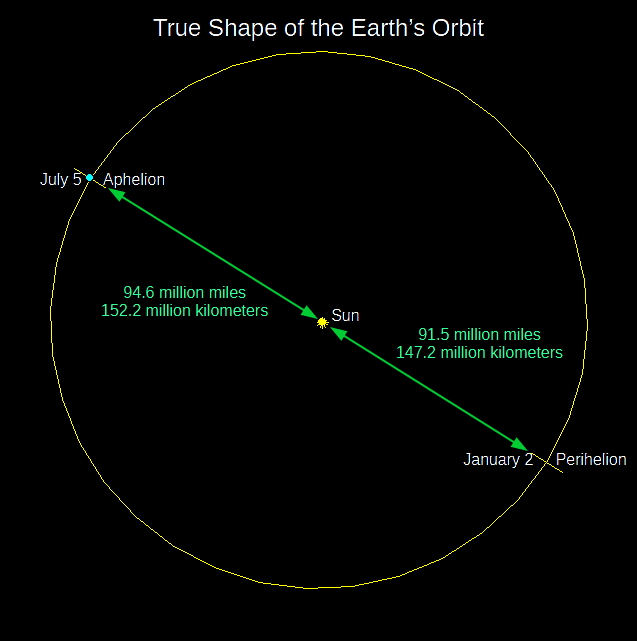
This afternoon at 5:59 PM, the Earth will reach aphelion from the Sun, the farthest it gets from it during the year. Earth will be 94 and a half million miles away from the Sun, a bit farther than our normal 93 million. In a planet’s orbit of the Sun, the Earth is no exception, it moves slowest when farthest from the Sun than when it’s nearest. It doesn’t make much difference in the amount of heat we get from the Sun being only 1½% farther than average. But it makes summer the longest season at 94 days, versus winter’s 89 days. OK, I know it doesn’t feel like it here in Northern Michigan, but count the days between each solstice and the next equinox.
The astronomical event times given in this blog are for the Traverse City/Interlochen area of Michigan (Lat 44.7° N, Long 85.7° W; EDT, UT – 4 hours) unless stated otherwise. Times will be different for other locations.
Addendum
Ephemeris: 11/15/2024 – What causes the tides?
This is Ephemeris for Friday, November 15th. Today the Sun will be up for 9 hours and 33 minutes, setting at 5:14, and it will rise tomorrow at 7:41. The Moon, at full today, will rise at 4:48 this evening.
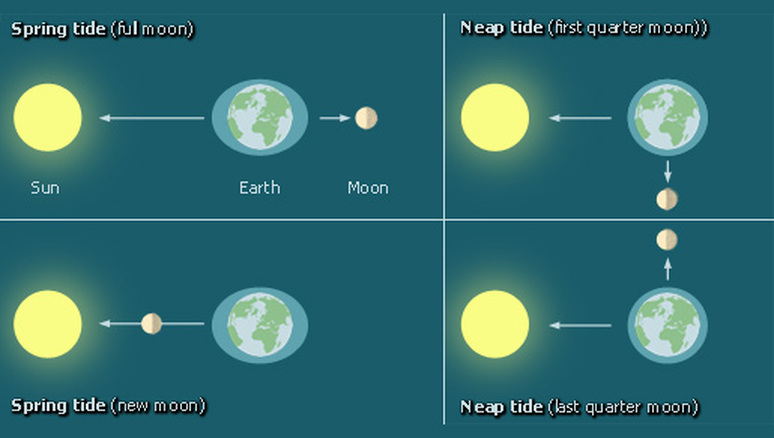
Today, at full moon, is one of the two highest tides of the month, the lunar month that is. The other highest tide comes at new moon. Both the Moon and the Sun cause tides because of their gravitational pull on the Earth. At new and full moon’s their gravitational pull gangs up on us. Since Earth is not a point body the gravitational pull of an object on the near side of the Earth pulls harder than it does on the opposite side of the Earth. Gravitational force diminishes with the square of the distance so it is the difference in the gravitational pull from one side to the other of the Earth that causes the tides to rise up on the side nearest and farthest from the gravitational pull of the moon and/or Sun. Since the Earth has a worldwide ocean, the water is free to slosh around and cause the tides.
The astronomical event times given are for the Traverse City/Interlochen area of Michigan (EST, UT – 5 hours). Times will be different for other locations.
Addendum
Ephemeris: 07/04/2024 – The Earth at aphelion
This is Ephemeris for Independence Day, Thursday, July 4th. Today the Sun will be up for 15 hours and 27 minutes, setting at 9:31, and it will rise tomorrow at 6:03. The Moon, 1 day before new, will rise at 5:10 tomorrow morning.
Tomorrow morning at 1:59 AM , actually overnight tonight, the Earth will reach aphelion from the Sun, the farthest it gets from it during the year. Earth will be 94 and a half million miles away from the Sun, a bit farther than our normal 93 million. In a planet’s orbit of the Sun, the Earth is no exception, it moves slowest when farthest from the Sun than when it’s nearest. It doesn’t make much difference in the amount of heat we get from the Sun being only 1 1/2% farther than average. But it makes summer the longest season at 94 days, versus winter’s 89 days. OK, I know it doesn’t feel like it here in Northern Michigan, but count the days between each solstice and the next equinox.
The astronomical event times given are for the Traverse City/Interlochen area of Michigan (EDT, UT–4 hours). They may be different for your location.
Addendum
Ephemeris: 04/22/2024 – Earth Day, support your local planet!
This is Bob Moler with Ephemeris for Earth Day, Monday, April 22nd. Today the Sun will be up for 13 hours and 51 minutes, setting at 8:37, and it will rise tomorrow at 6:44. The Moon, 1 day before full, will set at 6:28 tomorrow morning.
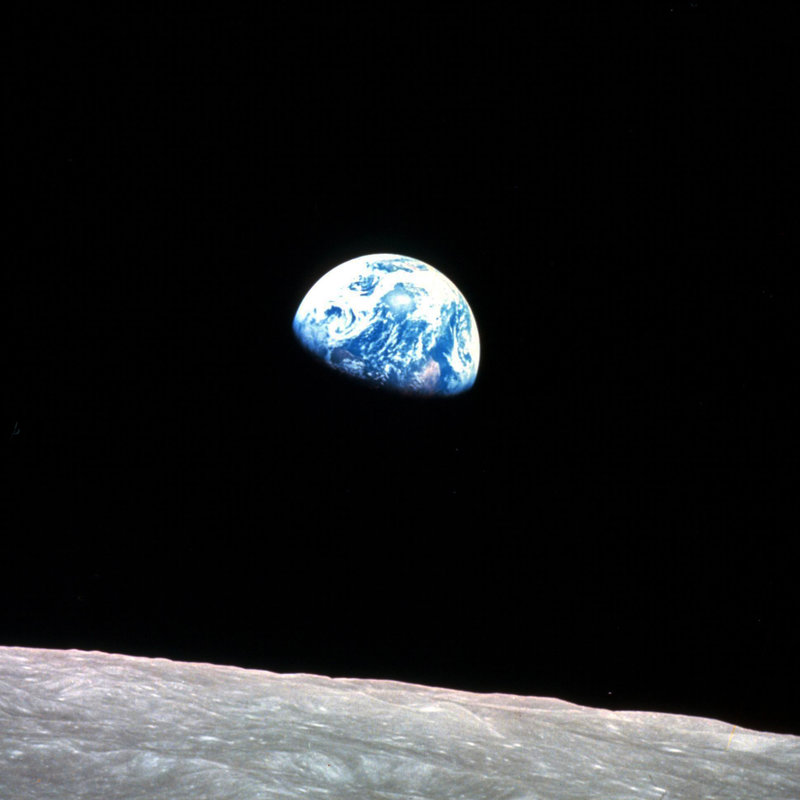
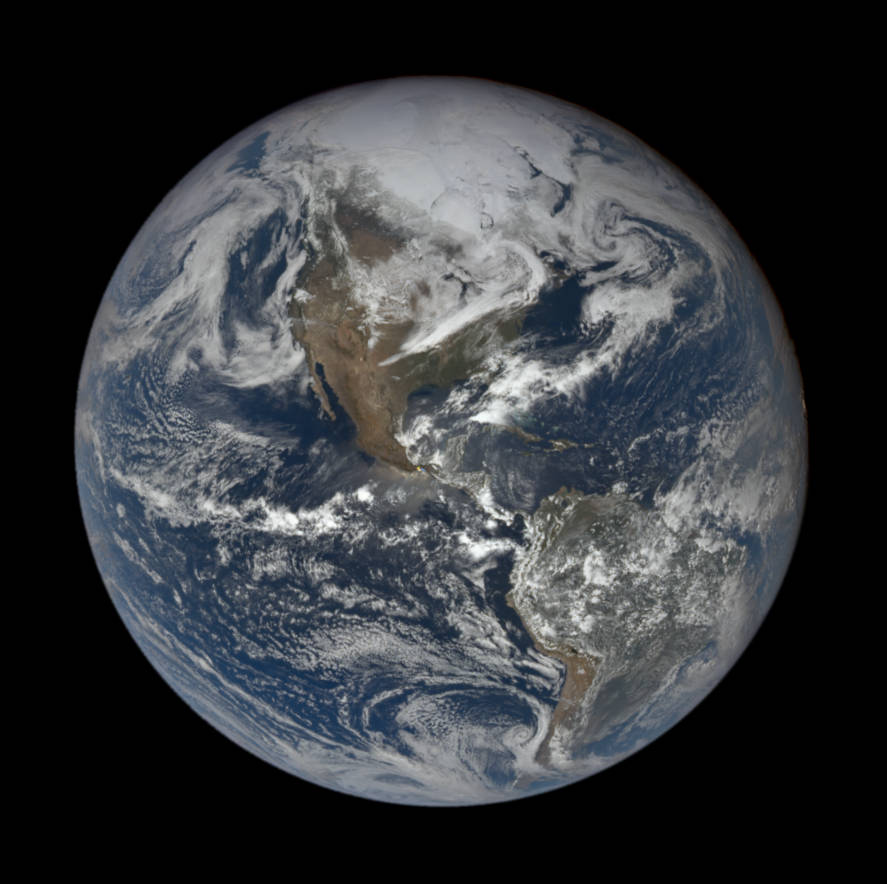
Earth Day was established in 1970, 2 years after William Anders in Apollo 8 took a picture of the Earth rising over the desolate moon, the Earth, a blue white oasis, in a hostile universe. I say support your local planet, there is no Planet B in case you messed this one up. Elon Musk wants to make the human race multi-planetary, which is a fine idea over time. It may take over a century to make any kind of Mars Base self-sustaining, if ever. I can’t see how we can terraform Mars, that is make Mars earth-like, because of lack of material. Mars probably was earth-like in its early days, but it has no magnetic field. Any large atmosphere it had when it had oceans has long been stripped away by the solar wind. It is here that we must make our stand!*
* Paraphrasing Carl Sagan “Pale Blue Dot”.
The astronomical event times given are for the Traverse City/Interlochen area of Michigan (EDT, UT–4 hours). They may be different for your location.
Addendum
Ephemeris: 12/21/2023 – Winter comes late this evening
This is Bob Moler with Ephemeris for Thursday, December 21st. Today the Sun will be up for 8 hours and 48 minutes, setting at 5:04, and it will rise tomorrow at 8:17. The Moon, 2 days past first quarter, will set at 3:37 tomorrow morning.
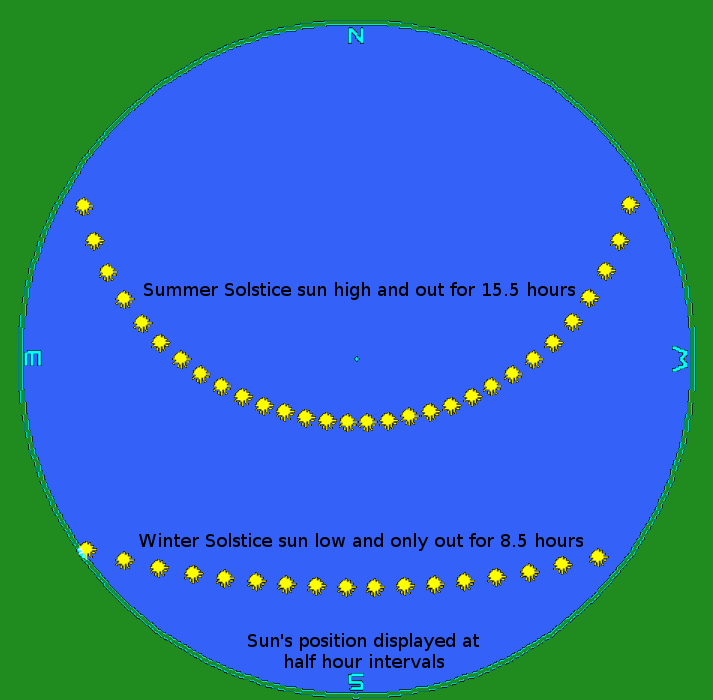
Today is mostly the last day of Fall, since the moment of solstice will arrive at 10:28 pm (03:28 on the 22nd UTC). If you’re south of the equator this is the first day of summer. The Earth reaches a point in its orbit where its North Pole is tipped its furthest away from the Sun, and is in shadow in the middle of its six-month night. The Sun for us is up only 8 hours, 48 minutes, and to boot the Sun only rises 22 degrees above the horizon giving us the least amount of energy of any day of the year. Why did the ancients celebrate this time of year? That’s because the Sun had slowed and stopped its drift southward and was beginning to come back higher in the sky. Spring and summer would eventually return!
The astronomical event times given are for the Traverse City/Interlochen area of Michigan (EST, UT –5 hours). They may be different for your location.
Addendum
07/06/2023 – Ephemeris – Today the Earth is farther from the Sun than anytime this year
This is Ephemeris for Thursday, July 6th. Today the Sun will be up for 15 hours and 26 minutes, setting at 9:30, and it will rise tomorrow at 6:04. The Moon, halfway from full to last quarter, will rise at 12:16 tomorrow morning.
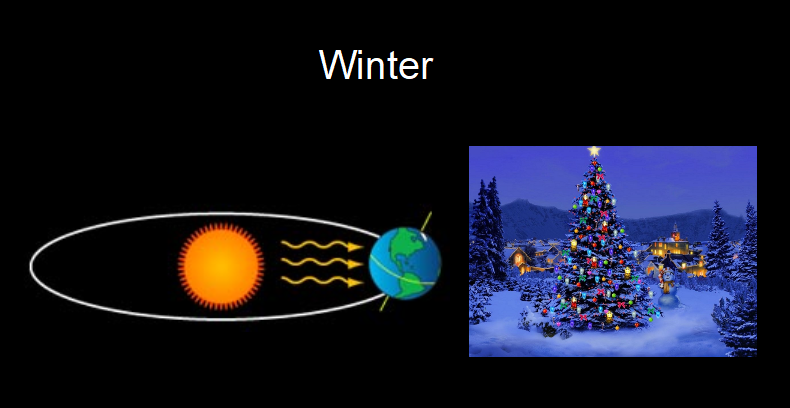
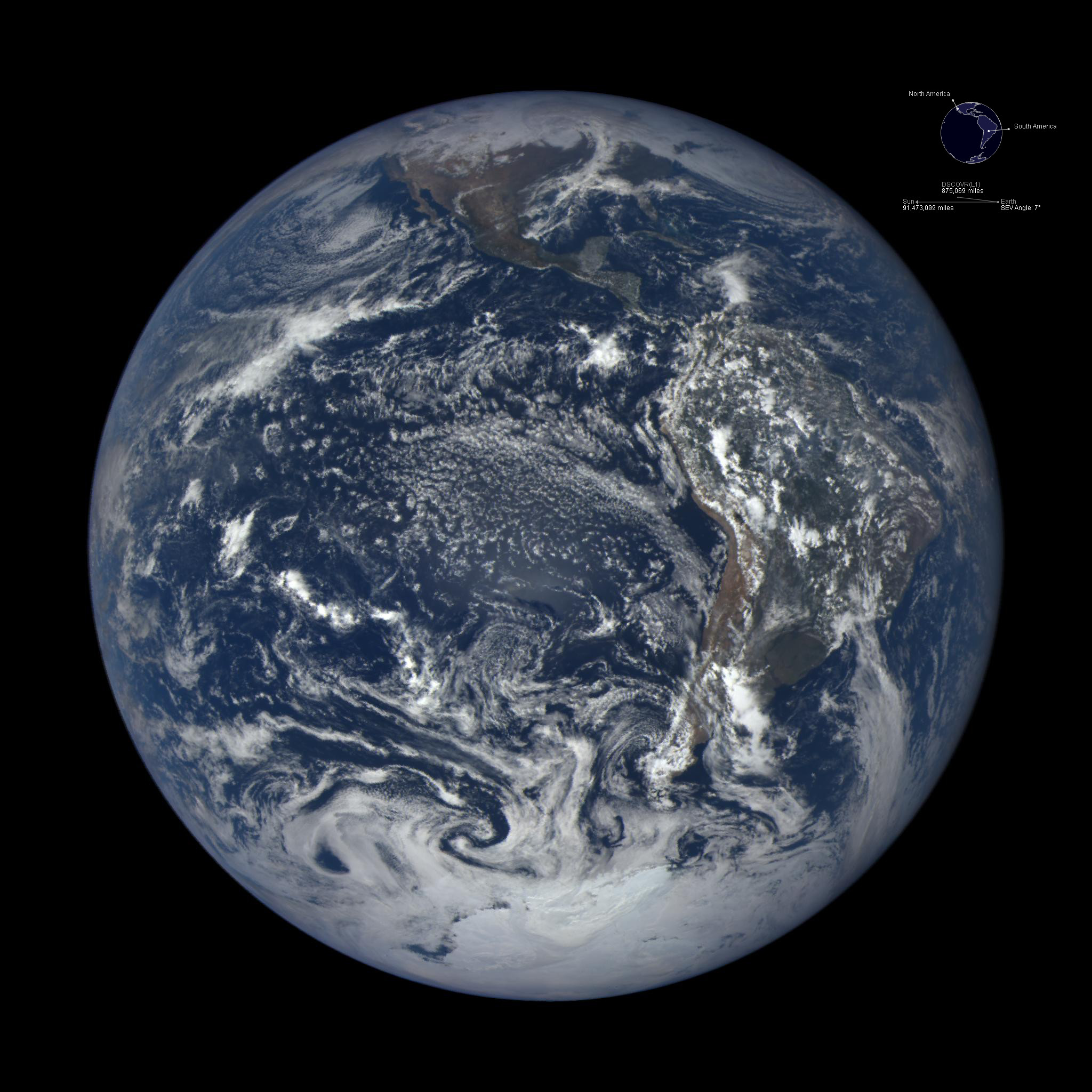
Today, the Sun is at its farthest distance from the Earth. It’s called aphelion. The exact time actually occurred at 4:59 this morning at a distance of 94 and a half million miles away. Because of the gravitational pull of the Moon and planets on the Earth, especially Jupiter and Venus and gravitational pull of the planets, especially Jupiter on the Sun, the aphelion and perihelion, the closest date in January don’t occur on the same date or same distance every year. The date wanders by a day or two each year. The entire distance variation of the Earth from the Sun is plus or minus 1.5 million miles (2.4 million kilometers) over the year, makes summer the longest season by a few days because the Earth moves slower when farther from the Sun, than when it is nearer.
The astronomical event times given are for the Traverse City/Interlochen area of Michigan (EDT, UT –4 hours). They may be different for your location.
Note: Apoapsis and Periapsis are generic terms for the farthest and nearest points in an orbit to the central body. For a body orbiting the Sun, it’s aphelion and perihelion. For a satellite of the Earth, it’s apogee and perigee.
01/03/2022 – Ephemeris – We’re the closest we get to the Sun of the whole year today
This is Bob Moler with Ephemeris for Monday, January 3rd, 2022. The Sun will rise at 8:20. It’ll be up for 8 hours and 54 minutes, setting at 5:14. The Moon, 1 day past new, will set at 6:14 this evening.
Today we are as close to the Sun as we’ll get for the rest of the year. The Earth will reach the perihelion point in its orbit at 7:59 this evening, at only 91.4 million miles. Since this is only a million and a half miles closer than average, it doesn’t affect the amount of heat the Earth as a whole gets from the Sun. But, since the Earth moves faster at perihelion than at any other time of the year, it makes winter the shortest season. Winter at 89 days is nearly 4 days shorter than the longest season, summer. I know, it doesn’t seem like it, but we live in Northern Michigan, and seemingly long winters come with the territory. January’s only major meteor shower, the Quadrantids, reaches peak at about 4 pm today. It reaches and falls off-peak rapidly, so we won’t have an impressive Quadrantid meteor shower this year.
The astronomical event times given are for the Traverse City/Interlochen area of Michigan (EST, UT – 5 hours). They may be different for your location.
Addendum
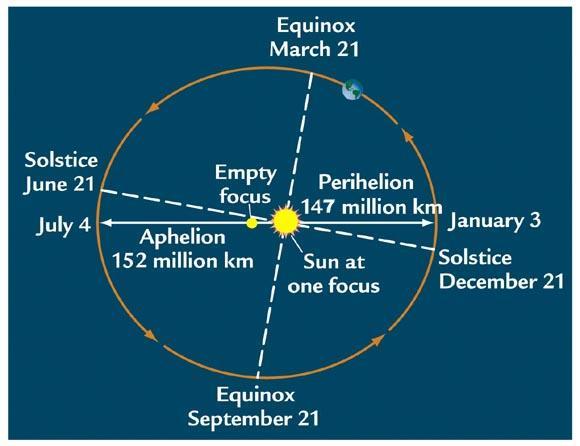
The Earth’s orbit, somewhat exaggerated, showing perihelion and the seasons. Credit: “Starts with a Bang” blog by Ethan Siegel.
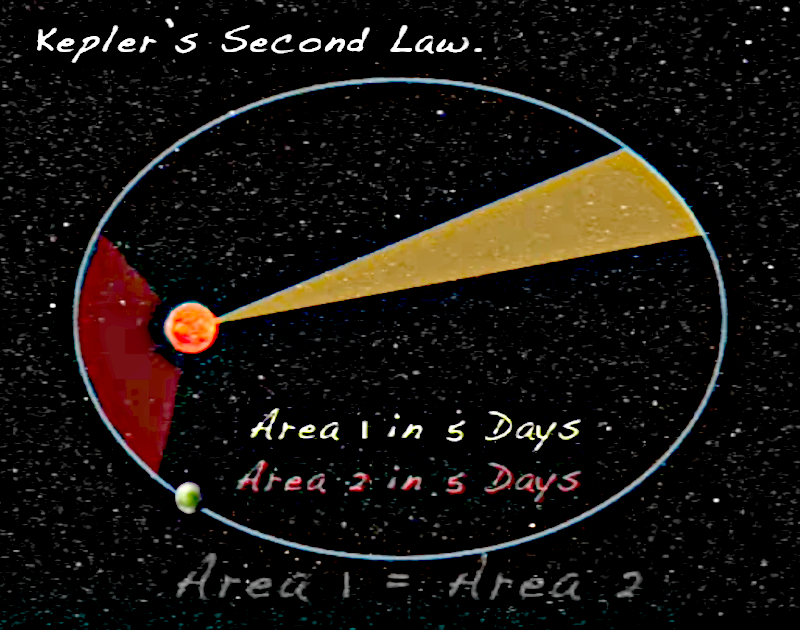
Kepler’s Second Law of Planetary Motion: the imaginary line joining a planet and the Sun sweeps equal areas of space during equal time intervals as the planet orbits. Credit: NASA, a screen capture from a video Solar Systems Dynamics-Orbits and Kepler’s Laws.
A note on the naming of the Quadrantid meteor shower. Meteor showers get their names from the constellation or nearby star where the meteor seem to come from at their peak. That point is called the radiant. The Quadrantids were named because they came from a constellation called the Mural Quadrant, back when the shower was discovered. The Mural Quadrant didn’t make the modern list of 88 constellations. The area where the Mural Quadrant resided is an area between northern Boötes, Draco and the handle of the Big Dipper.
10/21/2021 – Ephemeris – Defending the planet
This is Ephemeris for Thursday, October 21st. Today the Sun will be up for 10 hours and 41 minutes, setting at 6:47, and it will rise tomorrow at 8:07. The Moon, 1 day past full, will rise at 7:29 this evening.
This is the 4th program in 8 days here on Ephemeris about asteroids. A possible collision of an asteroid or comet has been on our collective minds since the 20-some odd pieces of Comet Shoemaker-Levy 9 hit Jupiter in July 1994. In 2016 NASA established the Planetary Defense Coordination Office to manage its ongoing planetary defense efforts. Its mission is to provide early detection of potentially hazardous objects that can come within 5 million miles of the Earth’s orbit and a size large enough to cause significant damage. Asteroid sizes would be 30 to 50 meters in diameter, that’s 90 to 150 feet in diameter or larger. It will track and issue warnings of these objects when found. It will coordinate responses to any impact threat.
The astronomical event times given are for the Traverse City/Interlochen area of Michigan (EDT, UT-4 hours). They may be different for your location.
Addendum
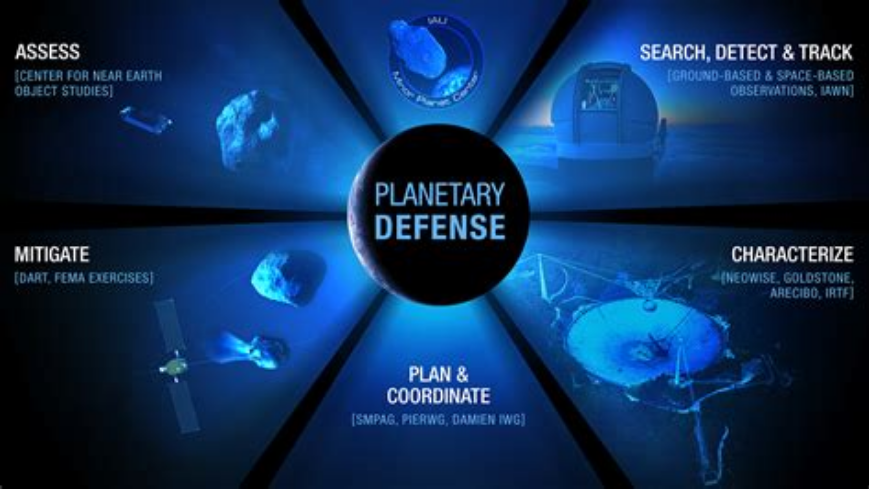
What the Planetary Defense Coordination Office does. Credit: NASA.
04/22/2021 – Ephemeris – Earth Day
This is Bob Moler with Ephemeris for Earth Day, Thursday, April 22nd. Today the Sun will be up for 13 hours and 50 minutes, setting at 8:37, and it will rise tomorrow at 6:44. The Moon, 2 days past first quarter, will set at 5:24 tomorrow morning.
The Earth is unique in the solar system. Actually every planet is unique, as we’ve found out with our spacecraft that have at least flown by every planet of the solar system, plus the dwarf planets Pluto and Ceres. But the Earth uniquely supports life as we know it. It’s the only one that we know of. It is imperative that we colonize the Moon, Mars and asteroids and live off the land, so no single disaster can wipe the human race out. However, we need to take care of the Earth, to understand and get a grip on what we’re doing to Earth’s climate. We must think of the Earth as a spaceship with both renewable resources and limited ones. Our journey is long, and the supplies will have to last. So support your local planet!
The astronomical event times given are for the Traverse City/Interlochen area of Michigan. They may be different for your location.
Addendum
 Bob Moler's Ephemeris Blog