Archive
Ephemeris: 06/30/2025 – Asteroid hitting the Moon in 2032 may cause spectacular meteor shower and danger to satellites
This is Ephemeris for International Asteroid Day, Monday, June 30th. Today the Sun will be up for 15 hours and 31 minutes, setting at 9:32, and it will rise tomorrow at 6:01. The Moon, 2 days before first quarter, will set at 12:46 tomorrow morning.
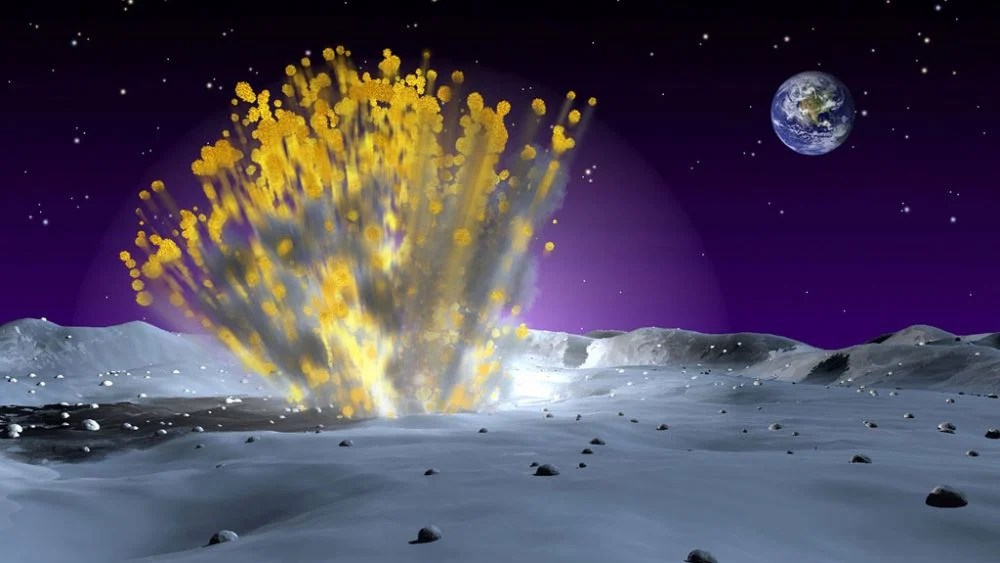
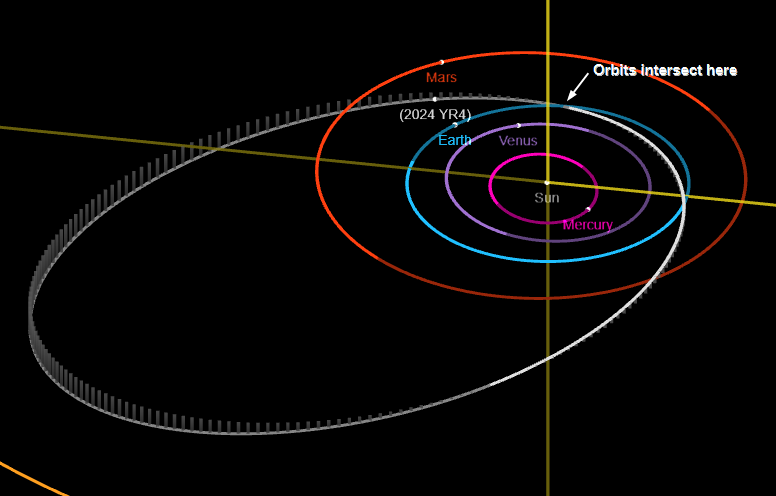
This is the 117th anniversary of the Tunguska Event, an asteroid strike that hit Siberia in 1908. An asteroid, thought to be of similar size, will pass close to the Earth, but has a 4% chance of hitting the Moon on December 22nd 2032. The asteroid was discovered near the end of last year and has the designation 2024 YR4. For a while there was a fear that this asteroid might hit the Earth. However, it was soon found that the asteroid would not hit the Earth but had a chance of hitting the Moon. Recently a paper was written that looked at what would happen to the ejecta of an impact of this asteroid on the Moon. It could be a hazard to the satellites orbiting the Earth.
The astronomical event times given in this blog are for the Traverse City/Interlochen area of Michigan (Lat 44.7° N, Long 85.7° W; EDT, UT – 4 hours) unless stated otherwise. Times will be different for other locations.
Addendum
Further reading
The Mother of All Meteor Showers Could Threaten Satellites By Evan Gough, Universe Today
Original paper: The Potential Danger to Satellites due to Ejecta from a 2032 Lunar Impact by Asteroid 2024 YR4 by Paul Wiegert et al.
Ephemeris: 03/04/2025 – Looks like asteroid 2024 YR4 will miss the Earth
This is Ephemeris for Fat Tuesday, March 4th. Today the Sun will be up for 11 hours and 20 minutes, setting at 6:35, and it will rise tomorrow at 7:12. The Moon, 2 days before first quarter, will set at 1:02 tomorrow morning.
I’ve got some good news for a change. The recently discovered small asteroid with the provisional designation 2024 YR4 it’s not going to hit the Earth on December 22nd, 2032. More precisely the percentage chance of hitting the Earth is now down to four thousandths of a percent. The recalculation was due to observations from the Subaru Telescope in Hawaii. Three separate organizations calculated the chances of the asteroid to hit. That means this number is of very high confidence. The new center of the locus that they calculated for the asteroid’s passage by the Earth now comes closer to the orbit of the Moon than it does the Earth. So that’s one less thing to worry about, although astronomers will be keeping tabs on it.
The astronomical event times given are for the Traverse City/Interlochen area of Michigan (EST, UT – 5 hours). Times will be different for other locations.
Addendum
Ephemeris: 02/14/2025 – A Valentine’s Day Rendezvous
This is Ephemeris for St Valentine’s Day, Friday, February 14th. Today the Sun will be up for 10 hours and 26 minutes, setting at 6:10, and it will rise tomorrow at 7:42. The Moon, 2 days past full, will rise at 8:34 this evening.
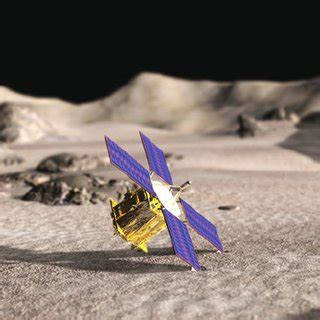
Twenty-five years ago to the day, the NEAR-Shoemaker* spacecraft entered into orbit of the near Earth asteroid 433 Eros. It wasn’t originally planned to enter orbit of the asteroid named after the Greek god of love on Valentine’s Day, 2000. It arose after an aborted course correction a year earlier. After solving the problem, a new course was plotted and NEAR-Shoemaker was gently inserted into orbit of this 21 mile long asteroid, shaped like a bent bread stick with a bite taken out of the center of it. The spacecraft spent almost a year orbiting Eros at various altitudes. The spacecraft ended its mission by gently dropping onto the middle of the asteroid, where it stayed alive for ten days before succumbing to the cold.
The astronomical event times given are for the Traverse City/Interlochen area of Michigan (EST, UT – 5 hours). Times will be different for other locations.
* The spacecraft was launched as NEAR for Near Earth Asteroid Rendezvous. It was renamed en route NEAR-Shoemaker after Eugene Shoemaker’s death in 1997. Shoemaker was a geologist who trained Apollo astronauts and proved that the Barringer Meteor Crater was indeed an impact site and not a volcanic caldera, and that most of the Moon’s craters were also caused by impacts. He with his wife Carolyn and David Levy discovered Comet Shoemaker-Levy 9, which crashed into Jupiter in 22 pieces in July 1994, gaining worldwide attention.
Addendum
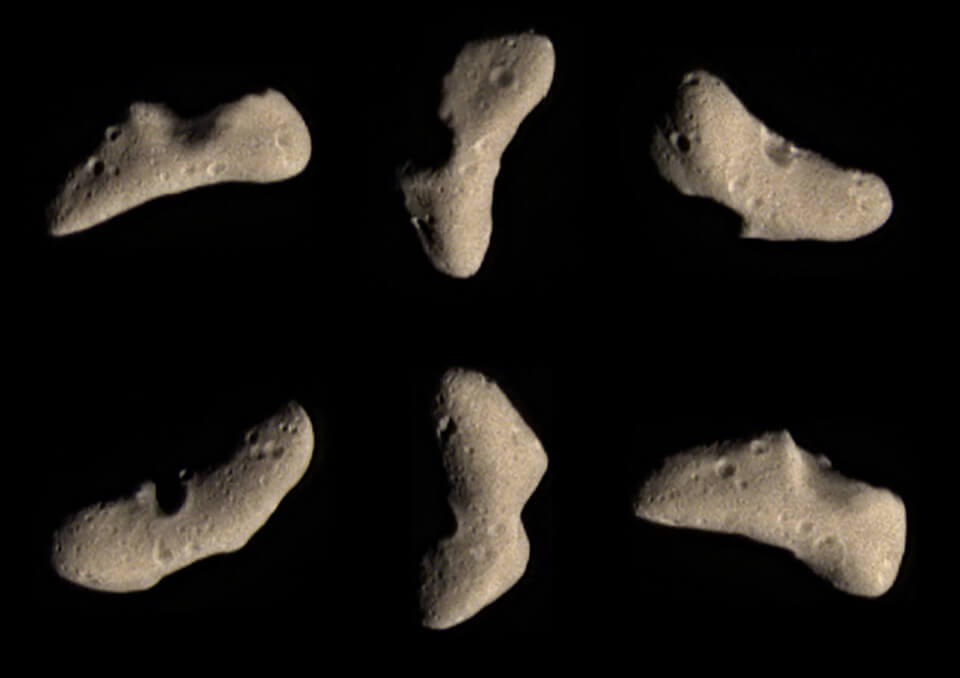
NASA/JPL/JHUAPL. Caption from: https://eros2019.imcce.fr/eros.html via Google Translate.
10/02/2022 – Ephemeris Extra – NASA goes on the offensive
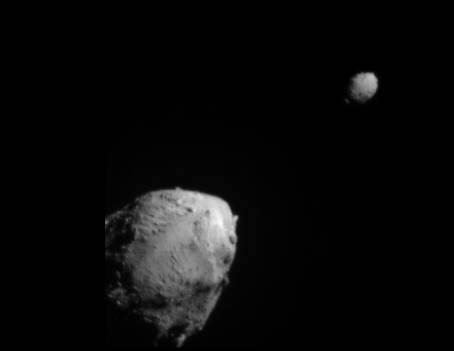
DART images of both Didymos, the big one, and Dimorphos, on approach. Credit NASA / JHAPL
This is a slightly revised version of my article in the Stellar Sentinel, the newsletter of the Grand Traverse Astronomical Society. Educators may receive a free PDF copy of this monthly publication via email, which covers astronomical topics and events visible from Northwest Lower Michigan. Send your request, stating your affiliation, to info@gtastro.org.
The score is: Asteroids-billions, NASA-1. It’s a bit unfair, since asteroids have been hitting the Earth for 4.567 billion years or so, and NASA has been around for 64 years before DART spacecraft collided with the asteroid Dimorphos. Hey, this was their first attempt at a small asteroid. As far as the 21st century destructive asteroid score is 1 to NASA’s 1, as far as I know.
That strike was in Chelyabinsk, Russia. That was February 15, 2013. We were all waiting on another asteroid making a close pass of the Earth, when the Chelyabinsk meteoroid exploded 14 miles above the city. Over a thousand people were injured by the blast wave. They saw the bright flash and rushed to the windows to see what it was. Then the blast wave hit, shattering the windows, causing glass cuts for over a thousand people. One building’s wall collapsed, and a fragment fell into a lake outside of town.
NASA’s record in attempting to hit a planetary object dates back to the early 1960s and the nine Pioneer missions to crash a probe on the Moon, sending back pictures all the way down. Back in the early 60s, just hitting a 2,100-mile (3380 kilometer) wide object a quarter of a million miles away was a dicey prospect. It’s one thing to miss the Moon on one side or the other, but to not have enough oomph to even make it all the way is downright embarrassing. NASA did much better by the end of the decade with the Apollo manned landings and bombarding the Moon with used space vehicles for seismic studies of its interior.
NASA actually collided a spacecraft into a comet. That was July 4, 2005, when the impactor part of the Deep Impact spacecraft hit Comet Tempel 1’s nucleus, attempting to study part of its subsurface. The non-impactor part was later renamed EPOXI and went on to fly by the dog-bone shaped Hartley 2 comet nucleus. Another reused comet explorer spacecraft Stardust after collecting cometary dust from Comet Wild 2 (pronounced Vilt 2), and possible interstellar dust penetrating the solar system, and after dropping the sample re-entry capsule back on Earth it ended in solar orbit. Later it was repurposed as the Stardust-NexT mission and flew by Tempel 1 six years later to study the crater the Deep Impact Impactor made in the comet.
To study the effect of a collision of a spacecraft from the Earth despite the fact that Dimorphos cannot be seen is a trick. However, the pair is an eclipsing binary from our point of view, so the brightness of the unresolved pair changes as they eclipse each other.
Before the collision, Dimorphos had an 11.9 hour orbit of Didymos. Dimorphos is a fifth the size of Didymos orbiting it at three times the primary’s radius. If the orbit is near circular, Dimorphos’ orbital velocity is only 0.39 mph (0.63 kph). It should be relatively easy to see a tiny change in Dimorphos’ orbital period.
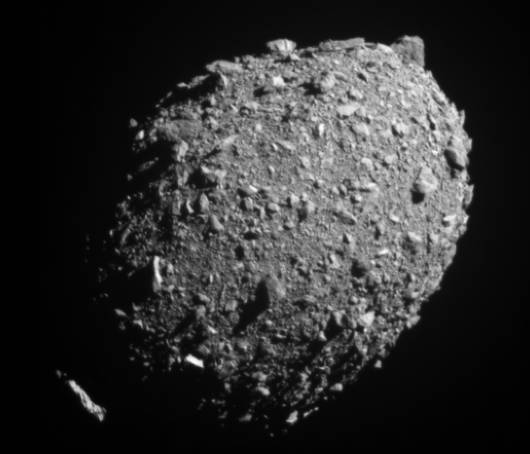
Last frame Dimorphos fit in from DART. Credit NASA / JHAPL.
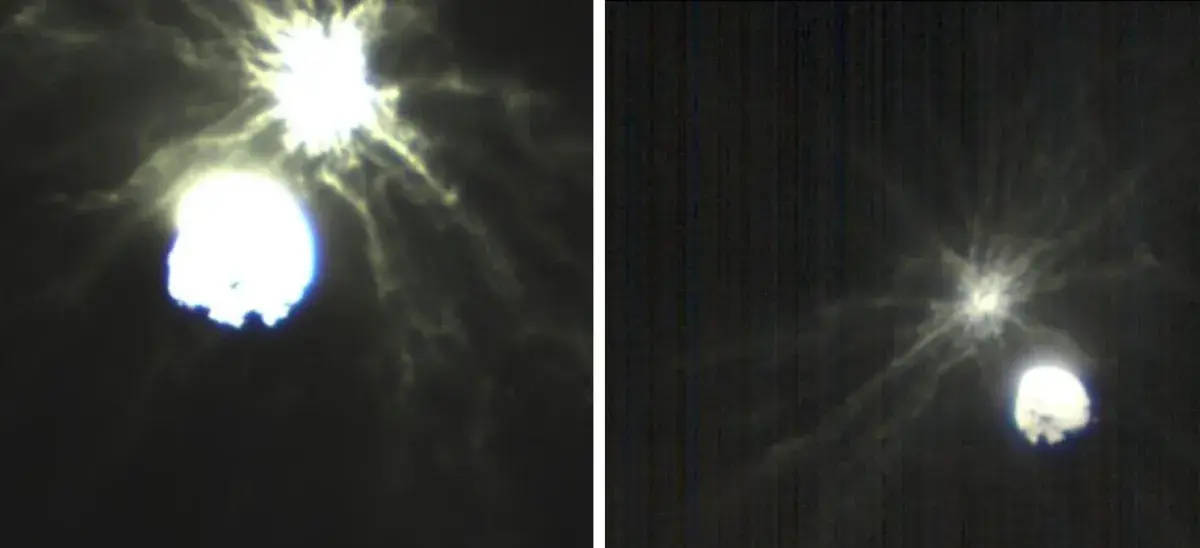
Two images from the LiciaCube satellite launched from the DART spacecraft 15 days before the impact, and trailing it to record the collision with its wide and narrow angle imagers. Dimorphos does appear to be a rubble pile asteroid from its appearance and the amount of ejecta caused by the impact. The ejecta adds to the effect of the spacecraft’s kinetic energy by pushing away from the asteroid by Newton’s third law of motion. Credit: Italian Space Agency.
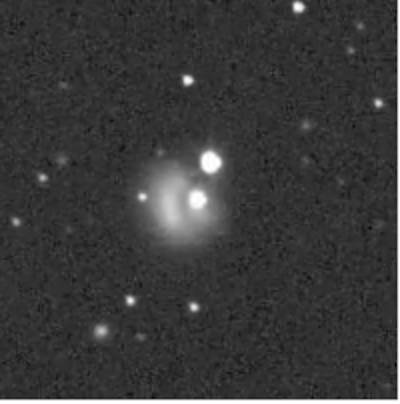
A frame from a time-lapse video taken from the ATLAS Project’s South African observatory of the unresolved Didymos – Dimorphos pair and the expanding ejecta cloud. The asteroid pair developed a dust tail like a comet for a while.
ATLAS is an acronym for a rather apocalyptic title “Asteroid Terrestrial-impact Last Alert System”. Developed by the University of Hawai’i and funded by NASA. It has two telescopes in Hawai’i, one in Chile, and one in South Africa. Credit: NASA/UH.
Days later, Dimorphos was exhibiting a thin dust tail, like a comet.
Now we wait on Earth’s observatories to observe of the period of Dimorphos’ orbit. It should decrease the orbital time.
11/19/2021 – Ephemeris – The Earth is being stalked by an asteroid
This is Bob Moler with Ephemeris for Friday, November 19th. Today the Sun will be up for 9 hours and 25 minutes, setting at 5:10, and it will rise tomorrow at 7:46. The Moon, at full today, will rise at 5:23 this evening.
We’re being stalked by an asteroid. Its name is, and I’m not going to say it twice: Kamo`oalewa or 2016 HO3 for short. It was discovered with the Pan-STARRS telescope at Haleakala on Maui on April 27, 2016. Which explains the name. It’s Hawaiian for something that oscillates. It’ll make big circles in the evening sky for a while, then it will retreat while the Earth moves ahead of it and almost overtakes it. It will oscillate in the morning sky for a while, I mean years. Then it will head around the Earth’s orbit and go back to the evening or trailing part of the orbit and the sky and do it all over. It never seems to get closer than 5 million miles away. Some astronomers think it might be a chunk of the Moon blasted off by an asteroid impact.
The astronomical event times given are for the Traverse City/Interlochen area of Michigan (EST, UT – 5 hours). They may be different for your location.
Addendum
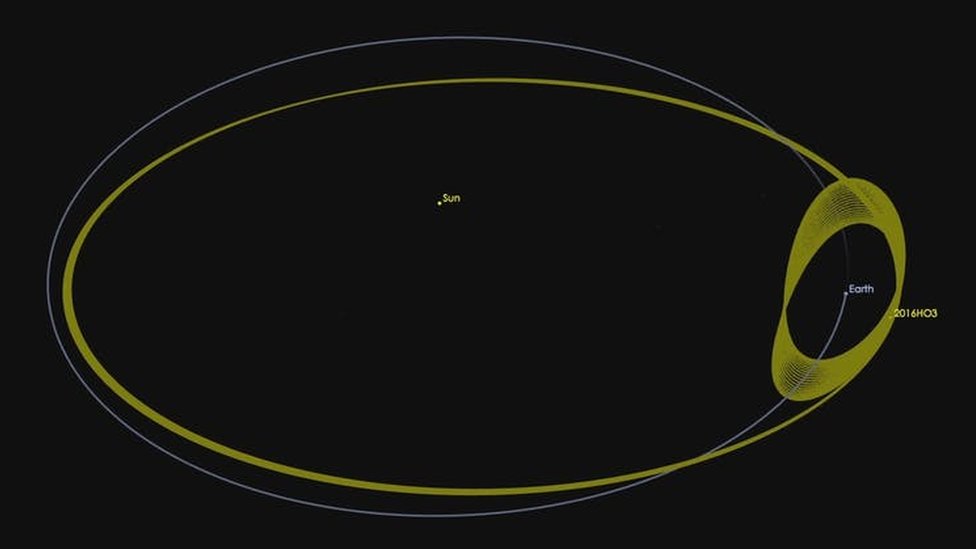
Kamo`oalewa (2016 HO3) orbit around the Sun, and shows how it interacts with the Earth. Credit: NASA/JPL.
Check out all the weirdness that is Kamo’oalewa here: https://en.wikipedia.org/wiki/469219_Kamo’oalewa.
03/30/2021 – Ephemeris – Apophis asteroid will not hit the Earth in the next 100 years, if ever
This is Bob Moler with Ephemeris for Tuesday, March 30th. Today the Sun will be up for 12 hours and 41 minutes, setting at 8:08, and it will rise tomorrow at 7:24. The Moon, 2 days past full, will rise at 10:50 this evening.
When the asteroid Apophis was discovered in 2004, it was calculated to have a 2.7% chance of hitting the Earth on Friday the 13th, no less, in April 2029. That’s 8 years from now. Except it won’t. We knew that early on. The next possible collision date would be on April 13, 2036 if Apophis passes through a hypothetical “keyhole” in time and space on its 2029 pass setting up a trajectory that would intercept the Earth on that date. Recent radar studies using pulses sent from Goldstone in California, off the asteroid, and received by the Green Bank Radio Telescope in West Virginia have refined the orbit to as to preclude any collision of Apophis with the Earth for at least the next 100 years. So Apophis was removed from the Jet Propulsion Laboratory’s asteroid risk list last Thursday.
The astronomical event times given are for the Traverse City/Interlochen area of Michigan. They may be different for your location.
Addendum
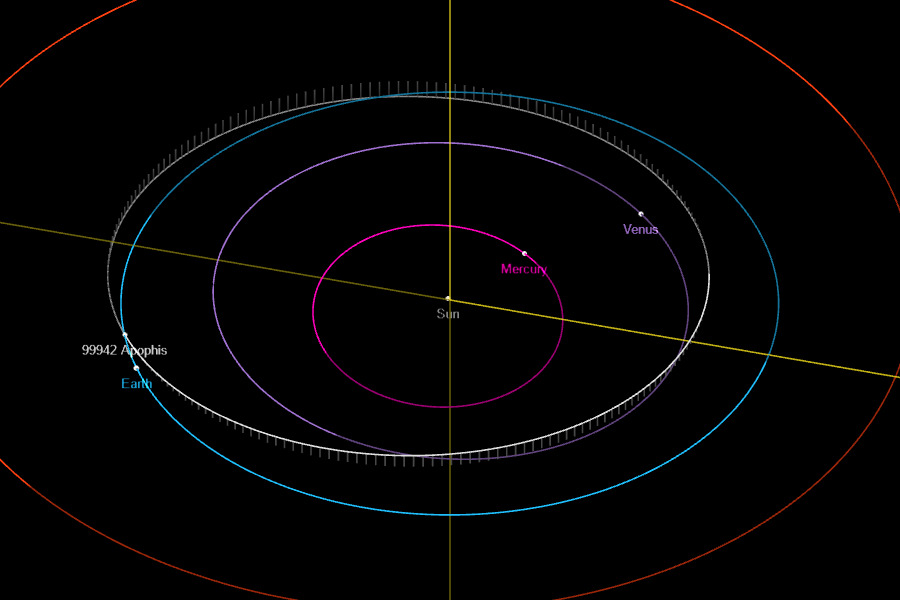
The orbits of Apophis and Earth and their locations on April 24, 2021. The proximity of Apophis to the Earth in March allowed radar observations that ruled out a collision with the Earth for at least the next 100 years. Image credit: JPL Small-Body Database Browser.
01/26/2015 – Ephemeris – First quarter Moon, a telescopic asteroid misses the Earth tonight and a Jupiter shadow recap
Note: Ephemeris program generally features objects in the sky that are visible to the naked eye or binoculars. However in the blog, with the ability to expand in both content and illustrations I can add information for telescopic observers and expand postings.
Ephemeris for Monday, January 26th. The sun will rise at 8:08. It’ll be up for 9 hours and 34 minutes, setting at 5:42. The moon, at first quarter today, will set at 1:30 tomorrow morning.
The Moon will be perfectly half illuminated by the sun at 11:48 p.m. The gray patches that appear on the Moon’s surface were called by early telescopic astronomers: seas; because they thought they were bodies of water. The Moon is pretty much bone dry, except for some eternally shadowed craters at the poles, which still aren’t wet because the water is frozen. Anyway the seas or maria on the moon are indeed low spots. The seas, from the top center of the moon down to the lower right are Serenity, Tranquility, Nectar and Fertility. To the upper right all by itself is the Sea of Crises. From Serenity to Fertility some can imagine an upside down rabbit, with ears of unequal sizes. In a few more days we’ll see the face of the man in the Moon.
Times are for the Traverse City/Interlochen area of Michigan. They may be different for your location.
Addenda
First Quarter Moon
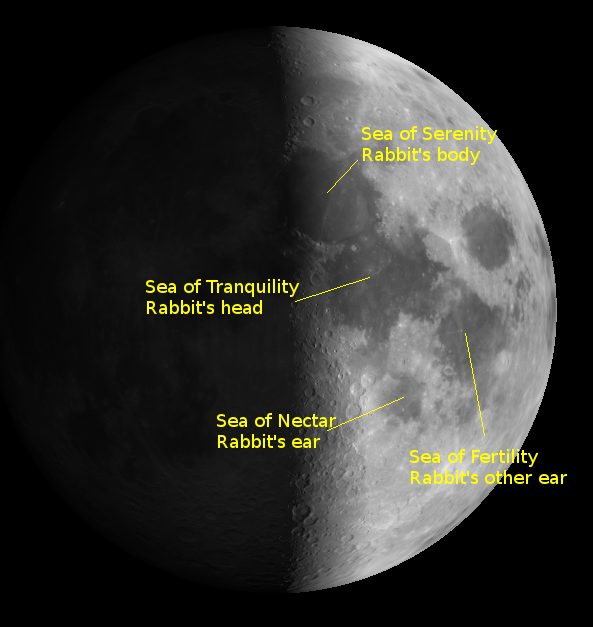
Rabbit in the first quarter Moon. Created using Virtual Moon Atlas.
Tonight Asteroid 2004 BL86 will pass three times the Moon’s distance from the Earth
This evening a rather large asteroid for a Near Earth Object or NEO will pass three-quarters of a million miles from the Earth. The asteroid has the designation 2004 BL86. The cool thing is that this asteroid is half a kilometer or so meters across, that’s 5 soccer or football fields in diameter. Radar from this close passage should nail down the size and shape. Between Goldstone Tracking Station and Arecibo Observatory in Puerto Rico the asteroid should be mapped down to 2 to 4 meters. It would be definitely not cool if this asteroid ever hit the Earth. It will be 9th magnitude, and so will be visible in small telescopes, and it will cross the east or left side of the Beehive star cluster also designated M44 starting about midnight tonight.
If you want to observe the event and don’t have the equipment head on over to www.slooh.com. This is the site for Slooh (pronounced “slew”) Community Observatory which has observatories in the Canary Islands and Chile, and partners with others. Besides these events, members can schedule time and use the telescopes via the internet. Check the above link for more information.
The chart below is from NASA/JPL’s Near Earth Object Program: Updated Charts for Asteroid 2004 BL86 Earth Flyby on Jan 26, 2015
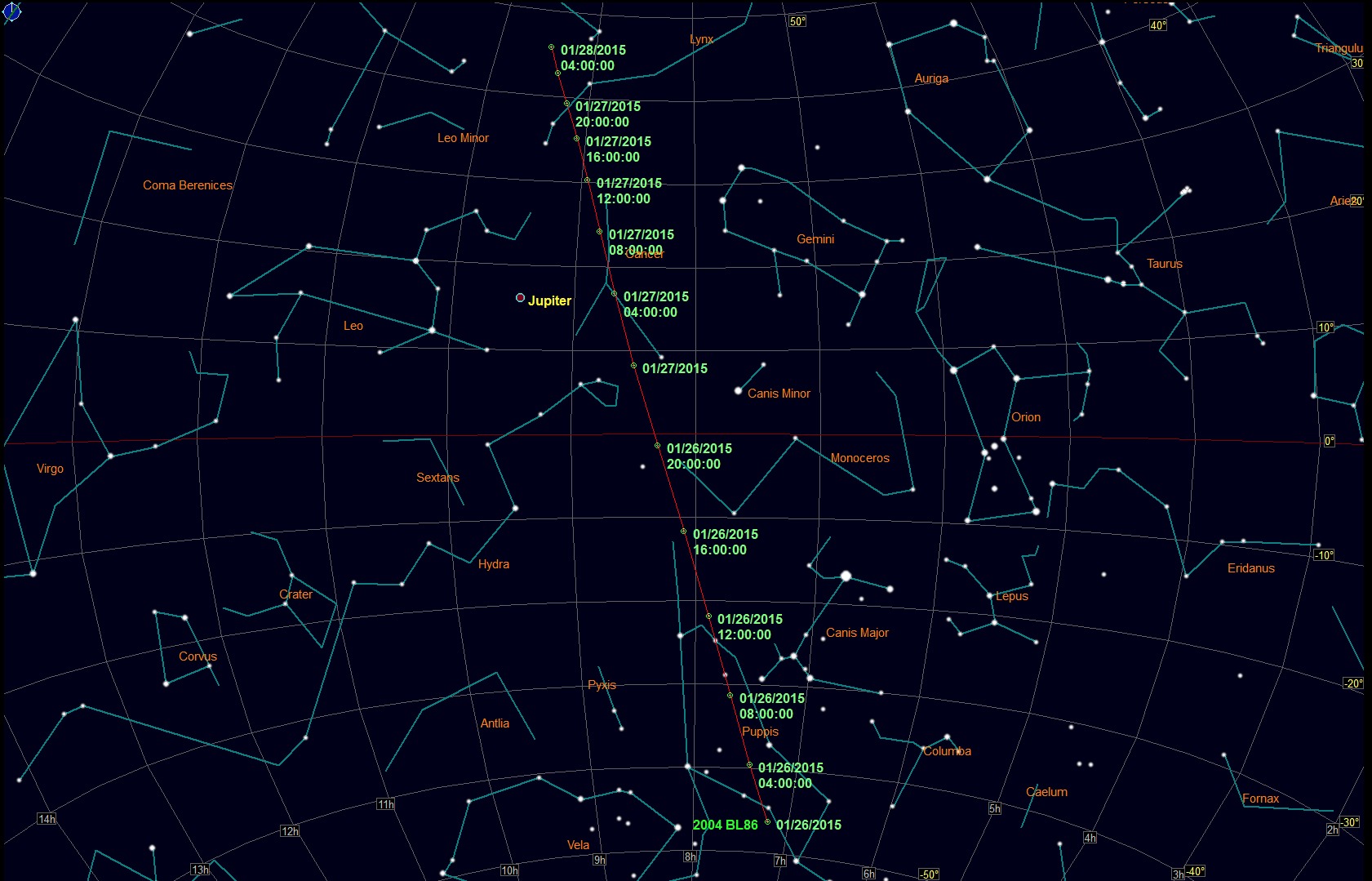
The track of asteroid 2004 BL86 as viewed from the Earth, plotted on a star chart with an equatorial coordinate grid. The asteroid location is shown at four-hour intervals from January 26 to 28. The indicated times are Universal Time; subtract 5 hours for Eastern Standard Time (EST), 6 hours for CST, and 8 hours for PST. On January 26, the asteroid will pass within 11 degrees of Jupiter, now shining brightly in the east in the evening sky. Image and caption credit: NASA/JPL-Caltech. JPL orbit solution #43, with star chart graphics produced using C2A. Click to enlarge.
Below is a chart from Universe Today. Here’s a link to their web page.
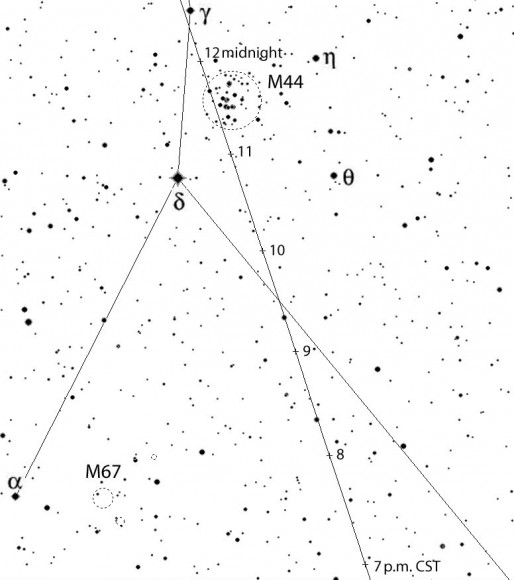
A Black on white chart of asteroid 2004 BL86 crossing to the right of M44. Note that the actual path depends on your location since the chart is based on the center of the Earth. The closer to your horizon the greatest deviation from the path shown. Time Ticks are for CST. Add one hour to them for EST. The Midnight tick mark is 0 h UT or GMT the 27th. Credit Universe Today and created with Chris Marriott’s SkyMap software.
Sky and Telescope has charts that have BL86’s track plotted about 15 minutes ahead of the track above. It is a newer chart, so the asteroid’s position may have been updated. The Sky and Telescope narrative and charts are here.
Results from Jupiter’s early Saturday satellite shadow play
The video live feed from the Griffith Planetarium in Los Angeles was a bust. It suffered from what astronomers call bad seeing. I mean really horrible seeing. Astronomers ascribe at least two qualities to the sky, other than brightness due to the moon or light pollution. That is transparency and seeing. Seeing is the steadiness of the sky. What Jupiter looked like was looking at a small disk at the bottom of a swimming pool while the kids are still playing in it. At first I ascribed it to Jupiter being low in the LA sky, being 3 hours west of here. But it didn’t get better as the night progressed. I could occasionally make out Callisto’s shadow, just because I knew where it’s supposed to be. But that’s it.
However my friend from the Detroit area, Scott Anttila, blessed at least for a while with clearer and calmer skies got some wonderful pictures of the first part of the multiple shadow event.
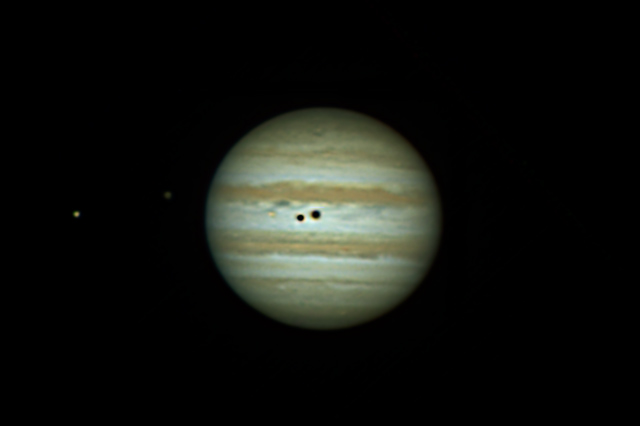
Left to right the shadows of Io and Callisto crossing the face of Jupiter at 12:52 a.m. January 24, 2015. Credit Scott Anttila.
Note that Callisto has a larger shadow than Io. That’s mainly due to it’s greater distance from Jupiter that makes its shadow larger and fuzzier than the closer Io.
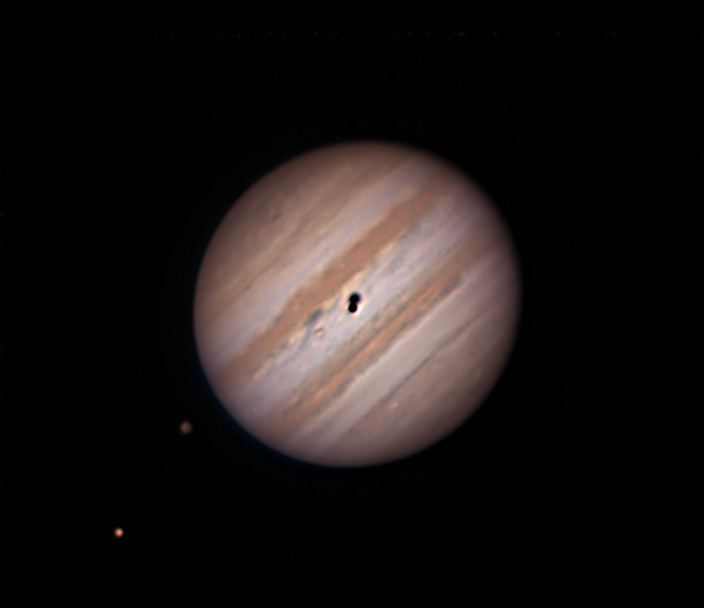
In this picture Io’s shadow has just caught up with Callisto’s shadow. Credit: Scott Anttila.
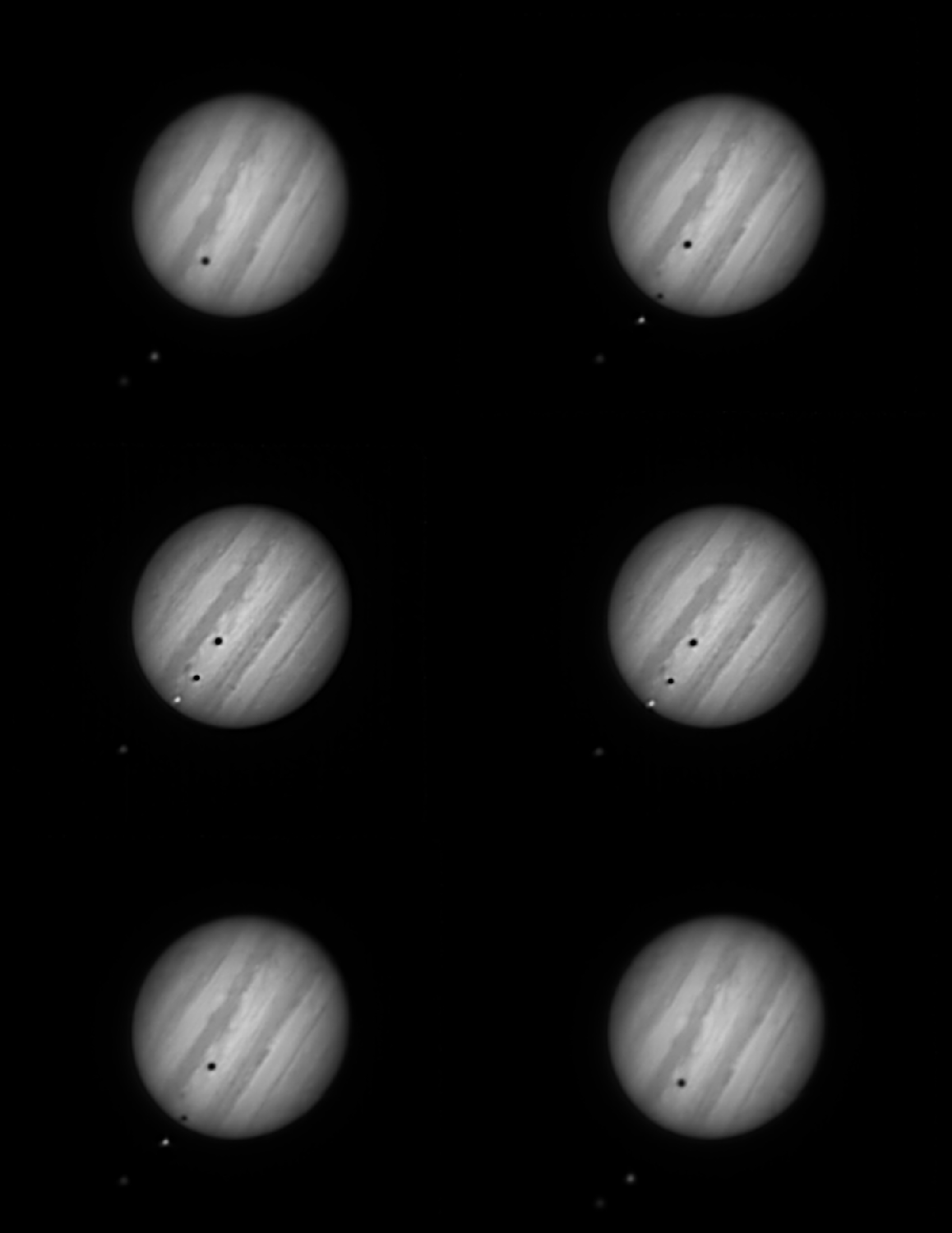
Rocking animation of the early stages of the shadow show on Jupiter. Callisto’s shadow already on the planet while Io’s shadow is just entering. Also Io’s transit is starting, following its shadow on the planet. Credit: Scott Anttila
 Bob Moler's Ephemeris Blog