Archive
Ephemeris: 04/23/2026 – Where did the Moon come from?
This is Ephemeris for Thursday, April 23rd. Today the Sun will be up for 13 hours and 52 minutes, setting at 8:37, and it will rise tomorrow at 6:43. The Moon, at first quarter today, will set at 3:42 tomorrow morning.
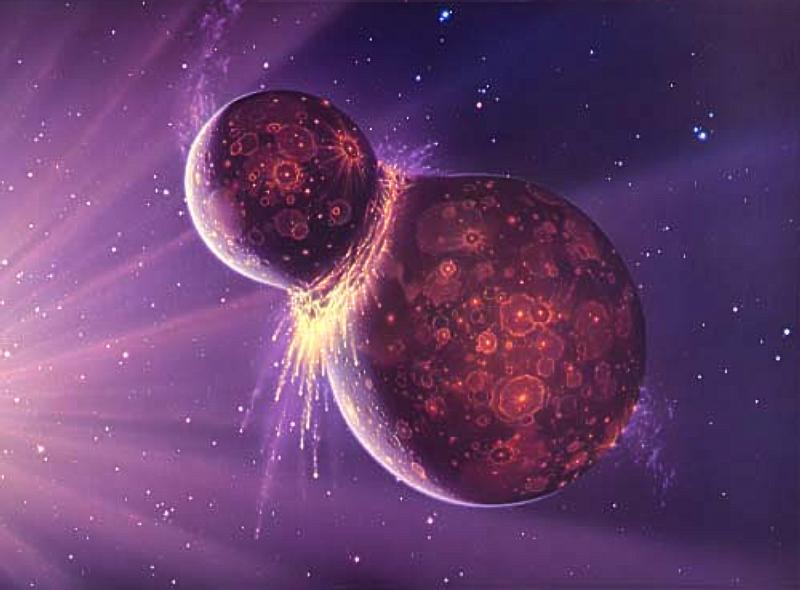
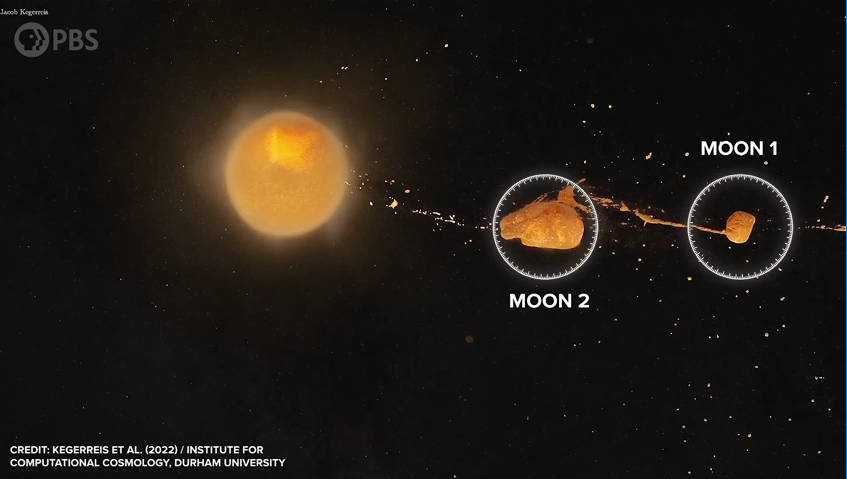
When one gazes upon the moon tonight the thought of where the moon came from might come to mind. Did it form with the Earth? Was it captured by the Earth? The latest thinking on the origin of the moon centers around a grazing collision with the Earth of a Mars sized body that has been given the name Theia, the mother of Selene, the goddess of the Moon, shortly after the Earth was formed. This is based on Apollo mission discoveries that the composition of the rocks on the moon are approximately the same as those of Earth’s crust. It’s been known for a while that there are two dense masses within the Earth about halfway to the center. One geologist has put forth that these masses could have been the core of Theia that sank into the Earth.
The astronomical event times given in this blog are for the Traverse City/Interlochen area of Michigan (Lat 44.7° N, Long 85.7° W; EDT, UT – 4 hours) unless stated otherwise. Times will be different for other locations.
Addendum
Ephemeris: 12/12/2023 – The source of the Geminid meteor shower
This is Bob Moler with Ephemeris for Tuesday, December 12th. Today the Sun will be up for 8 hours and 51 minutes, setting at 5:02, and it will rise tomorrow at 8:11. The Moon is new today, and won’t be visible.
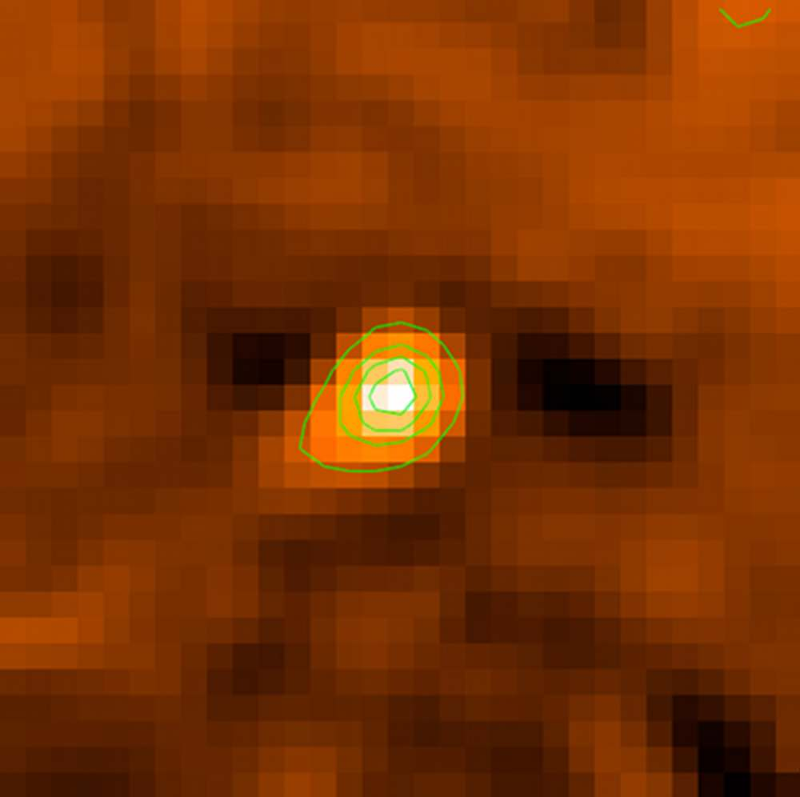
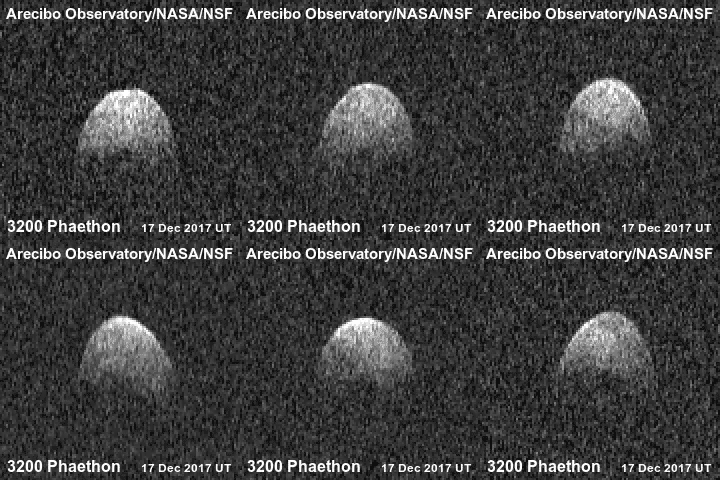
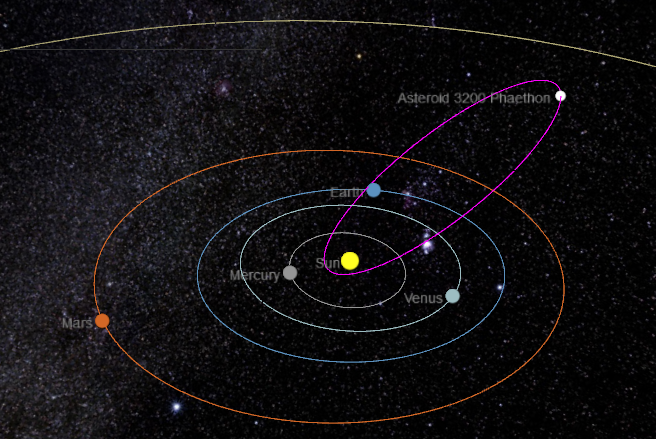
The Geminid meteor shower, which will peak this Thursday, is caused by a small body called 3200 Phaethon which looks like an asteroid but has the orbit of a comet, coming close to the Sun and back out to the asteroid belt. It’s probably a dead comet, with all the volatiles sublimated away leaving only the rocky bits. It is named Phaethon, because at the time it was the asteroid that came closest to the Sun. In Greek mythology Phaethon, the son of Helios the Sun god borrowed his father’s chariot that carried the Sun to take it out for a spin one day with disastrous results. The Geminid meteor shower was first recognized in 1862. The hourly rates of the Geminids have increased every year since then. The meteor stream has completely filled in the orbit of Phaethon, and they’re being pushed around by the gravitational effect of the planets and the pressure of sunlight.
The astronomical event times given are for the Traverse City/Interlochen area of Michigan (EST, UT –5 hours). They may be different for your location.
Addendum
12/27/2021 – Ephemeris – Where did Earth’s water come from?
This is Ephemeris for Monday, December 27th. Today the Sun will be up for 8 hours and 49 minutes, setting at 5:08, and it will rise tomorrow at 8:19. The Moon, 1 day past last quarter, will rise at 2:02 tomorrow morning.
The element hydrogen has two stable forms: Ordinary hydrogen with a single proton as its nucleus, and deuterium with a proton and a neutron as its nucleus. Both can combine with oxygen to form water. Deuterium and oxygen make heavy water. Water of any kind would not have survived Earth’s formation. Astronomers have long thought that collisions of asteroids and comet brought water to the Earth. Comets, however, have an overabundance of deuterium. Asteroids are close, also dust particles exposed to the solar wind have an under abundance of deuterium. Apparently, about a 50-50 mixture of dust and asteroids appear the right combination to fill the Earth’s with the right ratio of normal and heavy water.
The astronomical event times given are for the Traverse City/Interlochen area of Michigan (EST, UT – 5 hours). They may be different for your location.
Addendum
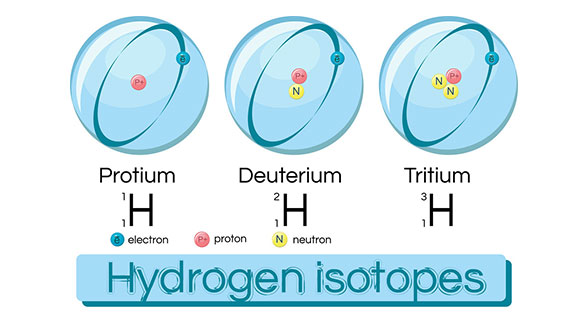
The three isotopes of hydrogen: protium, or ordinary hydrogen; deuterium; and tritium. Protium and deuterium are stable, while tritium is unstable and decays into helium 3 and an electron. Tritium has a half-life of 12.32 years.
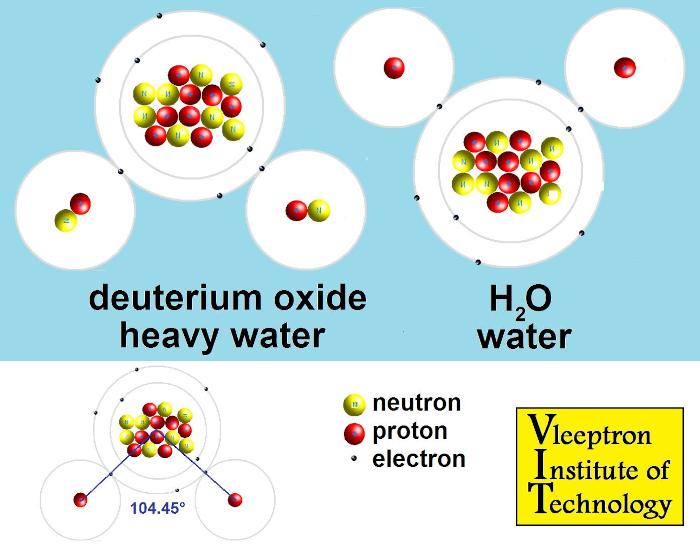
Heavy water D2O vs. normal water H2O. Heavy water is about 11% heavier than water. A heavy water ice cube would sink in a glass of water.
06/23/2015 – Ephemeris – What can you tell about the appearance of the Moon to the naked eye?
Ephemeris for Tuesday, June 23rd. Today the Sun will be up for 15 hours and 34 minutes, setting at 9:32. The Moon, 1 day before first quarter, will set at 1:31 tomorrow morning and tomorrow the Sun will rise at 5:57.
The Moon is at nearly half phase or first quarter. The unaided eye can see that the Moon has darker and lighter areas. The Greeks, who thought the objects in the heavens were perfect thought that the Moon was a silvery sphere. They never quite figured out why the moon had this mottled appearance. So why are the bright parts different from the darker parts? The bright parts are called the highlands and are the oldest part of the Moon’s surface. It’s saturated with craters from impacts since the Moon formed. The dark areas are roughly circular, and are really vast craters that penetrated through the Moon’s crust to bring up molten lava that repaved the surface of the Moon some 500 million years after it formed.
Times are for the Traverse City/Interlochen area of Michigan. They may be different for your location.
Addendum
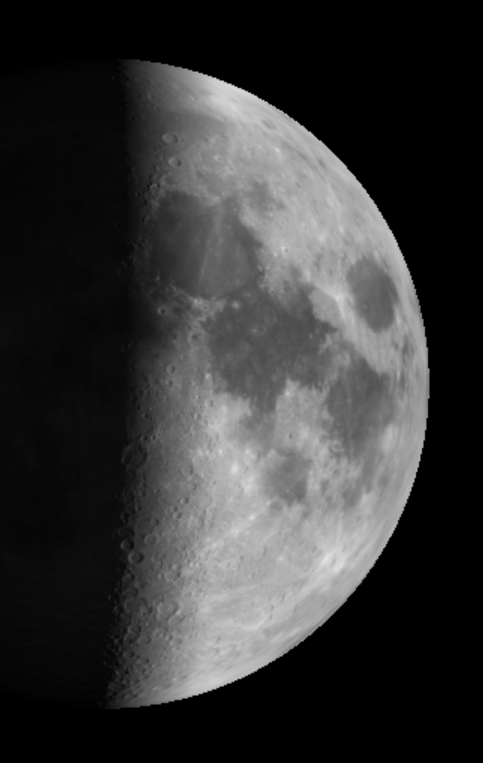
The Moon tonight (June 23, 2015). Look at the difference in the surface albedo (reflectance) between the light and dark areas and wonder about their origins. Created using Virtual Moon Atlas.

