Archive
Ephemeris: 12/17/2024 – A closeup look at Ganymede
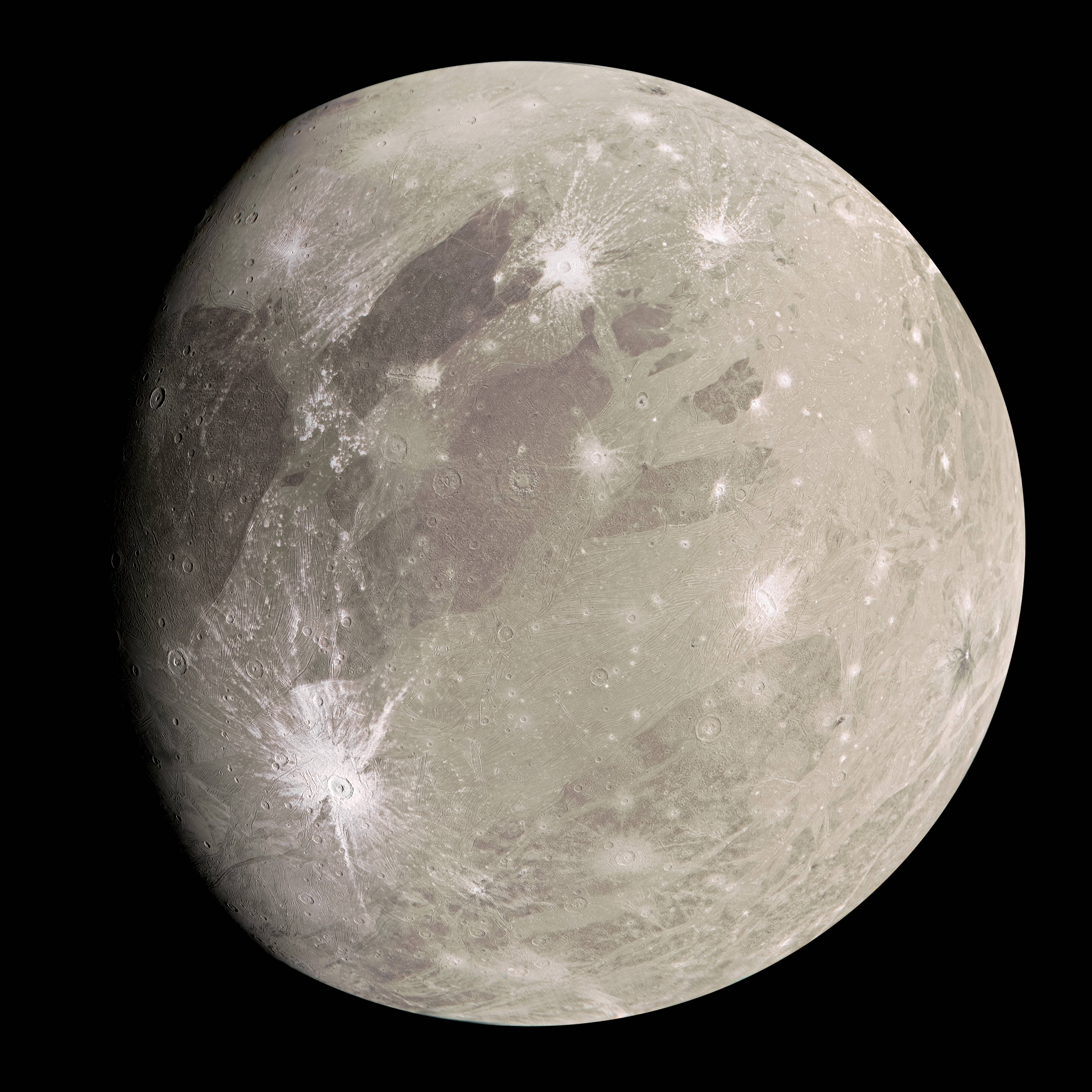
This is Bob Moler with Ephemeris for Tuesday, December 17th. Today the Sun will be up for 8 hours and 48 minutes, setting at 5:03, and it will rise tomorrow at 8:15. The Moon, 2 days past full, will rise at 7:23 this evening. | Ganymede is the largest satellite in the solar system orbiting the largest planet in the solar system, Jupiter. It is 1 1/2 times the diameter of our Moon, and slightly larger than the planet Mercury. It is an icy moon, being about half made-up of water ice and silica. Ganymede appears to have a below surface ocean of water like Europa. And its surface appears to be quite smooth, not as smooth as Europa’s but parts of it are literally devoid of craters for the most part, and many of the craters it does appear to have inner craters in the center which looks quite weird. The Juno spacecraft, still orbiting Jupiter, took some very close images of Ganymede back in 2021 using its relatively simple camera. These were some of the best images of it.
The astronomical event times given are for the Traverse City/Interlochen area of Michigan (EST, UT – 5 hours). Times will be different for other locations.
Addendum
Ephemeris: 10/02/2023 – This week: Launch to Psyche
This is Bob Moler with Ephemeris for Monday, October 2nd. Today the Sun will be up for 11 hours and 40 minutes, setting at 7:21, and it will rise tomorrow at 7:42. The Moon, 3 days past full, will rise at 9:00 this evening.
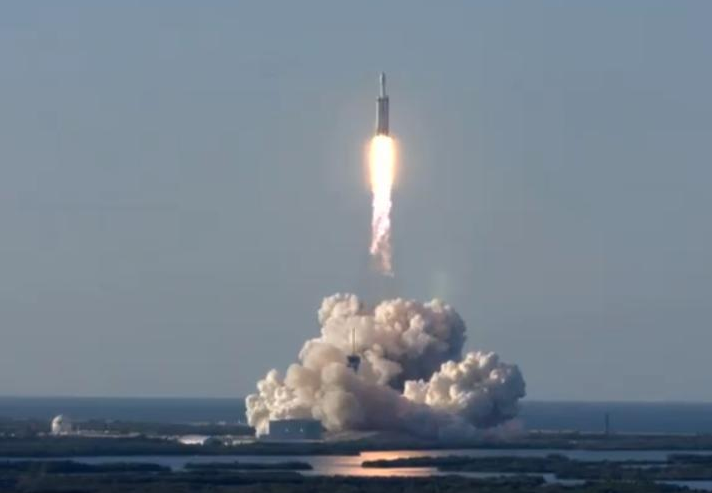
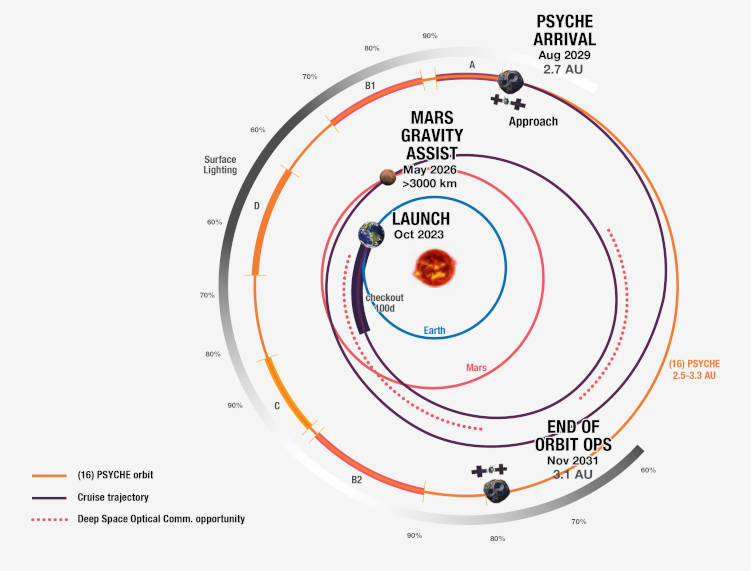
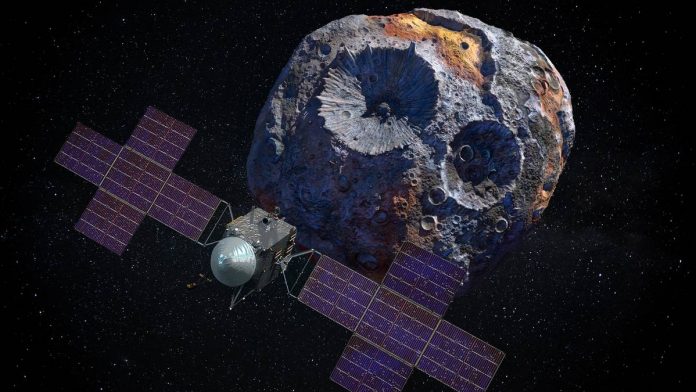
This Thursday, October 5th at 10:38 AM will be the first opportunity to launch a SpaceX Falcon Heavy rocket with the Psyche spacecraft to the asteroid 16 Psyche. It’ll be a nearly 5 1/2 year trip to this asteroid, which is metal rich, and quite unlike any asteroid that we’ve ever studied before with a spacecraft. There is a 20 day launch window starting October 5th with lunch possibilities during the 10 o’clock hour each day. Due to the design of SpaceX Falcon rockets there is only one time a day they can launch, due to the fact that they super chill their fuel and oxidizer to make them more dense to squeeze the most fuel and oxidizer into the rocket. They need to load them immediately prior to launch. Any hold in the countdown will allow them to expand and in the case of the liquid oxygen, to boil off.
The astronomical event times given are for the Traverse City/Interlochen area of Michigan (EDT, UT –4 hours). They may be different for your location.
Addendum
05/04/2023 – Ephemeris – The Moon is not quite as dry as we thought
This is Ephemeris for Thursday, May 4th. Today the Sun will be up for 14 hours and 22 minutes, setting at 8:51, and it will rise tomorrow at 6:27. The Moon, 1 day before full, will set at 6:18 tomorrow morning.
The Moon appears to be bone dry. The Apollo astronauts found no rocks with any water in them, or bound to them chemically. However, remote sensing satellites and an infrared flying observatory have detected hints that water does indeed exist on the Moon. Indeed, water would be worth its weight in gold if discovered there. The South Pole of the Moon has permanently shadowed craters which seem to have water ice in them. Recently the, since decommissioned, SOFIA aircraft, sporting an infrared telescope detected water on the daytime side of the Moon, in quantities, to mix units of measurement, 12 ounces of water per cubic meter of soil in the crater Clavius. It’s a large crater in the Southern Hemisphere of the Moon, and incidentally one of my favorite craters.
Also, recently, the Chinese Chang’e 5 lunar sample return mission detected water in the tiny glass beads that were part of the soil it brought back. The beads were the result of meteorite impacts. Maybe NASA might have another look at the lunar soil the Apollo astronauts brought back.
The astronomical event times given are for the Traverse City/Interlochen area of Michigan (EDT, UT –4 hours). They may be different for your location.
Addendum
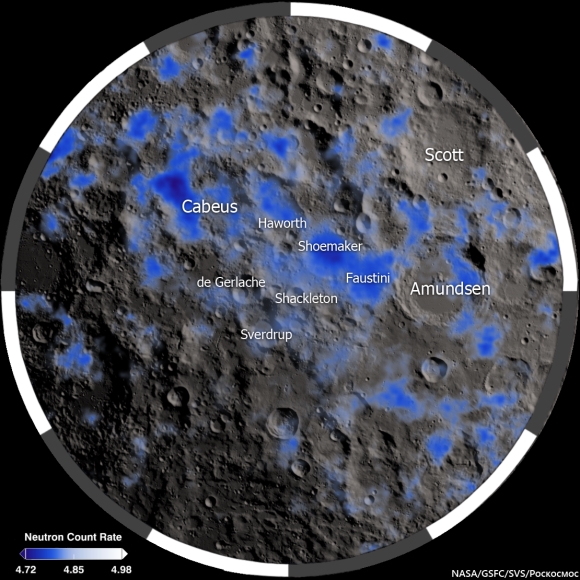
The South Pole of the Moon, where the presence of water ice is detected by the absorption of neutrons by the hydrogen atoms in the ice. Credit NASA/GSFC/SVS/Roscosmos.
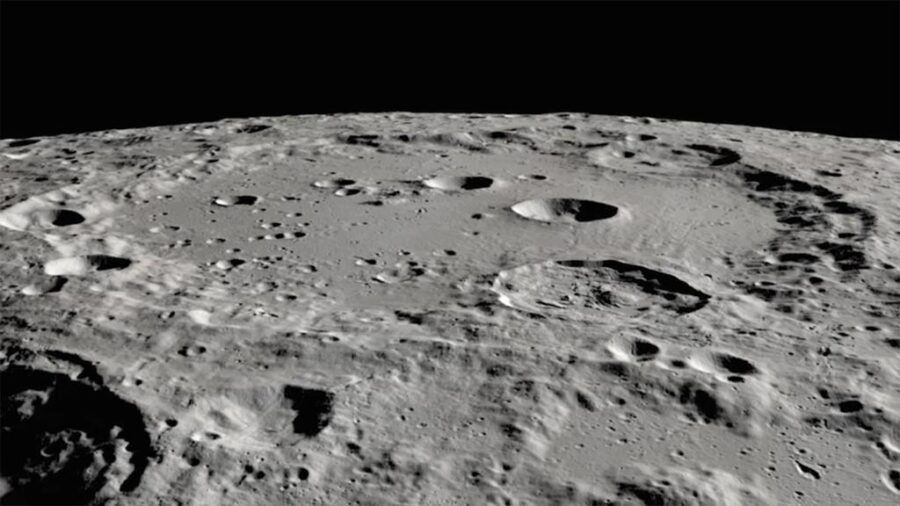
Closeup of Clavius from the Lunar Reconnaissance Orbiter. Credit: NASA/LRO.
11/14/2022 – Ephemeris – Psyche spacecraft to launch to its namesake asteroid next October after a 14-month delay
/
This is Ephemeris for Monday, November 14th. Today the Sun will be up for 9 hours and 37 minutes, setting at 5:15, and it will rise tomorrow at 7:39. The Moon, 2 days before last quarter, will rise at 10:07 this evening.
The launch of the Psyche spacecraft to the asteroid of the same name this past August was canceled due to problems with the spacecraft itself, not the SpaceX Falcon Heavy rocket. NASA thinks they have a handle on the problem and are now wanting to launch in October of next year. If they launched this year, they could have gotten a gravity assist by passing close to Mars on their way to the asteroid belt, where the asteroid Psyche resides. Next year’s launch will not have a Mars flyby and take 2 more years to reach Psyche, a total of 6 years, arriving in 2029. The long flight time is because of the attempt to orbit Psyche rather than just flying by the asteroid. To handle such a maneuver, the spacecraft will also use ion thrusters like the Dawn spacecraft did last decade, which orbited both the asteroids Vesta and Ceres. Psyche is a special metal rich asteroid that may have been the core of a protoplanet.
The astronomical event times given are for the Traverse City/Interlochen area of Michigan (EST, UT – 5 hours). They may be different for your location.
Addendum
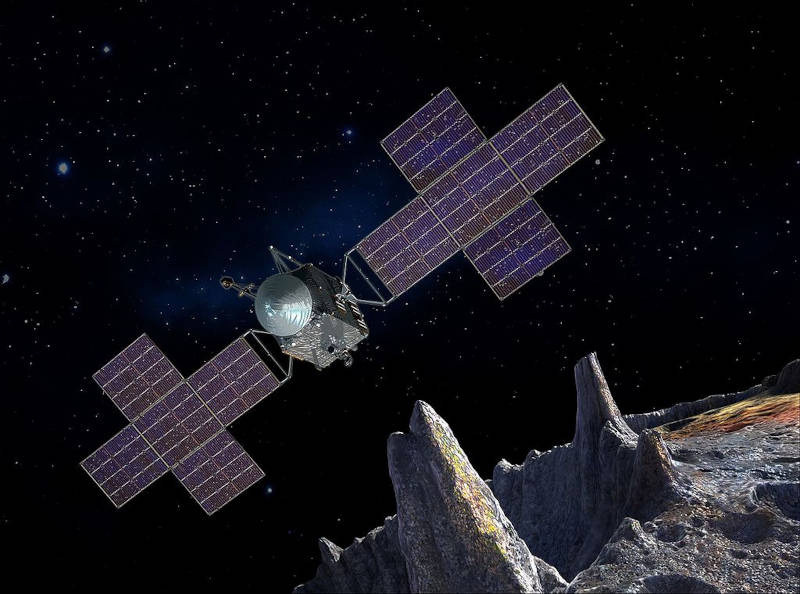
An artist’s rendition of the Psyche spacecraft at the asteroid Psyche. Credit: NASA.
09/06/2022 – Ephemeris – Ongoing NASA Missions
This is Ephemeris for Tuesday, September 6th. Today the Sun will be up for 12 hours and 59 minutes, setting at 8:10, and it will rise tomorrow at 7:12. The Moon, 3 days past first quarter, will set at 3:11 tomorrow morning.
The Artemis I launch has been postponed until later this month. The next try will come no sooner than the 25th, or next month. Another launch that is delayed is the Psyche mission to the asteroid Psyche that was supposed to be launched last month on a Falcon Heavy rocket. The problem this time isn’t the rocket, but the satellite. There is a delay with delivery and testing of the software for the satellite. The launch this year would have used a Mars flyby for a gravitational assist to shorten the flight time. A launch next year would not have that advantage and would increase the flight time. On the 26th of this month the DART satellite will impact the tiny asteroid Dimorphos, that’s orbiting a larger asteroid Didymos, to test that method of planetary defense.
The astronomical event times given are for the Traverse City/Interlochen area of Michigan (EDT, UT – 4 hours). They may be different for your location.
Addendum
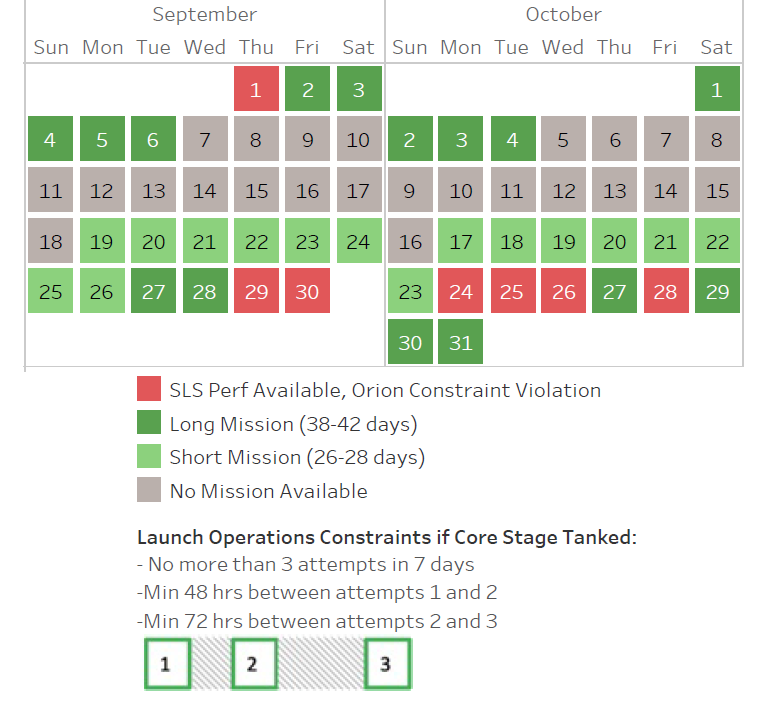
Artemis I availability dates for September and October 2022. As I understand it, launches on red dates would cause the Orion capsule to be in the Earth’s shadow for longer than 90 minutes. Gray dates would have the Orion Capsule land at night. Credit NASA. A cut & paste from Artemis I Mission Availability 2022-2023 (EST/EDT) pdf.
An artist’s rendition of the Psyche spacecraft at the metal-rich asteroid Psyche. Credit: NASA.
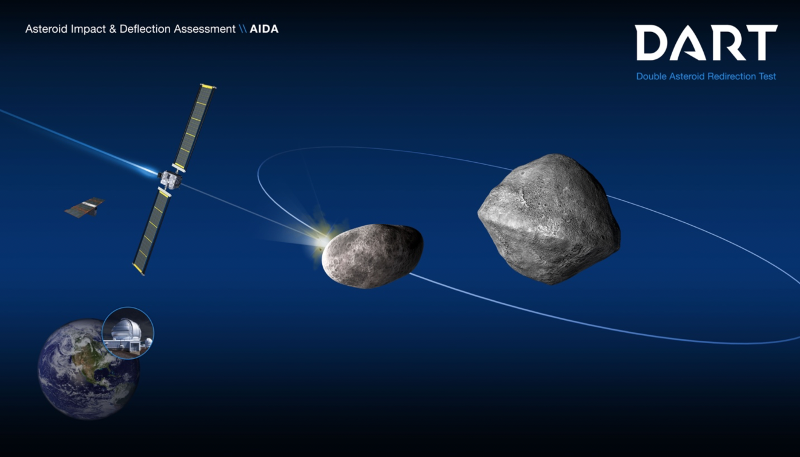
Schematic of the DART mission shows the impact on the moonlet of asteroid (65803) Didymos. Post-impact observations from Earth-based optical telescopes and planetary radar would, in turn, measure the change in the moonlet’s orbit about the parent body.
Credits: NASA/Johns Hopkins Applied Physics Lab.
08/11/2022 – Ephemeris – Another lunar mission in support of Artemis
This is Ephemeris for Thursday, August 11th. Today the Sun will be up for 14 hours and 14 minutes, setting at 8:54, and it will rise tomorrow at 6:41. The Moon, at full today, the full Sturgeon Moon, and a supermoon to boot, will rise at 9:18 this evening.
As we await the opening of the Artemis 1 launch window in two and a half weeks, and a successful mission, Artemis 2 may launch as early as May of next year with a crew of four for a loop around the Moon on a free return trajectory back to the Earth. They will not stay in orbit of the Moon. South Korea’s Pathfinder Lunar Orbiter was launched a week ago on a long trajectory to reach the Moon in December. Among other things, it has a NASA supplied camera to photograph the floors of the permanently shadowed craters at the Moon’s South Pole, a prime target for the Artemis missions. The pace of lunar missions by NASA’s partners is increasing, looking to a crewed landing, possibly as early as 2025 or 2026.
The astronomical event times given are for the Traverse City/Interlochen area of Michigan (EDT, UT – 4 hours). They may be different for your location.
Addendum
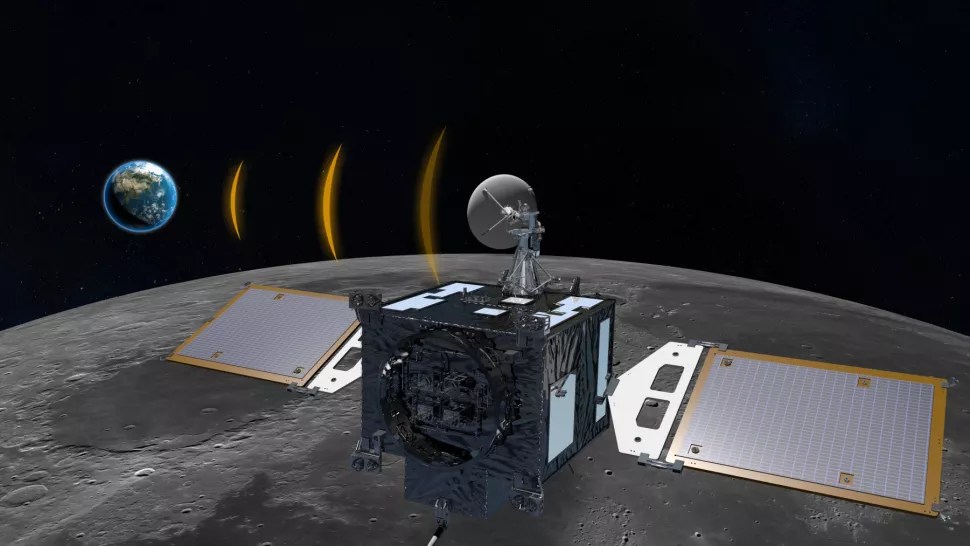
Artist’s vision of the Korea Pathfinder Lunar Orbiter “Danuri” communicating from the Moon. It has instruments to photograph the Moon, and otherwise detect resources. It also contains a NASA supplied ShadowCam. Credit: KARI, Korea Aerospace Research Institute.
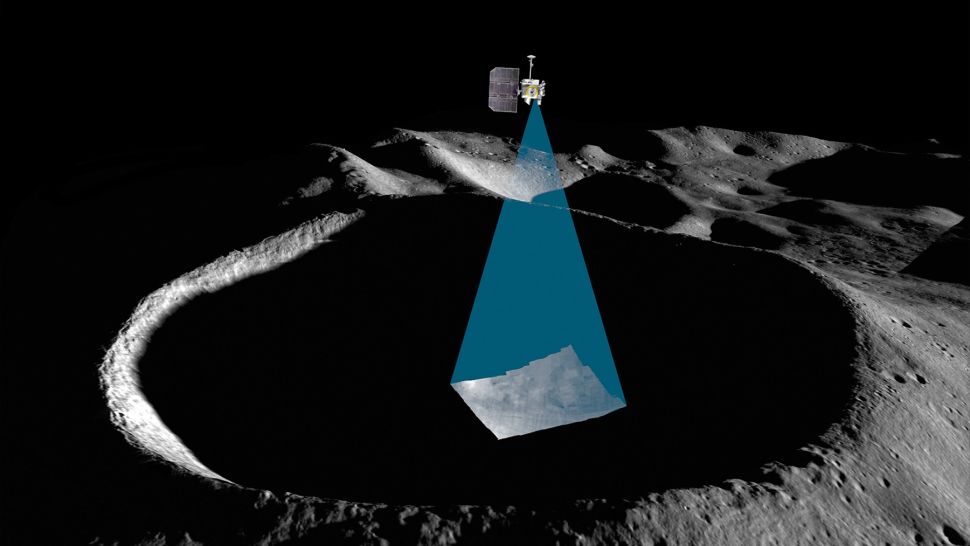
ShadowCam operation imaging the floors of permanently shadowed craters. The camera is 800 times more sensitive than those on the Lunar Reconnaissance Orbiter. Credit NASA.
08/09/2022 – Ephemeris – Artemis I mission could launch by the end of the month
This is Bob Moler with Ephemeris for Tuesday, August 9th. Today the Sun will be up for 14 hours and 19 minutes, setting at 8:57, and it will rise tomorrow at 6:39. The Moon, 2 days before full, will set at 4:15 tomorrow morning.
NASA has announced the launch date for the Artemis 1 uncrewed mission to the Moon. It’s August 29th. Or, in NASAspeak, NET (not earlier than) August 29th. Being the first launch of a new vehicle, they probably won’t launch on that day, due to encountered problems. Their second wet dress rehearsal still fell a few seconds short of the programmed end time, just before the main engines would be lit. If Artemis can’t launch on the 29th, the next date to go will be September 2nd, The four-day wait is because in that period the Orion capsule would spend too much time in the Earth’s shadow and without sunlight for its solar panels, depleting its batteries, on its way out to the Moon. The next opportunity after that would come on the 5th. Then a long wait til the 20th.
The astronomical event times given are for the Traverse City/Interlochen area of Michigan (EDT, UT – 4 hours). They may be different for your location.
Addendum
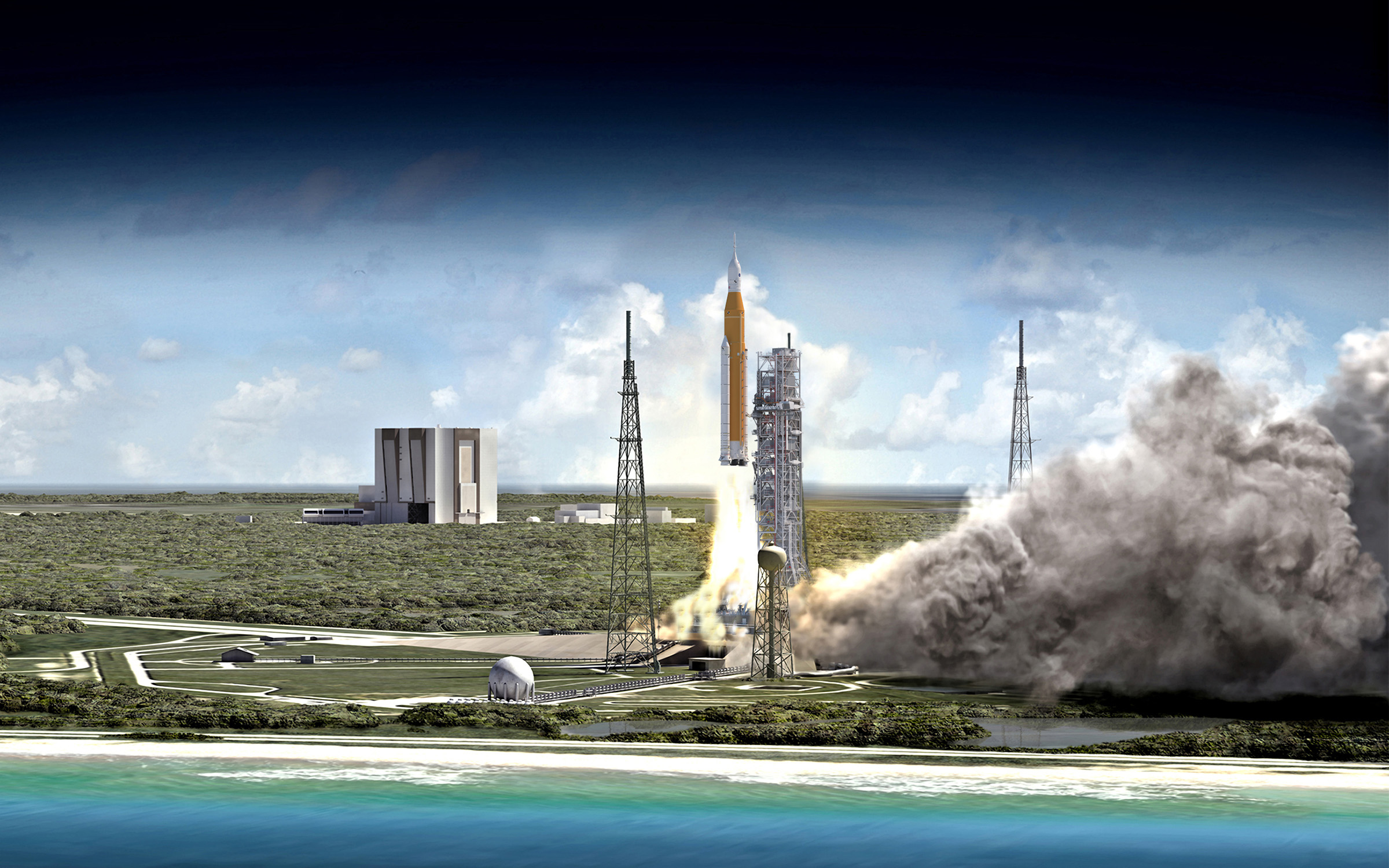
Simulated Artemis launch from Launch Pad 39B as it would be seen from offshore. Credit NASA.
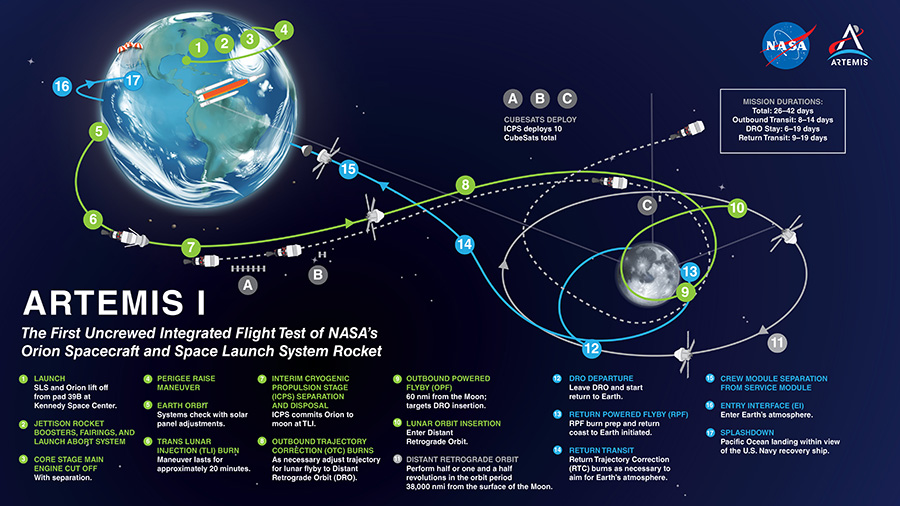
Major mission milestones. Click on the image to enlarge. Credit: NASA
07/04/2022 – Ephemeris – Space firsts, or attempts, on our nation’s birthday
This is Ephemeris for Independence Day, Monday, July 4th. Today the Sun will be up for 15 hours and 28 minutes, setting at 9:31, and it will rise tomorrow at 6:03. The Moon, 2 days before first quarter, will set at 12:53 tomorrow morning.
To celebrate our nation’s 200th birthday, NASA attempted to land the Viking 1 lander on the planet Mars on July 4th, 1976. The Viking was a combination orbiter and lander and had a twin spacecraft arriving almost two months later. Viking 1 entered orbit on June 19th and began to survey the prime landing area, that radar from the Earth suggested would be smooth, to land on the day of the Bicentennial. However, images from orbit showed too many obstructions, so another area was surveyed. The mission planners from JPL found a spot and sent the Viking lander down to land on Mars on another historic date, July 20, 1976, the 7th anniversary of the Apollo 11 landing on the Moon.
The astronomical event times given are for the Traverse City/Interlochen area of Michigan (EDT, UT – 4 hours). They may be different for your location.
Addendum
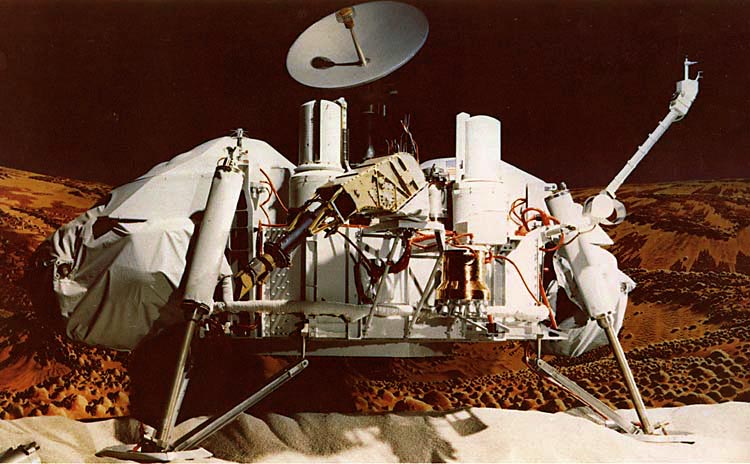
Model of the Viking lander. Credit NASA/JPL.
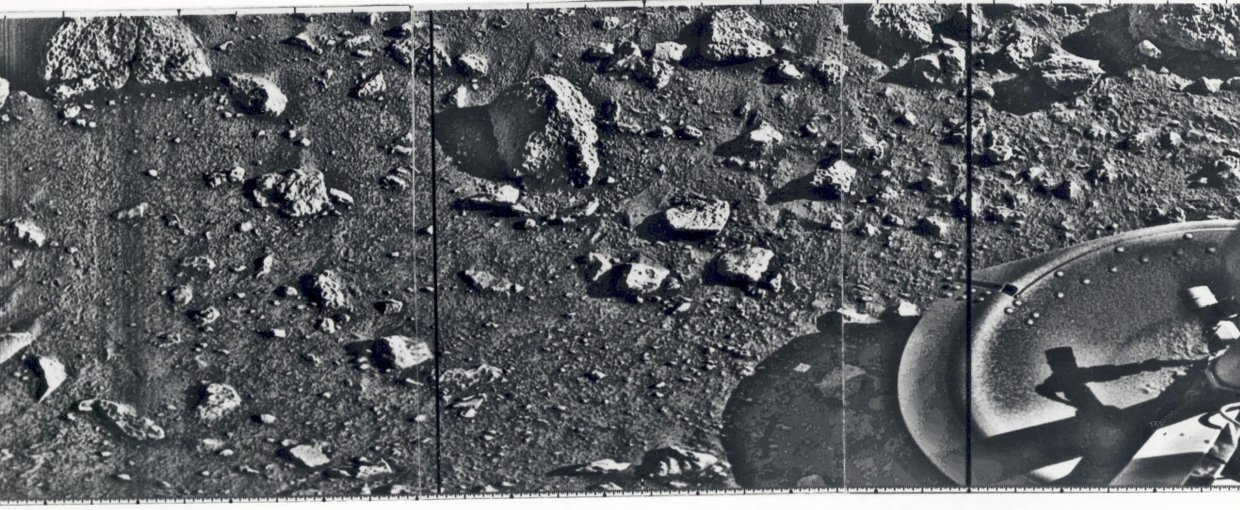
The first Mars image from the Viking 1 lander, taken moments after touchdown. The Viking landers used rockets to land, after a parachute descent, because the parachutes would not slow the lander enough in the thin Martian atmosphere. The reason to photograph the landing pad was to see how far it would sink into the surface. Credit NASA/JPL.
NASA did finally make a historic landing on July 4th,
the Mars Pathfinder mission, with the first rover to operate on Mars, the Sojourner rover, landed on July 4, 1997. It was a microwave sized rover. The mission on the surface lasted 85 days.
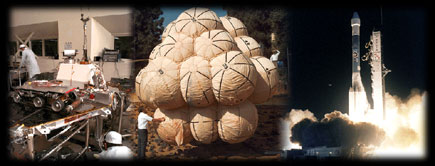
Pathfinder collage, Left to right, the collapsed Sojourner rover attached to one of the lander’s tetrahedron petals; 24 inflated airbags, attached 6 to a side of the Pathfinder tetrahedron; launch of the Delta II rocket carrying Pathfinder to Mars. Credit NASA/JPL.
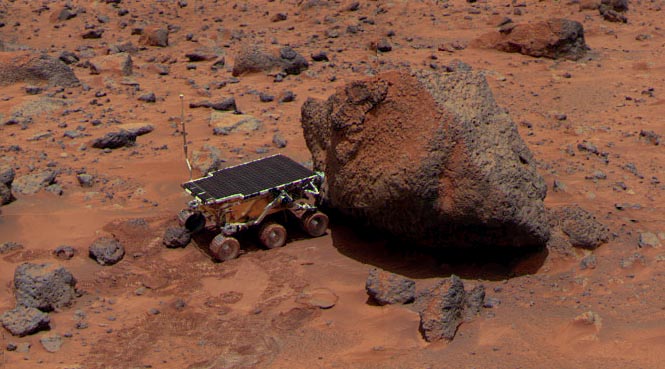
Sojourner rover investigates a rock named Yogi with its Alpha Particle X-ray Spectrometer to determine its composition. Credit NASA/JPL.

The Pathfinder Lander/Base Station and its deflated airbags from Sojourner. All communications from Sojourner to Earth is relayed through the Base Station. Credit NASA/JPL.
02/17/2022 – Ephemeris – Mission to a metallic asteroid
This is Ephemeris for Thursday, February 17th. Today the Sun will be up for 10 hours and 34 minutes, setting at 6:14, and it will rise tomorrow at 7:38. The Moon, 1 day past full, will rise at 7:21 this evening.
In August this year, one of the three scheduled Falcon-Heavy rocket launches this year will send the Psyche spacecraft on a four-year journey to its namesake asteroid, 16 Psyche. It is an unusual asteroid, thought to be 30 to 60 percent iron-nickel in composition. The spacecraft will swing by Mars for a gravitational boost. After the chemical powered boost into solar orbit, the spacecraft will open its huge solar panels in the shape of two crosses to feed its power hungry electric thrusters to complete the journey and to orbit 16 Psyche. The thrusters are Hall Effect thrusters, the first used in space, that use magnetic fields instead of electric fields to eject xenon gas ions to provide thrust. It is expected to arrive at 16 Psyche in 2026.
The astronomical event times given are for the Traverse City/Interlochen area of Michigan (EST, UT – 5 hours). They may be different for your location.
Addendum
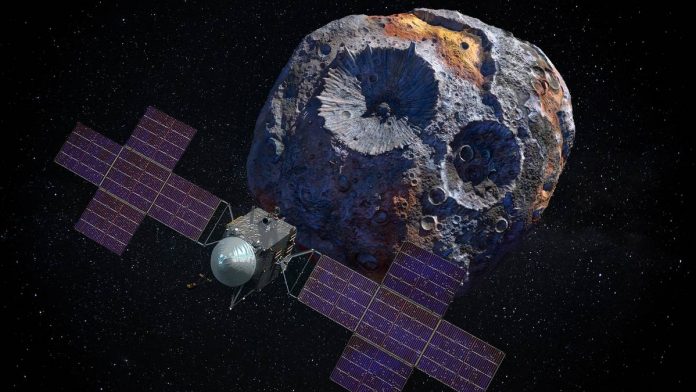
Artist’s visualization of the spacecraft Psyche orbiting asteroid 16 Psyche. This imagining seems to assume the asteroid is nearly 100% metallic. Credit: NASA.
 Bob Moler's Ephemeris Blog