Archive
Ephemeris: 09/03/2025 – Our weekly look at the naked-eye planets
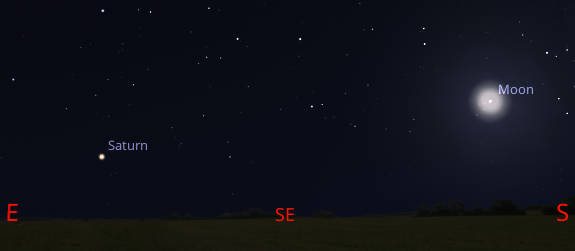
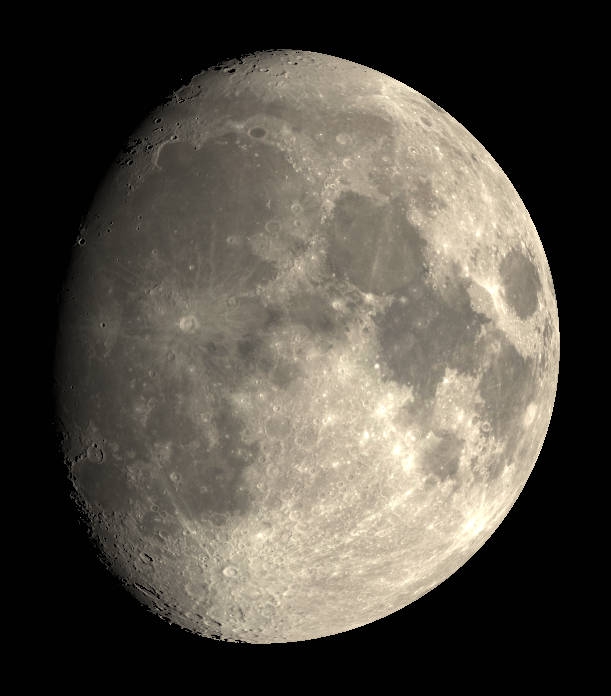
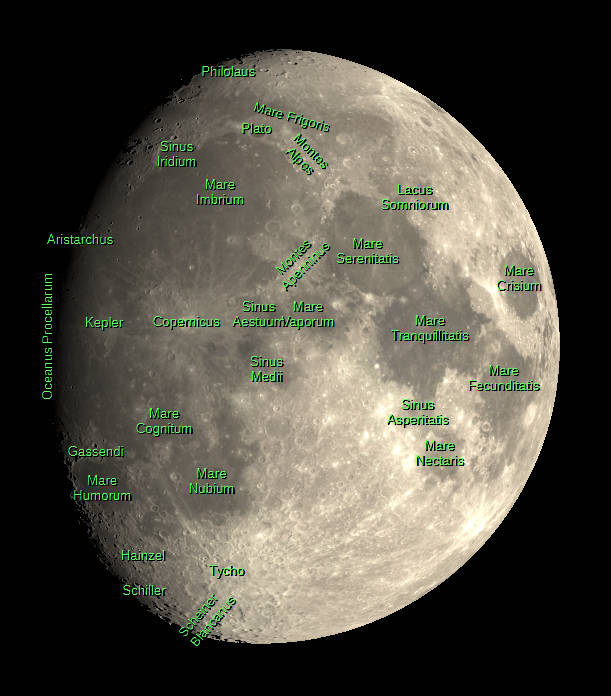
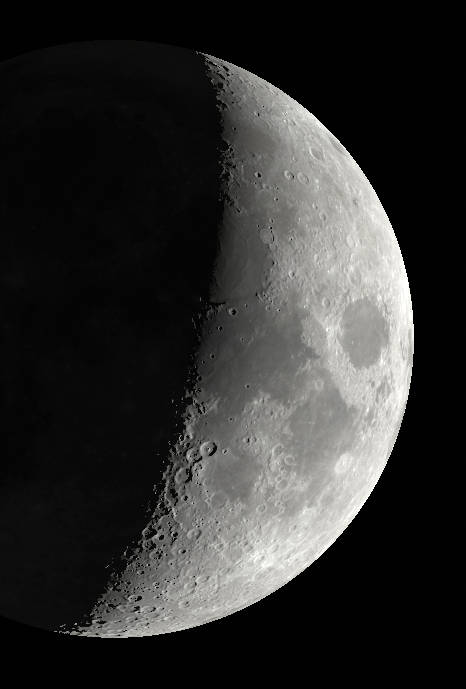
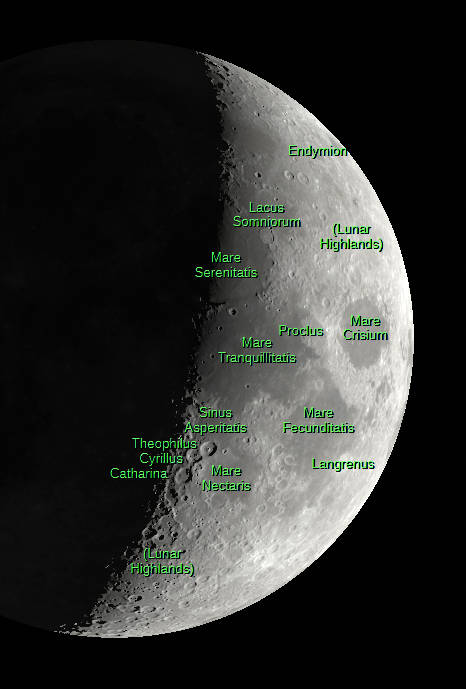
This is Ephemeris for Wednesday, September 3rd. Today the Sun will be up for 13 hours and 7 minutes, setting at 8:15, and it will rise tomorrow at 7:09. The Moon, 3 days past first quarter, will set at 3:04 tomorrow morning.
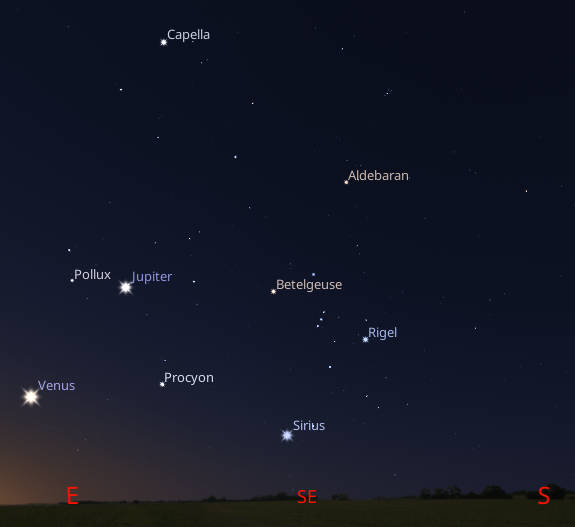
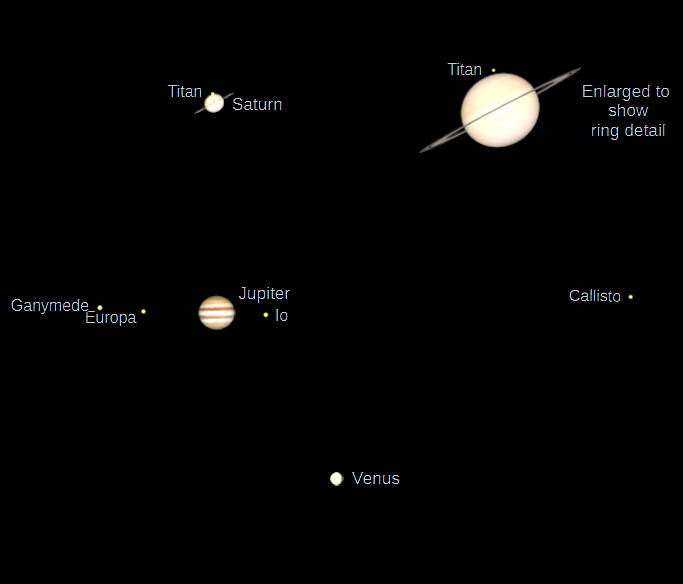
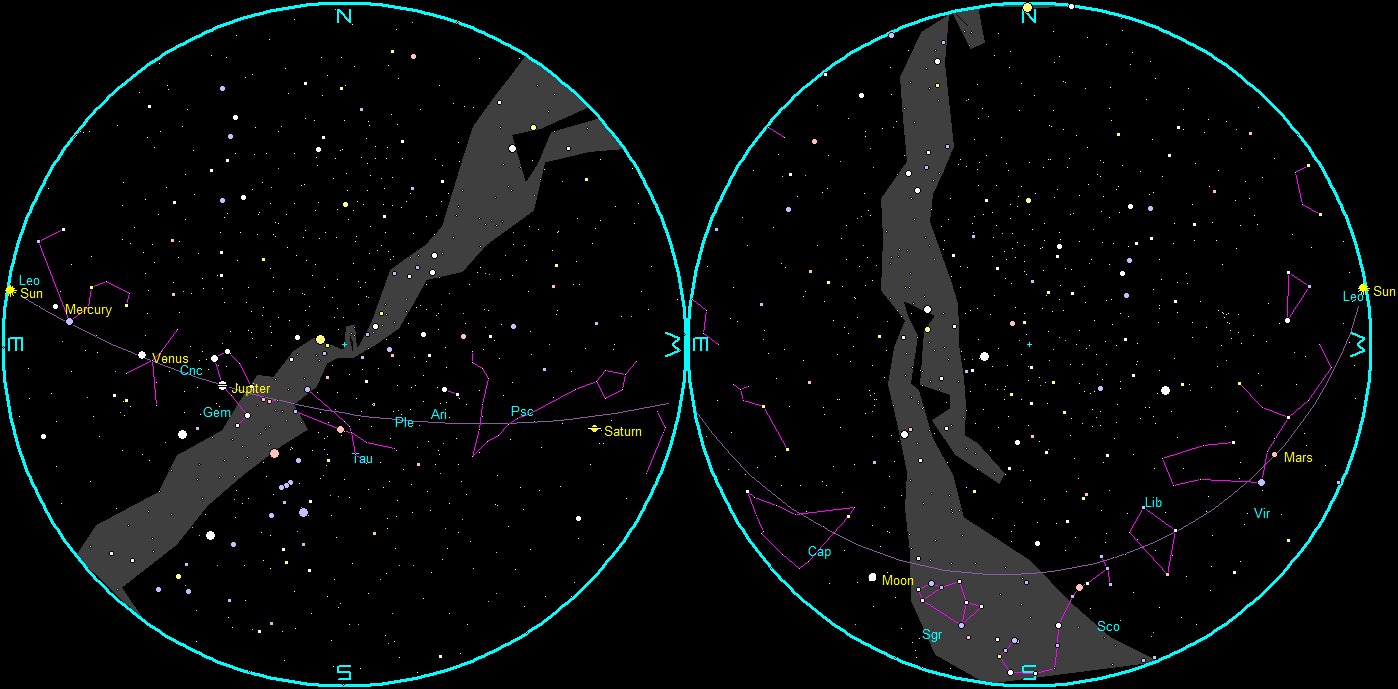
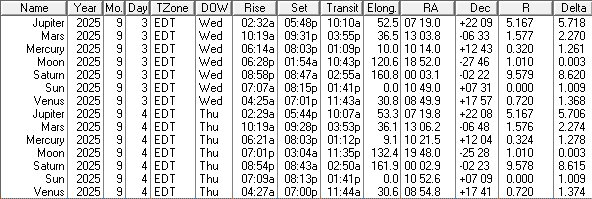
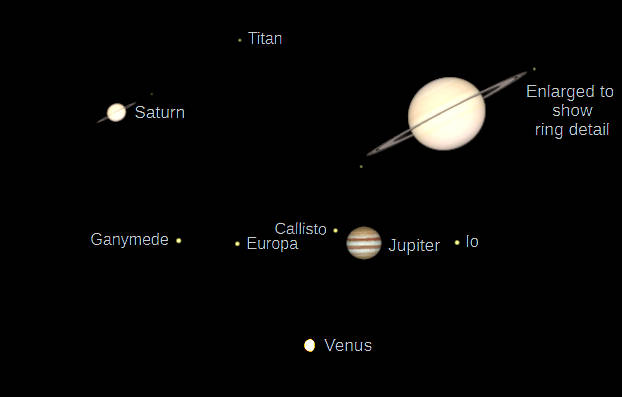
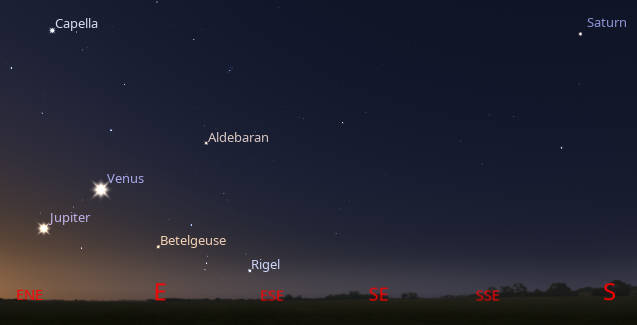
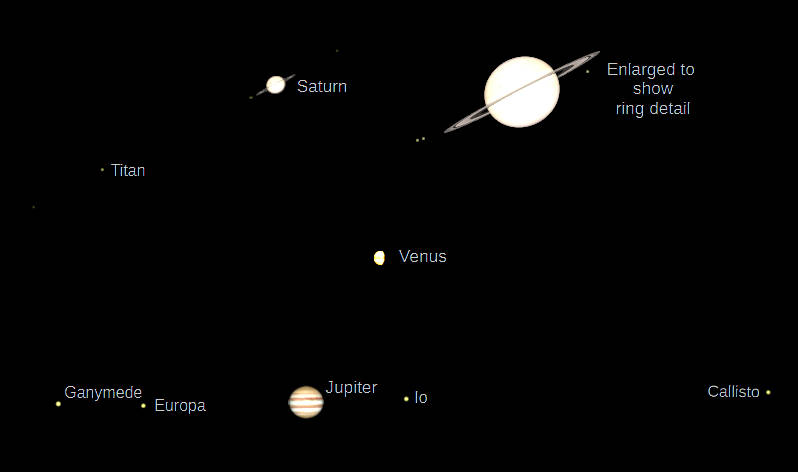
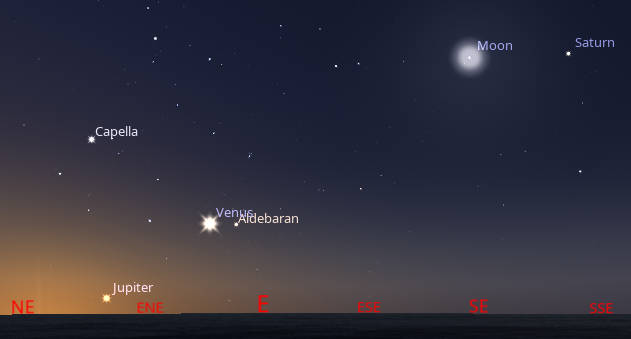
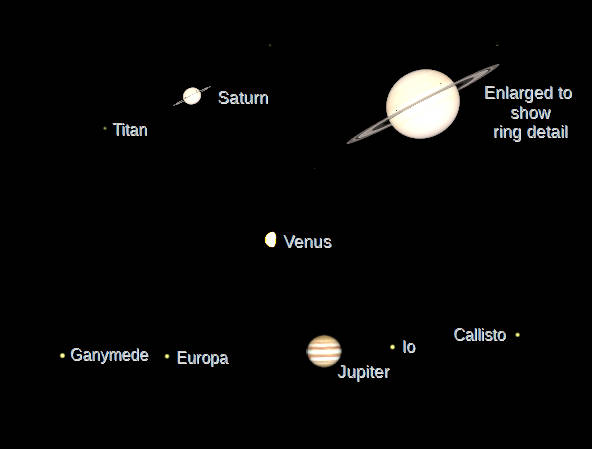
Let’s take our weekly look at the whereabouts of the naked-eye planets. The Red Planet Mars is too close to the direction of the Sun to spot. This is the curse of trying to view evening planets, which are near the direction of the Sun in late summer and early fall, for us at higher latitudes. Saturn now rises at 8:58 PM in the east. In a telescope Saturn sports a very thin ring, 2 ½° from being edge on. This angle will decrease to about a third of a degree by November 23rd before increasing. By 6 AM Saturn will be in the southwest. Jupiter will appear above the brighter Venus in the eastern sky and among the stars of Gemini. Venus and Jupiter are joining the bright winter stars, a beautiful sight in the morning twilight.
The astronomical event times given in this blog are for the Traverse City/Interlochen area of Michigan (Lat 44.7° N, Long 85.7° W; EDT, UT – 4 hours) unless stated otherwise. Times will be different for other locations.
Addendum
Ephemeris: 08/27/2025 – Taking our weekly look at the whereabouts of the naked-eye planets
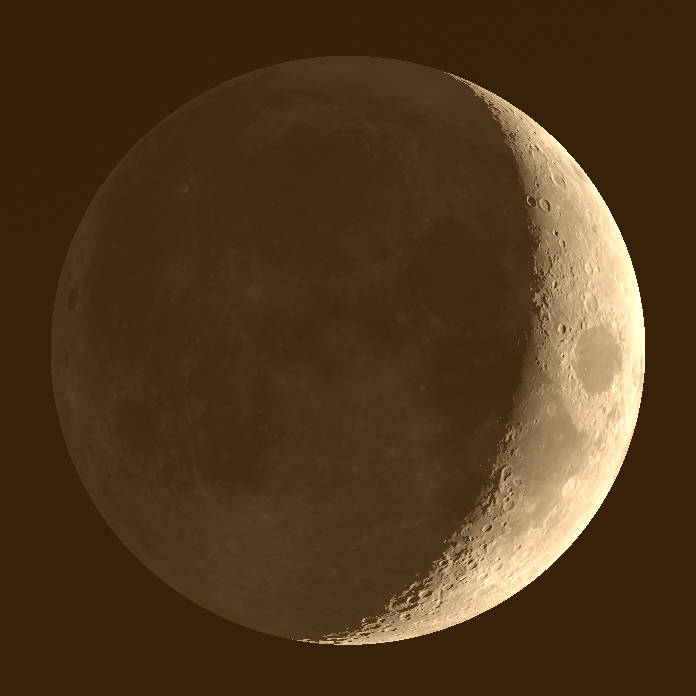
This is Ephemeris for Wednesday, August 27th. Today the Sun will be up for 13 hours and 28 minutes, setting at 8:27, and it will rise tomorrow at 7:00. The Moon, halfway from new to first quarter, will set at 10:02 this evening.
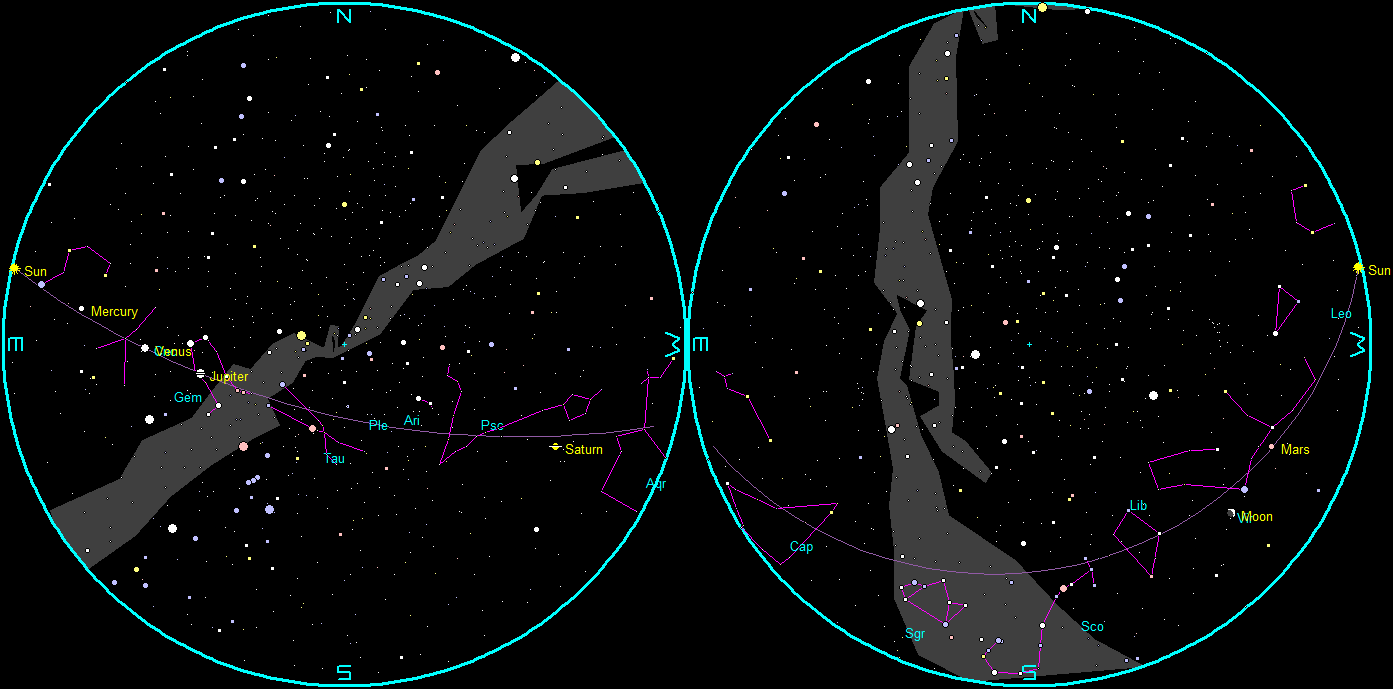
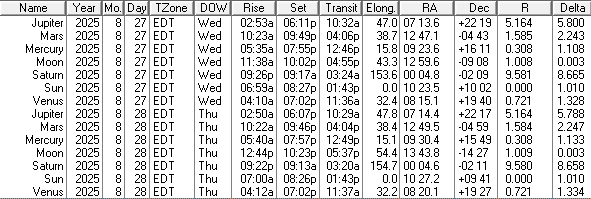
Let’s take our weekly look at the whereabouts of the naked-eye planets. The Red Planet Mars is too close to the direction of the Sun to spot. This is the curse of trying to view evening planets, which are near the direction of the Sun in late summer and early fall, for us at higher latitudes. Saturn now rises at 9:27 PM in the east. In a telescope Saturn sports a very thin ring, a bit more than 3° from being edge on. This angle will decrease to about a third of a degree by November 23rd before increasing. By 6 AM Saturn will be in the southwest. Jupiter will appear above the brighter Venus in the Eastern sky And among the brighter winter stars. Mercury will be in line with Venus and Jupiter very near the horizon.
The astronomical event times given in this blog are for the Traverse City/Interlochen area of Michigan (Lat 44.7° N, Long 85.7° W; EDT, UT – 4 hours) unless stated otherwise. Times will be different for other locations.
Addendum
Ephemeris: 08/20/2025 – Taking our weekly look at the whereabouts of the naked-eye planets
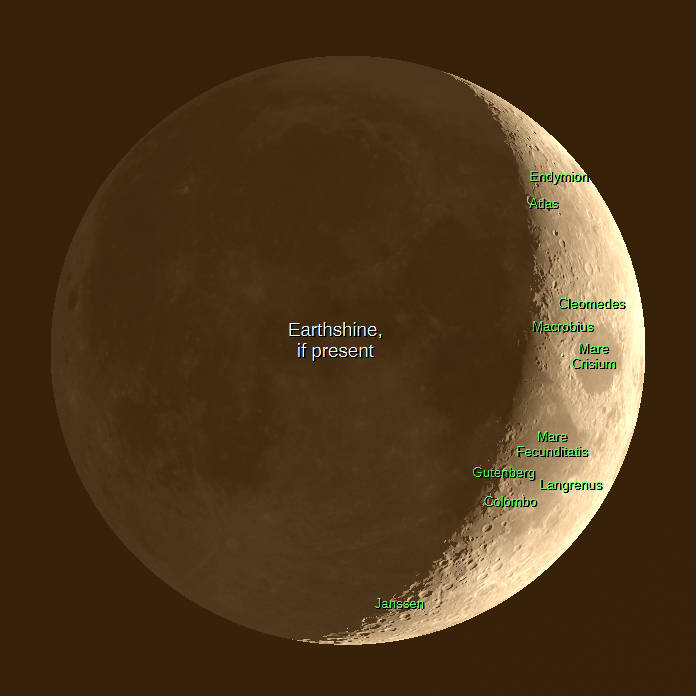
This is Ephemeris for Wednesday, August 20th. Today the Sun will be up for 13 hours and 48 minutes, setting at 8:39, and it will rise tomorrow at 6:52. The Moon, 3 days before new, will rise at 4:41 tomorrow morning.
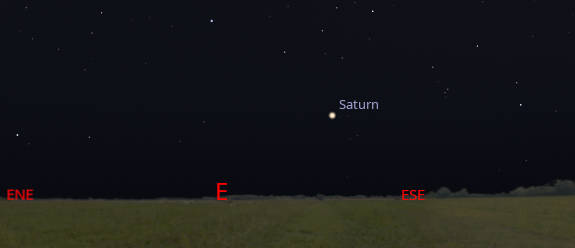
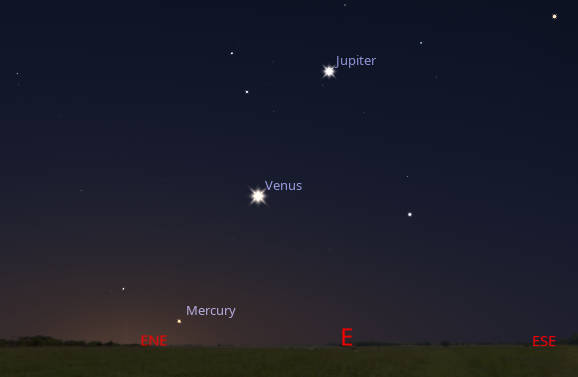
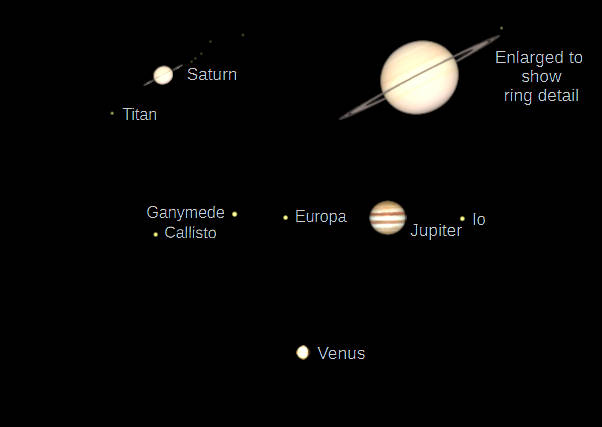
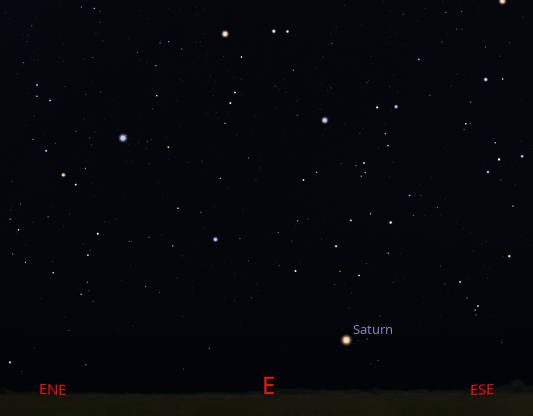
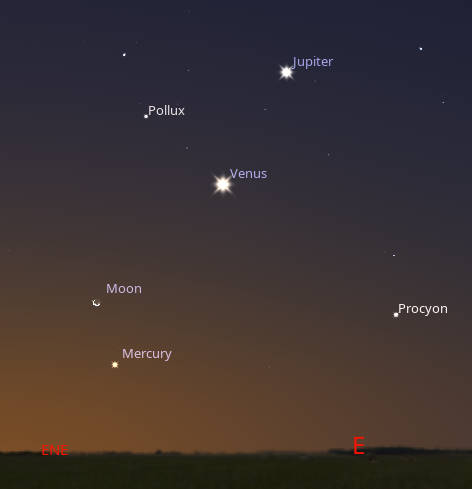
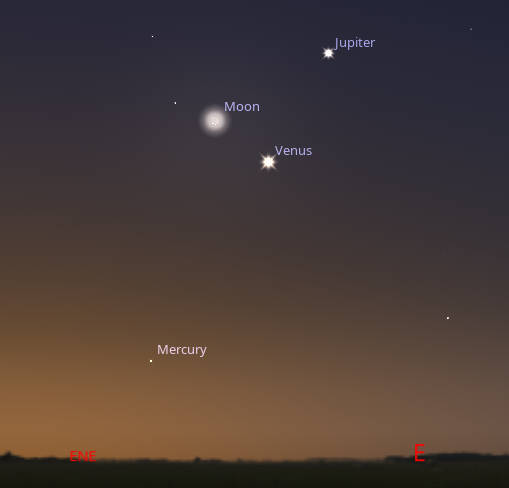
Let’s take our weekly look at the whereabouts of the naked-eye planets. The Red Planet Mars is too close to the direction of the Sun to spot. This is the curse of trying to view evening planets, which are near the direction of the Sun in late summer and early fall, for us at higher latitudes. Saturn now rises at 9:55 PM in the east. In a telescope Saturn sports a very thin ring, a bit less than 3° from being edge on. By 6 AM Saturn will be in the southwest. Jupiter will appear above the brighter Venus in the Eastern sky And among the brighter winter stars. Venus is by far the brighter of the two planets. Mercury will be below the crescent Moon tomorrow morning.
The astronomical event times given in this blog are for the Traverse City/Interlochen area of Michigan (Lat 44.7° N, Long 85.7° W; EDT, UT – 4 hours) unless stated otherwise. Times will be different for other locations.
Addendum
Ephemeris: 08/19/2025 – Mercury makes its morning appearance
This is Ephemeris for Tuesday, August 19th. Today the Sun will be up for 13 hours and 51 minutes, setting at 8:41, and it will rise tomorrow at 6:51. The Moon, 3 days past last quarter, will rise at 3:25 tomorrow morning.
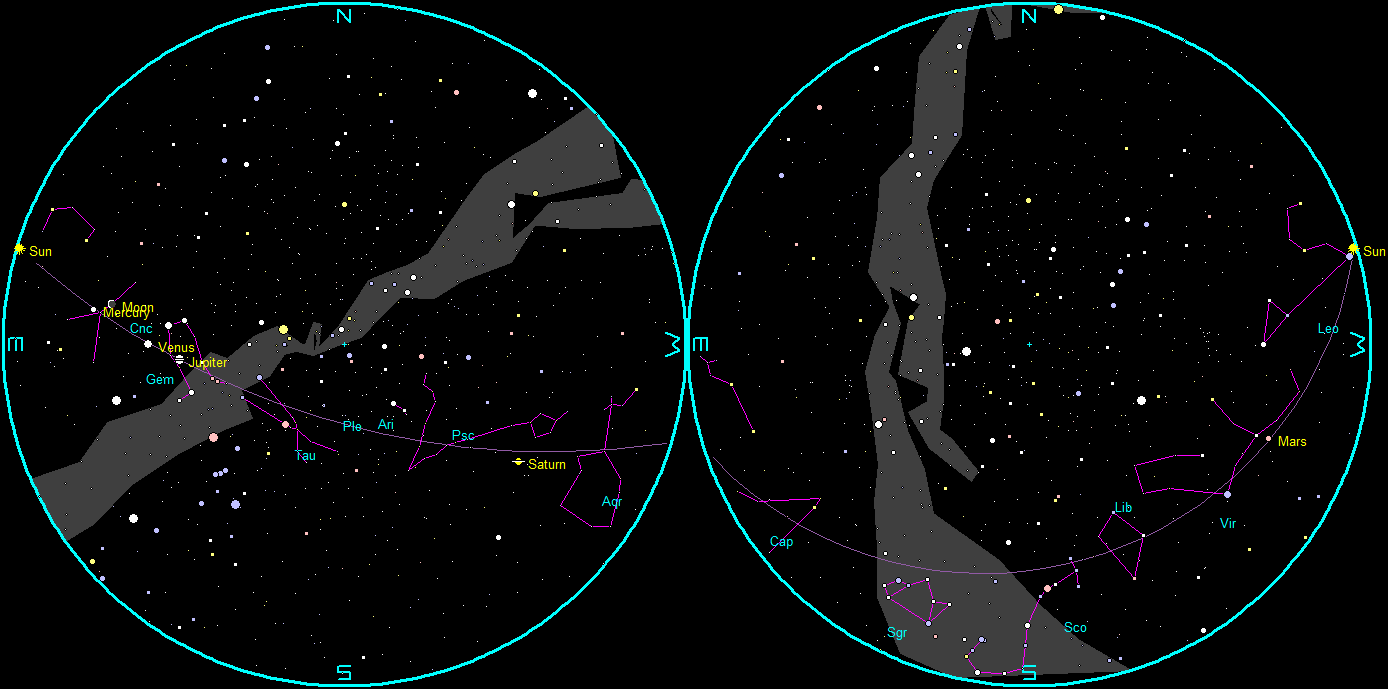
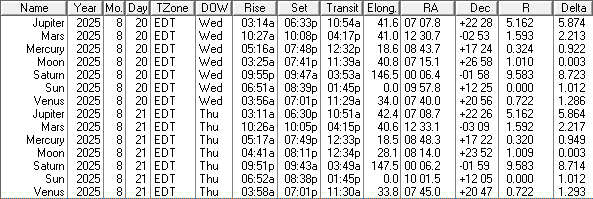
The tiny planet Mercury is making an appearance in the morning sky now. For the next week or so it will be visible around 6 AM. At least it’s time to start looking for it. Once found, it might be followed for another 20 minutes or so. This morning Mercury was at its greatest angular separation or elongation from the Sun of 18.6°. We have two periods where Mercury is easier to spot: on late winter and early spring evenings, and in the morning sky in late summer and early autumn. Of course Mercury must be at the proper elongation point at the time. Mercury is the smallest of the planets, being only 50% larger in diameter than our moon. In closeup, it looks much like our Moon, gray and cratered.
The astronomical event times given in this blog are for the Traverse City/Interlochen area of Michigan (Lat 44.7° N, Long 85.7° W; EDT, UT – 4 hours) unless stated otherwise. Times will be different for other locations.
Addendum
Ephemeris: 08/13/2025 – Taking our weekly look at the whereabouts of the naked-eye planets
This is Bob Moler with Ephemeris for International Left-handers Day, Wednesday, August 13th. Today the Sun will be up for 14 hours and 7 minutes, setting at 8:51, and it will rise tomorrow at 6:44. The Moon, 3 days before last quarter, will rise at 10:47 this evening.
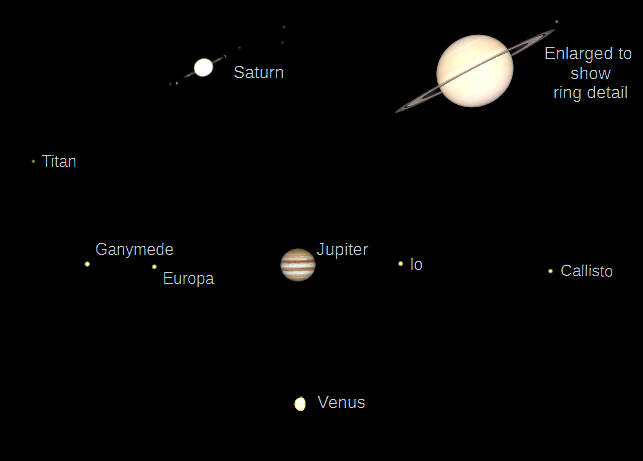
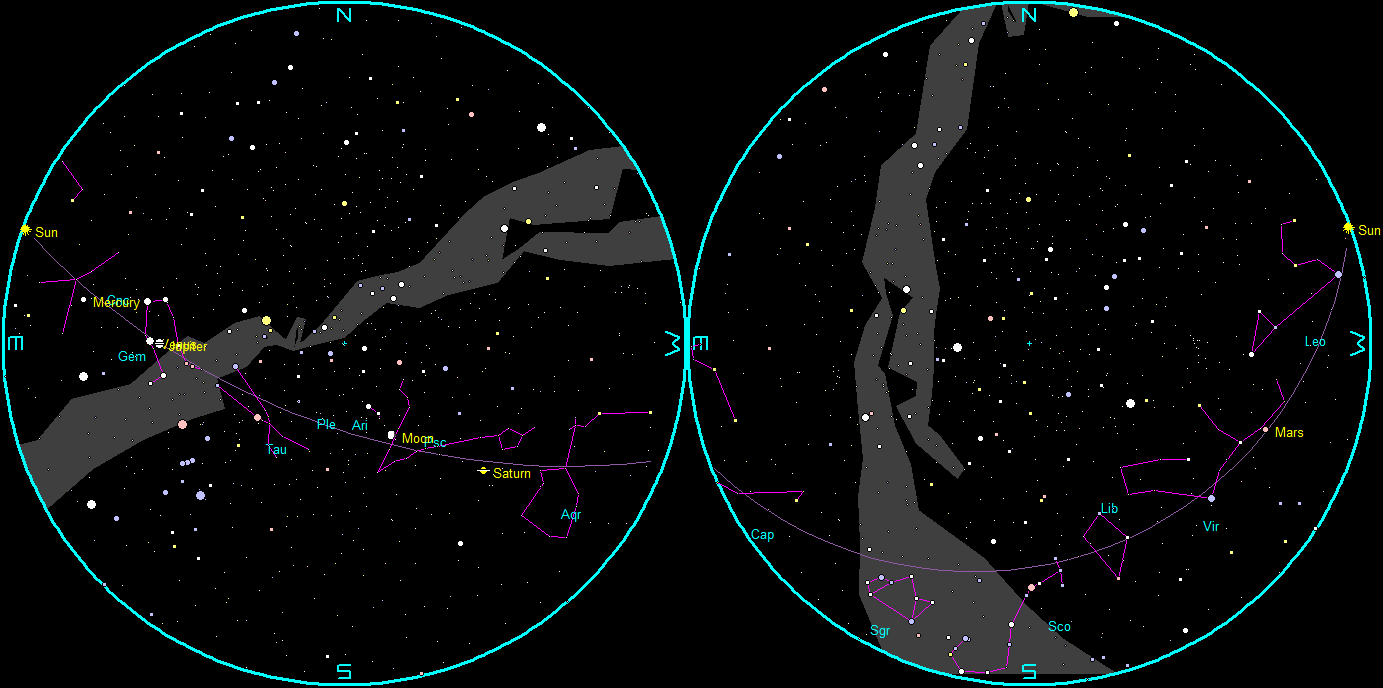
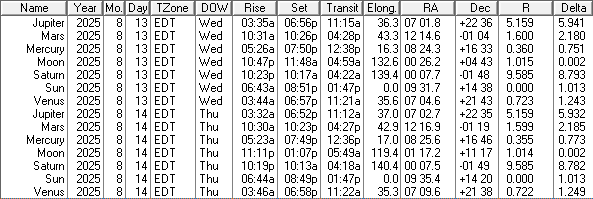
Let’s take our weekly look at the whereabouts of the naked-eye planets. The Red Planet Mars is getting so low in the western sky in evening twilight that I’ve given up on trying to spot it. This is the curse of trying to view evening planets, which are near the direction of the Sun in late summer and early fall, for us at higher latitudes. Mars won’t pass behind the Sun and enter the morning sky until January 9th. Saturn now rises at 10:23 PM in the east. In a telescope Saturn sports a very thin ring, less than 4° from being edge on. By 5:30 AM Saturn will be high in the south, when our winter pal Orion will be rising. Venus and Jupiter will appear very close. Venus is by far the brighter of the two.
The astronomical event times given in this blog are for the Traverse City/Interlochen area of Michigan (Lat 44.7° N, Long 85.7° W; EDT, UT – 4 hours) unless stated otherwise. Times will be different for other locations.
Addendum
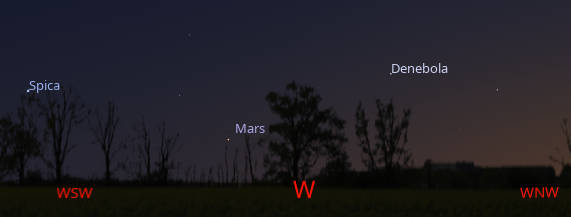
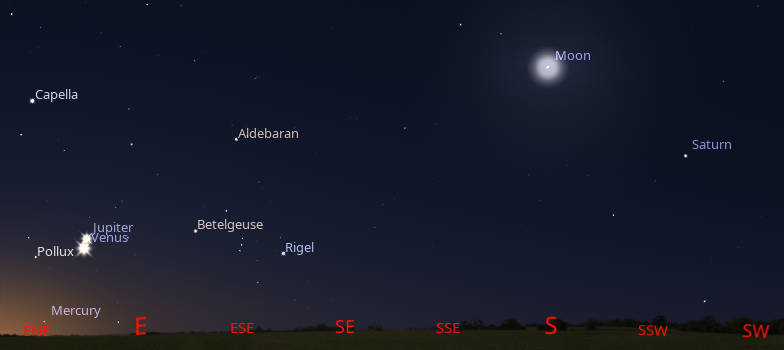
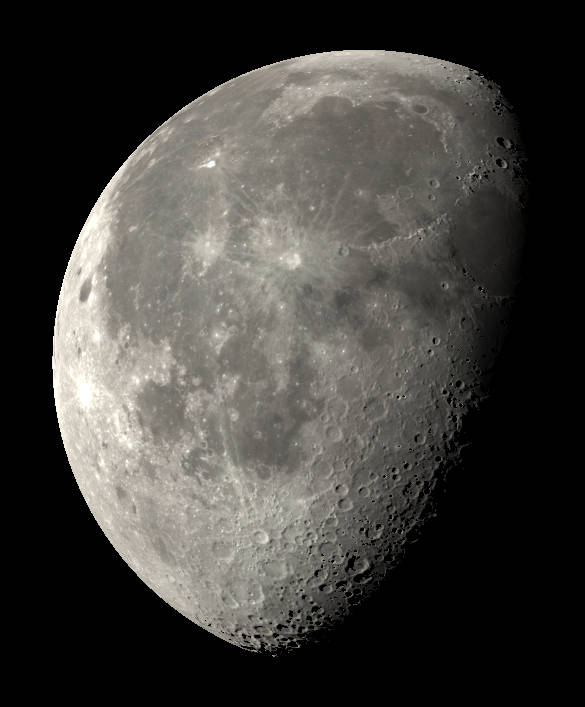
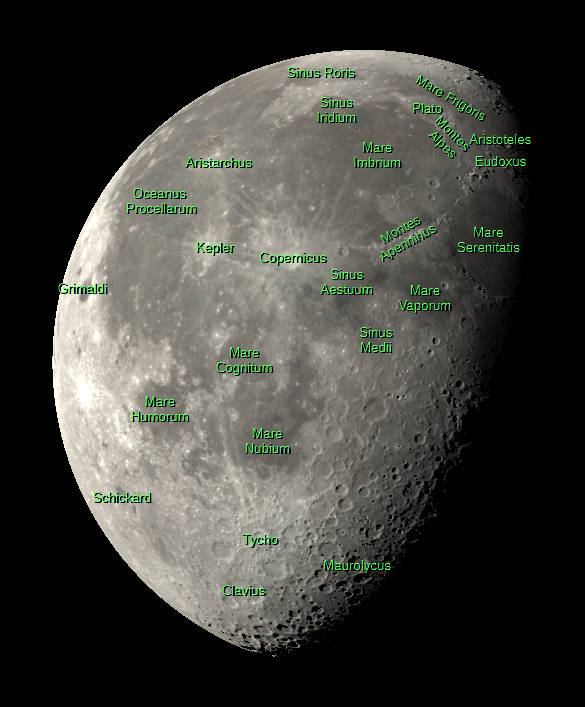
Ephemeris: 08/11/2025 – The best times to see the Perseid meteor shower
This is Ephemeris for Monday, August 11th. Today the Sun will be up for 14 hours and 13 minutes, setting at 8:54, and it will rise tomorrow at 6:42. The Moon, 2 days past full, will rise at 10:06 this evening.
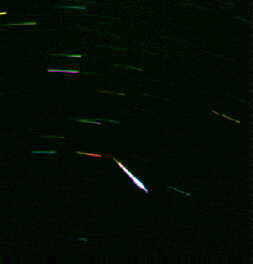
Tonight’s most interesting astronomical events will occur tomorrow morning. The Perseid meteor shower will reach its peak tomorrow afternoon, so tomorrow morning and Wednesday morning will be about the best times to see the meteors, except that the bright Moon is going to interfere. So only the brightest meteors will be visible. Bonus: in morning twilight tomorrow the planets Venus and Jupiter will be in conjunction, meaning they’ll be at their closest appearance to each other by a little bit less than twice the width of the Moon apart. Early risers may have been noticing that Venus and Jupiter will have been slowly approaching each other, with Jupiter below and left of Venus. Tomorrow morning, Jupiter will pass just above Venus.
The astronomical event times given in this blog are for the Traverse City/Interlochen area of Michigan (Lat 44.7° N, Long 85.7° W; EDT, UT – 4 hours) unless stated otherwise. Times will be different for other locations.
Addendum
Ephemeris: 08/06/2025 – Taking our weekly look at the whereabouts of the naked-eye planets
This is Ephemeris for Wednesday, August 6th. Today the Sun will be up for 14 hours and 26 minutes, setting at 9:01, and it will rise tomorrow at 6:36. The Moon, 3 days before full, will set at 4:13 tomorrow morning.
Let’s take our weekly look at the whereabouts of the naked-eye planets. The Red Planet Mars, May be seen very low in the western sky at 10 PM. Mars is moving toward Spica, a bit higher in the west-southwest. Mars will pass Spica on September 12th. By then they will be too low in the sky to be seen in twilight. Mars will leave the evening sky on January 9th. Saturn now rises at 10:50 PM in the east. In a telescope Saturn sports a very thin ring, less than 4° from being edge on. By 5:30 AM Saturn will be high in the south, when our winter pal Orion will be rising. Venus and Jupiter will appear very close. Venus is by far the brighter of the two. Their paths will cross on the morning of the 12th, where they will appear less than 2 moon-widths apart.
The astronomical event times given in this blog are for the Traverse City/Interlochen area of Michigan (Lat 44.7° N, Long 85.7° W; EDT, UT – 4 hours) unless stated otherwise. Times will be different for other locations.
Addendum
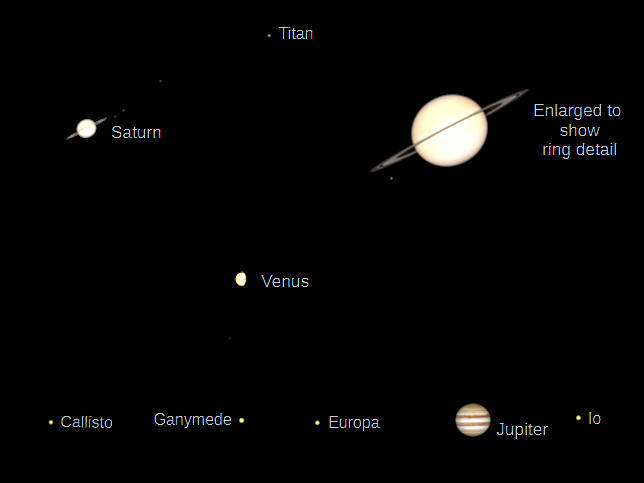
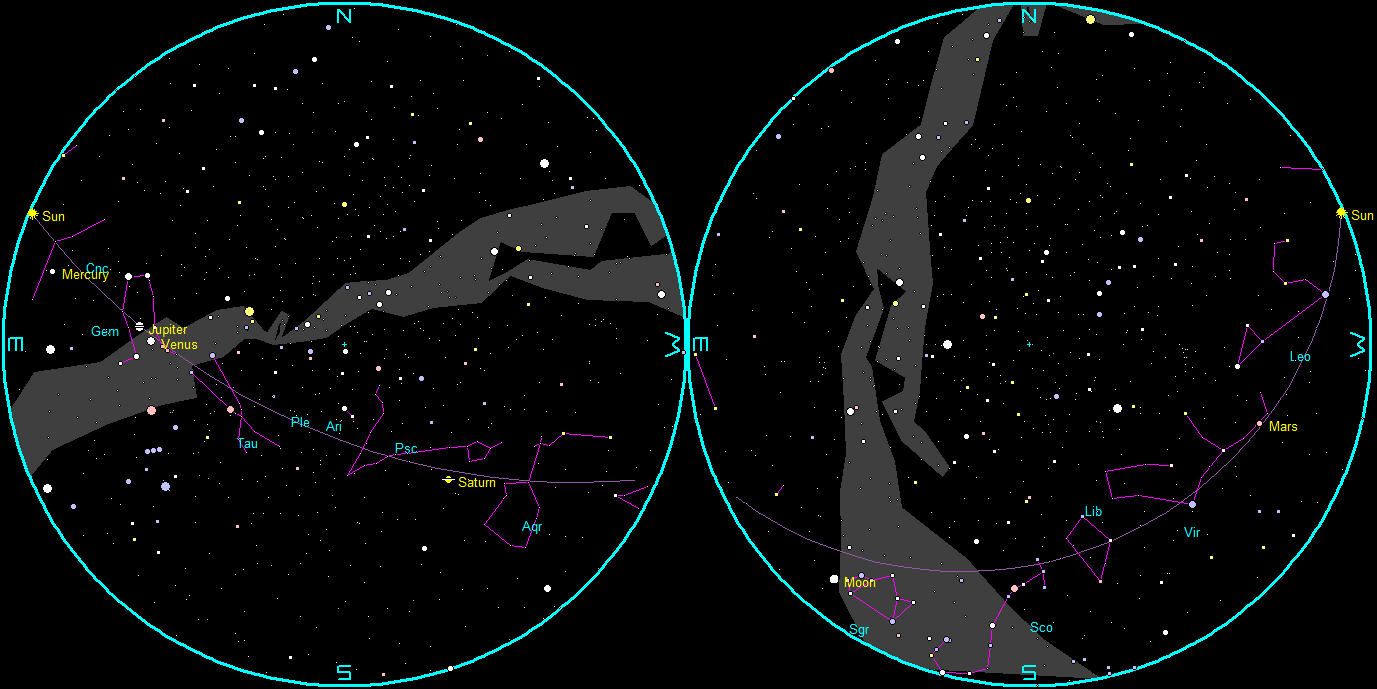
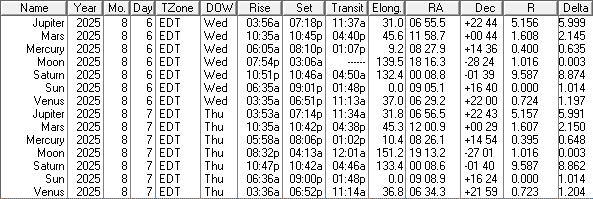
Ephemeris: 07/30/2025 – Taking our weekly look at the Moon and the naked-eye planets
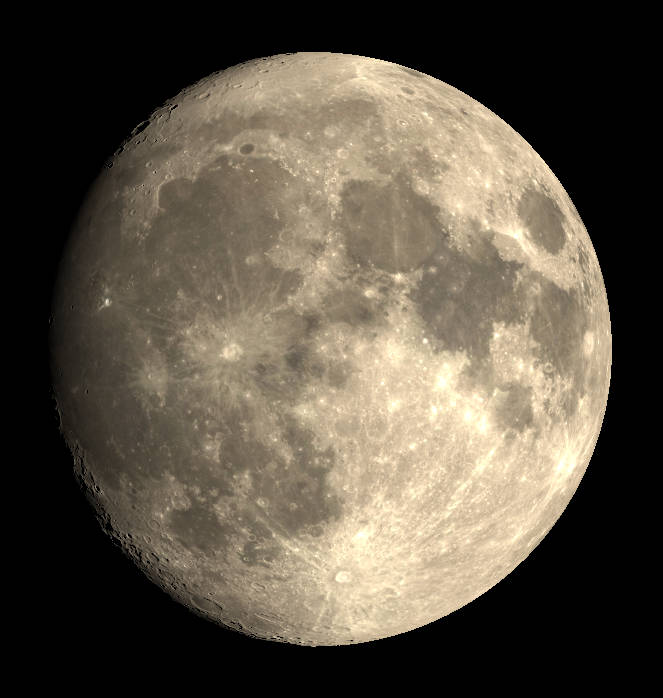
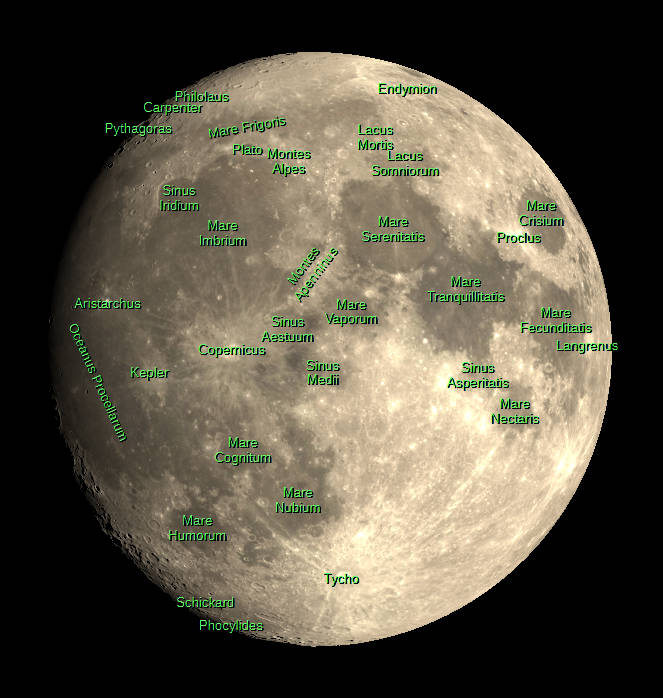
This is Ephemeris for Wednesday, July 30th. Today the Sun will be up for 14 hours and 43 minutes, setting at 9:10, and it will rise tomorrow at 6:28. The Moon, 2 days before first quarter, will set at 11:40 this evening.
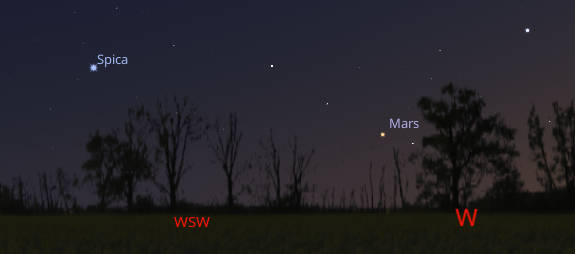
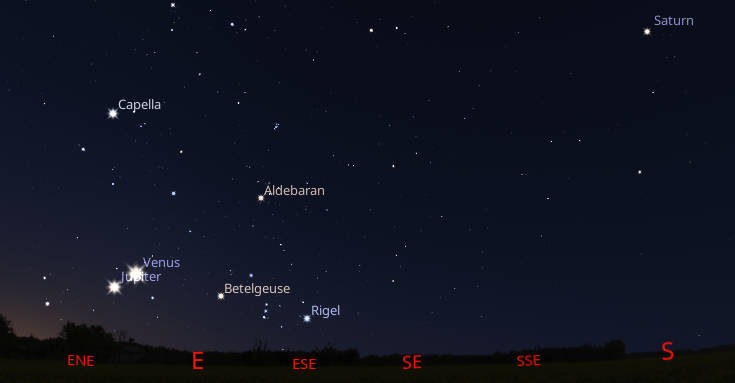
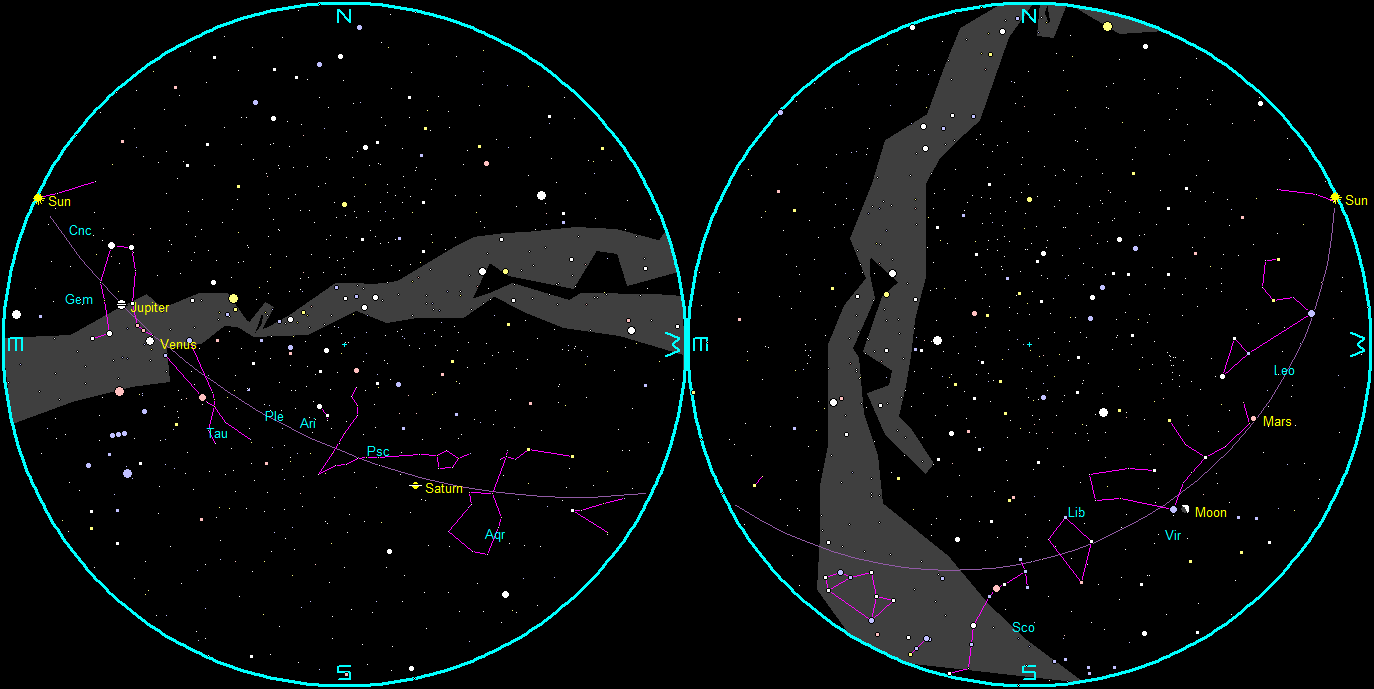
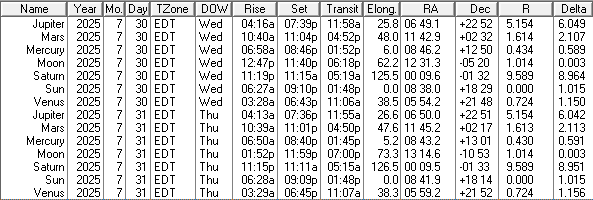
Let’s take our weekly look at the whereabouts of the naked-eye planets. The Red Planet Mars, will be seen low in the western sky at 10:15 PM. Mars is moving toward Spica, higher in the west-southwest, which will be above the Moon tonight. Mars will pass Spica on September 12th. By then they will be too low in the sky to be seen in twilight. Saturn now rises at 11:15 PM in the east. When I had my first telescope, eagerly waiting for Saturn to rise, I had to wait more than a half hour to get a sharp image of it. By 5:30 AM Saturn will be high in the south, when our winter pal Orion will be rising. Venus will rise at 3:29 AM in the east-northeast and will be higher in the east by 5:30. Jupiter will be below and left of Venus.
The astronomical event times given in this blog are for the Traverse City/Interlochen area of Michigan (Lat 44.7° N, Long 85.7° W; EDT, UT – 4 hours) unless stated otherwise. Times will be different for other locations.
Addendum
Ephemeris: 07/23/2025 – Our weekly look at the whereabouts of the naked-eye planets
This is Ephemeris for Wednesday, July 23rd. Today the Sun will be up for 14 hours and 58 minutes, setting at 9:18, and it will rise tomorrow at 6:20. The Moon, 1 day before new, will rise at 5:43 tomorrow morning.
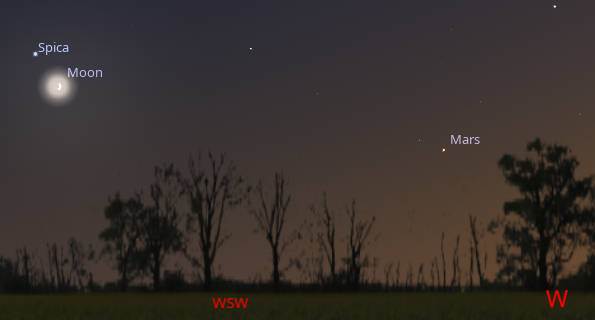
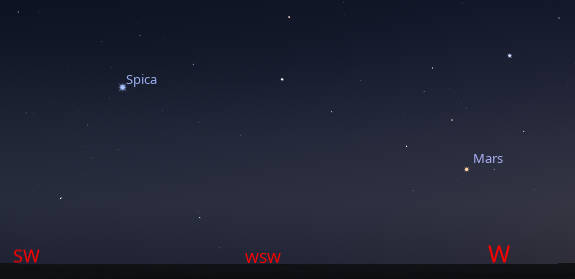
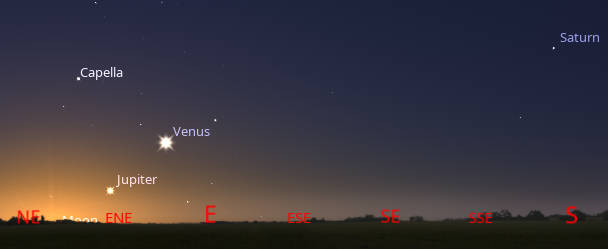
Let’s take our weekly look at the whereabouts of the naked-eye planets. The Red Planet Mars, will be seen low in the western sky at 10:30 PM. Mars is moving toward Spica, higher in the southwest. It will pass above Spica on September 12th. Mars moves much faster against the background stars than the more distant Jupiter and Saturn. Speaking of Saturn, it now rises just before midnight at just about due east, and by 5:30 AM will be high in the south. Venus will rise at 3:25 AM in the east-northeast and will be higher in that general direction by 5:30. Jupiter will be below and left of it then. That they will appear among the winter stars will become more apparent in the next few weeks.
The astronomical event times given in this blog are for the Traverse City/Interlochen area of Michigan (Lat 44.7° N, Long 85.7° W; EDT, UT – 4 hours) unless stated otherwise. Times will be different for other locations.
Addendum
Ephemeris: 07/16/2025 – Our weekly look at the whereabouts of the naked-eye planets
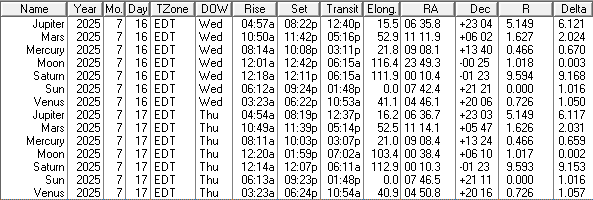
This is Ephemeris for Wednesday, July 16th. Today the Sun will be up for 15 hours and 11 minutes, setting at 9:24, and it will rise tomorrow at 6:13. The Moon, 1 day before last quarter, will rise at 12:20 tomorrow morning.
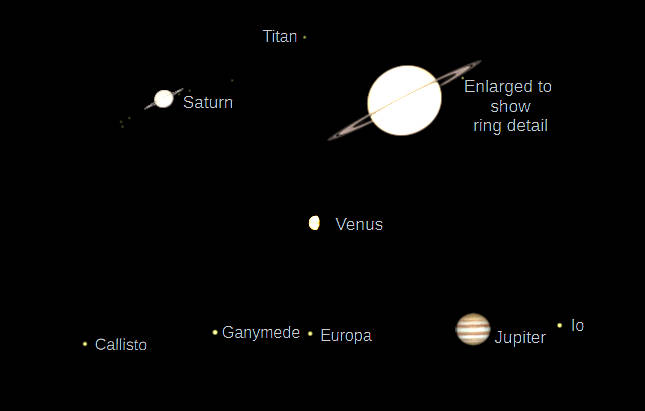
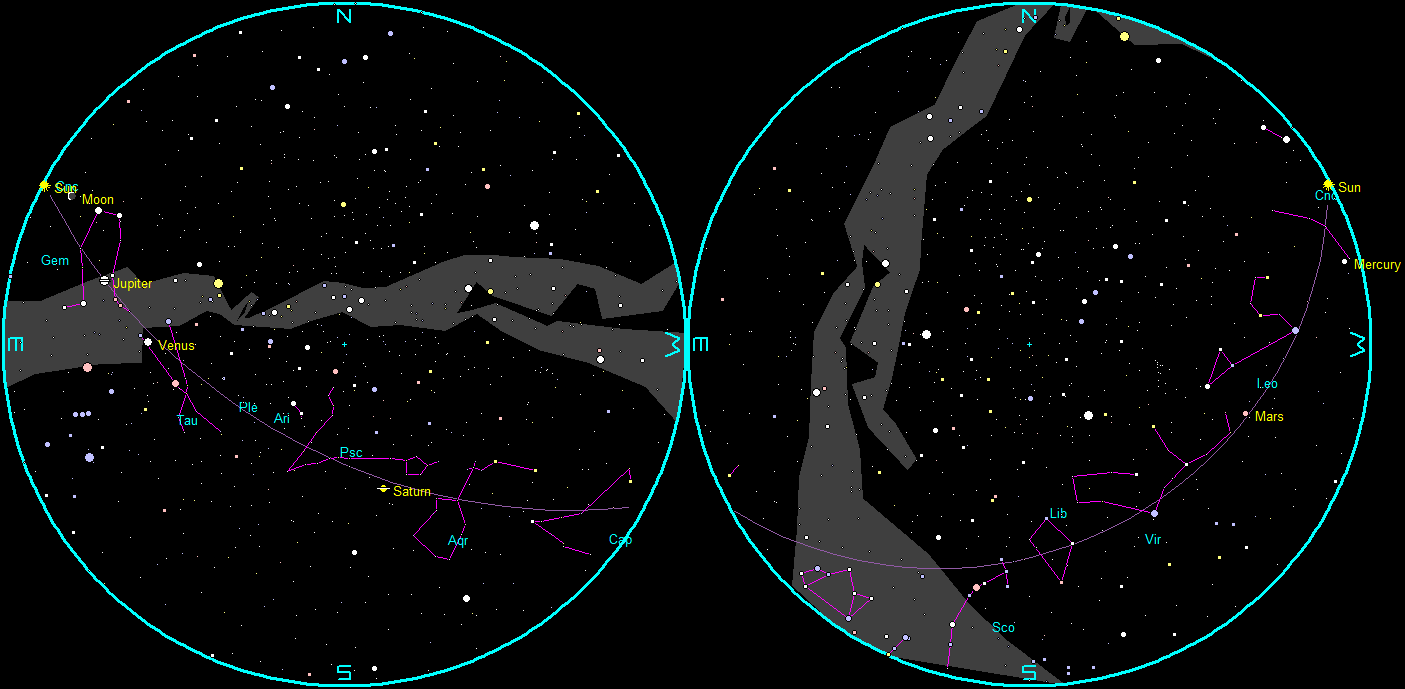
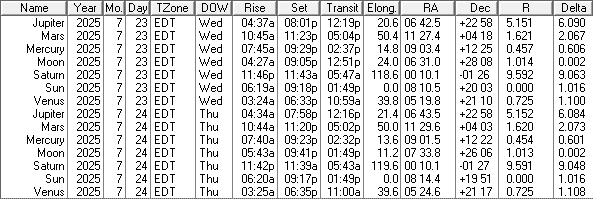
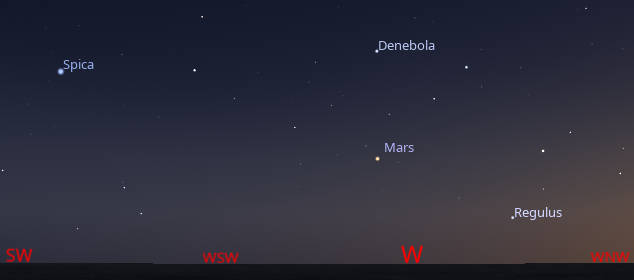
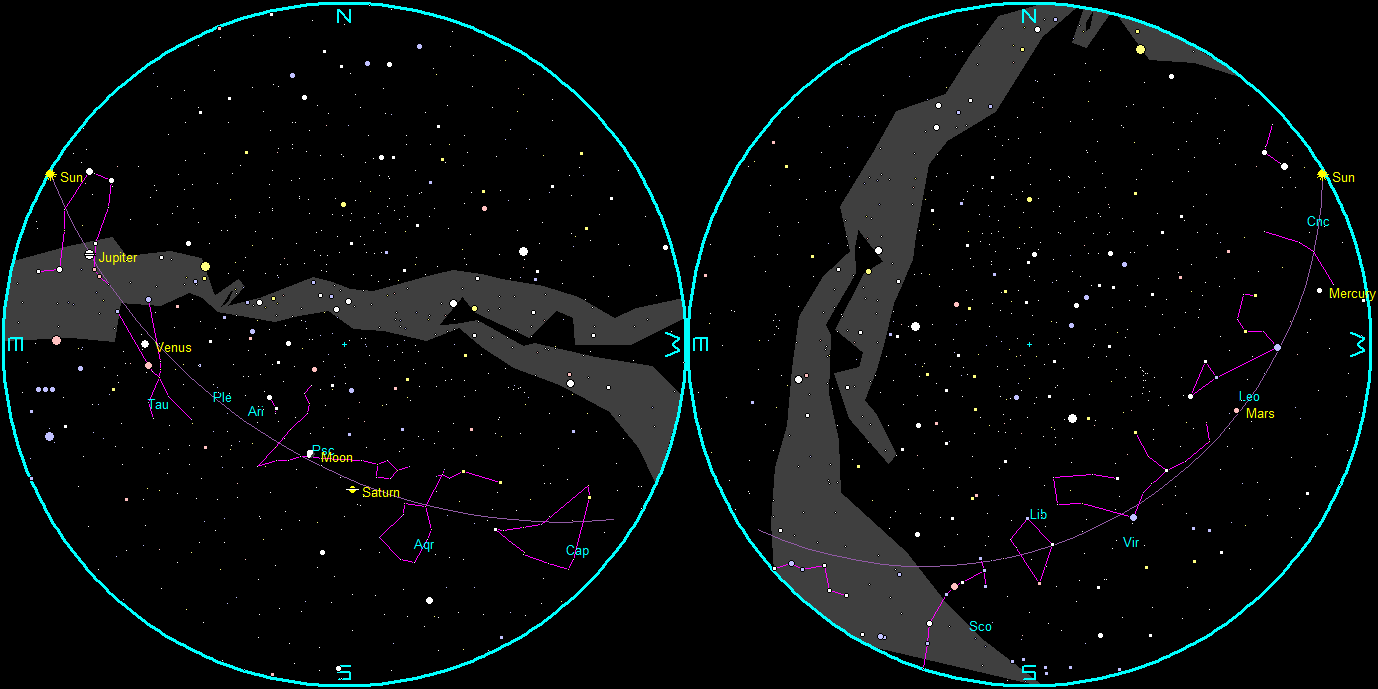
Let’s take our weekly look at the whereabouts of the naked-eye planets. The Red Planet Mars, will be seen to the upper left of the bright star Regulus in the constellation Leo the lion. Both are seen low in the western sky by 10:30 PM at least. Mars is moving away from Regulus, close to the horizon in the west-northwest toward Spica, higher in the southwest. Mars moves much faster against the background stars than the more distant Jupiter and Saturn. Jupiter is in the morning sky now very low in the east-northeast by 5:15 AM. Venus will rise at 3:23 AM in the east-northeast, and by 5 AM will be seen in the east, as the Morning Star. By then Saturn will be in the south-southeast, and below the last quarter Moon tomorrow morning.
The astronomical event times given in this blog are for the Traverse City/Interlochen area of Michigan (Lat 44.7° N, Long 85.7° W; EDT, UT – 4 hours) unless stated otherwise. Times will be different for other locations.
Addendum
 Bob Moler's Ephemeris Blog